Argentina

Gallinato butterflies (1)

Our farm is located in the northern part of the Gallinato gorge in the La Caldera Department, Salta province. It is a transitional area between the Yungas and the Chaco. It rains abundantly during the summer months and it is dry during winter and spring.

It is still a forested area that offers not only interesting trees and plants but a varied and interesting animal life. A study carried out in 2013-14 in the adjacent farm[1] found 14 spp of Amphibiae, 23 spp of reptiles, 28 spp of mammals and 216 spp of birds. Both mammals and birds are rather difficult to observe but this is not the case of the 152 spp of butterflies found as well as an amazing number of moths and other critters that are easier to see. In other words, our farm is an insect paradise!

As our life evolves around avoiding the winter by commuting between Zimbabwe and Argentina and Uruguay we are in Salta during the summer, warm and humid, ideal conditions for the development of insects, particularly butterflies. Aware of this fact we have planted “butterflies-friendly” plants that attract a good number of these beautiful creatures to the area around our farmhouse. However, it is over the 5 km of the access road that butterflies are really amazing and we record most of what we see.

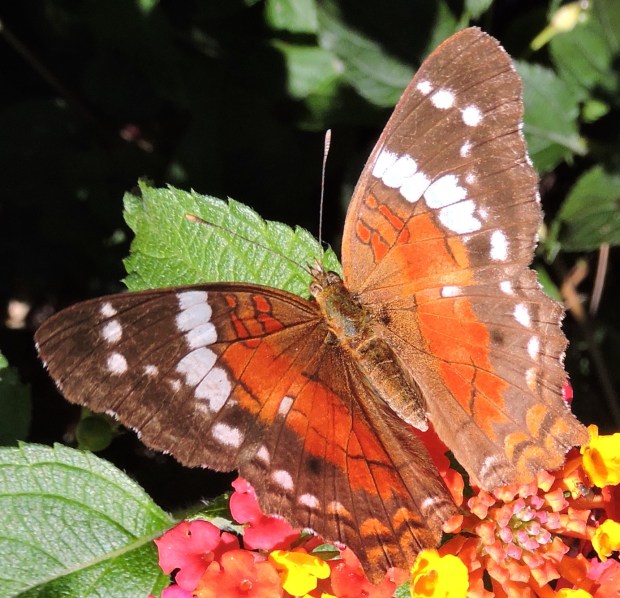
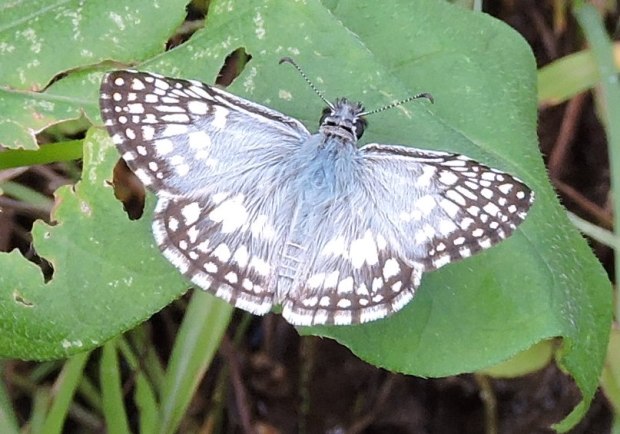
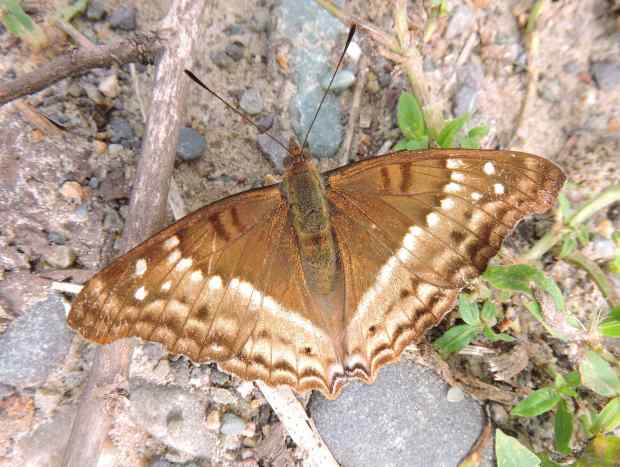
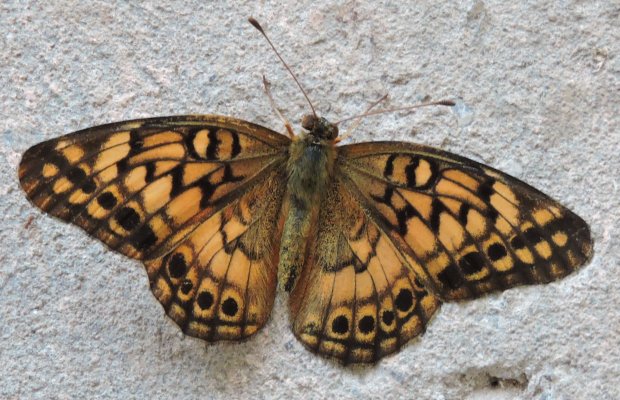
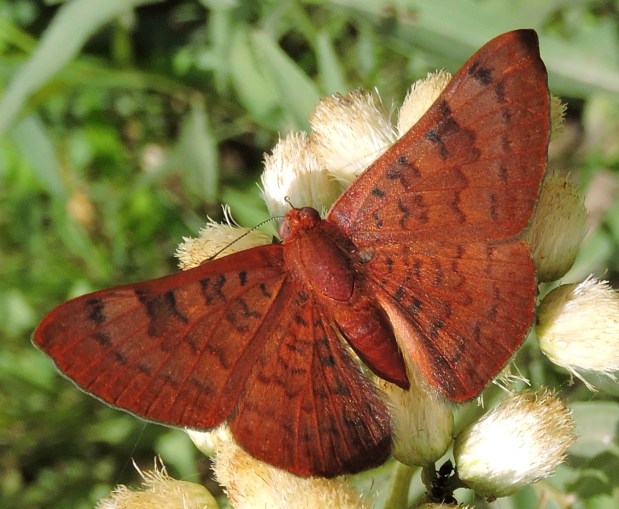
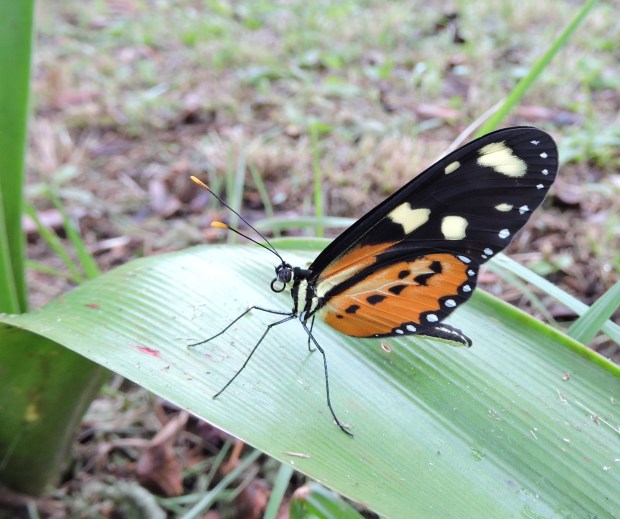
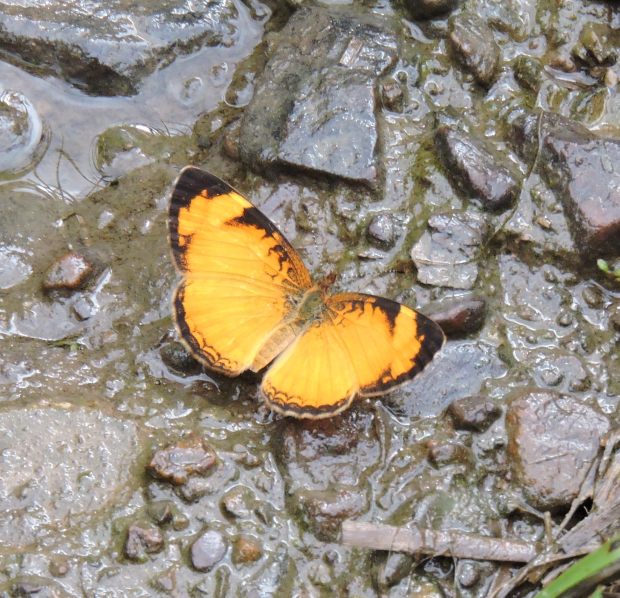
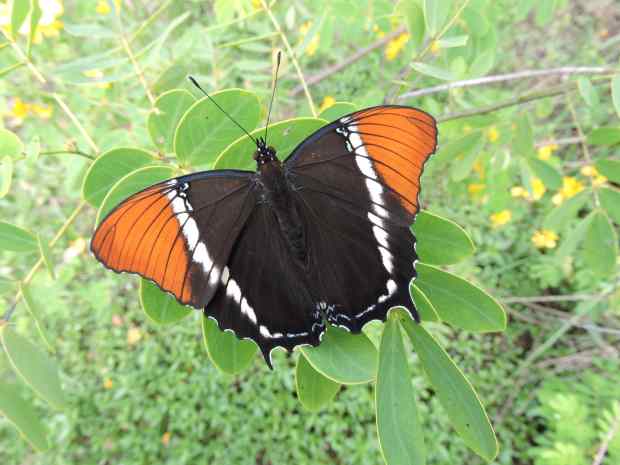
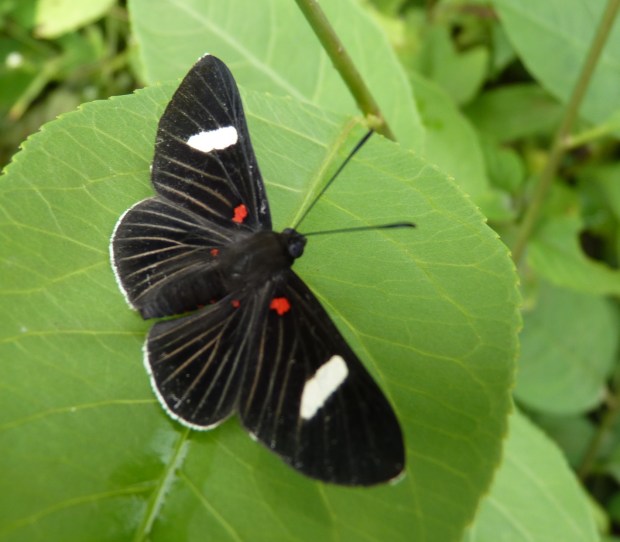
Over the next few posts I will present you with pictures of butterflies, moths and other “beasts” that we are finding this year during our morning walks when the rain allows us to walk.

I start with the butterflies. I have omitted their names as I am not yet sure of a definitive classification and also because I think it is a question of beuty rather than scientific facts. However, unable to escape my technical background, I will be naming them when I am sure of their identity.
P1170420 copy

P1160420 copy

DSCN5339 copy

DSCN4376 copy

DSCN4158 copy

DSCN4073 copy

DSCN4038 copyDSCN3897 copy

DSCN3793 copy

DSCN3479 copy

[1] Moschione, F.N. (2014). Relevamiento de Fauna. Finca El Gallinato. La Caldera. Provincia de Salta. 55p.
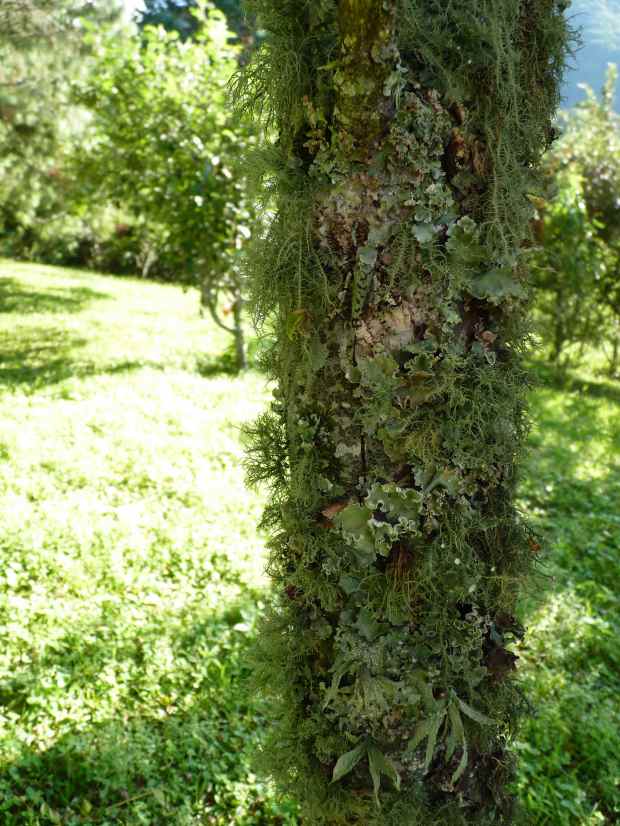
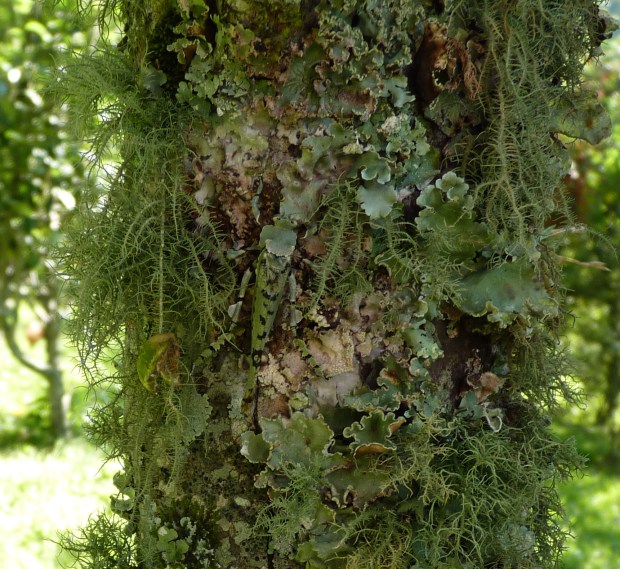
Spot the beast 21

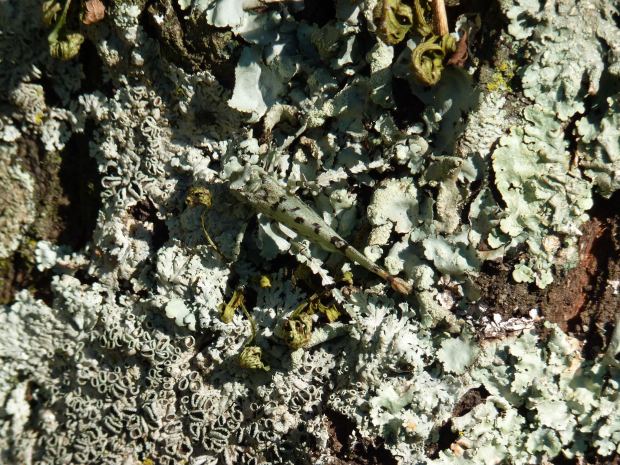
Back to Salta with another interesting creature for you to find.

P1140953 copy 1

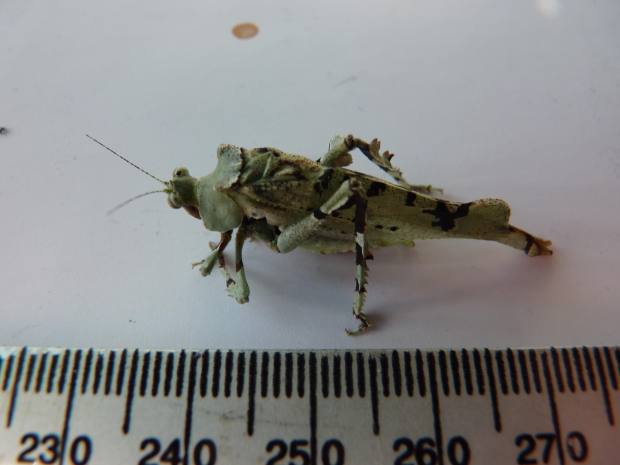
I think this time it was rather easy but it is a lovely insect all the same and worth having a look at it. I call it the “lichenhopper!” Below some more close-ups of the beast.

P1140953 copy

P1140959 copy

P1140946 copy

Spot the beast 20

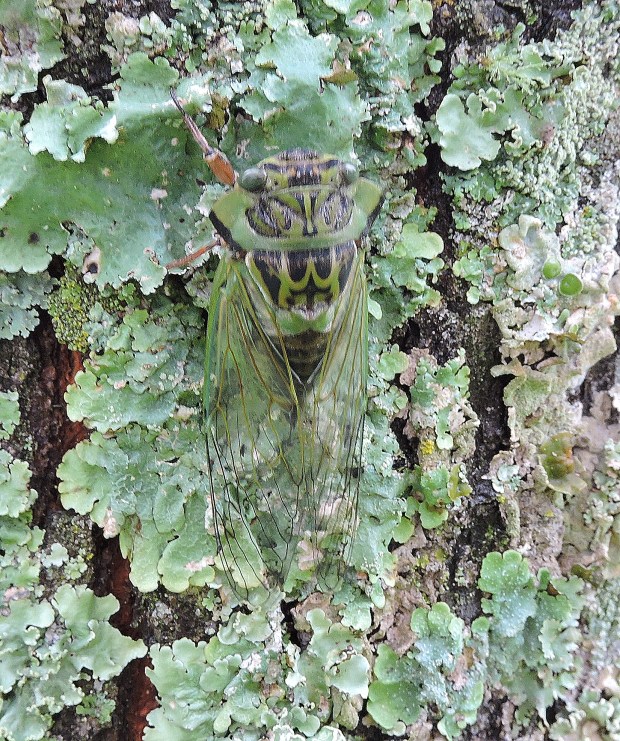
Occasionally at our farm we spot these noisy creatures in the garden. Of course, they are difficult to spot if not to hear!

dscn4250-copy

?
?
?
?
?

dscn4249-copy

A very loud, large and colourful cicade!

Puma?

Puma, Puma concolor, are usually quiet and therefore they can live with humans undetected as solitary predators feeding on medium sized and large mammals such as deer and agouti but also on smaller prey such as snakes, hares and rats.

Puma are the most adaptable of all wild cats in the world and inhabit many climates: boreal, tropical, desert and rainforests and they are equally at home in lowlands or mountains. Shy and suspicious of humans they are rarely seen.

Our farm in the Yungas of Salta is home to wild cat (Oncifelis geoffroyi), ocelot (Leopardus pardalis), jaguarundi (Herpailurus yaguarondi) and puma[1]. Luckily, there are still wild areas where these animals can dwell and the agriculture frontier is not yet here so no many incidents with livestock predation occurs.

Although we have never seen a jaguarundi or an ocelot, we have seen a skull of what we believed belongs to the latter.

20150217_102012-copy

Ocelot skull.

A few years back the family (while the Bushsnob worked away in Bolivia) bumped on an adult puma that crossed the road in front of them about one km from our farm while driving at night.

As you can imagine, after such a find our farm went up in our estimation, as, at the time the cat was observed, we were not sure about being able to return to Africa.

Aware of our exciting animal neighbours, checking all footprints we see is the norm. Although most of what we see belong to the various domestic dogs that are kept by our neighbours, occasionally we find some that clearly belong to felines, particularly after it rains.

It did rain on the night of 12 to 13 Feb 17 but the morning started sunny so we went for our usual walk to burn a few calories and to get our telephone signal located three km away at a place known as “The Cross” where a wooden cross remembers a past fatal accident.

Returning from the walk I stopped to photograph a butterfly and noted two footprints. They had no sign of nail marks and the larger one was 9 x 7.8 cm (foto). Our first thought was that they could belong to an ocelot. However, when we checked them in our mammal book[2], their size coincided with those of a puma although, as usual, some doubts remain.

Whether they belong to what we suspect or not, it is a great pleasure to be able to walk on a road where you can find such footprints and believe that such animals are around you in the thicket, probably watching your movements!


[1] Moschione, F. N. (2014). Relevamiento de Fauna. Finca El Gallinato, La Caldera, Provincia de Salta. Informe Relevamiento 2013-2014. 55pp.

[2] Emmons, L. H. (1997). Neotropical rainforest mammals: a field guide. 2nd. Edition. 307pp.

Mutant moth – Advance

Eight months ago I published a post where I showed a picture of a moth that had the wings of different colour and I speculated that it was a kind of “alien” creature[1].

dscn4120

Then I mentioned that I would follow-up the issue with the “experts” but I am afraid I did not!

However, luckily, searching for information on Southern African moths and butterflies I stumbled upon a site that deals with the kind of anomaly I came across, though in a more colourful butterfly[2]. This gave me the first indication that I was probably dealing with gyandromorphism.

In entomology, a gynandromorph is an insect that contains both male and female features that in butterflies -moths in our case- can be seen physically (in their wings) because of their sexual dimorphism.[3]

This is as far as I has been able to go for the moment but the search continues.


[1] https://bushsnobinafrica.wordpress.com/2016/03/18/mutant-moth/

[2] http://insectdesignsnews.blogspot.com/2010/11/charaxes-cynthia-gyandromorph.html

[3] https://en.wikipedia.org/wiki/Gynandromorphism

Duck tenderness

The distance between Carmelo in Uruguay and Salta in Argentina is about 1800 km by road so we usually divided the trip in three legs of roughly 600km each as to avoid driving too much in a day. The first stop is usually Curuzú Cuatiá in the province of Corrientes that we reach after crossing the border and a rather monotonous drive.

The second day takes us through a nice area known as the Iberá wetlands where bird life makes the trip very entertaining and interesting. Our second stop is found about 200 km towards the north-west, after crossing the mighty Paraná River in Presidencia Roque Sanz Peña, the second largest city of the Chaco Province. The main attraction of the city are its thermal waters but it also has a rather hidden treasure: a zoo of native animals. As the latter are difficult to see in the wild, the zoo helps preparing the observer for real life!

During one of the stop-overs we needed to kill time for a hotel room to be ready so we decided to defy the intense heat and spend some time at the zoo! We only learnt on arrival that mosquitoes were also on display and in large numbers! Luckily we had a strong repellent[1] otherwise the tour would have been abandoned!

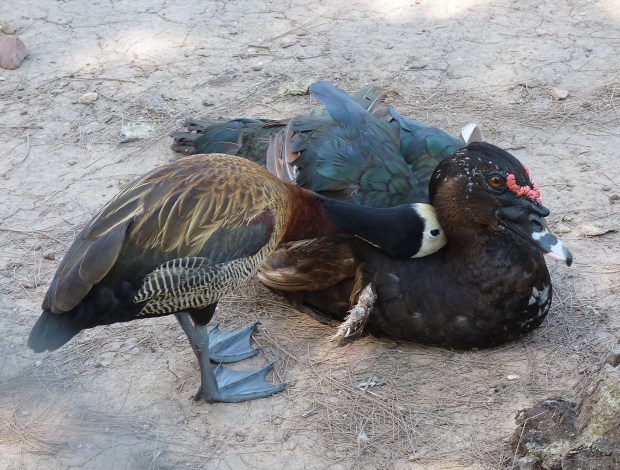
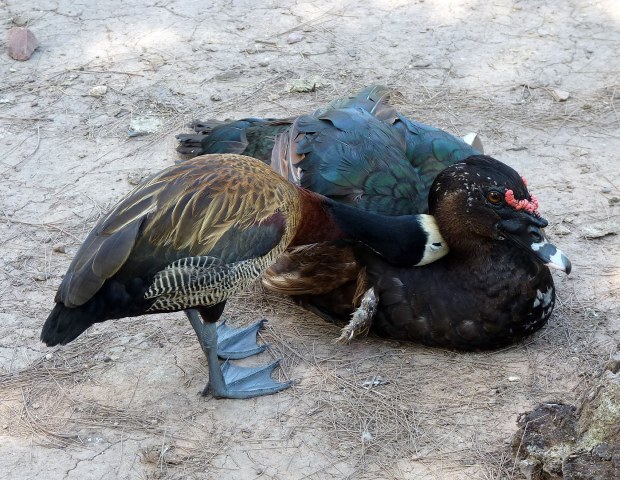
Towards the end of the visit we walked passed a pond that was home to several duck species including domestic ducks. While watching the pond, we saw a few wild ducks known as sirirí cariblanco or white-faced whistling duck (Dendrocygna viduata), one of the handful of species that occurs both in South America and Africa, just like us! While making a comment about its world distribution we noticed one that had a “relationship” with a domestic duck.

As this was unusual, we watched as the whistling duck approached the much larger “friend” and placed its beak and part of its head behind the neck of the larger duck!

20160216_160638-001-copy

The careful approach.

20160216_160650-001-copy

Getting in place.

p1130380-001-copy-2

Smugly in place.

At first we thought that it was looking for something there but it just kept its head there without moving for the whole time we were there and it was still in that position when we left them! The domestic duck, clearly used to this “treatment” did not move and accepted the wild duck indifferently!

p1130381-001-copy

Closing the eyes!


[1] Repellents in South America can make the difference between misery and enjoyment and you need strong stuff to survive the various biting insects that wait for you there!

Four in one

From our first visits to our farm in Salta it became apparent that its insect wealth was enormous. In particular, as you have read here, butterflies and moths really rule. The latter in particular are very varied and abundant. Being attracted by the light makes them easy to capture, observe, photograph and, eventually, release. In the early morning the trick is to be there before the insectivorous birds that do not care for beauty but taste!

I have described and published posts mainly on butterflies for two main reasons: they are colourful and photogenic but also better known in the area. Moths are difficult and, although I have taken pictures of a few hundred specimens, I am still waiting for their identification as the group’s taxonomy does not seem to be well known. The consequence of this is that most of the time I do not know what I am looking at in a taxonomical way. I then need to resort to my own classification by colour, shape and size that produces specimens such as “mottled brown medium size”, “barred brown with delta wings” or “large and smooth hawk moth”, etc.

A couple of days ago I came across one specimen that, although I have seen before, it is infrequent but rather attractive. Looking at it from its dorsal part, I could see a figure on its back that looked like a face (with Ray-Ban seafarer glasses?) or a cat face.

My wife saw a butterfly and, in December 2014 when I first saw it, I described as a moth “white with skull on back” It was like a psychological test I undertook in my childhood where you are asked to describe what you saw!

Later, looking at the pictures, there were more creatures to come out!

A dorsal view of its head showed a monkey face (agreed by my wife this time although the discussion centered on whether it was a baby Colobus or a Vervet!).

The final surprise was when we looked at it from the front. I saw a clear dog’s face while my wife saw a rabbit head!

Amazed by the various beasts we saw, we almost forgot that we were looking at a simple moth. However, it was one of Nature’s specials depicting three different creatures, apart from itself, a feat that I believe is difficult to match!

A tough owl…

Burrowing owls (Athene cunicularia) used to be very common in Uruguay in the past and I remember, about 50 years back, seeing them perched on fence posts at frequent intervals. Regrettably, the advent of generalized use of pesticides meant that they almost disappeared and they are now relatively rare.

We were happy to find that in the Yungas of Salta, where our small farm is located, they are quite common, particularly in an area devoid of tree cover a short distance beyond our farm where we watch them from time to time. Luckily pesticide use here is still rare!

It was during one of these visits that we found the group composed of probably two adults (placed at both ends) and two babies showing only their heads, ready to disappear down their burrow in case of emergency.

P1150264 copy

I was busy taking the first set of pictures when the adult on the left started to run towards me. I was quite impressed by its threatening behaviour as -I thought- it takes courage to attempt to scare off a large ape! It bobbed its head repeatedly, a normal behaviour of these birds and a couple of times it actually appeared to dig and scratch the soil with its beak. After a while it ran back to join the rest of its family and stood again where it was earlier.

P1150240


P1150237 copy

P1150244

After a while we left them to enjoy their owl family life and we returned to our log fire at home. Much later, while checking the pictures taken that day, I realized that in fact the owl was not threatening me but that it was after prey! I had missed the details in vivo but these were apparent when I looked at the various pictures.

The owl had spotted a large beetle half way from me and it rushed to get it (rather than to scare me off!), caught it, tried it and spat it out, as it must have tasted bad! I can only assume that he discarded it, as I believe that eating it would have taken some effort! Although I fear for the beetle after the rough treatment received, these insects are quite common around here and I do not believe that its absence will be noted…


Wet blogging!

Probably, through earlier posts I gave you the impression that living at the foot of the Andes is a dream. While this is true to a very large extent, it also has climatic and technological shortcomings that need to be accepted to enjoy it.

The climate is dry and cool in winter with most days being sunny and warm in the middle of the day when it is possible to be outside wearing a short-sleeved shirt. At that time some frost does take place at night, responsible for our failures with our tree and plant growing efforts but otherwise life is great at that time. Unfortunately, we visit Salta in summer and autumn!

The summer is hotter and rather humid. The rain in some areas reaches up to 2,500 mm (2.5 metres!) and cloud forests are the predominant kind of vegetation around us. For a cloud forest to be such the clouds must meet the trees and we are in the middle of this get-together as our farm ranges in altitude roughly from 1,300 to 1,900 metres. As these meetings take place rather often, sunshine is not the most common phenomenon around here now!

As a consequence of this heavy precipitation the area gets waterlogged and the water must drain somehow towards the larger water bodies, in our case the Mojotoro River in the gorge below. As gradients are marked, water runs wild and swells up fast. Sometimes this surprises you as it may rain higher up in the hills and you get the water rush but not the rain.

The entrance to our small-holding crosses a small watercourse that in winter is just a small dry ditch. The fun takes place in summer when, once the rains arrive, it again becomes a stream. This adds a touch of beauty to the farm until we have heavy rains! When this happens, the normally peaceful stream “comes out of the bottle” and transforms itself into a torrent that we can only watch while waiting for it to subside. This normally takes a few hours during which our lack of communication is wide-ranging.

20160224_133413 copy

For a few hours we are either in or out!

This brings me to the technological issues. The high hills surrounding us interfere with the telephone and Internet signals at the best of times. Well, there is a cell phone signal 3 km away on the access road and, of late, a basic Internet signal across the road, at the door of the public primary school. While the lack of communications makes the place a true nirvana to read and write, it has a negative impact on blogging and “Instagramming” productivity that, at this time, tends to be rather infrequent as you have probably noted by now…

IMG-20160325-WA0005 copy

The bushsnob taking advantage of the public internet to reach the world.

On the bright side, a recent study in the farm next door[1] detected the existence of 152 species of butterflies (Hesperioidea y Papilionoidea), 14 spp. of amphibians, 23 spp. of reptiles, 216 spp. of birds and 28 spp. of native mammals.

Believe me, it is worth getting your feet wet to be able to reach our communication “hot spots” when you can watch new creatures daily while reaching them!

20160225_094352 copy

One of the frequent photographic interruptions getting to the cell phone signal.


[1] Moschione, F.N. (2014). Relevamiento de Fauna. Finca El Gallinato, La Caldera, Provincia de Salta. Informe Relevamiento 2013-2014, julio de 2014. Proyecto de Conservación de Bosque Nativo. 55p.


Flying bill

I mentioned earlier that our farm was placed at the foot of the Andes. Being more specific, it is part of the Yungas, a name derived from yunka in Aymara. It is defined as a stretch of forest on the eastern slopes of the Andes that is a transition zone between the latter and the lowland eastern forests extending from Peru to northern Argentina. A warm, rainy and humid area the Yungas are also a corridor through which many animal species move from North to South and viceversa.

The first time I saw the bird on this occasion was during one of our daily morning walks, I tried to immediately alert my wife about it as she was busy on the cellular phone “whatsapping” the children, taking advantage of the existence of a phone signal. “Hornbill” was the first word that I uttered and almost before I said it I recognized that I was not in Africa and realized what it was. “Toucan” I managed after it had flown away so my wife looked up, searched the surrounding forest and the sky and then turned her looks on me to see if I had finally succumbed to some retirement-related terminal brain melting.

Honestly, its flying style really reminded me of a Silvery Cheeked Hornbill (Bycanistes brevis), that other magnificent African bird: a burst of wing flaps and then gliding.

It was indeed a Toco toucan (Ramphastos toco), also known as the Common toucan or Toucan, the largest and best known species in the Toucan family (yes, the one of the “ancient” beer commercials). We knew they occurred in the area as we had seen them once some years back, feeding on some bitter tangerines in our garden.

The Toco toucan feeding on the Hawthorn berries.

The Toco toucan feeding on the Hawthorn berries.

Swallowing a berry.

Swallowing a berry.

Further search indicated that it is a non-forest bird with a large distribution in the continent and that our farm is located in the southernmost limit of its present distribution. The latter is apparently expanding as forests decline! It is a fruit-eater and it uses its bill to pluck them from trees. It -surprisingly for me- also eats insects, frogs, small reptiles and even small birds, including nestlings and eggs!

Finally yesterday it landed on our garden as the red ripe Hawthorn berries were too much of a temptation for eat. It was then that, through the glass of our kitchen window, I managed to photograph it as best as I could and to take a video before it flew off, leaving us wanting!

For the next few days I will keep an eye for it and try to get better shots.