Month: October 2014

Watched at Shumba

In Hwange National Park you are allowed to camp at picnic sites. The understanding is that you can have the place for yourself from 18:00 to 06:00 hours but other tourists can use the facilities during the day. This is not a real problem, as during that time you are outside the camp game watching. This was the case for us during the six nights we spent at the camp from the 11th to the 17th of October 2014.

Things started off well! On arrival and about one km from Shumba, we met two lionesses moving through the bush clearly intent on their goal, as they did not even look at us. We watched them for a few minutes before they disappeared. It was a fitting start to our stay at a camp aptly named Shumba (Lion in the Shona language).
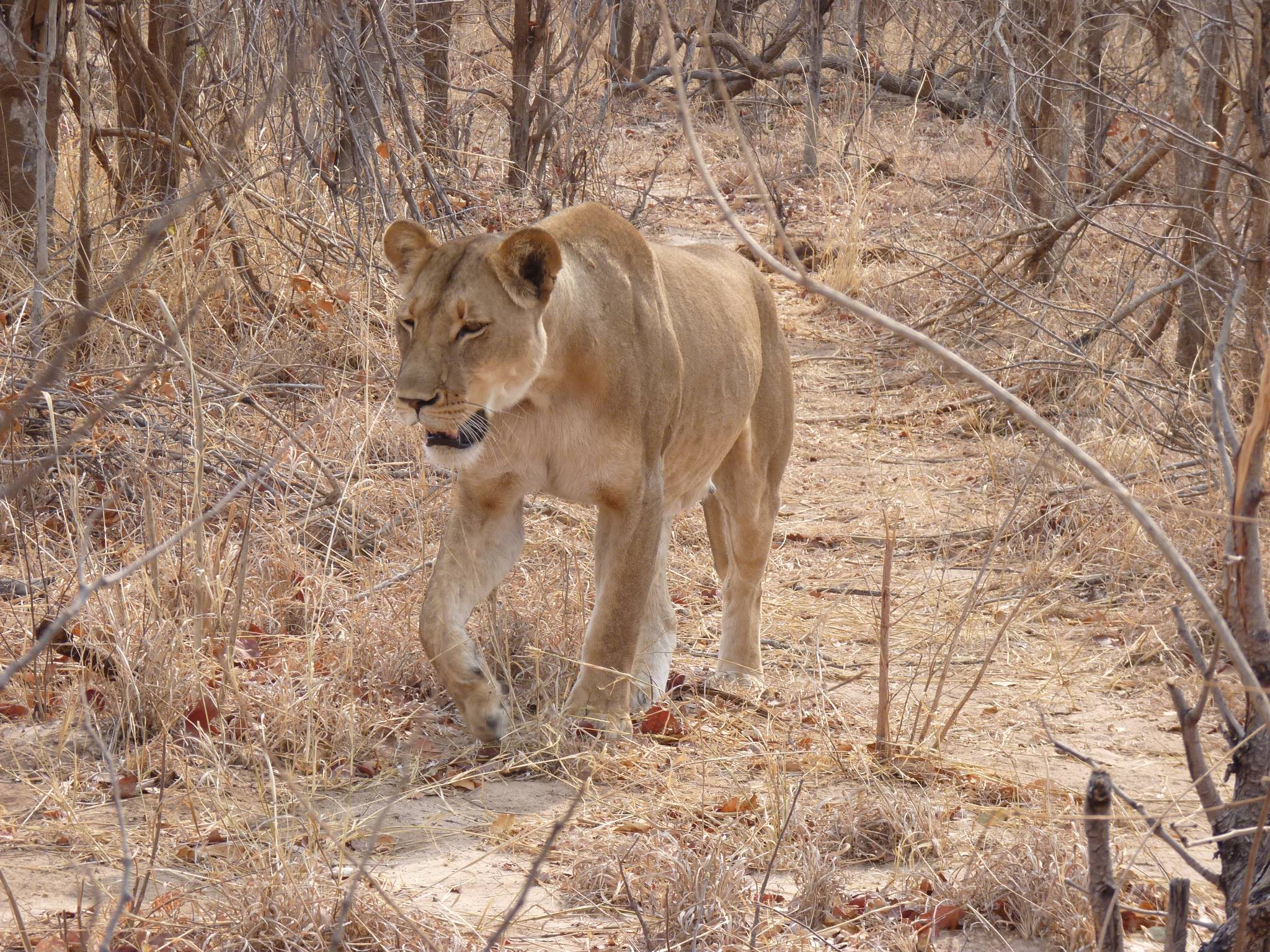
lioness small

One of the lionesses spotted near the camp. Note how dry it is!

We had chosen Shumba Picnic site after scouting a number of potential sites during our visit to Hwange last year. It is about half way between Main and Robbins Camps and somewhat removed from the main tourist area and it also had its own dam with permanent water. It was also shady, had good facilities and a Picnic Attendant looking after the place. The constant pump engine noise (located too close to the site) was particularly bad, especially when the wind blew from its direction towards us. However, the availability of water close to the camp attracts many animals and offsets this annoyance. Among the animals seen were elephants, buffalos and zebra, with some elephants browsing very close to us on a daily basis. There is a small viewing platform at the dam from where animals can be watched in relative comfort and safety.

Shumba dam

Shumba viewing platform.

On arrival, through the Picnic attendants, we learnt that the colony of Dwarf mongooses (Helogale parvula) that used to live in the trunk of the large fig tree (Ficus spp.) for a few years had moved away to another burrow nearby, outside the camp. This was disappointing, as I had come prepared for pictures of mongoose life at close quarters!

mongooses small 2013

The Dwarf Mongooses seen in 2013.

The area was extremely dry and the moment we filled the birdbaths, lots of visitors started to come, making me forget about the Mongoose’s absence. Apart from the ubiquitous starlings and hornbills we had a small flock of Southern Pied Babblers (Turdoides bicolor), a rare bird -near endemic- that I saw for the first time. We also saw Redheaded Weavers (Anaplectes rubriceps) and what I believe to be a Bennet’s Woodpecker (Campethera bennettii), all drinking from the birdbaths.

babbler small

Southern Pied Babbler.

weaver small

Redheaded Weaver (an unidentified Starling on the left)
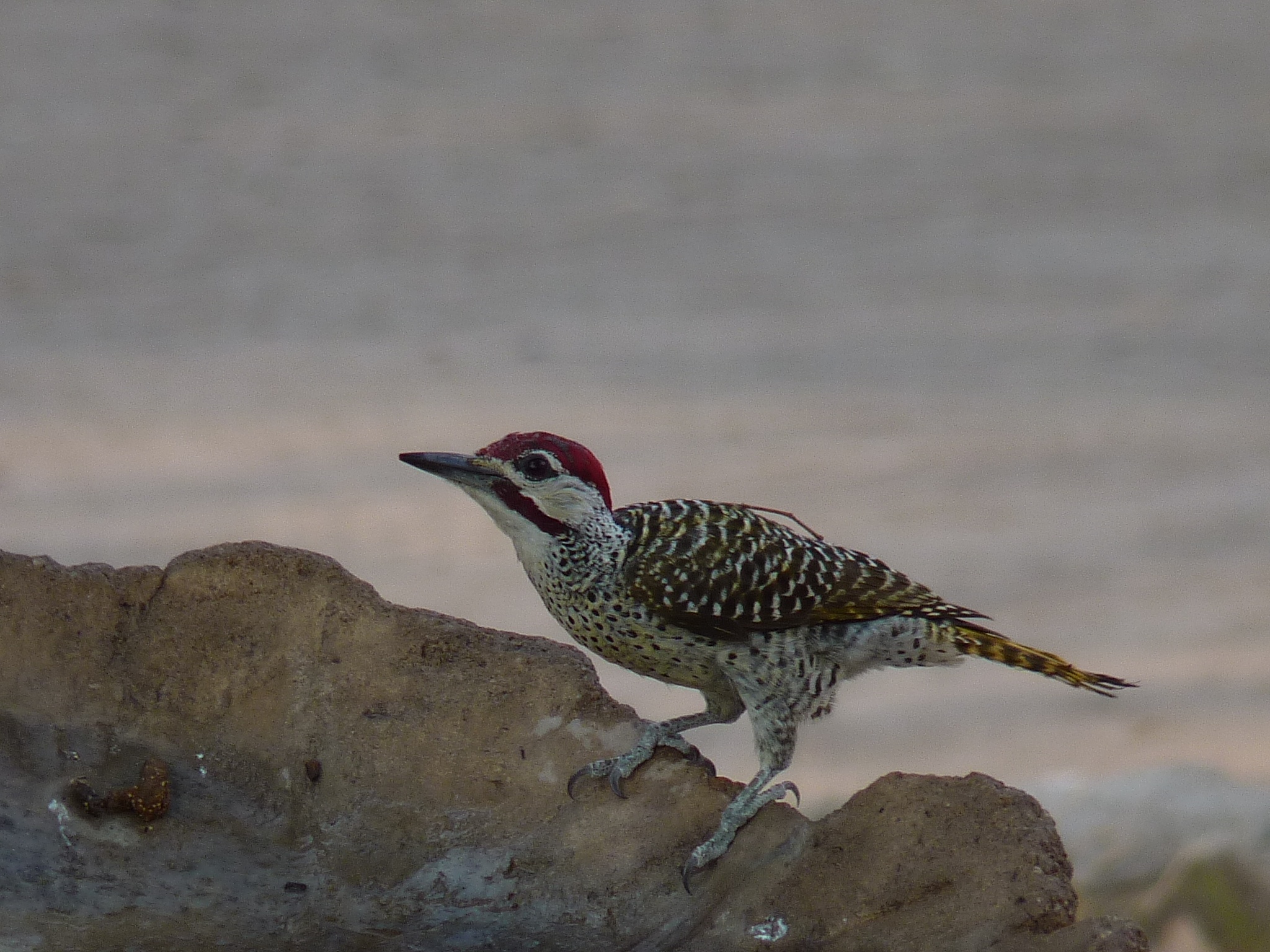
woodpecker small

Bennet’s Woodpecker

We set up our camp under a large African Ebony tree or Jackalberry (Diospyros mespiliformis), aware that the fence that at some stage protected the campers at the site was no more and all that remained were a few broken wires and posts. However, camping in the open was not new to us, as we did not have fences in Kenya! Apart from the fig and ebony trees, the camp also has Russet Bushwillows (Combretum hereroense) and a couple of Rain Trees (scientific name unknown)[1].

Although the dam at Shumba is almost your “private” dam, the flow of animals takes place mainly after dark, when mainly elephants come to drink. While this makes the nights entertaining from the “bush sounds” point of view, it is not easy to see the animals. believe me when I say that there was a lot of noise as elephant families and lone bulls interacted. Occasionally, elephants would be seen chasing each other and we suspect that some fighting also went on. We have seen evidence of clashes on our earlier visit in the form of chunks of ivory seen by the dam.
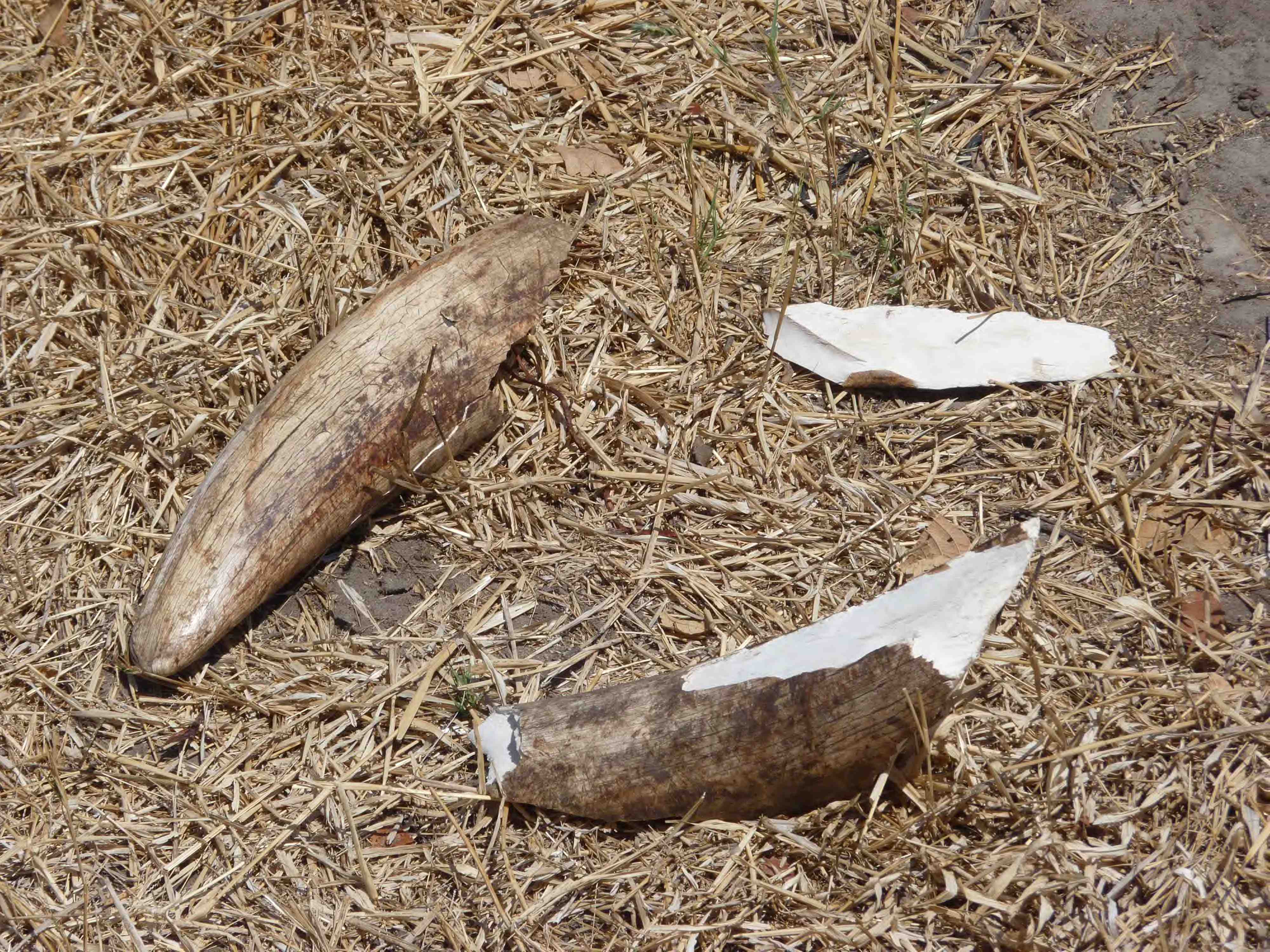
broken tusks at Shumba copy

Broken tusks photographed at Shumba in 2013.

For this reason, although we passed by “our” dam at every opportunity, our game searching forays took us to other dams such as Masuma, Deteema and Mandavu where animals can be seen during the day in larger numbers. The latter, a large dam, had a bush luxury if you wish to keep in touch with your offspring: a spot with cellphone signal! It was not under the Jackalberry tree as it is in Sirheni Bush Camp in Kruger National Park but exactly between the metal poles of a gate at the the picnic site!

Cell signal Mandavu

The telephone signal is found at a very precise spot, marked by a holder made of a plastic bottle!

The first evening at Shumba my wife heard a whistle coming from the trees when going towards the kitchen. Subsequent search revealed a large owl perched on a high branch. As we did not wish to blind it with our torches, we refrained -with some difficulty- from trying to identify it further that night. Early the following morning the search for the owl took place and it was found! It was an immature Verreaux or Giant Eagle Owl (Bubo lacteus) that was clearly too young to fly and still confined to the trees in our camp. It was watching us!

enlarged first view small

Our first sight of the owlet.

Although it was already sizeable it still had lots of juvenile soft feathers. In marked contrast, its wings were already very large compared with its body and looked completely feathered by now. It did not move much and when it did, it walked and jumped between various branches or flew very short distances. It did not remain in the same place every day either and showed great interest in what we were doing. Taking good pictures of it was difficult as it was usually high up in the trees and against the light.
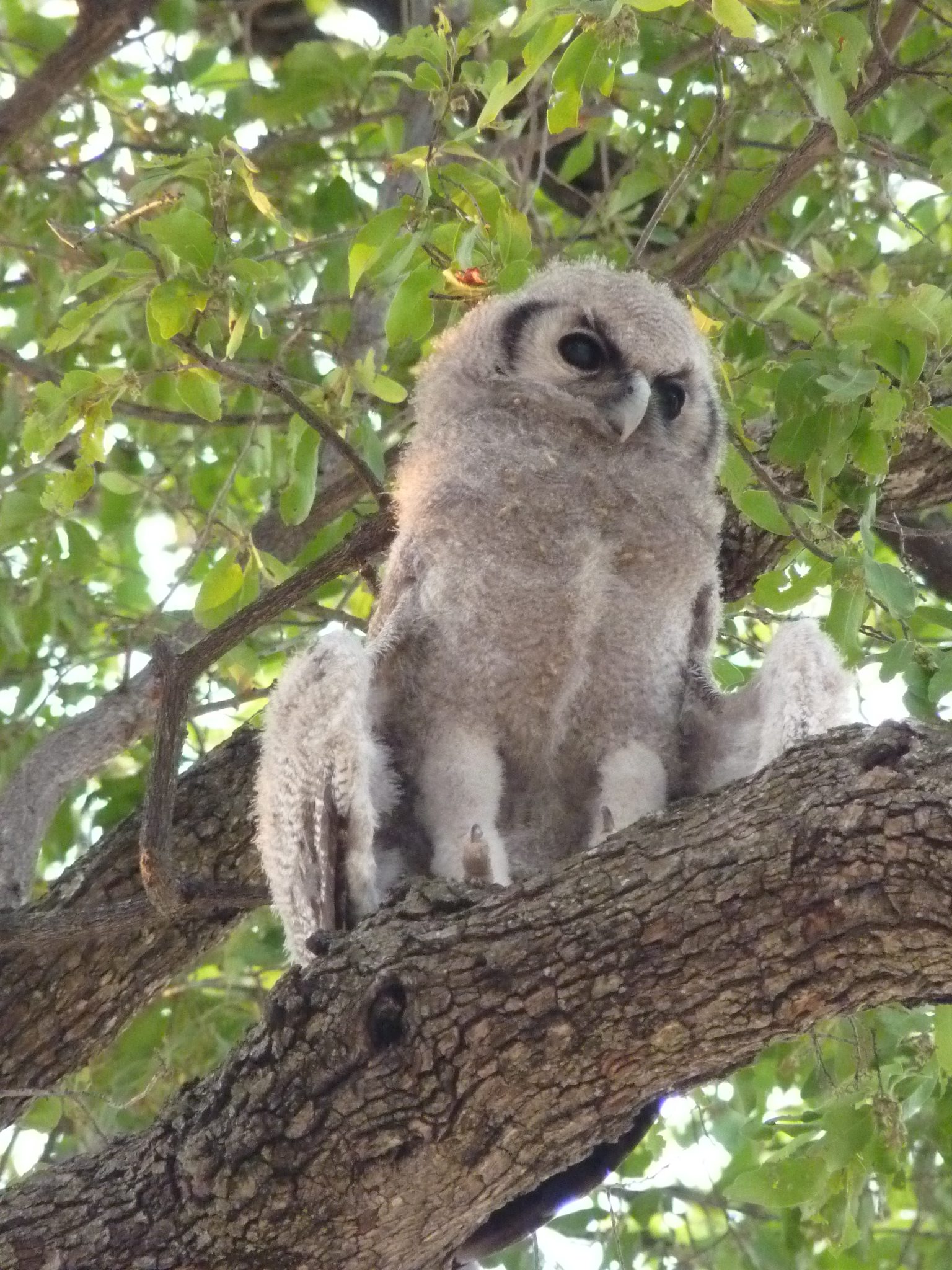
owl with wings low small

The youngster was seen to lower its wings. Was it for heat dissipation or to rest them?

The bird was there for the duration of our stay and it would be quiet mostly, whistling on occasion. We did not see it coming down to drink from the birdbaths or show any interest in the other birds. Said birds were not seen mobbing the youngster either.
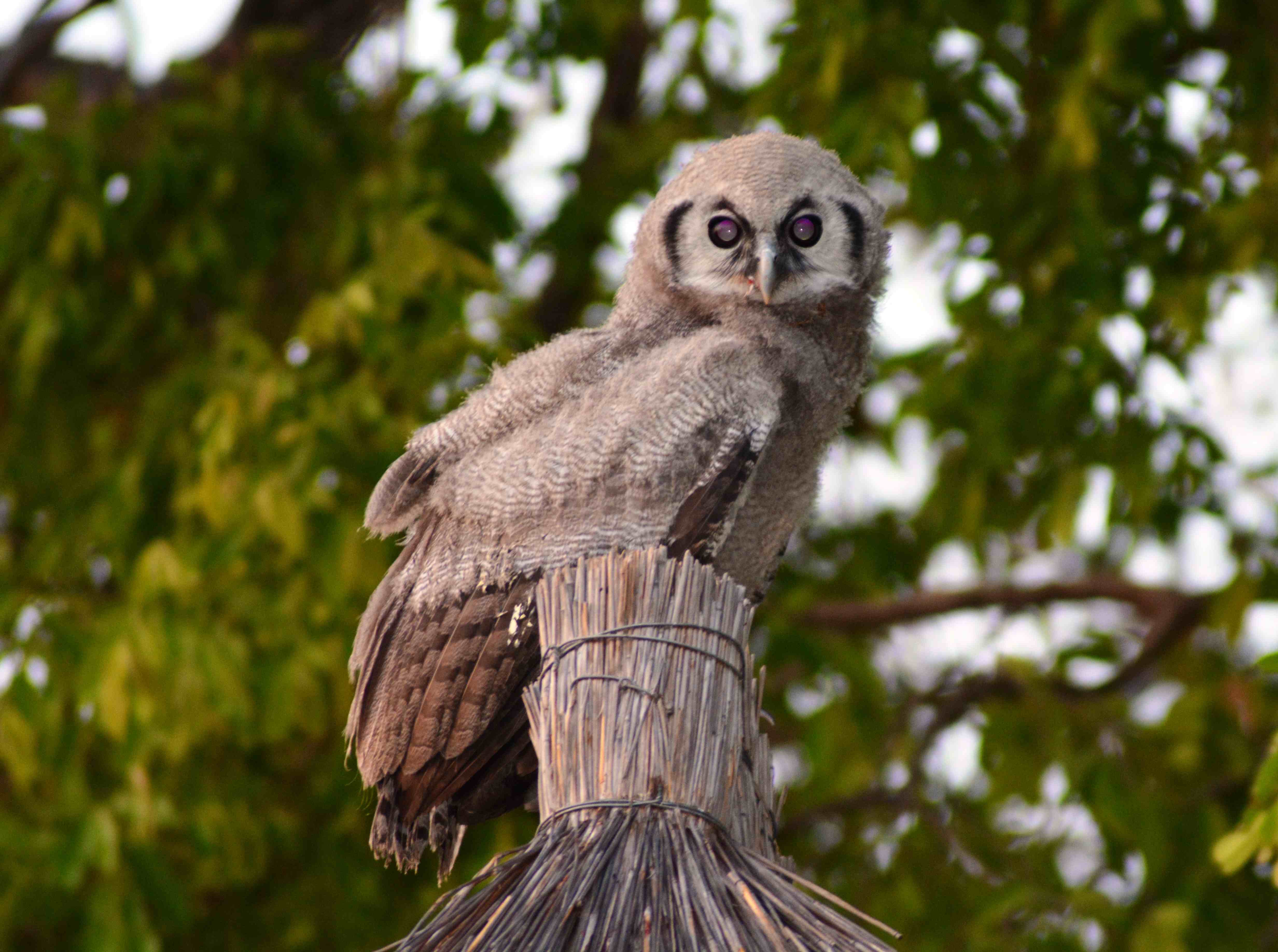
owl on roof tom small

Perched on top of the kitchen (Photo by Tom Milliken)

Upon further reading I learnt that the female owl lays two eggs and the first one hatching is the one surviving when food is not enough for two owlets. The new birds leave the nests at about two months of age and can fly two weeks after this. They remain rather inactive for three months after that and only start getting their own food after that time, at about five months of age. Probably the owlet we saw was still within the three months of “low profile”.

wings open tom small

Flexing its rather oversized wings! (Photo by Tom Milliken)

The third morning I woke up earlier than normal, at about 0545 hs, and heard deep grunts like “hru, hru-hru-hru, hru, hru-hru” emitted continuously[2]. Thinking that the young owl was calling I went out of the tent to see what was happening and saw an adult owl that soon flew off. I followed it outside the camp but lost it as it flew off. The parents were keeping an eye on our youngster! Later on we found a dead mole rat under a tree, a sign that the adult had brought food to the youngster! The mole rat was not eaten though.

Friends came to stay with us on the fourth day after travelling from Harare to Shumba in one day! They arrived in late afternoon and rather tired so we helped them setting up their tent. This was easy as it is very easy to set it up. However, my sigh of relief was premature when the inflatable mattresses were produced. I felt obliged to offer my help with the hand pump. Hard work followed until; eventually they were had the required pressure. That completed, we spent the rest of the evening chatting and had an early dinner.

Once in our tent, we noticed some night moves in the adjacent tent and some talking as well but we refrained from asking anything until the following morning as things calmed down after a while. Apparently one of the mattresses had suffered from a puncture(s) during an early safari by their children and it had deflated during the night with the result that one of our friends gradually “descended” to floor level and, subsequently, had a literally hard night!

Spotting the young owl perched in a good place for photography made us forget the bad night and improve the spirits. My friend is a good photographer and had just bought a camera with the latest technological advances and took some excellent photographs that he kindly lent to me to illustrate this post. This was despite him not being very familiar with the camera that -as usual with modern gadgets- had a manual the size of the bird book!

scratching by Tom small

A great picture showing its diagnostic pink eyelids. Photo by Tom Milliken.

Two days later, again during early morning, we had another visit by one of the parents that repeated the call described above. It was rather shy and did not stay too long, flying away after a short while. Later on we found what appeared to be a Teal on the ground, based on the plumage of its back. Further identification was difficult, as the head and breast of the bird had been eaten, presumably by the youngster.

By the time we left Shumba a couple of days later, the young owl was starting to fly short distances and at some stage we thought it had gone. However, its whistling gave it away and we found it again, perched above our tent inside the tree’s foliage, probably seeking protection from the heat. We expect that soon the owl will become completely independent from its parents and start its own life. We hope to find its siblings next year!


[1] I do not wish to mislead you to think that I know about trees. Thankfully some forester placed nametags on the tree trunks. Unfortunately the Latin name for the Rain Tree was disfigured.

[2] A good recording can be found at http://www.listentoafrica.com/audio/wildlife-giant-eagle-owl-14092009/


To Hwange!

cropped-rural-buses-overtaking.jpg

There are 430 km from Harare to Bulawayo and 330 km from the there to Hwange National Park. As we had time, we preferred to interrupt our journey at Bulawayo to ensure that we drove safely and experiences less fatigue.

The first part of the journey was uneventful except for several Police roadblocks, speed traps and Toll stations, in addition to the road works that require rather long stoppages as the road is cut in several places. This being said, it is good to see that roads are being maintained.

It was during one of these stops that our attention was drawn to a pick up queuing ahead of us. We could see “things” moving in the open back. At first we took it for some flapping canvas or plastic sheeting, a common occurrence. On second look we realized that there were heads bobbing up and down. The heads’ belonged to a “flock” of red hens being transported to or from a farm!

The pick up’s feathery occupants were clearly bored and bent on having a look around! Look they did and, seeing freedom, they became more agitated and, somehow they managed to loosen the strings that were keeping them tied to the car and once free, it took a very short time before a pioneer gathered its courage and jumped out! The occupants of the pick up were both on their cell phones and did not notice this. It was only when several hens had abandoned the car that the lady occupant -a rather large lady- managed to get out of the car and take in what was happening. There were hens running for freedom in several directions on both sides of the road.

The large lady, clearly not dressed for running after chickens in high heels, a tight dress and large earrings, made a short attempt at getting some back and nearly got run over -together with the hens- by a car coming in the opposite direction! Not keen to begin with, this quickly persuaded her that it was too much work so she quickly gave up the chase, huffing and puffing and proceeded to contemplate the calamity. While this was going on, the driver finished his call and got out of the car to assess the situation. Realizing that it was critical, he recruited some of the road workers who gradually, managed to recover the fugitives that miraculously did not get hit by the passing cars!

When the light turned green we overtook the troubled pick up. Operation “catch that hen” was still going on and the fugitive hens were being captured, tied and deposited unceremoniously back in the car.

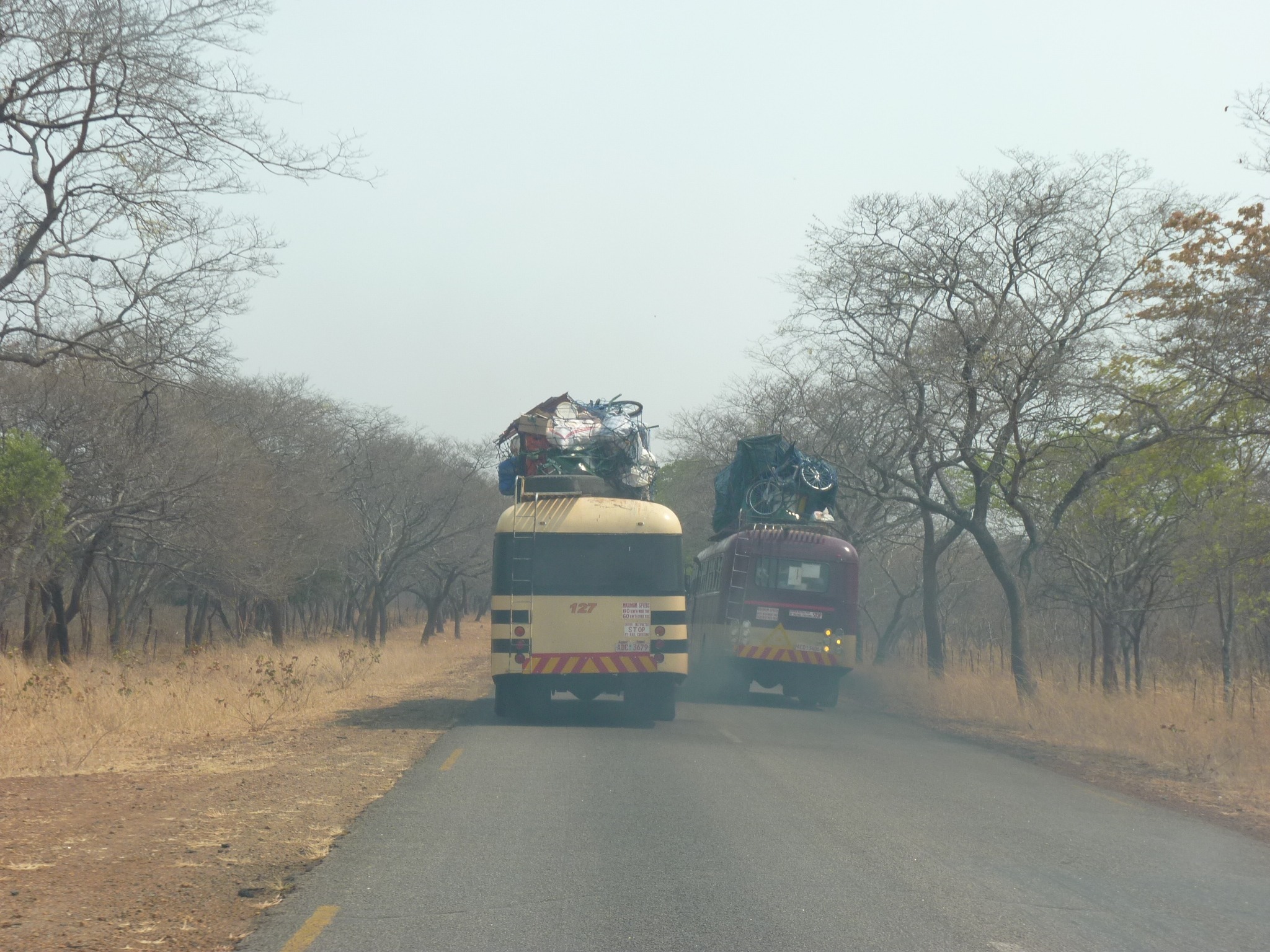
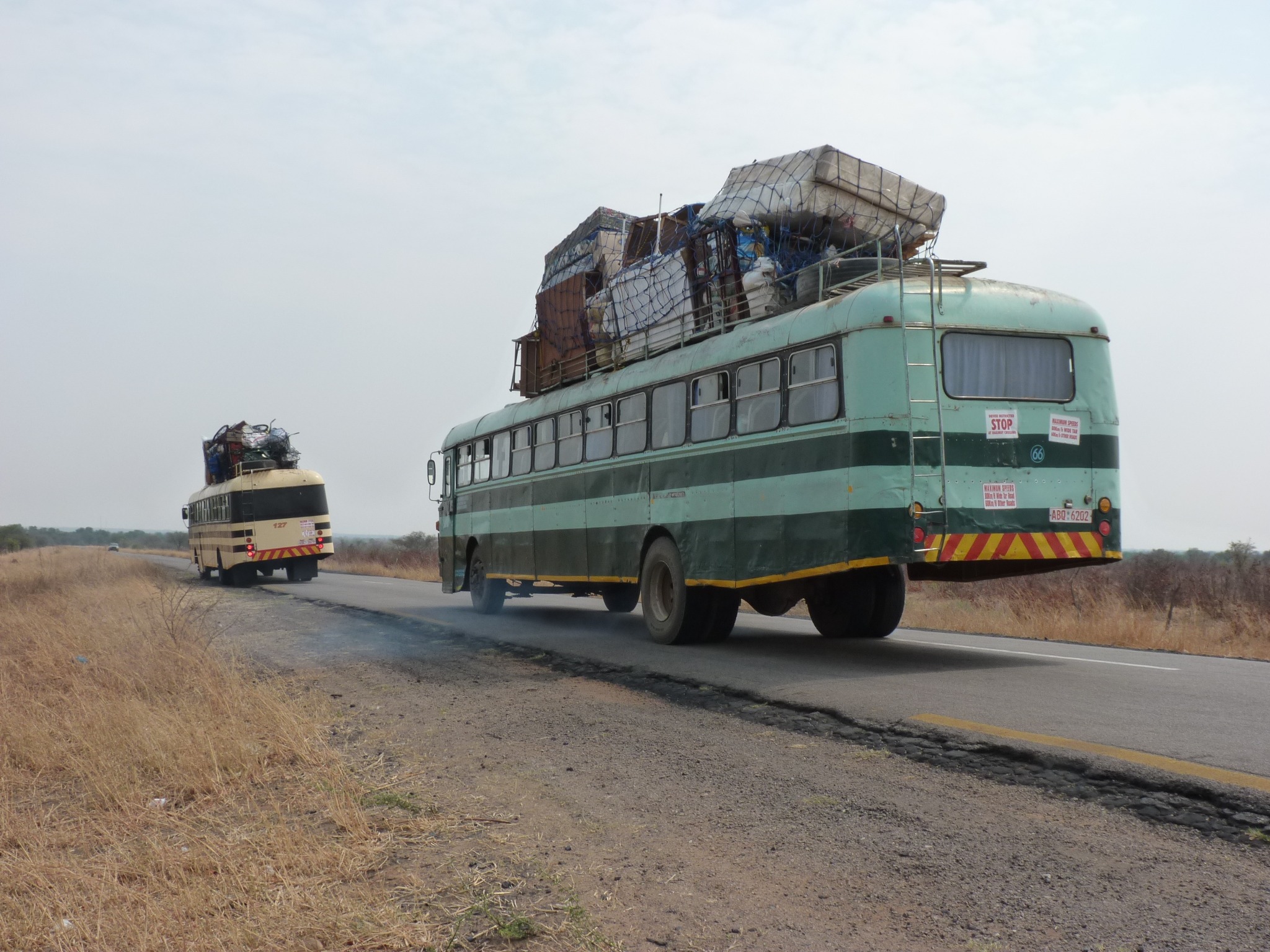
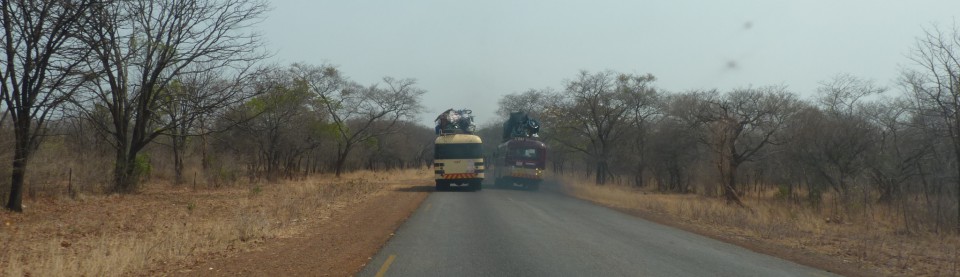
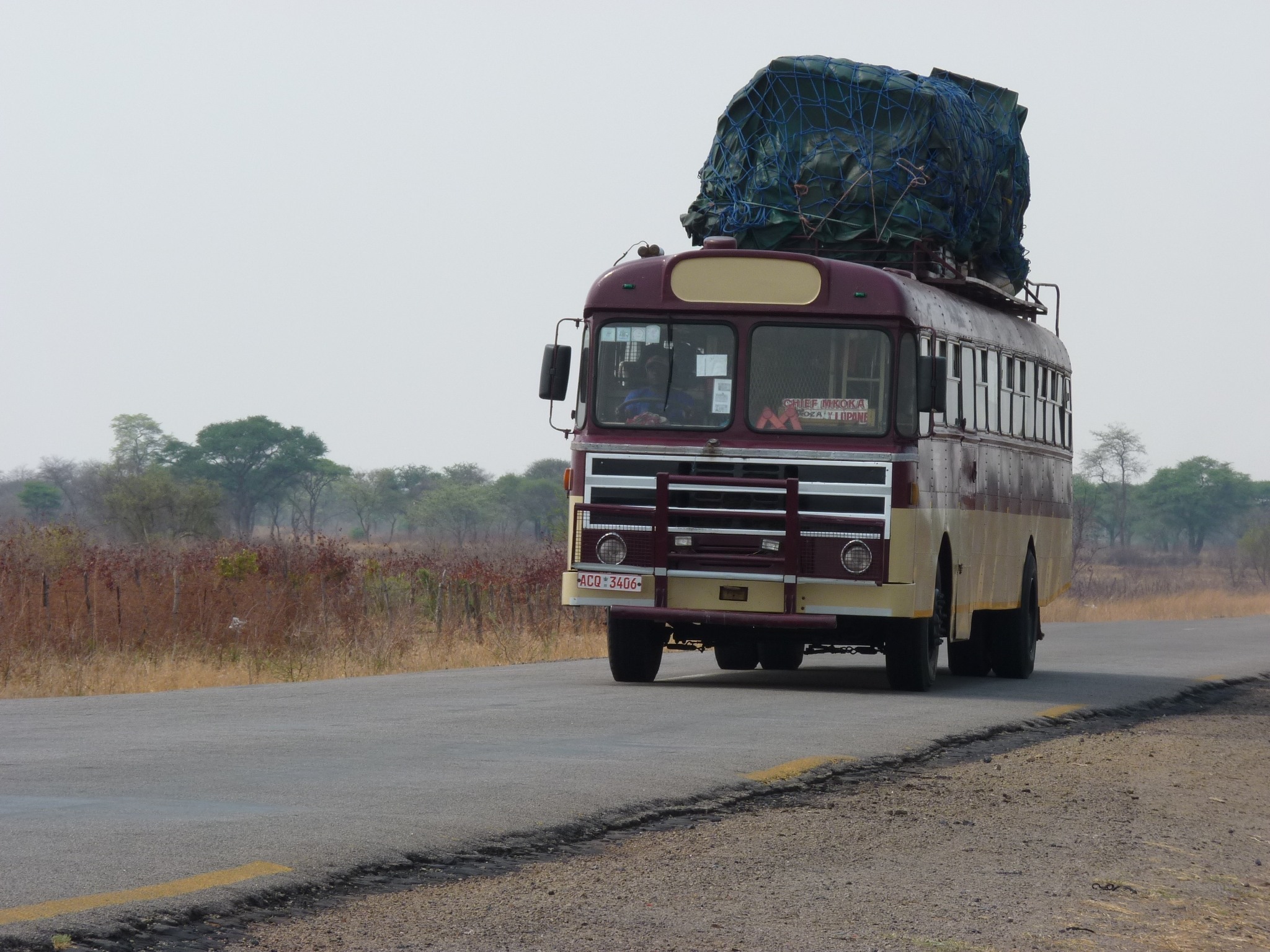
After the night in Bulawayo we resumed our journey. Again the road was not too busy but we came across a number of rural buses, a remarkable feature on Zimbabwe roads.

red bus front small

They are all similarly built, following a format that has not changed over many years. Their main signature is their large roof racks, usually heavily and highly loaded with the belongings of people going to the rural areas. They are a very effective means of transportation loyal to the motto “if it works, don’t fix it”. Their drivers deliver a rural courier service as they carry money and other documents of importance that need to change hands between rural families and relatives working in the cities and viceversa.

buses overtaking small

These buses are not fast and their drivers are rather careful so they did not cause any problems, and we were able to admire them as we overtook or crossed them while wandering about their final destination.

2 buses small

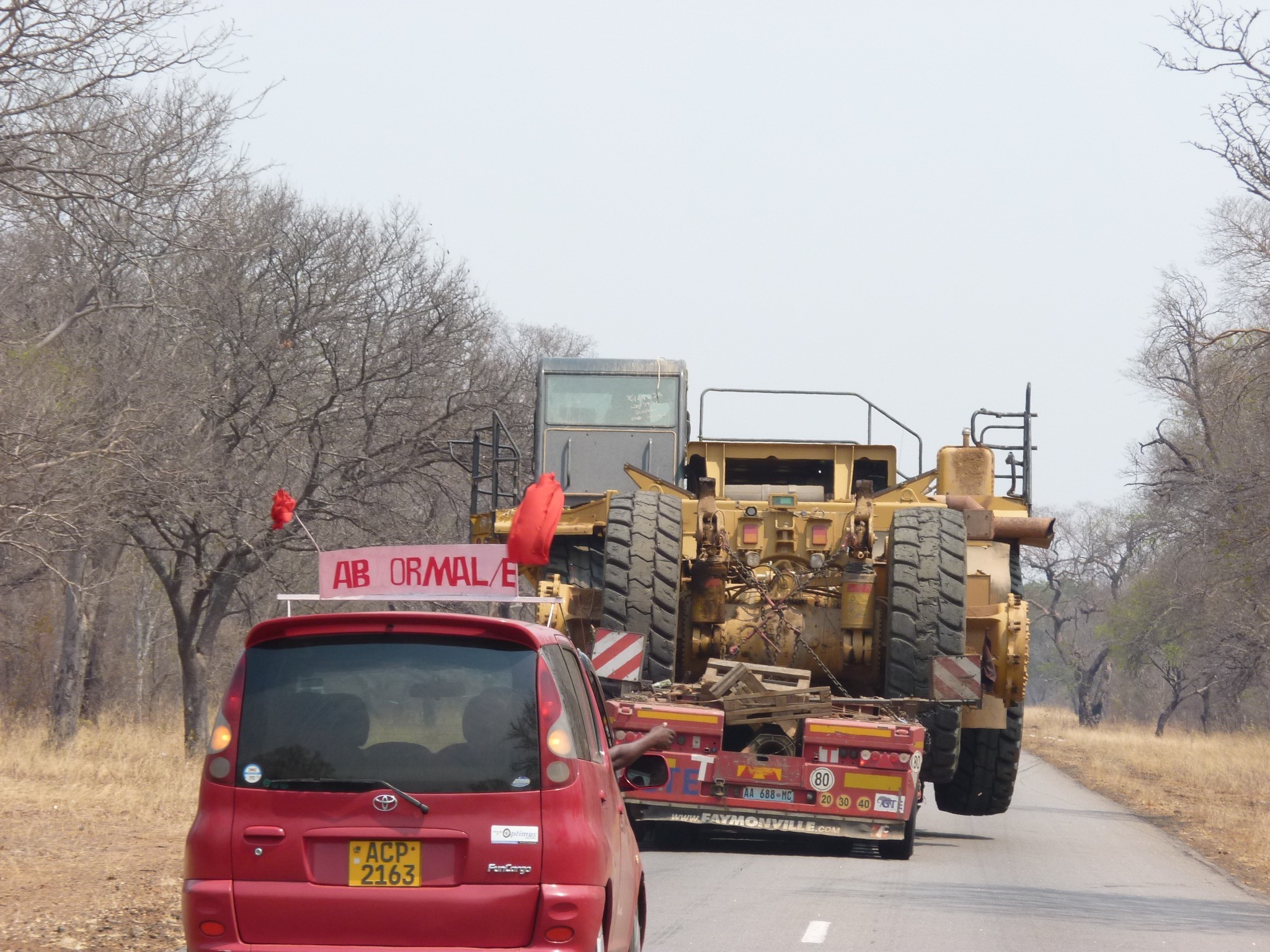
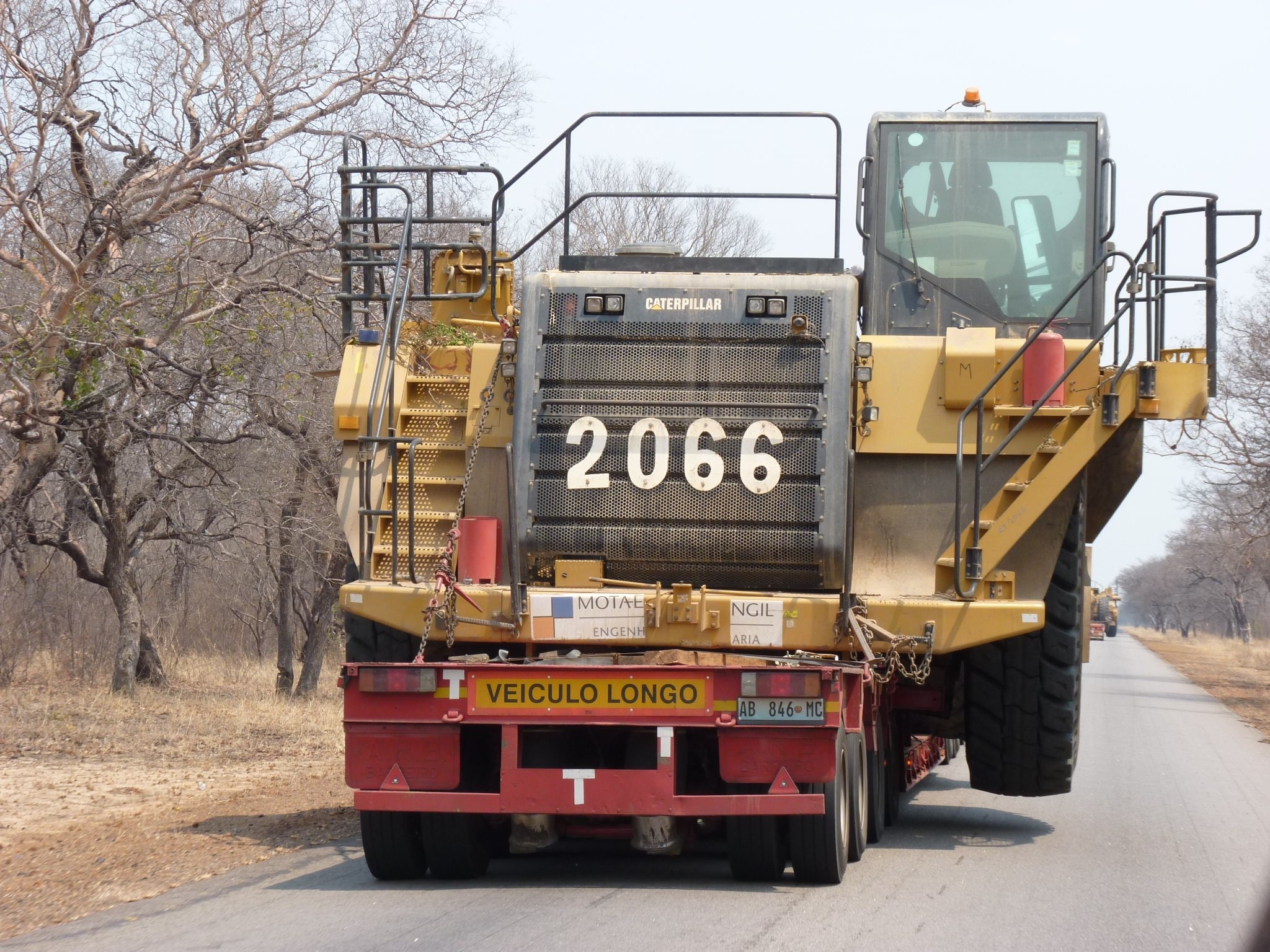
A different -and rather dangerous- find was a convoy of lorries carrying very heavy mining equipment that occupied the entire width of the road, making overtaking a real hazard.

wide mining machine small


wide machine small

We followed the wise course and waited for a break that took a while to come as we crawled behind the convoy. The opportunity presented itself at a toll station as the machines, because of their bulk, needed to take a detour around the station. We drove through and left them behind to continue to our destination at good speed.

To drink or not to drink!

to drink 1

to drink 2

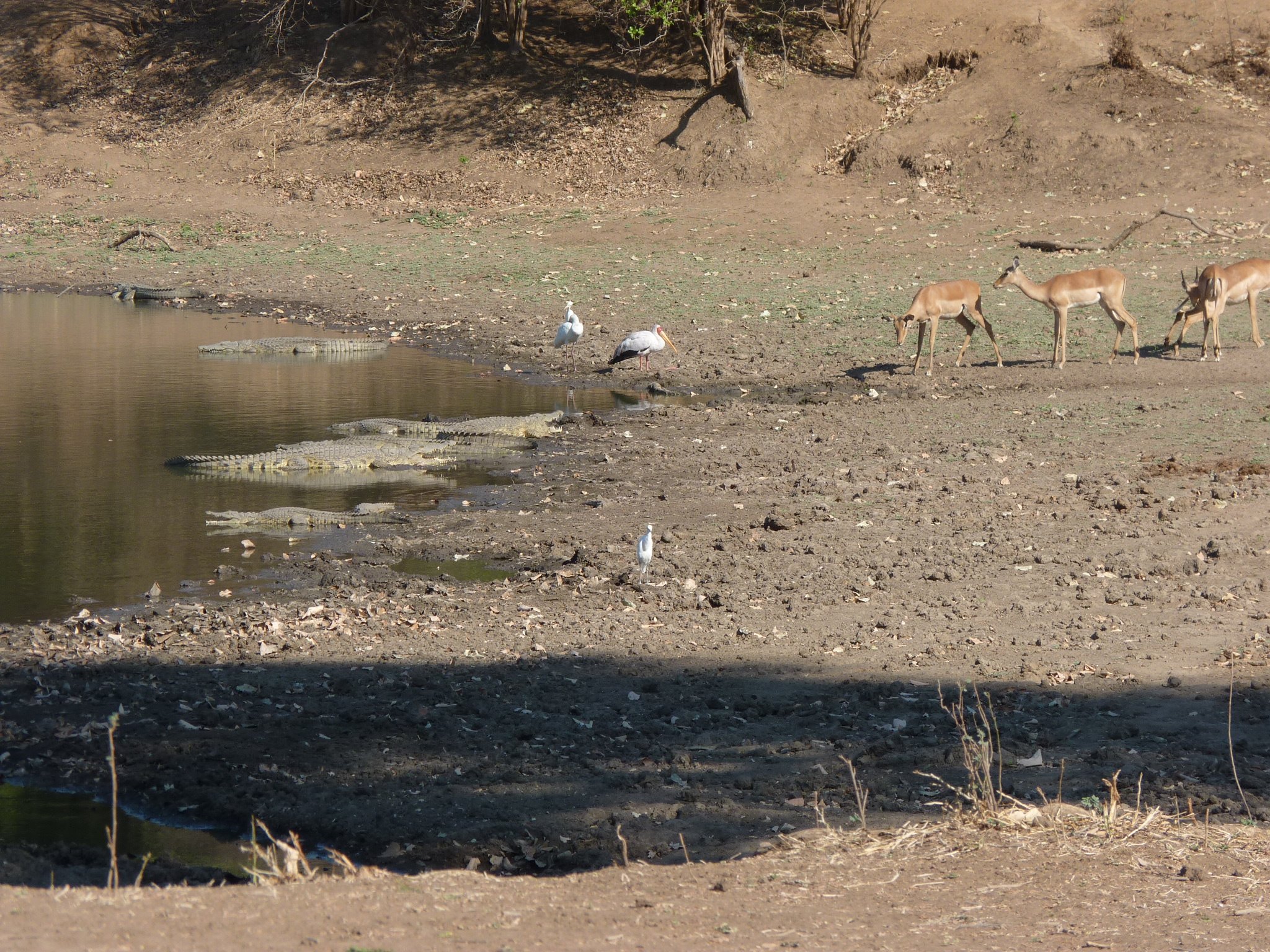
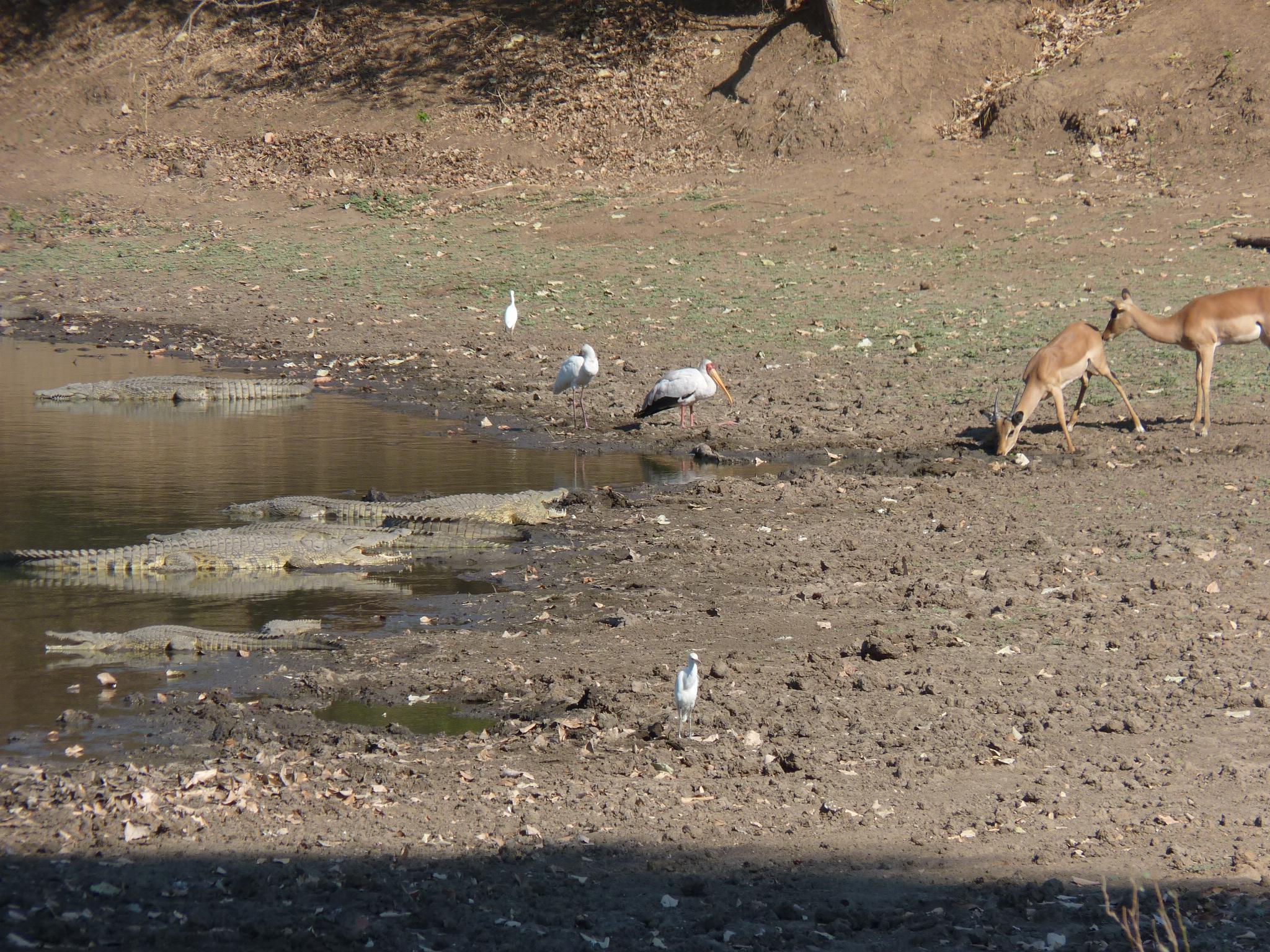
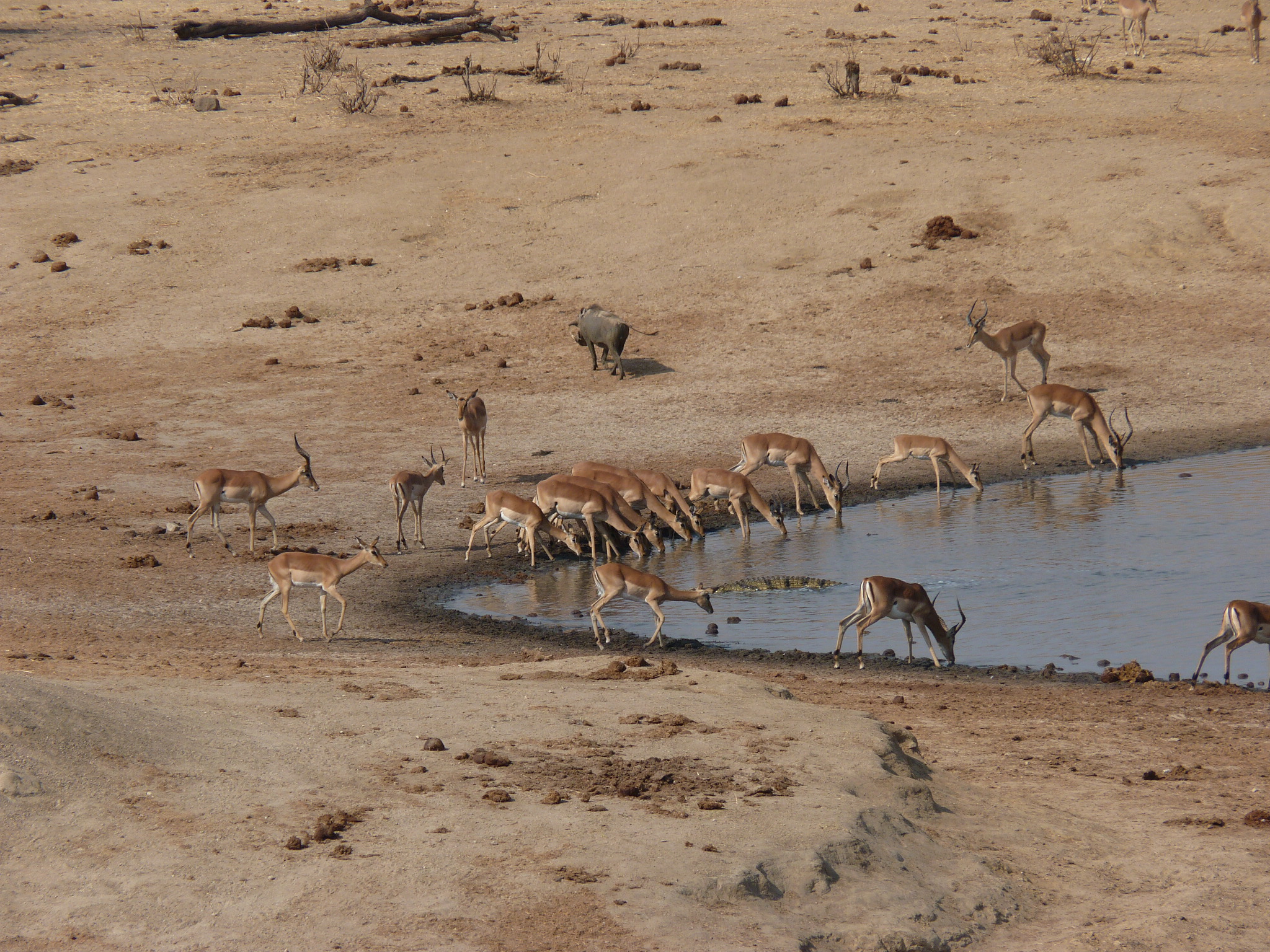
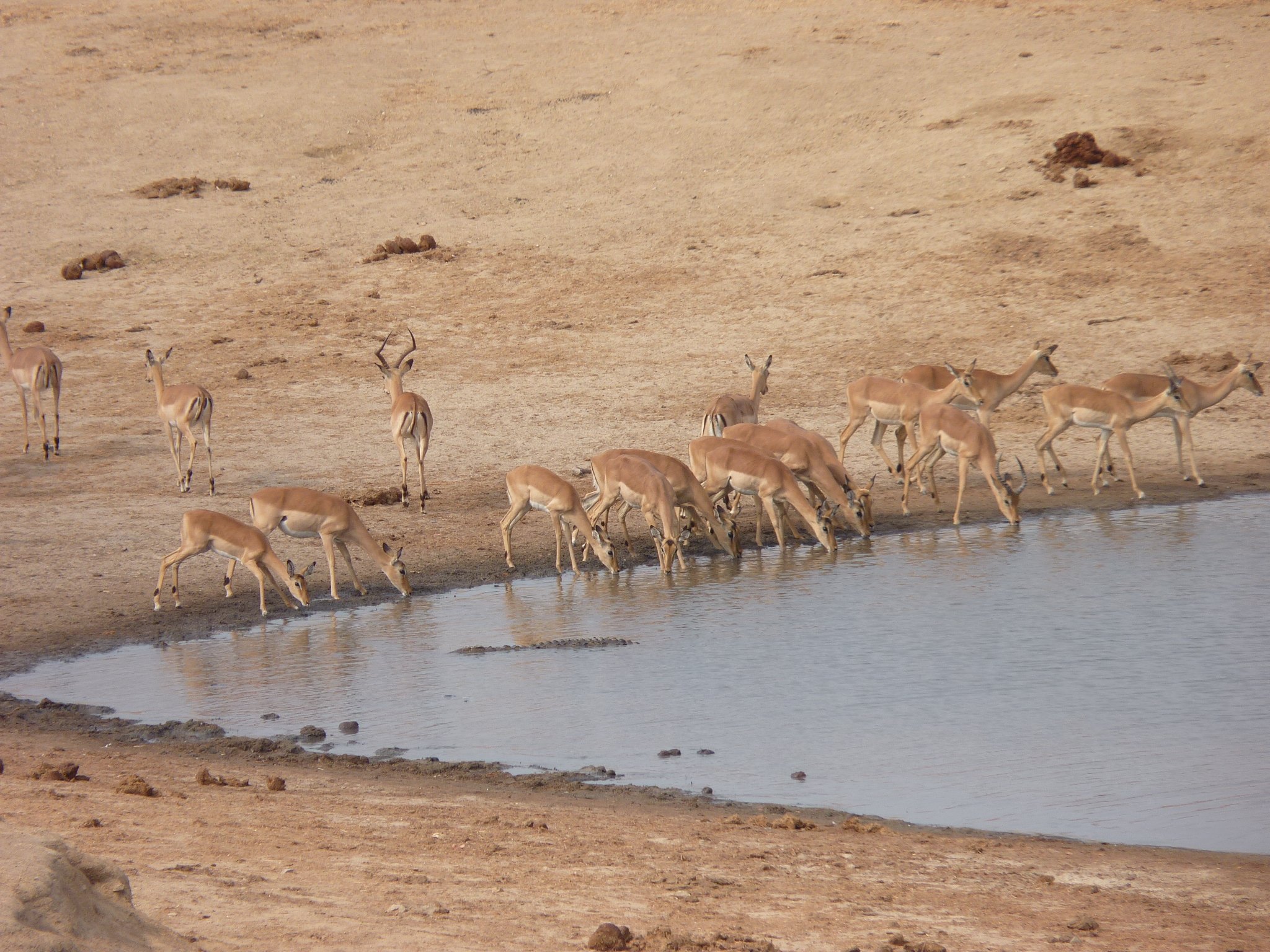
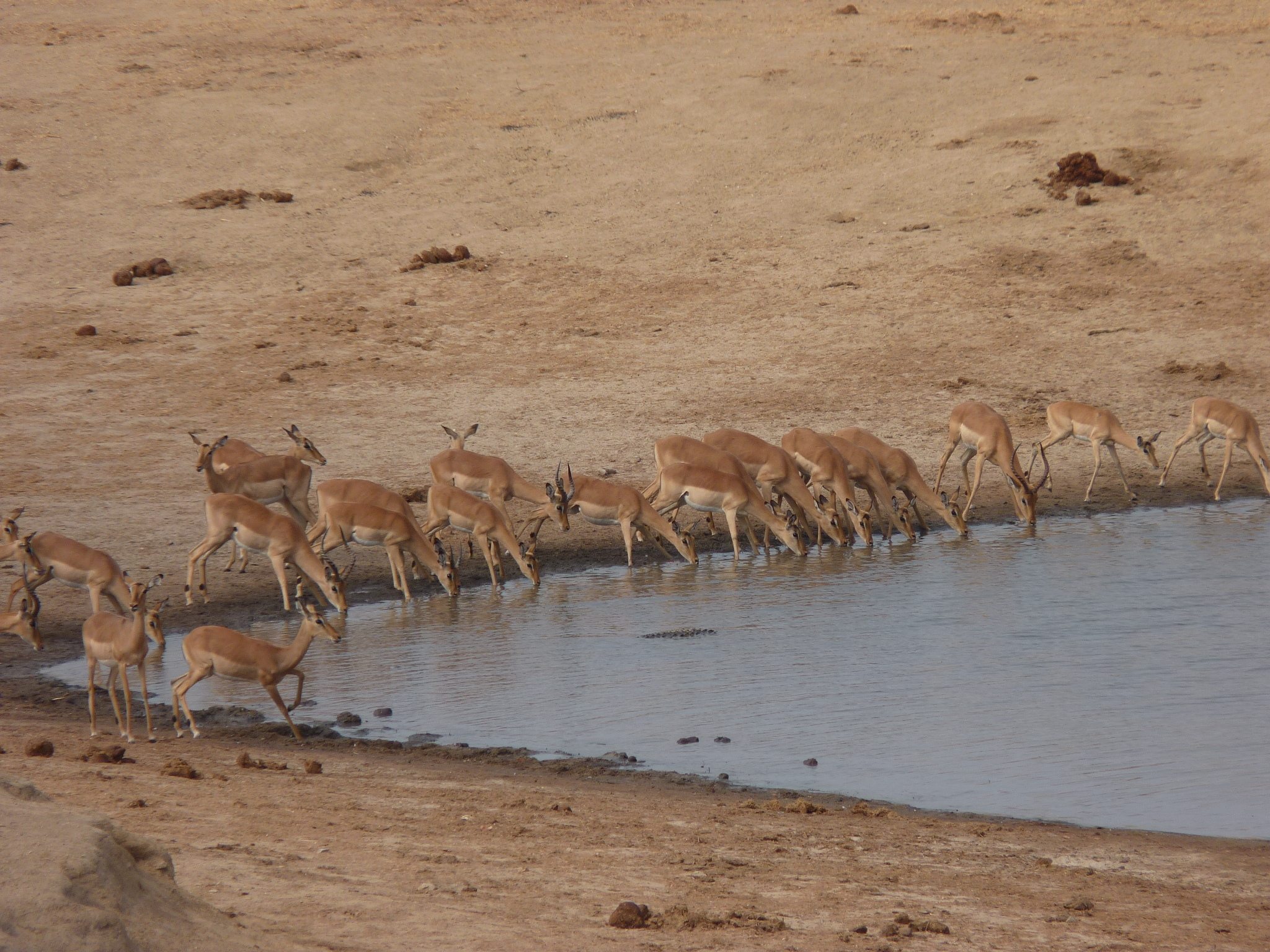
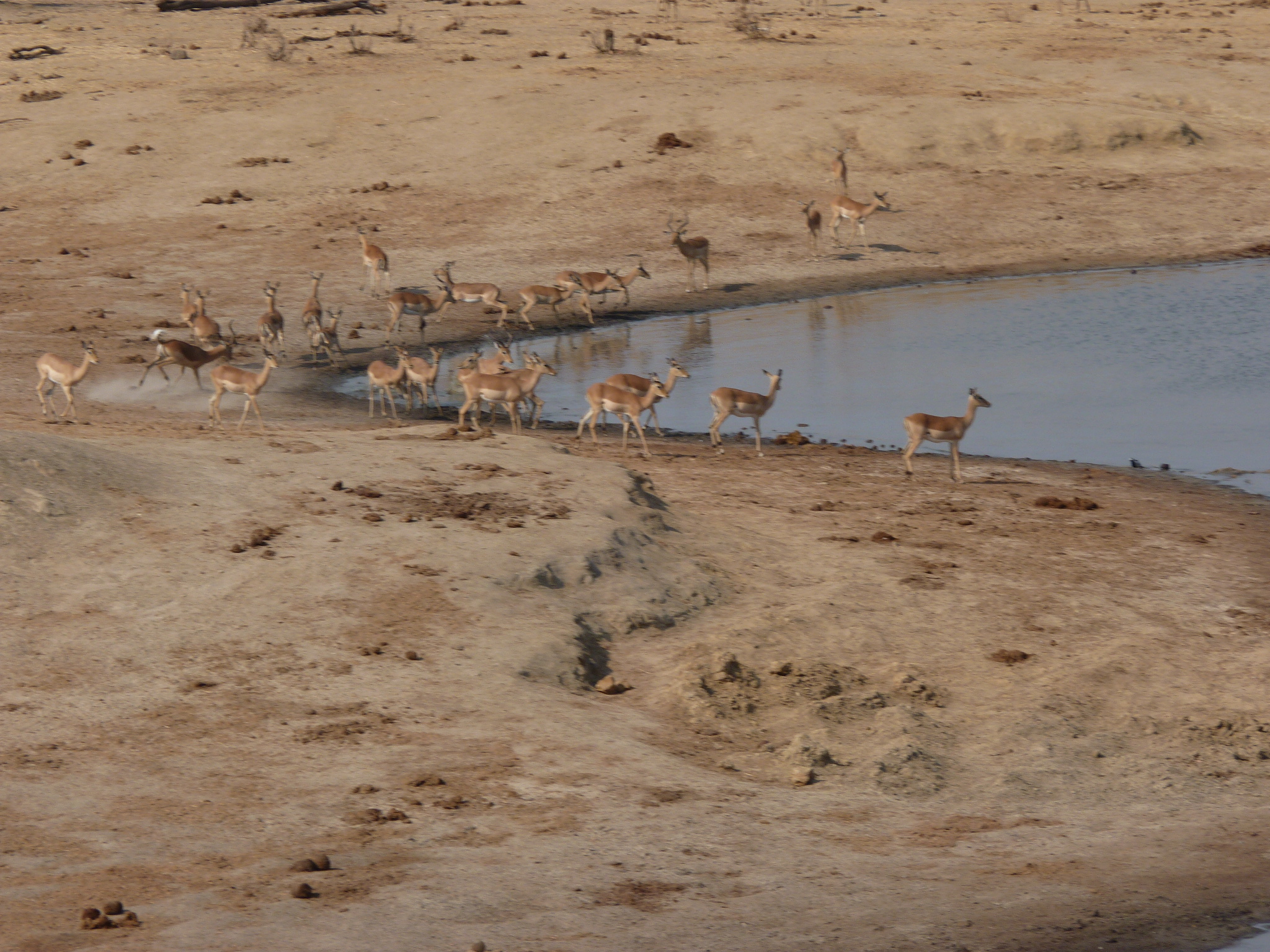
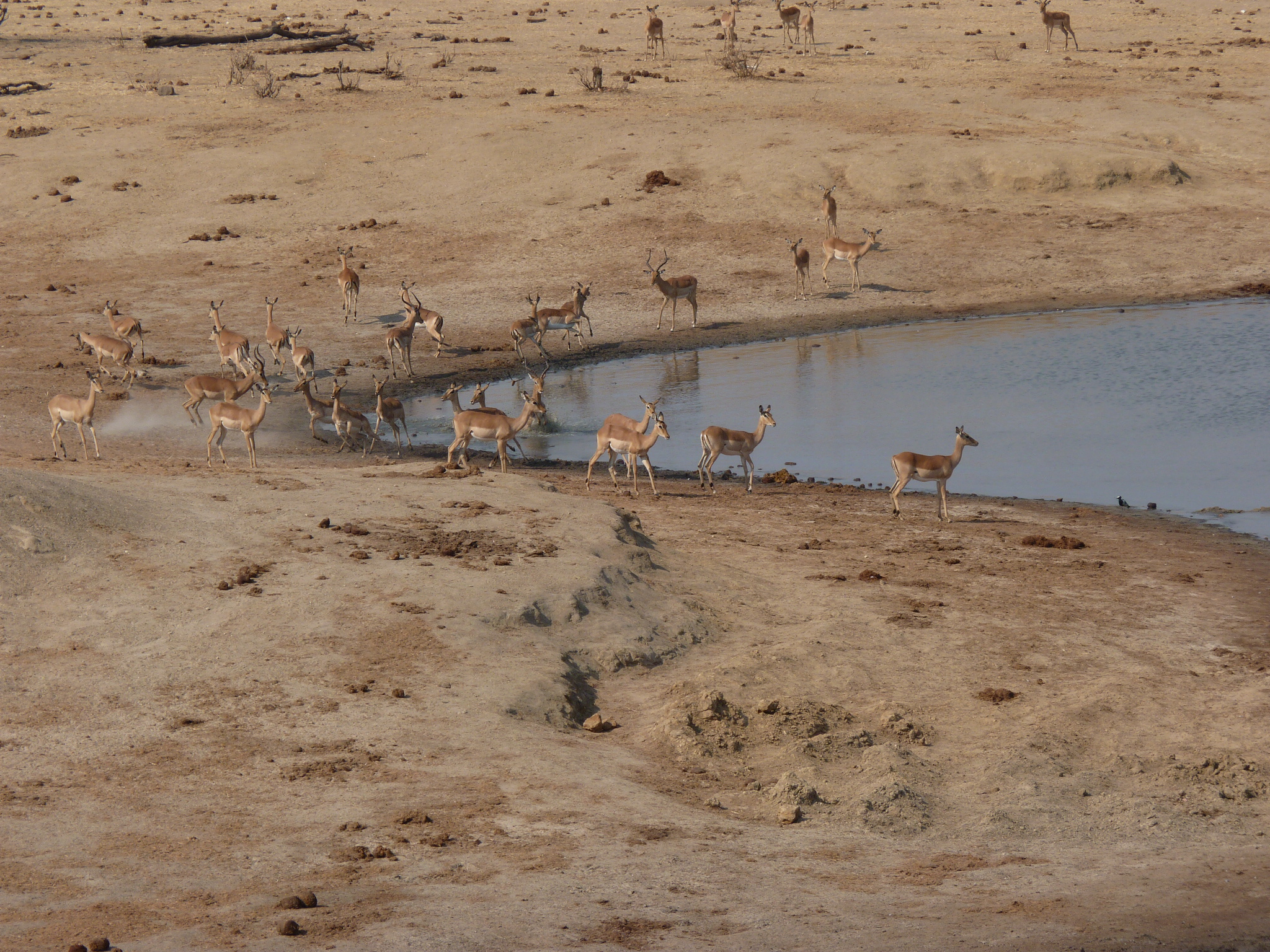
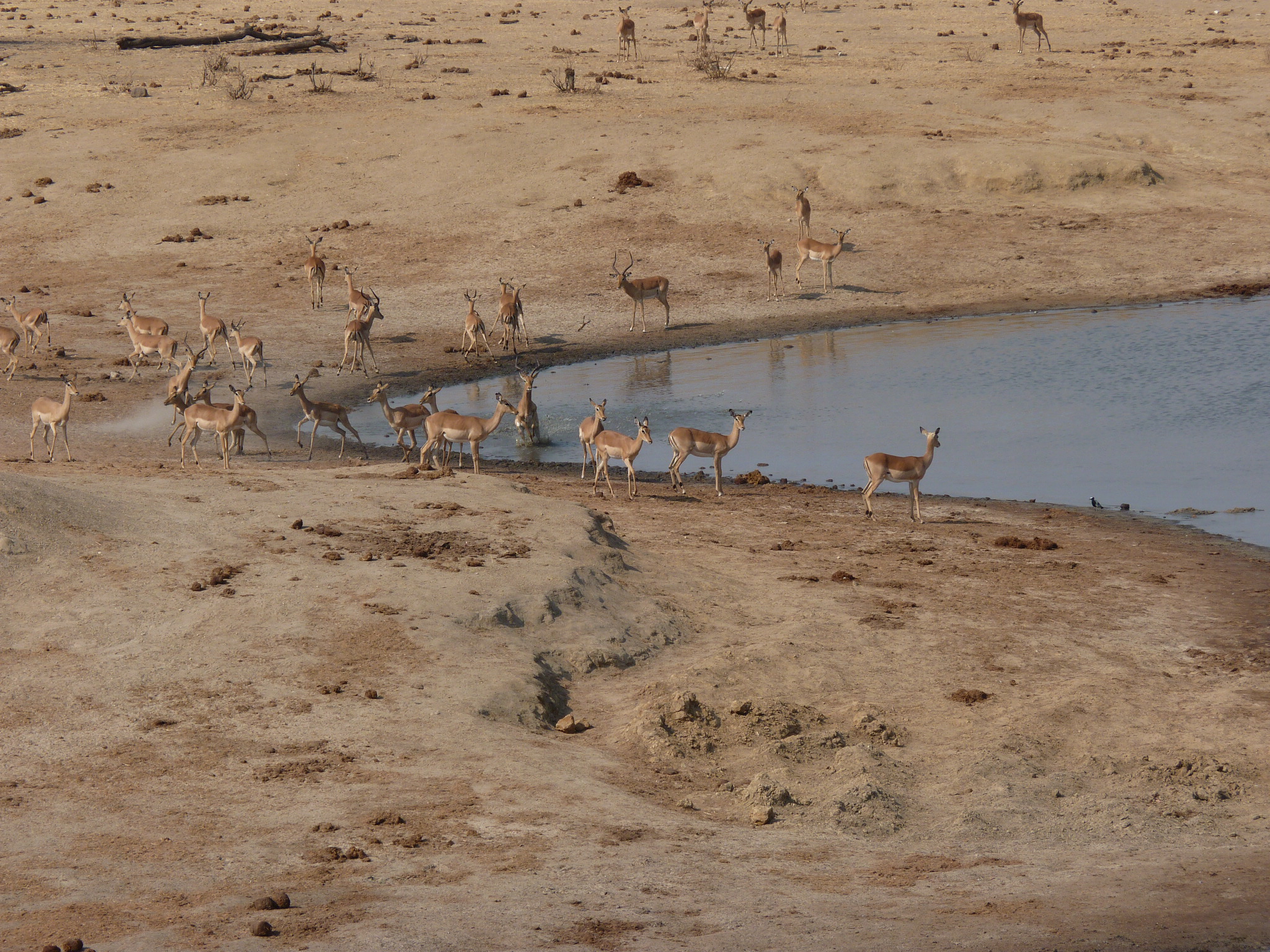
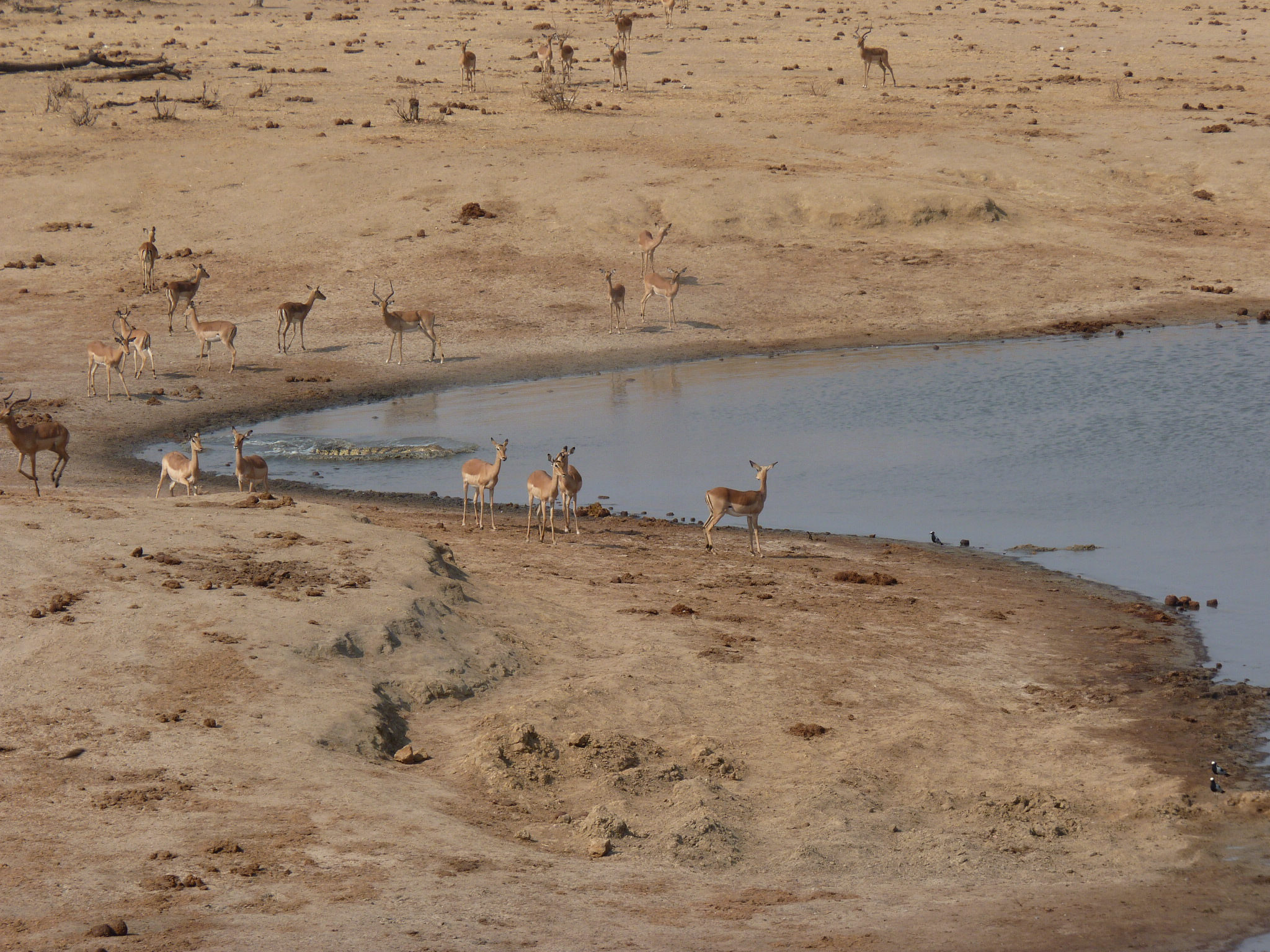
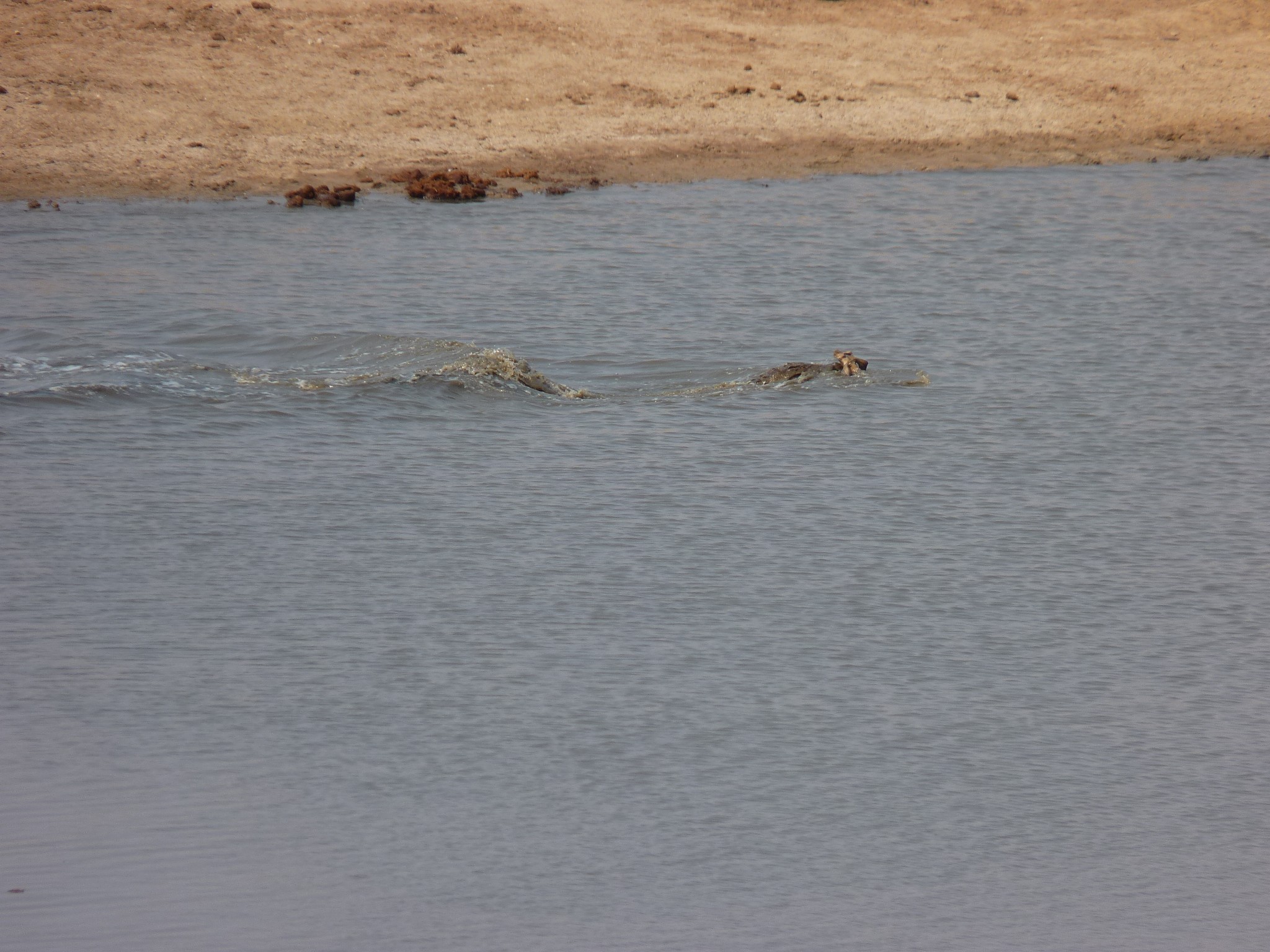
While on the issue of impala and crocodiles, covered in the earlier entry, I jump my post queue to show you what we observed in Mana Pools National Park last week. The Impalas had a serious dilemma! Luckily for them, they could drink from the small channels while the crocodiles could only watch and wish!

Crocodiles and Impalas

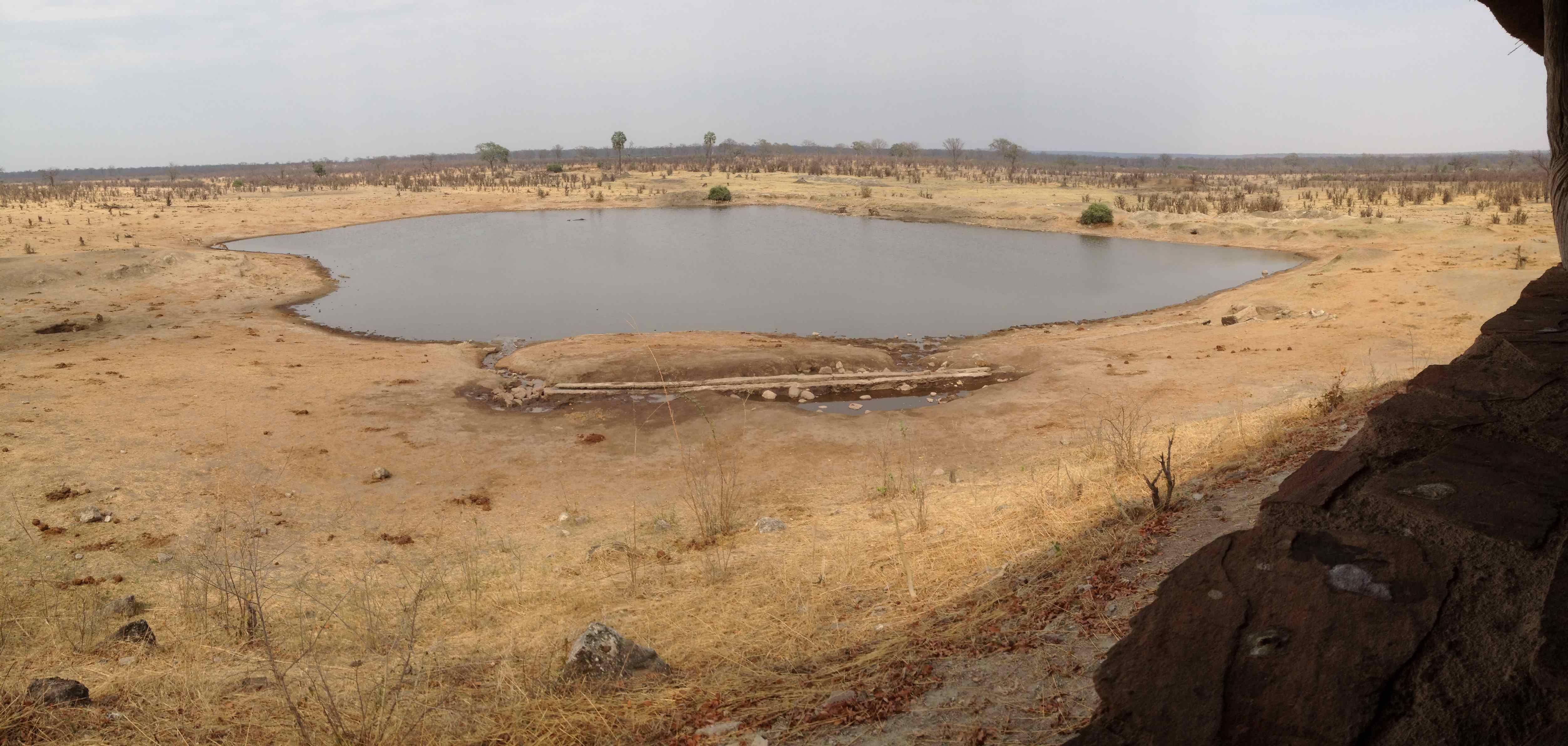
The events described were observed at Masuma Dam in the Hwange National Park. The dam is about 120m by 100m and it has a roughly oval shape. Water is continuously pumped to the dam from a nearby borehole making it an essential water source for the animal population in the surrounding area.

Masuma panorama

The time of the observations -13 to 16 October 2014- correspond to the end of the dry season. Elephants, Greater Kudus, Waterbucks, Impalas, Zebras and Warthogs were regular visitors, together with large flocks of Guinea Fowls and Vultures, to name the most frequent and common. We also counted 16 Hippos and six Crocodiles.

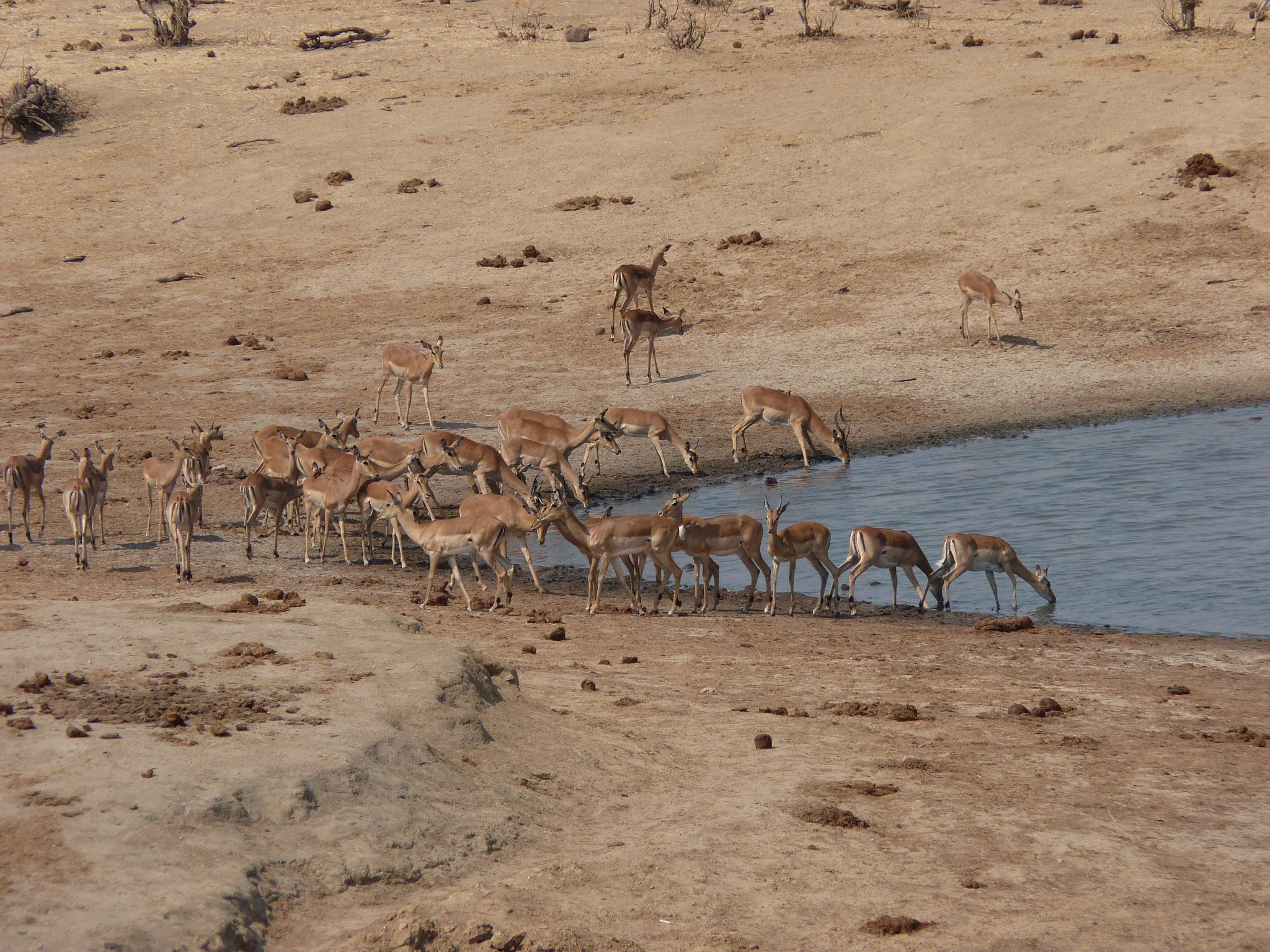
The preferred drinking place was a small bay located towards the Southern part of the dam (seen on the left of the picture above, at the back where some Impalas can also be seen). Most antelopes drank from there, particularly the Impalas that would come throughout the day in herds of various sizes. The figure below shows a typical drinking scene in that bay.

normal impala drinking

A herd of Impalas drinking at the dam.

As soon as a herd started to drink, usually one of the Crocodiles would swim towards them. They did so in full view of the antelopes and stopped at about 1 to 1.5 metres from them.

Croc attack 7 (after)

A crocodile slowly approaching the drinking Impalas.

On seeing this the impala would withdraw from the water’s edge for a short time but gradually calm down and return to the water’s edge to resume their drinking. The crocodile would remain immobile for a few minutes and then slowly submerge and, eventually, disappear completely.

croc in position

The Crocodile starts to sink.

croc sinking

The Crocodile is barely visible now and about to disappear.

What followed next was really unpredictable. With the Crocodile (we assume that there is only one!) submerged the Impalas would continue to drink, although very fretfully. Most of the time, the Impalas will get their fill and move off without incident. However, approximately two or three times in a morning a sudden swirl in the water will be the only thing that preceded a violent attack by a Crocodile by lounging itself at the Impalas, moving its head sideways while biting in an attempt at catching one.

Croc attack 1

The Impalas’ first reaction at seeing the water starting to move.

As soon as the impala saw the water movement preceding the attack, they scattered in all directions, including jumping into the water in order to avoid the Crocodile.

Croc attack 2

The Crocodile attack is taking place, the Impalas scatter in all directions, including into the water becoming very vulnerable.

Croc attack 3

The Impalas escaped the attack this time, including the male inside the water.

The most common outcome was that the crocodile(s) failed and went back to the water empty-jawed.

Croc attack 4

The Crocodile returns to the water after the failed attack.

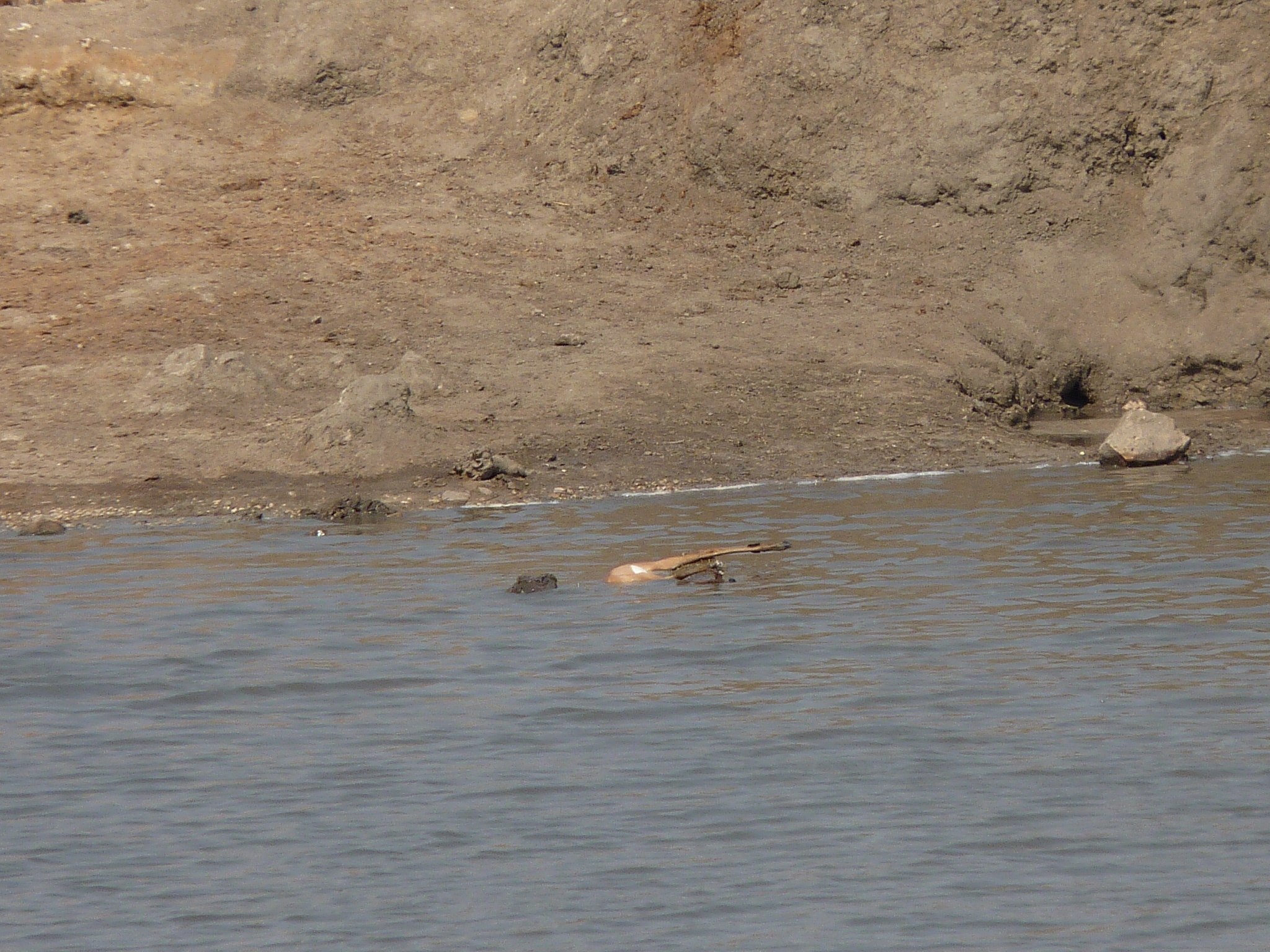
On two occasions, however, animals were caught. We witnessed one kill while the other one took place just before our arrival and saw the Crocodile swimming with the dead antelope. The Impala we saw was a young animal and it was caught from a foreleg. After a short struggle it was quickly drowned.

croc carrying impala small

A Crocodile swims away carrying the Impala.

croc with impala

The Crocodile holding the impala after drowning it.

During the time we were at the dam, the Crocodiles caught two Impalas out of eight attacks witnessed.

There was also an extremely interesting follow-up to the kills but for that you will need to wait for a while!!!


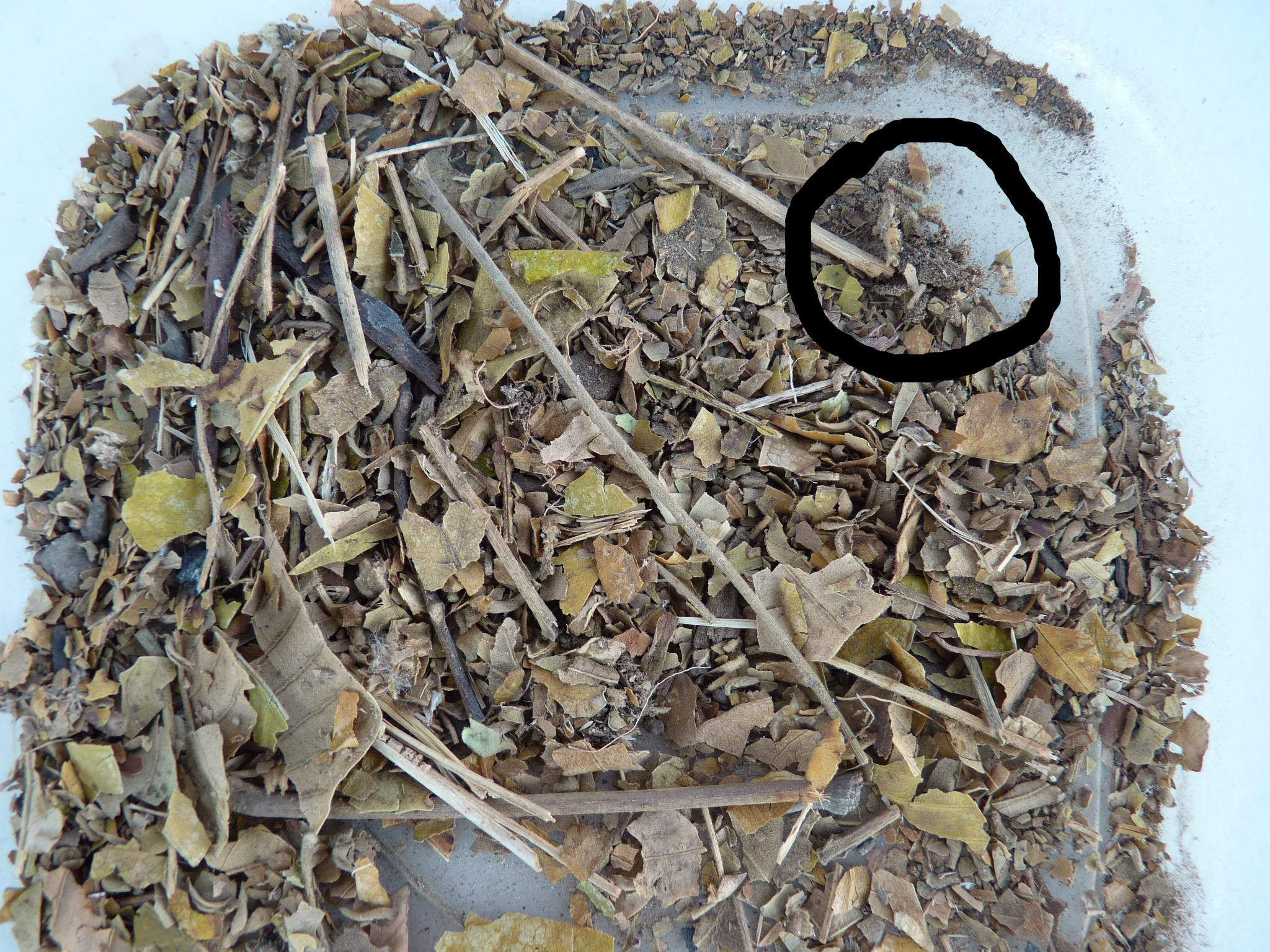
SPOT THE BEAST 3 – REVEALED

Spot the beast 3 1 circled


spot the beast 3 2

the beast isolated small

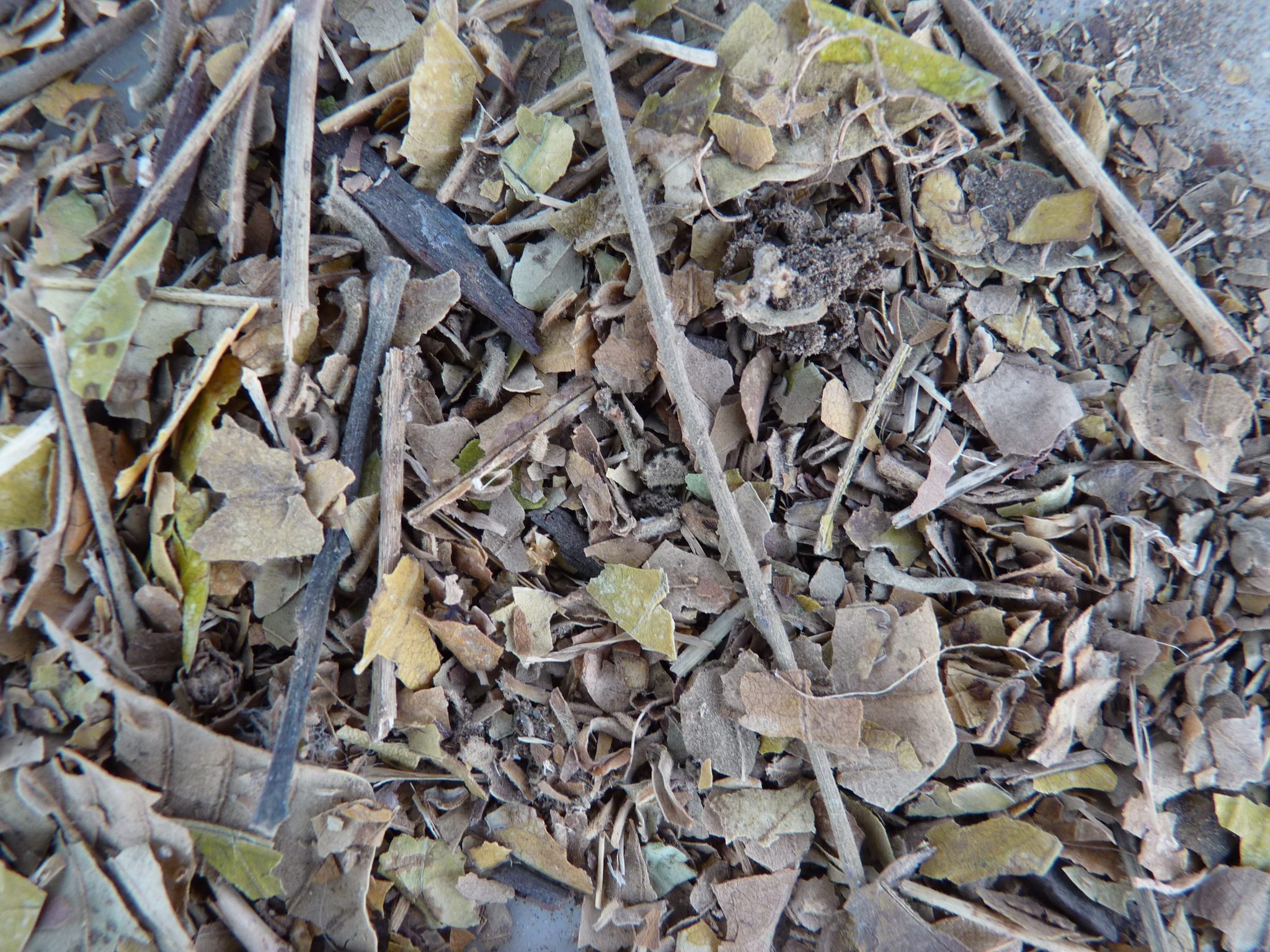
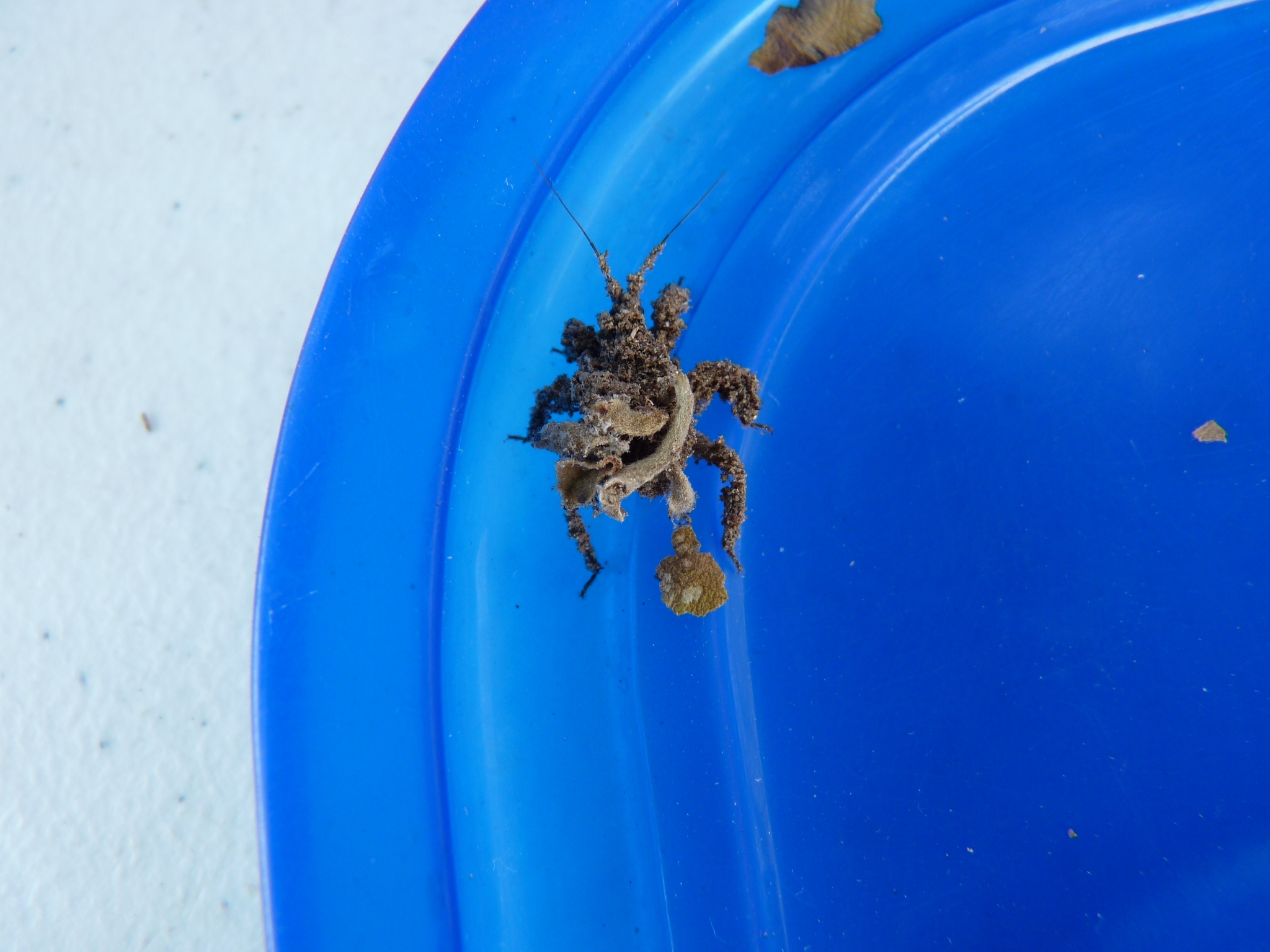
OK, there it is. It was the best camouflage trick I have seen. It seems that the said “beast”, an insect as it has six legs… covers itself with debris through some mechanism that I imagine it to be like an insect version of Velcro although it could also be a sticky secretion on its body where the debris gets glued! Nature surprises us all the time with large and small things!!!

I have also discovered that it is very difficult to know what it is as -I am sure- it changes according to the surroundings! However, I will continue looking for it and keep you informed.

The Bushsnob

Spot the Beast 3

Spot the beast 3 1

Back from Hwange and Mana Pools National Parks where several interesting things happened that I will tell about in future posts. As we returned only yesterday afternoon, to gain time, I post this picture for you to find the creature. Not surprisingly my wife found it while packing up our tent in Mana Pools!

I took the picture in the bush by placing a handful of debris from the area it was found in a plastic box with the beast itself and then I let it go. When looking at it with friends yesterday evening, we had difficulties finding it but it is there, lurking somewhere!

Good luck and I will “reveal” it tomorrow. No prizes for the finders yet (until this blog attracts sufficient publicity that I start making money!!! Then it will be a different story…).

The Bushsnob


WE ARE OFF AGAIN…

Dear followers,

I tried to post a last entry today but there was no power in Harare.

We are off to Hwange National Park where we will camp for 7 nights at Shumba Camp. We will keep notes and observations to be shared with you, together with the usual bad pictures.

See you!

The Bushsnob

Locking of horns

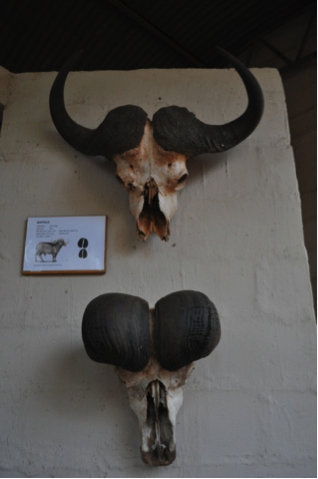
While staying at Mlilwane Wildlife Sanctuary in Swaziland in June 2012, we came across something oddly called a Wildlife “Interpretorium” and Training Centre. It was a nicely set up combination of animal exhibits with good working space for training purposes. I am sure that it is put to good use in educating the youngsters in Swaziland. Two things came to my attention there. The first was a bull buffalo skull of normal size but that has a perfectly developed boss[1] but totally lacking the actual horns (Fig. 1, bottom skull). Its apparent perfect symmetry suggests that it was a freakish genetic mishap and not the result of trauma or wear and tear. I imagine this to be a rare occurrence but that is only speculation. Clearly it was an adult male buffalo but we will never know if this malformation had any impact on its life, particularly regarding its sparring and fights with other bulls with the aim of reproduction.

Fig. 1. A normal buffalo skull above and the malformation below. (© Leonor Fernandez)

A normal buffalo skull above and the malformation below. (Picture: Leonor Fernandez)

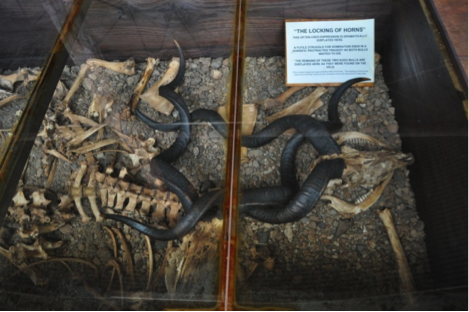
What I do know is that next to this exhibit there was a much more dramatic one showing what can happen when normally developed horns are locked (Fig.2). Clearly the two fully developed kudu bulls were engaged in a serious quarrel when the accident happened. According to the notice that accompanies the two skulls, their horns’ whacking could be heard from the camp for quite a while until it suddenly stopped. Only a couple of days later it became clear of what had taken place when their carcasses were found. Their horns had become inextricably jammed and their heads were twisted in such a way that their bodies, pointing in the same direction became parallel to each other. No one can live long in such a situation and, unable to separate, the stress, fatigue and lack of water rapidly put an end to their lives in what we can only imagine was a rather protracted agony. One can only hope that such magnificent animals had a chance to pass on their genes before this incident took their lives at their prime.

Fig 2. The display showing the locked kudu horns. (© Leonor Fernandez)

The display showing the locked kudu horns. (Picture; Leonor Fernandez)

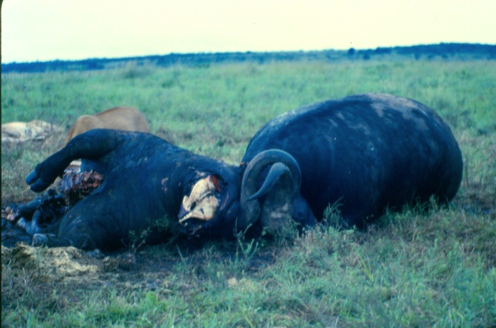
The kudu incident brought to mind a finding we came across in the Nairobi National Park, Kenya in the 80’s.  While on a game drive in that magnificent park, our attention was caught by a couple of lionesses on a small hill and we went there to have a look. From the distance, it was clear that they were feeding on a large animal. At close quarters we could see that they were busy with a buffalo carcass that, when we got closer, became two buffaloes and, like the kudu in Swaziland, they had locked their horns (Fig. 3). In this case, however, they were facing each other.

Fig 3. Buffalo with locked horns in Nairobi National Park. The back of a lioness is visible over the buffalo on the left. (© Julio de Castro)

The buffalo with locked horns in Nairobi National Park. The back of a lioness is visible over the one on the left.

Considering the shape of buffalo horns it is difficult to imagine that they can be locked but these two bulls managed it and ended their lives as a consequence. The knoll where the carcasses lay appeared ploughed, no doubt because of the titanic struggle that took place prior to their deaths. How they died will remain another mystery of nature but I would not be surprised that their violent confrontation attracted the lions and they may have had something to do with its ending.

I am sure that this is one risk that the “hornless” freak displayed at the Wildlife “Interpretorium” and Training Centre of Mlilwane did not face.

[1] An adult bull’s horns are fused at the base and this continuous bone structure is known as the “boss”.


Verreaux’s Eagle Owl and Thick-billed Ravens

Looking for pictures of Giant Eagle Owls to illustrate the earlier post I found one I did not remember having! As usual it is bad! It was taken on film in a hurry and later scanned to an electronic file. It shows a raucous confrontation we witnessed while living at Bedele, Ethiopia in 1989. We recorded the event and only recently we published it in SCOPUS

The scan of the original article included explains what happened and it save me from re-writing it! Please note that the publication is reproduced with the kind permission of SCOPUS. (For easier reading, click on the pages and then again).

The only picture I have of the event. It is bad but it shows the action that took place!

Verreaux and ravens page 1 small

Verreaux and ravens page 2 small


An unlikely find at Kruger National Park

Owl tree no circle

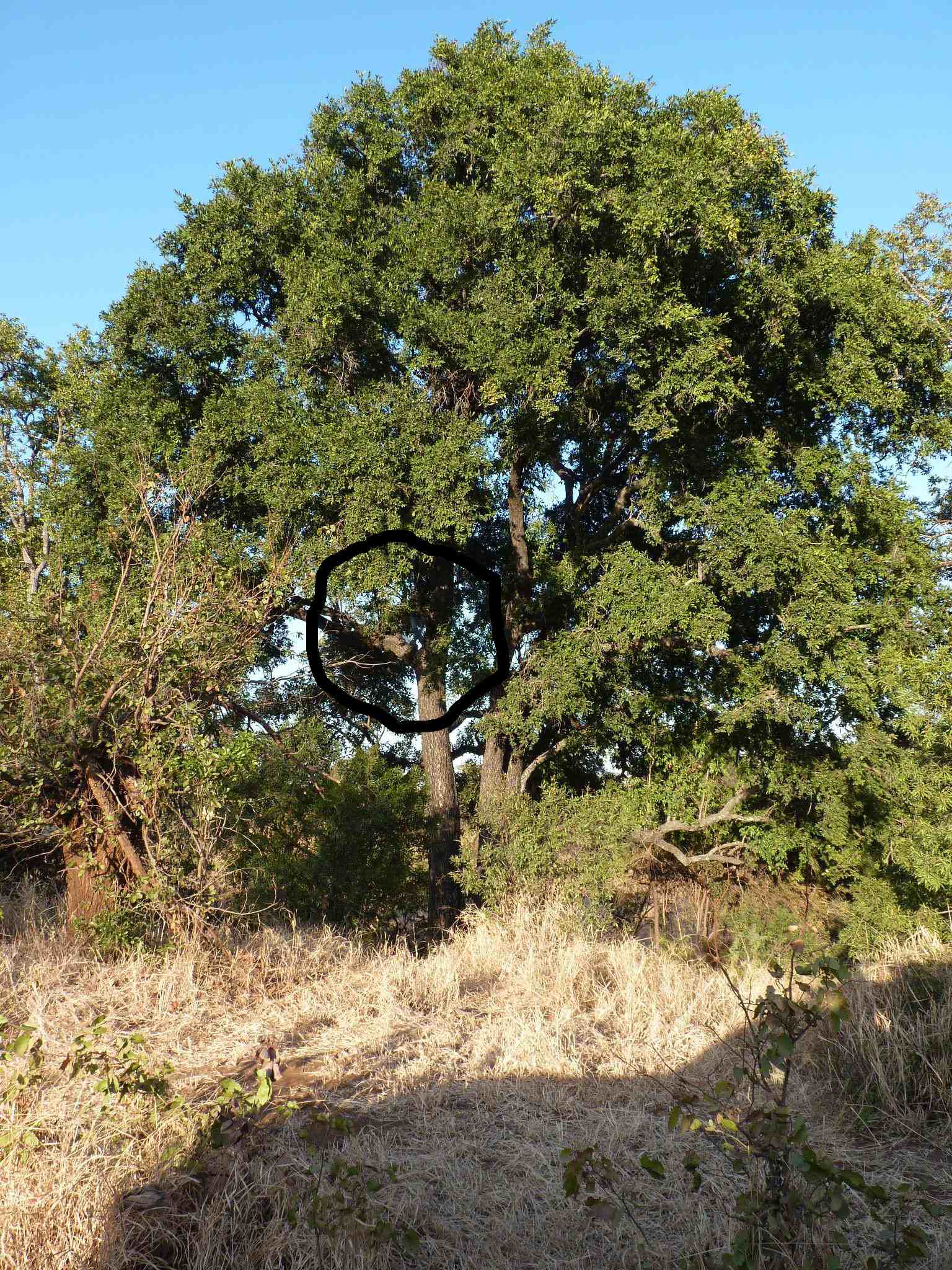
A tree like any other?

I have already praised my wife’s eyesight in the post “Green eyes in the wild” and showed you the two pictures of the hiding lioness at Tsavo East National Park in Kenya.

This example of my wife’s superb eyesight took place at the Kruger National Park during our recent trip (see Kruger National Park Report).

One early morning, while staying at Letaba Rest Camp, we were driving along the Letaba river looking for leopards and -as is normally the case- not finding any. Suddenly, my wife said “Stop, go back, go back!” so I did while she prepared herself to have a closer look with her binoculars. “What do you see there?” she asked me, thinking that I have her eyes! “Nothing” I replied, then added “where?”. “Use your binoculars”. “Do you see that large tree?” “Of course I see it” was my reply.

Owl tree with circle 1

After a while I could see the general area!

I must add that my binoculars are more powerful than hers, and I looked and saw a tiny red dot on one of the branches. “I see a kind of flower, is that it?” I ask. “It is not a flower, look at it again” she replied and I did.

It looked like a bit of meat as it had a pink centre and some brownish hairs. I moved the car a bit to get a different angle and then I could see the whole picture: the pink meat had been either a hare or a squirrel (maybe a rat). “Oh yes, I see it now!” I exclaimed “Do you think a leopard left it there?”

branch with red spot

After further car maneuver the red spot became visible!

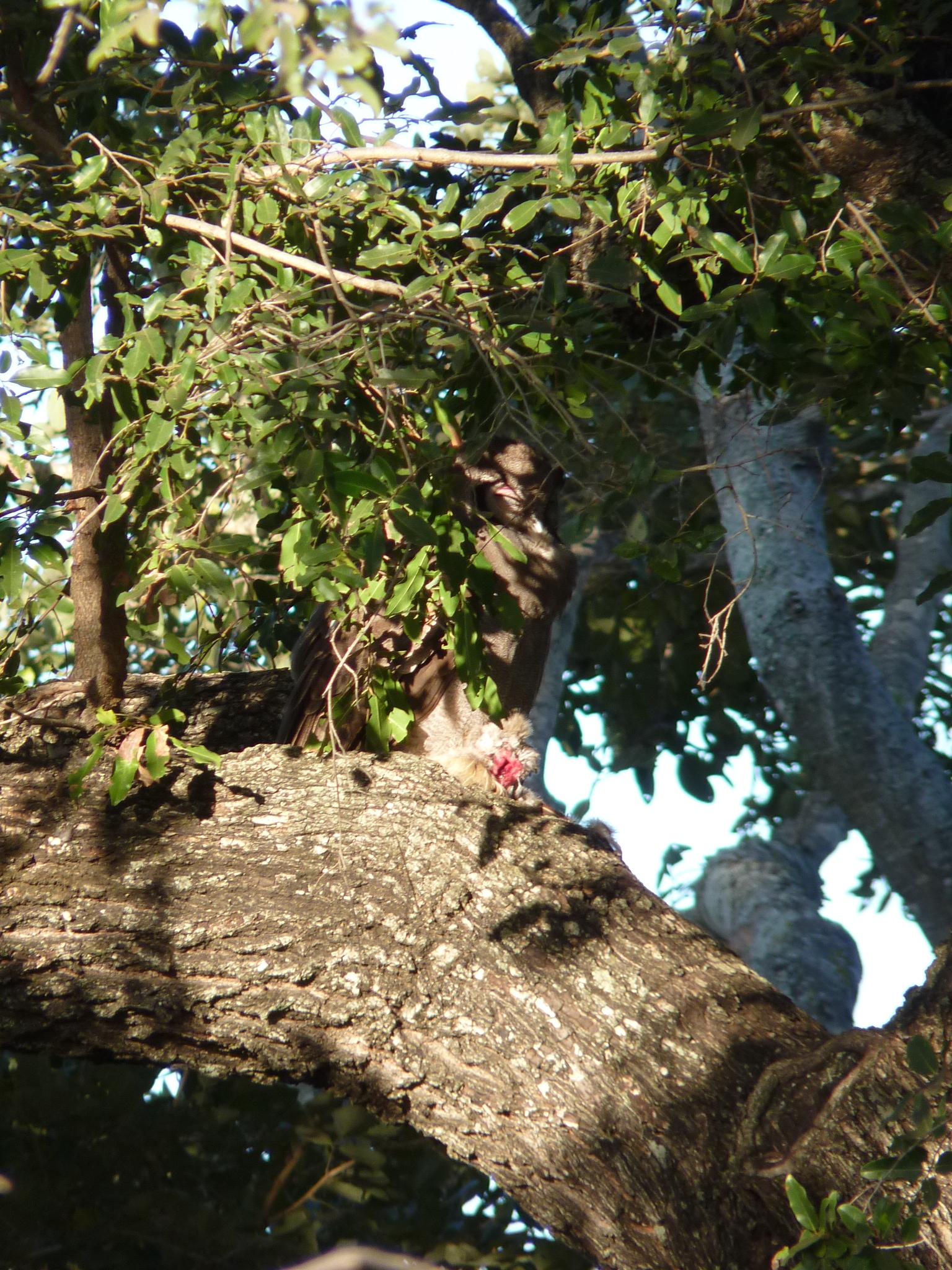
“No” she said, “There is a bird there as well,  move the car back” I did and then I really saw the whole picture! Perching on top of the animal remains -hidden from me until I moved the car- there was a bird with pink eyelids that could only be a Giant Eagle owl (Bubo lacteus) perched on a branch and holding its kill!

owl and prey cropped

More car maneuvers and finally I could see the owl!

The owl is described as being up to 66 cm tall and I still had difficulties spotting it. I did take rather poor pictures that I present to you but believe me, I could drive past one hundred times and never see it!

There is a great advantage in having a wife with such keen eyesight while looking for game on safari. However, there is a drawback. As my children and I know very well, it is difficult to hide from those eyes!