Memoirs

Episodes of my life in Africa.

Intona ranch[1]

It took a while to disassemble the tent and to collect our scattered belongings; including the unwashed suferiers where the soon to be legendary and much talked about Chicken a la Rusinga had been created, surely for one and only time in the universe! We were late, packed the car in a rush and, rather casually, left Mbita Point for our rendezvous with Alan in Kilgoris. I would remain with Alan to visit his field trials and collaborators while Matt returned to Nairobi, probably to attend some important meeting (read trout fishing) over the weekend.

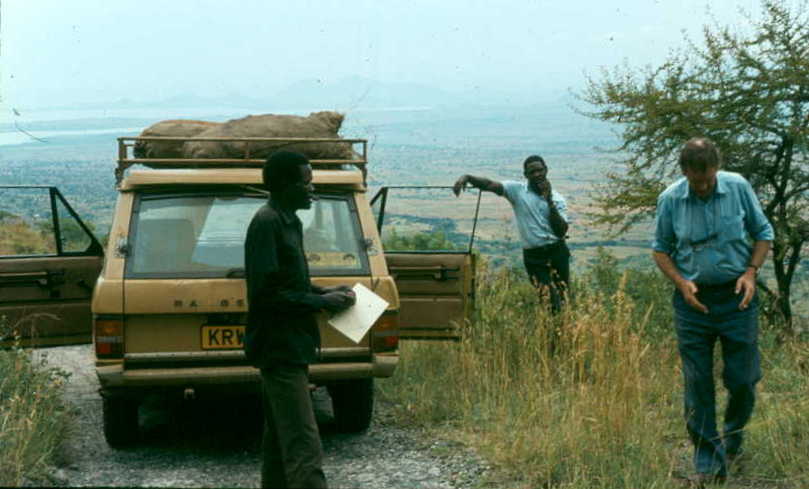
We got to our meeting point, an open field in Kilgoris, meant –at some point in future- to be the village’s main square but currently occupied by grazing Maasai cattle and found Alan waiting for us. A few dukas[2] were found around the field that were clearly taking care of Maasai needs: lots of red cloth[3] and assorted veterinary drugs among other essentials such as Tusker beer. Just across the road was the “Kilgoris Nylon Day and Night Club”, a name that took me a while to digest! Despite its interesting name, we refrained from exploring it and preferred to miss lunch. What we would have found in it will remain shrouded in mystery. Alan welcomed me and, after a quick exchange of news and greetings Matt went his way and we headed for Intona ranch.
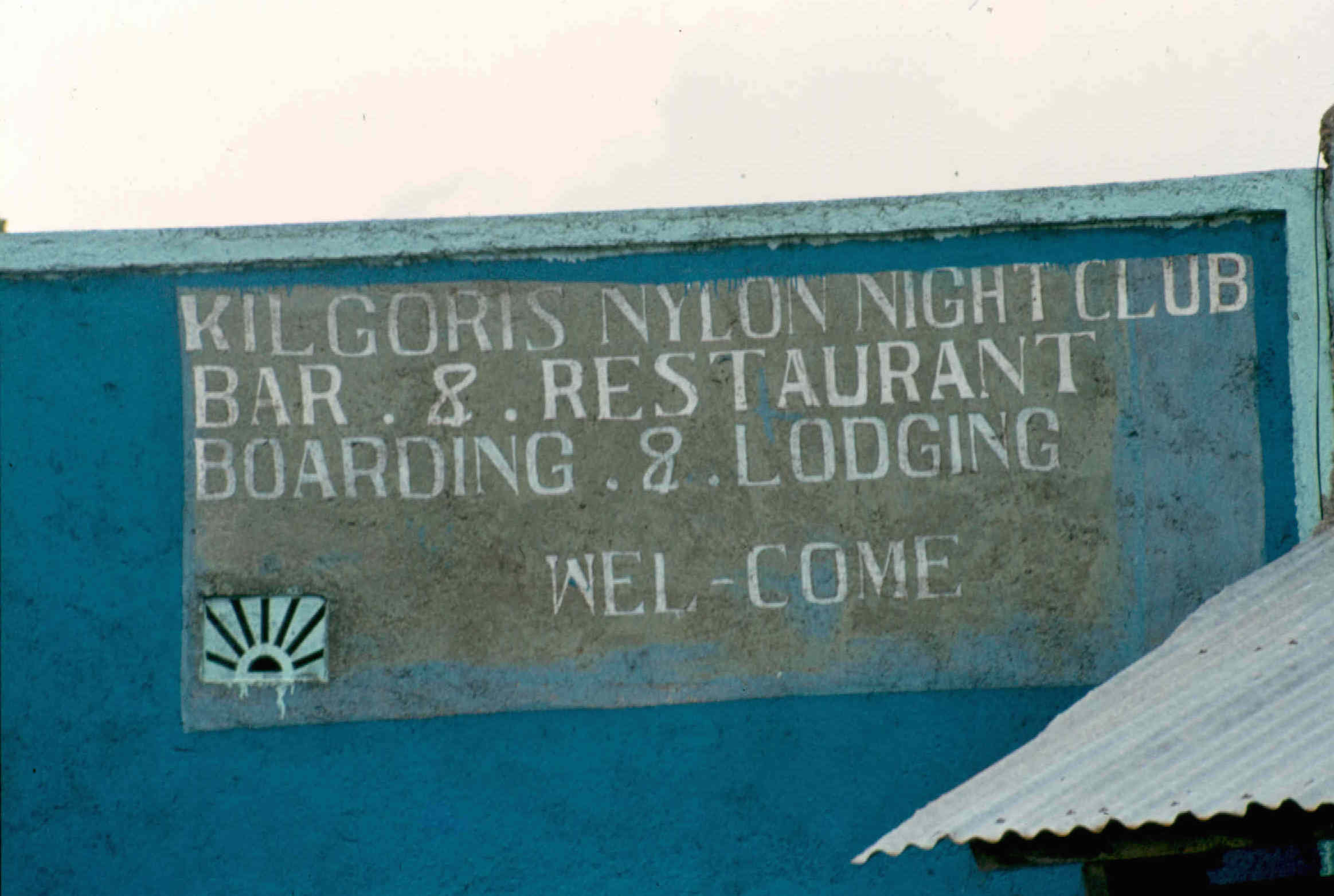
The meeting point with Alan.

The meeting point with Alan.

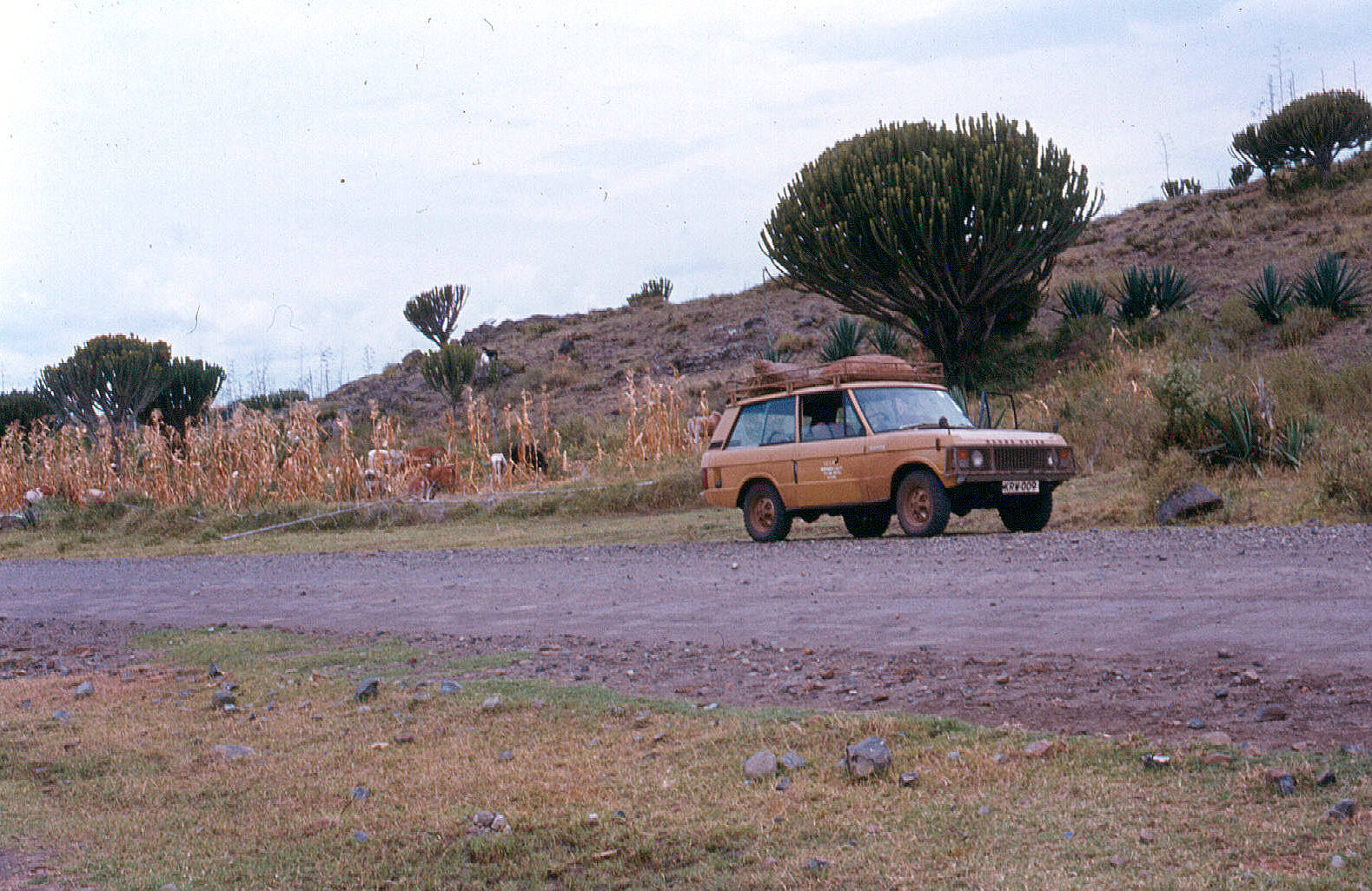
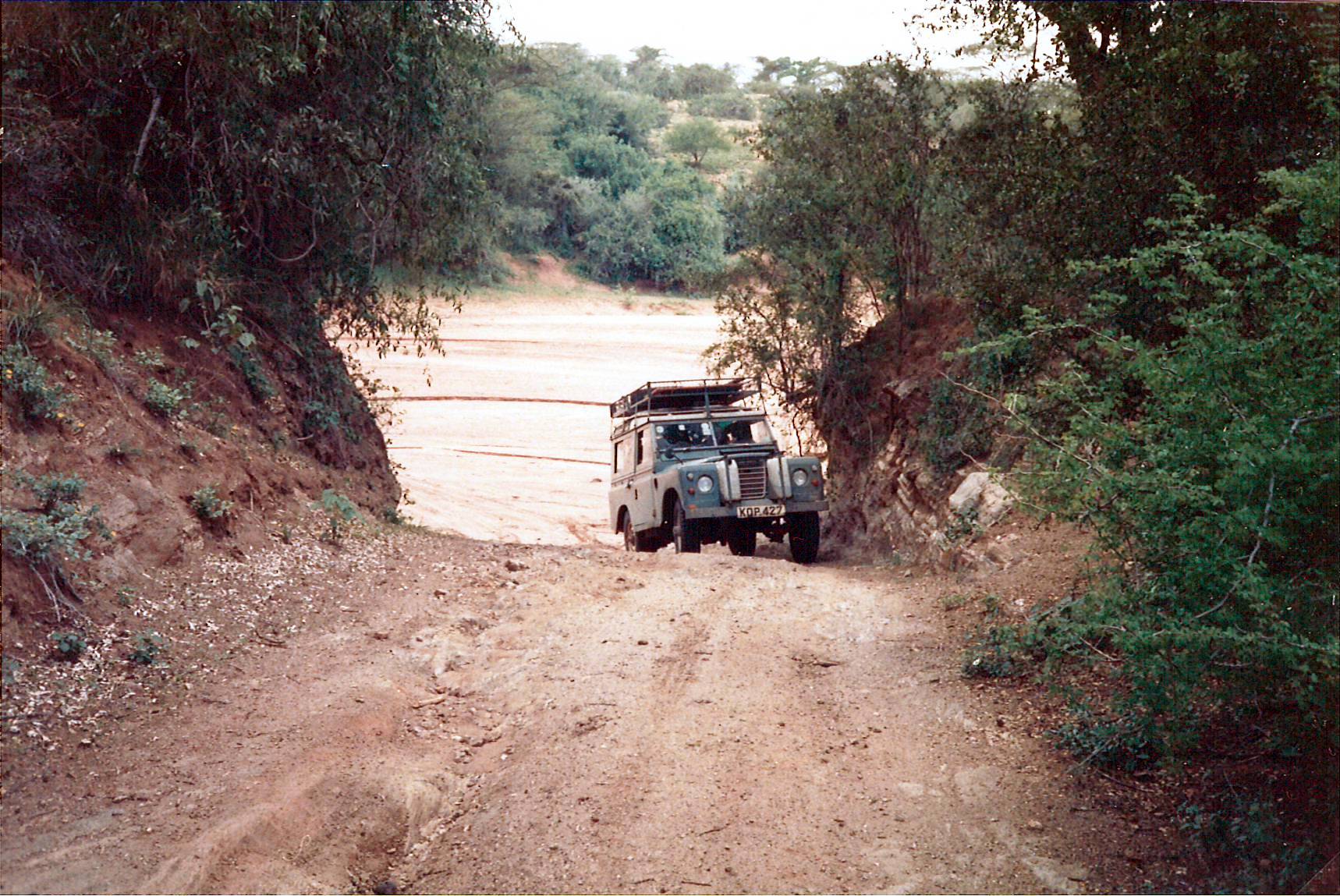
Alan was a chain smoker of menthol cigarettes[4], he stammered in an Irish accent, had an easy laugh that he combined with rubbing his gold and gray goatee. As we moved on, it became evident that Alan was not concerned about potholes and I was treated to the unique experience of listening to his mostly one-way conversation while bumping around on a rough road. Luckily we were in a Land Rover Series III, an almost unbreakable vehicle.

Although I focused fully on Alan’s conversation I still needed to guess a lot of what he said. I learnt that he was born in Northern Ireland and studied parasitology in London. He had come to Kenya in 1968 where he remained since, with a few short spells back home. He was a great supporter of the infection and treatment method to protect cattle against this scourge and he had helped Matt to develop it. I also learnt that collaboration was everything for him and that he was already talking to me as if we were already working together. This was excellent after my earlier experience in Mbita Point. Things were looking good but I still needed more details. “That is the purpose of this trip”, I thought, and continued listening. Our budding friendship was further boosted when we discovered our shared passion for soccer and the fact that Alan knew and liked some of the Uruguayan soccer players of the day, particularly Rubén Sosa.

He explained that he first came to the Transmara to collaborate with a veterinary GTZ project near Lolgorian –another small Maasai town- where they had done some pioneer epidemiological studies on theileriosis. The fact that this information was available enabled him to select the prevalent Theileria parasites to be used for the immunization of cattle in the area, including Intona ranch. This breakthrough meant that tick control could now be relaxed and even stopped altogether. This, Alan said, would enable me to compare dipped and not dipped cattle subject to natural field tick challenge and, in this way, ascertain their impact to achieve my goal.

Kilgoris was a Maasai town, Alan explained, the shambas[5] we could see in the outskirts belonged to the Kisii people. The latter became less frequent as we moved out of the populated area and the landscape started to open up to a savannah ecosystem where Maasai cattle grazed, looked after by the usual herd boys or elders. The countryside was punctuated by brown manyattas[6], giant brown mushrooms scattered at regular intervals.
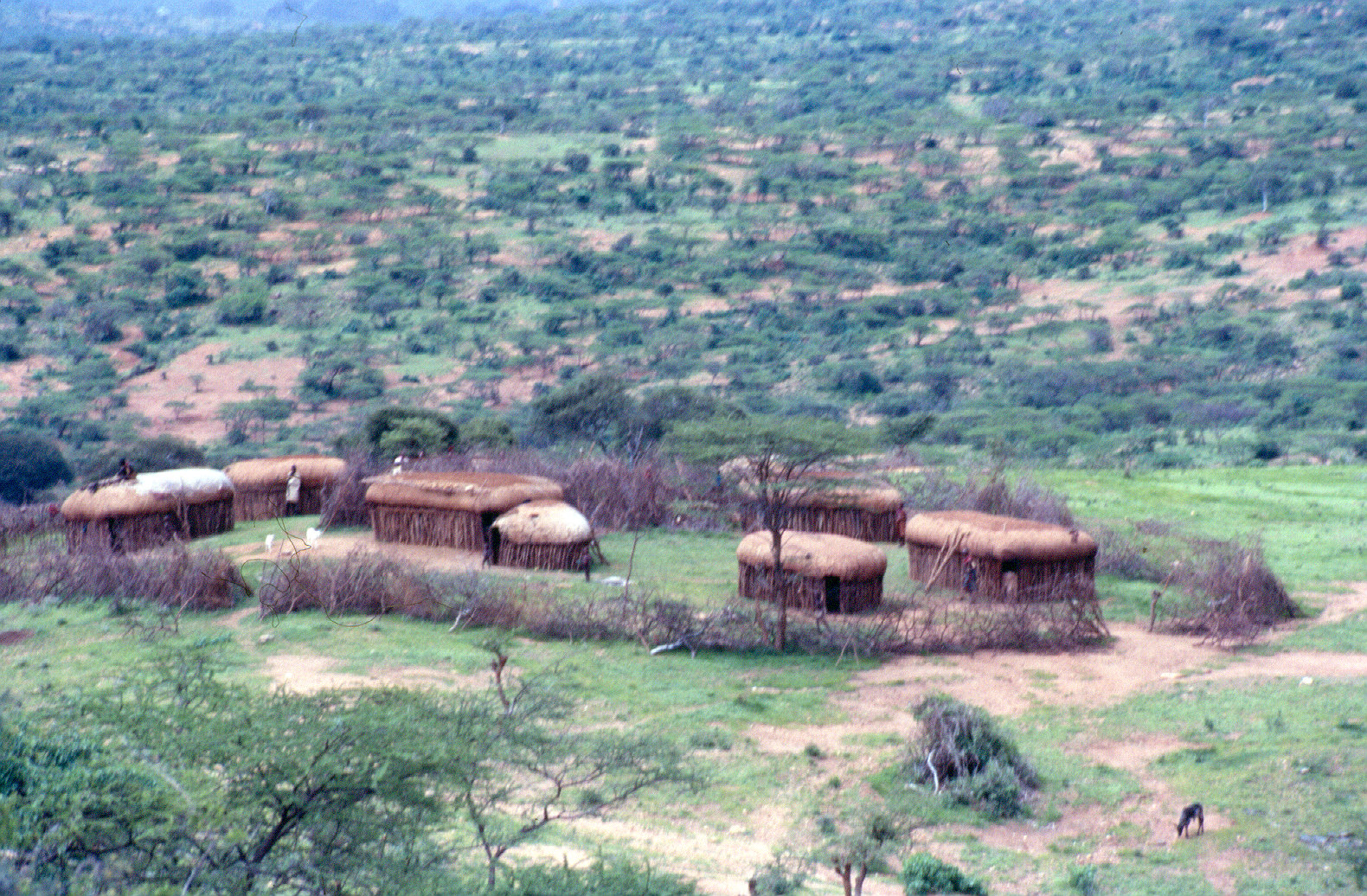
A Manyatta.

A Manyatta.

A manyatta is where the Maasai live. A strong thorn bush fenced area designed to keep all predators out and themselves and their livestock protected within, mainly during the night. Inside the enclosure there are any number of huts made of a rounded frame of branches and built with a mixture of mud and cattle dung. Most cattle are kept in the enclosure but there are smaller sub-enclosures for sheep and goats or animals belonging to the different dwellers of the manyatta. Cattle are heavily branded and their ancestry thoroughly known by their owners.

“I know you will not believe this”, said Alan, “but there is a war going on here. The Kisii are moving in to occupy the Maasai grazing land”. He went on: “the Kisii will eventually win and this beautiful place will get all planted with maize!” Looking around, I found this really unbelievable but I trusted Alan.

The mention of a war made me wary and I started to look for warring parties lurking behind the bushes. After a while of not seeing anything unusual I said with hope in my voice: “Luckily, I see nothing so there must be a truce at the moment.” Alan laughed heartily with profuse goatee rubbing and, after hitting a few more potholes, he explained that the fighting was in the bush and normally not obvious. He added: “the Kisii cultivate the soil and gradually they are being given land. The Maasai resist and there are frequent skirmishes and then the Government intervenes to bring back some degree of calm”.
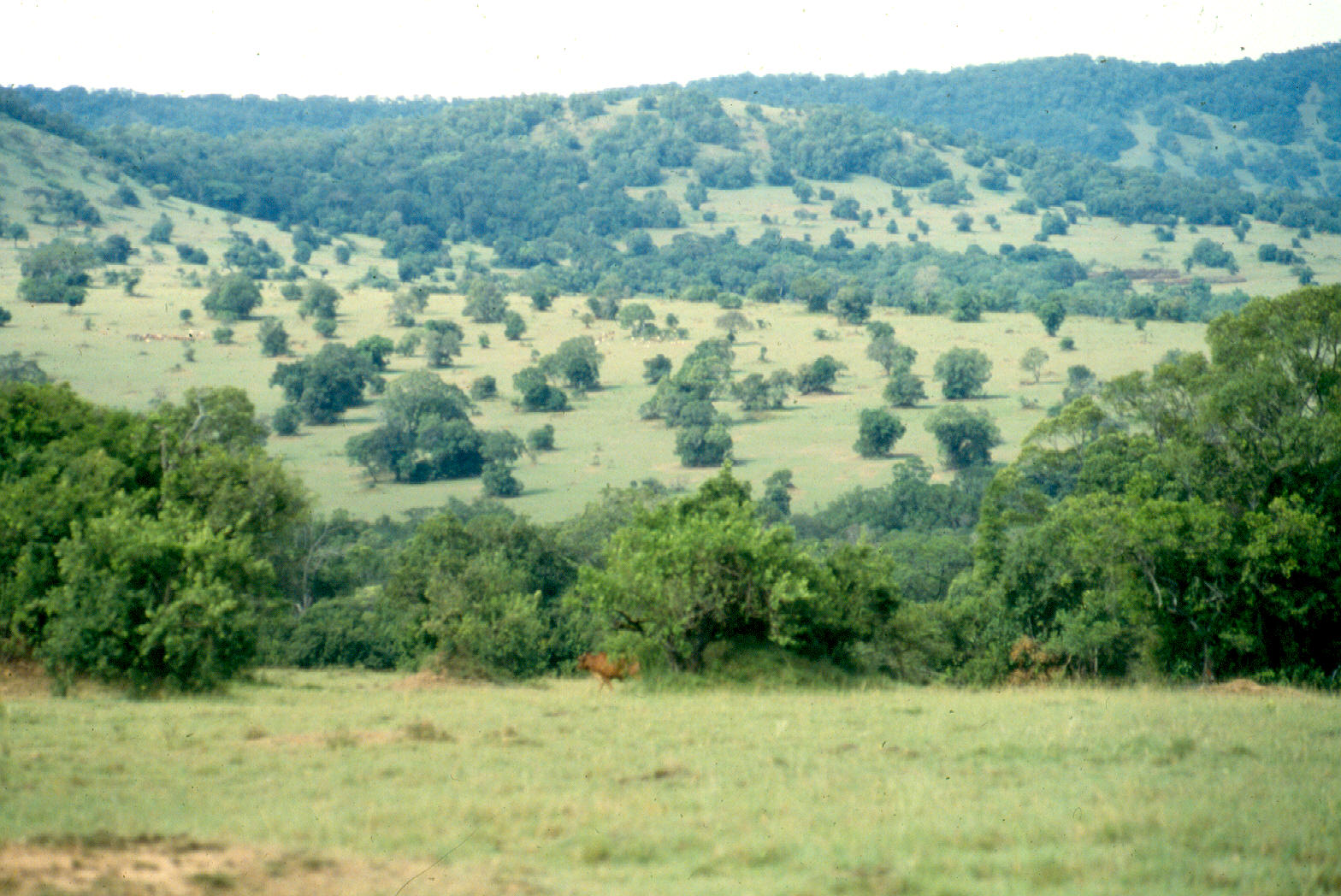
A view of Intona ranch in  the Transmara parkland.

A view of Intona ranch in the Transmara parkland.

Nearer to Intona ranch there was only lush green savannah with large tree islands. I noticed that these islands were always associated with bulky termite nests and I started wondering which appeared first, the trees of the termite mounds? I decided in favour of the trees. And then I saw the first game: a herd of Impala, shiny and healthy. Later, Topi and Zebras appeared to add a wild touch to the ever-present Maasai cattle. There were also Baboons and Vervet monkeys and a large number of Warthogs.

The manyattas in this area had significantly more dramatic thorn enclosures and the presence of large predators such as Lion, Leopard and hyena came to mind as the reason behind the need for greater protection, but I learnt from Alan that cattle rustling was rampant and probably more of a concern than predators. Clearly the Maasai were not taking any chances with their beloved livestock. This was in sharp contrast with their seemingly casual bearing when walking in the bush only carrying a spear and a simmi[7] with a few throwing sticks, their feet clad in recycled car tire sandals. They appeared to be carrying very light luggage considering all predators that were around, not to mention the on-going war!
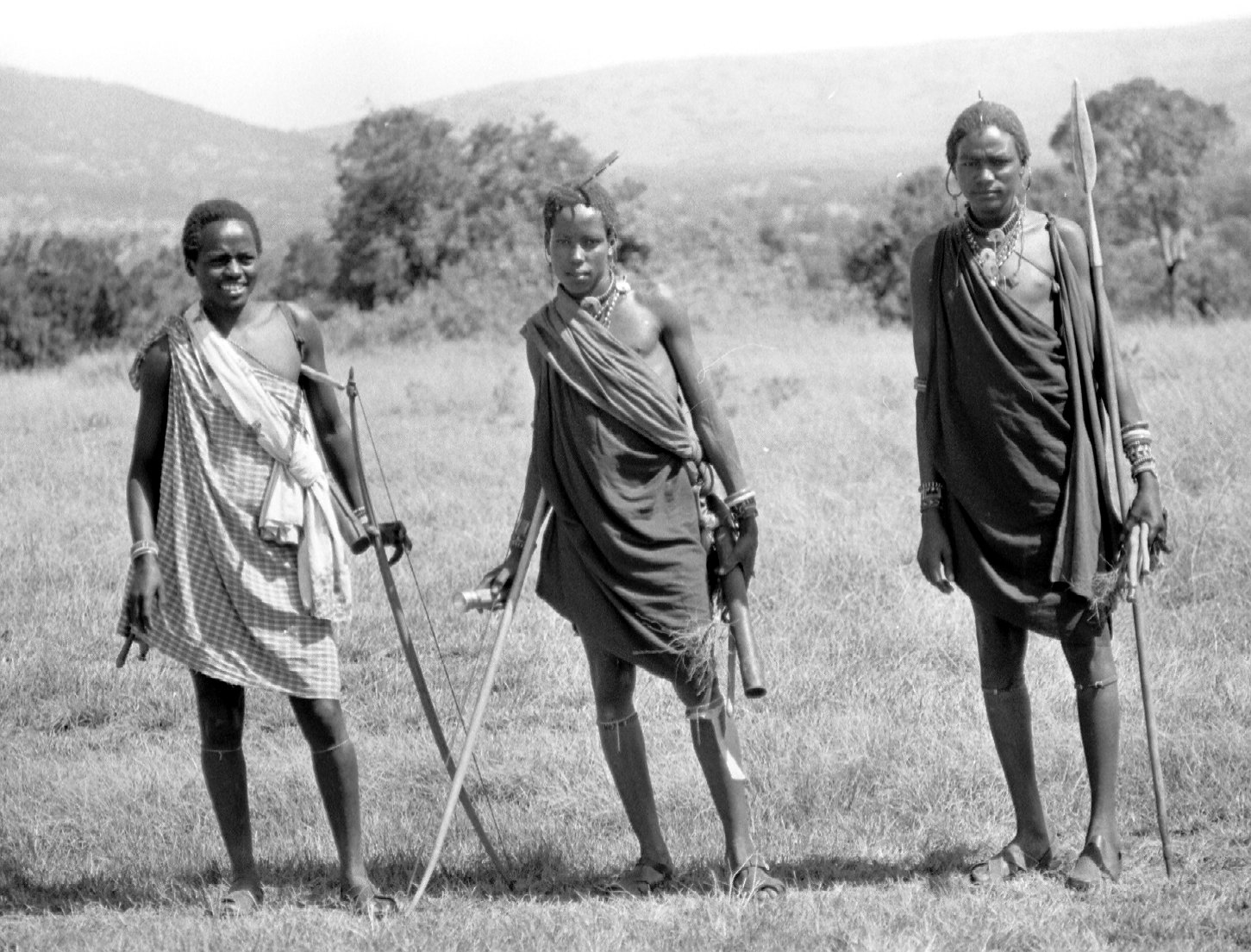
Maasai visitors with spears, bow and arrows and throwing sticks.

Maasai visitors with spears, bow and arrows and throwing sticks.

The Transmara District that we were traversing is close to the Maasai Mara Game Reserve and the latter is the northern extension of the Serengeti National Park in Tanzania. The Transmara is split into two by the Migori River with its riverine forest. It is here that, with luck, the Giant Forest hog (Hylochoerus meinertzhageni) can be spotted. A native of forest habitats in Africa, it is considered the largest wild pig, at over two metres in length and one in height, reaching more than 200kg of weight. Discovered by Richard Meinertzhagen in 1904, who shot the type specimen in Kenya. Another special of the area is the Blue Flycatcher (Elminia longicauda), a lovely cerulean blue bird with a beautiful tail-fanning display.

“Julio, remember that Maasai do not like to be photographed and they can get very agitated and even aggressive”, said Alan. “Why is that?” I asked with surprise. “I do not know for sure” came the reply. I started learning that he was not too interested in any issues apart from theileriosis!

During the trip I decided that I would work with Alan and started developing a plan to convince Matt that this was the best idea. Rather sleep-deprived by Matt’s snores, and despite the jerks and bumps, I dozed off. I woke up startled by the sudden stop. I prepared for a surprise attack by the warring parties! However, the herd of Wildebeest and Zebra in front of us did not look dangerous. They were frolicking about as only wildebeest can as they moved back into the parkland.

Alan decided to follow them so that I could observe them better and take a few pictures as he liked photography. We drove off-road following them and got some good shots. When we decided that we had enough good pictures and turned back we realized that we were lost in the green labyrinth. The workers travelling with us were of the Kikuyu ethnic group. They were foreigners like us and therefore as lost as we were! We drove rather aimlessly for a while following a few cues we thought correct but the road was nowhere to be seen.
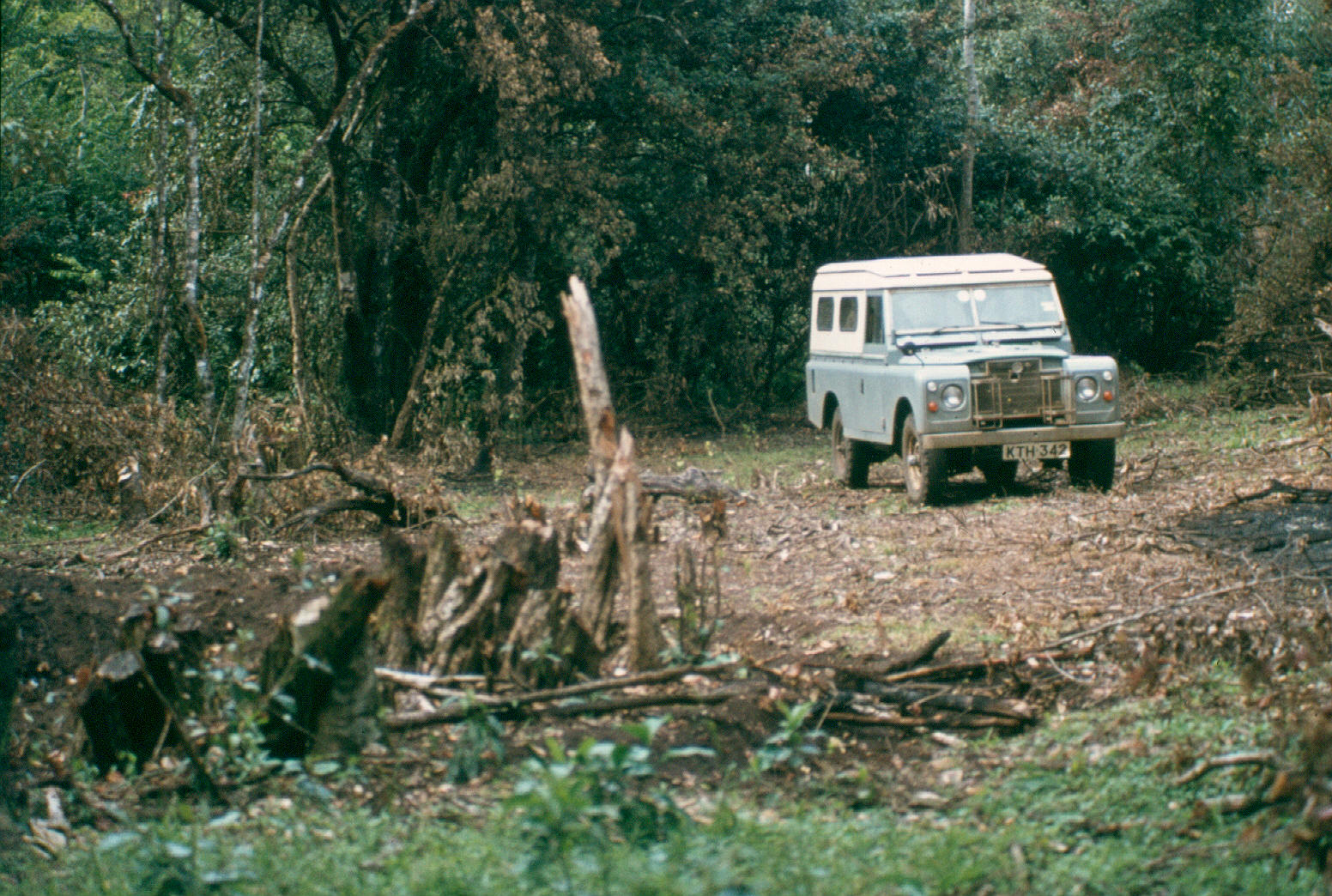
Lost in the bush with Alan, prior to finding our Maasai

Lost in the bush with Alan, prior to finding our Maasai “saviour”.

In one of our turns we found a Maasai elder who asked us for a lift! We gladly obliged and he jumped in. In a mix of English and Swahili we asked him to take us to the road. He sat next to me, half on my lap, as we were already three in the front seat of the Land Rover. We were ridiculously close to the road and were brought back to it immediately. Our saviour stayed with us as, apparently, we were going in the same direction!
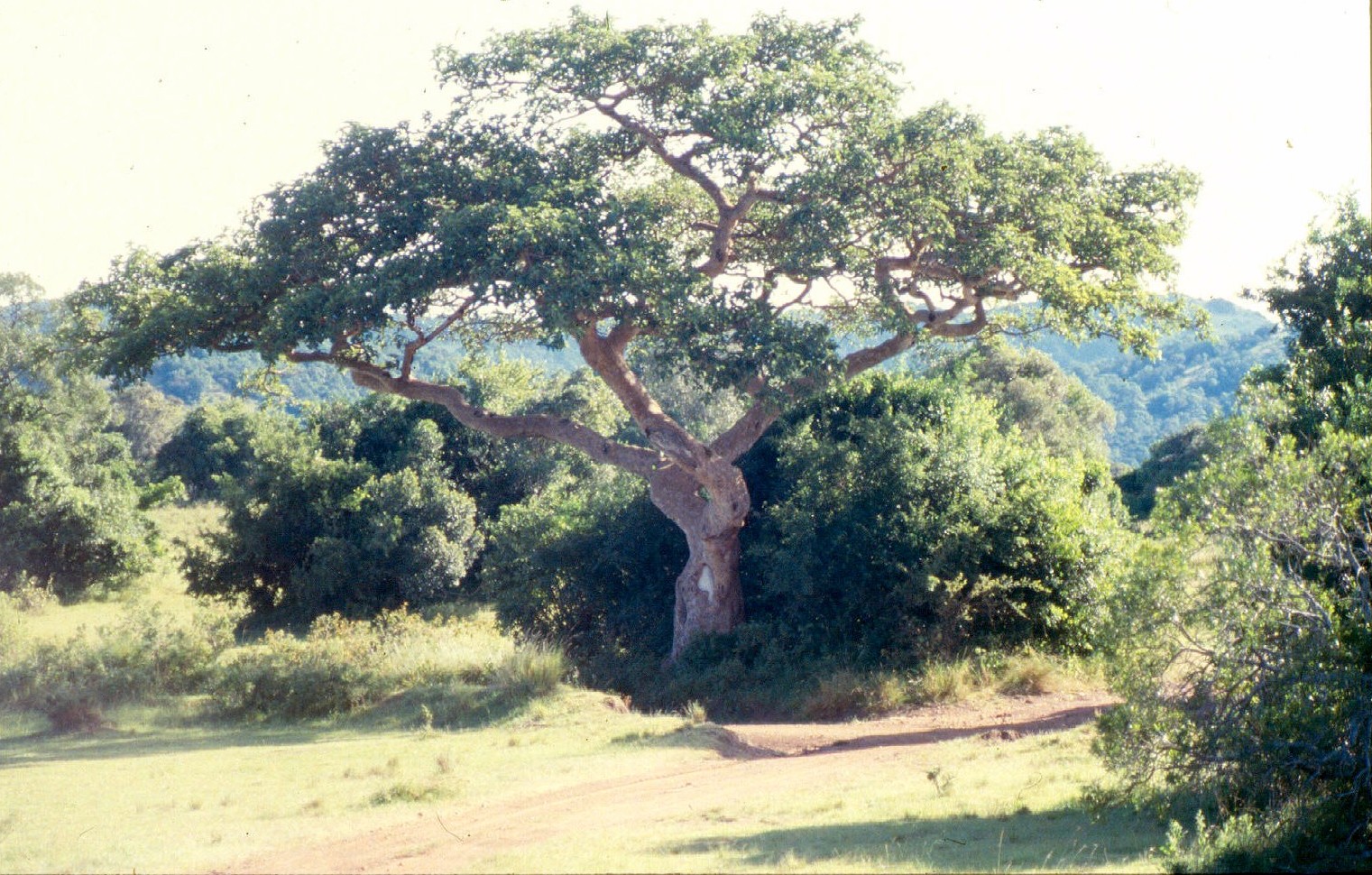
The fig tree,

The fig tree, “signpost” to Intona ranch.

Finally we got to a large fig tree on our right, the entrance to Intona Ranch and there the Maasai left us with our thanks. The ranch was still unfenced and largely undeveloped at the time. Its border was marked by a plough furrow! Alan drove through the ranch and showed me the crush pen, weighbridge and cattle boma[8]. The latter was a large wood and barbed wire fortress. He also showed me the ranch personnel quarters and other back up installations such as the generator house and store. “The cattle are out grazing”, said Alan, “they will not come back until dusk so let´s take the personnel to their camp and then go to meet Joe and Sheila” he added. During the journey I had learnt that Joe was in fact Joseph Murumbi, an important retired politician[9]. His mother was Maasai and he was given the land by them.
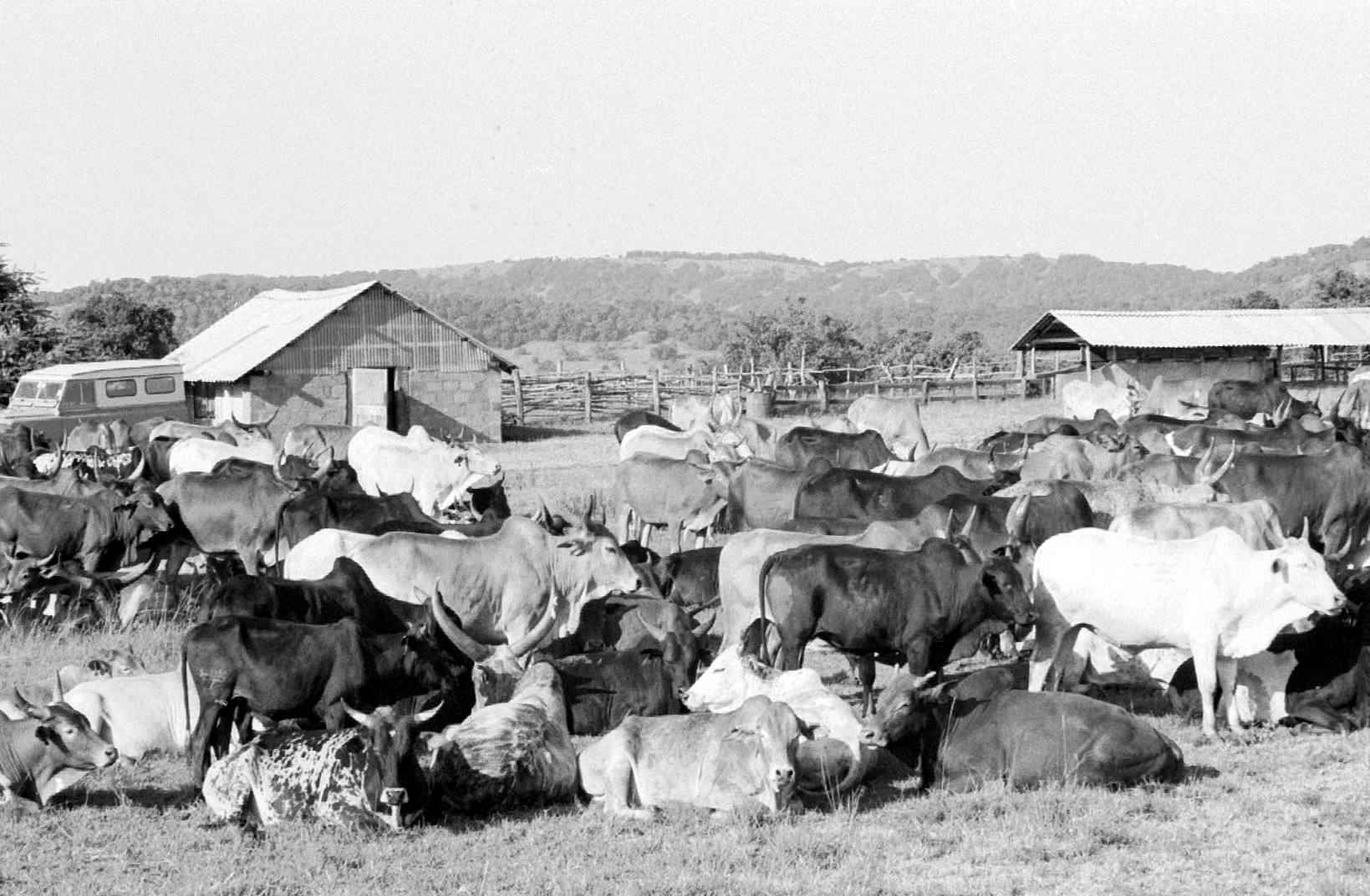
Cattle and facilities at Intona ranch.
Cattle and facilities at Intona ranch.

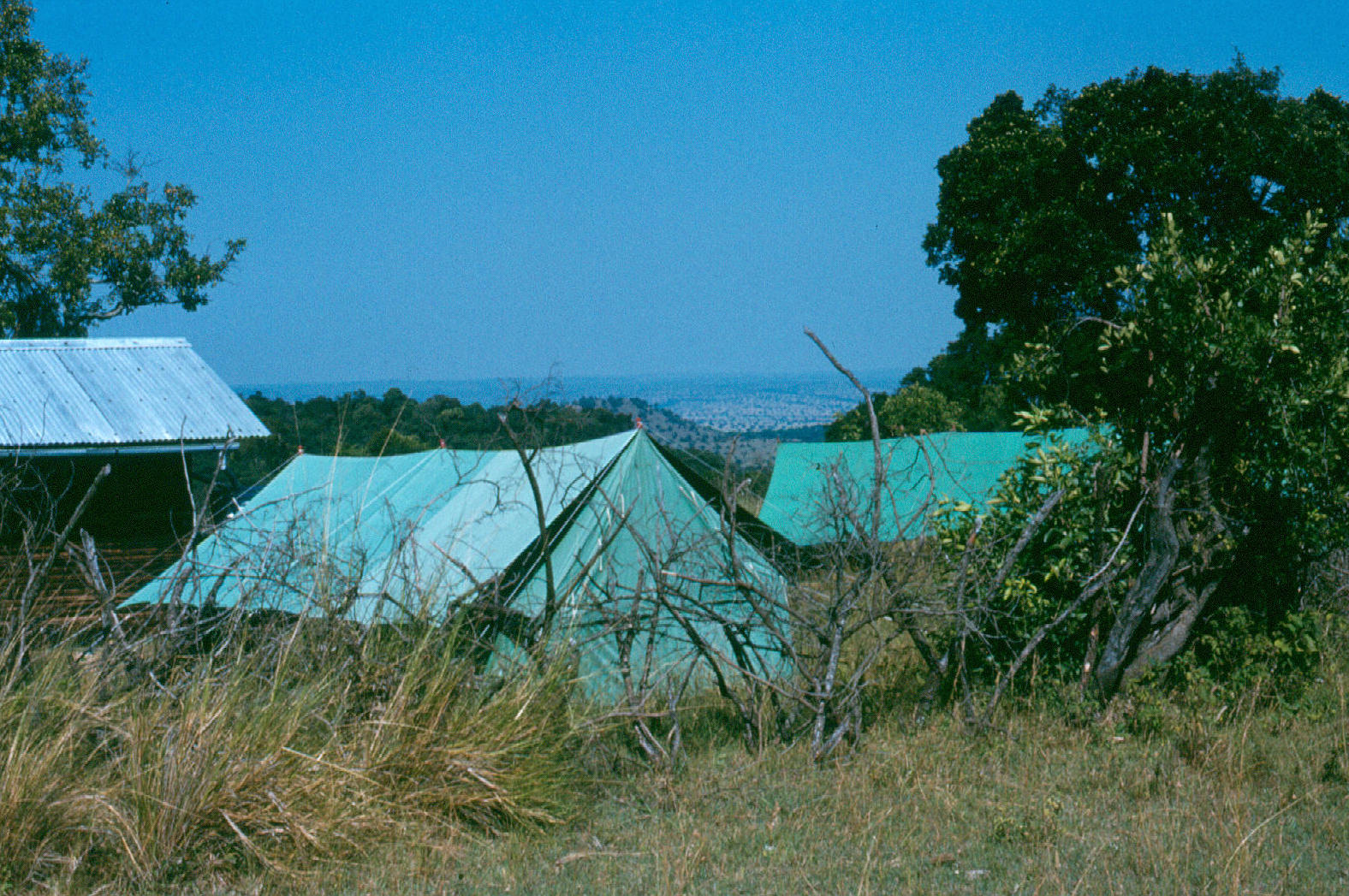
The herdsmen camp at Intona ranch.
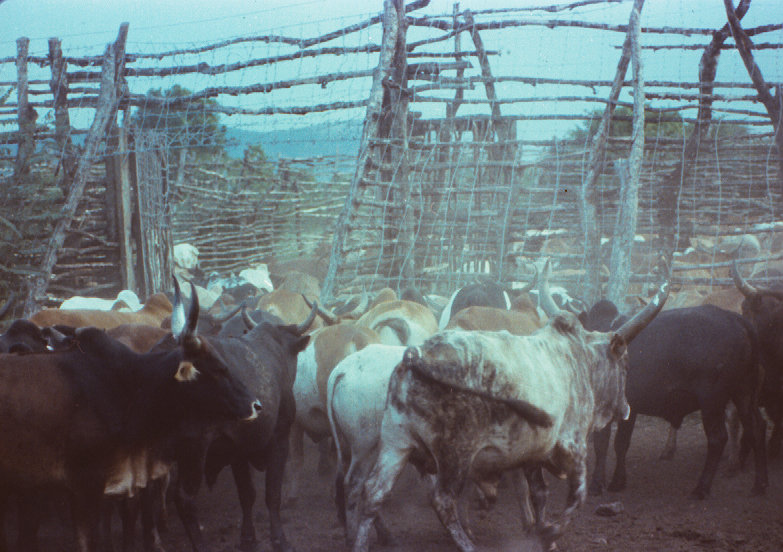
The herdsmen camp at Intona ranch.

Intona cattle kraal cropped

After about a kilometre a very large white house appeared, looking like a palace to me at that point. It looked newly built and was as beautiful as it was out of place. Its construction –I learnt from Alan- followed the Swahili style found at the Kenyan coast, complete with carved wooden doors brought all the way from Lamu and surrounded by a high white wall. We parked in one of the lateral entrances, announced our arrival and were shown in.
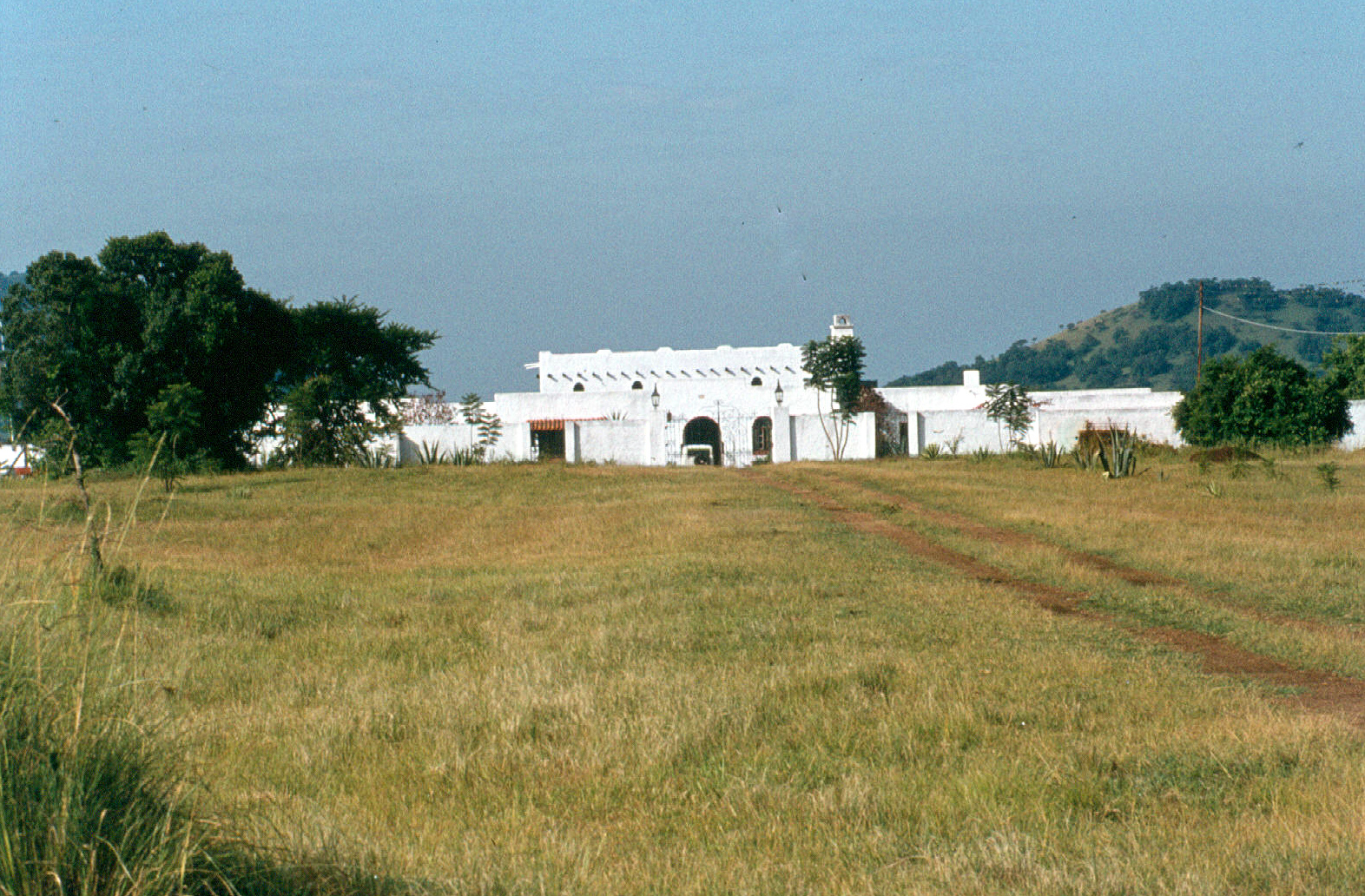
A large white house appeared in the distance!

A large white house appeared in the distance!

We walked into a very large rectangular living room, its walls covered with art objects. The chairs were large and made of forged iron, including the one where a coloured person with Indian features sat, atop lots of cushions and surrounded by small dogs. I guessed him to be in his late seventies. He stood up with some difficulty and came to greet us with a warm look on his face.

He was Joe. “How was the safari?” he asked and added: “they tell me the road is rough but I do not drive any more so I do not know”. Alan made a comment about the road and introduced me, explaining who I was and the reasons for my visit. Joe welcomed me and invited us to sit, while ringing a bell. Soon a white middle-aged woman in crutches came in. Joe introduced her to me as Sheila, his wife. As it was late afternoon some Tuskers were produced for us. “You must be tired Julio”, she said, “coming all the way from Mbita Point”. “We will have dinner very soon as Joe goes to bed early” she added.

Over the beer I gathered that Joe had a special interest in books, largely fired by his Goan father. “I have many books” Joe said “and art” he added. I also learnt that Joe was recovering from a stroke and that Sheila’s hips were in a bad state and that she needed an operation soon.

Dinner was a simple affair and we soon retired to our bedrooms. Alan´s had a microscope and piles of stained slides that he needed to examine, so he proceeded to check the health of his experimental cattle. I unpacked my belongings and feeling very tired I went to bed, leaving Alan with the microscope and the ubiquitous Tusker at hand.

The following morning Alan woke me up before sunrise as we needed to check the cattle before they went out for grazing. We did not see our hosts as they were resting when we left. Daily body temperature, blood and lymph node smears are routine monitoring activities when working with theileriosis. That day we also had to tag a few animals. We needed to write on the tags with a special pen known as the “magic marker”. Alan asked one of the herdsmen -Ephraim- to fetch it. He went to look for it while we went to look at the cattle boma. This was an enormous 3-metre tall barbed wire enclosure where Joe´s cattle were kept, together with the experimental cattle. After inspecting it we went back to the crush pen to continue with the work but Ephraim was not back yet! Alan asked what was happening and was told that “he is coming”, the usual reply in these situations. Finally, after Alan’s patience was almost gone Ephraim appeared carrying a basin with hot water! When Alan saw this, he became quite angry. “What is this?” he asked. “What you asked for” replied Ephraim “maji moto“. The incredulous look on Alan’s face was very funny to see, and suddenly he laughed at the confusion and all the tension disappeared everyone joined in! Magic marker was mistakenly taken for magi moto, Swahili for hot water!
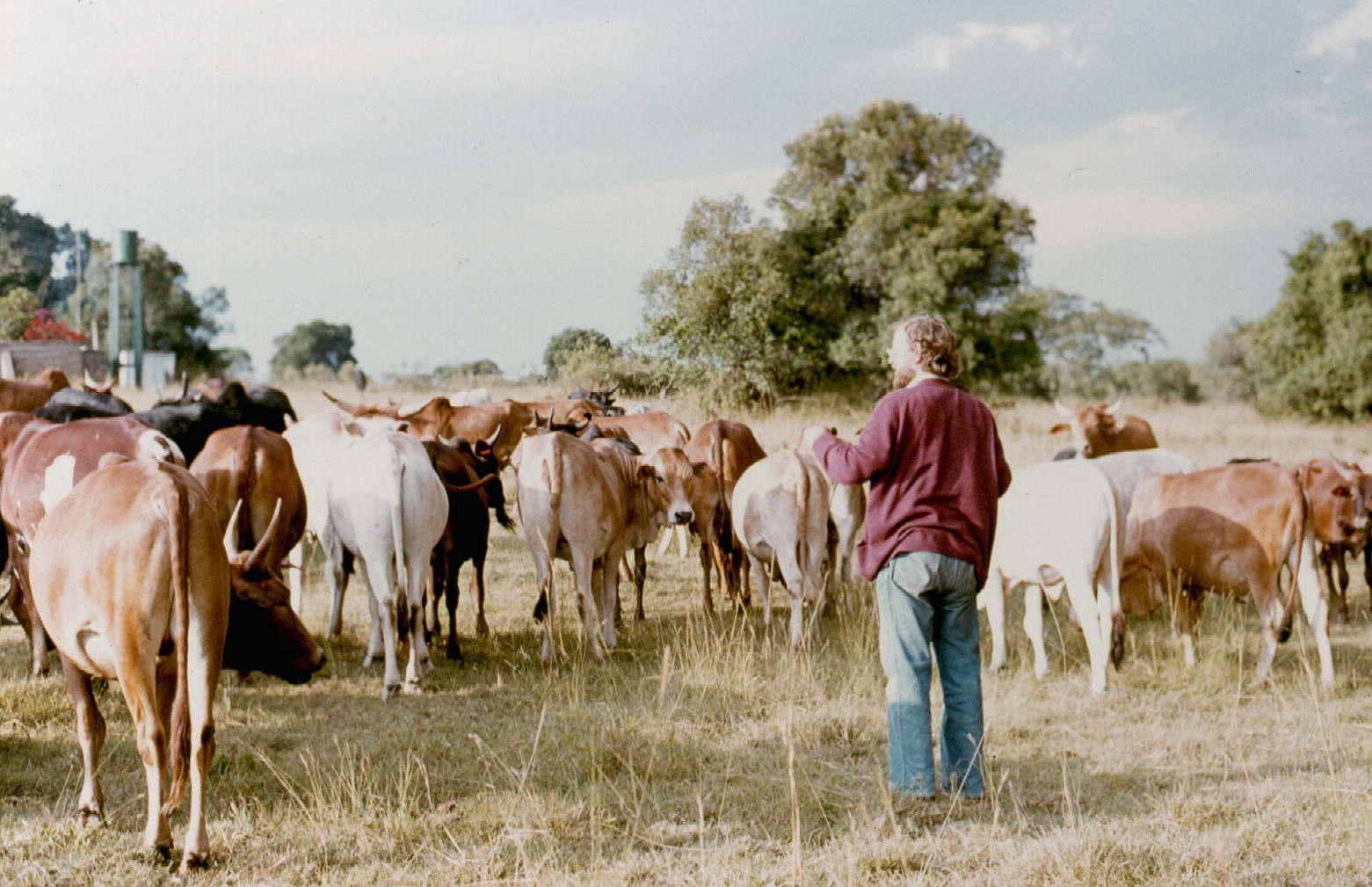
Alan watching the cattle leaving the boma.

Alan watching the cattle leaving the boma.

Our work completed, we left the following morning, driving through the Maasai Mara Game Reserve. I loved the place! We crossed the Mara River on our way and had the chance to see the aftermath of the Wildebeest river crossings: a solid mass of dead animals being feasted upon by crocodiles and vultures, after the remaining beasts successfully continued on their migratory route.
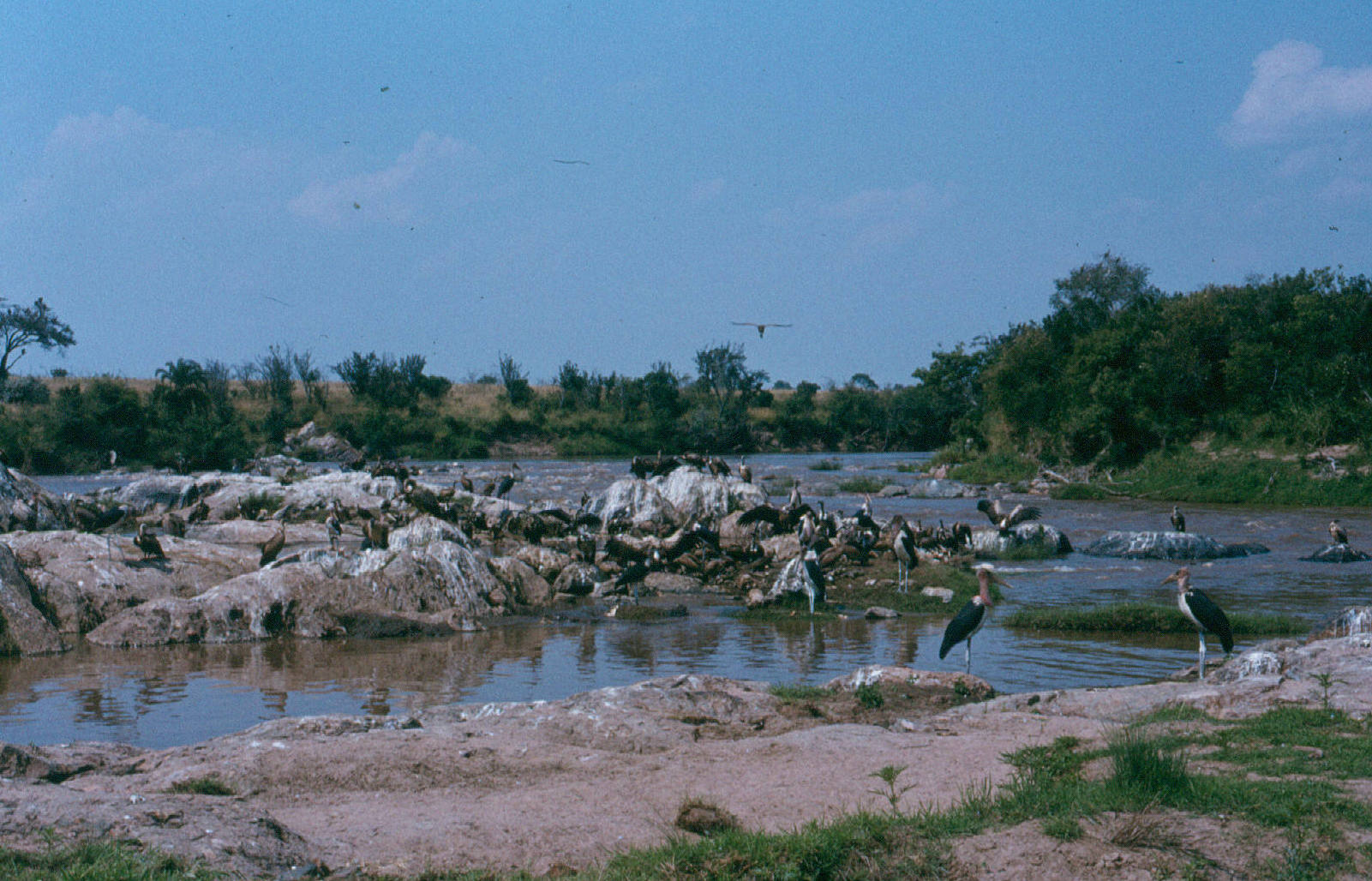
The aftermath of a wildebeest crossing of the Mara river.

The aftermath of a wildebeest crossing of the Mara river.

Seeing that natural marvel for the first time created a very strong impression on me. I believe that it was then that my life took a turn that would make me stay in Kenya and Africa. I decided that I would do all I could to persuade Matt that I should work at Intona ranch and, on my way to it, have the privilege of driving through the Maasai Mara Game Reserve!
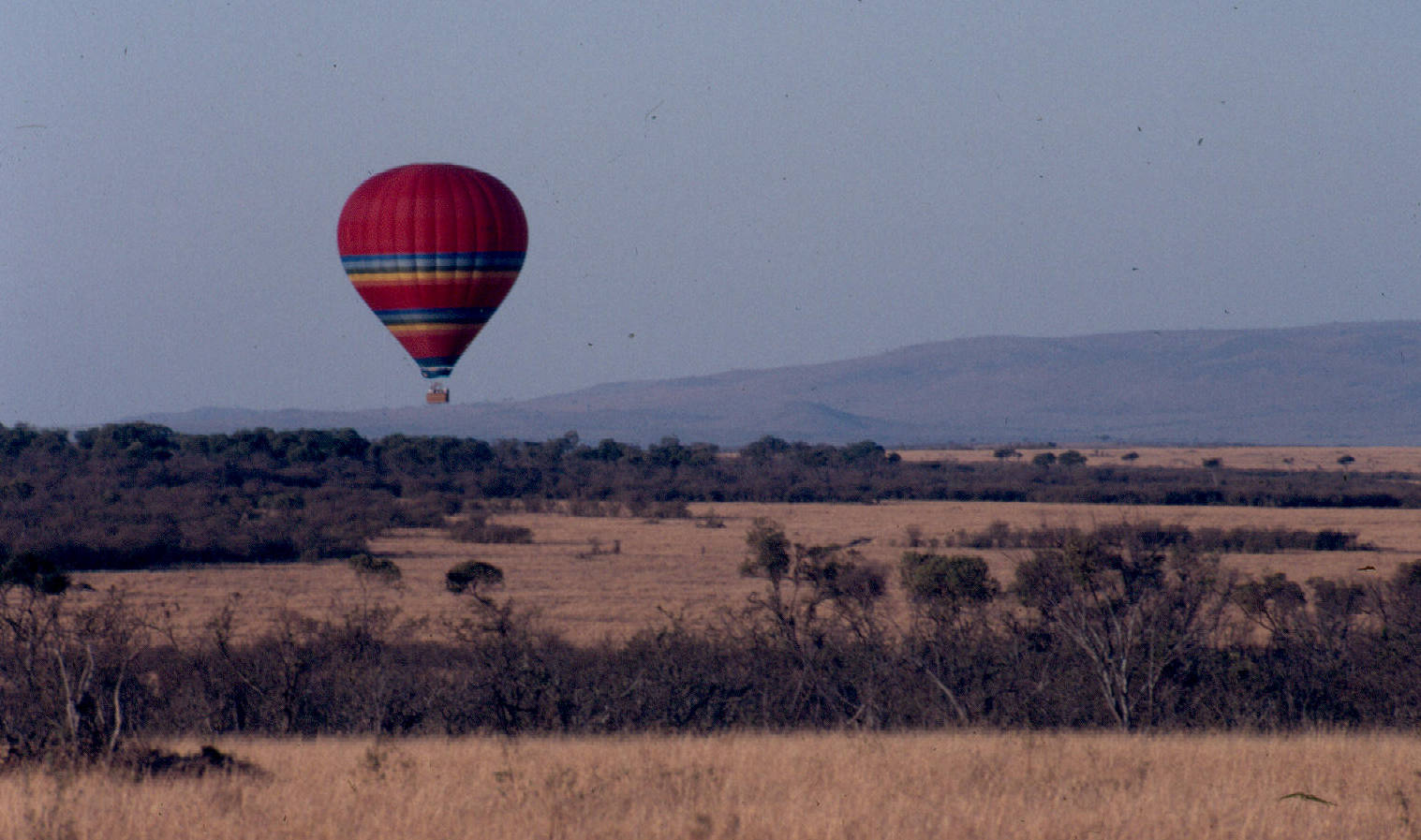
A hot air baloon flies over a rather dry Maasai Mara.

A hot air baloon flies over a rather dry Maasai Mara.

[1] Follows “Chicken a la Rusinga”.

[2] Swahili for a general store shop.

[3] Red was the dominant colour for the Maasai “tunics” at the time.

[4] Sadly he died on 15 March 1995. I placed his Obituary in the Pages section.

[5] Swahili for cultivated land or vegetable garden.

[6] Maasai for house.

[7] Short, double edged Maasai sword.

[8] Kraal in Swahili.

[9] See Pages for more info. The next post describes more of my relationship with Sheila and Joe.

Stoned hummingbird

I was a young boy when this event took place. My father’s work as a Government’s Agronomist constantly demanded his presence in the rural areas. His responsibilities, among others, included pest control, crop storage monitoring and the development of farmers associations and cooperatives.
He used to tell us stories of his jeep Willys getting stuck while driving over swarms of locusts and I used to accompany him while inspecting wheat plantations for True armyworm (Pseudaletia adultera), locally known as “lagarta”.

It was autumn and the harvest of winter crops had been completed and the depots were full to the brim with wheat. His main job was to monitor the humidity of the grain to prevent post-harvest losses due to the normally high humidity levels prevalent in southwest Uruguay.

That day he needed to visit the large depot of a Farmers’ Cooperative in Tarariras, a small agricultural town in the Department of Colonia. Being a young boy, I usually played around while my father did his duty. I was a rather active youngster so the workers tried to keep me entertained while my father was busy. Not an easy task…

On that day, one of the workers who knew me gave me a bottle of a known local methylated spirit made of dark green glass with a stopper made of a maize cob, and announced that it contained a surprise. I did not see anything and was consequently unimpressed, as an empty bottle did not mean much to me. Before I could ask, the Manager of the cooperative who, together with my father were watching said, “Have a good look as there is something inside that I am sure you will like”. I strained my eyes and made out a tiny object rolling inside.

I removed the cob and gently shook the bottle until I managed to get the object out and on my hand. It was a wet and shiny green feather ball that on closer inspection became a dead hummingbird that still felt warm to the touch. It was a sad sight and I was not too impressed with the “present”. Before I could react though, the bird moved slightly and I realized that it was breathing and apparently asleep!

A Glittering-bellied Emerald hummingbird pictured at an artificial feeder in Colonia Carlos Pellegrini, Corrientes, Argentina.

A Glittering-bellied Emerald hummingbird pictured at an artificial feeder in Colonia Carlos Pellegrini, Corrientes, Argentina.

It was the common Glittering-bellied Emerald hummingbird (Chlorostilbon lucidus). Its slumber was explained by the alcohol vapours still present inside the bottle. So, suddenly, I was the new “owner” of a drunken miniature bird and became responsible for its welfare.

Close-up of the Glittering-Bellied Hummingbird.

Close-up of the Glittering-Bellied Hummingbird.

A second one lands on the feeder.

A second one lands on the feeder.

Another view of the bird with an unidentified one with its back to the camera..

Another view of the bird with an unidentified one with its back to the camera..

I held the bird on the palm of my hand where it rolled backwards and forwards until I was able to accommodate it better with a piece of cloth to stop its rolling. Once settled I spent the rest of the day holding it on my open palm being careful not to drop it as it was a very small bird.[1]

When my father’s work was done, it was time to get back home and I was still holding the bird. So I travelled the hour that it took to get home holding the bird and watching it as its efforts to regain normality became more and more frequent. By the time we arrived it was already over its alcoholic haze and it was ready to go.

So, as soon as I left it alone outside and it got familiar with its surroundings it hopped to a small branch to preen itself (and recover from the hangover?) and soon flew away.

[1] An adult bird of this species weighs between 3.5 and 4.5 g while a normal Bic biro weighs 9.0 g !!!

Picture credits: Mariana Cardoso.

Chicken “A la Rusinga”[1]

Matt, driven in a Range Rover, came to fetch me early in the morning for our rather long trip to Western Kenya. We would travel northwest, first following the Great Rift Valley then Kericho, Kisii and afterwards to Homa Bay. From the latter, already on the shores of Lake Victoria, we would proceed to Mbita Point. Rusinga Island was just across, separated by a narrow channel.

Matt enjoyed travelling. He was very cheerful while constantly giving me details of the route, Kenya, his work and other interesting facts. While going down the dramatic Kikuyu escarpment he pointed at a little chapel and said in his heavy Glaswegian accent “This road and this wee church were built by the Italian prisoners during the war” and he added “and you know, one of the guys that came from the Italian Alps longed to climb Mount Kenya, poor bugger”. He continued: “You know what he did? He organized other prisoners and secretly prepared the climb, including all necessary gear that they secretly made, escaped, climbed it and returned!” “That was good,” he said with amusement and respect for his enemy[2].

Going further down we saw Longonot, my first volcanic cone, then Suswa in the distance with its much larger caldera. As the Range Rover continued descending we spotted the blue waters of lake Naivasha with its freshwater, later lake Elementaita and finally lake Nakuru with their soda-charged waters, harbouring prolific birdlife. I made a mental note to return to this magnificent pink lake that on a more careful look revealed its secret: hundreds of thousands of flamingoes feeding on its blue green algae-rich soup. An ornithological sight difficult to match and to forget![3]

From there we continued to Kericho through extensive and manicured tea plantations that slowly became smaller areas as we moved through smallholder owned tea plots that somehow interrupted the large extensions of the commercial plantations. The area offered a great contrast between the tea and the clumps of forest that still remained, adding shady green to the yellowish green of the tea bushes. People, mainly women, were busy picking tea leaves, placing them in their back baskets while lorries were seen at points where the bulk of the tea was collected to be taken to the processing plants. We stopped at the Kericho hotel for lunch and then moved on past Kisii. Finally we entered the final dirt road towards our destination. The going was tough as the road was dusty and rough. I noted that the area got gradually more arid as we drove on towards lower altitude.

Towards Mbita Point.

Towards Mbita Point.

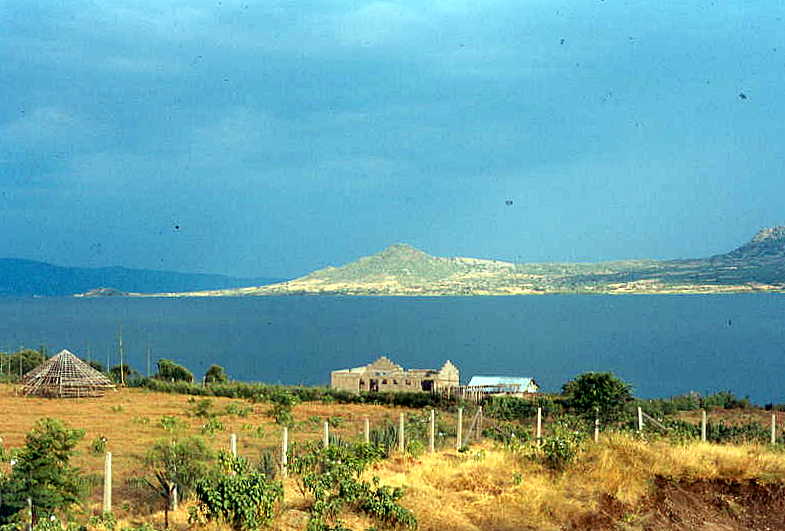
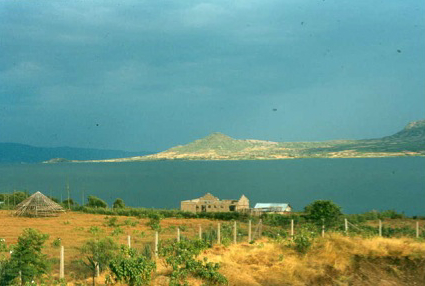
After a while, suddenly, Lake Victoria came into view. The sight did not match my expectations. It was framed by fairly bare and brownish rolling hills in a rather dry landscape that contrasted nicely with its blue water. It was humongous, a true inland sea! I thought on how the early explorers would have felt at finding the main suspect for the Nile source!

We stopped to enjoy the view of Lake Victoria in the distance.

We stopped to enjoy the view of Lake Victoria in the distance.

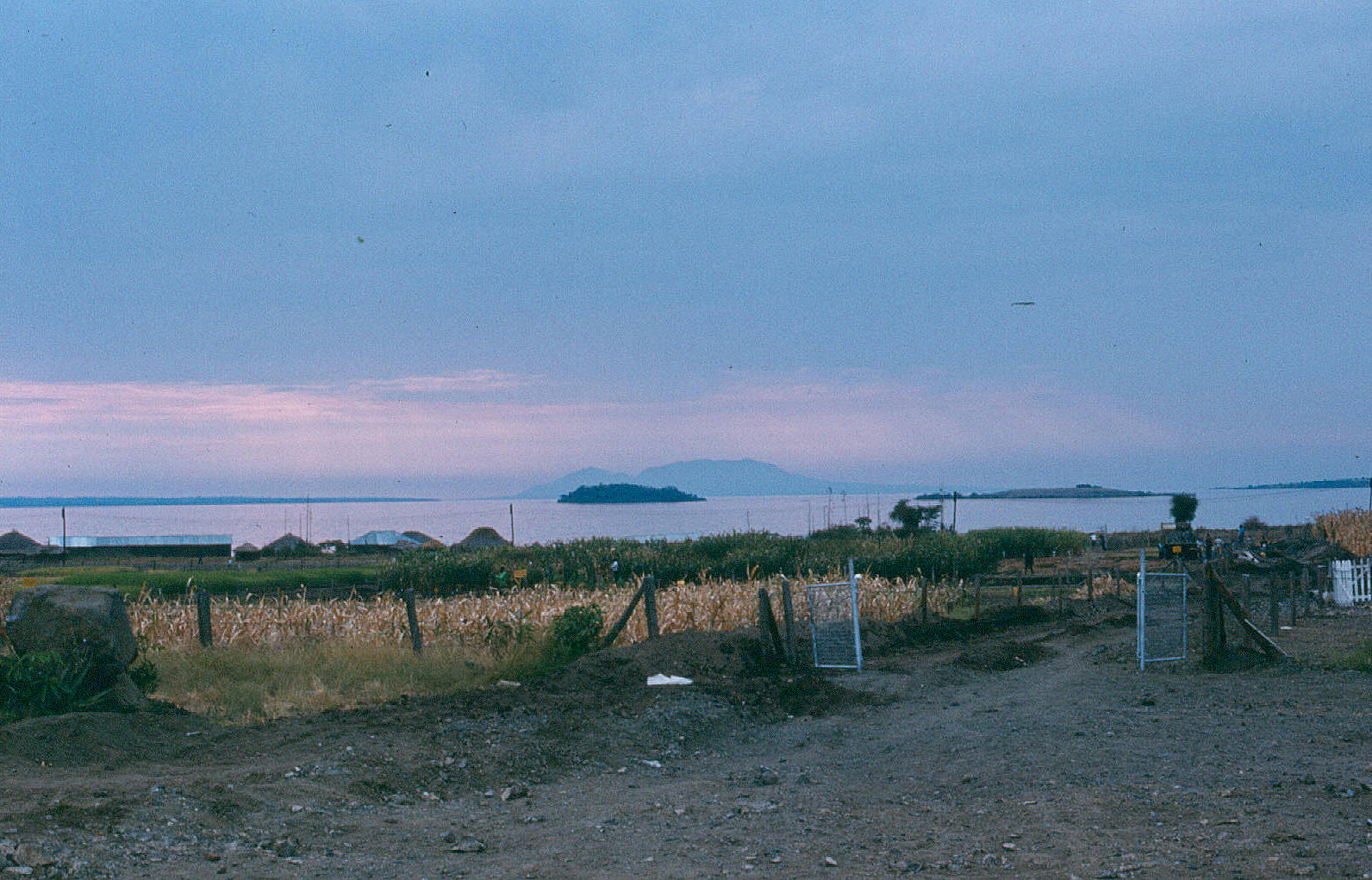
Eventually by mid afternoon we passed Homa Bay and after dustier travelling we got to Mbita Point and, just across, before my very eyes was the now “mythical” Rusinga Island! It looked beautiful by twilight and it suddenly hit me that I had come a long way from Uruguay! However, there was no time for soppiness as we needed to focus on practical issues: to find accommodation and dinner.

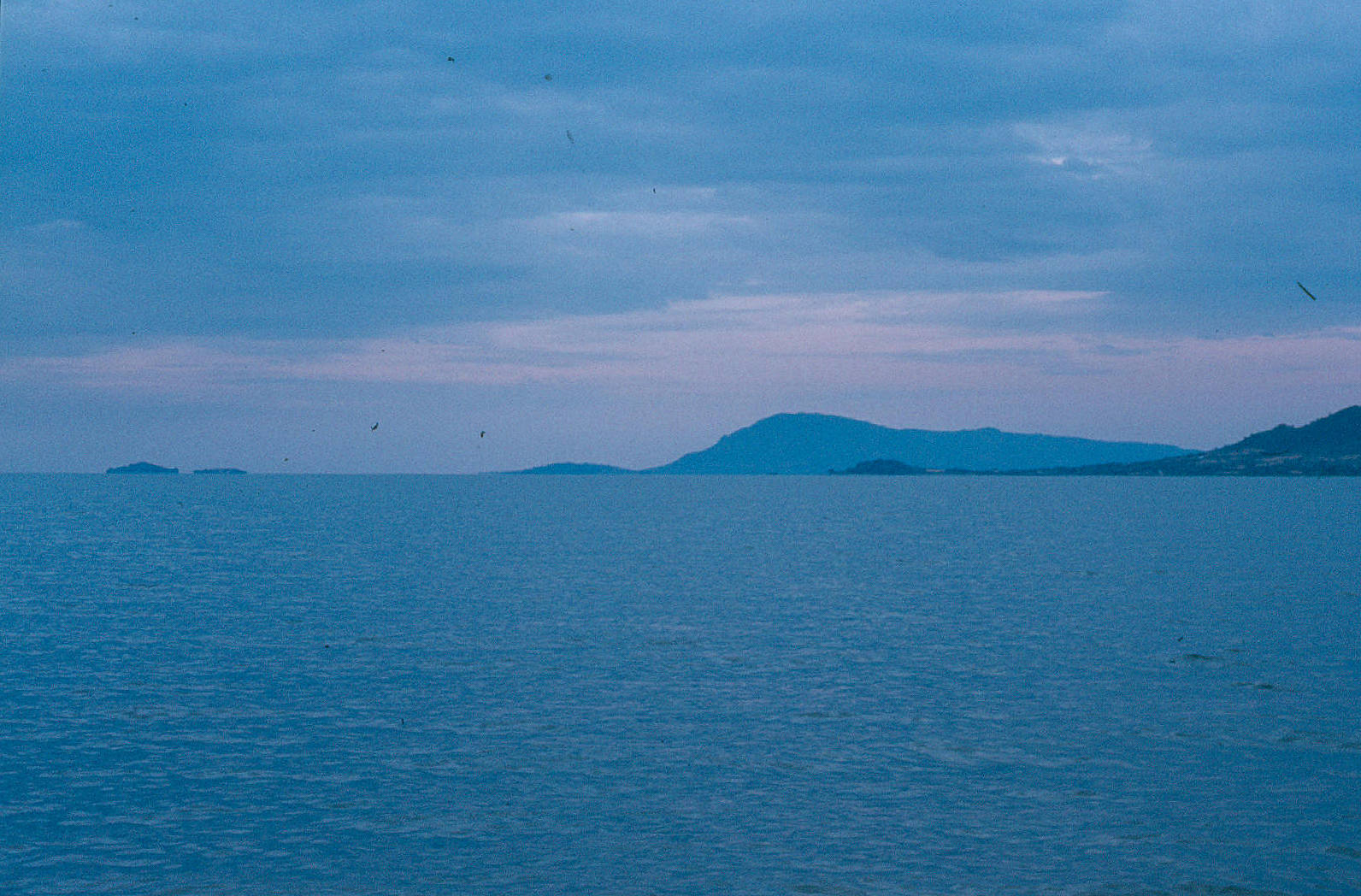
Rusinga island, across the channel.

Rusinga island, across the channel.

During the trip I had learnt -rather to my shock- that this was also Matt´s first trip to Mbita Point so he was as keen as me to see the place. The Head of the station, warned in advance of our coming, was there to welcome us. He apologized for the absence of accommodation and recommended a place for us to camp within the perimeter of the station. We agreed to meet again in the morning and got ourselves to put the tent up and unpack our belongings. While we organized the camp, Matt dispatched the Driver to find a kuku[4] and to bring it ready for cooking.

The entrance to the research station.

The entrance to the research station.

Matt had organized the food for the two nights we would spend there. I saw potatoes in the car and we had also acquired a large cabbage, bananas and charcoal on the road, as it is routine in Kenya. He had also brought a couple of sufurias[5], cooking oil, salt and pepper. Evidently food was not Matt’s main goal in life!

The tent job done, we opened the ubiquitous Tusker beers and proceeded to sit and wait for our soon-to-be dinner to arrive while contemplating the lake, peeling a few potatoes and boiling water. We spent some time discussing whether the Schistosoma[6] parasite would be present in the tap water of the station as we knew of its high prevalence in the area. As this parasite enters a person through the skin, we evaluated the risks of showering with lake water. After some discussion we agreed that we did not know but, more importantly, there was no shower on sight so the discussion ended with a hearty laugh while agreeing to continue in our dirty condition just in case. We left it at that and then changed the subject to the late Tom Mboya, a famous young politician that lived in Rusinga Island[7]. Matt told me that his house would be a good place for me to live. “Typical Matt” I though, “He has never been on the Island but he has already found me a house” but I refrained from making a comment!

We heard the return of the car and we looked at each other as we also heard a chicken! Dinner would be delayed as the Driver had difficulties to persuade farmers to part from one! Eventually, through the old trick of adding more Kenyan Schillings, had managed to buy one. It was a tough-looking country cock and, judging by the size of its talons, an elderly one! Matt was not impressed with the price paid but supervised its killing and cleaning by the Driver and myself. He then placed the whole animal in a sufuria of boiling water adding salt and pepper. The peeled potatoes were placed to boil in a separate one.

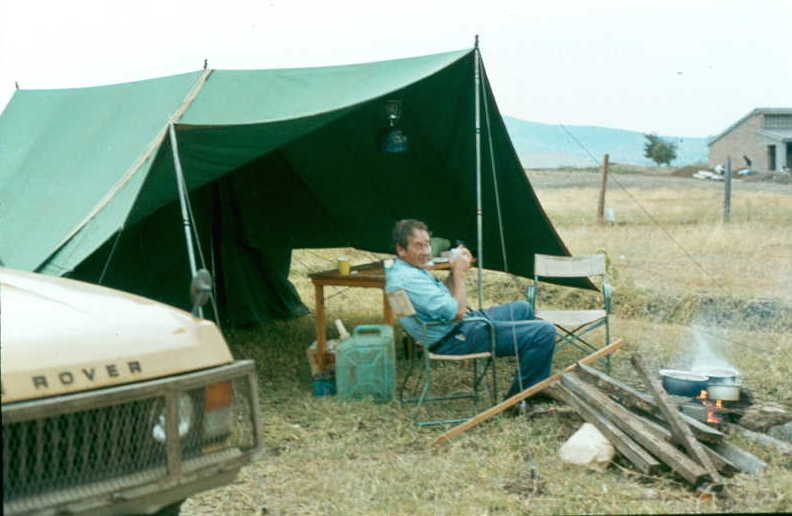
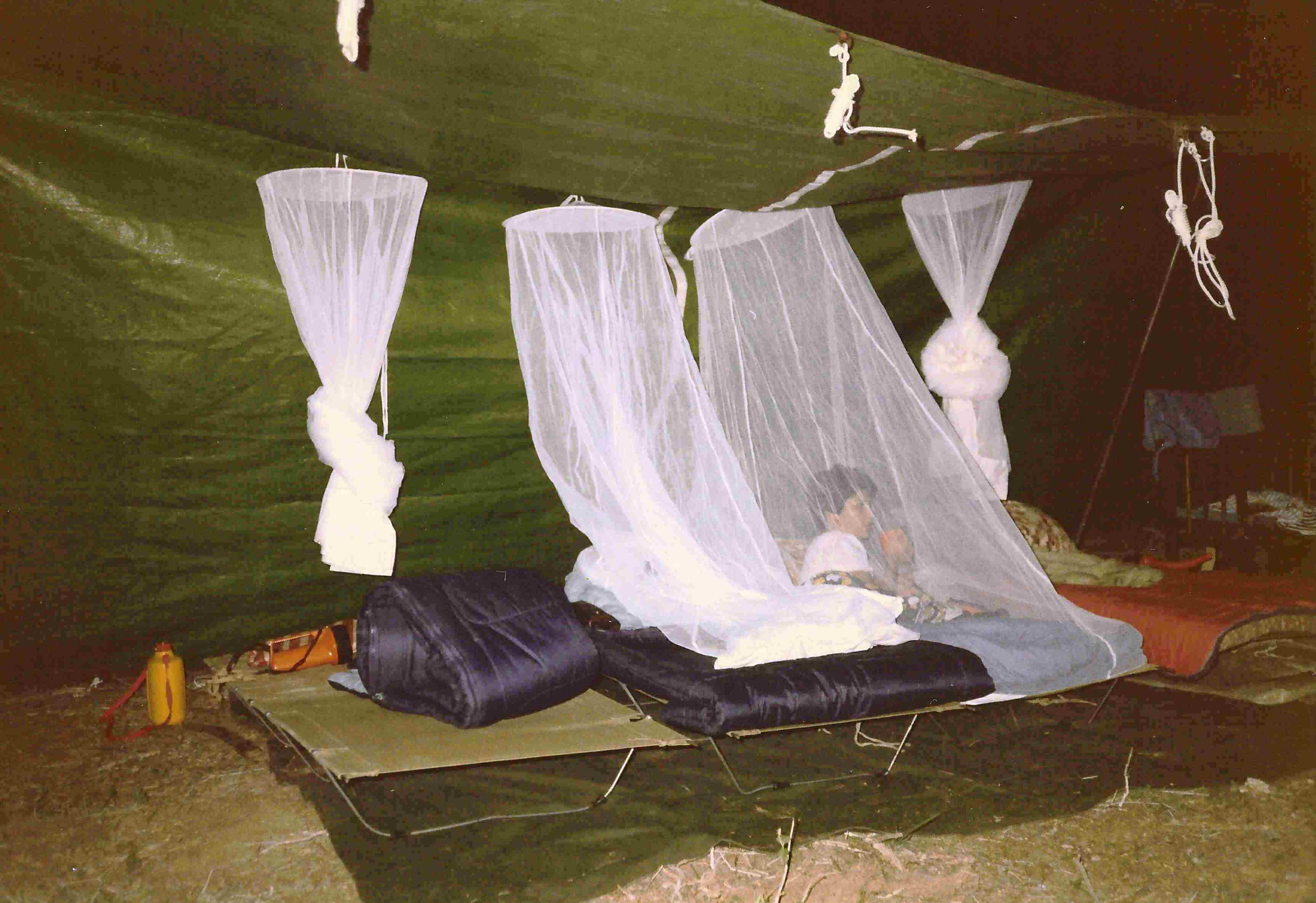
Our camp at Mbita Point. The chicken and potatoes boil while Matt relaxes.

Our camp at Mbita Point. The chicken and potatoes boil while Matt relaxes.

While we waited, time was passing when we heard “Jambo[8] pronounced in the way foreigners speak. It was a crop protection specialist from Ghana -resident at Mbita Point- that learning of our arrival had come to greet us. He knew Matt from Nairobi and he was pleased to see him again. He politely declined Matt’s invitation for dinner but he did accept a Tusker beer and stayed a while.

From him we learnt that at that time the station consisted of temporary prefabricated facilities to house staff and carry out basic laboratory work while the definitive laboratories, staff quarters, school and hostel were slowly being built. We joined him in a short walk by the lakeshore while he explained that he was there with his Dutch wife and that they had two girls aged four and six. He was a specialist on integrated crop insect control and was working on cassava, an abundant crop in the lake region.

The walk by the shore of the lake was very pleasant; the sun had already disappeared behind the hilly Rusinga Island leaving its trail of red –smoke-fed- haze with an amazing cloud frame, product of the high humidity that prevails around the lake. More basic needs suddenly interrupted our inspiring walk when Matt remembered our chicken! We rushed to our camp while our visitor, laughing at Matt’s panic, hastily departed not without inviting us for dinner on the morrow. We shouted our acceptance over our shoulders and kept running to attempt to save our dinner.

Not a chance! The water -clearly not enough in the first place- had evaporated for a while now and our dinner looked black and crusty on the bottom side and raw and very juicy on the top. The potatoes were also dried and rather burnt but had feared slightly better.

As dinner looked rather inedible and there was no way of preparing something else I braced myself for a hungry night. Conversely, Matt found the whole thing very amusing and, oblivious to its apparent inedibility, pulled bits of chicken apart and placed them on our plates together with pieces of the burnt potatoes. He passed me a plate with a Tusker and said: “Julio, welcome to Mbita” and then added with a sardonic smile: “Enjoy our Chiken a la Rusinga!” Unknown to me then, this event became our connection from then on and the anecdote came up in many conversations afterwards, helping us to connect. I must confess that I was so tired and hungry that I actually found the contrast between burnt and raw chicken meat tasty… but I think it was probably the beer that did the trick.

Dinner over, Matt got his whisky bottle from the car and, diluting it with water, started enjoying it. He cheerfully said: “Julio, I know you will be all right!” and, after a few more minutes of night contemplation, he stood up and, after wishing me good night entered the tent. I decided to follow him after brushing my teeth, still thinking of the lake water and its risks! He was already asleep when I finished undressing. Like him I passed out instantly and slept soundly until the morning, no doubt assisted by the Tuskers I have had but also by a belly filled with our newly created delicacy…

Somehow we survived the potentially severe Salmonella challenge and we were both alive in the morning. After coffee and bananas, we went to meet the Head of the station for a tour of the facilities. The fresh foundations showed the layout of the future buildings and the walls of the more advanced constructions had reached about one metre high. Clearly things were far from ready and I could detect some concern from the Head.

Despite the glaring unsuitability of the place Matt -to my surprise and growing irritation- kept insisting that I would be based here! This was music for the Head’s ears, eager to get new staff to “his” station. I kept quiet but my heart was sinking as to do all that was expected from me under these conditions would have been impossible and I saw myself having to build both house and laboratory to be able to move forward. “We have plans for Julio to stay in Tom Mboya’s house in Rusinga”, Matt repeated and the Head smiled and nodded in agreement. My concern was turning into desperation!

In accordance with what was there to see, the tour lasted a short time and we decided to visit the surrounding rural area, accompanied by a local technician to act as guide and show us the way and interpret for us. I found this much more interesting as it enabled me to have my first exchanges with the local farmers and to get a first hand feeling for their problems that, in regard to their livestock, were blatantly obvious! For the first time I saw dwarf cattle! They were the consequence of surviving trypanosomiasis and theileriosis as well as other diseases and parasites that will dispatch European cattle in days if not hours! To reduce the risk of trypanosomiasis cattle were kept tethered until late morning to protect them from the bites of the tsetse fly vectors and they were only left out to graze for literally half day.

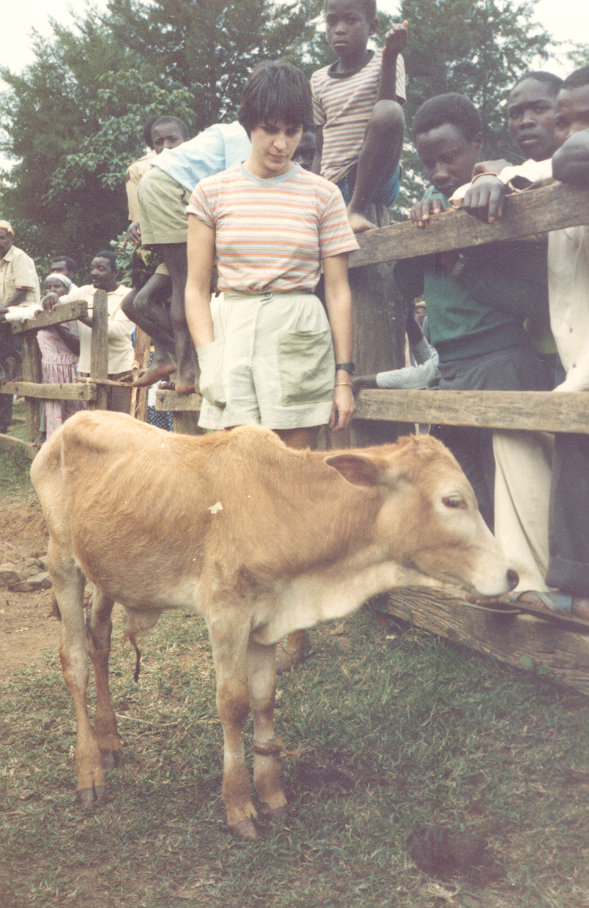
A survivor! An adult steer with my wife and members of the public!.

A survivor! An adult steer with my wife and members of the public!. Please note that this picture was taken during a subsequent trip to the area.

“What do this animals produce” I asked, realizing that it was a rather inept question before I finished asking it! I was told that they gave a calf every 18 to 24 months and that they produced meat and little milk. However, I was explained that other factors are also important in Africa as cattle are not valued only by their productivity but by their many other functions: savings, status and as a source of dowry money. I could not fail to note that they were also covered in ticks of different species! I was starting to learn about African cattle!

The field trip took us until mid afternoon as Matt kept asking to see more and spent time telling them that their productivity would increase once ICIPE developed the tick vaccine! I thought of it as a rather far-fetched promise but that was Matt. We got back from our trip dusty and sweaty but there was no chance of swimming in the lake! If you were spared by crocodile and hippos you were still likely to contract schistosomiasis and spend days under treatment with no guarantee of a full recovery. So a bucket-wash with lake water, the less risky option, is what I took. While I was on cleaning duties behind bushes Matt sat and drunk a Tusker with no intention of improving his personal hygiene and still wearing the same clothes from Nairobi!

I was ready when the Ghanaian colleague came to fetch us for dinner. His blond wife and their two lovely dark skinned and blond girls greeted us on arrival to their wooden prefabricated house. Although the house was small it transmitted a warm feeling where you could see a woman’s touch and the children’s influence. Our dinner of Nile perch was excellent and our conversation started with Matt mentioning the Chicken a la Rusinga of the night before! While having our dessert I asked how was life in Mbita Point as I was curious and needed to prepare for it. Suddenly our hostess that had remained mostly silent came to life and said bitterly: “No drinking water, no electricity, no transport and endemic cerebral malaria” and then she added with a grin of dejection: “apart from that, it is fine!”

Sensing trouble her husband tried to change the subject but she continued, getting more upset when she mentioned that they had all been sick with malaria several times, concluding her horror story. Hearing this Matt tried to comfort her saying that things were improving. However, her reaction was not what he expected and she broke down and started to cry saying finally: “Matt, please do not send Julio here with his young wife, this is no life for them!”

After this acme the lady calmed down but the situation had become very awkward and we soon decided that it was time to depart. We thanked them for their kindness and left walking in silence towards our tent, her words “this is no life for them” ringing in my ears while trying to develop a valid strategy to convince Matt -and ICIPE- of the absurd of having to stay in Mbita Point. Matt did not say a word until we got to the tent and then he only said “Good night” and went in. I sat outside for a while, still thinking. Then I decided that sleep, away from mosquitoes, was the best possible course of action and went to bed.

I heard Matt loud snuffles before I entered the tent. Until then I was the one that snored and my wife had put up with it rather stoically. This time the tables changed and I needed to continue my adjustment to Matt’s ways, this time even while he slept! I came in silently, climbed on my camp bed and closed my eyes. Matt was quiet now so I relaxed and waited for the sleep to come. Soon I started to drift off when suddenly I heard a loud grunt followed by a longish silence and then the start of a chained sequence of snorts that became louder and louder to almost be unbearable and then as suddenly as they had started stopped, before Matt breaking apart! He had gone into an apnea that I associated with his passing. I was wrong; he was alive and well and would repeat the whole shenanigans again and again during the whole night!

A tip of Rusinga island in the forefront (right) with Mfangano island in the back.

A tip of Rusinga island in the forefront (right) with Mfangano island in the back.

His snoring beat my most extreme ideas on the subject and I lied there with open eyes in a moral dilemma: I wanted him to stop but I had heard that waking a snoring person suddenly could be fatal. I also wanted -and needed- him to live so I decided to bite the bullet. Gradually my tiredness got the best of me and with a parting thought that it would be easier to handle his dead body in the morning rather than worrying for each of his “deaths” during the night I also joined in with my own snoring contribution. I am confident in assuring you that our combined efforts kept Rusinga Island awake for a while!

Amazingly the following morning Matt was not only alive but had also already brewed some coffee for both by the time I woke up. “Did you rest well?” he asked knowing that I had not. Then he added “Julio, we need to find another place for you to work as this place is shit!” Startled by his change of heart, all I could do was to nod gravely making a supreme effort not to laugh and shout in joy! I did silently thanked the unhappy Dutch lady, my saviour!

It was time to travel to Kilgoris to meet Alan and to decide my fate and, by en large, my future life.

[1] Follows Kenya: Friends and Foes.

[2] See Felice Benuzzi in the “Pages” section of this Blog for more details.

[3] I am told that today the lake is not what it was as the flamingoes are not there in large number anymore.

[4] Swahili for chicken.

[5] Swahili for handless saucepans.

[6] See http://www.who.int/mediacentre/factsheets/fs115/

[7] See Thomas Joseph Mboya under “Pages” for more information on him.

[8] Swahili for Hello!

An Amphibious Land Rover

I mentioned earlier that I worked as a veterinary practitioner in Uruguay for four years after my graduation in 1975. It was after a couple of years of this work that the events narrated here took place.

It was a luminous autumn day that, as usual, started very early with a mate breakfast[1] before going to work at the clinic. The latter, as most clinics in Uruguay, was a mix of agro-business (belonging to a third party) with our clinic attached to it. At the time we were three partners, myself being the newest.

The shop was a popular meeting place, close to the main bank and it was normally busy. Apart from customers seeking to purchase agriculture-related products as well as getting advice on veterinary issues from us, there were friends and hangers-on all the time. That morning was not an exception and, when I got there, Gerardo, one of my partners was talking animatedly with one of the visitors, Pozzo, a well known farmer from a neighbouring farming area.

The topic of conversation was the then-current situation of the River Plate which was undergoing an extreme low tide that, according to a veteran like Pozzo, had not been seen since he had “use of a memory” as he put it. Pozzo was known as a colorful character reputed to eat eighteen fried eggs for breakfast among other colourful stories attached to his name!

Clearly the situation was interesting and I suggested that, once the business of the day was dealt with, we should go and investigate. Pozzo said he would join us, as he wanted to see what the Carmelo coastline looked like at low tide. So, before lunch the three of us climbed in my car and left for the beach, located a few kilometres away. At the time I had bought a 1959 Series II SWB Land Rover, after trading in my first car, a beautiful red and black voiturette Chrysler 1931 that was too expensive to run on paraffin leave alone petrol!

On arrival at the beach it was clear that the situation was extreme and I had never seen a sight like that before. There was no water for at least a couple of kilometres into the river where only wet sand could be seen except for the navigation channel where the river was still “wet”! Spectacular situations require equally remarkable responses… and I rose to the challenge! For some reason I hatched the idea of going down to the beach and then to drive all they way to Conchillas to surprise my wife -then my girlfriend- with a glorious and an unexpected virgin voyage after 30 kilometres of beach drive!

With the agreement of my eager companions we set off driving over wet sand for a few kilometres without stopping, looking for possible Spanish galleons carrying gold that sunk during the conquest… Of course we found no trace of them but found a large and shallow lagoon where several rather large fish had become temporarily trapped. They were bogas (Leporinus obtusidens) a good fish both to catch and to eat. We watched their futile swims towards the normally deeper areas that ended in them almost coming out of the water! It was a unique sight as these were large fish, apparently doomed. After watching their comings and goings for a while we left to continue our journey.

The way ahead looked clear, apparently all the way and we felt encouraged to go on. So we climbed back to the car and I engaged first gear. The car did not move forward but rather down, or at least its rear end did. I revved the engine but -of course- made matters worse by sinking further into the wet sand. We got out to inspect the situation and realized that we were in a tight spot, particularly bearing in mind that the front wheel transmission in my ancient Land Rover had become somehow disconnected some time back and I had not repaired it!

So, it was a matter of digging and pushing, which we did for a while. After each attempt the car would move a bit and then sink again. We were in trouble! As if being stuck was not enough of a problem, we heard Pozzo say: “I think the tide is coming in”. As I revealed before, he had a reputation for being witty so we did not pay attention to his words and kept on digging frantically.

After a few minutes I could see that not only was he correct, but also that the water was coming in remarkably fast! After a few more attempts the water reached the wheels and the sand became liquid rendering all our efforts totally futile. As the loss of the car became a certain probability I reacted and decided to look for help ashore. “I will go and find a tractor to pull us out” I said not before agreeing with my companions that they would take out all movables from the car, preparing for the worst. I ran to the shore and, very luckily, found someone driving a tractor cutting bulrushes, taking advantage of the lack of water. My hopes increased when I realized that I knew him. A mixture of the absurdity of the situation and my heavy breathing due to the running did not help my explanation. Eventually he understood and agreed to have a look.

My heart sank when he announced that it was too risky to enter the water to pull the car because he could also get stuck in the river as the bottom would be very soft. I insisted but he steadfastly refused so I gave up. I believe that my dismay helped in his decision to take me in the tractor to seek further help. We drove up the steep bank to see if the owner of another tractor would dare to go in as they had a larger tractor.

Luckily the owner was there. This time I did not need to explain much as, before our eyes and into the river we could see my Land Rover being progressively denuded of its movable parts by my trip companions. “There is no way we can pull it with a tractor” he said and added, “If we get stuck, we lose everything!” Somehow my mind moved to what story I was going to tell the insurance company about how I lost the car and then the idea of bringing a wreath every year to the spot also came to mind but it was quickly discarded as superfluous!

“I will try to pull it with horses” the voice of the farmer brought me back from my total loss-related thoughts. “What?” I just managed. “Yes” he said, “I have horses and a pulling harness. I think the horses will pull it out”. He called a couple of workers to bring three horses, the harness and ropes and, before ten minutes had passed we were going down the bank towards the “sinking” Land Rover.

The situation was now desperate! The water has come in fast and it had already covered the wheels. My companions had been waiting, wondering whether I was coming back. We entered the water and walked towards the car with the horses. The car was a pathetic sight as all movable items were no longer there and the water was now covering the engine and flowing inside it! Realizing that time was not on our side we got to work fast and harnessed two of the horses to the submerged bumper. A guy sat on the bonnet with the reins and I sat under water behind the wheel as, although the engine was flooded, there was still a need to steer! A horse was kept in reserve and all other hands got ready to push.

Despite my strong reservations about success, we agreed to push and pull at the count of three. What happened next was unexpected. Under the strength of the horses the Land Rover rolled forward with ease and moved to the triumphant shouts of my rescuers! “Do not stop now!” I shouted, my adrenaline flowing while seated in water to up to my breast steering and watching the back of the farmer on the bonnet that was controlling the horses, our real saviours. Stop we did not and, eventually, we managed to get the car on dry ground and away from the highest tide line mark to a safe zone. I was a happy man and, at the same time amazed that two horses could move a stuck car so easily. Later I realized that the increase in water depth helped greatly in making the car lighter.

News moved fast and, by the time our rescue was over and we were wondering what to do next, my father had come and witnessed the action. Being a photographer, he took the only picture I have of the event that I present you with here. It is a bad scan of the print he took but I hope it shows the absurd situation I got into and, luckily, out of.

The speck in the background is the semi-submerged Land Rover then there is open water and in the forefront an extensive area of water covered with bulrushes.

The speck in the background is the semi-submerged Land Rover then there is open water and in the forefront an extensive area of water covered with bulrushes.

The aftermath was an anticlimax! My father towed us back to Carmelo where we arrived after dark and straight to the mechanic. After dropping the car and when we were alone, as expected he lectured me on my lack of prudence!

In addition to the failure to achieve the feat -and impress my girlfriend- I also suffered financial humiliation when the time came to pay the bill for the car repair!

[1] Mate is a traditional drink where hot water is drank after sucking it through ground dried leaves of yerba mate (Ilex paraguariensis) with the aid of a bombilla (metal straw) from a calabash gourd (mate).

See also  http://en.wikipedia.org/wiki/Mate_%28beverage%29 for more details.

Kenya: Friends and foes[1]

After the initial rather intensive contact with Matt, a time of waiting followed while settling down at Muguga House. I saw Matt less often as he was busy running the Tick Programme. It was time for waiting, he had said earlier, as possible collaborators needed to return from their home leave when the European summer ended.

I was still busy! My attention was fully dedicated to my wife’s arrival as this offered some logistical issues both locally but also en route. The local issues were easier: obtaining a more comfortable bungalow at Muguga House and persuading a colleague to provide us with night transportation to and from the airport as her arrival was late at night. The issue of her Visa was a serious concern, though. For some reason better known to the intricate recesses of international diplomacy, Uruguayans get a Visa at the airport in both Kenya and South Africa, a rather convenient procedure. All very well then. Not so: my wife needed an overnight stopover in Johannesburg and needed a Visa for South Africa.

Flight connections were not as frequent as today. Nothing wrong with that you may think. However, I had learnt while in Kenya that, because of South Africa’s apartheid being in full swing at the time (1981), passengers arriving in Kenya with their passports stamped by the “racist regime” would be denied entrance and sent back! This was part of the blockade being imposed by all African countries to South Africa at the time.

I could expect no assistance from the Embassy of Uruguay in Kenya as there wasn’t one![2] There were only three Uruguayan embassies in Africa: Egypt, Nigeria and South Africa. Aware of that there was no South African High Commission in Kenya I decided to first see the airline and then, if all else failed, to call the Uruguayan Embassy in South Africa seeking help. Cellphones did not exist and landlines between Muguga and Nairobi did not work very well so the best thing to do was to go to Nairobi to meet the airline, Varig at the time.

As her arrival was imminent I decided to travel to Nairobi the following day using public transport, no doubt encouraged by the experience I had on arrival[3]. The trip consisted in finding a way from Muguga to the main road and then another one to Nairobi, both ways.

The trip started well as I was lucky to find transport straightaway and got to the main road in good time. I joined a crowd of waiting passengers and, soon enough, a matatu[4] was waved down. It was a VW minibus, the brand that at the time dominated the minibus world in Kenya.

My hopes of a good ride in the front evaporated fast as this was apparently reserved for women and friends and currently overflowing. With moderate pushing and shuffling I entered, after paying the tout the necessary fare. “Not too bad” I thought while finding a seat in the back. “At least I will learn the dynamics of public transportation”. I also thought that the trip would have been fast as the bus was pretty full -by my standards- already. Nothing could have been more wrong! People needed to get out but many more got in until there were over twenty people in the back (I cannot say how many there were in the front seat as visibility was severely impaired!). Amazingly, we still accommodated a few more before we reached the Post Office stop at Nairobi city centre.

I literally popped out of the jam-packed bus and walked to the Varig office, almost on a “high” due to the sudden increase in oxygen levels, despite Nairobi’s high altitude! I hasten to add that, despite the large number of people and the scarcity of water in the rural areas, there was no more human body smell in the bus than in any minibus or lift in my country or the UK for that matter!

The Varig representative, fortunately, was not at all concerned by my predicament. “All you need to do is to ask your wife to get her Visa on a separate paper” she said. And she added, “She gets that paper stamped, makes sure that her passport is clean when she presents it to Immigration here”. Those were the tricks of countries under UN sanctions! The rather fast resolution of the Visa issue left me with time in my hands so I decided to look for Matt at ICIPE and I was lucky to get a most welcome return ride all the way to Muguga with him. He was rather surprised that I was so grateful and, after explaining the reasons, luckily he agreed to approach FAO in Nairobi to get me a vehicle. A rather good outcome from the matatu ride!

My wife’s travel went without hitches and I soon had her with me at Muguga House. Her arrival coincided with the return of most of the potential collaborators and I had the chance to meet some of them as well as do a lot of reading about tick and tick-borne diseases, working at the KARI library, an excellent source of historical research documents on the subject. I prepared a new work plan everyday, only to abandon it as my knowledge augmented!

Over the following days Matt took me for a round of official meetings to meet several people relevant to my future stay in Kenya. We had a rather difficult and cold meeting with the Government Veterinary Department and I could detect negative vibrations. In the end I was given the green light. Matt did not enjoy the meeting and he was rather short-tempered for the rest of the day. I, conversely, was happy that I was in Kenya to stay!

We also met the FAO Representative to update him on my plans as well as to plead for transport. Luckily, his response was positive and he asked the Administrator to identify a suitable vehicle for my use. This produced a VW Kombi, redundant from an earlier project, that was allocated to me for private as well as official use! An added advantage was that it had one of the most coveted items: a red -diplomatic- plate, a road opener. So we were finally mobile. The new car was ideal for us. Although it did not have 4WD, it had the necessary road clearance to take us all over Kenya.

Returning from a muddy Maasai Mara Game Reserve in the VW Kombi.

Returning from a muddy Maasai Mara Game Reserve in the VW Kombi.

At Muguga we met the Director of KEVRI, a highly qualified, very friendly and smooth Kenyan that was very welcoming. He was the Chairman of one of the two most popular soccer teams of Kenya and very involved with soccer in the country. We connected immediately when he learnt that I was coming from a country with such a good soccer pedigree and, although we talked about my future work and how collaboration could be strengthened, the main topic of our first meeting was soccer! Among the issues we covered was the possibility of me getting a Latin American coach for his team! This was the beginning of a friendly relationship through which I got very good support at work and also shared a few soccer matches with him.

The final of the “obligatory” meetings was with the Director of ICIPE. He was a highly educated and suave Kenyan Professor that was difficult to meet as he was constantly in meetings, running the Centre and meeting Donors and partners. He was pleased to see me and gave me valuable directions on what my situation as a Fellow within ICIPE would be and, of course, directed me to his Deputy for further issues. During the meeting he was very clear that I was awaited at Rusinga Island as ICIPE’s new research station at Mbita Point needed scientists settling down there. After the meeting was over, I learnt from Matt that the Director’s home area was precisely Western Kenya and that was the reason for his keenness for me to get there. Apparently the die was cast!

After these meetings I saw Matt less frequently for a while. Luckily Robin, the ICIPE ecologist, returned and I started going to the ICIPE laboratory at Muguga to be with him and learn. He was a very kind man, graduated in Oxford, who never refused to answer my questions and be of help. I was really lucky to find him and with him I learnt most of what I know about ticks and their ecology!

I had been in Kenya for about two months by now and I still did not know about what I would be doing so, concerned, I decided to ask Matt what was happening. The opportunity presented itself when he came to Muguga for a meeting. I managed to get a moment alone with him and asked him about the situation. Matt’s reply left me cold: “Julio, if you are not happy with the situation you tell me now and we cancel all arrangements and you go back to Uruguay and nothing happens”. I was shocked and worried but perhaps I had insisted a trifle too much or perhaps he was having a bad day as his mood sometimes seemed to swing. However, as the FAO Fellowship was all I had, I replied that I trusted him and would wait. I said: “Matt, the idea is not to leave but to let you know that I am worried for the delays”, I answered. “I understand your problem but this is Kenya and things work differently and at a slower pace. This should be clear to you from the start, otherwise you will not be able to work here” he said, in a way that was meant to close this uncomfortable encounter. I got his message and began my adjustment process to Kenya, Africa and to Matt’s ways and moods!

A few days later Matt came to see me at Muguga. He was in a jovial disposition. “Julio, Alan is back and we are meeting him now” he said. The meeting was timely and good. Alan was aware of my arrival and very keen to work with me as he saw the collaboration as very promising. The various work options were discussed and it also transpired that Matt had been under great pressure from the Government regarding my work as the latter had different ideas[5]. There had also been some administrative difficulties between FAO and ICIPE regarding the administration of the Fellowship’s funds. However, it had all been solved by now and we were, apparently, ready to go.

Matt was as idealistic as Alan was practical so they were a good combination: ideas and execution. I liked Alan from the start. During the meeting it was agreed that I would do some work at Muguga itself as well as field work. We would therefore visit Mbita Point and Rusinga Island with Matt. On the way back to Nairobi, we would take the opportunity to visit the ranch in the Transmara where Alan had his research on immunization. Finally, the return would be across the Maasai Mara Game Reserve, an added bonus.

It was agreed that, after that visit we would be in a better situation to take a decision on my future research work. In a way they kicked the ball forward! Nevertheless, I was happy to see movement at last. We agreed to leave as soon as possible.

[1] Follows “Kenya: Muguga”

[2] A complication that affected our lives and I will refer to in a future post.

[3] See “Africa – Arrival” in this blog.

[4] In Swahili, passenger minibuses or closed pick-ups.

[5] A couple of years later I learnt that the Kenyan Government had their own candidate for the FAO Fellowship that I got and my appointment did not go down well.

Kenya: Muguga[1]

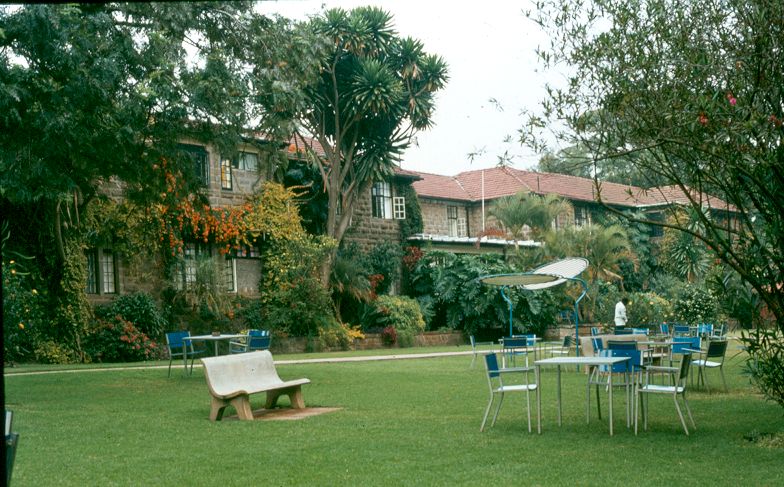
The last night at the Fairview Hotel was a good one and I enjoyed my breakfast in the garden, where I noticed that birdlife in Nairobi was prolific and that there were not only several bird species but there were also large numbers of them! I did not know their names yet, apart from the ubiquitous sparrows that I knew from Uruguay. I was amazed to see birds so tame, in particular a kind of iridescent blue ones with cinnamon chests[2] that would come to my breakfast table expecting something from me! “Cheeky ones”, I thought.

The access to the Fairview Hotel.

The access to the Fairview Hotel.

It was light by 06:00 hours and dark by 19:00 hours so, unless you covered your ears, it was impossible not to be woken up by the early loud bird chorus. As it is customary, a cup of early morning tea is brought to your room and I had asked for mine for 06:30 hs, had showered and packed my bags before I went down for breakfast to be ready for Matt’s arrival.

A Superb Starling (Lamprotornis superbus).

A Superb Starling (Lamprotornis superbus).

The hotel was good and, thankfully, economical as I did not get any perdiem as a FAO Fellow and my stipend was rather modest. I needed to watch my expenses all the time. Clearly aware of my modest income Matt had booked me at a Government’s Hostel in Muguga, known as Muguga House until more permanent accommodation could be found. Muguga was then about 30-40 minutes drive North of Nairobi, in the direction of the Uganda border.

Packing Matt’s car -a smallish Honda Civic- was trickier than expected. One of my bags filled the boot so I went straight for the back seat, only to be warned by Matt “Wait, this is my portable Office archive” I looked up and only then noted that the back seat and floor were covered with papers and publications. “I need to be in several places so I carry the work with me” said Matt while piling papers on the floor in no particular order!, until my bag fit.

We drove straight to the hostel at Muguga. The place consisted of a central building where the administration and common facilities such as dining room and bar were located and a number of two- and three-room cottages with toilet and bath, scattered throughout ample wooded grounds. Matt had already booked me a cottage so my settling in was smooth. I noticed that several cottages were occupied and wondered who my neighbours would be but I left this for later. I adverted the Manageress of the arrival of my wife in about one month and arranged to pay monthly. I also deposited some advanced money for the use of the bar and I was settled.

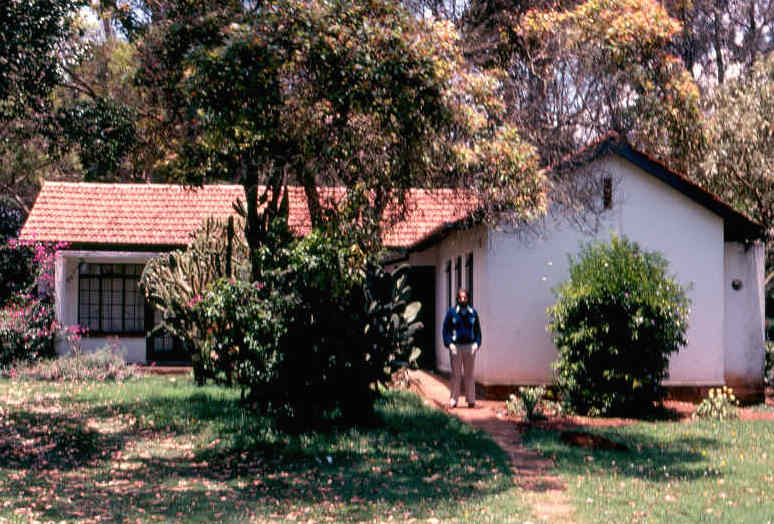
Our bungalow at Muguga House.

Our bungalow at Muguga House.

After Muguga House, we toured the very large grounds of the Kenya Agriculture Research Institute (KARI) where we saw the various establishments based there such as the Kenya Veterinary Research Institute (KEVRI) and the Kenya Trypanosomosis Research Institute (KETRI). Matt pointed out the ICIPE’s “laboratory” at KEVRI. To my eyes it looked like a very small barn but I kept the comments to myself.

We did not find any of our prospective collaborators as most were on leave and others outside the Institute so Matt decided that lunch would be at ILRAD’s restaurant, so we drove back to Kabete, about half way between Muguga and Nairobi. While KARI impressed me as a formerly beautiful place built by colonial Britain and getting slowly worn down by lack of funding and maintenance since Kenya’s independence, ILRAD belonged to another planet! It was a modern and beautifully set campus with manicured lawns and all possible facilities to perform research on livestock diseases. To me it looked like a grand place tailored for high-powered research with several state of the art laboratories and all the necessary equipment that scientific research would need. All of this was nestled in a lovely hilly area where the central manicured lawns and woods were surrounded by grasslands where lovely zebu cattle grazed. “Julio, welcome to ILRAD” said Matt while finding a place to park among the abundant 4WDs and other expensive cars. I could not believe my eyes!

While walking towards the canteen Matt explained that ILRAD was created in 197… to solve two problems Trypanosomosis and Theileriosis. “A difficult job” said Matt and added “I know lots of people here and we will meet a few over lunch”. The restaurant followed the style of a university campus restaurant and it was very busy. The diners were of mixed race and different nationalities. I was amazed, as Ross seemed to know everybody. He walked straight to a large table at a corner and introduced me to the Director General and his Argentinian born wife. I also met many other people that day. The place was a hive of activity and the closest resemblance to a place I had been was the University of East Anglia in the UK while I learnt English prior to my MSc studies in North Wales. It was both stimulating and rather intimidating but, above all, totally unexpected!

After lunch we toured the laboratories and talked to even more researchers about what they were doing until Matt decided that we had done enough and it was time to leave. He invited me to pass by his house in Tigoni, North of Nairobi, for a cup of tea. Matt’s invitations were more decisions than invitations so I was not given a chance to refuse, despite being rather tired by then!

It was a worthy visit as another huge surprise awaited me. His house was a lovely British-style house with a tiled roof and stonewalls, located in beautiful woodlands. A stream ran through the large grounds and this was the source of water for the trout ponds being developed. I could see at least three from the house.

Although she was not informed of our visit[3] his wife gracefully invited us for tea and cake in the lovely garden. Afterwards Matt gave me a guided tour of the trout dams with two of his three young sons. The third one was busy becoming a plane pilot in Nairobi Wilson Airport. It was an impressive development as three dams were being built and there was a lot of activity. Clearly Matt was serious about his trout! Afterwards it was his wife’s turn to show me their flock of African Gray parrots. About eight young parrots were kept in a large enclosure. They were young fledglings when seized as part of an illegal shipment at Jomo Kenyatta Airport. “They were in bad condition when we got them but we were lucky to get them all back to good health” said his wife, proud of her achievement. She also informed me that once fully grown they would be returned to the Kenya Society for the Protection of Animals for distribution.

Matt somehow interrupted the “parrot tour” to bring me back to his verandah as he wished to show me something. I followed him until he stopped facing the dams. “Julio, this has been my dream since I left Scotland” he said and then added “I will catch them from here when I retire and cannot walk anymore” he said, mimicking the fly rod movement from his verandah and laughing heartedly. It was clear that Matt and family enjoyed a very good standard of living that, in my ignorance, I did not expect to find in Africa!

The more I listened to Matt the more I gathered that he was a man with many dreams and ideas both private and professional. While the trout dams being built belonged to the former, the achievement of an immunization method against ECF was clearly part of a realized professional dream. A more recent one was the development of the vaccine against ticks and he talked about it as if it was something really achievable. However, it was clear that his veterinarian’s heart was with ECF work while the tick work -mine included- was more of a necessity for him, despite his infectious enthusiasm.

I continued listening to Matt for the rest of the day and it helped me to get an initial understanding of the persona as well as the worker. It was clear that as someone who got to the top of his working area, he had made himself a few enemies, both black and white. Realizing that I would have to share them I listened carefully. As most people in Kenya at the time, he had a rather colonial view of racial relations! I learnt that he had a long-term rivalry with a Senior Government veterinarian as well as with other British colleagues. He had a clear dislike for one and described his face as looking like “a weasel peering out of a bear’s ass”. I did not really understand what that meant until later!

We drove back to Muguga at the end of the day, still talking and making future plans. We agreed to meet again in a couple of days to carry out a few protocol visits: Government, FAO and ICIPE to start with.

I got back just in time for dinner and to get to know some of my future housemates. There were several Kenyans from up country, Ugandans and the ubiquitous British. I shared the table with some of them. Food was simple (some roasted, boiled or curried meat with rice and occasionally salads), soon to get boring, particularly the boiled cape gooseberries and custard dessert that I eventually learnt would be a lunch and dinner ending feature forever!

More interesting was the after dinner conversation held in the main hall. Most of the guests were long-term and worked in different institutions at KARI. There were mainly agronomists, biologists, foresters and veterinarians and the topics of conversation were Kenyan politics, sports and comments about life in Muguga House. It was entertaining and interesting as well as informative and some of the friends I made there remain friends to this very day!


[1] Follows “Kenya – The Beginnings”.

[2] Later I identified them as Superb Starlings, a common bird in East Africa.

[3] No cell phones then!

Kenya: the Beginnings[1]

Recovered from my curry dinner and rested I met Matt, my future supervisor. My first impression was that he did not take much notice of his personal appearance. He was tall with stooped shoulders, going bald and had somewhat bowed legs. He wore khaki gray trousers, a long-sleeved shirt, a green cardigan and Clarks shoes (always the same model that he never changed[2] for the years I was with him!) and, at first sight, he seemed friendly and direct but also demanded respect. He spoke with a strong Glaswegian accent that took a while for me to get used to.

We had a cup of coffee and talked for a while and then he invited me for a tour of Nairobi as he said “Julio, we can talk while we see the city and tomorrow I will take you to Muguga House where you will stay for the time being”. I was delighted, as I had no transport. So we spent most of the day together and I got a valuable briefing on important issues for my future. Most importantly, I liked him and I thought then -I believe correctly- that he also liked me in his own way.

Matt had been born in Scotland 58 years earlier and graduated as a veterinarian in Glasgow. After working in Pakistan (he was very proud of his Urdu), in the 60’s he moved to Tororo in Uganda to work on African Animal Trypanosomosis[3]. His important findings on the epidemiology of this deadly disease placed him in a prestigious place in the parasitology world, particularly in the African context.

His success prompted FAO to hire him in Kenya to spearhead a very large programme to develop a protection method against another cattle scourge in East Africa: Theileriosis [East Coast fever (ECF) or Corridor Disease], caused by a blood parasite -somehow similar to Malaria- known as Theileria. Those were the days of the early East African Community composed by Kenya, Tanzania and Uganda. The Brown Ear Tick (Rhipicephalus appendiculatus) is ECF’s vector[4] inoculating cattle (and other wild animals) with the Theileria parasites from its salivary glands, and, most of the time killing the susceptible animal. Some wild animals such as African Buffalo survive the infection and become “carriers” of the parasite, a kind of storage for the disease that can jump again to cattle through the ticks as the latter feed on different hosts.

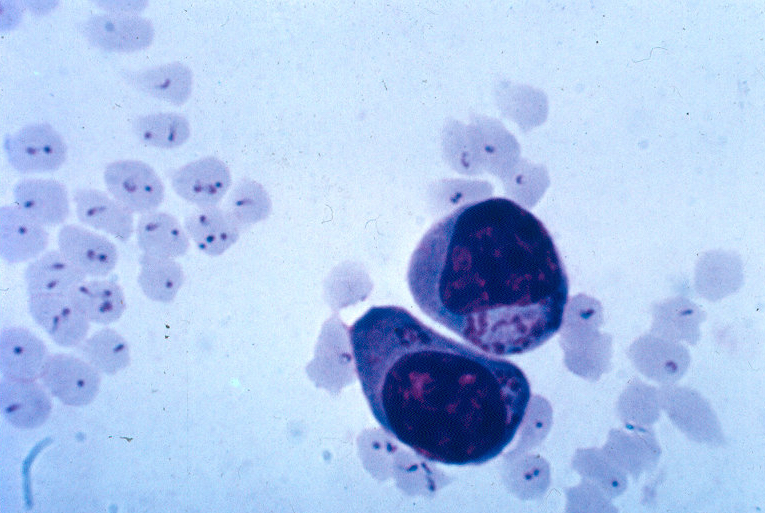
Theileria schizonts (inside cells with nucleai) and infected erythrocytes.

Theileria schizonts (inside cells with nucleai) and infected erythrocytes.

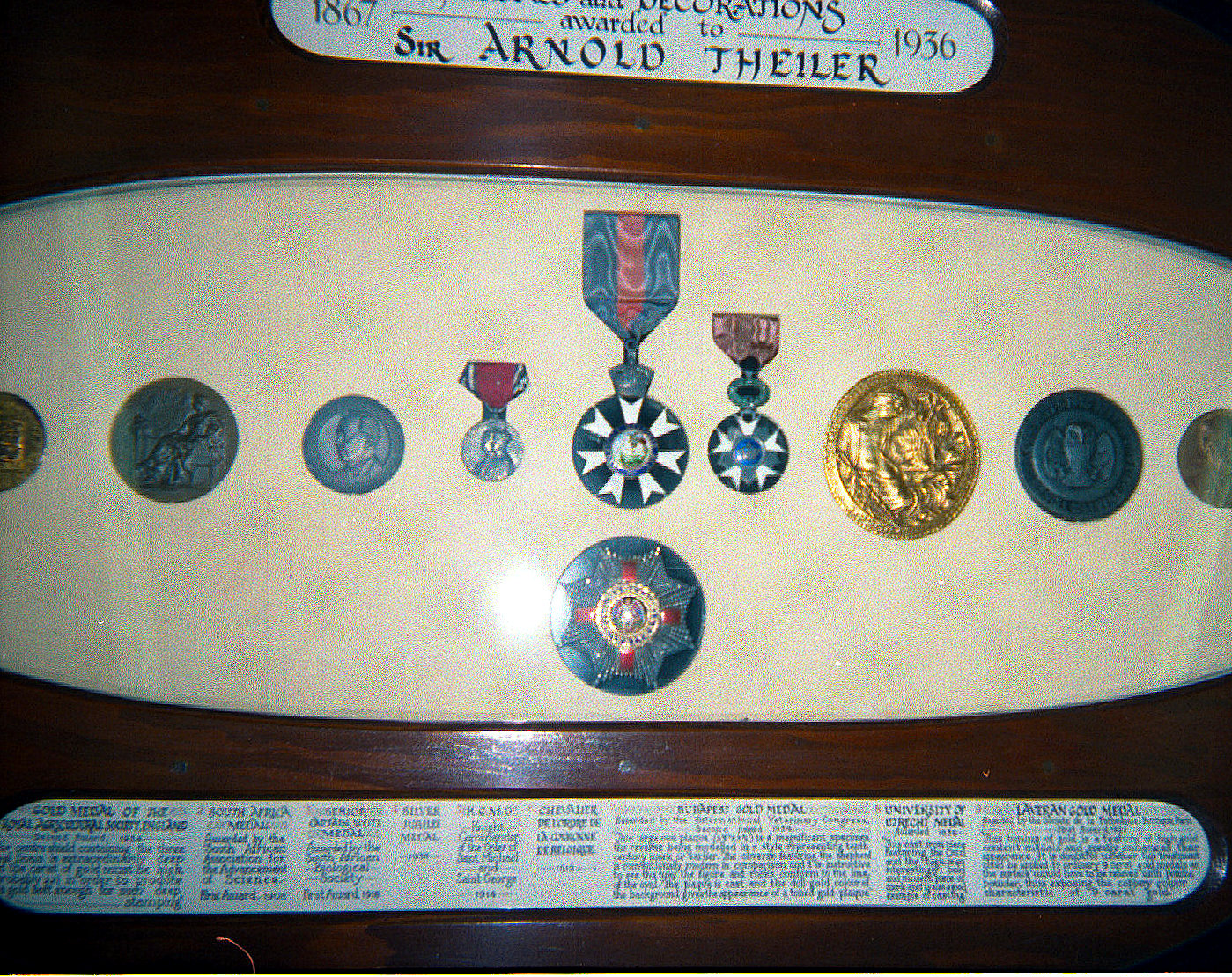
Theiler's condecorations for his outstanding work.

Theiler’s condecorations for his outstanding work.

Clearly, Matt’s main contributions to the programme were to keep a very diverse scientific team working together for years and to achieve its goal. (Later, I learnt that he was a strong leader and heard several stories of rather vehement programme meetings where participants came to blows and chairs flew but I am not able to confirm them).

It was clear that he had managed to successfully “translate” his research in Trypanosomosis to ECF. Success started when the programme managed to reproduce the disease artificially by injecting a known number of ECF infective units extracted from the tick vector[5]. This achievement enabled the programme to develop an efficient system to work with the disease that, after more than ten years of research, culminated in the development of an immunization method: a mix of Theileria types[6] that, when inoculated to an animal together with the right antibiotic (tetracycline), would produce a very mild disease and result in the animal becoming immune practically for life[7].

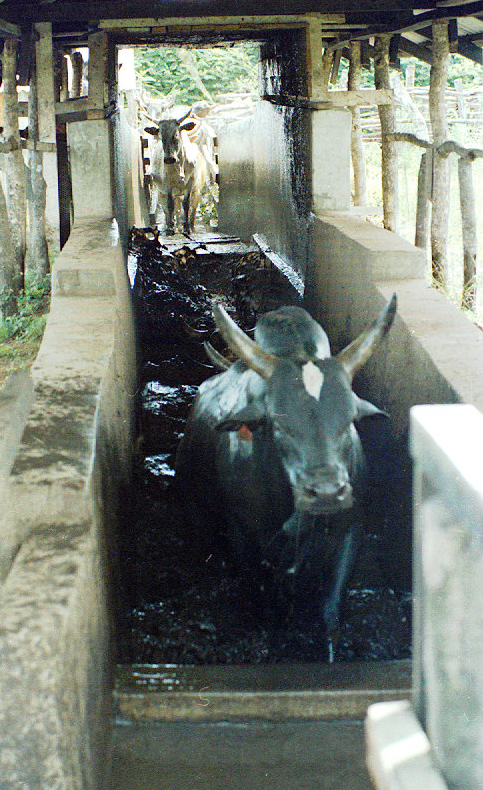
Cattle being dipped with acaricides.

Cattle being dipped with acaricides.

Until the development of this immunization method, the only way to keep cattle in ECF endemic areas was by “cleaning” the animals with insecticide-like chemicals known as acaricides[8] dissolved in water as often as twice a week! In theory, the new immunization method would remove the need for intense acaricide treatment with beneficial effects for both the animals and environment.

Despite the advances in ECF immunizations, the ticks would still be there and have an impact on the animals as parasites. I was a small cog in this rather complex parasite-vector-host system and my mission was to quantify the effects of the ticks themselves on productivity and their economic impact. I had 30 months to achieve this! Clearly Matt’s over-optimism had permeated the project proposal, as I later discovered was true for most proposals he developed…

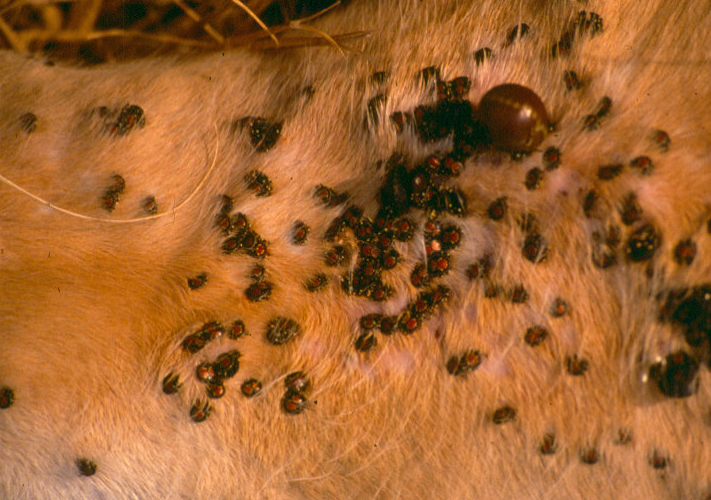
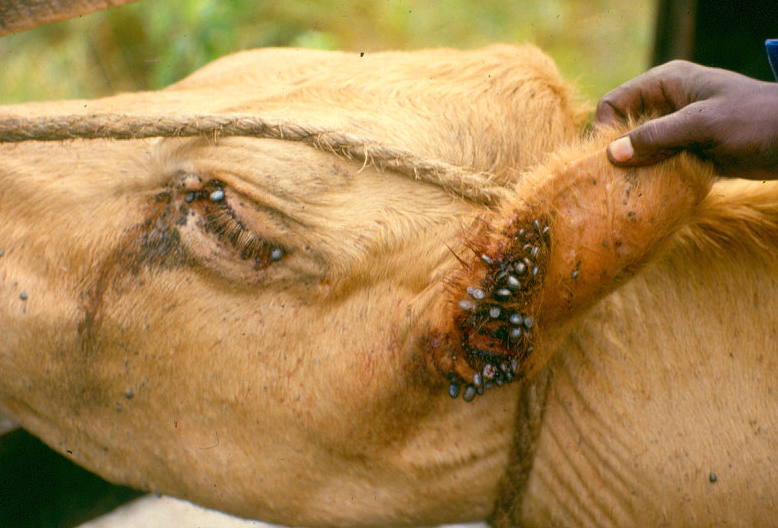
Heavy tick infestation, mainly Amblyomma spp.

Heavy tick infestation, mainly Amblyomma spp.

Brown Ear ticks

Brown Ear ticks

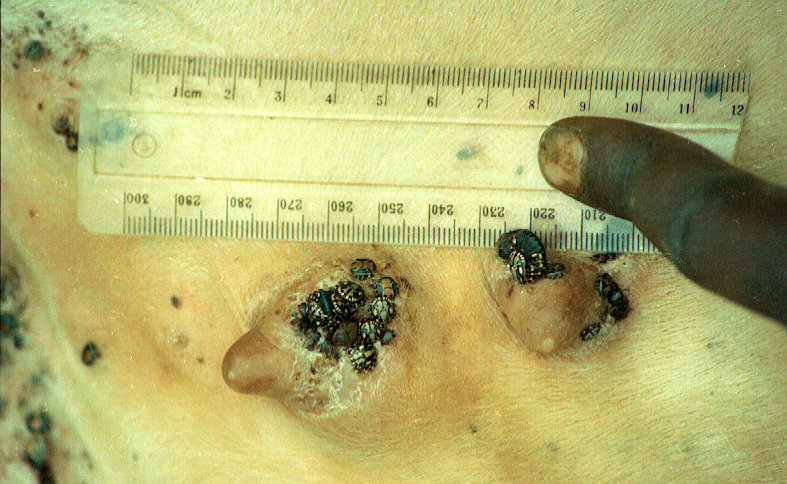
Amblyomma cohaerens (gold) and A. variegatum (orange) tick infestation.

Amblyomma cohaerens (gold) and A. variegatum (orange) tick infestation.

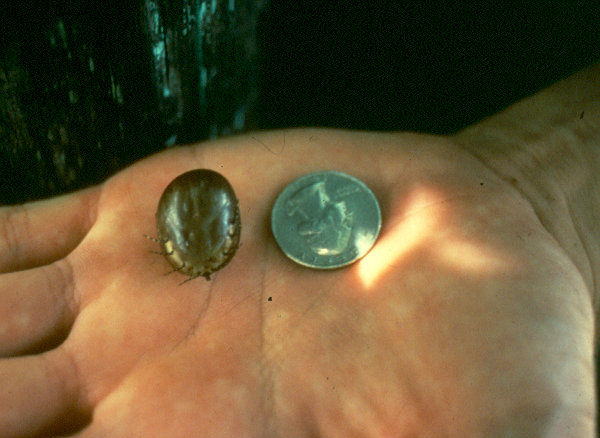
The size of a tick!

The size of a tick!

Matt, at the timenow retired from FAO, was the Director of the Tick Programme ofat the International Centre of Insect Physiology and Ecology (ICIPE). The ICIPE would host me as an FAO Fellow attached to the Tick Programme so he was my direct supervisor. . I was seconded by FAO to the latter, hence his role as my boss. The Tick Programme was working on the ecology of the Brown Ear Tick as well as searching for a “vaccine” against the Brown Ear tick vector. “Julio, we have a laboratory in Muguga and good relations with the veterinarians working on ECF there, so we will succeed”, he said. I listened with interest, accumulating questions and anxieties!

He was very excited with my arrival. I recall him saying “Julio, you are at the right place at the right time” while lighting another Sportsman cigarette (he was a heavy smoker), adding “Most of the important work on theileriosis is taking place in Muguga!”. In fact I was a bit too early but I did not know this yet! He explained that the work of the now finished FAO programme still continued and the immunization method was being laboratory and field-tested in various places in Kenya, mainly Muguga[9] and the International Laboratory for Animal Diseases (ILRAD)[10]. “Julio, the key word is collaboration” Luckily, because of his past work he had lots of connections with people working in ECF in Kenya.

Almost immediately he mentioned Alan as one of his main allies. A Northern Irish parasitologist that as Matt put it: “has green fingers with parasites”. You will work closely with him, as he is the man behind ECF immunization. “He is waiting for you at Muguga!” he said. He added, “Robin, our tick ecologist -on leave now- is also there. He knows everything you need to know on the ticks so you will be OK”. I noted that Muguga would be an important place for me!

We drove around Nairobi and he showed me some of the key spots: the FAO Office near Bishops Road, the ICIPE HQs at Chiromo, ILRAD and the Veterinary Laboratory, both located at Kabete and other useful places in town. He never stopped talking about work! We did not drive to Muguga (about 30 km north of Nairobi). He promised to take me there the following day.

I soon realized that Matt was an “ideas man” and that I was part of one of them! He believed that my fieldwork was possible and had agreed with FAO to host my research. I also learnt that there were a number of knots yet to be untied for me to do my job. The place where I would work was the main bone of contention but Rusinga Island was still top of the options. My preoccupation increased!

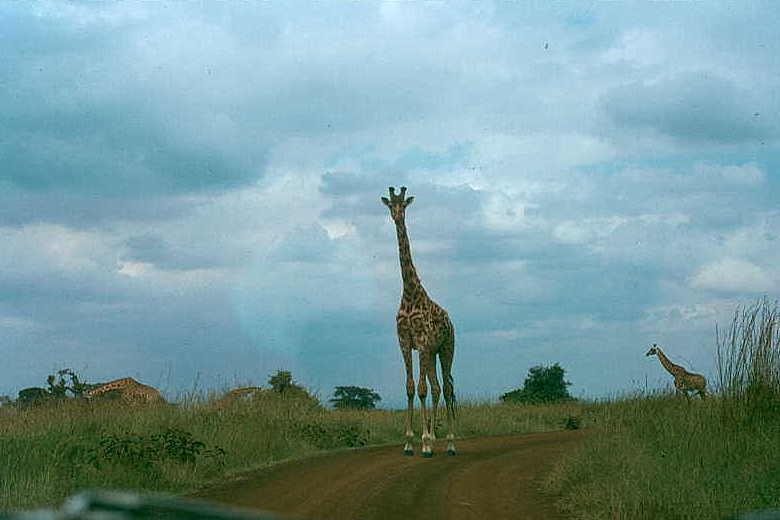
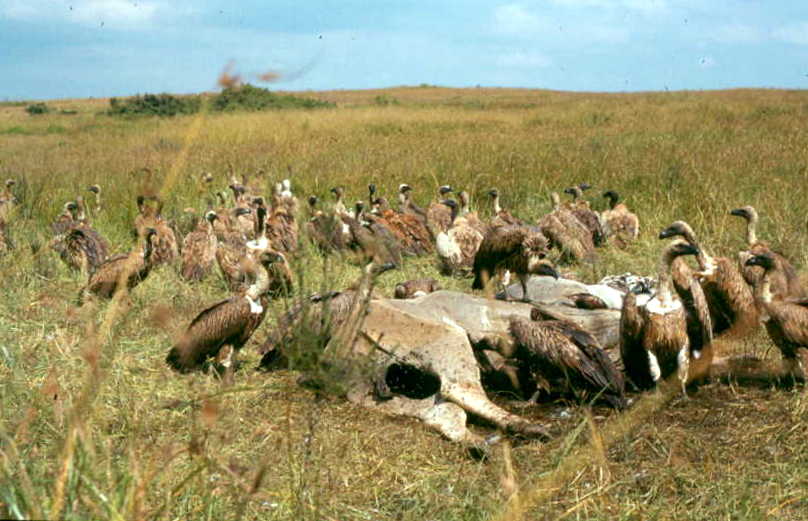
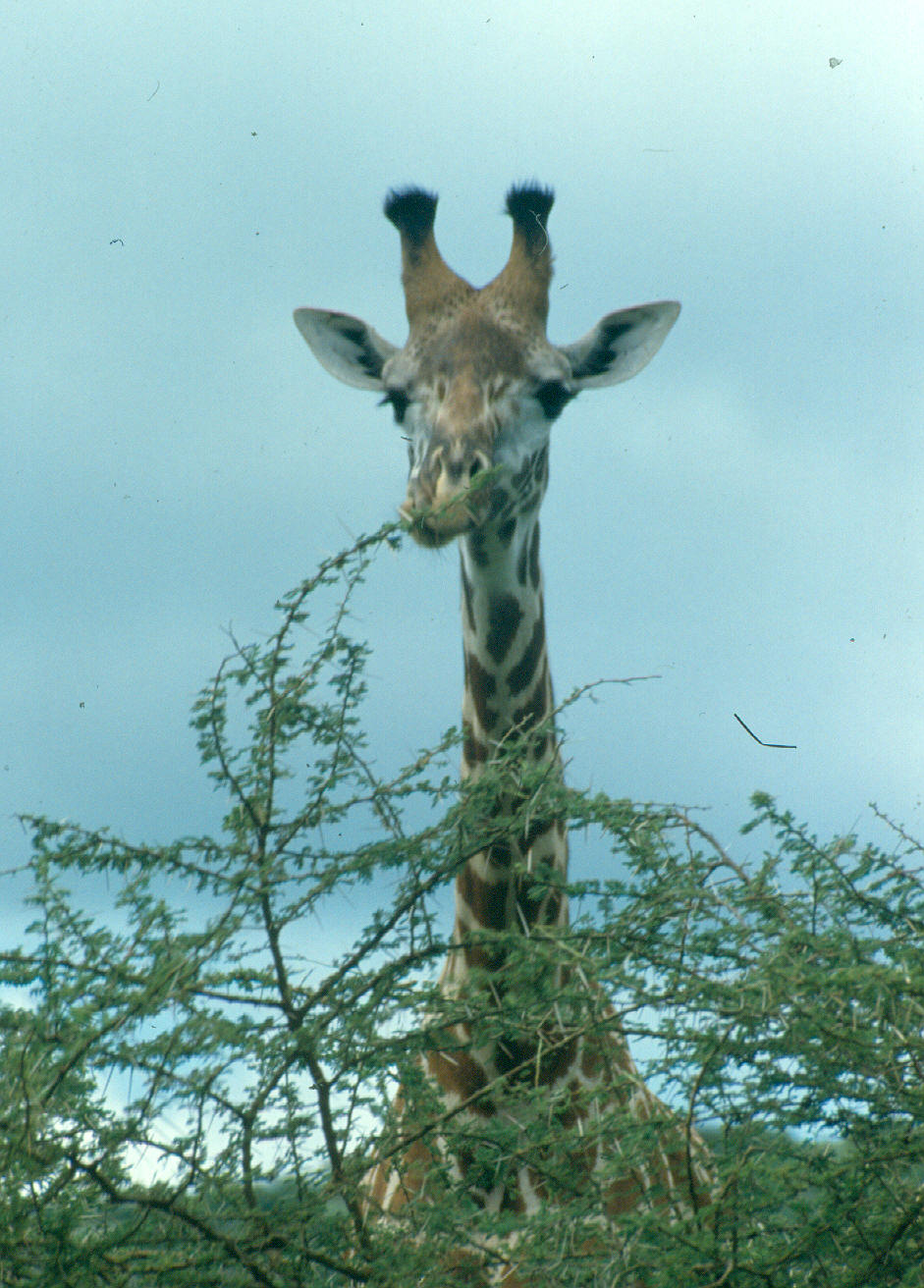
Lunchtime was approaching and Matt proposed to have lunch at the Nairobi National Park. I happily obliged. So, after stopping at a duka[11] to buy samosas[12] and two packs of milk we drove to the Park. We soon got there and we drove almost straight to the Viewing Platform without stopping to watch anything! Matt had seen all or did not care about wildlife! I took some hurried pictures of what I could during the short stoppages he did or from the moving car. It was the first “real” wildlife I had seen! We stopped for a herd of giraffes and drove past vultures at a kill and had our lunch while taking in the view extending into the Athi plains and beyond. It was my first picnic in the bush at a beautiful location! Matt continued talking about work, his enthusiasm unabated!

My first giraffe at Nairobi National Park.

My first giraffe at Nairobi National Park.

I took this picture of vultures at a carcass while driving past!

I took this picture of vultures at a carcass while driving past!

Occasionally he would digress to his other passion in life: fly-fishing. He loved it and never missed an opportunity to practice it. He explained that he was building dams at his house in Tigoni -an area North of Nairobi where many British lived- so that he could keep his own trout. “Julio, I can catch them from my verandah” he said while mimicking casting his fly towards the plain! I was also a fisherman but knew little about fly-fishing so I limited myself to polite and rather useless comments! He promised to take me to his house to show me the dams and to introduce me to his family. Clearly aware of my rather useless comments regarding fly-fishing he never invited me to join him!

At the end of the day Matt dropped me off at the hotel and we agreed that the following day he would collect me in the morning and take me to Muguga, my future “home”. I was tired, both physically and mentally. Although I had gained valuable information I had also accumulated many questions that I needed answers to. Being young and rather anxious, I needed to rest, relax and think. I had entered a new world with new places, new people and a different working methodology. I was beginning to realize that my work would come with a few trials. Despite this, I never regretted my choice as I loved the Kenya atmosphere and I was hopeful that things would work out in the end, despite my present doubts.

[1] This post follows “Africa – Arrival”.

[2] He may have several pairs of the same model!

[3] At the time Glasgow Veterinary College was strong in East Africa.

[4] Similar role to the mosquito in malaria.

[5] Until then ECF was only caused by applying live ticks.

[6] Theileria parasites vary in different areas.

[7] This method known as “infection and treatment” is still today the only practical method available to us, despite years of high-powered and costly scientific research.

[8] Ticks are acari. Acaricides are very toxic chemicals.

[9] The Kenya Veterinary Research Institute (KEVRI) of the Kenya Agriculture Research Institute (KARI) was located at Muguga.

[10] Now the International Livestock Research Institute (ILRI).

[11] The local name for a shop that in the “old” days was mostly owned by Indian migrants.

[12] A fried triangular pastry filled with minced meat, mutton or chicken, heavily spiced and chilly-hot.

Africa! – Arrival

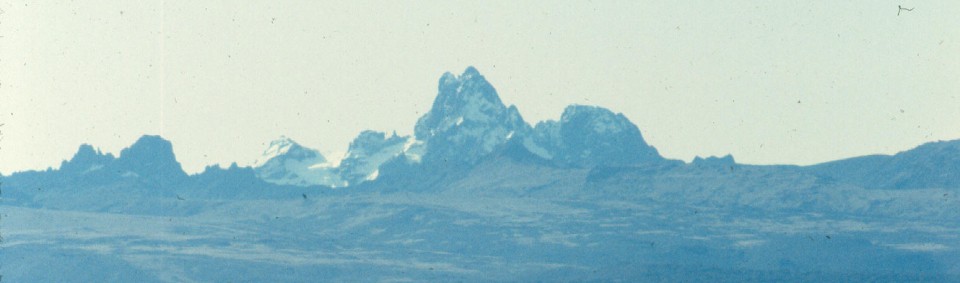
cropped-mt-kenya-way-to-shaba-1.jpg

This time I do remember boarding the Boeing 707 of Kenya Airways at Fiumicino airport, as it was like moving into another dimension. All passengers seemed exotic to me and there was an African crew! After dinner I read and re-read all the documents I was given in order to impress the people I would be working with. At dawn, the plane started to lose altitude and I was very excited when I saw an incredible green lake in the desert. The pilot explained that it was Lake Turkana and that we were close to landing in Nairobi.

The first area of Kenya I saw: Lake Turkana. The picture was taken a few years later during a safari there.

The first area of Kenya I saw: Lake Turkana or the “Jade Sea”. The picture was taken a few years later during a safari there.

Then I felt it. It was a light stitch of pain in my lower abdomen. I dismissed it at first as the consequence of lake Turkana´s beauty on my system, but when it repeated itself I knew that not only were the passengers on board colorful and exotic but also the food bacteria belonging to that category. As we had less than an hour until landing, I decided that I was going to manage by focusing my mind on my surroundings. In any case, the pre-landing queue for the plane’s toilet was such that I had no options left.

By the time we landed at Jomo Kenyatta International Airport I only had one thing in my mind: finding a toilet! I learnt that it is called choo in Kiswahili. This was my first and very necessary brush with the language. My obligatory gut-related pause took its time. When I was able to emerge, I was relieved all the passengers were already gone. Although it did not seem like it to me, it had taken quite a while! Luckily there were still immigration officers waiting and I entered Kenya after a careful and thorough examination of my exotic Uruguayan passport. Only my suitcase remained on the conveyor belt.

It was early morning in Nairobi when I left the airport building and started looking for the airport bus, as advised by my FAO colleagues in Rome, who were aware of the need to save my limited fellowship resources and my own meager capital. I looked up and down the front of the airport and found it empty. No FAO reception committee despite the information forwarded about my arrival! Eventually I found a bus and made my way slowly towards it. My suitcase was heavy and my cabin luggage probably heavier and its strap was cutting into my shoulder! Be aware that I packed for a two and a half year journey as I was well aware that I did not have the funds to return to Uruguay until the end of the fellowship.

I entered the empty bus (with my luggage as there was no haul), chose a seat near the front and prepared myself for a long wait. I was feeling good and looking forward to the future. My gut seemed settled by now. In those days there were no cell phones so I could not call anyone and I was on my own. I was about to have a catnap as I lacked sleep when movement between the trees caught my eye. My first impression was that I was dreaming but I was actually seeing the long spotted neck, at the end of which was the head of a giraffe that was busy browsing on a yellow-bark acacia just 10 metres away from the bus. Amazed, I discovered another one and, after my eye got used to it, about fifteen more animals, all sailing slowly across the airport parking area in search of fresh acacia shoots. They were very relaxed and, as the first rays of sunlight bathed their faces, I saw the most beautiful eyelashes ever created.

One of the giraffes browsing at the airport!

One of the giraffes browsing at the airport!

The sputtering and vibration of of the bus’ diesel engine interrupted my giraffe-induced rapture and forced me to focus on holding on. I considered myself very lucky to be the sole passenger on the bus. A choo stop has its advantages I thought… My joy was short-lived. To my surprise, the bus stopped a few blocks from the airport to pick up passengers. “This cannot be”, I thought, “the airport bus goes to the centre of town and it should not pick people up on the road!” Despite my mental opposition, the stops continued at regular intervals and the bus started to fill up. This was clearly no airport bus but a normal city bus, part of the Kenya Bus Services known as KBS buses and I had no idea of its route or destination! Now I also realized why it was so cheap! To put it mildly, I had a minor panic attack! But, as there was nothing I could do, I accepted my fate and waited for the outcome of my wrong choice.

I now need to elaborate on the concept of a full bus. In the countries I had lived in until then, a bus is full and stops picking up passengers when all seats are occupied and standing people are not able to move. Not in Kenya. I witnessed a new definition of bus “fullness”. The bus did not skip a single stop and people kept getting in, first to occupy the seats –I counted four bodies in mine in addition to myself. Throughout the bus, bodies filled all available spaces, maximizing every possible centimeter with unbelievable precision, as if accomplished by professional packers. First I lost physical contact with my luggage and soon afterwards I also lost visual contact. I regretted their likely loss with a sense of emptiness and not a little despair but what could I do? My immediate attention was focused on more vital activities: getting sufficient breathing air to be able to reach the final destination. Luckily, my earlier gut incident was still not showing signs of returning. At least something is going well; I though, while trying to position my nose in an air pocket between a shoulder and a face. I smiled but the face did not! Its eyes were closed in a sound sleep!

The passengers included primary and secondary students, mothers with babies, workers, police and even a Maasai warrior in full regalia trying to avoid impaling passengers with his spear and simi (long double edged knife). Despite the mass of bodies and apparent discomfort, laughter was frequent and this would continue during all the time I spent in Africa. Although I was looked at as an unusual passenger, I did not feel threatened or uncomfortable. Body odour mingled with the smell of baby talc, stale mothers’ milk, fresh fruit and exotic spices.

When I was starting to feel that my choice of bus may have been my last, I felt a slight slackening of bodies after one of the stops and then, gradually, the bus began to expel people and finally stopped at the end of its route. To my amazement, my bags were still there and seemingly intact! All doors opened and out went the few remaining passengers and I remained, like at the start of the journey, on my own. I asked the driver where we were and I seem to recall that he mentioned Eastleigh, a suburb of Nairobi, very far from my destination in the centre of town.

I am not sure what prompted the next act and it remains as another mystery of my lucky life in Africa. The Driver, clearly seeing the desolation showing in my face, asked where I was going. I explained to him that the Serena Hotel in the centre of Nairobi was my ultimate destination. “You are too far from there my friend”, he said. And then added, “this area is not safe as there are too many shiftas!” (rebels, outlaws) to end with a “you do not see wazungu (white people) walking here and there are no taxis either” This left me speechless and I was desperately trying to figure out my next move -clearly quasi suicidal- when the bus doors closed and it moved again

Before I could protest for him to let me leave it, he grinned and said: “I will take you there!” He said it twice as I asked him to repeat it for fear of having misheard him. So I was the sole passenger on a trip that ended when the bus entered the offloading area of the Serena Hotel where the doors were opened and I descended to the amazed look of the concierges! That was a gesture of human solidarity that not only moved me but started to prepare me for what I would find repeatedly in Africa.

He departed with a wave and I entered the Serena. My sense of elation evaporated the moment I learnt the prices of a room and decided that this was not for me and went back to the street. This is not a good or common thing to do when you are carrying the amount of luggage I was, but, as I did not know this then, my saving obsession got the best of me. It was even more unexpected for a mzungu (white person) to walk around carrying bags in the streets of Nairobi.

I began to ask people on the street for a cheap place to sleep that night and, as is normal in most of Africa, someone offered to accompany me to precisely such a place! Needless to say, my idea and the one of my Good Samaritan were quite different! After walking to two possible places, we parted amicably. Luckily, there was another passerby who took me to a hostel nearby that seemed clean so I settled for it, left my bags and went for an afternoon stroll to find my bearings and get my first feel for the place. (Note added on 8/10/14: The hostel was the C.P.K., now the Anglican Church of Kenya Guest House located in Bishop’s Road, off Ngong Road. The Guest House was used to accommodate missionaries from up country missions. See: http://www.ackguesthouses.or.ke/nairobi/index.html).

I returned to the hostel at dusk, very tired and ready for dinner and bed. The day had been long. Dinner was a modest affair served on a communal table. As I was very hungry I helped myself to an abundant helping of the only available dish: a meat stew that did not look too bad and there was also rice to go with it. I am a fast eater and this time I did not wait and got on with the job.

For the first 10 seconds the mouthful of meat behaved like any tough and seriously overcooked piece of Uruguayan beef. After that fleeting evaluation passed, a number of things started to happen, all new to me until then. In what I thought a miracle of chemistry, the half-chewed meat suddenly caught fire in my mouth and, hoping to be unnoticed but trying to smile –an impossible task while suffering third degree burns- I spat it out. “Uhmm very grrood” I muttered while looking for the nearest source of water and wondering about whether my vocal chords were still there. While my mouth and surrounding areas were being cauterized, I felt the hair on my head and neck rise, accompanied by copious sweating of my eyelids, something that hitherto had never taken place! As I had never cried with the outside of my eyes, I was clearly concerned but managed to wipe the sweaty tears and gulped a glass of water in a rush. I could not distract myself from focusing on the status of my already castigated pyloric region and hoped that would withstand this added and novel punishment.

Trying to appear normal and having recovered some of my speech function I muttered another positive comment about the food while I waited for the water to calm things down under the clearly amused look of my African table mates, too polite to laugh openly at my rather comic status. Thankfully, in nature all comes to an end, and to my relief the burning eased and slowly the affected organs started to respond again. I also learnt that I had just experienced my first encounter with a beef curry of the “mild” variety.

I was sure that I had locked my room to go for dinner so I was surprised and concerned when I found it open. “The only thing that I need now is a thief” I thought and walked in prepared to defend my meager possessions. To my surprise, my lamp was on and a man was lying on my bed! Confused but very tired I said good night and went to sleep in another place only to spot, among the clothes of my roommate a white priest collar. It all fell in place as I became aware that my cheap hostel find was a religious place were church personnel posted in the field coming to do business in Nairobi. So it is that, surrounded by sanctity, I had a very good night’s sleep and did not hear anyone else entering the room although it was full when I woke up to face another day. Clearly they were quite angelical in their movement.

The gardens at the Fairview Hotel.

The gardens at the Fairview Hotel.

The following morning, after a curry-free breakfast and happy to learn that all my body parts had healed, I managed to make contact with the local FAO office. Clearly unaware of my gut-rot related delay in arriving to the lobby, they were very concerned that I did not turn up at the airport and thought that I had missed my flight. They also gave me the address of the Fairview hotel where I should have been and the contacts of my future boss, a Scot with whom I met later the same morning.

But that is the beginning of another story!


Caput Mundi

Foro Romano cropped

Roman Forum.

It was July 1979. I was getting ready to travel to Armidale in Australia to join a team of scientists working on internal parasites of sheep to study for a PhD. My medical clearance, visa application and travel bookings for September were all advanced. I had been in Uruguay for a few months after getting an MSc in animal parasitology at the University of North Wales, UK and the PhD opportunity was the logical next step in my mind. I was very excited and looking forward to the challenge.

That is why the message from the Food and Agriculture Organization of the United Nations (FAO) in Montevideo informing me of the arrival of an urgent Foodagram (FAO telegrams then) addressed to me was a jolt. It was not unexpected, as months back while ending my studies -and still in the UK- I had applied to an FAO Andre Mayer Fellowship to study ticks in Africa. However, it was inopportune!

I returned the call as soon as I could and they confirmed that they were trying to contact me urgently. As there were no faxes or e-mail attachments in those days, we agreed that they could send the -still unopened- telegramme to me by the local bus. I arrived the following day and I read it with some trepidation. It said:

URGENT STOP TO MR. J. DE CASTRO, TEL CARMELO 567, C/O FAO URUGUAY STOP PLEASED TO OFFER AN ANDRE MAYER RESEARCH FELLOWSHIP STOP YOU WILL TRAVEL TO KENYA AND JOIN THE INTERNATIONAL CENTRE FOR INSECT PHYSIOLOGY AND ECOLOGY TO STUDY THE ECONOMIC IMPACT OF TICKS ON CATTLE STOP MORE INFORMATION FOLLOWS BY POUCH STOP URGENTLY REPLY TO MS. IRENE FIELD, FELLOWSHIPS DIVISION STOP KIND REGARDS STOP EDOUARD SAOUMA, FAO DG

After digesting the contents of the telegram and its potential implications, I contacted FAO in Montevideo again and we agreed that we would wait for the information that would come by pouch. It was easier said than done and I immediately started to think on the decision I needed to take as, although Australia was attractive, Africa -being totally exotic- possessed a strong allure.

Some days passed and, in view of the absence of news, I continued with the Australia arrangements, just in case.

A couple of weeks later, however, I got an envelope with the promised information and the written offer that awaited an urgent response. Through the enclosed documents I learnt that Professor Andre Mayer had been Chairman of the FAO Executive Committee in the early days of the organization and left a donation to FAO for young scientists to conduct research projects in relevant development issues. I also learnt that I was going to be based at Rusinga island and joining a team of tick and tick-borne disease experts in Kenya. Images of an Indian Ocean island with palm trees came to mind!

My interest in animals led to me becoming a veterinarian and what little information about the African continent that was available did nothing to discourage my interest. During my childhood my mother -a devout catholic- subscribed to “El Africanito”, a monthly publication from the work of the Catholic Church in Africa. I used to read this every month. Later on, the series “Daktari” with Clarence the cross-eyed lion and the movie “Hatari” with John Wayne were fascinating to me.

Later in life and while already working as a veterinarian, I read a publication on African cattle in the Hoechst Veterinary Blue Book which highlighted the enormous numbers of cattle per veterinarian in Africa as compared with Latin America and other continents. More recently, my appetite had been further wetted by hearing my lecturers in the UK talk of tsetse flies and ticks and related travel tales.

This was my opportunity! However, I was committed to Australia. After a lot of thought and not much sleep I took the bus to Montevideo to find out more from FAO Representative in person. By the time I left his office I had made up my mind and chosen Kenya and, although unaware of it then, our lives would change in a way we could not imagine.

Luckily, the Australians were very pragmatic and they gracefully allowed me to unravel my Australian attachment so that I could accept FAO´s offer. The greatest opposition to the decision came -probably justifiably- from family and friends as it was going against “the norm”. I still remember the reply from an old friend when I told him that I was going to Kenya. “Julio, you are crazy” and then added “You will leave your carcass in Africa!” What reply could I give to what seemed like common sense?

The identity of Rusinga island remained a mystery. The available atlas we checked failed to locate it and it was finally a geography professor who informed me of its location in Lake Victoria, a rather large body of water I had not taken into account until then.

Part of Rusinga Island seen from Mbita Point.

Part of Rusinga Island seen from Mbita Point.

I sent my acceptance and it was agreed that I would travel alone as I needed to pass through Rome for briefing on my way to Nairobi to join the work team. The plan was for my wife to join me later in Nairobi when I already had a clear idea of ​​what it all meant and had gotten my bearings!

I do not remember my departure from Uruguay to Rome, perhaps I was too worried and nervous, or may be my memory fails me now! I do not remember what airline I traveled with or how the trip was. I do recall arriving in Rome and getting to the Lancelot hotel where, by virtue of sharing the dinner table, met other FAO and World Food Programme colleagues that spoke about the wonders of Kenya.

The Trevi Fountain in the 80s. I did throw a coin then and returned!

The Trevi Fountain in the 80s. I did throw a coin then and returned!

I also remember being stunned by Rome’s beauty and being paralyzed in fear of its traffic. The walk to FAO from the Lancelot was memorable as there are a number of monuments nearby such as the Coliseum, the Arch of Titus but also some potentially lethal traffic traps in at least three places. The experience of witnessing a visitor trying to cross the street remains vivid in my mind. Stopping at a red light I noticed a tourist by my side talking to his wife in German. He was obviously agitated seeing that the Italian pedestrians continued to cross the street despite the red light. He waited patiently for the light to change to green and then he stepped onto the pavement. The moment he did so, a car running a red light zoomed past him at very close quarters and he lunged backwards, totally dumbfounded. He was still there, totally lost when I moved on. Welcome to Rome, I thought!

Once inside FAO I had a triumphant feeling and I thought “I am in the world’s cathedral of agricultural knowledge and it is offering me something, well done!” At that time, young and ambitious, I thought I touched the sky with my hands and I even took my picture behind a desk to show my “importance” to family and friends. The people I met and their quality, both human and technical, immediately brought me back to my humble situation of a young person at the very beginning of his career and I focused on my work as it was obvious that I had lots to learn!

jj en FAO cropped and small

At FAO, thinking that I had made it… I was to return to work to this office in the 90s! The telephone had changed by then!

My FAO colleagues prepared me technically but they also gave me lots of well-meaning advice: do not try to do too much, at ICIPE you will have a good boss, everything on ticks and tick-borne diseases is happening in Nairobi now, it is an expensive place but there is an airport bus to town and cheap hotels, be careful with malaria on the coast. These are some of the ones I still remember. After one week, I was ready to travel.

FAO Headquarters from the Palatine Forum.

FAO Headquarters from the Palatine Hill.

Next: AFRICA! – Arrival

Swiss-Uruguayan Easter Safari Rally – Kenya, 16th to 20th April 1987.

1-Matthews4WD87

Coming out of a riverbed: Have you put the four-wheel drive on?

The rally in a few words…

Programme

  • 16th of April : Nairobi – Meru town
  • 17th of April : Meru town – Shaba National Reserve
  • 18th of April : Shaba National Reserve
  • 19th of April : Shaba National Reserve – Matthews range – Samburu National Reserve
  • 20th of April : Samburu National Reserve – Nairobi

Participants

  • Land Rover – Uruguayan team (4WD[1], the pilot and X-ray[2], wife and co-pilot)
  • Isuzu Trooper – Swiss team (ScoutSpirit[3], pilot and PinkShade[4], partner and co-pilot)

Reporting

  • PinkShade, to serve you (although not very used to that job and not trained in English at all!)

Results

  • Both teams excellent, both “ex-aequo” at every leg, despite major technical and mechanical problems.
  • No real brake down (nervous ones, I mean!), no flat tires and no accidents (Thank God!)
  • Cars and skills were tested through all types of weather, on all kinds of tracks, marshy or dry.

 The rally in detail…

Thursday, 16th of April – Getting in the mood!

Our departure took place in Nairobi at 2.00 PM roughly. Unexpectedly, everybody from the town was along our way to greet us and enjoy our way through! Our success was huge and tremendously exciting. At around 3.00 PM we met a few cars driven by “amateurs” coming our way at high speed. All the cars were numbered, full of stickers and very noisy. It was a kind of a funny race, which looked like a pale copy of ours. We gave way very politely, full of respect for the beginnerswe thought that they were showing off a bit too much[5]. Anyway, the atmosphere was light and happy: the weather was perfect, hot and sunny. The roads, either tarmac or dirt, were dry. The coffee bushes were all in blossom, which gave a marvellous scent to the air. No better conditions were expected for a very enthusiastic and fair rally.

2-MeruAreaRallyCar

One of the “real” Safari Rally car: It looks more like a rally than like a safari!

We reached the town of Meru without any trouble, but well after dusk. Towards the end of the journey the Land Rover got a bit weak and it just managed to climb up to the “Pig and Whistle”, our stopping place for the first night. Once our luggage was in the cottages, we met at the terrace. But the noise of the Safari Rally going through Meru while we were having a lazy late drink (7.30 PM) made us feel tense! And so we slid to the annoying question: Is the Land Rover all right? Will it be ok tomorrow? The usually optimistic 4WD was dubious and the usually pessimistic ScoutSpirit showed -as usual- calm and detachment! Morality: one’s very deep characteristics can change depending on who or what is the subject of the problem! Later, the meal, excellent but overwhelming, helped us to forget about any possible doubts and the best plan was to ensure a good night to everybody!

Our quiet room at the Pig & Whistle Hotel in Meru (built around 1930): A good night for a good rally's leg.

Our quiet room at the Pig & Whistle Hotel in Meru (built around 1930): A good night for a good rally’s leg.

Friday, 17th of April – Bivouacking in the bush!

We got up at 8.00 AM, a GORGEOUS[6] sunshine greeting us at the doorstep. Things stayed all right until the end of breakfast. But then, the Land Rover gave us bad news: It was tired, exhausted, no more power and wouldn’t say why. Kindly, the manager of the hotel proposed his mechanic. Good news, the fundi kwa gari[7] (the cars’ specialist = the mechanic!) was trained on Land Rovers. This was our luck in misfortune. The man came and gave his diagnostic: “Burnt cylinder head gasket”, something not nice to hear in that GORGEOUS morning when everything was just starting. It was 10.00 AM and he said that he could repair it for 1.00 PM. Doubtful but hopeful, 4WD and ScoutSpirit went with him and both cars to his garage.

Meanwhile, X-ray and I had a good “seed-collecting-time” while inspecting trees and various plants in the garden: Custard-apple trees, fig-trees, coral-trees, African tulip-trees, a sort of climbing cucumber, frangipani, etc. At 1.30 PM or so, men and cars came back, ready for another brilliant -if somehow delayed- start! We thanked the manager heartily, filled the tanks up and bought the newspapers. We left Meru after a light picnic. It would have been nice to have driven eastwards to Meru National Park, the only place in Kenya at that time which hosted white rhinos (introduced). This is also where Elsa, the very famous lioness raised by Joy Adamson, was buried. But, in view of the mechanical delay, we kept that itinerary for another possible safari and headed to the north, to Shaba National Reserve. By that time, I discovered that we were going to a place we had no map of! The Swiss part of me thought “well, we are really looking for adventure”. I understood later why it was not that adventurous: Shaba is a very small national reserve and there is only one main track through it! I was then ready to follow happily, not that I really had the choice but that I was much relieved not to go to the “outback” without enough training.

Samburu's manayatta (family settlement with huts and traditional spiny fence): Somewhere on the way to Isiolo.

Samburu’s manayatta (family settlement with huts and traditional spiny fence): Somewhere on the way to Isiolo.

After Isiolo, we passed Samburu National Reserve and Buffalo Springs National Reserve on the left hand-side and turned to the right near a military camp. With Shaba National Reserve, these three national reserves make a well protected area, famous for its “northern dry-country” game, such as reticulated giraffes, Somali ostriches, Grevy zebras, gerenuks, oryx, kudus (both greater and lesser) and so on. From that point on, the semi-desertic landscape appeared and it was truly marvellous, well I would say GORGEOUS! We were -however- driving into temporary rivers because it had just been raining heavily (April is the start of the rainy season in Kenya but heavy rain is not expected in the northern part!). With rays of sunshine on the spurting water, the scenery was “not bad” at all. I had great fun trying to get a picture of the Land Rover surrounded by water, the sun shining through. As it was following ours, I was twisting myself out of the window, trying to stay inside despite the many bumps.

A group of camels: Under the unusual strong shower of that day...

A group of camels: Under the unusual strong shower of that day…

Sparkling water under sunshine: well-tried but the picture doesn't really render the full atmosphere.

Sparkling water under sunshine: well-tried but the picture doesn’t really render the full atmosphere.

We eventually arrived at the gate of Shaba National Reserve. Built in the middle of that totally wild land, at the edge of that national reserve, the office was yellow, I mean completely yellow. Not even a frame or a nail was of another colour! When we got in, we saw that inside, it was yellow too, of course! We found a man waiting as If he was just expecting us to come at that time precisely! Nevertheless, I wonder how many persons he may see in a week, except for his few companions?

After a heavy rain: The dirt-road is flooded at many places...

After a heavy rain: The dirt-road is flooded at many places…

We first went to visit the “ghost” tented-camp. It was a pathetic sight: Not GORGEOUS! The last drops of rain were dripping from the broken roof into our necks and the bright white toilet was shining in the deep green grass near a tree. But the camp may have been pleasant because it is right above the Ewaso Nyiro river[8] and has got springs and the shelter of big trees[9]. We decided then to go further and to find the other campsite. It was about 6.00 PM, we still had time, but not too much. As nothing like a signboard appeared (If you read the ninth footnote, you already know that without a signboard, there is no way to make sure that you have reached the campsite!), we thought that we had missed it. So we chose our own one in the middle of the bush: just the perfect place, away from animals’ tracks (we were mainly beware of hippos there), flat surface, two big trees, nice stones to hold the grid above the fireplace and water not far away. At the beginning, we didn’t notice the impressive quantity of very aggressive acacia thorns, so we thought that it was like paradise! Yes, if you forgot about the many punctures in your soles, it really was ideal.

The so-called “sleeping-room” was composed of a big tarpaulin and sheltered by a double flysheet, building one wall and the roof. It could sound strange but a car was part of it as we had only three poles to hold the stuff and the Land Rover was the fourth one… an interesting pole I must say. Other advantages of this architectural puzzle were that it supplied light and water and provided some handy space to prepare the meals and store. A few stones, a few logs and we got a big fire going. A few armchairs, a table and drinks and we were well settled. “Shouldn’t we stay two nights in this place? It is so GORGEOUS!” said 4WD and we were already agreeing “Yes, after all this work, it is not worth removing everything and starting again tomorrow… and would we find another spot like this?” First step towards settlement not to say laziness! We voluntarily postponed the decision to the following morning: “Let’s think about it tomorrow. Anyway, we will do as we will wish”.

We looked at the bedroom, so attractive with our four camp-beds, mattresses, pillows, sleeping-bags and mosquito-nets! We looked at the fire, its smoke chased by the wind towards the darkness. Happy us! The dinner, one of X-ray’s fantastic stews was bubbling on the fire and her famous “pineapple-pie” was also waiting for us as much as we were waiting for it with the memories of earlier occasions! We were having a good time and we were very much aware of it. A Scops owl called in the distance and we stared at the sky hoping to discover the announced full moon. We argued about the time of the moonrise and it eventually appeared (at 10.00 PM), shortly before we prepared for the night’s sleep. I must add here that the idea of bivouacking was a real excitement to ScoutSpirit and I as we never did it before… Having as unique protection a mosquito-net while you are deep asleep in a game reserve where lions, leopards, cheetahs, elephants, buffalos, hippos and hyenas may be roaring around is quite challenging… it gave a certain chill down our spines!

8-ShabaBivouack87

9-ShabaCampC87

How to sleep in the bush: Bivouacking is nicer but a bit more scary than camping!

What a story to wash ourselves and get into bed! “Primo”: thorns all over the place, so don’t remove your shoes too early… “Secundo”: small instable bed, so keep your balance… “Tertio”: annoying mosquito-net to be wrapped around your mattress, so be patient and methodical… “Quarto”: dudus (pests or rather annoying insects) still coming into your “cell”, so start again from “Tertio”! “Something dreadful happened to me” shouted 4WD while collapsing in his bed, head lower than his feet! As an answer, we all laughed out loudly, getting rid of the tension that we accumulated during the operations. It was good that the well known and rather naughty practice of placing the remains of the meal under the bed of the “beginners” was not carried out. One can imagine the surprise of the “victims” the moment the hyenas tried to snatch the food from under their camp beds! Eventually we fall asleep and the day after…

Saturday, 18th of April – Getting soaked!

We woke up at 9.00 AM after a GORGEOUS night shared with nature and lit by a bright moonlight. We soon shared a “solid” breakfast before leaving for a game drive. The ladies were installed on the top of the Land Rover. ScoutSpirit was following just behind us with his car. We drove along the river, aiming for Penny’s falls. It was wild and beautiful. On our way, we passed some campsite (occupied!) and a sort of “kopje[10]”. Was this the campsite we aimed for the night before? ScoutSpirit, with whom we had lost sight of for a while, came back with a huge tortoise-shell which he found on the riverbank for us to see it. Soon before we reached the falls we forded a stream. When we looked back, we could see the Trooper diving into this narrow but quite deep stream that drains the marsh and forms the famous waterfalls further down! Fortunately, the car came out easily and we could reach the falls and leave the two vehicles under a big tree, shade being strongly recommended at this time of the day where the temperature can easily reach 40°C.

We had been told that here was where Joy Adamson lived for a period of her life. But there was no more building or sign of any settlement anymore to see around. Not being looked after, it certainly disappeared in the vegetation very quickly[11]. We climbed down a rough and steep slope heading for the Ewaso Nyiro river and discovered the magnificent falls with their dark red but transparent water from the marsh mixing up with the “white coffee” water from the main river: GORGEOUS again! On the sandy shore we had our lunch, roasting ourselves in the sun. After the picnic, 4WD and X-ray went walking a bit further and came on a few crocodiles… we set off for the cars quite rapidly!

 Measuring about 40 cm length: The famous tortoise-shell that "polluted" part of the safari!

Measuring about 40 cm length: The famous tortoise-shell that “polluted” part of the safari!

On the way back, the second crossing of the small river became a problem: The Trooper stopped in the middle of it, just in front of us, and the engine failed kabiza (totally… and total bad news!). Anyhow, after a while, we saw ScoutSpirit crawling inside and appearing finally out of the boot-door! Water was about the same level as the doorstep. Hands under water, he attached the towrope and 4WD’s car pulled the Trooper backwards a little bit but not much as the four wheel-drive was not on. At the second attempt the job was done. But the Trooper still refused to start as the engine was soaked. Soon we realized that the floor was flooded too so we started to pick up some drooling things and put them outside to dry under the sun. Then we had to remove the water from the carpets and absorb it as much as possible. To complete the task, we drove back, doors open and full heat on. The “ex-dry” tortoise shell, still with us, got quite wet again. It was stinking like hell![12]

11-ShabaTrooperStuck

12-ShabaTrooperRope87

In the marsh: It is a pleasure to get stuck -and unstuck- with such good adversaries in that rally!

In the marsh: It is a pleasure to get stuck -and unstuck- with such good adversaries in that rally!

Next event was the episode of the famous snake. It was spotted by us, the ladies sitting on the roof, whose shouting resulted in such sudden braking by our driver that we almost landed on the sand. Of course, we were rather glad to be still on the car’s roof, especially when 4WD took the beast and put it on the bonnet. A kind of panicked interrogation took place in our heads… what was he doing and what If the snake was poisonous? “Would you hold it for me to take a picture?” asked 4WD to his patient wife. We nearly fainted! Eventually, the roles were reversed, 4WD held it and X-ray took the shot. 4WD was very happy holding the snake. Just as we were about to leave the poor thing, ScoutSpirit arrived and we had another episode of the same magnitude! Afterwards, the reptile went under one of our tires and we felt sorry at the risk to squash it. So ScoutSpirit didn’t hesitate to put his bare hand under the tire to chase it away despite our warning screams! By that time we started to understand that the men where teasing us. Silly ones[13]! From then on the atmosphere went a little bit crazy. 4WD got bored to drive alone while we were talking happily on the roof! He then left the pilot’s seat and had a chat with us, nearly standing out of the car but still driving…

14-ShabaBarkSnakeWatch

15-ShabaBarkSnake

The very nice and small bark snake: At first we didn’t know it was supposedly harmless to man!

Then it was “mate time”. Mate is a South American beverage made out of a plant[14] that, once dried and crushed, is mixed with hot water in a calabash (also called mate) and drank through a sieving straw (bombilla). Every time the calabash is emptied by a drinker, it is filled with hot water again and passed to the next person of the group. This is a very social way of drinking that can be compared to our Swiss habit of eating melted cheese in the same pot for the whole table’s company, traditional and collective dish that we call “la fondue”. So you see, travelling with our Uruguayan friends, it was impossible to ignore that fantastic tradition, even on safari… as they also had to discover the famous fondue made with “El Molo” cheddar, dry papaya wine and vodka (all produced in Kenya), cooked on the fire in a famous Kisumu earth pot! But that took place in another safari and would be told about another time.

As we experienced it with great interest, mate is really good, social and somehow “sacred”! So much that we became very talkative for one hour non-stop! As dusk was coming closer, we hurried towards our “home-sweet-home”, still with doors wide open and full heat on for the Trooper to dry up. But we knew that it would take a few days to dry kabiza. We passed again by the beautiful rocks that we called “kopjes” and saw surprisingly no game at all. We came to the camp in the dark and under the rain which had spoiled our things: wet camp-beds, wet armchairs and worst, wet firewood! In spite of that, X-ray managed to light a pretty nice fire after we gathered some minute more-or-less dry twigs under some partly sheltered areas. Thus we could put our things around the fire in order to dry… It was time consuming. I was busy too with my belongings that had been soaked in the marsh-juice, so I kept waving them near the fire, in front of my dear friends who became sea-sick as a consequence!

By the time the meal was ready, everything was dry and we merrily started to eat our curry with poppadums: GORGEOUS for sure! The thought about “tomorrow” came again of course, but we sent it back as easily as the day before… not without bringing a few suppositions! Anyway, we quickly all disappeared under our mosquito nets after a quick wash. The moon came again, just raising at a quarter to 11.00 PM, nearly full, already shrank on one side, ‘cause of time passing by. The fire was special that night: Dry elephant-dung had been used because we thought that they might last longer than wood. So we could admire strange “squarish” pieces, very red, very luminous, with a particular scent, but not unpleasant, that we never had before…

16-ShabaEllieBones

 The elephant skeleton: A vast open cemetery that brings up many reflexions as the tusks were missing...

The elephant skeleton: A vast open cemetery that brings up many reflexions as the tusks were missing…

 Sunday, 19th of April – Heading north shortly!

Yes, the idea of using the elephant dung was brilliant. The fire was still hot with quite a few embers and started on easily, earlier on that morning, said ScoutSpirit (I can’t tell as I was fast asleep at that time). After breakfast, the decision was taken to try and reach the Matthews range for the night. So straight away, we entered a big spell of activity till 11.00 AM. A few pictures were taken on our departure: The tortoise-shell that was still around and an elephant skeleton that was lying a bit further along the track. The hide of the latter was still there also, stinking horridly but no need to look for the tusks… poachers’ business! At 12.00 AM, we reached the gate and drove on towards the north. We passed Archers’ Post and, later on, drove straight ahead as we left the road leading to Wamba on the left hand-side. We could admire the very nice alignment of the dirt road towards the big mountains of the Matthews range: a GORGEOUS view although it soon became very clouded! The way began to grow wilder as we had to cross big luggas (dry riverbeds, but don’t ask me where this word comes from) and very rocky and hilly places… but always there was a hut or a shamba (cultivated field or/and dwellings, usually wooden houses) to see nearby. It started to rain cats and dogs thus inflating the rivers very quickly, so we decided to go back south and join Samburu National Reserve by a shortcut rather than to continue for the Matthews. It is well-known that the mountains attract the clouds and means much more rain than on the plains…The roads were too flooded to our taste and mainly too risky for the cars… there was no point to get stuck there for the night!

18-MatthewsView87

Matthews mountains and corrugated iron dirt-road: Above a certain speed, you “fly” and it stops shaking!

19-MatthewsRains87

Very heavy shower: Everything was under water in no time!

20-MatthewsFloods87

21-MatthewsFloods87

22-MatthewsFloods

Flush-flooded roads: Everybody was testing the water’s depth and strength as to know whether to cross or not…

Once in Samburu, quite late in the afternoon, we did a quick game-drive and passed near the lodge, but on the opposite bank of the river, where they put some bait on a tree to attract leopards (although we don’t recommend this way of dealing with wild animals!). At the campsite (this time clearly announced by a board but nothing else revealing it!), everything was wet. But that was better than flooded! It was then time to set up the camp for the last night of that much appreciated Easter long week-end. Thank to the experts, it was done in no time… We were so busy that we forgot easily that the leopard didn’t come to the bait. Our menu, cooked on the fire, included fine spaghettis with a spicy egg and tomato sauce (Mediterranean way), delicious chapatis (Indian flat bread – the dough wouldn’t grow!) with butter, banana cream with plums, biscuits, tea, coffee… not bad as usual.

After that, the ladies talked until 2.00 AM. As the men were trying to have a rest, we decided to stop! In fact we woke them up at that very moment, because closing the bonnet of the Land Rover after disconnecting the light without any noise was impossible. The same happened with the doors. We started to laugh like mad and it was even noisier. We couldn’t stop. Even once in bed, we could hear each other laughing in our pillows. That went on and on for some time… “Oh shit” said 4WD, turning over in his camp-bed, most upset! But this didn’t help us to stop laughing, on the contrary…

Monday, 20th of April – Winning the rally!

Our Swiss-Uruguayan Easter Safari Rally had to be finished on that very day, in Nairobi. So we woke up at 7.30 AM and went quickly for a game-drive, the four of us in the same car, after a cup of tea and a piece of cake. Again, the ladies went on the Land Rover’s roof rack and, Good Lord, were still there at the end despite thorns and baboons menacing to jump on the roof near us! We haven’t seen much during that game-drive: a bunch of crocs, some hornbills and a few other birds, impalas, reticulated giraffes, oryx and baboons. That’s all! Nothing compared to other times in that area, not to speak about a safari in Ngorongoro’s crater or in Maasai Mara’s plains! But we weren’t there for watching animals, were we? Of course, we were there to win that bleedi rally… (just kidding!).

But, not joking anymore, the open view on the wide Ewaso Nyiro river, with its doum palms (Hyphaene thebaica) and acacias (Acacia elatior) was fully GORGEOUS. It looked somehow very exotic, almost like being near the Indian ocean! 4WD told us that, at the right season, the elephants and baboons or even other animals use to come here especially to eat the fermented fruits of the palm… After what they get drunk and you have to be careful not to be on their way! Up the banks, the umbrella thorn (another acacia) and the commiphora trees, also very thorny, are predominant. The latter produces a very nice scented resin (dried sap) which is used to make local incense or myrrh.

We came back to the campsite at around 11.00 AM and had a nice brunch. Then we packed up quickly (sigh) and went desperately for a swim at the neighbouring Buffalo Springs National Reserve, adjacent to Samburu’s. We found the springs crowded! A huge amount of school children were using the lovely basin where the main spring is collected and protected from the animals by a big circular stonewall. So we went for the “side-springs”, not to swim, which is not possible there, but to collect leeches instead of getting rid of our “miasmas” and accumulated safari dust.

A good swim in spring water (picture taken on a previous safari): That is what we missed on that last day!

A good swim in spring water (picture taken on a previous safari): That is what we missed on that last day!

We quit the spot at 2.00 PM (sigh again). Short after we passed the gate, at only 3.00 PM, the fan belt of the Land Rover jumped out! But the mechanics (4WD and ScoutSpirit), put it right in no time. It is so reassuring to have fundis around! Both cars then headed for Nanyuki and stopped for petrol there. Next stop and arrival in Nairobi was near the “Premier Club”. It was established that both teams were first “ex-aequo”. We congratulated each other heartily and admitted that our drivers were very well trained and the organisation perfect!

So when do we start again?

Landscape around the Ewaso Nyiro, nearby the Shaba campsite: Doum palms and red soil (laterite).

Landscape around the Ewaso Nyiro, nearby the Shaba campsite: Doum palms and red soil (laterite).

 THE END

PinkShade

Footnotes

[1] 4WD (four-wheel drive): as he can make his way through everywhere and possibly through every situation. 4WD is an ancient nickname of the well-known today’s bushsnob!

[2] X-ray: as she has a very accurate view and the ability to spot before anybody any living creature miles around you in the bush!

[3] ScoutSpirit: as he is so calm and well organized that you could always count on him to provide what you did not bring or to have some spare place in his boot to host your things even If very heavily loaded!

[4] PinkShade: as she used to wear particular sunglasses that makes you see everything pinkish and also because she tried very hard to see the positive things although sometimes very anxious in that period of her life!

[5] You may have understood that they were the actual cars of the original African Safari Rally that took place at Easter in Kenya!

[6] You will see that “gorgeous”, pronounced with emphasis and a French/Spanish accent, sounded funny and it was adopted as THE word of this long week-end!

[7] Words in italics are Kiswahili terms that we adopted as we found them more expressive or poetical than ours.

[8] Staying near a river is a guarantee of good game spotting as many animals come to drink or bathe. The Ewaso Nyiro (brown river) is named after its quite dark water.

[9] Although these were the best and nearly sole qualities required for a campsite in almost any national park or reserve in Kenya. Yes, I know, coming from Switzerland where camping places have hot water, showers, washing machines, tumble-dryers, dishwashers, swimming pools, ping-pong tables, cooking places and very technical barbecue devices… it is always astonishing to come to a simple spot near a river and to be told proudly “this is the campsite, Madam” as you cannot tell the difference with the rest of the whole wild area!

[10] After the Afrikaans’ name given to rocky hills appearing like islands in the plains, i. g. in the Serengeti’s savannah. They could have their own ecosystems (plants, animals and interactions amongst them).

[11] Checking on internet nowadays (September 2014), it seems that a monument has been placed since then.

[12] The shell was handed over to the Reserve’s management on exit.

[13] The snake was an Eastern bark snake (Hemirhagerrhis nototaenia), mildly poisonous, unlikely to be harmful to man.

[14] Yerba mate (Ilex paraguariensis) is a cousin of our European holly (Ilex aquifolium), the latter being poisonous!