Out of Africa

Riding my fears

The Senior Editor (daughter) certifying in person that what is written is real...

The Senior Editor (daughter) certifying in person that what is written is true…

One of the activities offered at Rincon del Socorro, during our visit to the Iberá Wetlands, was horse riding. Unlike all other members of the team that eagerly awaited the day, I dismissed it without thinking and made an alternative plan with our guide Mingo. I do not like horses or rather I am scared of them! The worse part is that they detect my fear from a mile away!

I have no doubts that it all started when, as a baby, a cousin placed me on a horse. I have a pictorial record of the event and my face while enduring the experience is telling! I am sure that although I cannot remember the event, it left a mark that I am not able to overcome without expensive intense psychiatric therapy! As avoiding horses is an easier solution, this is the path I have chosen after -as an adult- I became aware of this “trauma”.

Dodging horses during my four-year stint as a practitioner in Uruguay, a country where these beasts are revered and left to die of natural causes to reward their loyalty was, to put it mildly, difficult! So I tried to overcome my dreads and did what I could. Most of this involved referring the cases over to other colleagues!

To actually sit on a horse is an even more terrifying experience for me as I become rigid with fear and tend to fall off the horse at the first unexpected movement. I studied veterinary medicine with Álvaro, the second of nine brothers who owned a cattle ranch in the centre of Uruguay. They were a horse-loving family and each brother had a few riding horses as a lot of the tasks were carried out on horseback. The few times I visited the ranch it involved joining the routine cattle work. While I like working with cattle on foot, I had difficulties joining the necessary horse-dependent preliminary preparations inherent to cattle work.

My first time on a horse started early in the morning with the saddling of the beasts. As all were aware of my limitations I was given the tamest horse. In retrospect, as the mare’s name was Tarántula (the local name for a hairy spider!) I should have politely refused the offer but I did not! I received “riding instructions” from all and I was declared “ready to go”! I mounted and sat on the horse and followed the others, or rather Tarántula followed the others. It all went well while we walked towards the field where the rather lively Aberdeen Angus cows and calves were. The task was to separate them, as we needed to vaccinate the calves.

We entered the field and, before I knew what to do, Tarántula started moving faster and trotting in anticipation. I discovered too late that the mare was tame but not stupid… She had clearly identified a “separable” cow-calf pair and went straight towards it to perform the task. I followed (I had no option!) and managed to stay on during the trotting-galloping-trotting that took place and began to feel proud of myself as we were succeeding. My elation came too early! The moment Tarántula got between the pair and the mother lost contact with the calf it veered back to join its offspring. Tarántula reacted swiftly by swerving to the left to avoid their reunion in a great move for her equine brain. Although my more advanced brain understood a millisecond earlier what the horse was attempting, time was not enough to adjust my body to hers! What happened next lasted at most a couple of seconds: I went over the side head-first and hit the ground, luckily absorbing some of the knock with my arms. In the process I destroyed my watch and got badly knocked. To make matters worse my foot went through the stirrup and I became trapped. Flashes of western movies seen in earlier life of cowboys being dragged all over fields and disintegrating in the process assaulted me. Luckily, the mare did not watch the same movies and, confused and I am sure amused, she stopped in her tracks and looked at me in surprise, not understanding what had happened to the rather rigid human she had been carrying!

My working companions’ help with my condition was severely delayed by hilarity and rude remarks. Eventually I was released and, enduring all imaginable jokes, I abandoned the exercise to lick my wounds while, after tying the horse on a tree, I decided to watch and admire my friends’ riding skills!

Although funny in retrospect, this experience has remained in my mind all my life and it was the reason for making alternative plans for the Iberá horse-riding proposition! However, human folly has no limits and, when time arrived and after thinking about it, for the sake of teamwork (and under silent and subtle peer pressure…) I decided to join the equine adventurers not without obtaining assurances beforehand from the organizer that the mounts were tame almost to a stupid level.

I hasten to inform you that I did not fall and I feel so proud about it that I fail to find the right words to describe this feeling. In fact, with the exception of a couple of hitches, I enjoyed the trial.
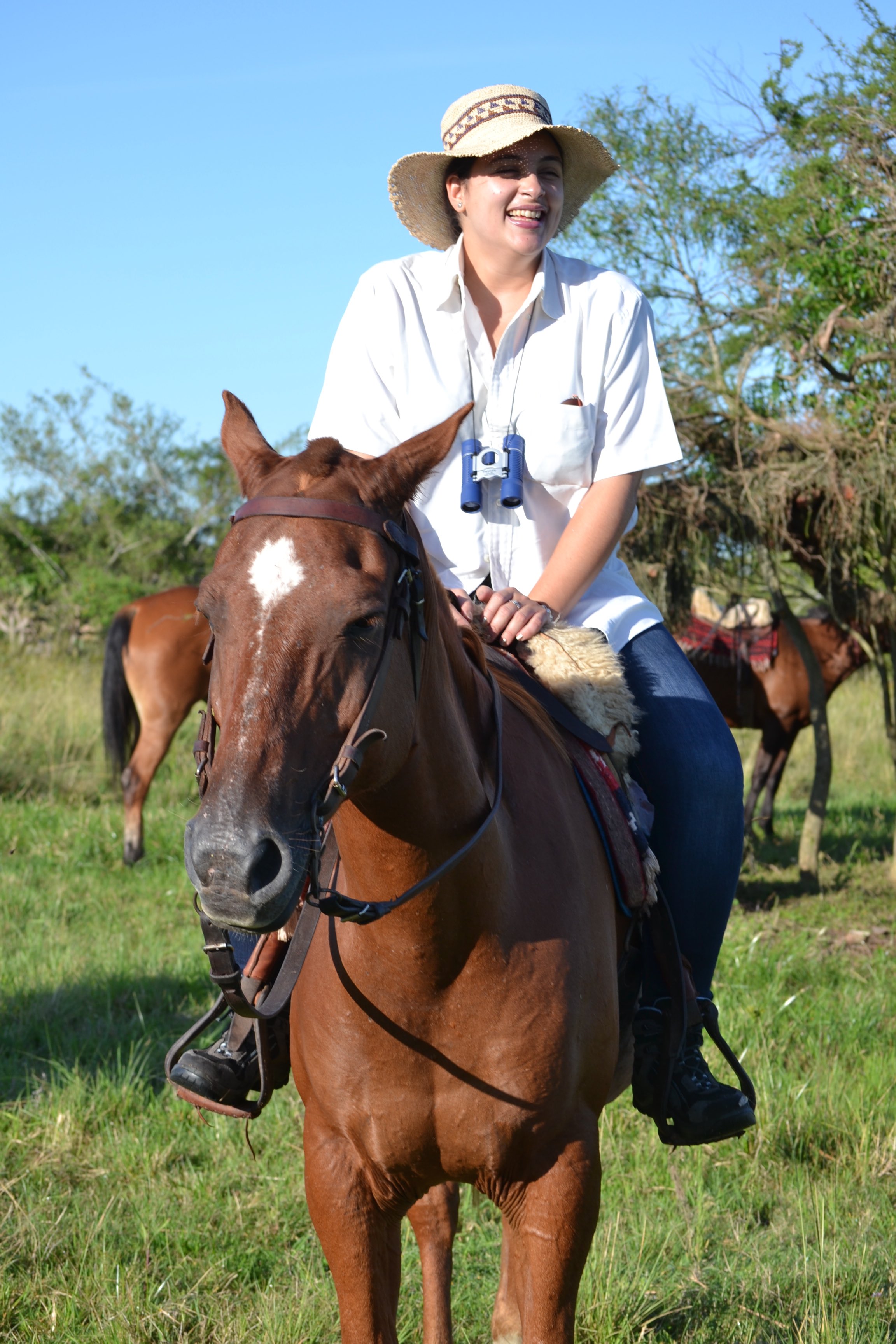
The Bushsnob being optimistic about the challenge. Picture by Mariana Terra.

A rigid Bushsnob being optimistic about the challenge. Picture by Mariana Terra.

The first challenge came when we needed to cross a rather deep river that implied a brisk descent, water fording and a steep climb up the other side! I got my feet and legs water-logged as all my attention and extremities were holding on to avoid a worse fate. After that success I felt physically soggy but spiritually high. This glorious feeling lasted for a few minutes until the horse skidded on the muddy ground and my heart missed a beat. Luckily the four legs quickly recovered their verticality and I continued my triumphant parade all the way through the obstacle course and back to the ranch.

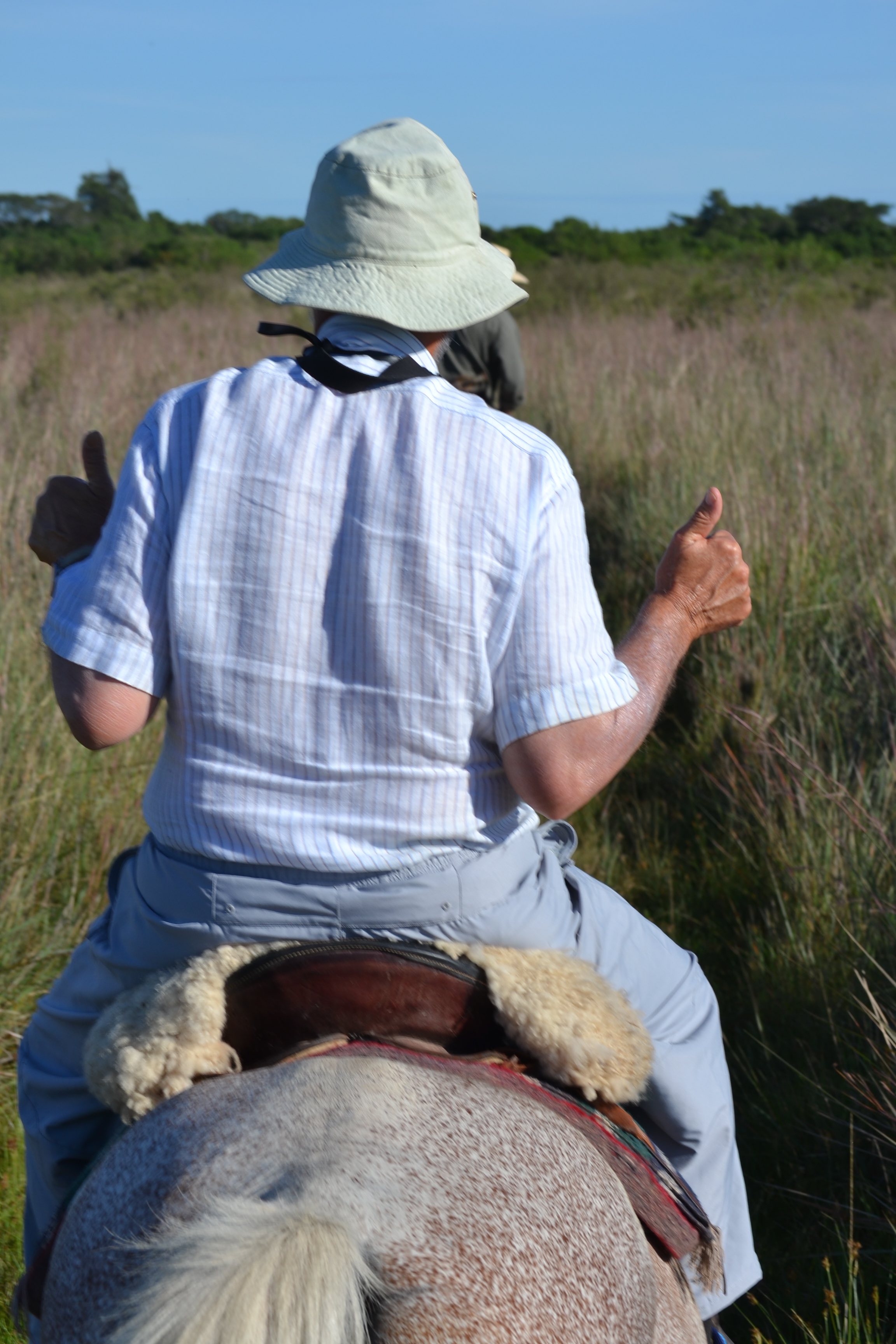
The Bushsnob being looked after by a member of the team.

The Bushsnob being looked after by a member of the team.

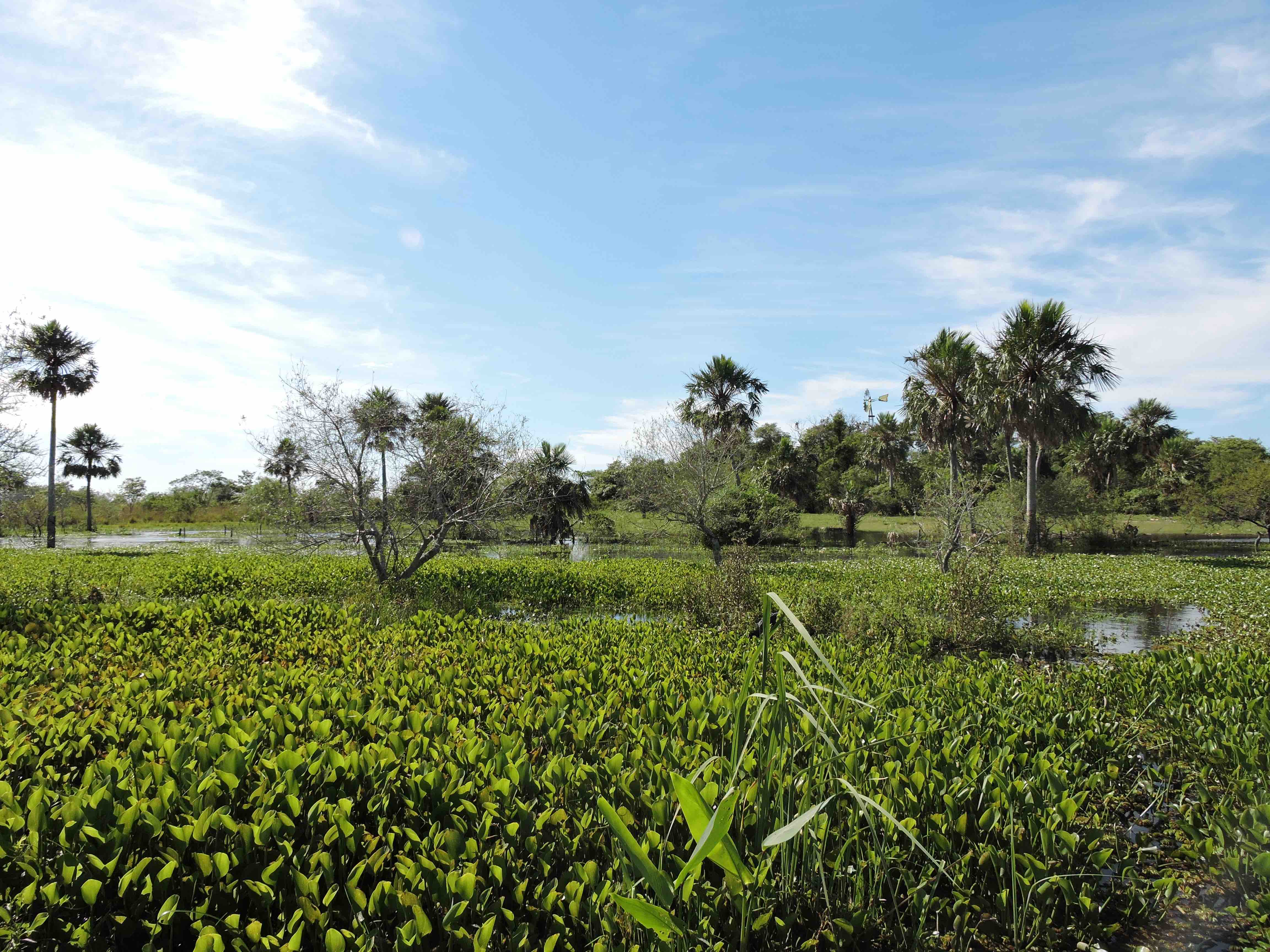
The ride took us through areas of tall grass, difficult to walk through, that opened up in a large flooded area where lots of water birds were present. An interesting sight was a lone Marsh Deer (Blastocerus dichotomus), the largest deer species from South America.

The good news is that I quite enjoyed the ride as it was far more comfortable than anticipated and the fact that I managed to stay on the horse made it 100% better than earlier experiences! The bad news is that, after this success, I may try again!
A lucky strike at the Brilliant Waters

View of swamp

We visited the Esteros de Iberá (Yverá in its original Guaraní denomination)[1] a few years back and the idea of returning stayed with us. Taking advantage of the visit of our children during the 2015 season’s holidays we booked a three-night stay at Rincón del Socorro. I quote from their web site (http://rincondelsocorro.com/):

Rincón del Socorro has 12.000 hectares and is located in the Iberá Wetlands. It has been historically managed as a cattle ranch until 1999 when it was bought by The Conservation Land Trust (CLT), who now dedicates to care for its environment through a group of biologists and veterinarians who develop different restoration and reintroduction programs of species. As a touristic establishment, we provide to our guests a close understanding to the local ecosystem, appreciating the importance each different natural environments and conservation it has“.

The CLT was created in 1992 by Douglas Tompkins to protect wild lands, primarily in Chile and Argentina. It was blatantly obvious that a large investment has taken place not only in the refurbishment of the ranch but also in the general area of the wetlands. The hostel at Rincón del Socorro is managed by a private concession that employs about 40 people, including the guides. We were very fortunate to get “Mingo” as ours as he proved to be a great companion who patiently explained most of the questions we asked and who had no problems in admitting not knowing an answer on the few occasions that he did not.

RdS view cropped

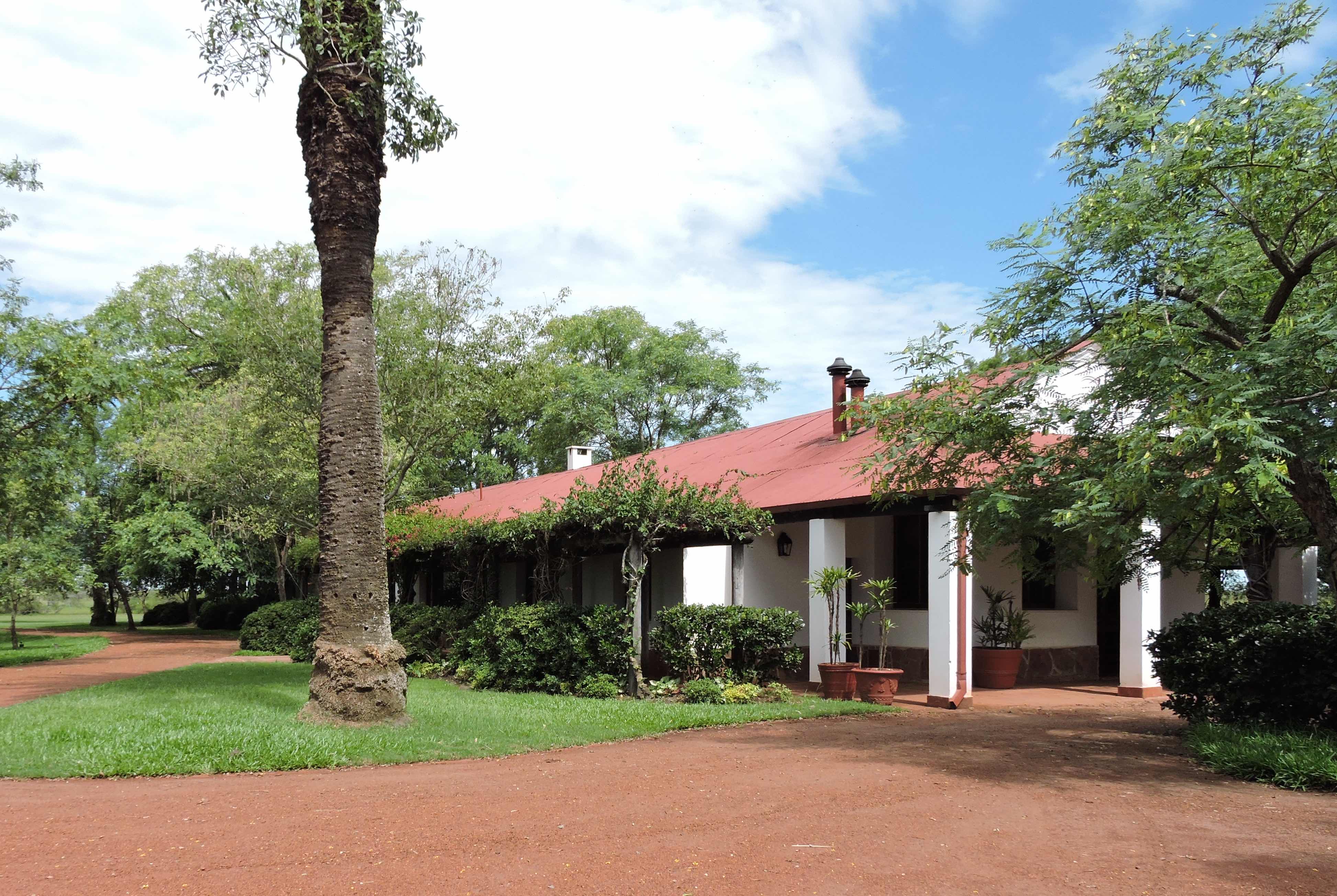
Rincon del Socorro: parking and reception areas.

To reach the place required a long journey of about 750 km from Carmelo, our hometown in Uruguay. Bookings were made about one month before the visit and being this a wet summer I immediately got “cold feet” about the very likely possibility of a rains during our visit planned for 2-5 January. However, there was not much I could do but hope that the usual luck that accompanies us would be with us again.

My concerns were not lessened the day before as 2015 started with heavy rain! A rather desperate last minute check to the weather forecast showed “suns” so hope was somehow maintained. The lucky strike started when getting up very early on the 2nd of January where clear skies greeted us. This magnificent weather stayed with us and we had four beautifully -and even relatively cool- sunny days that enabled us to enjoy the trip to the full and the playing cards and dice we brought with us in case of rain were not remembered. Amazingly, it started raining after we got back to Carmelo and it continued to pour until the 8 January!

During our stay we joined all available activities: animal watching walks and drives, boat trips to lake Iberá as well as a -rather painful to me- horseback ride. All these activities combined allowed us -with the advice of Mingo- to understand the different ecological areas that are found in the wetlands that I will try to briefly describe to you.

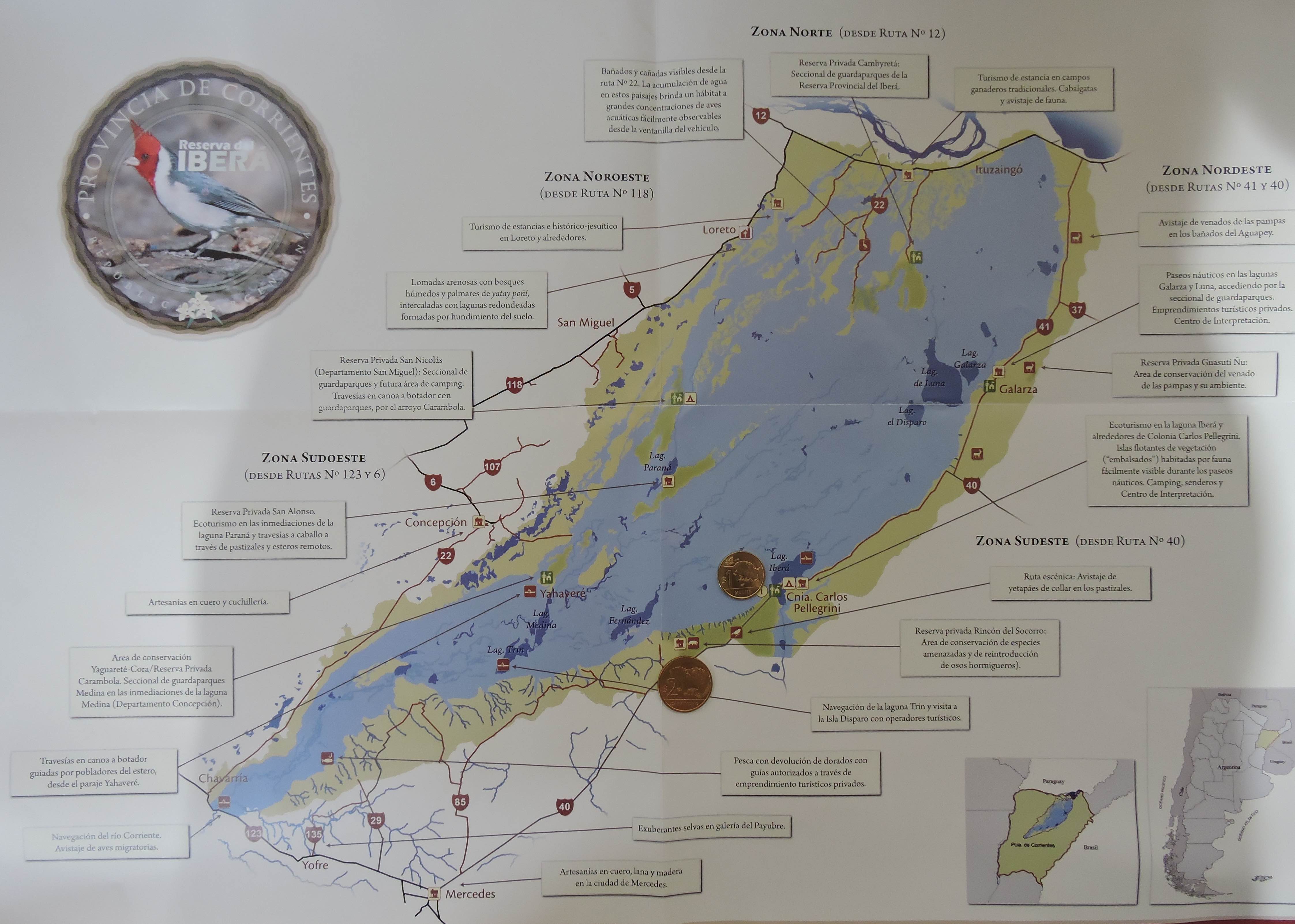
A general view of the Ibera wetlands. Capybara coin: Rincon del Socorro; Armadillo: Ibera lagoon.

A general view of the Ibera wetlands. Capybara coin: Rincon del Socorro; Armadillo: Ibera lagoon.

The Iberá Provincial Reserve is a protected area in the northwest of Corrientes Province, northeastern Argentina. The entire area is in the shape of a funnel, with the conical mouth towards the northeast and the stem pointing towards the southwest, ending in the Corriente River. Established on 15 April 1983, with an area of about 13,000 km2 it contains a mix of habitats that I will briefly describe to put the place in context. More information is available in the web, of course.

The lagoons, up to a depth of five metres, and the floating islands are an important feature. The latter are composed of floating organic material where giant bulrush (Schoenoplectus californicus) (Totora in Spanish) predominates among others such as yellow laurel (Nectandra angustifolia). These islands determine the shape of the open water while the water circulates underneath towards the Corriente River (the funnel’s stem). The latter with its sandy banks maintains a constant and slow flow that will eventually flow into the mighty Paraná River. Its very wet and sandy banks do not allow for the growth of large vegetation.

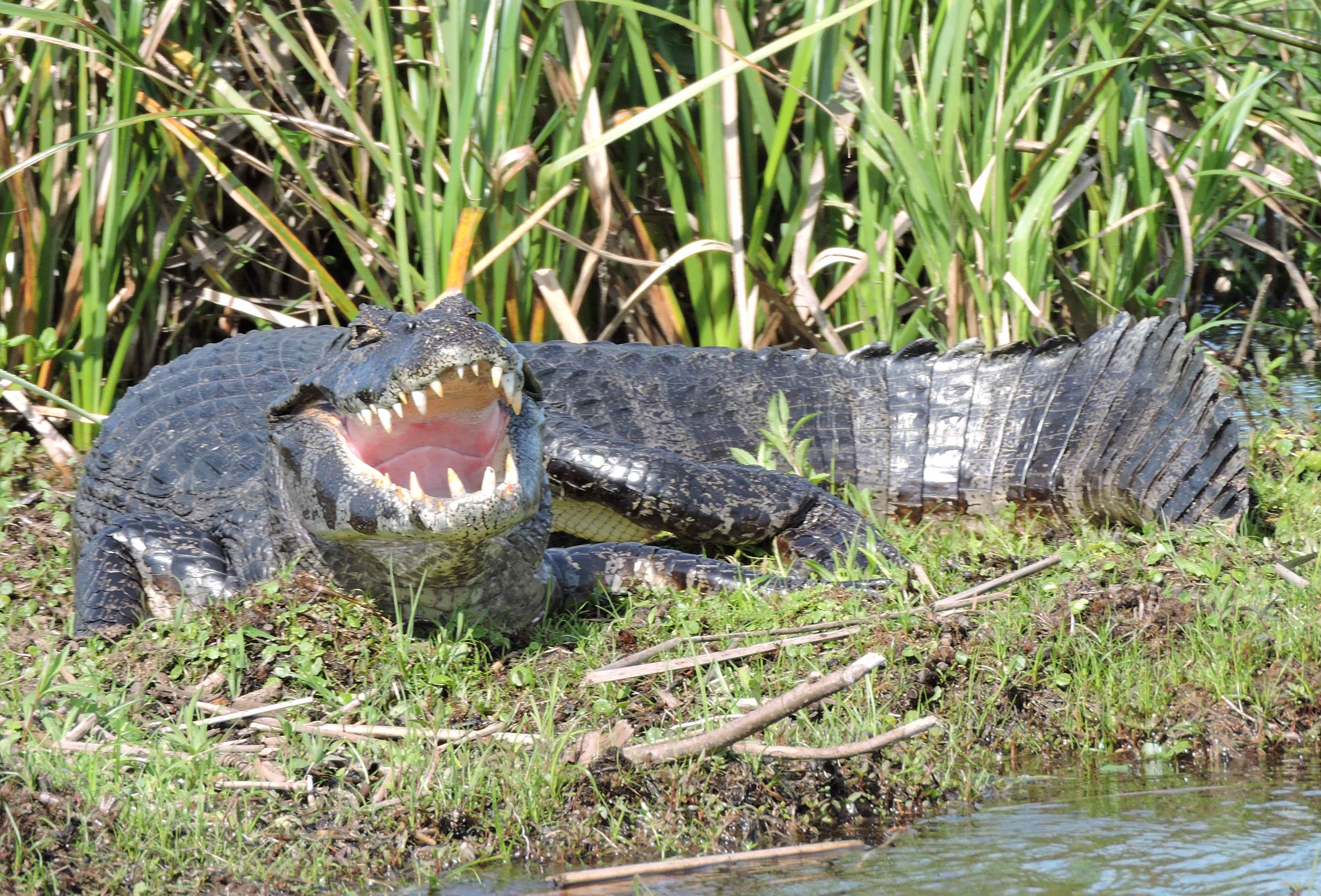
A Yacare (Caiman yacare) on a floating island at the Ibera lagoon. Picture by Julio A. de Castro.

A Yacare (Caiman yacare) on a floating island at the Ibera lagoon. Picture by Julio A. de Castro.

There are large areas of swamps and reeds, particularly towards the northeast where the water has filled depressions and accumulated over time, creating large flooded grasslands and reed beds mainly formed by piripiri (Cyperus giganteus) a kind of papyrus and giant bulrush that rarely dry out. In other areas grass fields made up predominantly of red grass (Andropogon lateralis) predominate and walking on it reveals small depressions filled with water. These micro lagoons enable the development of truly small aquatic systems. Finally, there is another grassland system in the sand hills of North and West Iberá where scattered patches of forest and/or little round blue lagoons interrupt the grasslands known locally as “espartillares”.

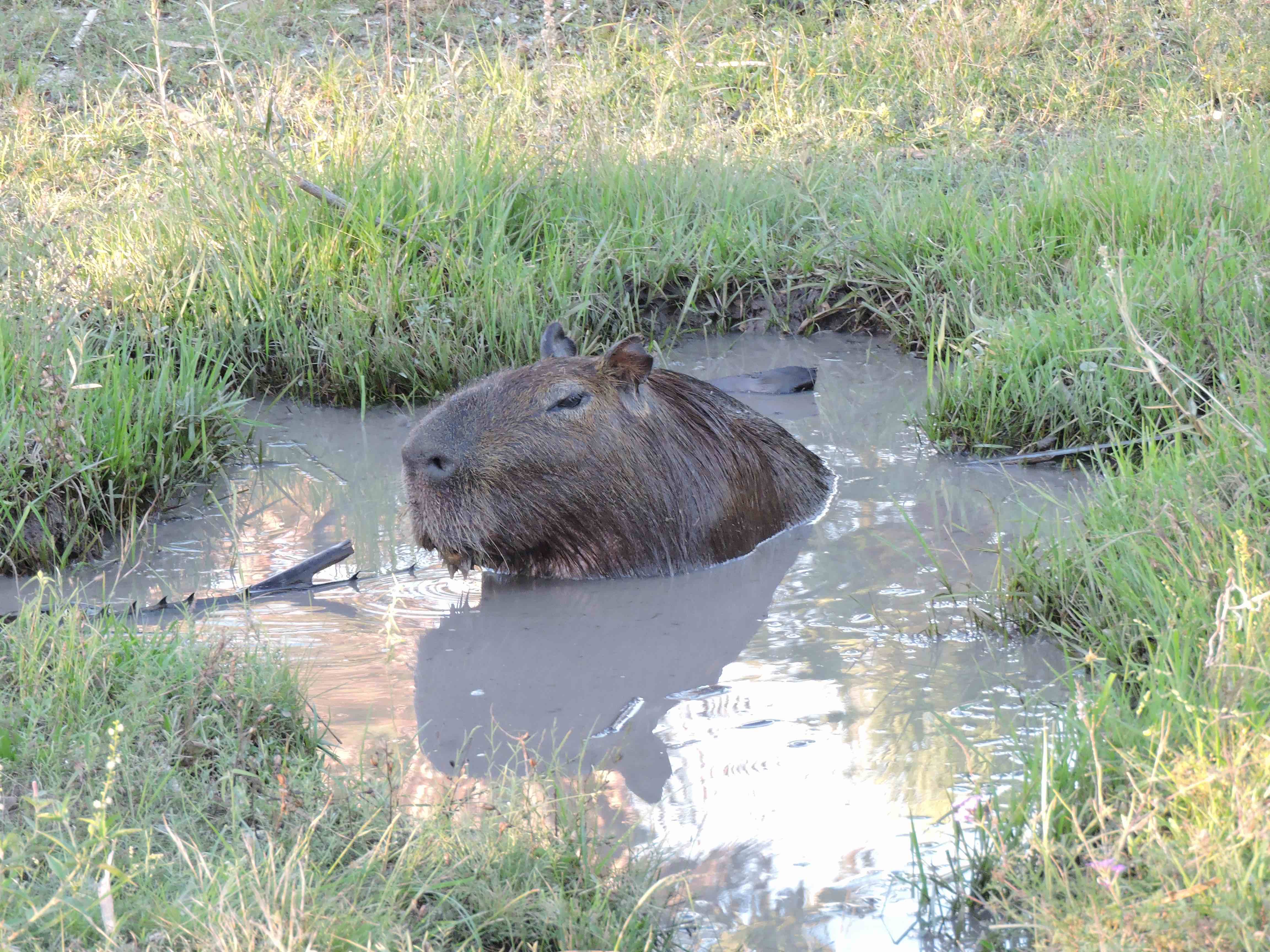
A Capybara in its private bathtub.

A Capybara in its private bathtub. Picture by Julio A. de Castro.

Palms occur in the form of groves of the small Dwarf Yatay Palm (Butia paraguayensis) that grow in the higher parts of the area as well as Caranday Wax Palm (Copernicia alba) that grow in sand and clay. As these palms are water tolerant they can survive floods and form dense forests that occupy areas where most land and aquatic plants do not survive.

There are patches of wet forest that have a limited lifespan as conditions are not ideal for the growth of the common forest trees such as queen palm (Syagrus romanzoffiana), the gum tree (Sebastiania brasiliensis), the ombú tree (Phytolacca dioica), the pacara earpod tree (Enterolobium contortisiliquum), and the lapacho tree (Tabebuia spp.). Drier areas are populated by Ñandubay trees (Prosopis affinis), with their medium height and flattish canopies creating dry forests in the savannah.

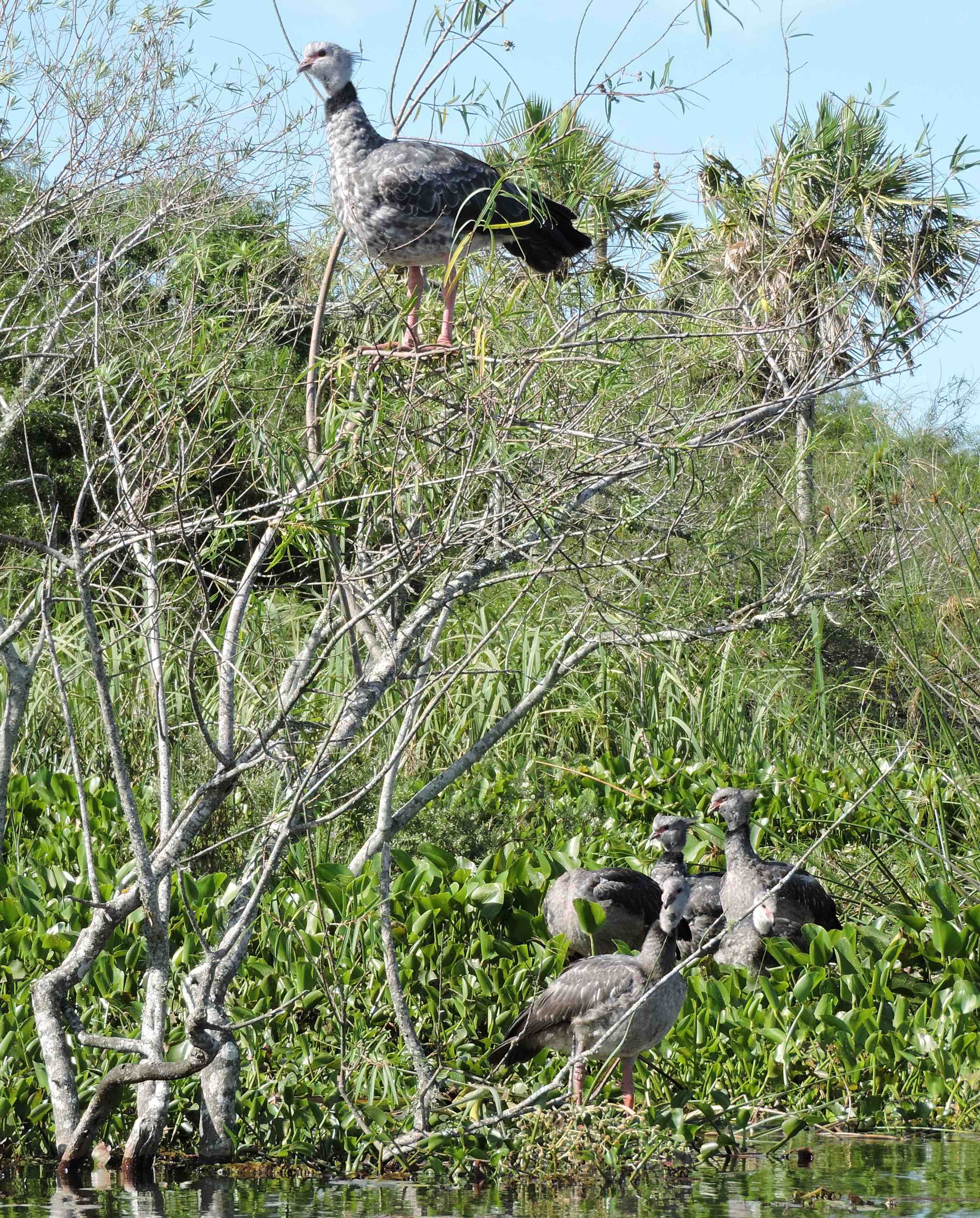
A group of Southern Screamers at the Ibera lagoon. Picture by Julio de Castro.

A group of Southern Screamers at the Ibera lagoon. Picture by Julio A. de Castro.

The place is also an animal paradise with many interesting and rather unique species. Abundant southern screamers (Chauna torquata) were spotted while living up to their names and screaming in alarm at our approach while the rheas (Rhea americana) grazed undisturbed.

Rhea and chicks feeding. Picture by Mariana Terra.

Rhea and chicks feeding. Picture by Mariana Terra.

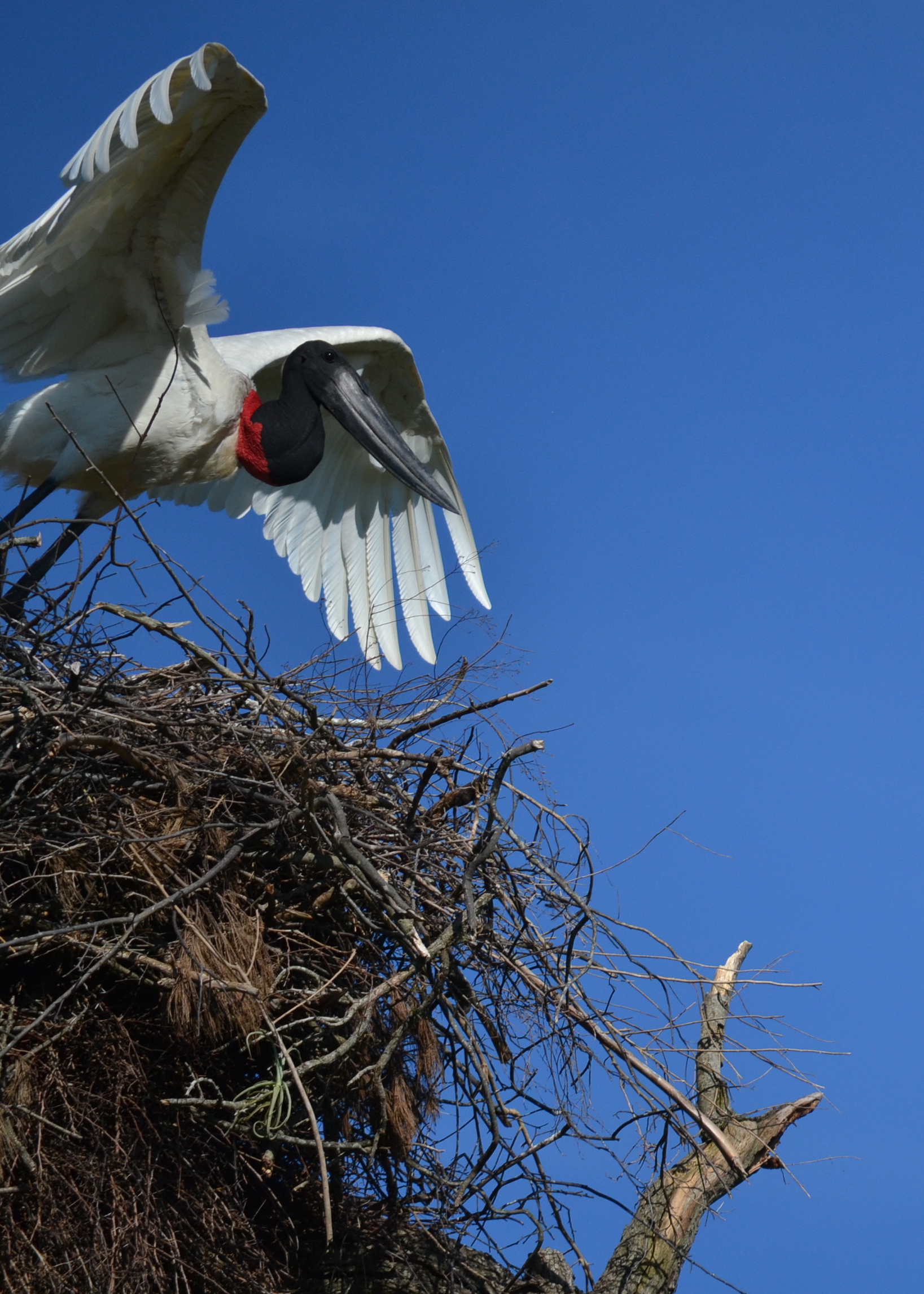
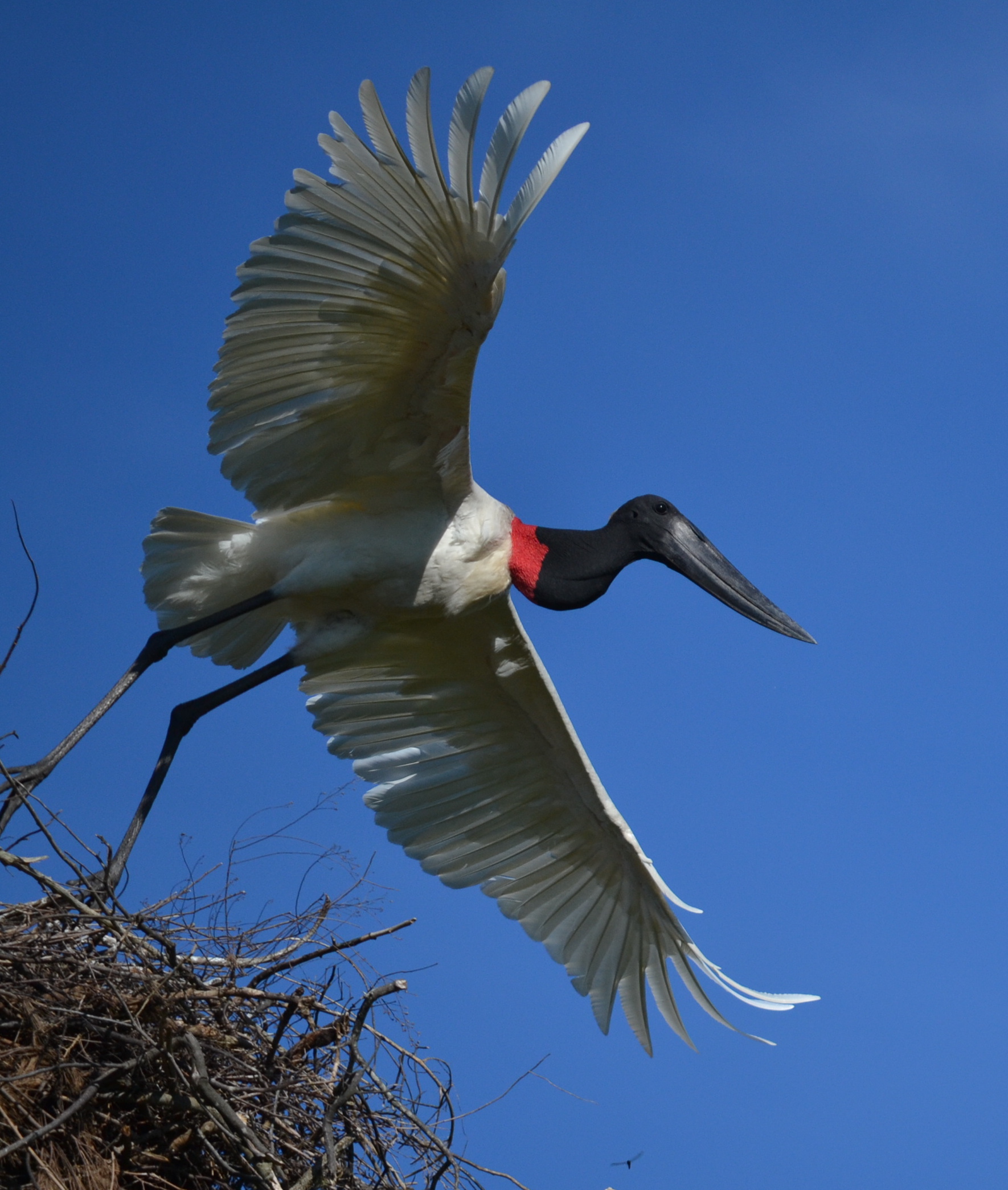
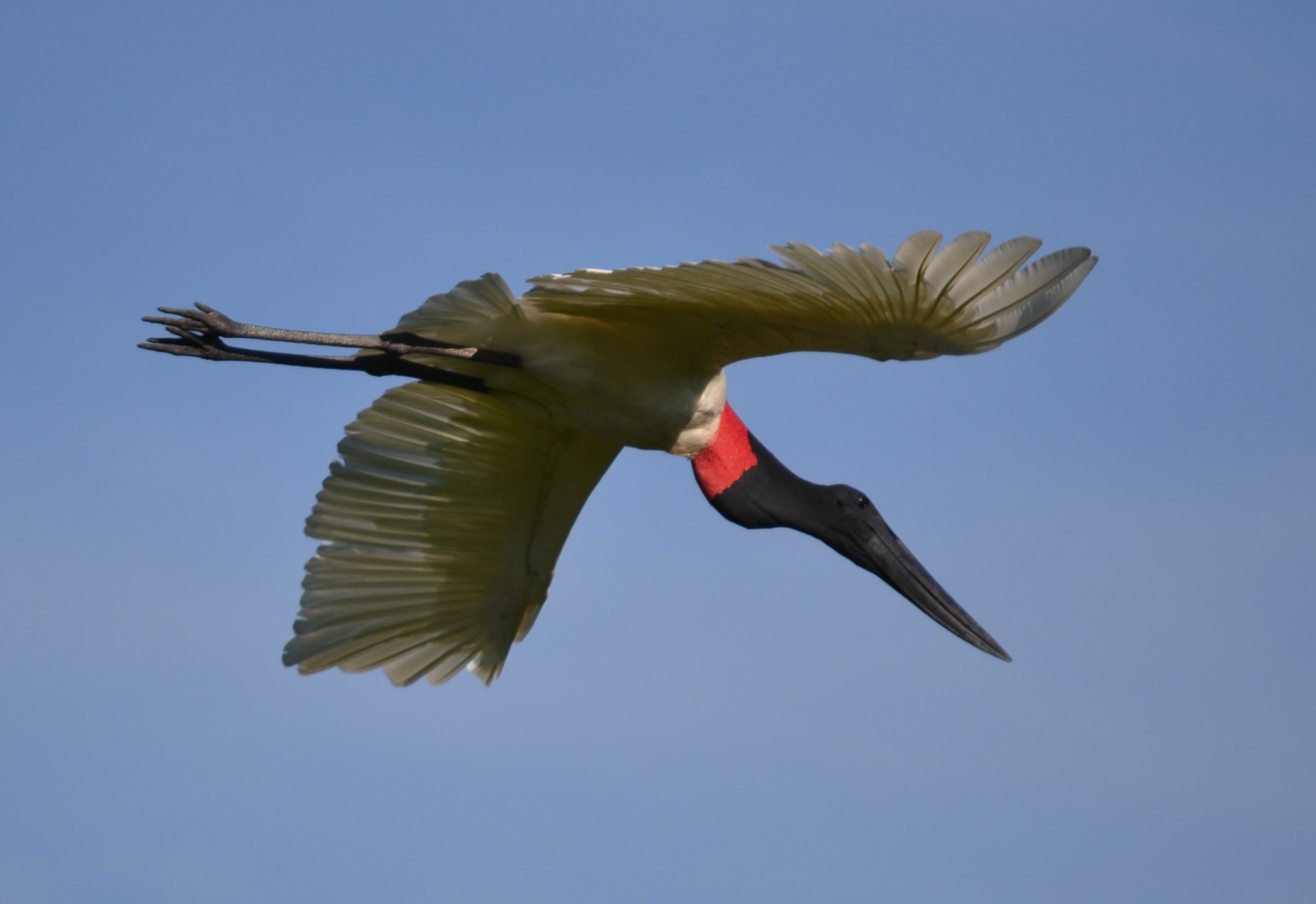
The estimated number of bird species identified in the wetlands is nearly 400 and therefore there are too many to mention. However, the pair of Jabiru storks (Jabiru mycteria) nesting near the ranch were simply spectacular.

A pair of Jabiru Storks on their nest. Picture by Mariana Terra.

A pair of Jabiru Storks on their nest. Picture by Mariana Terra.

Taking off... Picture by Mariana Terra.

Taking off… Picture by Mariana Terra.

Taking off and in flight. All three pictures by Mariana Terra.

Taking off and in flight (below). Both pictures by Mariana Terra.

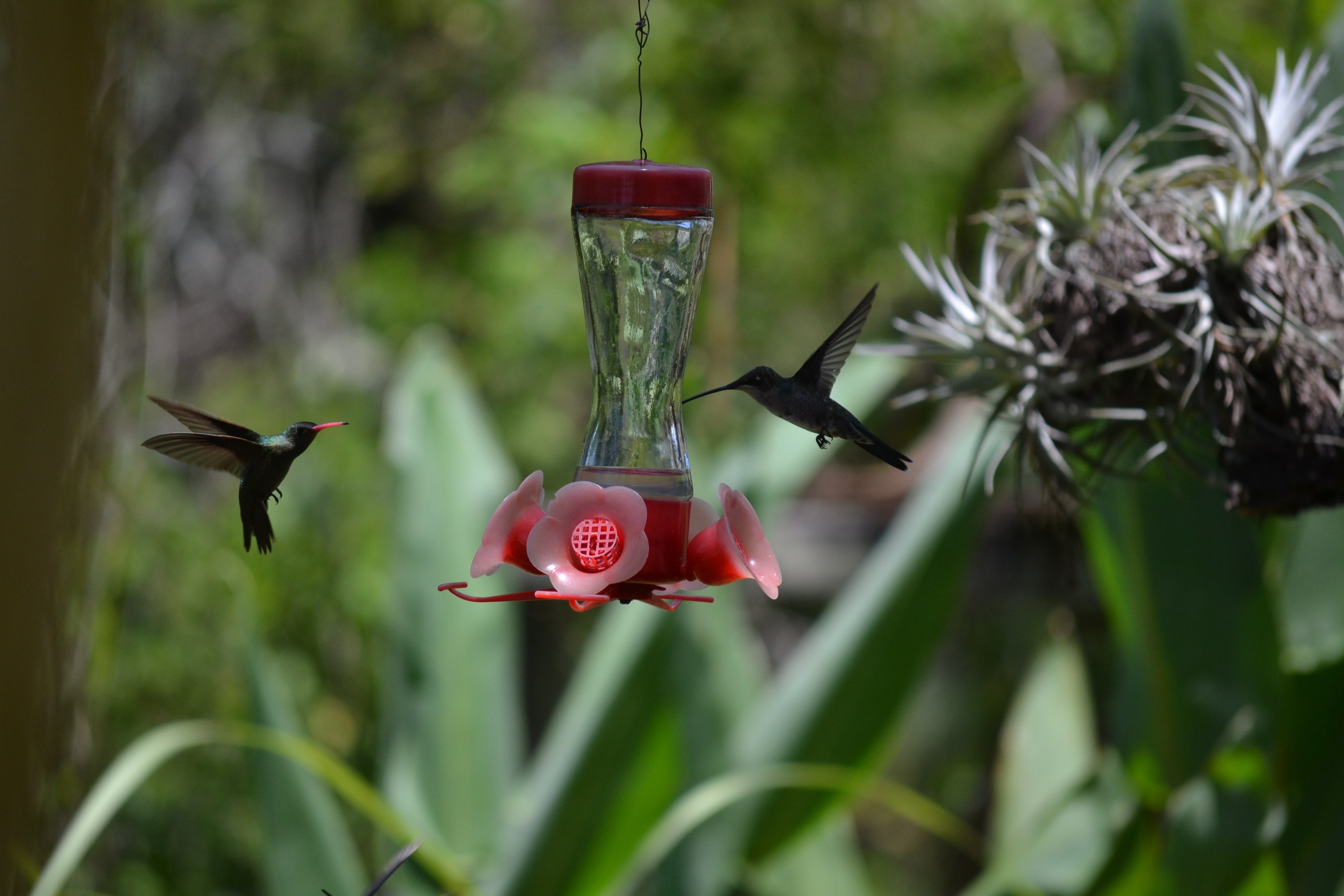
Mariana jabiru flying 2On the other end of the size spectrum (tiny), but not less impressive were the various humming birds as well as the aptly named Strange-tailed Tyrant (Alectrurus risora), spotted too far to capture it on film but that can be seen in: http://www.pbase.com/james_lowen/image/88253519.

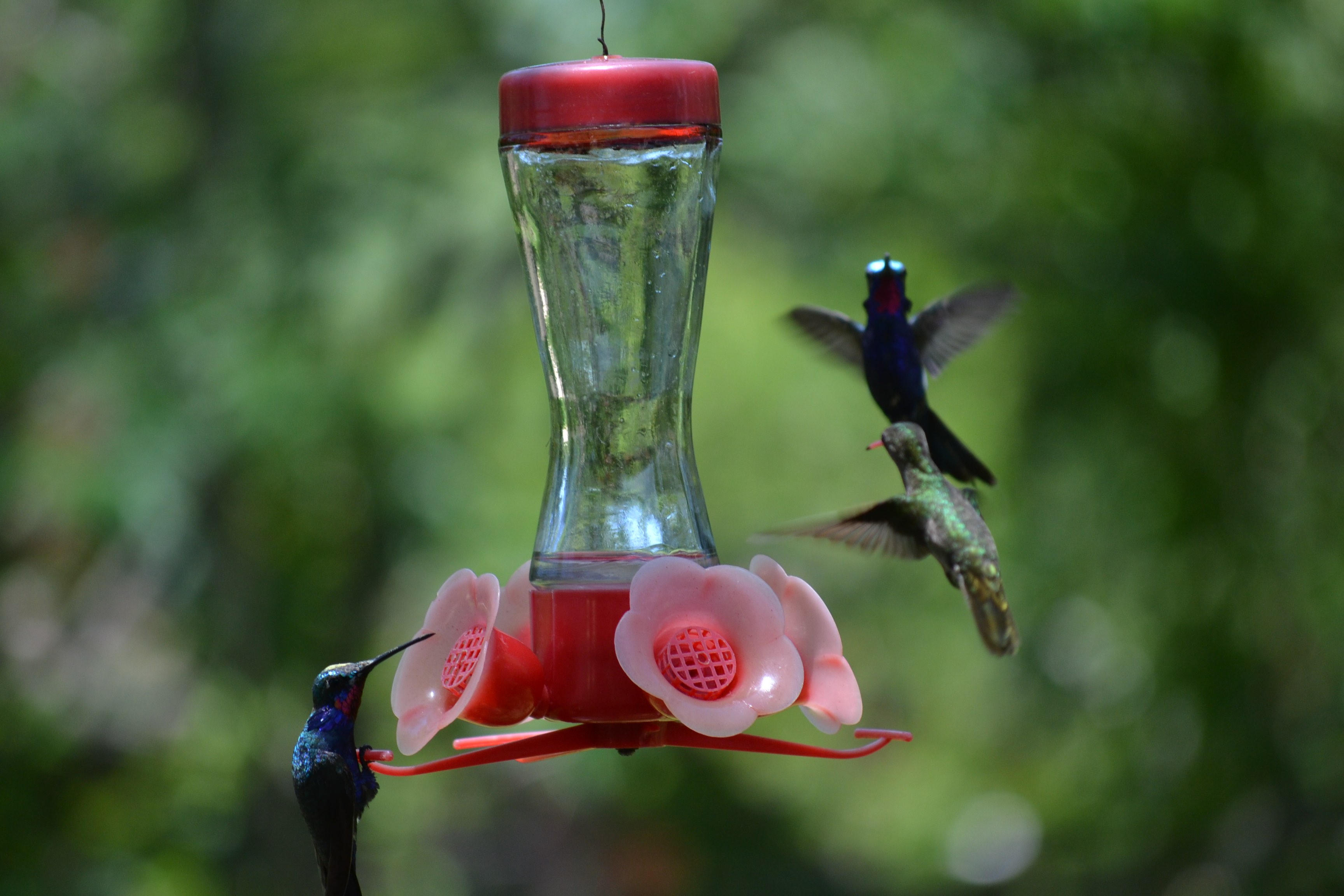
A Glittering-bellied Emerald Hummingbird (left) and probably a female Blue-Tufted Starthroat Hummingbird at a feeder in Colonia Carlos Pellegrini.

A Glittering-bellied Emerald Hummingbird (left) and probably a female Blue-Tufted Starthroat Hummingbird at a feeder in Colonia Carlos Pellegrini.

Close-up of the Glittering-Bellied Hummingbird.

Close-up of the Glittering-Bellied Hummingbird.

A Glittering-bellied Emerald Hummingbird (left) and probably a female Blue-Tufted Starthroat Hummingbird at a feeder in Colonia Carlos Pellegrini.

Blue-Tufted Starthroat Hummingbirds (perched, left and in flight top right) and a Glittering-Bellied Emerald Hummingbird (flying, right). All Hummingbird pictures by Mariana Terra..

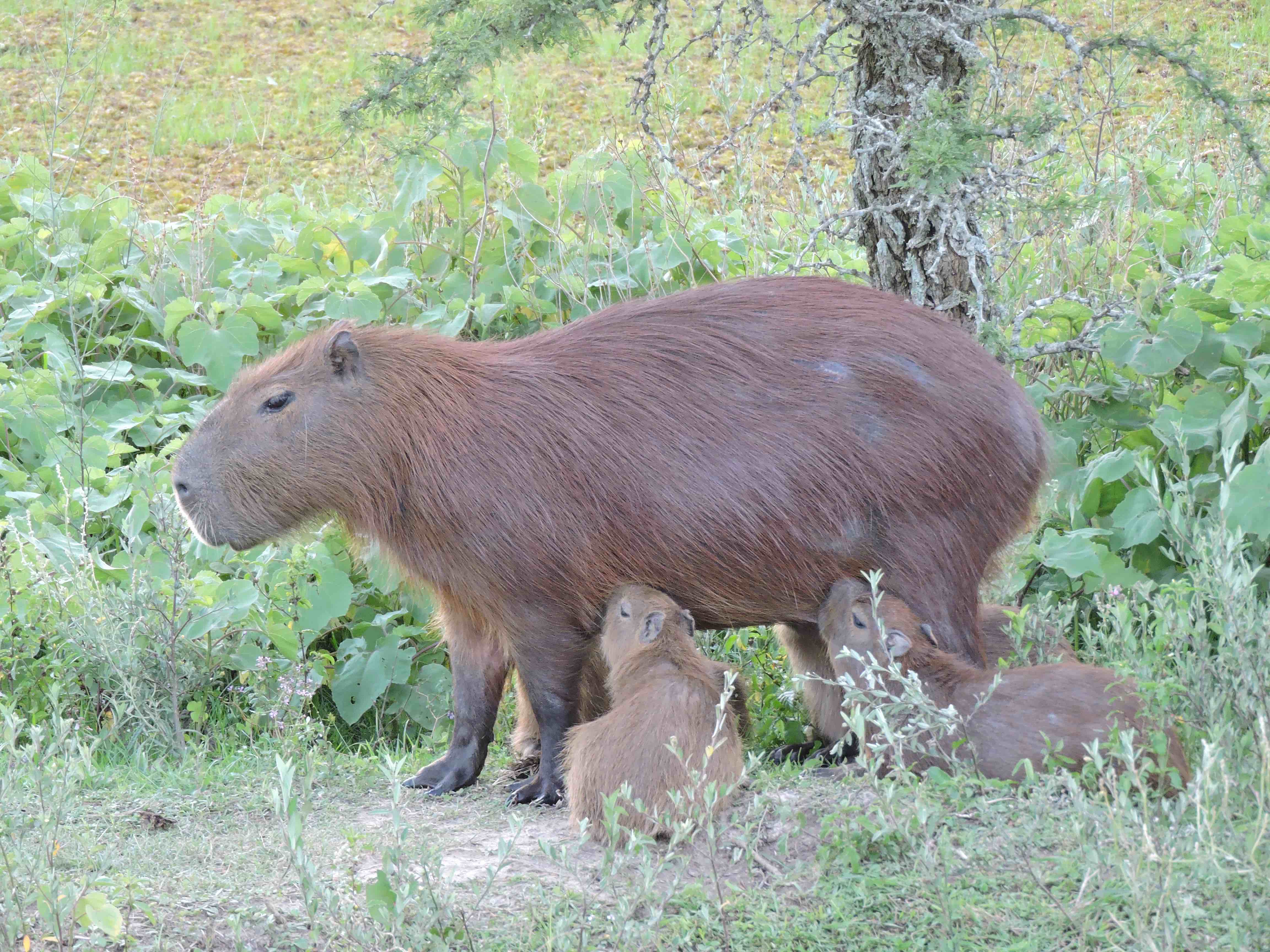
The mammals spotted were mostly rodents. Capybaras (Hydrochoerus hydrochaeris) being very abundant both in the swamps as well as in the small lakes we visited. It was interesting to notice that while the latter were rather brown in colour, the ones inhabiting the swamps and grasslands had a reddish tinge as if henna would have been applied to them.

Female Capybara feeding her babies.

Female Capybara feeding her babies. Picture by Julio A. de Castro.

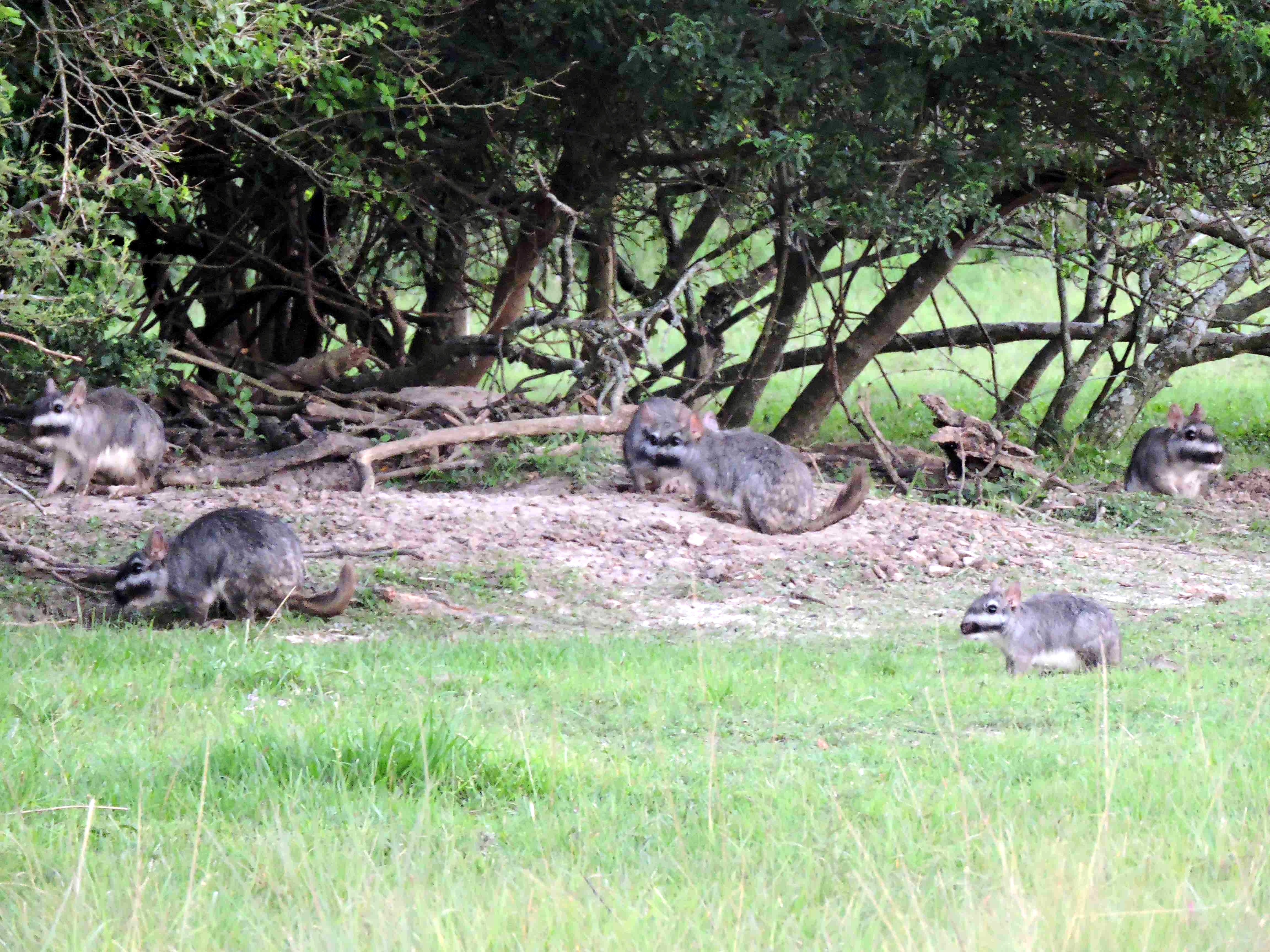
Plains Vizcacha (Lagostomus maximus) were also present in numbers, mainly grazing around their burrows and it was very entertaining to see them carrying various objects to their burrows. They are the largest of the Genus and they build elaborate burrows that house successive colonies for generations.

A family of Plains Vizcacha out in the evening.

A family of Plains Vizcacha out in the evening.

Grey (Lycalopex gymnocercus) and Crab Eating foxes (Cerdocyon thous) were seen daily and three Hog-nosed Skunks (Conepatus chinga), a mother and two babies, were seen daily at the ranch’s park, stamping their forelegs in warning when we got too close, failing to get good pictures as they appeared only at dusk. We also saw a family of Black Howler Monkeys (Alouatta caraya) but did not see the rare Maned Wolf (Chrysocyon brachyurus) or the re-introduced Giant Anteater (Mymecophaga tridactyla). However, our disappointment was somehow lessened by enjoying the sight of a Screaming Hairy Armadillo (Chaetophractus vellerosus) standing in its burrow and three Nine-banded Armadillo (Dasypus novemcinctus) walking in the meadows.

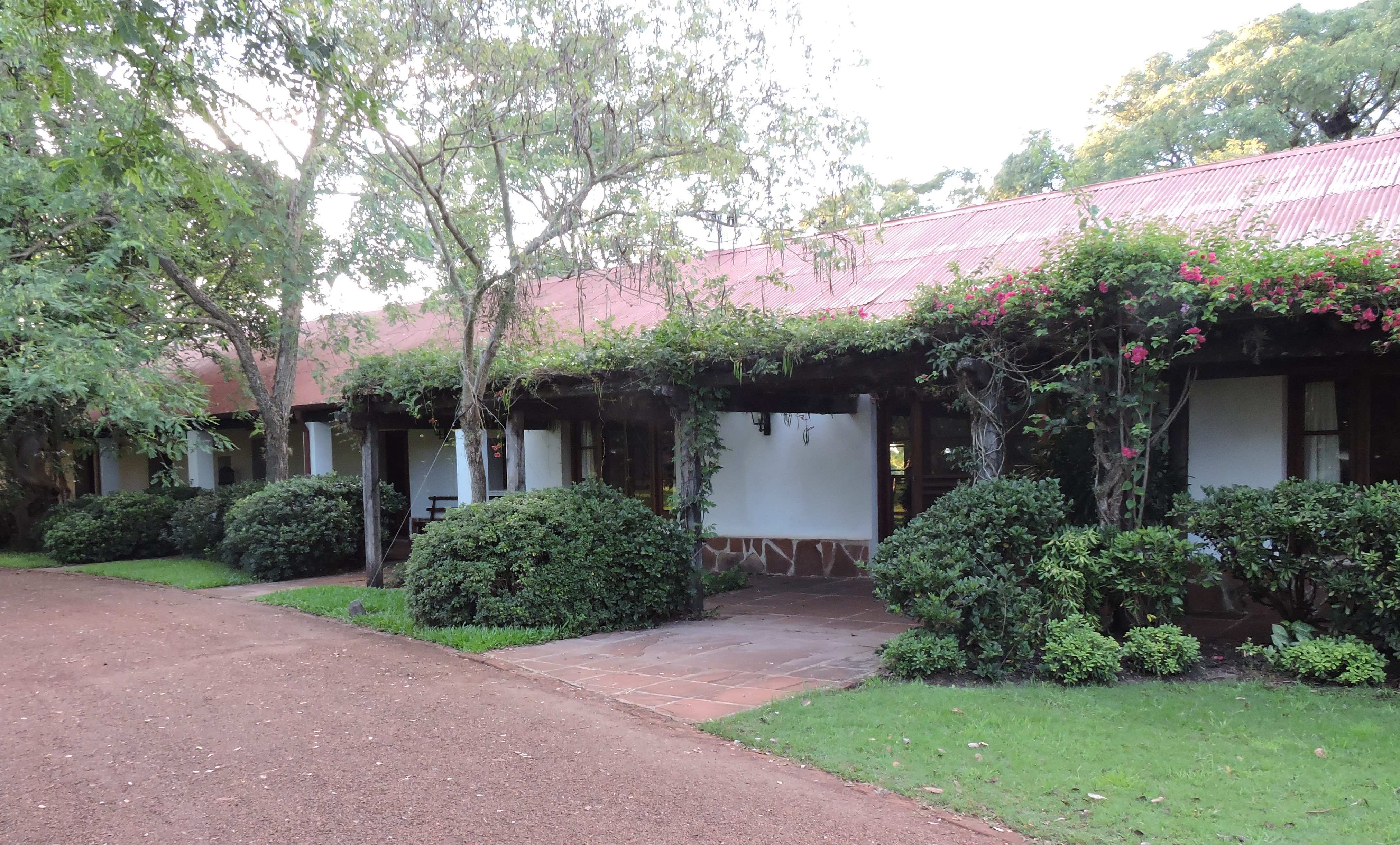
Rincon del Socorro: guest accommodation area.

Rincon del Socorro: guest accommodation area.

We were accommodated at the refurbished ranch facilities. The rooms were very comfortable and they were up to the high standards we have enjoyed. All activities and meals were included in the price. The latter were good and the service did not make us wait. We were all very satisfied except for our son who in his early twenties, who during dinner on the first day got small portions of food and only his British education kept him from making the remarks I would have made being in his place! He also stoically tolerated our jokes. He was pleased at breakfast as it was a buffet and he could serve himself the portion size he wanted!

The respite given by the good breakfast ended at lunch where he received the smallest portions again! After that, anticipation regarding his portion size for dinner grew as the day went on and, yes, we were not disappointed as he again got the smaller portion. This made us all laugh loud to the surprise of the other guests and waitresses who did not understand the reason for such a mirth! As the situation repeated itself at all meals, it soon became an expected event and we did not laugh anymore but felt sorry for our son and even contributed from our portions to enlarge his! Well, his mother did anyway…

Finally, during our last dinner it was the time for us to get the surprise as he was somehow rewarded when he was presented with the largest -by far- cheesecake portion of all. He did not leave one crumb as he ate it with a smile in his face!

[1] Iberá means Brilliant Waters.

At the foothills of the Andes

A view of the Andes with a  Vicuña in attendance.

A view of the Andes with a Vicuña in attendance.

In 2001 I got transferred from Harare to La Paz in Bolivia, a rather dramatic move but the organization needed my experience and fluency in Spanish. At the time, the departure meant -sadly then- a high possibility of not returning to Africa, something that was not in our plans. It was a difficult move, made slightly more bearable at the time by the obvious bonus of our children learning Spanish. As it turned out, our time there was far better than what we expected.

Sowing in an Andean valley near Potosí, Bolivia.

Sowing in an Andean valley near Potosí, Bolivia.

While in Bolivia[1] we spent our holidays travelling around the country when we could but we also took the opportunity to visit parts of Brazil, Chile, Peru and Argentina. Most of this travel was done by road. Apart from Chile -closer from La Paz- Argentina was the most visited, particularly the Parana River where we mainly fished for Dorado (Salminus maxillosus) and Surubi Manchado (Pseudoplatystoma coruscans[2]), two great game fish. While we would stay in the Corrientes city surrounds, we also visited other well-known fishing spots such as Paso de la Patria, Ita Ibate and Itatí. I will cover this experience in another post.

A Llama looks on.

A Llama looks on.

The trip from La Paz to Corrientes took us through several interesting places. The first stop was the city of Oruro, well-known years back as the stronghold of Simón Iturri Patiño, who aside from Evo Morales today, was perhaps the most famous Bolivian. For years, Patiño dominated the world tin production and became known as the “Tin King”. Part of his large fortune is now in the Patiño Foundation that is very active in Bolivia with development work. Oruro is also regionally and internationally known for its indigenous Carnival celebrations[3], not to be confused with the more famous Brazilian one.

A member of the "Diablada" (Devils) dancers.

A member of the “Diablada” (Devils) dancers.

Another group of dancers.

Another group of dancers known as “Morenos”.

One of the several bands that accompany the various groups.

One of the many bands that accompany the various groups.

About 400 km further on we found Potosí. The first time we drove there the road was very rough and, to make matters even worse, the asphalt was being laid down. Potosí is where most of the silver of the Spanish conquistadores was mined and where their gold and silver coins were minted. The “Cerro Rico” (Rich Hill) is still producing silver, although considerably less than in the times of the conquest, now led by individuals. The hill is reputed to have shrunk over time due to the intensive mining that took place. Sadly, it has -and is still- swallowing many lives and it is a true “mass grave”. Mining is normally a tough activity anywhere. If to this we add that the activity is performed at an altitude of 4,000 m, with minimal or no security measures and rather rudimentary tools, we begin to get the picture and the thought takes your breath away, if you still have any to spare when entering a mine![4]

Potosí from the road to Tupiza and Argentina.

Potosí from the road to Tupiza and Argentina.

The sun is everything in the highlands and the large difference in temperature between sunny and shaded areas needs to be taken into account. You soon get used to walking on the sunny side of the road to avoid the cold and the large differences in rent between adjacent houses -that tempt the unsuspecting- are very often attributed to the differences in sun exposure!

Spending the night at Potosí’s altitude is in itself a challenge, with subzero temperatures at very high altitude and a rather weak sun. As if this wasn’t enough, hotels tend to keep their central heating at full throttle and the warm and stuffy air hits you the moment you walk in.

Interestingly, our family was divided regarding “altitude tolerance”. While my wife and son were almost indifferent, my daughter and I felt like fish out of water! This meant that we had two rooms: the tough guys and the sissies… I cannot account for the fate of the tough guys in the room next door but as far as my daughter and I were concerned, we did suffer the lack of air. You are probably thinking, the obvious thing would be to open the windows to let fresh air in, and I completely agree! This was attempted and soon we had frost on the beds, so rudimentary survival required that we close them and look at each other in resignation while the green tinge of our skin increased! Eventually the night would be over.

On occasions, in search of oxygen, we deviated to Sucre for the night. This is the administrative capital of Bolivia, a beautiful colonial city of white buildings with tile roofs, hosting a number of museums and churches worth a visit. In addition, some of the best hats are made in Sucre. Although that meant an extra 200 km, it was worth the drive as the sissies felt much more comfortable here.

A church at dusk in Sucre.

A church at dusk in Sucre.

Beyond Potosi and Sucre we travelled via Tupiza, to Villazón where we would cross to La Quiaca in Argentina. On the way we passed close to places where Ernesto “Che” Guevara started his ill-fated attempt at a revolution and eventually terminal revolutionary attempt in Bolivia. We also visited the area where Butch Cassidy and the Sundance Kid met their nemesis at the hands of the Bolivian Army that seemed to have been rather active during those days.

The trip through Bolivia was rather epic as the roads were rough and dusty and most of the trip was at high altitude and very tiring. I recall four punctures on one of these journeys and an almost complete absence of road signs that meant getting lost on the dusty roads! Matters were not improved by our 10 year old son’s “Is there still a lot to go?” question after 10 minutes of our departure from La Paz, rephrased slightly and repeated as time went on… I vividly recall one arrival at the Villazón border post while Mass was being celebrated at the border crossing point and all traffic in both directions needed to wait for about an hour until all believers were satisfied and we were allowed to proceed!

A welcome pause on the way to Tupiza, Bolivia.

Dust was not in short supply on the way to Tupiza, Bolivia.

Clearance of road blocks demanded patience.

Clearance of road blocks demanded patience.

The road we were...

The road we just covered…

Leaving the border town of La Quiaca and entering Argentina was a big and welcome change. The roads were perfect and, on the first bend in the road there were more road signs than we had seen so far in Bolivia! The added bonus of petrol stations with shops was irresistible for our children. I am grateful for the child locks that prevented them from jumping out in order to enjoy their favourite drinks and snacks!

Continuing our journey after La Quiaca we would enter Jujuy Province, pass by its homonymous capital city and finally get to Salta, the capital of the Province of the same name. This was the first place where the blood oxygen levels of the sissies were finally restored and a really good night’s sleep could be had without dreams of frenziedly swimming through water towards the surface only to drown in the process, waking up with a serious tachycardia and covered in cold sweat (consequence of the anoxia!)

At this stage 800km of driving still remained to reach Corrientes. This took us through the Chaco region on an almost totally straight road across places with exotic and even threatening names such as, Pampa del Infierno, Canal de Dios, Monte Quemado, Quitilipi and Pampa de los Guanacos. On one of the journeys I needed to make a pit stop as something I had eaten did not sit well with me. When I came back to the car I made a joke to the kids of having knocked out a lot of guanacos as a consequence of my act! This has endured all these years and is still the topic of conversation and laughter in the family!

Eventually we would arrive to Resistencia, the capital of the Chaco Province and after the final 20 km, that included crossing the mighty Paraná River, arrive to the city of Corrientes, Capital of the Corrientes Province, and our fishing destination. Fishing in the Paraná was excellent and will be addressed in future posts. Unfortunately Corrientes can be extremely hot so we never considered it as a place we would be happy to live in.

During the first journey, we spent one night in Salta before continuing our journey. During the next trip we luckily found a very nice hotel, the Selva Montana in a suburb of Salta called San Lorenzo, the summer destination of the patrician families from Salta. Gradually Salta moved from a one-night stop into a destination where we could enjoy several activities, together with great food and wine! As it happens, the place grew on us to the point of making it a “home” as we were not sure would be able to return to Africa.

The farm from the opposite hill.

Our farm as seen from the opposite hill.

As the weather was very pleasant and the place very beautiful[5] the thought of settling there grew and we decided to explore the area with the aim of acquiring a plot of land where we could eventually build a house. We looked at several options until finally we settled for what we have today: a small farm at a place called “El Gallinato” located about 20km north of the capital city of Salta. The farm is located in a region known as “the Yungas” which is in fact a transition area towards the Andes Mountains, at an altitude of about 1200m and an important area for the biodiversity of the region.

Its cloud forest is host to some remarkable tree species, some of which have been sadly cut as they have fine wood. However, there are still beautiful trees and some regrowth is taking place. Indigenous Walnut trees (Juglans australis), Tipas (Tipuana tipu) and Ceibo (Erythrina crista-galli) are among the species found in the area. There are almost two hundred bird species including special ones such as Hummingbirds, Toucans, Guans, Jays and Seriemas to name but a few. Condors are sometimes seen flying overhead.

A cactus flower.

A cactus flower.

There are also several interesting mammals including Wild cats, Foxes, Ocelots, etc. However, the climax in terms of mammal sightings for us was the lucky spotting of a Puma (Felix concolor) or Mountain Lion that crossed the road in front of our car and stopped to watch the occupants! Finally, insect life is prolific and butterflies and moths are simply amazing!

Through this short account you are now aware of some of the motives that convinced us to secure this rather out-of-the-way piece of land in the foothills of the Andes that will be the subject of future posts.

NOTES:

[1] We spent five good years there that will be dealt with in separate posts.

[2] The Surubí Atigrado (Pseudoplatystoma fasciatum) also occurs but is less frequent in the area.

[3] I had the privilege of being invited to watch it while working there and it is a totally unique event.

[4] A well known tourist attraction is a visit to a mine.

[5] It is known as “Salta la Linda”, Salta the Beautiful.

Spot the Beast 6 (Easy but beautiful!)

Spot the beast 6 no light

I know, this one is not too hard to spot…

As I am short of time, below I place all the pictures I took trying to show it as it is.

Spot the beast light on 1

lights in the dark

Light on dark

holding the beast


Whole insect cropped

Head

It is a “Headlight Elater” (Pyrophorus noctilicus) of about 3.5 cm in length, a species of the “Click beetle” family that numbers over 9 thousand species worldwide!

It is locally known here as “Tucu-tucu” If upside down they snap a spine on the prosternum onto a corresponding notch on the mesosternum (very academic of me!), producing a violent “click” that makes the beetle jump in the air until it rights itself and is able to move off.


On Plane Travel

As announced, the Bushsnob has moved continent (if not hemisphere) and is now in Latin America, more precisely in Uruguay. This feels like an achievement considering the rather grueling plane trip endured to get here. Nothing wrong with the flying itself but a lot to be desired on the issue of room on board!

I was taught at school -and confirmed later through various reliable sources- that slaves were packed and transported in ships in the most atrocious of conditions and I fully support the end of the slave trade.* I do believe in racial equality but surely that does not mean that to show it, individuals of all races should be packed tightly together on a plane!

The amount of personal space available on board is so small that it is becoming almost inexistent! The real issue, however, is where does this stop? I am sure that engineers are currently busy trying to find ways of packing more passengers per cubic metre! Are profits so small that stuffing 20 more passengers makes such a difference? Or is it greed?

Whatever the reason, it seems that human air transportation is moving towards modern slavery so perhaps “Ecoslave” could be an appropriate name for the lowest air travel variety? It brings in the “Eco” for ecology and economy as well as the egalitarian tight human packaging.

I am aware that plane configuration varies between airlines and that my comment may not apply to all. However, there seem to be some general rules: (i) the further south you travel, the poorer the service and, (ii) the larger the plane, the less individual space available. Although our flight to Africa last April was acceptable on a smaller Airbus A330, the return on a much larger A340 was very uncomfortable.

Trapped in a narrow seat made of materials with sharp ends, you are completely dependent of the passenger in front of you. The moment he/she decides to recline the seat (as is their right as a flyer) this will not only change the angle of your video screen but also spill whatever plastic food and drink you had been given! In addition, gone are the 2 cm of knee room you cherished to keep the blood in your ageing arteries from clotting and the normal leg ageing process accelerates for the hours you have to endure the trip.

As if restraint by folding seat would not be enough, your plastic table also aids in keeping you clasped-in until the remains of your meal are withdrawn. As a rule, turbulence starts at the time when drinks and food are served, so clasped-in time can be rather long (sometimes as long as the time your food takes to be digested!).. I sometimes believe that pilots have a “Turb” knob that they turn with relish to keep passengers from moving too much!

After the turbulence subsides, you eat your meal and, while waiting for freedom from the clinching table to arrive in the form of the withdrawal of your tray, a fleeting thought that says “toilet” appears in your pressurized brain. While still waiting for your corset to be removed, this thought becomes a more urgent “TOILET” until your stewardess, aware of your agonic look, finally removes your tray. She does this with the same smile that she would have when telling you to remove your shoes before using the slide in a sea landing!

What comes next is a challenge to your physical and mental strength. You need a toilet but your legs are numb so a waiting period accompanied by vigorous massage to re-establish blood circulation is required. Once you regain the feeling in your legs it is time for the next step: the exit from your seat. To achieve it, you move sideways keeping your legs on the floor and your torso behind the seat in front of you, avoiding hitting your head against the bottom of the overhead luggage compartment and also to annoy the occupant in front of you. A contortionist act worthy of Houdini!

Once in the passageway you try to walk naturally towards your target while counting the minutes you can still hold on! Your innards freeze when you see the queue and this actually helps you wait, at least for a short while. Then, to distract your mind from your urges, you look around. What you see if the final blow to your already impoverished situation: while your plane section (seats 41 to 60) is packed chock a block, passengers in the other ones are comfortably sleeping across three seats! You swear at the stupidity of being clever while choosing your seat and promise yourself -knowing that you will never dare to do it- that next time you will go to the airport and get your seat allocated there.

Your angry thoughts are briskly interrupted as the toilet door opens and it is your turn! The relief that follows is so great that -like I am told happens during childbirth- all is forgotten afterwards and you face the return to your clamp with renewed enthusiasm. After all, you only have another eight hours to go!


* Disclaimer: I am in no way making light of the slave trade or the circumstances endured by slaves, but rather over dramatising an event that I experienced (in true Bushsnob fashion!)

Asado con Cuero*

asado pelo al fuego

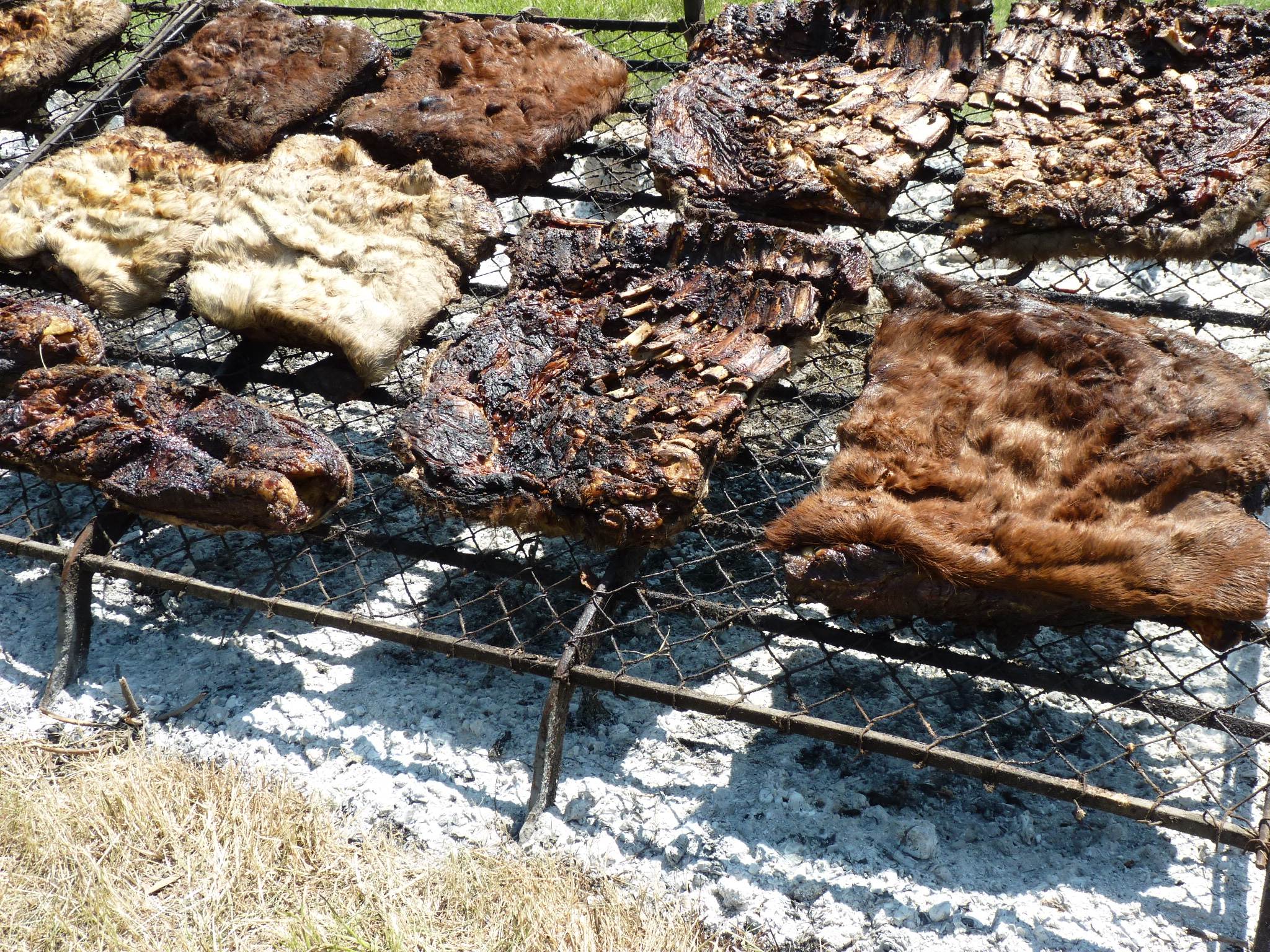
In the final stage of cooking the hair is against the fire.

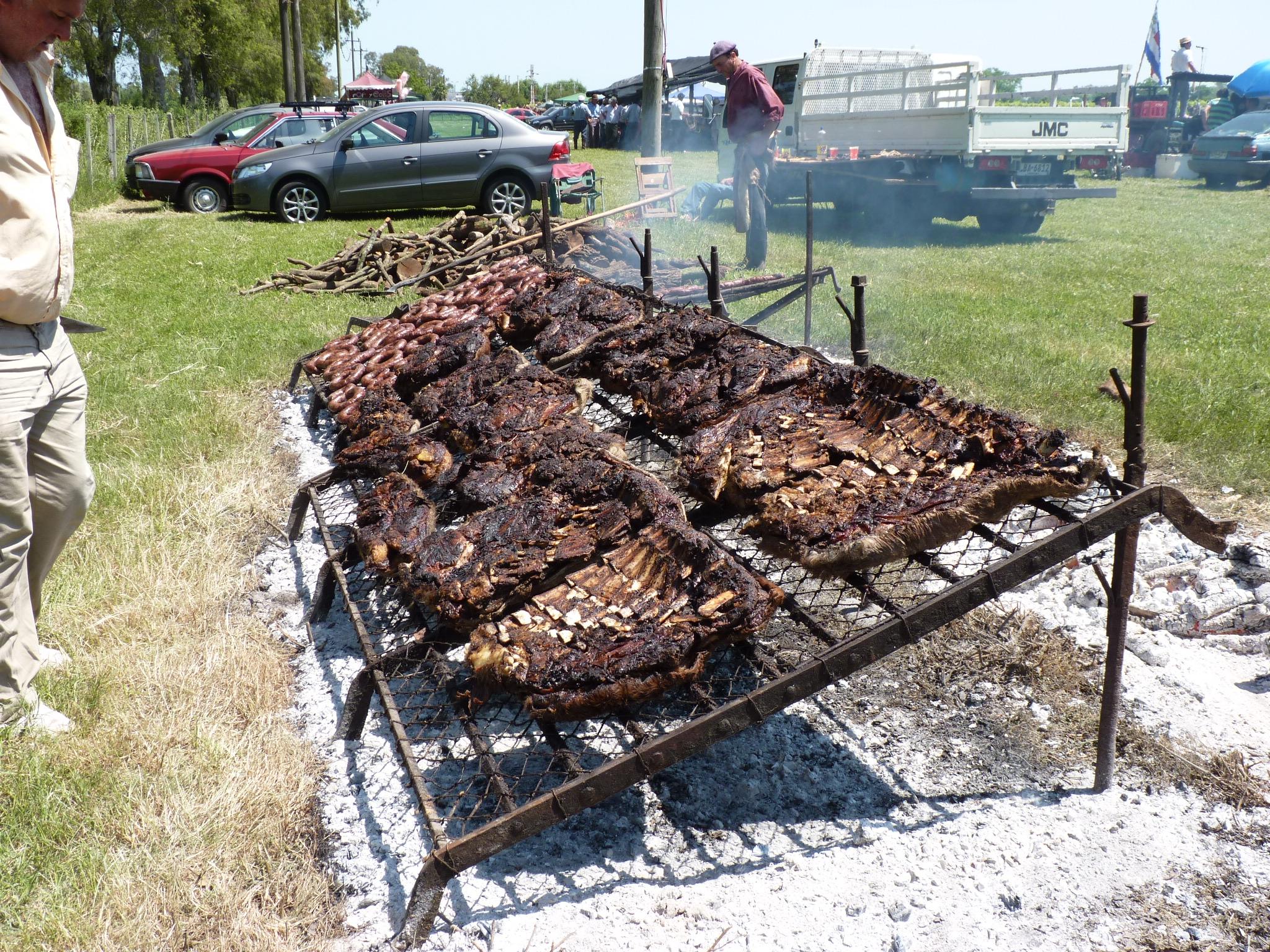
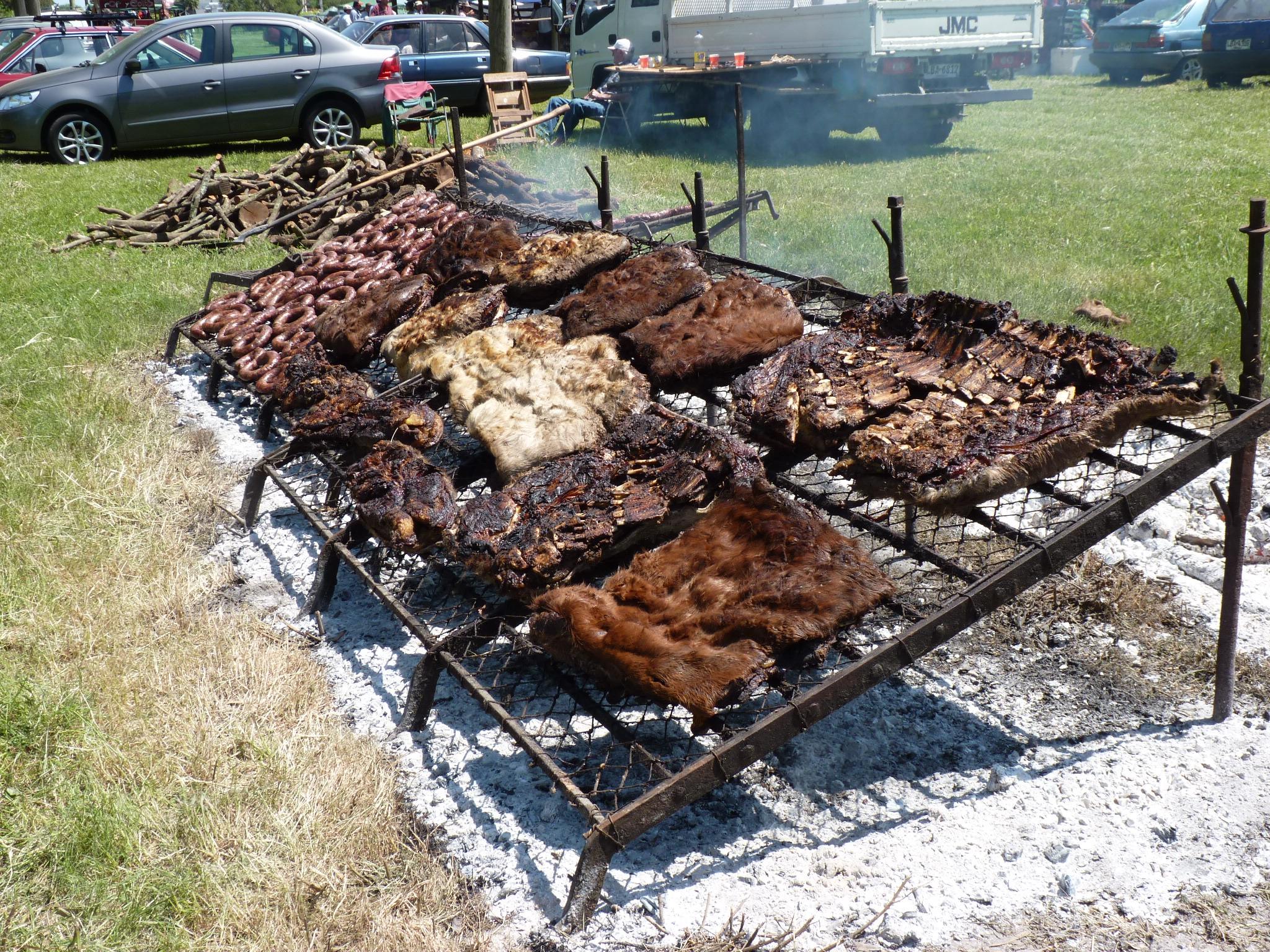
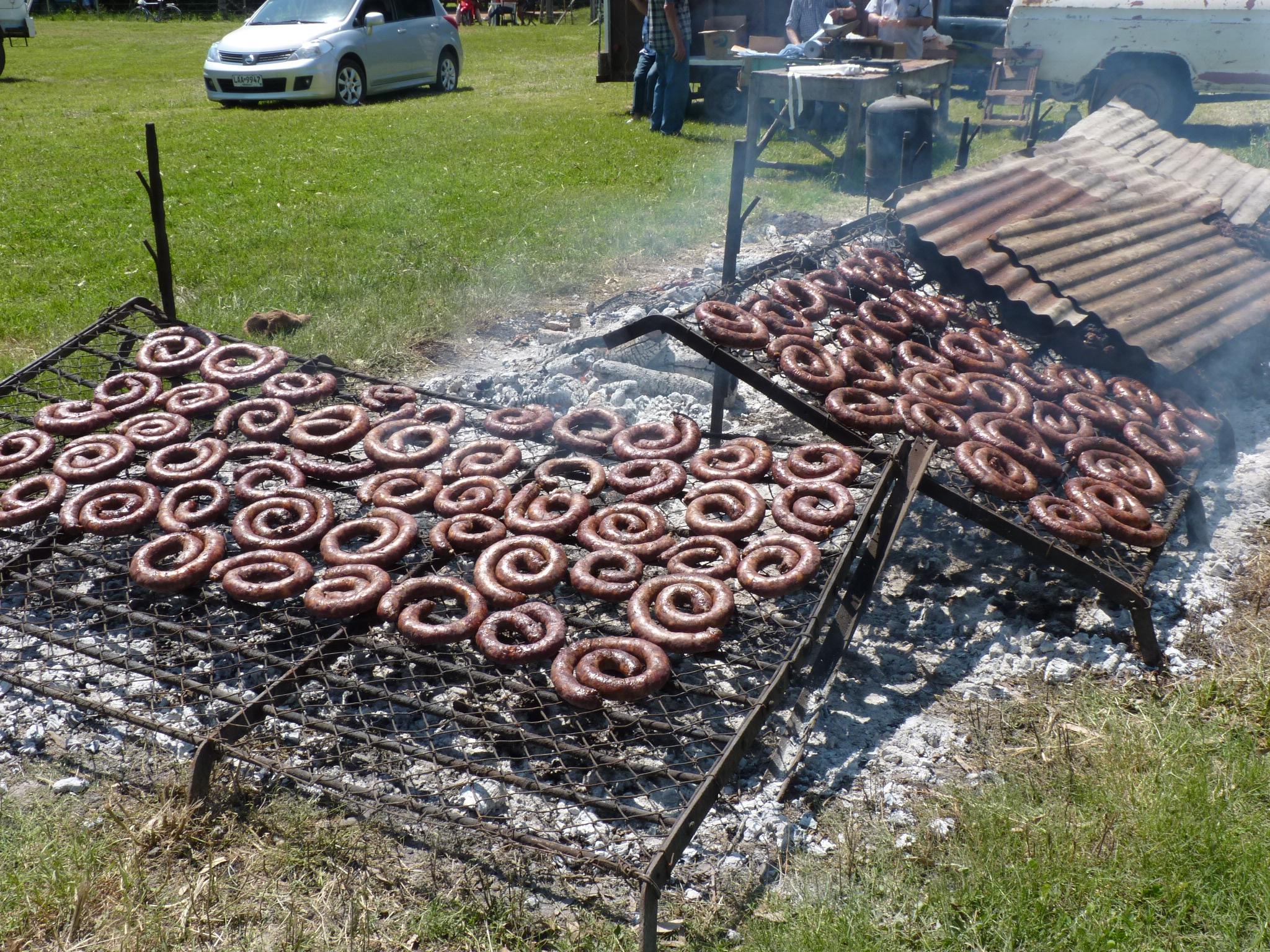
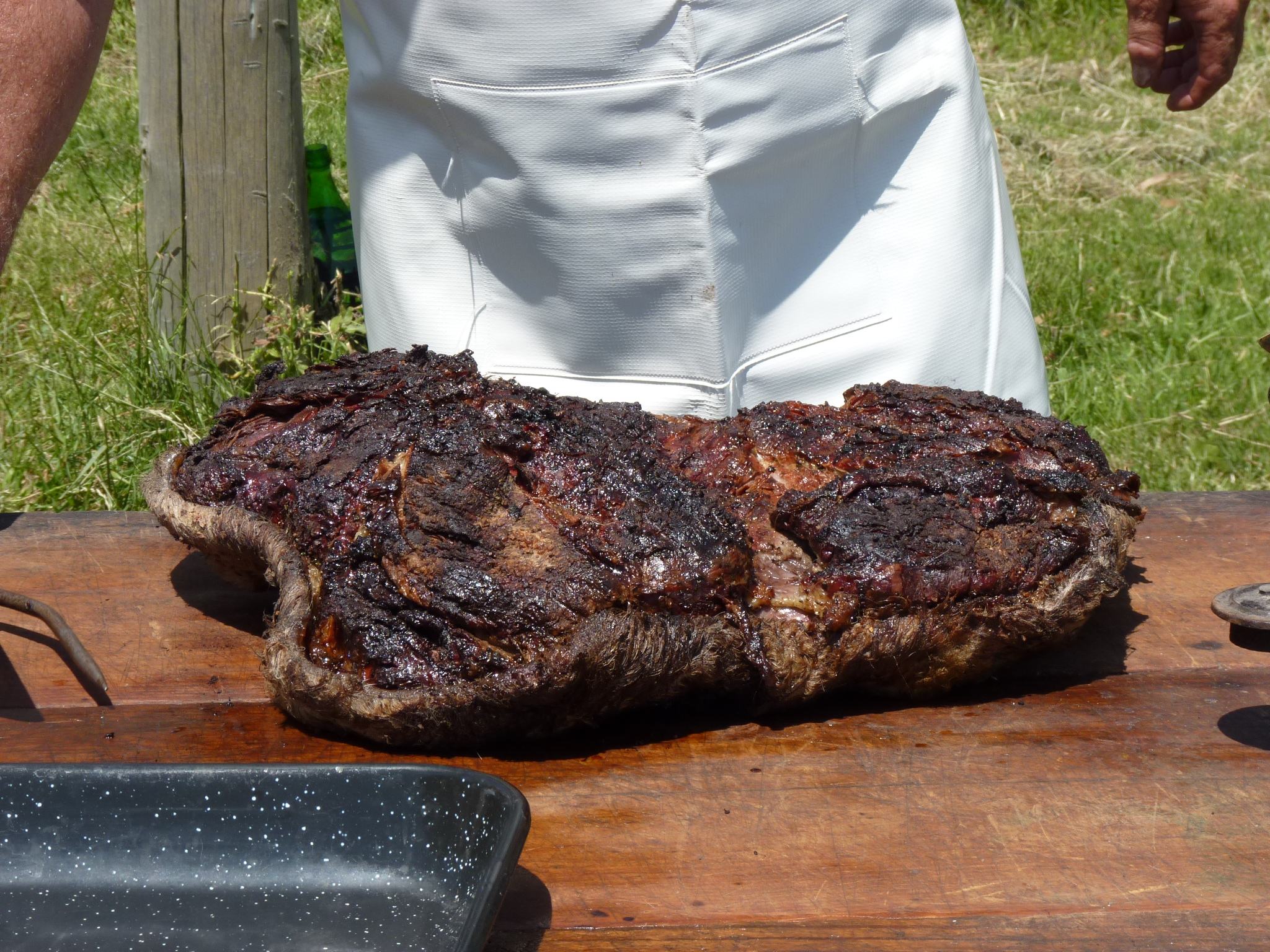
There is no doubt that Uruguay is a country of beef-eaters with a consumption of 70 lbs per person per year. Beef is eaten in different ways but nothing matches the Asado con Cuero, a traditional gastronomic specialty of the region.

asado con cuero y chorizos

Some pieces are with the hair up or down according to how ready they are.

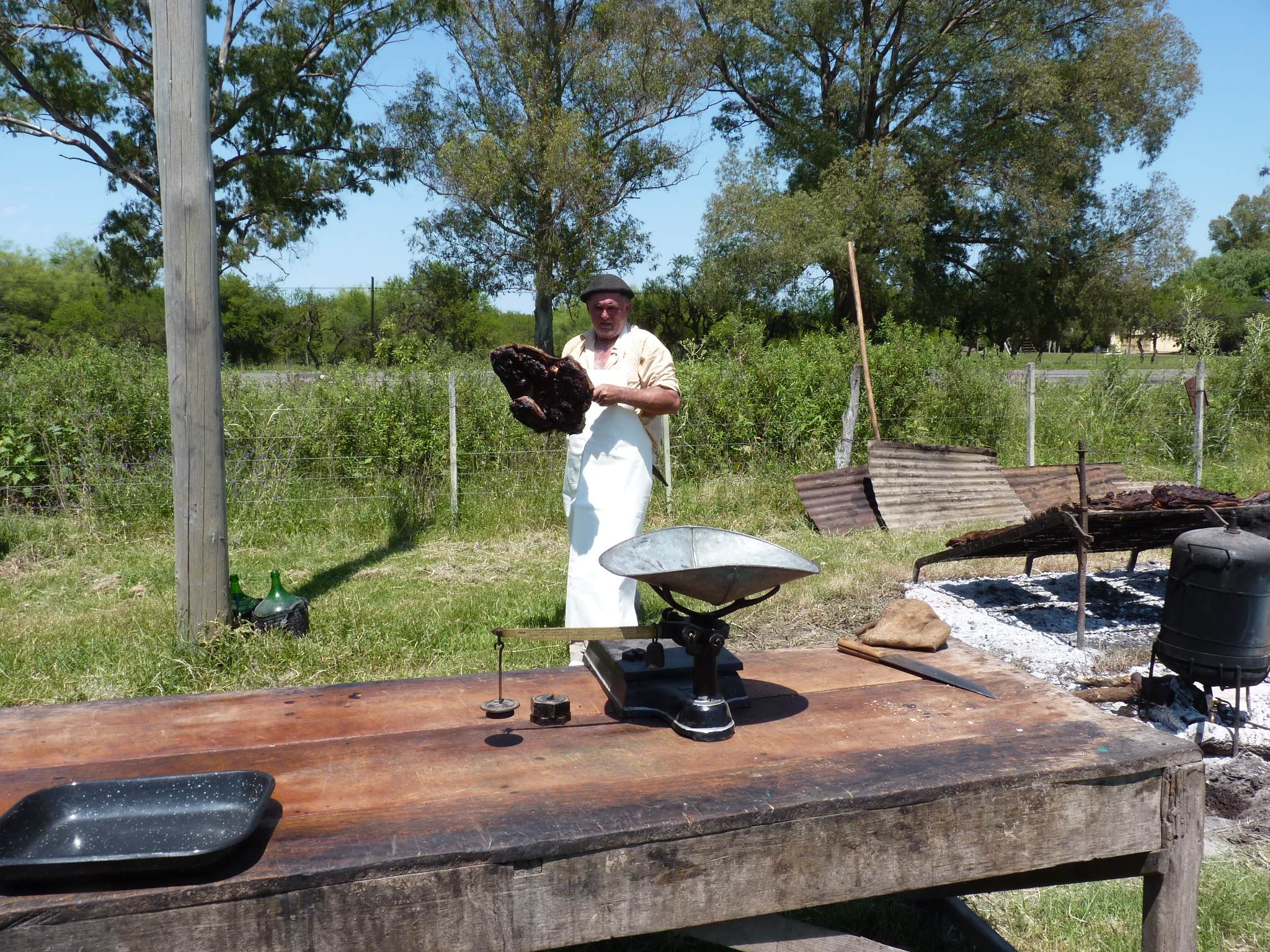
After its slaughter the animal is cut in large pieces and most large bones removed but not the hide (including the hair) and it is left to mature overnight. Very early in the morning (about 3 to 4 am) a large fire is prepared to get sufficient cinders to cook the meat.

asado con cuero close up

A close up of the barbecue.

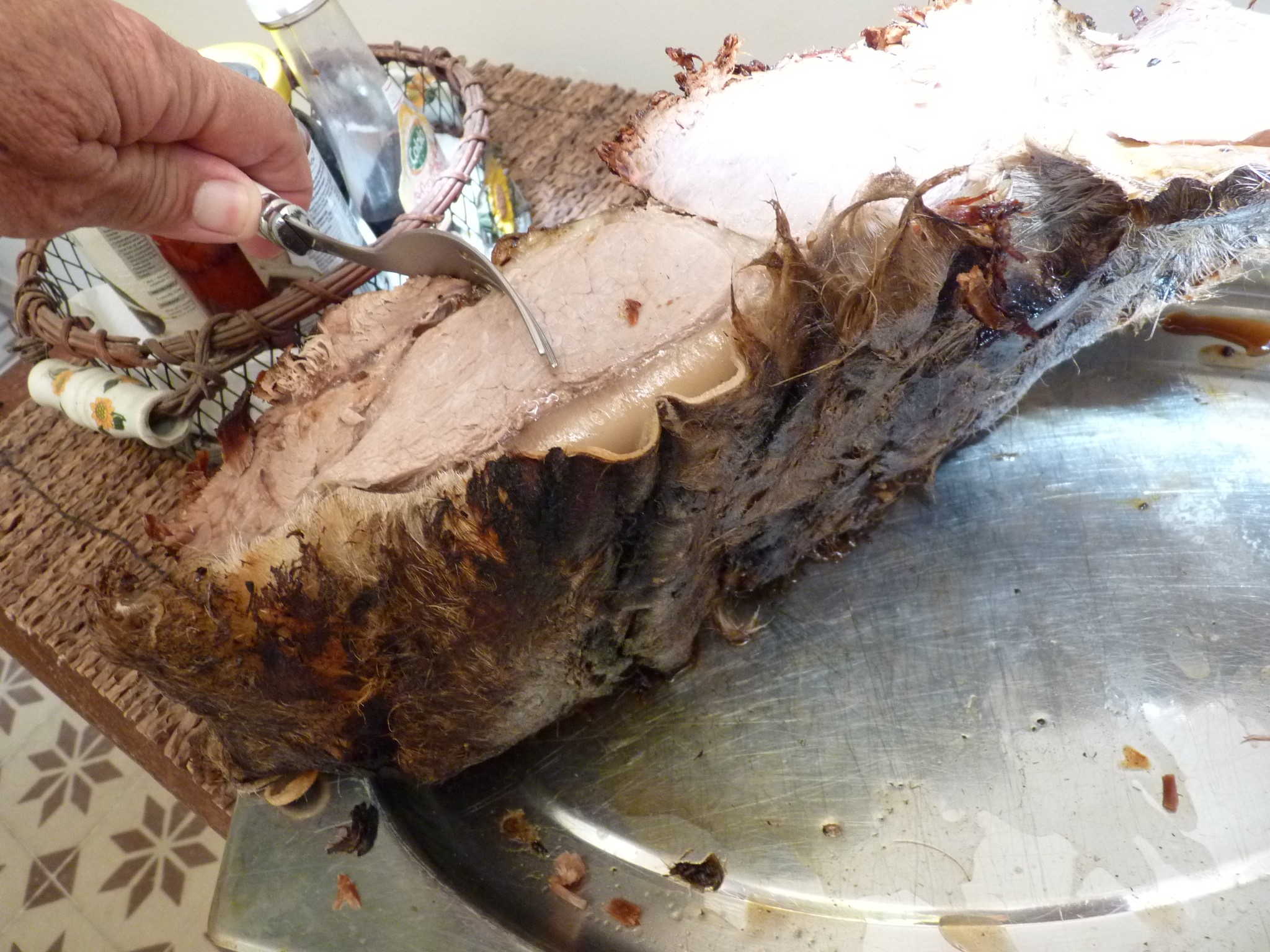
Once the fire achieves the right temperature the beef chunks are placed on the cinders in large grids, with the hide facing upwards. In this way the juices and fat are kept by the hide and contribute to cook the meat that gets more tender and tasty in the process. After about 8-9 hours of very slow cooking the pieces can be turned with the hair against the fire to finish the process, depending on the cook. To cook the beef with this technique is highly regarded and even considered a culinary art!

chorizos

A choice of sausages is also available…

first cut

Serving starts.

first cut 2

Time to chose…

piece cut

The end result: first class beef on the hide.

chorizos y asado gral view

Multitasking the Uruguayan way!

Its origin is attributed to the indigenous people that inhabited this land long ago. They became not only great riders with the introduction of the horse but also took advantage of the newly arrived cattle. It seems that they used to cook the beef in this way as it enabled them to roll the meat up inside the hide and run away on horseback if discovered cooking a stolen animal.


* Spanish for Barbecue with hide.

Almost a zebra…

potranca

I must confess that at (very) first sight it looked like a baby zebra by the river Plate! Perhaps I am conditioned to African wildlife or maybe it was the jet lag…

Anyway, as soon as I could establish contact the beast confirmed that, in fact, it was a filly.

JC and potranca 2

I tried to explain it that she was confusing and of a rather weird colour but I am not sure that she understood me as she just looked at me and listened quietly!

JC and potranca 1

You would agree with me that it is a weird example of a horse coat!

Beautiful Beasts

I came across this “flower” while walking in the beach by the river Plate.

cat tree

On closer inspection the real “flower” was revealed!

cat 3

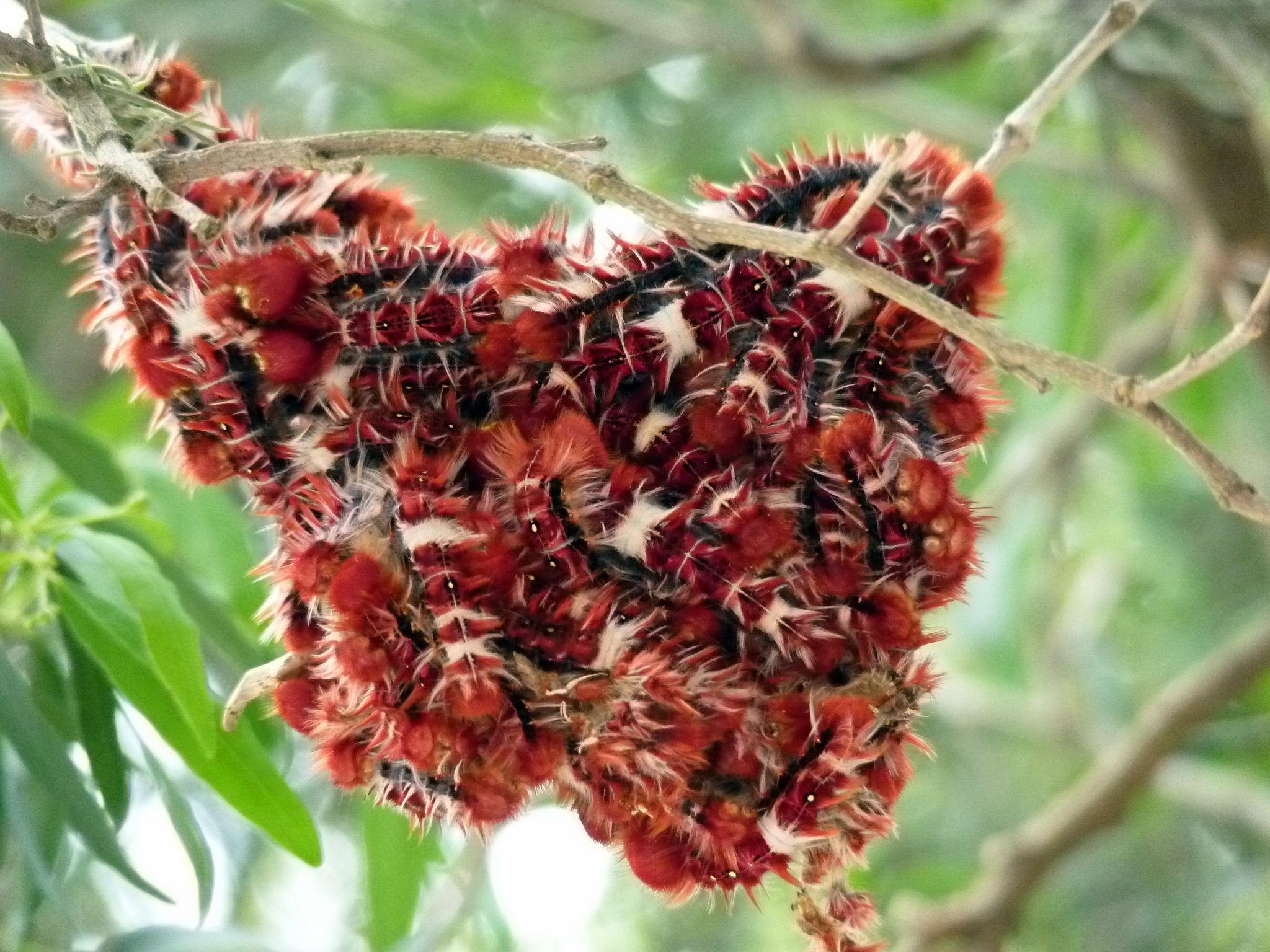
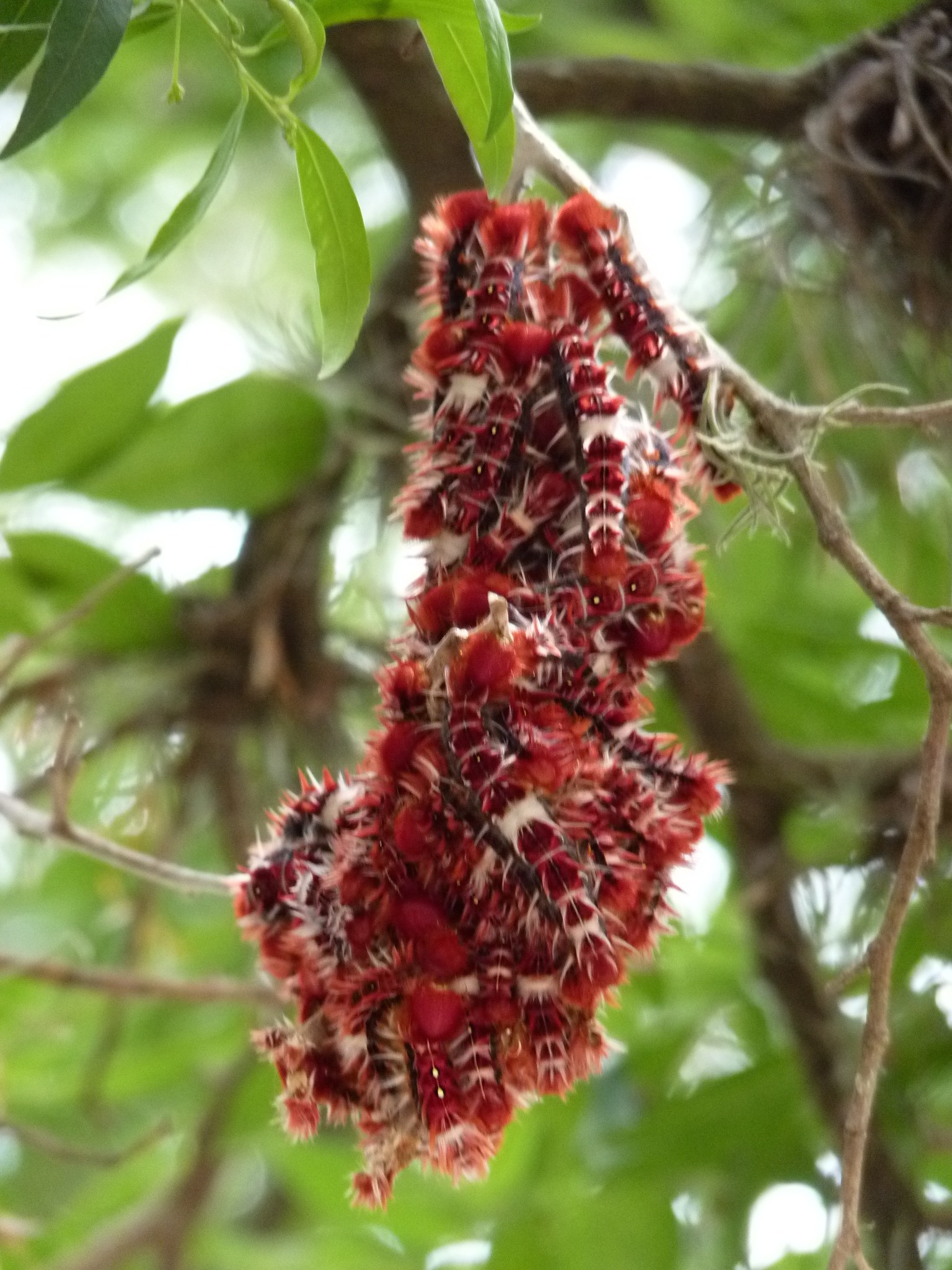
caterpillars 1

They were in fact hairy caterpillars aggregated together in a bunch!

I will find out more about them and let you know.


Note: The caterpillars are Morpho epistrophus, a rather beautiful butterfly!

See:

http://netnature.wordpress.com/2014/02/12/ecologia-de-borboletas-morpho/

http://en.wikipedia.org/wiki/Morpho_epistrophus

https://www.flickr.com/photos/grandma-shirley/6703808411/


Out of Africa: Plank phobia

“The fear to step on a plank or a precarious tree trunk(s) contraption in order to board a floating device -a boat- and/or to cross a small river” (Bushsnob, 2014).

Rurrenabaque harbour and market on a Saturday. These were the fish we were after!

Rurrenabaque harbour and market on a Saturday. These were the fish we were after!

I did not know I suffered from this condition until I was in my fifties. It appeared without warning hence I could not resort to preventive psychiatry. Maybe it was the altitude in La Paz that did it. I do not know!

The first encounter with it took place in Bolivia so I ask your permission to digress yet again and to depart from the African bush to the Amazonian one where, in pursuit of these very large fish, we booked an “expedition” up the Amazon tributaries. Eventually I will give you the complete details but now I will only focus on my phobia.

Early in the morning, the boat came to collect us and we needed to climb on board, over the water. The plank in question was about two metres above the water and rather precariously bridging land and boat. The river was calm and I do not suffer from vertigo but, the moment I set my foot on the plank, I knew I was in trouble so, pretending to be a gentleman, I allowed the family to go first, the luggage to be loaded and all to be ready and then, in a final and desperate attempt not to “plank” I informed all present that I would go and pay the hotel bill. “Dad, what are you saying, we paid it already!” my daughter said. “Oh, yes, I forgot” I lied and then added; “I will check the room to see if we left anything”. “Dad, we all already did”, it was my son’s turn to talk. So, aware that there is a limit to lame excuses and for my love of fishing, I faced the music and “walked the plank”, eyes closed, having memorized the route beforehand as you do when you are a child walking through a dark room!

Faltering I just managed to get on board, tumbling over fishing gear, people and bags which were clutched desperately as my arrival literally rocked the boat! Once on board I felt perfectly normal -as usual- and did not dwell on the moment any longer. Thus we were heading for the Madidi National Park, an area immortalized by “Exploration Fawcett”, a great read.

The plan was to camp on the shores of the river Tuichi, after a few hours of arduous travel up the river towards the Andes. The navigation would not be a direct one as we all agreed to our guide’s suggestion of stopping to watch the macaws. “No trip to the Madidi is complete without seeing this natural wonder” he had said. These were the Red-and-green Macaw, Ara chloropterus, the largest of the macaws belonging to the Ara genus and only smaller than the Hyacinth Macaw, the largest macaw. We could not wait!

On arrival I was relieved that disembarking was “plank-free” and it involved a quick jump ashore. “Easy” I thought. We walked in the forest towards the red cliffs where the nests were. All was going well until a small river appeared. In these areas the infrastructure is not well developed so there was no bridge to cross but two tree trunks tied together that spanned the three metre breach. I crossed it with my eyes wide open this time. I was very relieved that I made it to the other end quite easily.

After walking another kilometre we arrived to the site of the nests, wich took the shape of holes in the cliffs where the macaws were seen perching either singly or in pairs, together with other smaller parrots. It was beautiful to observe and hear these large birds interacting, going in and out of their nests and flying back and forth continuously. These are predominantly bright red birds with iridescent green-blue wings and long tails in the same colours.  There were about 40-50 birds at the time and they were as entertaining as they were loud! After watching them for a while and taking a few pictures, it was time to return.

We walked back basking in the glow brought on by our experience when we came face to face with the trunk “bridge” again! The guide crossed first with the ease of one well used to the action. Then it was my turn and, again, I went for it without stopping to think as this had worked in the other direction. Regrettably, it did not this time…

The moment I set foot on the trunks I felt an almost imperceptible rotation of perhaps two or three centimetres, enough to throw me -the athletic bushsnob- off balance. By the time I completed the first step, my body angle was already unsustainably tilted and, although I tried to compensate with the following step, my balance was already gone. Now, while I am suspended in mid air, I will stop for a moment to describe the situation around me. The guide had already crossed, but my family was behind me so everybody was watching my act. They may have shouted in alarm or relief at my imminent demise, I will never know. I did not hear anything.

What I remember next is landing on my back about two and a half metres below on the reeds growing in the water. The dense vegetation clearly spared me from serious physical damage as it cushioned my fall before I hit the water with a mighty splash (I was about 90kg at the time). As usual in these cases, wounded pride was stronger than overall damage so I shook myself off and promptly climbed the steep bank at an appropriate place a few metres away (where I could have crossed the river with only wet feet!). I was totally soaked in muddy water, shaken, winded, and upset at my clumsiness but otherwise fine!

Maybe my family asked me how I was, I do not remember. What I do recall was the guide saying: “You fell really well. How did you manage to turn around in the air as you did?” I looked at him and he seemed serious! I do not recall what I replied or if I did but my self-esteem felt a bit restored. His remark was certainly better than the fit of giggling that took over my family and that continued for the rest of the trip whenever the incident was remembered!

After a few steps I recovered control over my senses and I remembered the camera in my shirt pocket. Muddy water dripped out of it and it became evident that no macaw pictures would illustrate any future publications (sorry!) and also that the rest of the expedition would only be remembered! So the picture of the boat I show here is from another trip in the Tuichi, later on, prior to my second camera’s desintegration under similar circumstances…

So it was that, wet and with my pride badly dented, I climbed back on the boat and we proceeded to have a great trip, despite my newly discovered syndrome. Thankfully it did not affect my fishing skills.

En route to the river Tuichi. My daughter at the prow is making heroic moves to steer the boat while the bushsnob, on the right, gives instructions...

En route to the river Tuichi. My daughter at the prow is making heroic moves to steer the boat while the bushsnob, on the right, gives instructions…