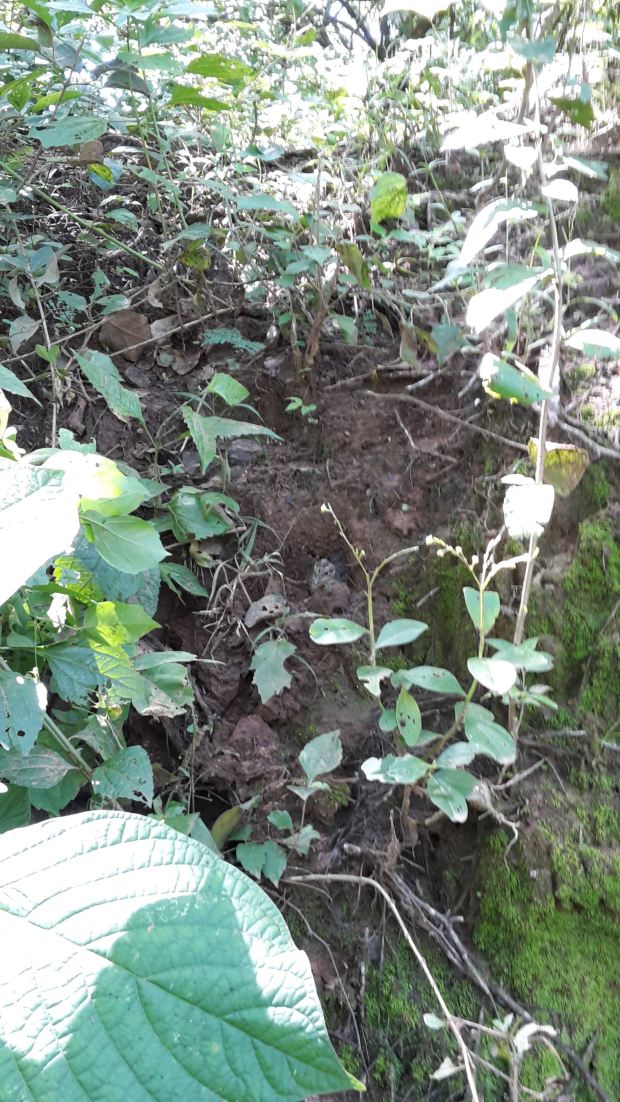
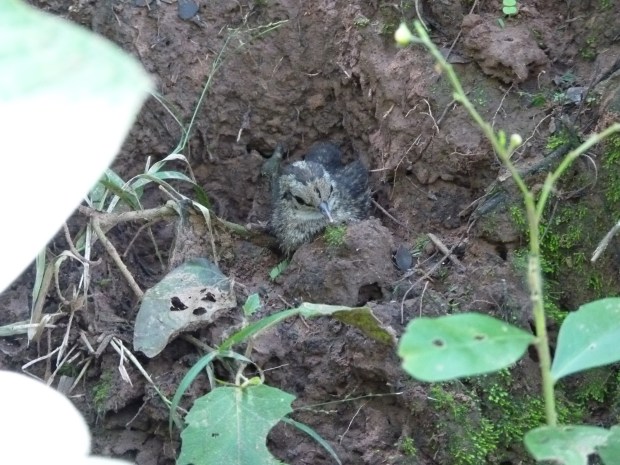
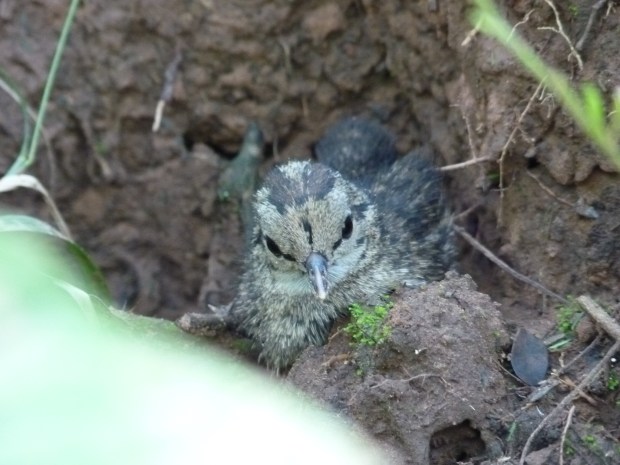
Forever in doubt!

This event took place in August 2008, when I was not aware of the existence of blogs and even less that I would be writing one! It took place at our farm in Salta.

It all started with the death of a steer at a neighbour’s farm on the 17th of that month. The animal’s hide was removed on the 18th and left to rot. Over the next couple of days a number of Black Vultures (Coragyps atratus), Southern Crested Caracaras (Caracara plancus) and Chimango Caracaras (Milvago chimango) were seen feeding on it during the day. On the 20th we saw a fox and a tawny wild cat on the road, near the carcass but we were not able to identify them. As things were getting interesting and as we were used to waiting for hours for predators and scavengers at carcasses in Africa, we made a point of returning that night to see what could spot.

At about 21:30hs my wife and I drove to the area and pointed the car headlights towards the carcass, as unfortunately we did not have a spotlight. While I was maneuvering to get the best illumination of the dead animal, my wife -already known for her keen eyesight- said almost shouting with excitement “There is a large cat feeding!” I stopped the car and brusquely moved towards her seat to get a better angle.

What I saw left me amazed. At about 30 metres from us a large cat was crouching on the other side of the carcass, apparently feeding on it. It looked at us three times and bounded off towards the bushes. As we could not follow it with our lights, we could not see if it was spotted or not. What we both agree is that it was a large cat (at least the size of a large leopard) with a rather sizeable and rounded head that we saw clearly as it stared at us. That was it! Although we both knew that seeing a jaguar (Panthera onca) in this area was extremely unlikely, we were both convinced that this was what we saw.

We knew that the chances of seeing it again that night were not high and, after a while, we returned to the farm, about 1.5 km away. We were so excited that we invited relatives staying with us at the time and our children to come back to the spot with us but failed to see it again!

The following morning we checked the area around the carcass for footprints but the soil was too hard and we failed to find any around the carcass or in the area we saw it moving towards, where there was a small stream.

When I spoke to our neighbor about this, I had the feeling that he thought I was joking but finally the concept sank in and he considered it as an impossible occurrence. After searching on the Internet I came across a publication that dealt with the distribution of the Jaguar[1] and decided to contact the author.

Below I translate our exchange.

4/12/2008

Dear Mr. Perovic,

Maybe this message surprises you but I have a farm in El Gallinato, Salta and wished to consult you about the possibility of having seen a Jaguar in this area. The coordinates of the place are: 24°40′ 23.10″S and 65°21′ 35.99″W.

In this place in August of this year a cow died and, aware that in Africa carnivores are spotted many times feeding on dead animals at night, we went with my wife to see what was feeding on it and we were surprised to see a large cat with rounded ears and green eyes that looked at us a couple of times, ate a bit and left. Regrettably we only had the car lights and a small torch that did not help us much to see the body. It looked rather dark but we do not know if melanistic specimens are present here or not. Around this area we have already seen wild cats and a puma but we do not publicize this to avoid hunters finding out and finishing off the few that may be around. Of course we returned to the carcass the following night but we only saw dogs feeding.

As I found your work on the distribution of the jaguar in the Argentinian North West, I thought that you would be interested in this information. I would also like to know if what we saw could have been a Jaguar or if it is that we are too old and having visions!!! Maybe some day when we are in Salta we could meet.

Kind regards.

His answer came the following day:

Dear Julio,

Many thanks for your message. Regarding your query, regrettably, I must tell you that is unlikely that it was a jaguar, I do not say impossible as one should never loose hope that their distribution will increase again to its original area which included the El Gallinato. But I do not think that nowadays it could have been a jaguar.

Regarding the article you mention, (although old) you would note that sites close to El Gallinato are mentioned (the mountain road towards Jujuy). These are data on footprints and some other signs, but regrettably 8 or 9 years have passed during which we cannot find new evidence.

I reside in Vaqueros and travel frequently to Jujuy (I am from there) in the mountain road. At the moment I work with jaguar and other cats (that are just as important as the one you saw) in several places, but mainly in the Yungas and Andes highlands.

If you wish when you pass through Salta, you could write and we could talk about this, about things that need to be taken into account about the predatory attitude of the different species, and I could also give you some useful material.

I thank you for your interest and initiative.

Many thanks and I remain at your disposal for any doubts you may have.

Greetings.

Pablo

Although we had a couple of additional e-mail exchanges, I have not yet met Pablo. I was in Rome at the time of the exchanges and in the past and present our visits to the farm were (and are) always short for time as there is always other more urgent and or important things to do!

Thinking back, perhaps the situation called for the probably first and last use of my “yaguareté” (jaguar) caller that I had acquired earlier in the Beni of Bolivia with the absolute guarantee (from the seller!) that it would attract jaguars! Luckily, the contraption remained forgotten in a corner of our farmhouse!

Incredibly ten years have passed since the sighting and, although I take in what Pablo said, writing this post brought back the memories of the large cat we saw that night whose identity will probably always remain unexplained for us!


[1] Perovic, P.G. and Herrán, M. Distribución del Jaguar en las Provincias de Jujuy y Salta. Noroeste de Argentina. (http://www.jaguares.com.ar/datos-personales/distribucion/distribucion-noroeste.html)

Spot the beast 43

Although winters at our farm in Salta are mild, sometimes we have cold nights and the occasional frost.

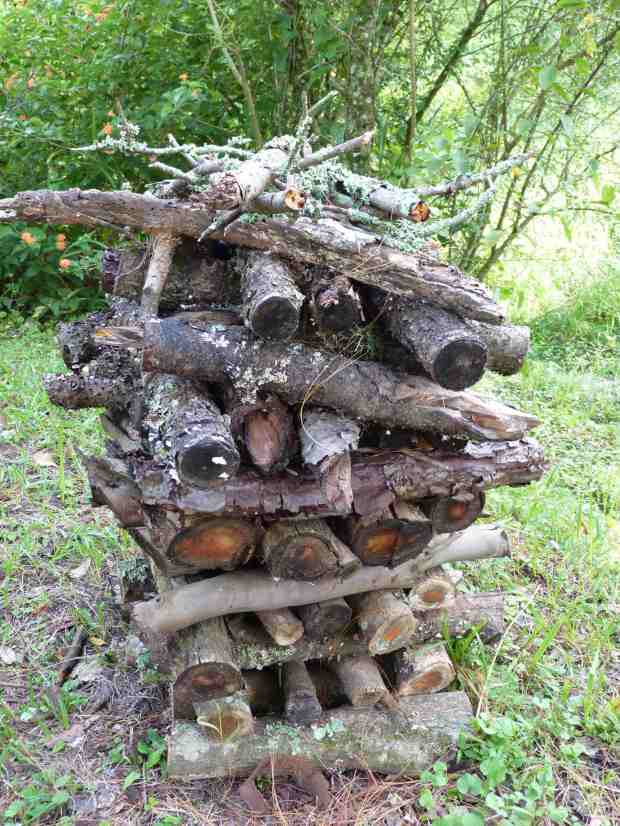
We buy some hardwood for our fireplace and also use fallen trees and branches to complement it.

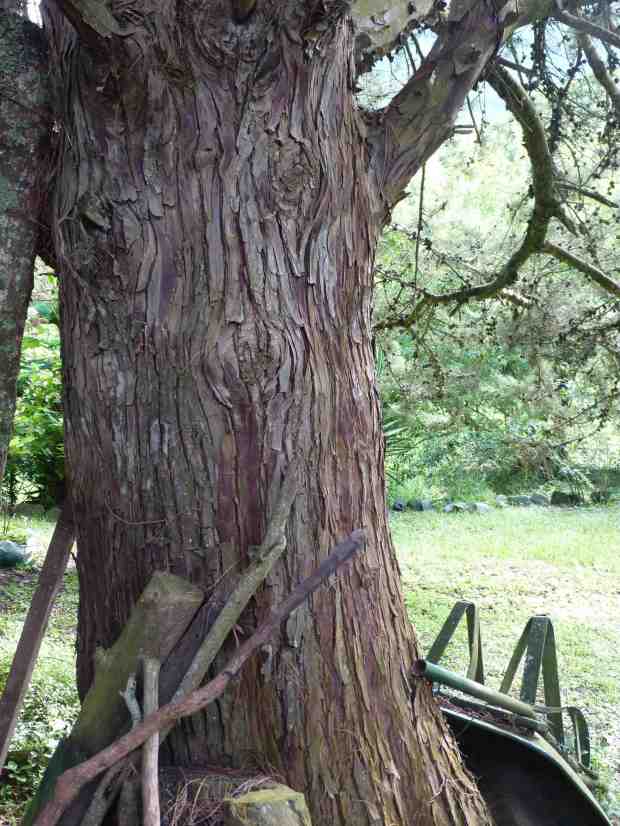
The picture shows a pile of pine wood getting dry for next year. It also hosts an inhabitant rather tricky to spot.

P1190137 copy

?
?
?
?
?
?
?
?
?
?
?
?
?
?

Here it is, revealed for you. It was quite difficult, I know! A real master at camouflage!

P1190140 copy

Alien

This year Salta has been unusually wet and we still have warm weather and rather heavy rains in April. This has created a true green revolution accompanied by an insect explosion. The moths are still coming in numbers to our outside lights and midgets and mosquitoes are still around.

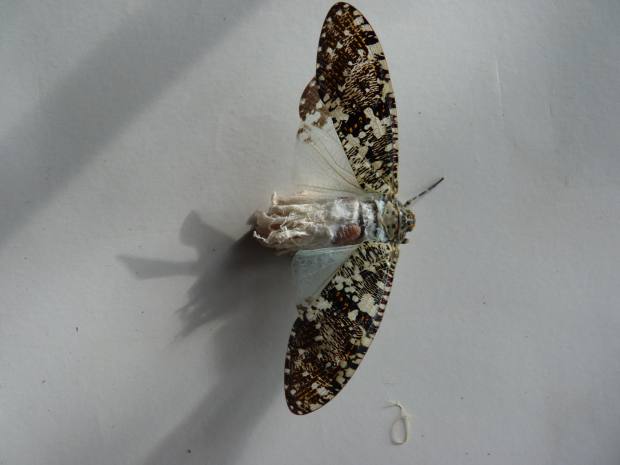
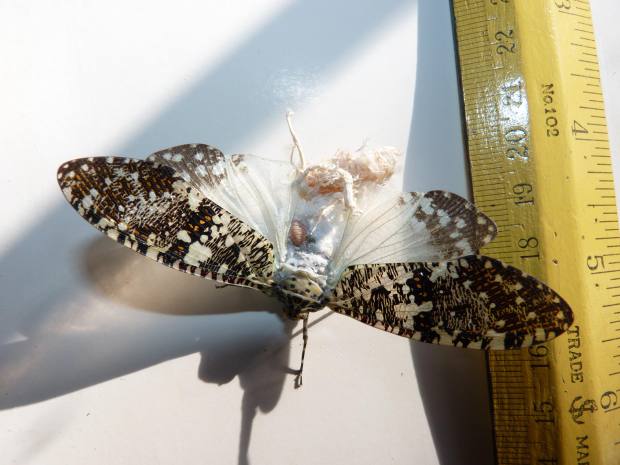
We found a cicada that had been attracted to the verandah lights. It was rather quiet and, unusually, stayed after daybreak. I collected it without much difficulty to have a look at it as there was clearly something wrong. While having a look, my wife noted pinkish silky filaments where its abdomen should have been! In addition, it was opening its wings from time to time but not making any effort to fly.

P1190074 copy

Dorsal view of the cicada.

P1190075 copy

The parasitoid larva can be seen at the joint between the thorax and the abdomen.

It was during one of these wing movements that she also noted a protuberance on its dorsal area that, after some careful inspection became a small pink worm-like creature apparently lodged in it. It was about 3 mm long and somehow it reminded me of a small warble fly larva.

P1190085 copy

The pink parasitoid seen from above with a size reference.

P1190085 copy 2

A close-up of the parasitoid larva.

Further inspection revealed another couple of worms also lodged on the cicada’s flesh. The larvae were still alive as they moved when I touched them!

We decided to keep the “sick” cicada under observation. As expected it died the following day but the larvae were still there so we left it undisturbed.

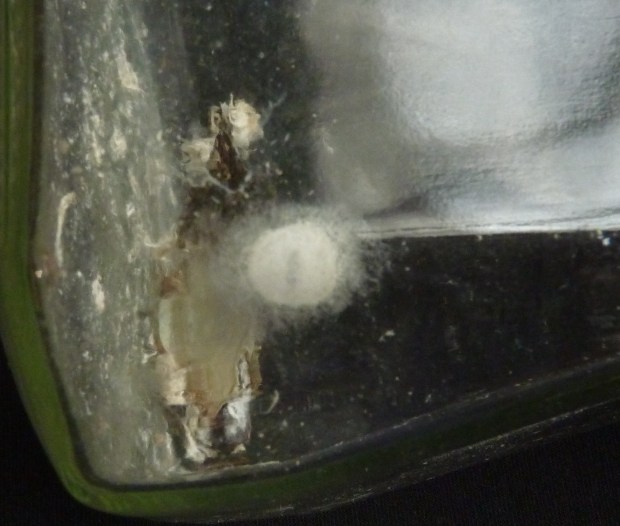
It is now about one month after the find. One of the larvae that detached soon after the death of its host has apparently built a small cocoon attached to the glass jar but the other two that stayed on the dead cicada turned grey and are apparently dead.

P1190248 copy

What I believe hatched from the cicada and made a cocoon in the glass jar.

I am afraid that the outcome of the cocoon will probably have to wait until our next visit, hopefully in 2019. In the meantime I can only speculate that, as it happens with caterpillars and other arthropods, the cicada was the victim of some parasitoids that have somehow colonized it. It is likely, as we other situations like this, that the larvae had eaten the cicada slowly until the damage created caused it to perish but not before the parasitoids, or at least some, were ready to leave the body and develop.

I will venture that these are larvae of a parasitoid wasp but I cannot be sure until the small cocoon hatches, if it ever does. However, having seen such an interesting interaction, I will watch for another cicada showing similar signs and follow it up.


Postcript: In the internet I learnt that some flies are important parasitoids of cicadas and that they locate them through their sound. It is also possible that the silky, pinkish filaments could be a fungal infection that follows the parasitoid’s damage of the host.


Collision

The fall of the VW kombi [1] was not the only car mishap I was involved in during my Kenya driving life. There was another more serious one that was not amusing.

It happened one morning that I was driving my brand new Peugeot 504 going to work. I needed to turn right from Fifth Ngong avenue into Jomo Kenyatta avenue, a normally risky move as it meant crossing the traffic to get to the left traffic lane heading towards the city centre.

As usual I waited for a gap and went for it. The moment I entered the large avenue I saw (too late) a small motorbike coming rather fast towards me. I had no time to change anything and in horror I watched the bike and its occupant hit me on my side of the car! Very luckily for him (in retrospect), the rider flew over the bonnet landing heavily on the tarmac on the other side.

Shocked, I helped the rider to get into a passing car to be taken to the hospital while we agreed that I would look after the vehicles and wait for the Police and his brother to collect the bike. While waiting, my landlord drove past and gave me encouragement while recommending me his lawyer as, according to him, he had gone through issues like this a few times! When I told him that I was charged with dangerous driving, in my view a terrible thing, he dismissed it explaining to me that that was the usual charge when there was an injury.

After dealing with the vehicles and the Police I visited the bike rider in hospital and found him, despite having an injured arm, in good spirits and being discharged. He was not only shaken by the experience but also for not having a Driver’s License!

Although the civil details were dealt with between the insurance companies, according to Kenya Law, a court case was set where I needed to appear to hear my case. I had some earlier experience appearing in court as a witness when my cattle feed was stolen [2].

As the date of my meeting with the Kenyan Justice drew nearer I went to see the lawyer my landlord recommended me. His studio was in a rather affluent area of the city. After hearing me for a couple of minutes he dismissed me arguing that he was too busy at the time (probably my case was too small for him!) and he recommended me Dr. Shah [3], an experienced lawyer. I noted that the latter’s office was sited on a less elegant part of Nairobi.

I drove to Dr. Shah’s office and met him that same morning. I explained what had happened and also that the accident had been my fault. He accepted to represent me but he recommended me not to accept the charges and plead “not guilty”. Although I resisted, at the end he convinced me arguing that “no lawyer would represent a guilty person”. I finally gave in and agreed to employ Mr. Shah to represent me. The USD 50 fee seemed reasonable at the time.

As it is normal, the day of my case the Court was brimming with people. Things were to happen in Court No. 2. It was another case of “controlled chaos” a common situation in many places where, despite apparent confusion, things do happen. The room was filled to capacity by about fifty people of all ages and sexes. Facing the public sat the judge, a small lady dressed in a black robe with the rather odd white wig.

My lawyer and I sat next to the bike driver and his own lawyer, both of Indian descent. The lawyers knew each other, of course. While a case was on-going a clerk came to inform us that our case would be the next so we waited in silence for a few more minutes. While waiting I was worried and nervous and I realized that I knew I was guilty despite the lawyer’s argument and also that it was too late to change things!

Eventually our turn came, the charges were read and I was asked to plead. As instructed by my lawyer I said “not guilty”. As soon as I said this I regretted and somehow I felt that the Judge did not like it. She then informed us that the case was adjourned to about two months in the future. That was too much for me as I wished to finish the business.

I asked the Judge to wait a minute and she agreed. I then called my lawyer aside. I told him that his job was terminated. I then returned to my post and asked to talk directly to the judge. She agreed and then I changed my earlier plead to “guilty”. I was not sure that this was possible but she accepted it and passed sentence.

She said that as it was my first offense and that, considering the circumstances of the accident, she would reduce the charge to “careless driving”. She indicated that I needed to pay a fine of about USD 20!

I was very relieved and congratulated myself for changing my mind. I left the room and met my lawyer. Although he was still unhappy, he agreed that the outcome had been good. I paid him what at the end accounted to more than double the fine and went home with a clear conscience!


[1] https://bushsnobinafrica.wordpress.com/2017/07/29/the-kombi-falls/

[2] https://bushsnobinafrica.wordpress.com/2016/06/13/cattle-feed-on-wheels/

[3] Not his real name.

Spot the beast 42

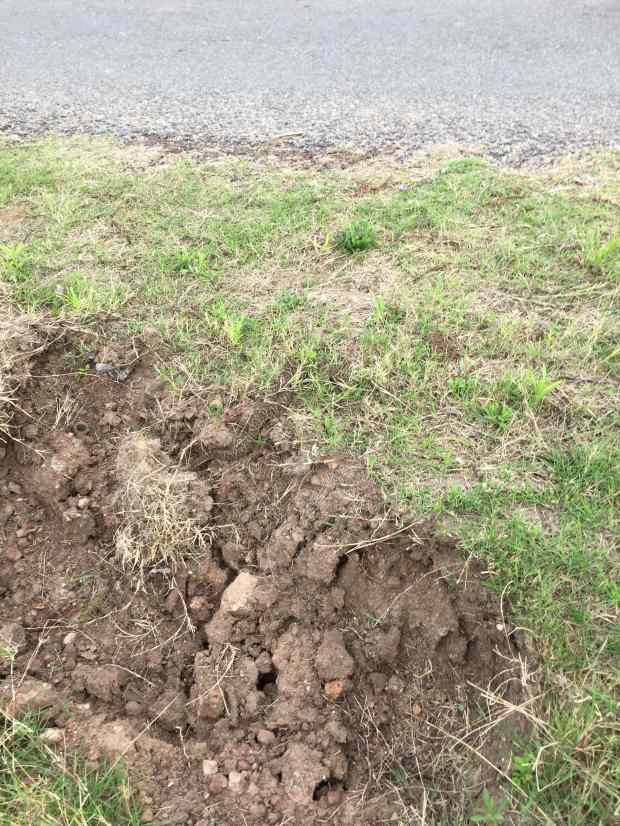
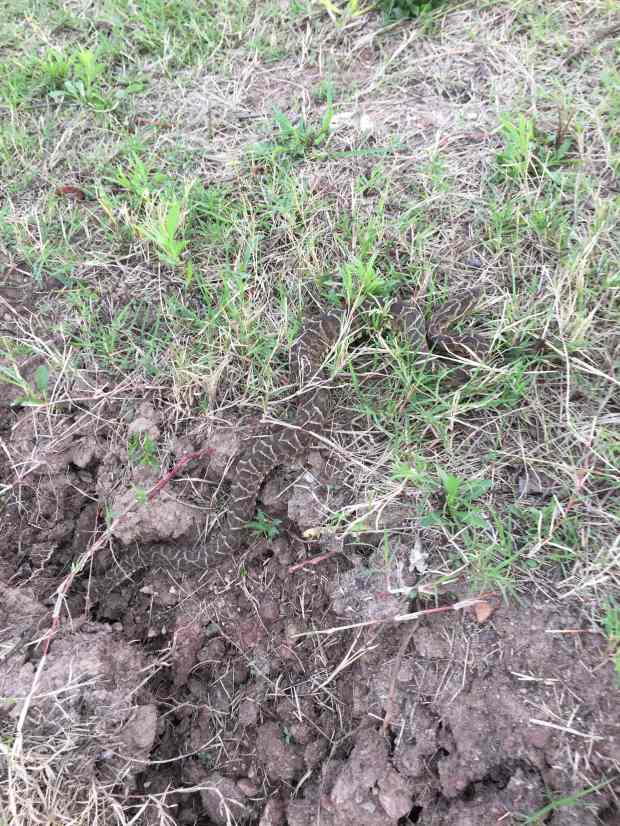
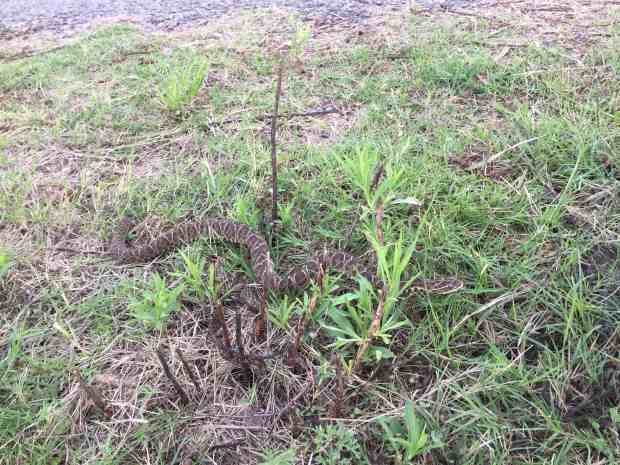
I am still thinking that Spot the beast 41 was too difficult! To make up for this, I am presenting you with this (more dangerous) creature we found while walking in Carmelo, Uruguay.

IMG_3321 copy

?
?
?
?
?
?
?
?
?
?
?
?
?

IMG_3322 copy

IMG_3324 copy

It is a venomous snake known locally as “crucera” (Bothrops alternatus). It is found in Brazil, Paraguay, Uruguay and Argentina and, although not naturally aggressive, it is an important cause of snakebite. The reason for this is its reliance on its comouflage for protection. It is then easy to either step on it or nearby causing a defensive reaction that can end in a bite.

The venom is haemolytic and can cause serious tissue damage although is not as deadly as it is generally believed.


80, 89…

Why nature decided to make butterflies so colourful defeats me. I can understand the role colours may play in predator protection, easy recognition among conspecific individuals, reproductive behaviour and all sorts of other properties that colours may have but, still, why being so outrageous with butterflies?

So, you would think that Nature would have been content with allocating them the whole colour spectrum? Not so, some of them have also been numbered! These are some of the members of the Diaethria genus and I do not think that this was done to help the taxonomists!

You know from earlier posts that the Yungas region where our farm is located host a great many colourful butterfly and moth species and to take a walk on a sunny summer day is a true challenge to your eyes!

I have probably photographed over one hundred butterflies (and perhaps double that number of moths) and I had covered the butterflies issue earlier in this blog [1]. Despite having seen most of the available butterflies, I am still surprised at what I find!

One of the posts deals with one of the numbered butterflies: the 80 (or 08) , depending how you look at it. It is known as Diaethria candrena.

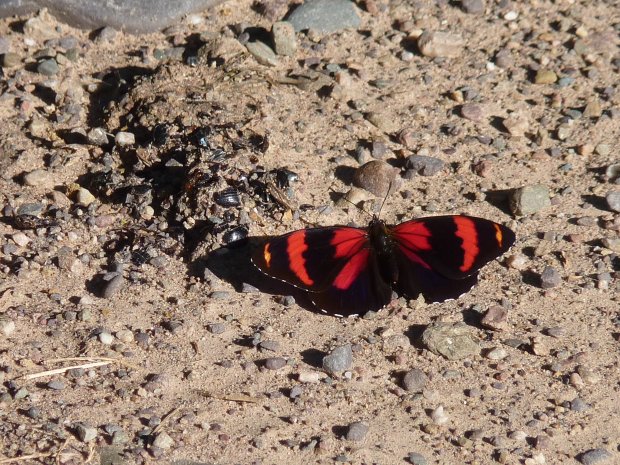
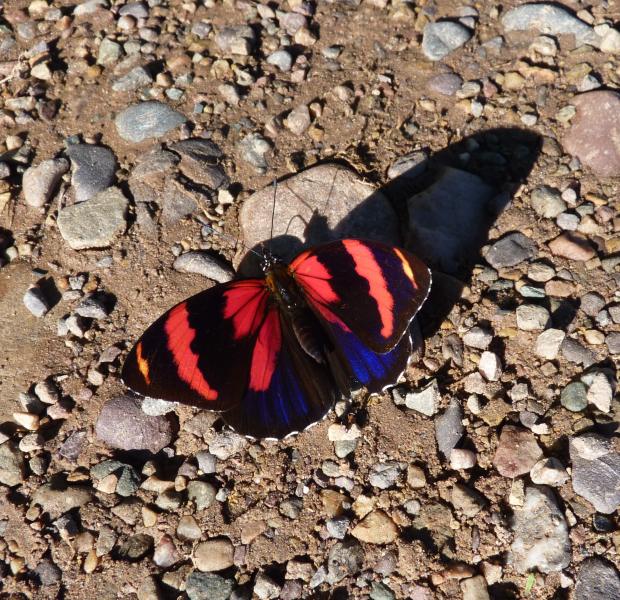
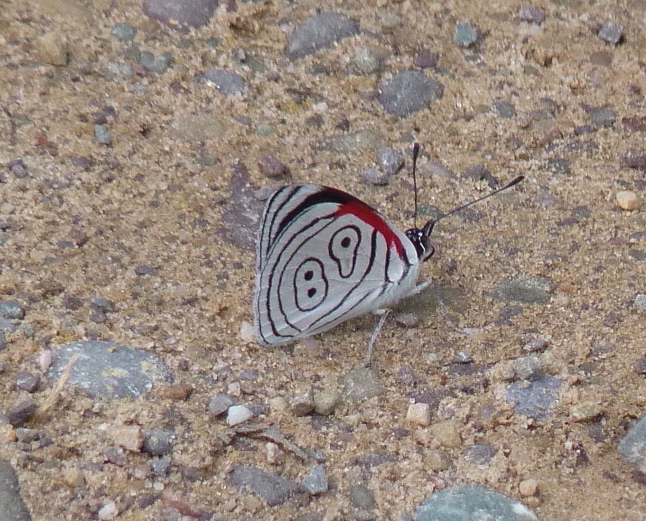
P1130769 copyP1130829 copyP1130858 copyVery recently we briefly saw a new and strikingly iridescent butterfly flying very fast and we soon lost it. Luckily the following day we found it again and, with lots of patience, I managed to take a few reasonable pictures of it. To my surprise it also carried a number: 89 (or 98) and I believe it to be Diaethria neglecta, also known as the 89 butterfly!

89 butterfly copy89 butterfly 2 copyP1190177 copyI then learnt that the numerals which appear on the underside hindwings of these butterflies are present in the twelve species of Diaethria but vary in colour and shapes, some of them do not show recognizable numbers.

There is also the 88 butterfly that would complete the numbered ones: Diathria clymena. I have not yet found it although I believe that it is also in the area. To find the third butterfly numbered by Nature adds another motive to continue with my daily walks.


[1] https://bushsnobinafrica.wordpress.com/2015/02/27/flying-gems/ and https://bushsnobinafrica.wordpress.com/2016/03/02/80-zig-zag/


Spot the beast 41

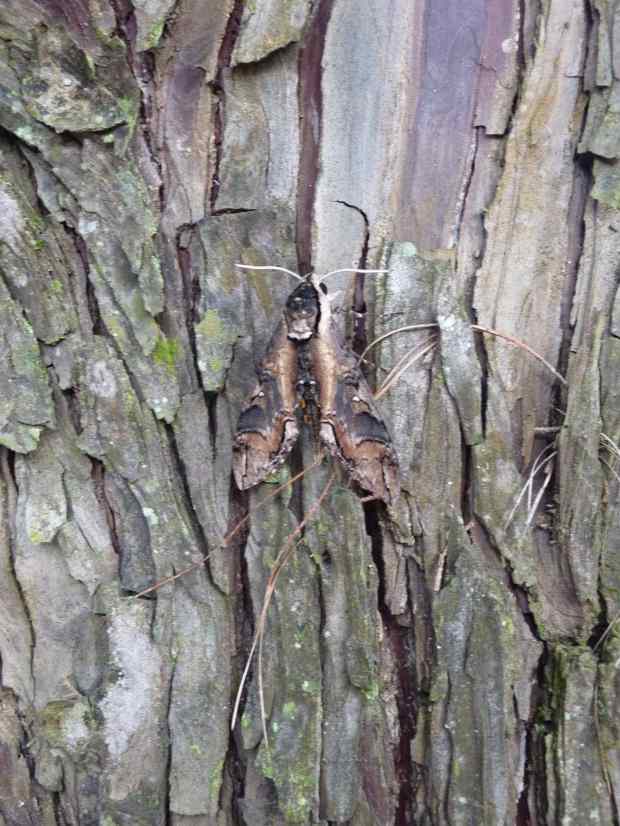
I consider this “Spot” a tough one. Once again it shows the amazing camouflage that some creatures have developed to survive. Look for it!

P1190142 copy

?
?
?
?
?
?
?
?
?
?
?
?
?

P1190143 copy

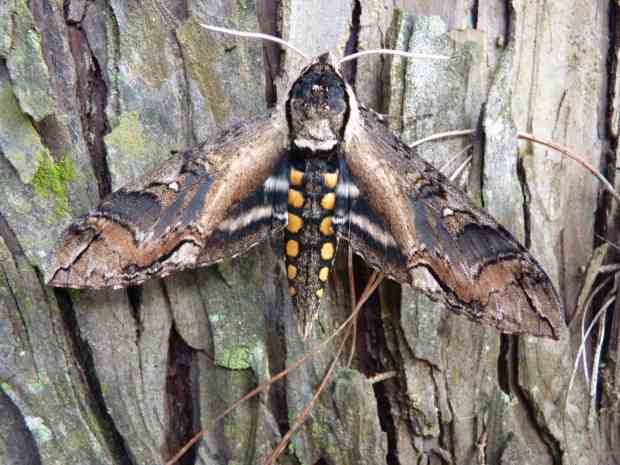
Its colours do not matter once it is able to fly off!

P1190144 copy

A WWII relic

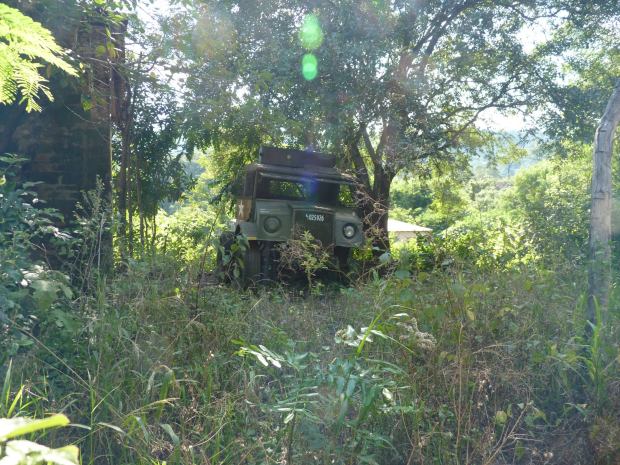
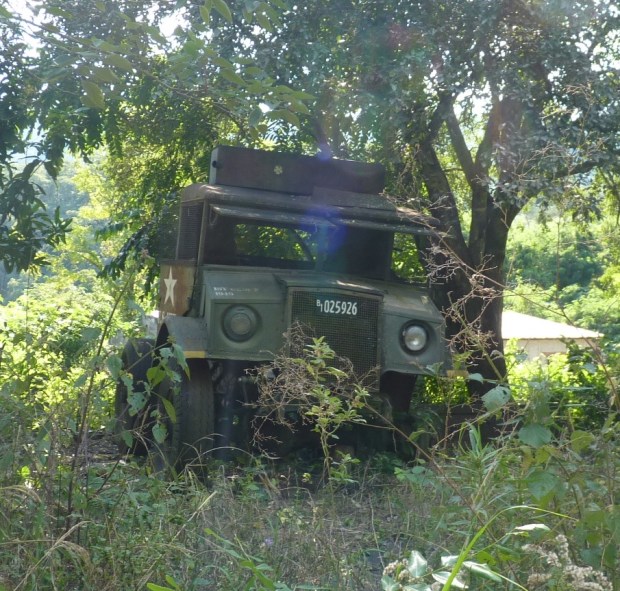
On the way back from our macaw walk [1] Oscar mentioned that there was an old truck parked nearby. Curious we agreed to get there and -as usual- do a bit of “controlled trespassing” to investigate.

P1190027 copy1

First view.

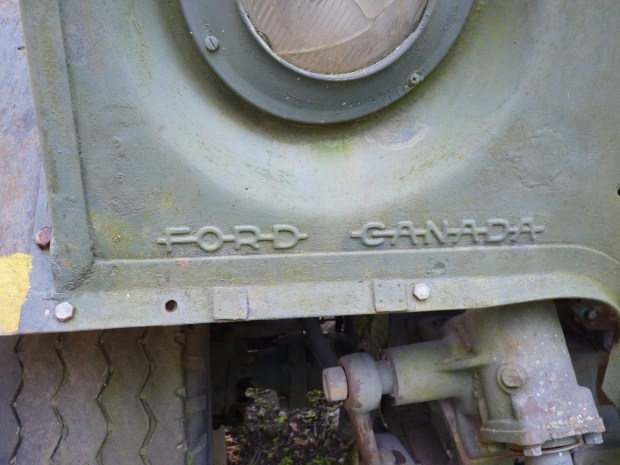
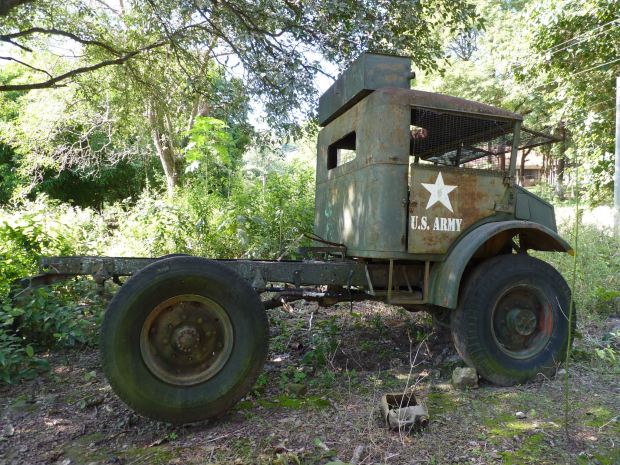
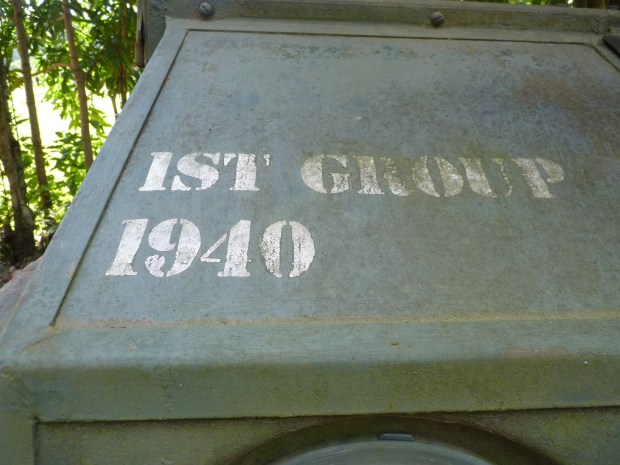
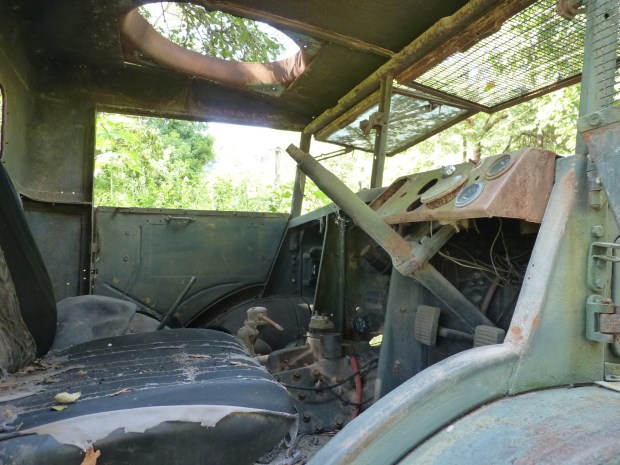
The truck was still there and it still showed its original painting as well as its make: Ford Canada.

P1190027 copy

P1190014 copy

P1190010 copy

P1190013 copyP1190015 copyAlthough the truck showed the signs of time, it still was quite well preserved. Surprised, I took a few pictures and went to the Internet in search of answers. This is what I found mainly via Wikipedia [2].

I believe that it is a Canadian Military Pattern (CMP) truck. This truck was produced in large numbers and several types in Canada during World War II. Standard designs following British Army specifications for use by the armies of the British Empire and allies were prepared before the beginning of the war coincident with the rise to power in Germany of Hitler and the Nazi party in 1933.

By 1939, mass production in Canada of CMP military vehicles was on the way and the Canadian-built vehicles were to serve widely in the forces of other countries. At the outbreak of World War II, Canada’s large and modern automobile industry was shifted over to the production of military vehicles out-producing Germany. Truck production was focused on a broad range of medium-capacity vehicles.

Over 500,000 CMP trucks were manufactured in Canada. They were right-hand drive and they formed the basis of a wide variety of different truck types and armoured vehicles.

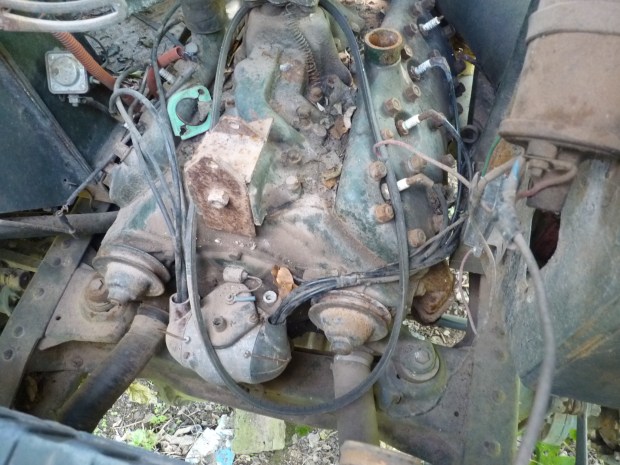
All the CMP cab designs had a short, “cab forward” configuration that gave them a typical boxer-nosed profile, a design required for a more efficient transport by ship. Internally the cab had to accommodate the comparatively large North American engines and it was generally cramped.

P1190011 copy

P1190025 copy

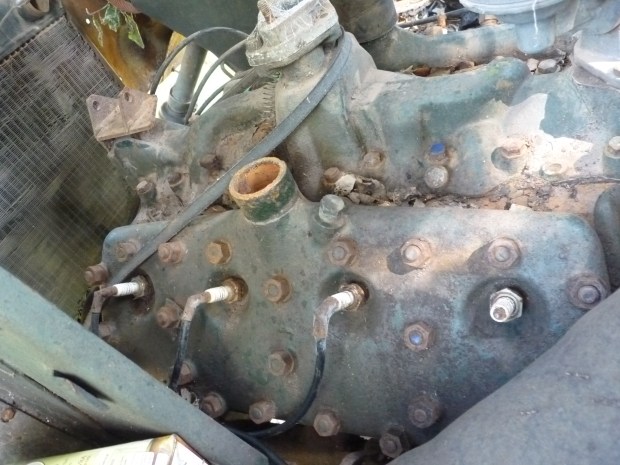
Eight cylinder engine.

P1190021 copyNewly manufactured, or as modified war surplus, CMP trucks were widely used after 1945 in several European armies and around the world, among them in Argentina. CMP trucks were adapted after the war for a variety of civilian roles including forestry, grain transport, fire-fighting trucks, and snow-ploughs.

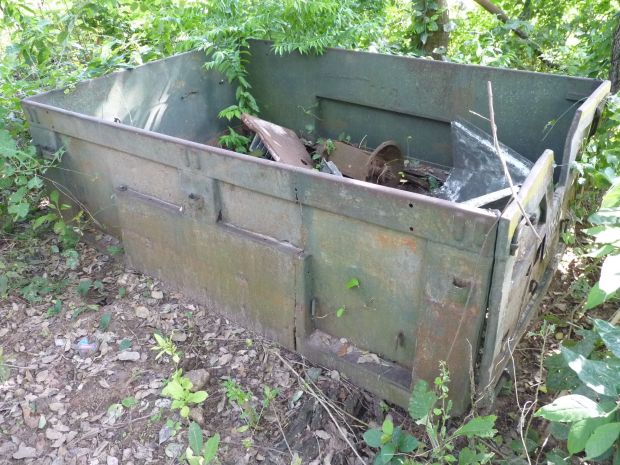
Focusing on our find, while I wait for a response from the experts available in the web (if it ever comes!) I would classify our find as a Ford CMP truck of the cargo type as its back part was resting nearby.

P1190019 copy

Summary of technical specifications:

Ford F15. 3 ton 4×4 Cargo produced by Ford Canada. Designed in 1936–1940. Produced in 1940–1945. Service history: From 1940. World War II. Engine: Ford 239 239 cu in (3.9 L) petrol V8, 95 hp (71 kW). Wheel 4×4. Speed 50 mph (80 km/h)

Now, how did it get to Itiyuro?

Although the Argentine Army is listed among the world armies that got CMP trucks [2] they would have been re-painted with the proper livery and they would have had special Army number plates.

The answer to the origin of the truck relates to oil prospection work in the area [3].

Oil had been detected near Tartagal (Northern Salta) in the 17th Century although interest for its extraction only started in the mid 1920’s through the arrival in Salta of the Jersey Standard Oil Company (SOC), attracted by the area’s potential.

The SOC finally started to extract oil industrially from 1926 but soon slowed down its intervention as the Government YPF moved in. During 1938-9 extraction by SOC declined as the YPF’s increased and by the late 1940’s, in view of the poor production of its wells, the SOC withdrew from Salta.

It is possible that the truck is one of the few remnants in the Itiyuro area left by the SOC or one of its engineers that brought the truck as a war surplus. I am not sure that we will know but, anyway, it was an interesting find.


[1] http://www.bushsnobinafrica.wordpress.com/2018/04/10/safari-to-itiyuro/

[2] https://en.wikipedia.org/wiki/Canadian_Military_Pattern_truck. Consulted on 6 April 2018.

[3] Benclowicz, J.D. (2011). Aportes para la Historia del Norte de Salta. Conformación y desarrollo de las localidades de Tartagal y General Mosconi durante la primera mitad del siglo XX (Contributions to the History of Northern Salta. Formation and Development of the Towns of Tartagal and General Mosconi in The First Half of the Twentieth Century). Andes vol.22 no.1 Salta ene./jun. Consulted on 6 April 2018.


Spot the beast 40

This took place while walking up the hill in Itiyuro in search of the macaws. See my earlier post.

For a change I spotted this little fellow running and then lost it when it stopped. After a while searching it moved again at the time that we were almost about to abandon our search.

I am sure that you will find it.

20180331_121041 copy ?
?
?
?
?
?
?
?
?
?

Just in case you did not spot it, I took a couple more pictures as it was really a nice youngster although we could not identify it.

P1180957 copy

P1180960 copy

Safari to Itiyuro

There are 979 bird species in Argentina [1] and 656 (67%) of them are found in Salta Province [2], one of the reasons that prompted us to get our small farm located in the foothills of the Andes mountains.

Although quite familiar with Eastern and Southern African birds, we try to keep up with those present in Salta but it is a rather hard job to remember the vernacular names of the species present. That is why we are lucky to have our own resident ornithologist in the shape of Oscar, the owner of the farm next door!

We often consult him on bird (and other) matters and he does not disappoint us. So, when he and Ágata -his wife- invited us for a trip to the Itiyuro-Tuyunti (Itiyuro) dam to watch some unique birds, we readily accepted although we have not eard of the place before! It was only later that we learnt that the place was actually located about 350km from our farm on the very Northeastern part of Argentina, very close to the border with Bolivia.

The idea was to stay two nights at a Government house close to the dam while accompanying Oscar on his bird census work as well as trying to spot some “specials” of the area such as the Military macaw (Guacamayo verde in Spanish), Ara militaris and the Yellow-collared macaw (Maracana Cuello Dorado), Primolius auricollis among other birds, some of which are not easy to see.

We left our farms at about 08:30hs and travelled North through a mixture of farmland and sub-tropical hills framed by the snow-capped pre-Andes in the distance. The latter showed a rather heavy snow cover despite being quite early in the year and added a great contrast with the heat of the area we were moving through.

After a brief stop at the bridge over the San Francisco river where -from some fishermen- I learnt that some good fishing for dorado, surubí, patí and other species is possible. The San Francisco flows into the Bermejo (some info on the Bermejo) and the fish move upstream.

“We did not catch anything this time. The water is too muddy” they said and then, showing me their arms added “no fish but the marigüis are plentiful”. I felt sorry to see the number of bits they hd suffered and memories of fishing in Bolivia under a similar “challenge” came back. I made a note to come prepared if I ever attempted fishing there!

Before we finally got to Itiyuro we stopped again to buy fruits and veggies at Pichanal as the offer was very tempting and we could do with good avocados, papaws and bananas. I also spotted some special medicinal honey from the local Moro-moro bees and made a note to buy a jar for Nena -a friend in Salta- on the way back.

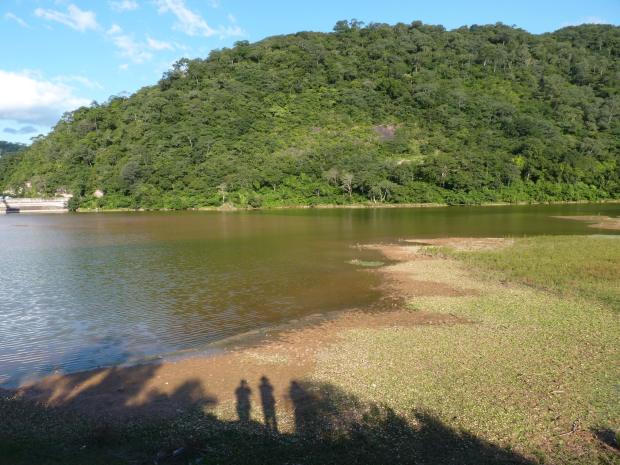
After quite a mission to find the keys for our house, we got to Itiyuro in mid afternoon, a bit later than planned but still in good time to try to watch the macaws’ “fly-over” that Oscar knew takes place after 16:00hs. We were lucky to see a number of Golden-collared macaws flying overhead, returning to their roosting places.
P1180922 copy

The dam.

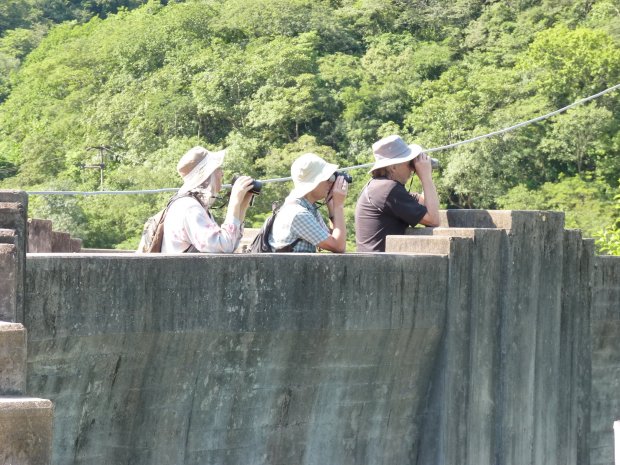
We were disappointed not to see any of the “specials” of the place, the Military macaws. This bird of about 65cm in length has a red forehead and an overall bluish tinge to its plumage while its face is rosy with black lines like some other of the macaw species. Its distribution in Argentina is stated as “Yungas (a small population North of Salta)” [1] so our willingness to see them increased. “Do not worry” said Oscar, “tomorrow we have a chance of walking towards a special area where -if very lucky- we can see them”
P1190033 copy

Keeping watch for the macaws.

P1180919 copy

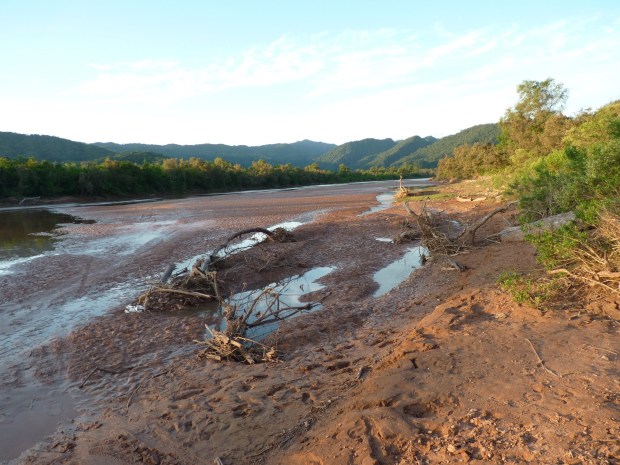
Although we watched a few water birds at the dam, our sights were already set on finding the rare Military macaws. We learnt from Oscar that the “top spot” for the macaws required a 20km walk and he added “the path is wide and we may be able to cross the river with the car so we can save about 2km”. We estimated that our daily walks had kept us fit enough to attempt it. Before going back to our house we drove to the river and realized that crossing with the car was out of the question.

Although the depth could be negotiated and the bottom was quite firm, the access to the road on the opposite bank had been washed away and a 4WD pick-up that had tried to cross was still submerged in the river with water up to its seats! Its occupants were digging while waiting for another car to tow them back. We left knowing that the following day we would have to ford the river on foot and walk the distance.

So, after the customary asado (barbeque) accompanied with roasted sweet potatoes and a bottle of an excellent Cabernet Franc, we prepared our bags for the following day and went to sleep. Apart from binoculars and cameras we needed to pack sufficient water, food and -above all- insect repellent as we remembered our experiences of walking in the Madidi National Park in Bolivia where the marigüis (a Simulid of ths sandfly kind) were worse than the piranhas!

Although we planned an early start we realized that senior citizens required more sleeping time in the tropics so we got somehow delayed by about one hour. Despite this we decided to set off anyway as the walk offered other attractions apart from seeing the macaws and the weather was superb. So, the plan was adjusted accordingly to take in the possible higher temperatures to be suffered and we agreed that if we felt strong we would aim for the “máximo” (top spot), otherwise we could turn around earlier. The top spot we were cheerfully informed by Oscar was worthwhile.

Oscar guided us. He had visited the place a couple of times before and had a GPS with the top spot in its memory. Although the intention is to preserve the area as a protected area in the future, at the time of our walk there were no facilities in place apart from the road opened up sometime ago during the exploration for oil and gas.

So we walked across the murky river and succeeded as -luckily- the bottom was clean sandy-clay and no yacarés (caimans), stingrays or piranhas lurked under the surface. More importantly for me, the water temperature was rather pleasant…
P1190006 copy

Once across we were treated to a few interesting birds in the riverine forest. The most visible and interesting were a Toco Toucan (Ramphastos toco) and a Blue-crowned Trogon (Trogon curucui), the latter quite similar to Narina’s trogon, found in Africa. As if these two beautiful birds would not be enough, suddenly Oscar pointed to the sky and there, in all its glory, an Andean condor gave as a display of its amazing gliding skills, a beautiful sight considering that we were at a sub-tropical forest.

Not crossing the river in the car was a “blessing in disguise”. A few hundred metres forward we came to some heavy eroded area where the wooden bridge that we would have used with our car had been destroyed by flooding and we would only have been able to make use of our motorized transportation for a few metres after crossing the river!

And then we walked! It was mostly uphill although a few descents to alleviate our legs also appeared. The first stage of about 5km would take us to some human habitation known as “the Post” where we could rest and decide whether to go on or return to base.
P1180968 copy

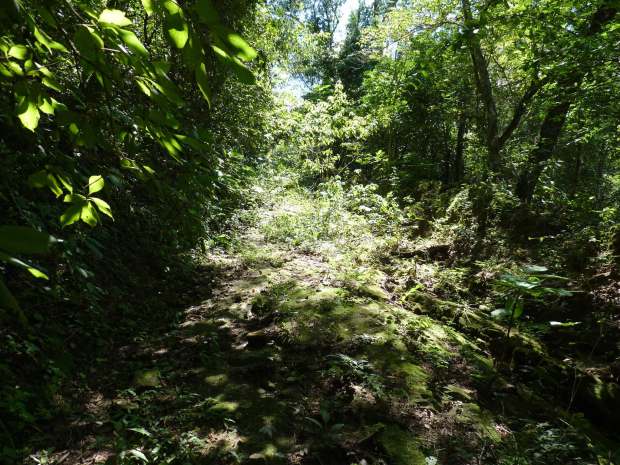
The path to the Post.

While moving through the forest we saw few birds and most were “flashes” of colour across the path as it is usually the case in rather thick cover. Despite this, we observed footprints from peccaries and red brockets as well as a number of interesting insects, flowers and fungi, apart from the magnificent trees and climbing vines that surrounded us. Luckily, our repellent was working and the marigüis were kept in check, at least most of them.
P1180983 copy

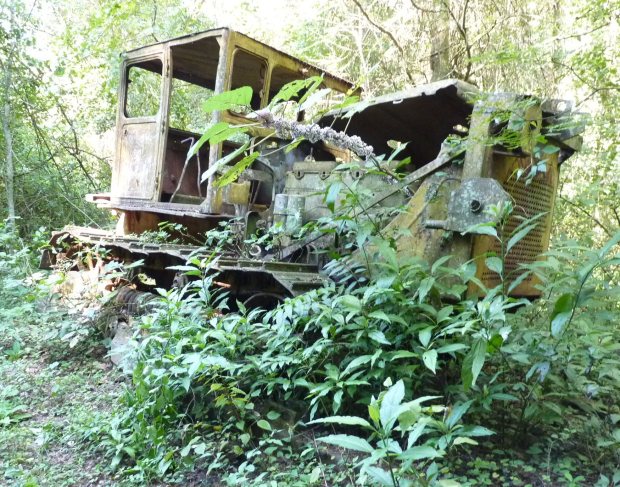
Before arriving to the Post we found an old earthmover resting in the foliage. Judging by its condition it had been in this place for a few years, most likely from the times of the oil and gas prospection that took place during the 1900’s. I had been abandoned after having done its duty of opening the road.
P1180937 copy

I climbed on it to have a look hearing Oscar’s warning about looking our for snakes as these tend to find refuge inside old machines. A quick look did not reveal its make but I could see a rather powerful eight-cylinder engine that, unless some major mechanical work is done to it, will not start again.

Oscar, the conservationist, said “this looks like the revenge of the forest against its destroyer” and he walked on.

After about 90 minutes we arrived to the Post and needed to decide whether we continued to the top spot or took a detour back to our car through another dam known as the “Limoncito” (small lemon) that was quickly re-named “Lemoncello” by the mostly Italian-influenced crowd.

We unanimously decided to continue agreeing that we were already half-way and that we may never had the chance again! So, we calculated that it was 11:30hs and we would need another two to get to the place, an hour to observe the area and possible macaws and then return the 10km at one go! As the latter were mostly downhill, we estimated 3 hours so we would just make it with enough daylight to ford the wide river back. We set 15:00hs as our latest return time and set off again after a welcomed drinking stop.

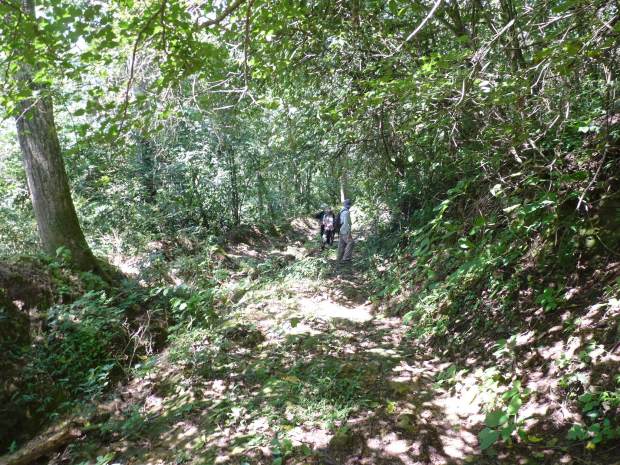
The way beyond the Post was tougher! The going was mainly uphill through a narrow and often muddy path. We climbed for about 5km until Oscar estimated that we needed to leave the path to deviate down a steep ravine in order to find the stony bed of a normally dry stream that would take us to the top spot. To find the right turning was hard as the floods that had taken place after Oscar’s last visit had dramatically changed the landscape. Despite the GPS, he could not find the right path down!
P1180969 copy

After a few fruitless attempts at finding the right path we decided that it was a good time to pause, have lunch and rest a bit. It was a rather forlorn group that sat on tree trunks rest and recharge energies.

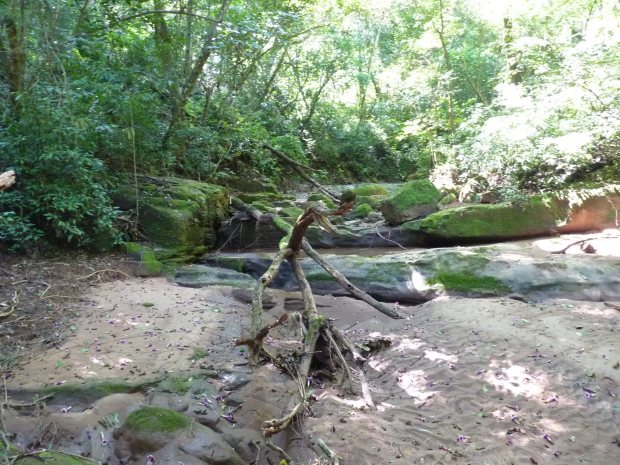
Luckily, the pause had a positive effect as, soon afterwards, Oscar located the begining of the path and we managed to move in the right direction. A large tree had fallen and pulled down the foliage around it, blocking the usual entrance. We climbed down the ravine and followed the stony stream where we negotiated some high stone steps until, about 200m further we could see some light among the trees. We continued our walk towards the light and then we could go no longer and we just looked forward in silence.

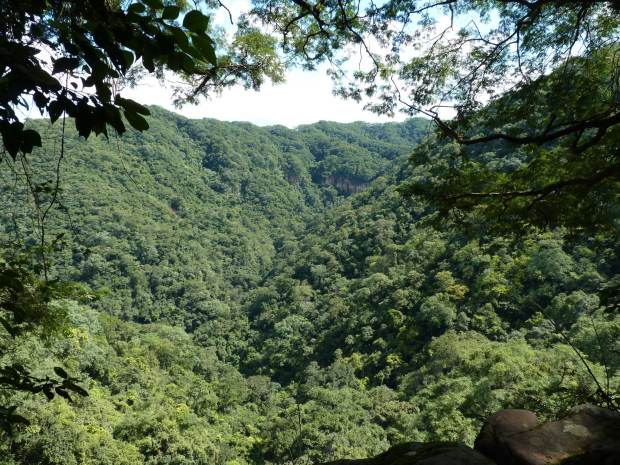
The path/stream on which we were walking ended in what clearly during the rains is a spectacular waterfall but that now it was dry and offered a great platform from where to watch the beautiful forested gorge that opened in front of us. We had reached the top spot!
P1180989 copy

The “lost” path re-found.

P1180994 copy

Some of the steep steps we negotiated

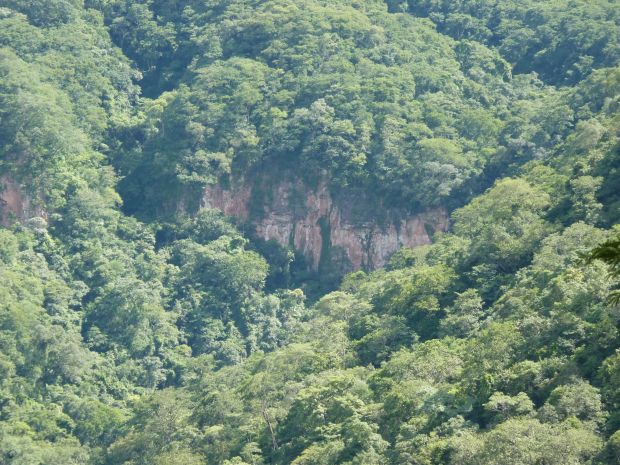
Just before we settled down a Peregrine falcon (identified by Oscar) flew across the opening and it was gone at high speed. We sat down facing the gorge and, at the distance, some red cliffs were seen.
P1180991 copy

The macaw cliffs are seen in the distance.
P1180992 copy

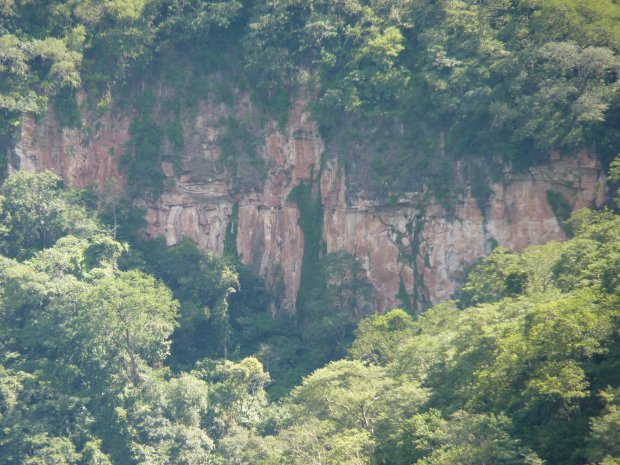
The cliffs zoomed in.

Oscar informed us that the macaws liked to come there and they were seen at the cliffs although nesting there was not confirmed. If very lucky, they would get closer. We waited and watched. As the difficulties finding the right place had delayed us, we also delayed our departure to 16:00hs to give us sometime to wait for the macaws and to rest.

The cliffs were a few hundred metres from us so I had not much hope of seeing much as -for the sake of saving weight- I had only small binoculars! A bad choice but one that was too late to regret! We sat in silence and waited. After about 30 minutes we heard the classical loud calls of the macaws and my wife (who else?) spotted four of them flying from the cliffs towards the forest behind. There were about three seconds of birding and I saw nothing!
P1180993 copy

The fleeting sighting of the macaws took place here

As our departure time approached and nothing else had happened after the fleeting view, we decided to extend our departure time by another few minutes as we estimated that, as the way back would be mostly downhill and assuming that this would enable to walk faster, we could still make it with some daylight left. Our decision proved to be wise. AGain we hear the loud calls and probably the same 4 birds returned to the cliffs. This time I was better prepared and managed to see them, long-tailed and bluish against the emerald green of the surrounding forest!

After that second sighting (only sighting for me!) it was time to go. The going was downhill indeed and we did walk faster. I also lived up to my reputation of falling in forest paths (particularly when watching macaws!) and I fell in the mud! Luckily there were lots of tender branches that counterbalanced my fall and I survived.

Without any further hitches we managed to get back to the wide river in time and, after a deserved swim in its muddy waters by those members of the party that were well preapred and had swimming trunks (Ágata and Oscar), we were able to get back, thirsty, tired, stung by marigüis and sunburnt but happy to had seen birds that although we hope will endure forever, may not be there for very long.

These are a couple of embedded pictures from Getty images for you to see what we were after and managed to see in the distance!

Embed from Getty Images Embed from Getty Images


[1] Narosky, T. & Matarasso, H. (2010). Checklist Argentina. Aves, Birds. Vazquez Mazzini Eds. 60p.

[2] Moschione, F., Spitznagel, O. & González, M. (2013). Lista de Aves de Salta. Birds Checklist. Gobierno de la Provincia de Salta. Ministerio de Cultura y Turismo. 49p.

Final Note:

Oscar saw or heard 117 species and I managed 63 that I actually saw. Not a bad number for a weekend spent mainly in a forest. Some of the interesting species seen by the bushsnob, apart from the macaws were:

Roseate spoonbill (Espátula Rosada), Platalea ajaja

Swallow-tailed kite (Milano Tijereta), Elanoides forficatus

Real Ornate hawk-eagle (Aguila Crestuda), Spizaetus ornatus

Squirrel cuckoo (Tingazú), Piaya cayana

Crested oropendola (Yapú), Psarocolius decumanus