Africa

Butterflies

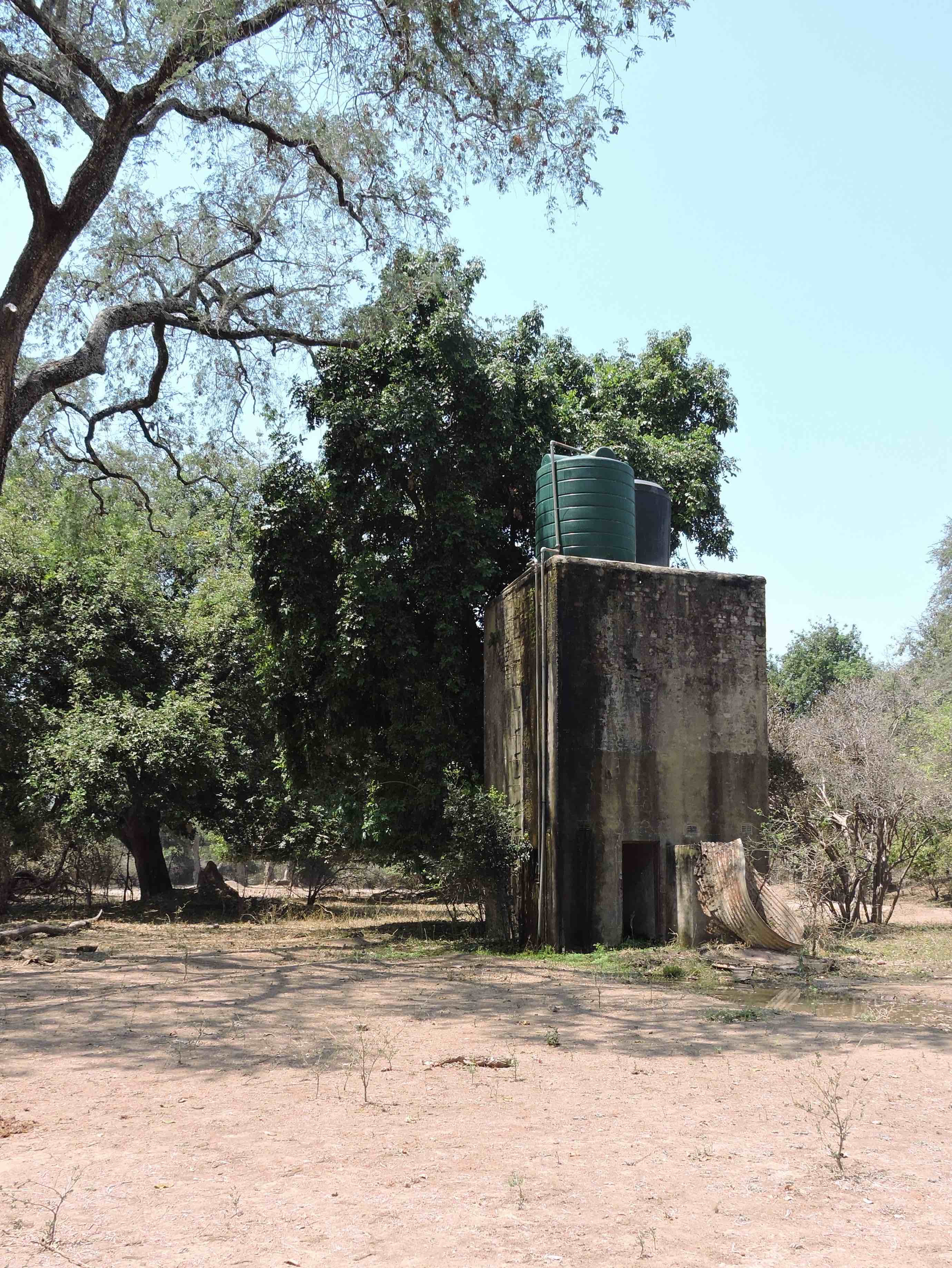
During our previous visit to Mana Pools in September[1] we stayed at Gwaya camp. In one of the walks around camp I found a rather derelict water tower that still supplied us with this important liquid. A leaking water tank sat over a square and now door less room. The latter and the surrounding area were very damp on account of the long-term water leakages that run down its walls ending up feeding a number of puddles where animals came for a drink. The area was a green blotch on an otherwise bone dry landscape.

The water tower.

The water tower.

It was near to this spot that my hidden camera trap almost remained secret for good as buffalo and lions moved in[2]. At that time, with my attention focused on recovering the camera I had a brief look inside the base of the tower expecting to find bats. I found butterflies instead but did not spend time there, as I was more concerned about avoiding lions and/or buffaloes!

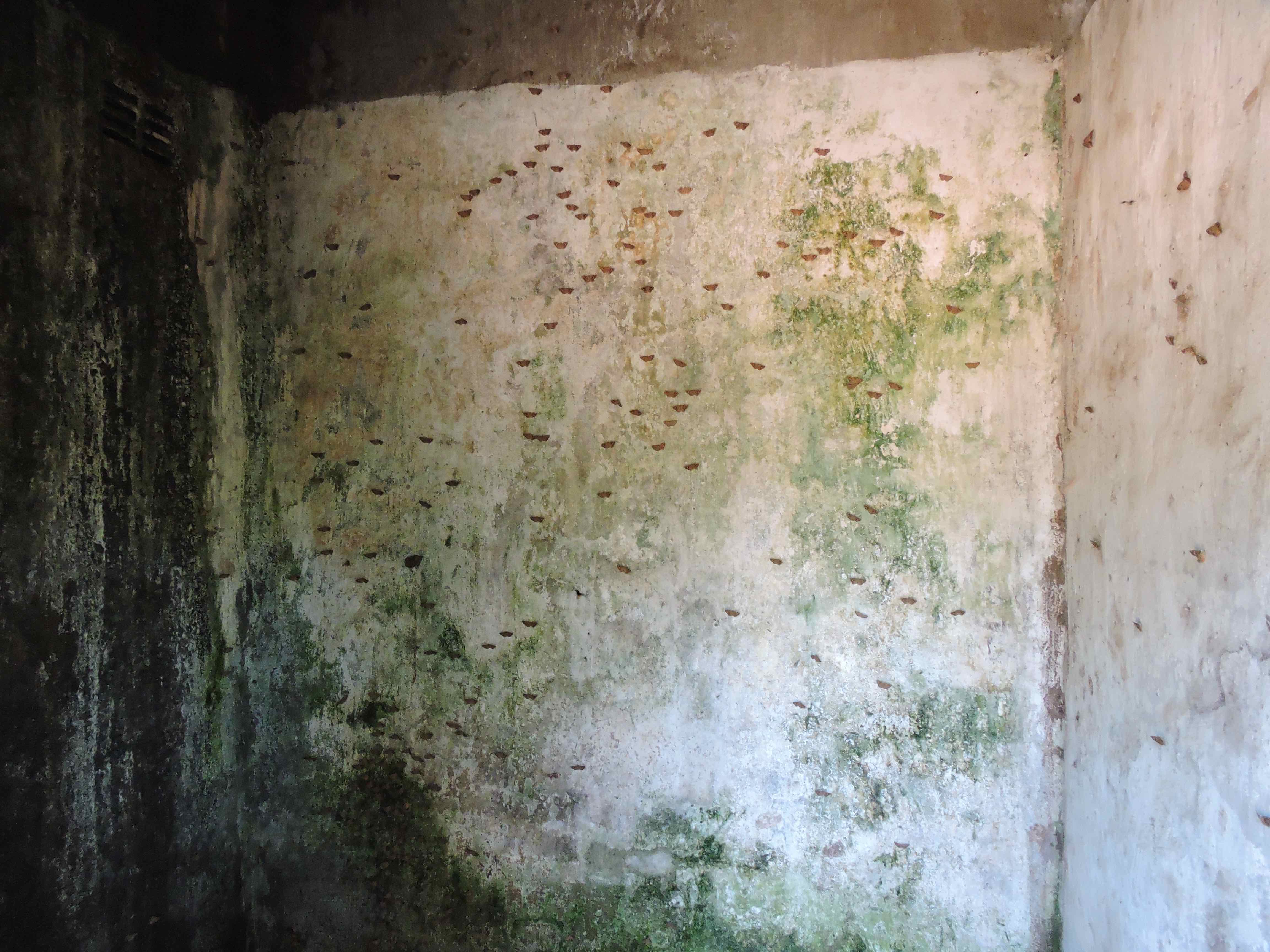
During the last visit in October 2015, we noted that Gwaya was deserted from both campers and dangerous animals, so we went back to the water tower to have a better look, hoping that the butterflies were still there. There were! This time I managed to enter the room although its floor was waterlogged as water was also filtering in the inside of the tower. The combination of intense heat and abundant water had created a tropical microhabitat that was still home to hundreds of small butterflies, settled on the walls.

The view from the door.

The view from the door.

A closer view of the butterflies.

A closer view of the butterflies.

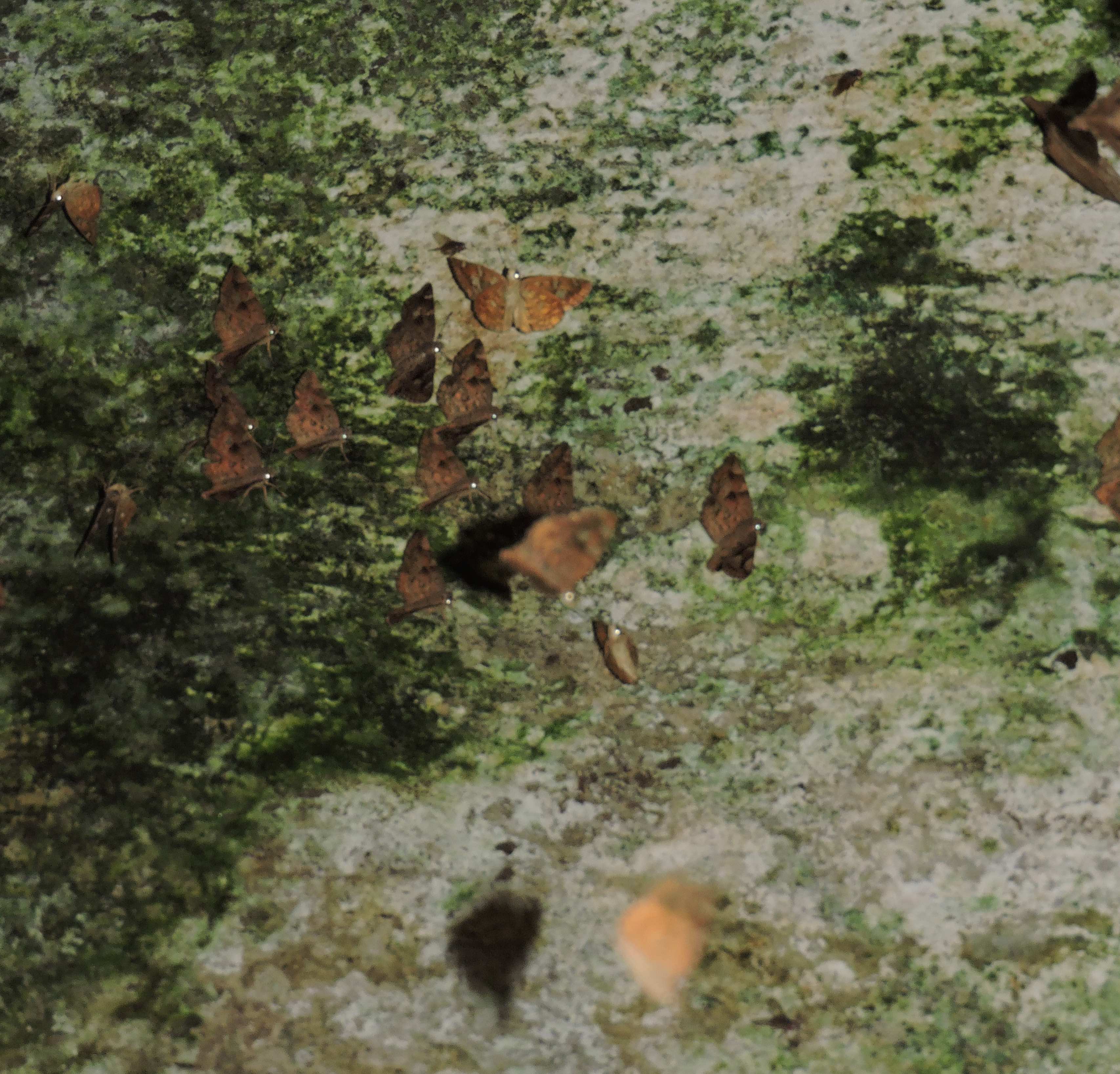
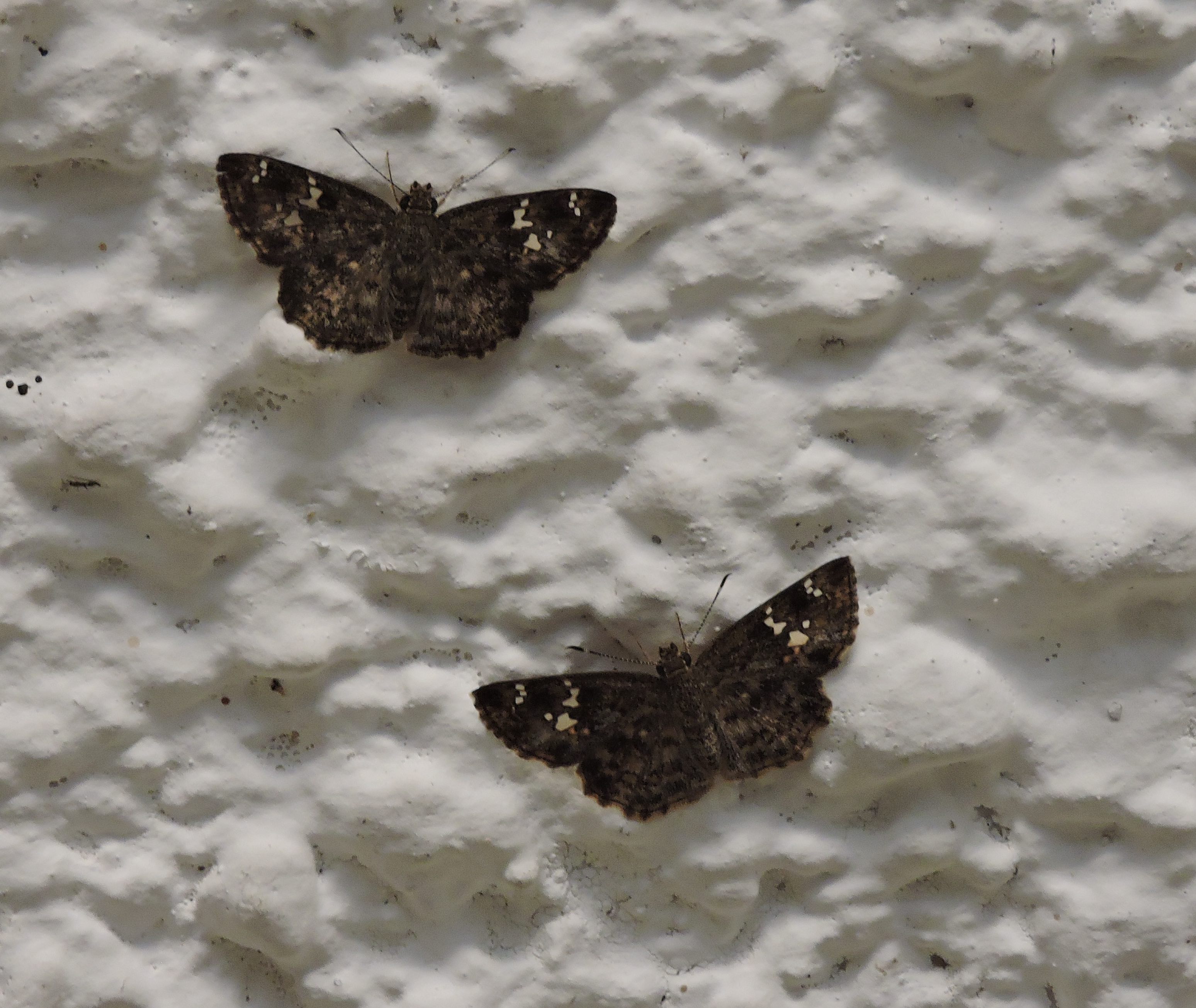
My entrance disturbed them and they took off all at once. As they did not wish to leave the dark damp area, a large cloud of them formed and flew around my head. For a while I felt like Mauricio Babilonia of Macondo[3] with the difference that these butterflies were brown and not yellow! Eventually they settled down again and I managed to take the pictures that illustrate this post.

They took off when I entered.

They took off when I entered.

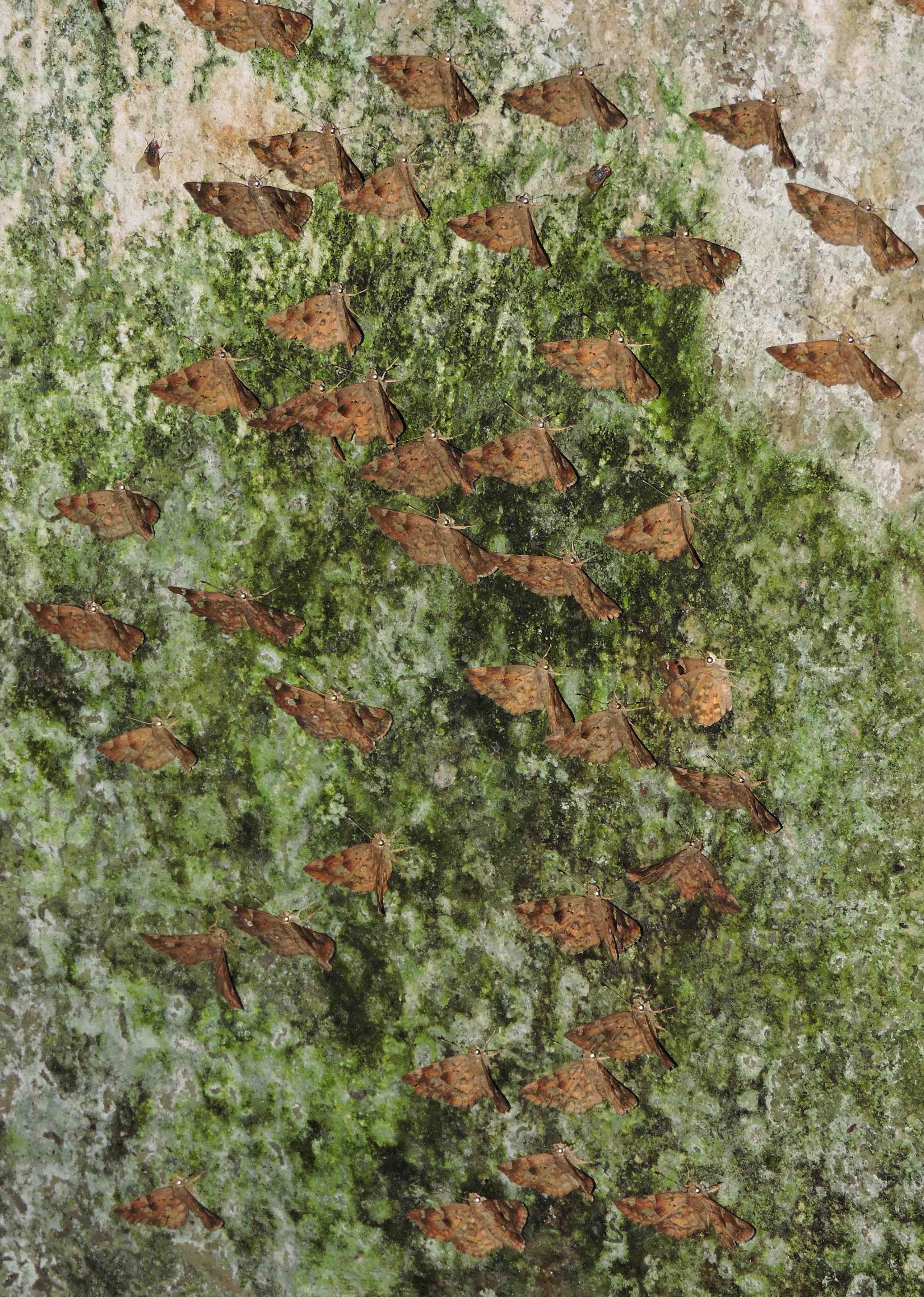
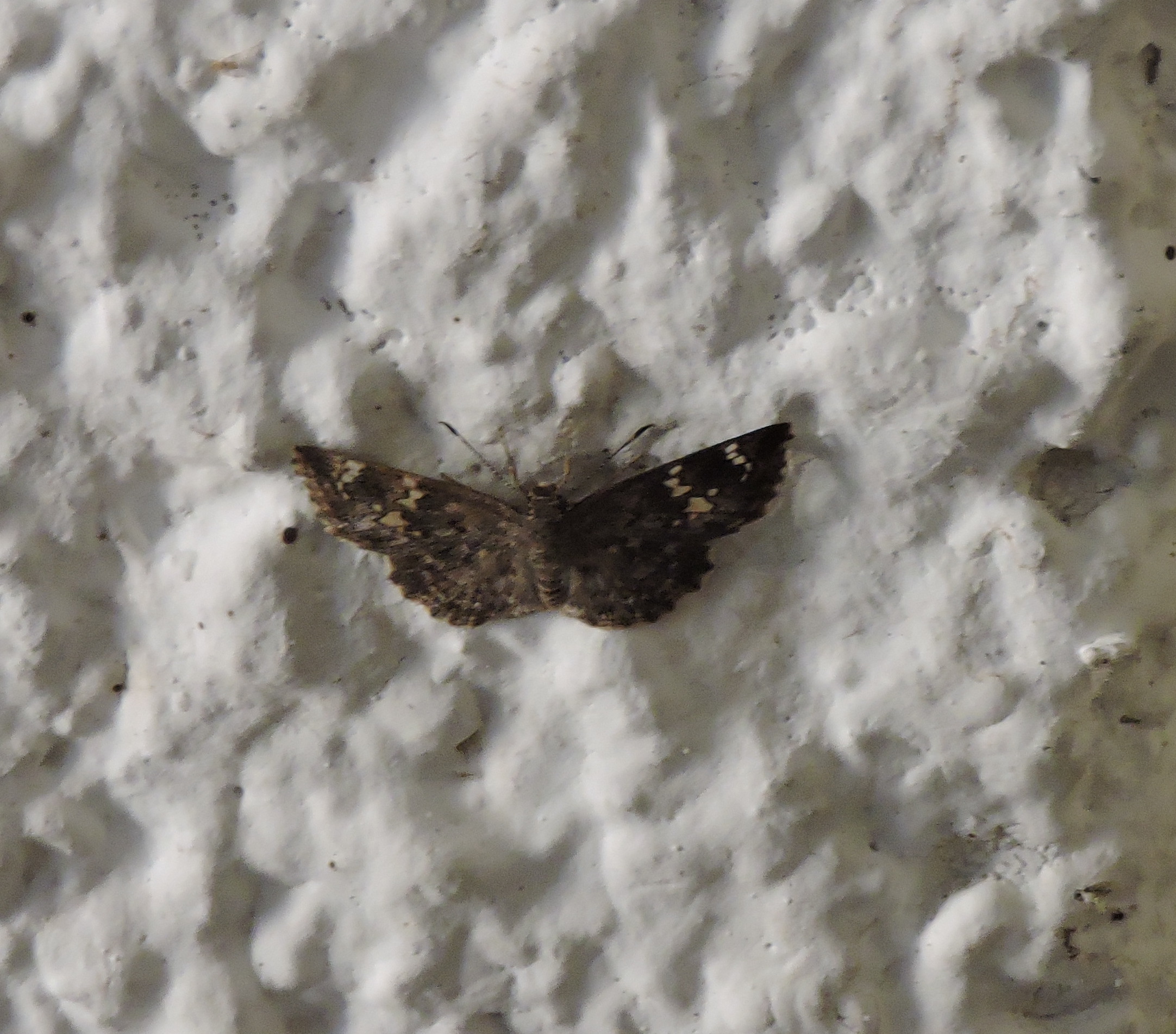
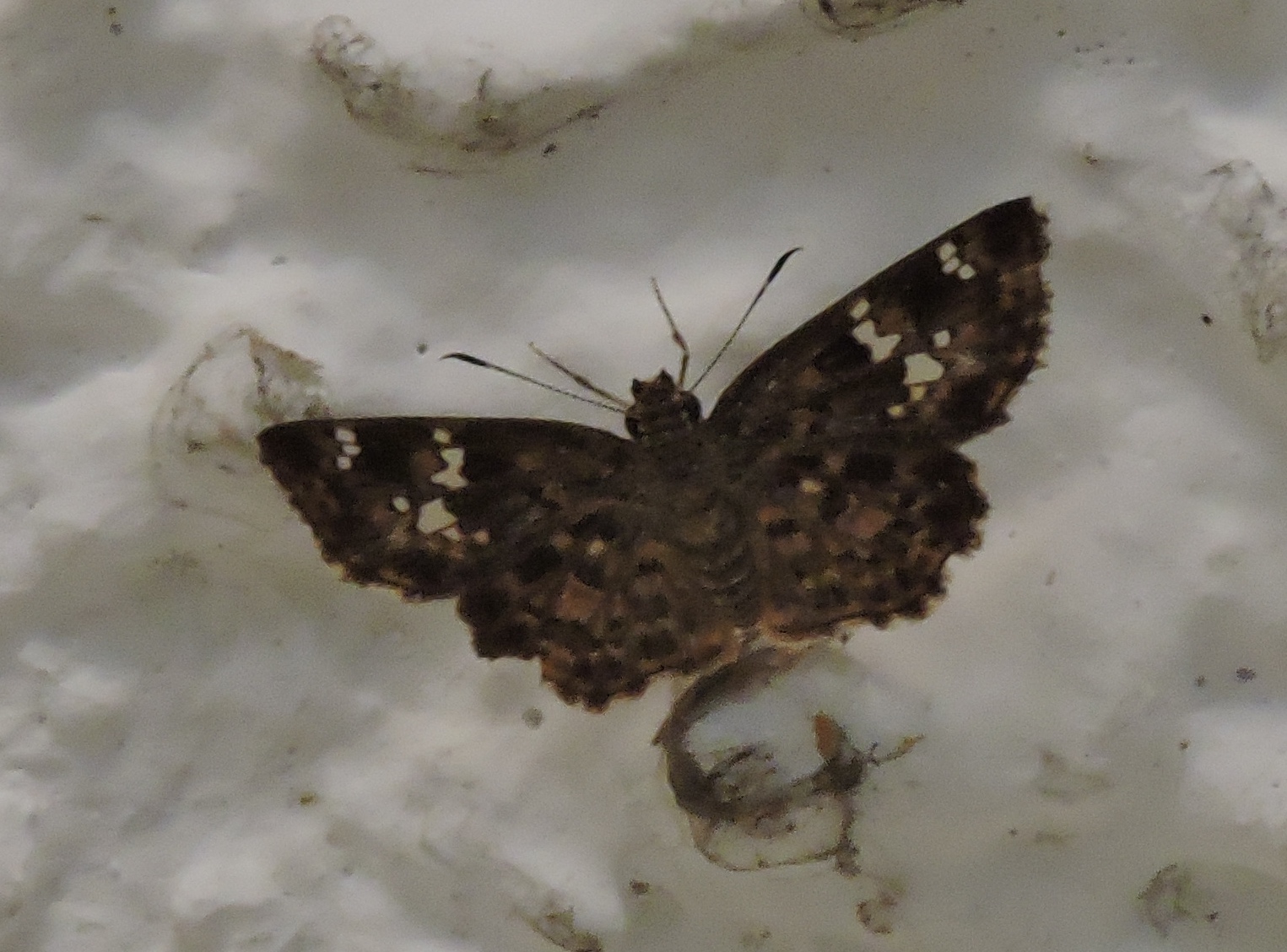
I believe that they were Elfin Skippers (Sarangesa motozi) that Migdoll’s Field Guide to the Butterflies of Southern Africa describes as an uncommon species found mainly in rain-forests in the region where it feeds on Barleria, Justicia and Perithrophe, members of the Acanthaceae flowering plants.

DSCN8683 copy

DSCN8682 copy

DSCN8684 copy

A lone and rather bloated gecko also resided in the room, his condition revealing that it did not know what hunger is!

I am sure that this resident colony of butterflies would offer a thrilling study to a lepidopterist! Not being one, I left them thinking on how much I enjoyed reading García Marquez’s magic realism and that I should revisit his work.

Muchichiri lodge, Mana Pools, October 2015.

[1] See: https://bushsnobinafrica.wordpress.com/2015/09/23/mana1-pools-safari/

[2] See: https://bushsnobinafrica.wordpress.com/2015/10/06/camera-recovered/

[3] Interestingly, to get to Mana Pools you cross the Makonde District!!!

Javelin throwing (almost Olympic games)

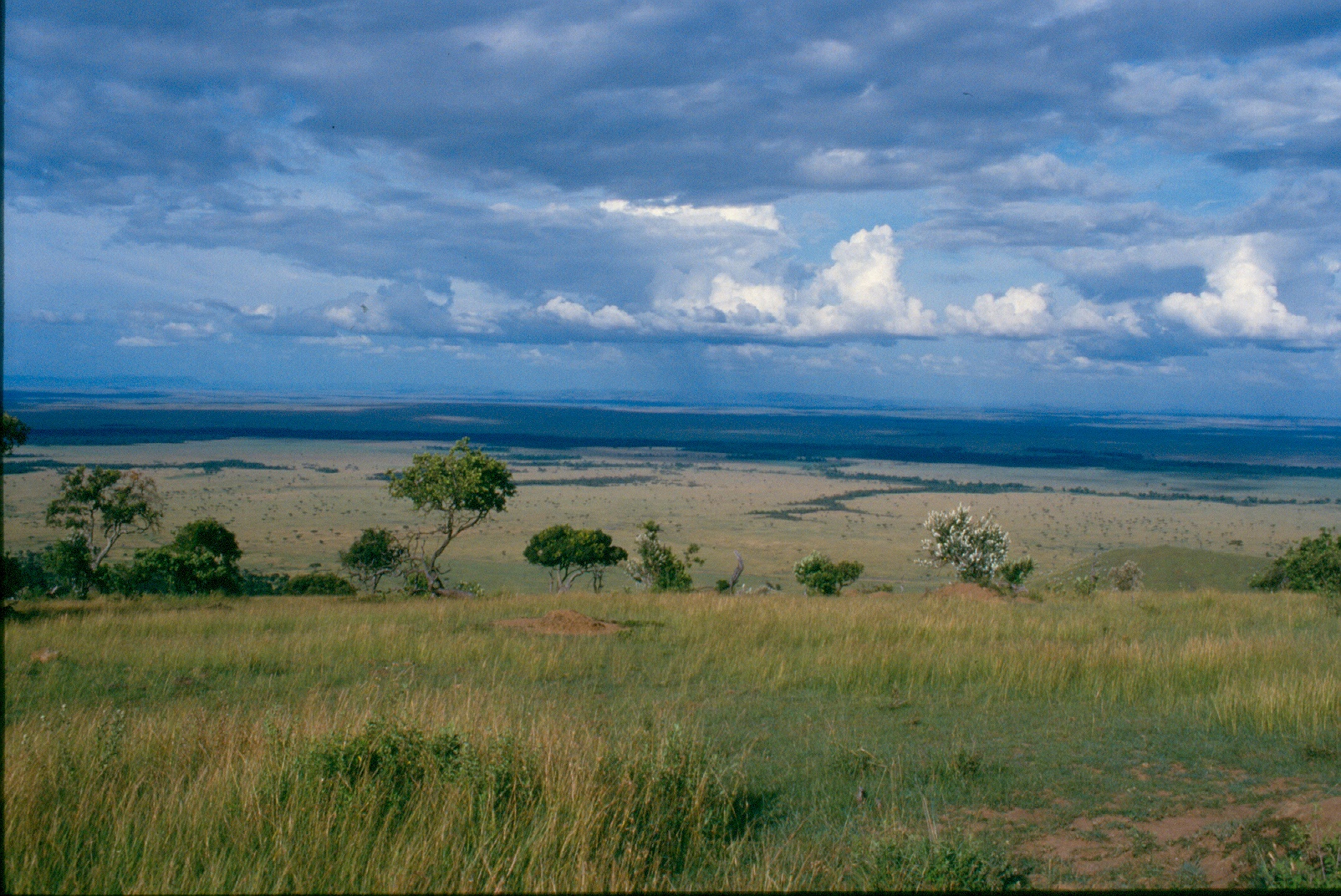
The view of the Mara triangle on the Maasai Mara from the Oloololo escarpment on the way to Intona ranch.

The view of the Mara triangle in the Maasai Mara from the Oloololo escarpment on the way to Intona ranch.

Despite our busy work schedule we did not work on Sundays. We took the morning to explore Intona and its surrounds as there were always interesting sightings, particularly in the area towards the Migori river forest.

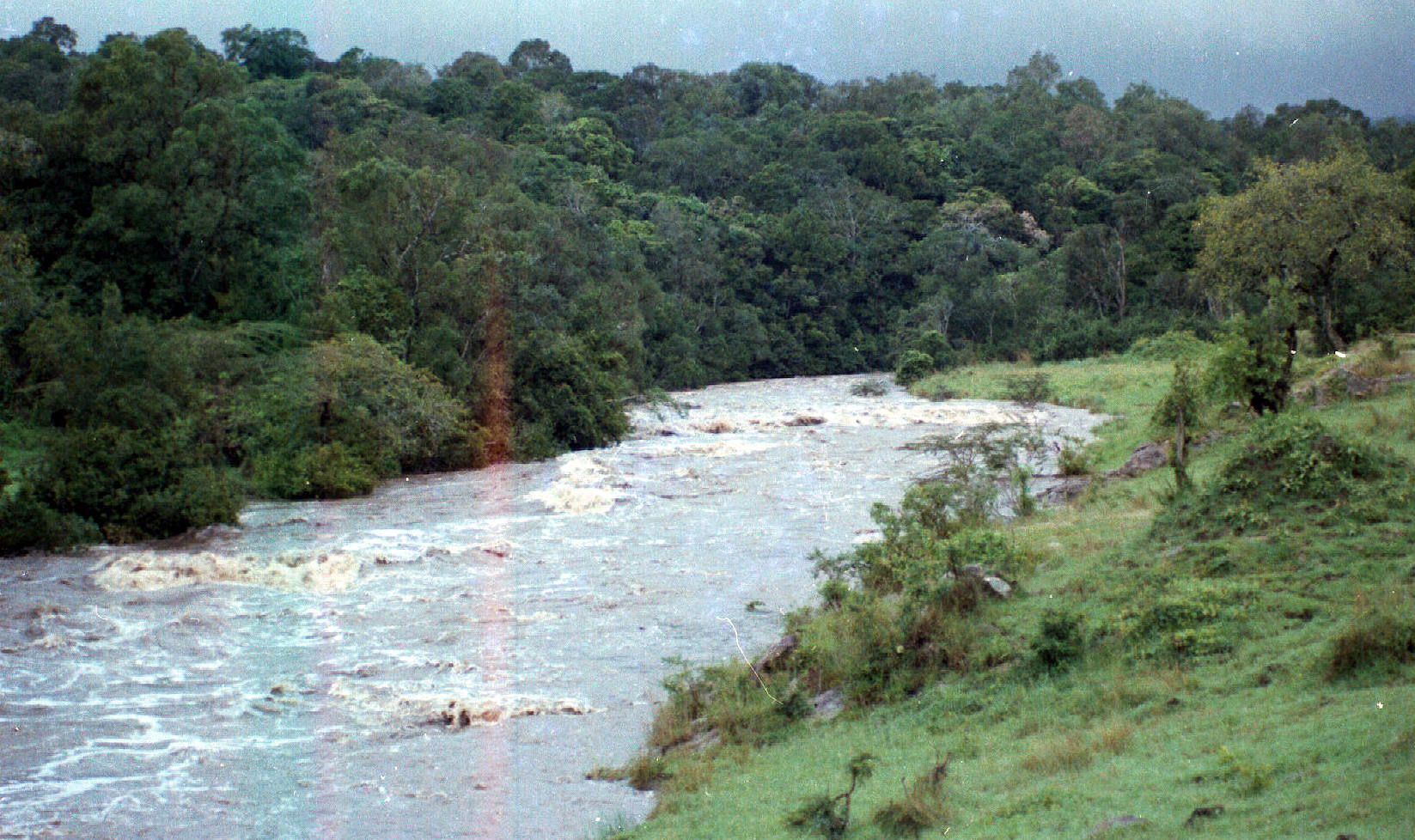
A flooded Migori river at the back of Intona ranch.

A flooded Migori river at the back of Intona ranch.

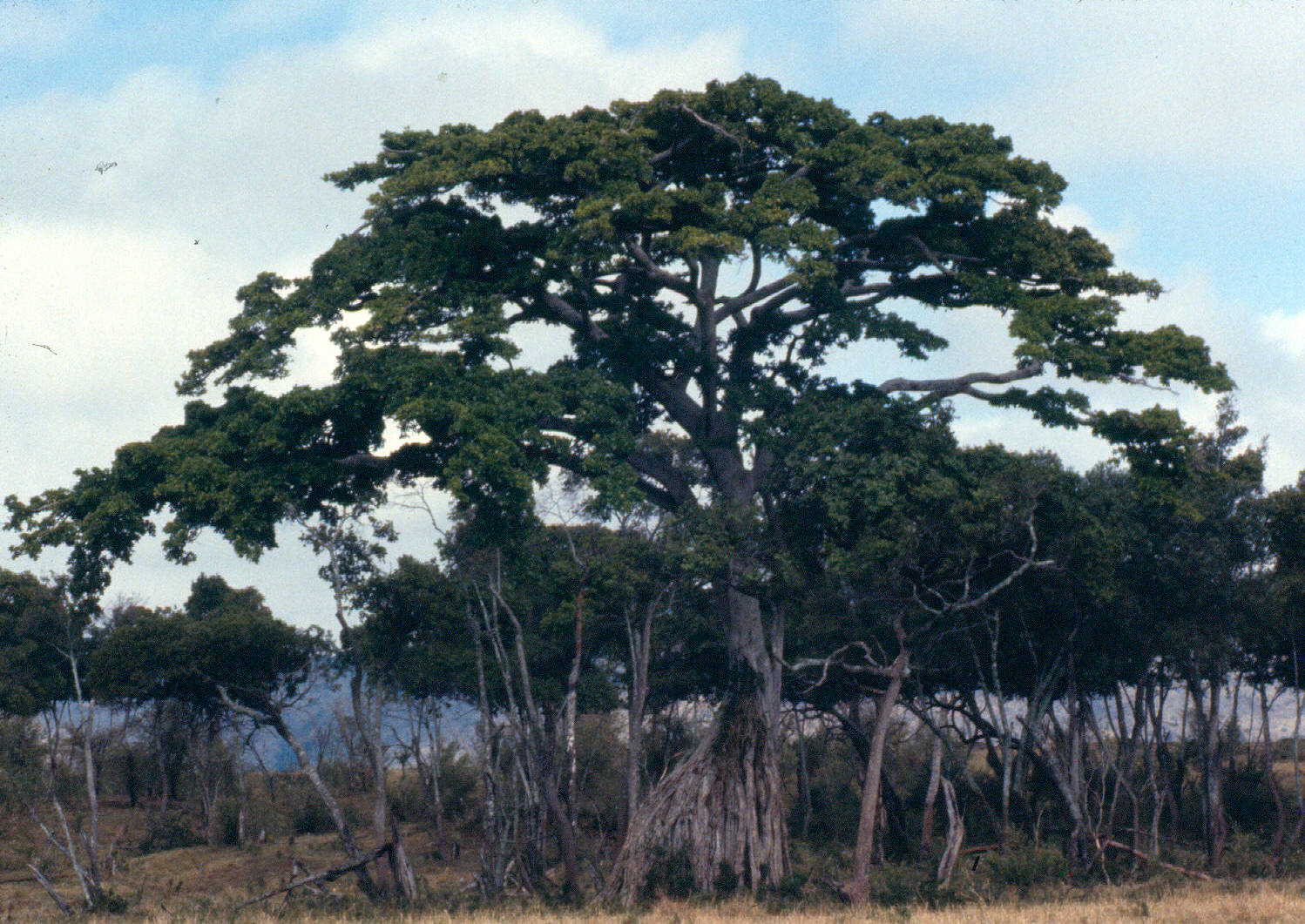
A notable tree in the Migori river forest.

A notable tree in the Migori river forest.

After lunch and seeing that there was not much to do I hatched the idea of a spear-throwing contest and mentioned it to Ernest. “What about an international spear throwing competition this afternoon?” “We can have participants from Africa, América and Europe, almost like the Olympic games”, I added. Ernest happily agreed and I got on with the organizing.

Apart from Ernest and myself there were also a Ugandan veterinarian and Kikuyu and Maasai assistants, admittedly both Kenyans but from different ethnic groups. “After all, we are in Maasailand” I thought and we should find a suitable javelin” “Let’s find a good spear and get the throwing field organized,” I said as I was already walking towards the herdsmen camp to arrange the details. “Tommi, I need to find a good spear” I said before I said good morning, and added, “I have an idea”.

He and the other herdsmen knew me by now and they smiled in anticipation. Tommi assured me that he could easily find the right tool as there were Maasai nearby that he knew. Good news!

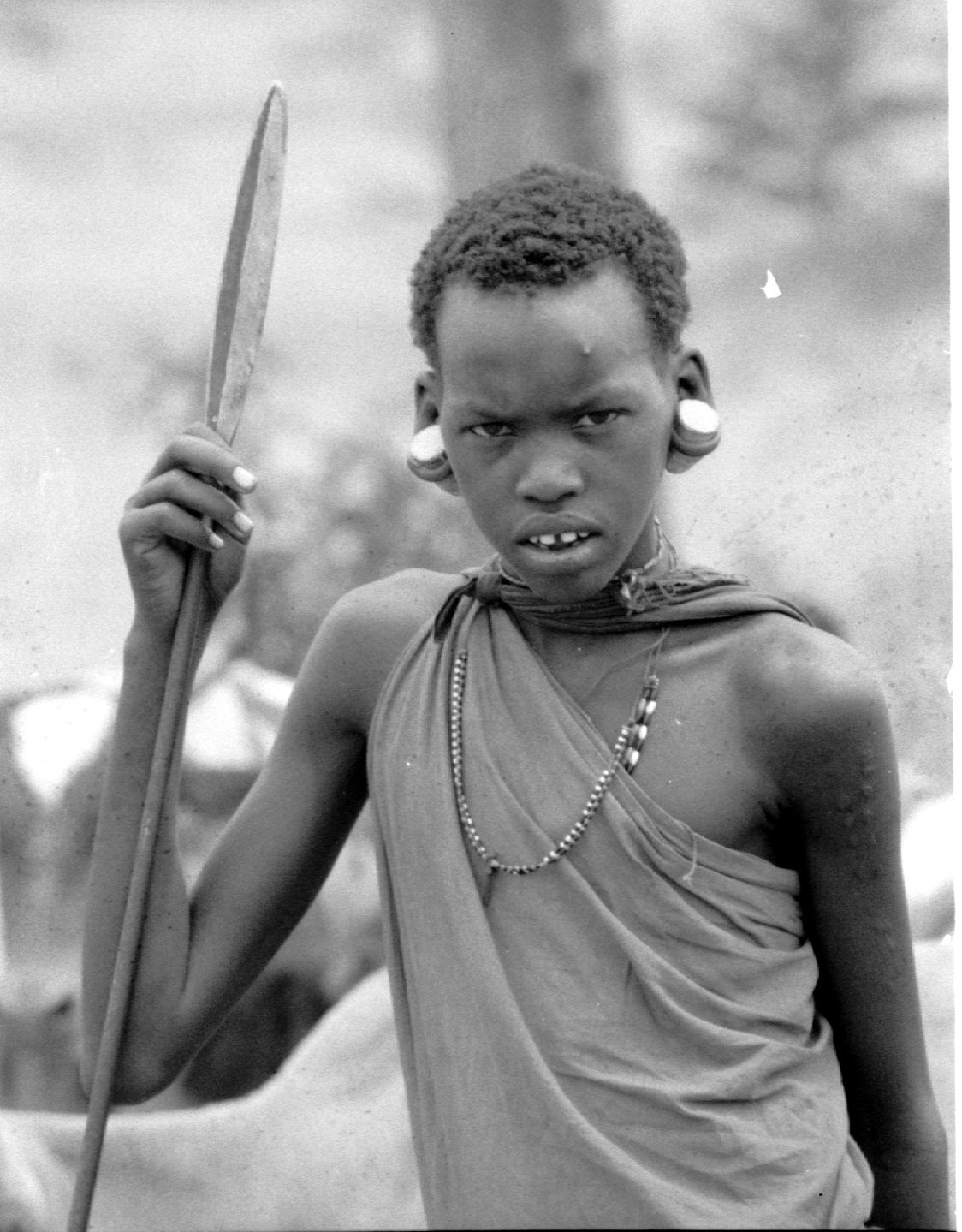
A similar spear to the one used in our competition.

A similar spear to the one used in our competition.

While Tommi strolled through the bush in search for the spear we walked about to find a suitable field where the competition could take place. We found a good site and placed some distance marks while we waited for Tommi’s return. I also went around the farm inviting participants to the event. I managed to engage Joseph (Kikuyu, Kenyan) and Kiza (Ugandan) in addition to Tommi (Maasai, Kenyan), Ernest (Swiss) and myself (Uruguay). We had an international field!

By the time Tommi returned after lunch we were all ready and waiting. He brought a sturdy looking spear that we judged suitable for the task although it was rather long and heavy. It had a long metal blade, a wooden middle part and along steel rod at the end. It was time to start to get done before the daily 17:00 hours shower!

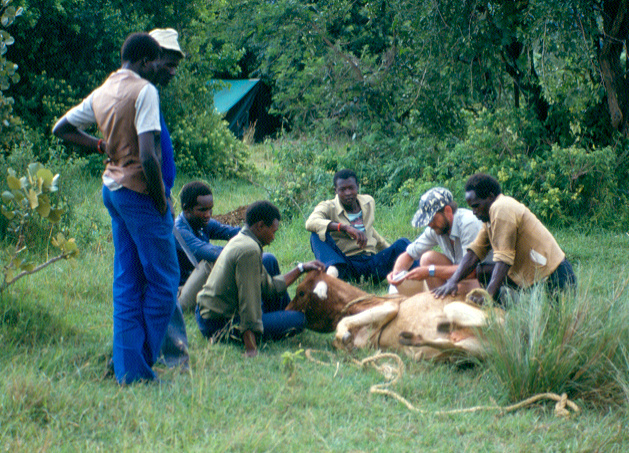
Ernest and helpers examining an animal for ticks.

Ernest and helpers examining an animal for ticks. The herdsmen tent can be seen in the background.

Av copy

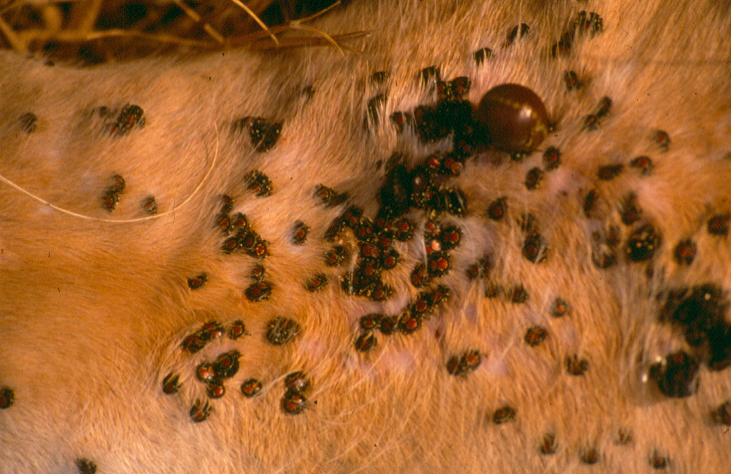
A heavy Bont tick infestation on a heifer at Intona ranch.

All participants agreed at the onset that measurements would be done in paces. It was thought that equal throws were unlikely and the need for laser-aided technology[1] was thought not to be required. No bets were allowed, as just by looking at the competitors, an inexperienced observer should have been able to guess who the favourites were! This did not come to our minds while we warmed-up.

As the start of the competition approached, the tension increased and, by the time we drew our throwing terms, it was almost unbearable… For some reason Uruguay went first, followed by Joseph the Kikuyu representative, Switzerland was third, Kiza, the Ugandan fourth and, a fitting finale, the last to throw was Tommi, Maasai. It may as well as he was the “host country”.

Aware that I would not win I argued in favour of some try throws to get the right balance of both body and javelin but, regrettably for me, the other competitors (unkindly in my opinion) refused arguing that this was not in the rules (?). So, resigned to my fate I grabbed the spear and got ready to do my best. It felt heavy and rigid. I threw it and, the second it left me I knew that there were problems with both direction and distance. It was a rather poor show that landed a long way from the cattle boma and far from my possible personal best. “I have never had any strength in my arms” I said, trying to feel better. “about 20 paces is not too bad for my age”.

Joseph was quite fit although he was from a relatively well off Kikuyu family and this was beginning to show around his midriff. His throw was better than mine but stopped at 26 paces. Ernest, the Swiss researcher turned athlete improved my mark by a couple of paces and Kiza, the man from Uganda, despite his relatively small size, did much better than all at about 30 paces. A big smile lit his face, as usual and a lesson to us all that size is not that important but good technique is!

It was the turn of the Maasailand representative, the final competitor. He was perhaps the most relaxed participant and the one that was enjoying the tournament the most! From the moment he picked the spear we all new that the competition was over! We exchanged resigned glances and head shakes and got ready for an Olympic humiliation! We tried our best to disrupt his throw by talking to him but, he just smiled and replied to our remarks without losing his composure.

He held the spear naturally, balancing its weight by instinct. Almost without running and with a fast and wide arm movement he threw it, almost unexpectedly and even casually. The spear flew high vibrating with a “swiiiiiiisshhhh”. It went beyond our throwing field and over the cattle boma. We lost sight of it but run in the general direction where we last saw it to see how far it had gone. Behind the cattle boma it was the herdsmen camp so, when we fail to find it inside the boma we got more worried and started looking around the camp. There was no trace of the spear anywhere and the camp looked normal. For this we were reassured as at least there were no casualties!

We looked around the tent, near the fireplace, chairs, table, up the trees and all over: no spear! Nothing stuck on the ground, nothing visible up the trees or stuck anywhere. “Another mystery of the African bush”, I thought, or some Maasai magic I was not aware of?

As there was no point in arguing in favour of declaring the throw void on account of it having gone beyond the throwing field or even worse, on account of the disappearance of the instrument, we declared our Maasai warrior the undisputed winner. The absence of the spear meant that there was no possible revenge. This came as a relief as a change of the result would have been unlikely!

I apologized to Tommi for having had the idea that has led to the losing of his borrowed spear and offered financial compensation for his loss. He said that he had thrown it and lost it so I did not need to worry. He will eventually find it he said. I expressed serious doubts but gave him the benefit of the doubt and, as the rain was starting, I moved to our tent.

That night, while we were having our dinner we herd loud talking and laughing at the workers camp next door and went to have a look. The spear had been found! In its wild trajectory it had gone through both the flysheet and the tent and it was embedded in one of the herdsmen’s camp beds, luckily empty at the time of the event! I felt great relief that nothing had happened and a lesser one that the spear could now be returned to its owner!

I cannot remember how I explained the tent holes to my senior managers. Maybe I did not and it just remained as normal “wear and tear”!

Transmara, Kenya circa 1986.

[1] I do not think it was available at the time, anyway!

Hyenas and planet-gazing

The morning after the Maasai chicken dinner a good breakfast was in order! We prepared bacon and eggs to compensate for our austere meal of the night before. In an attempt at avoiding another fasting episode I offered to take over the next dinner and to roast the beef we had brought from Nairobi.

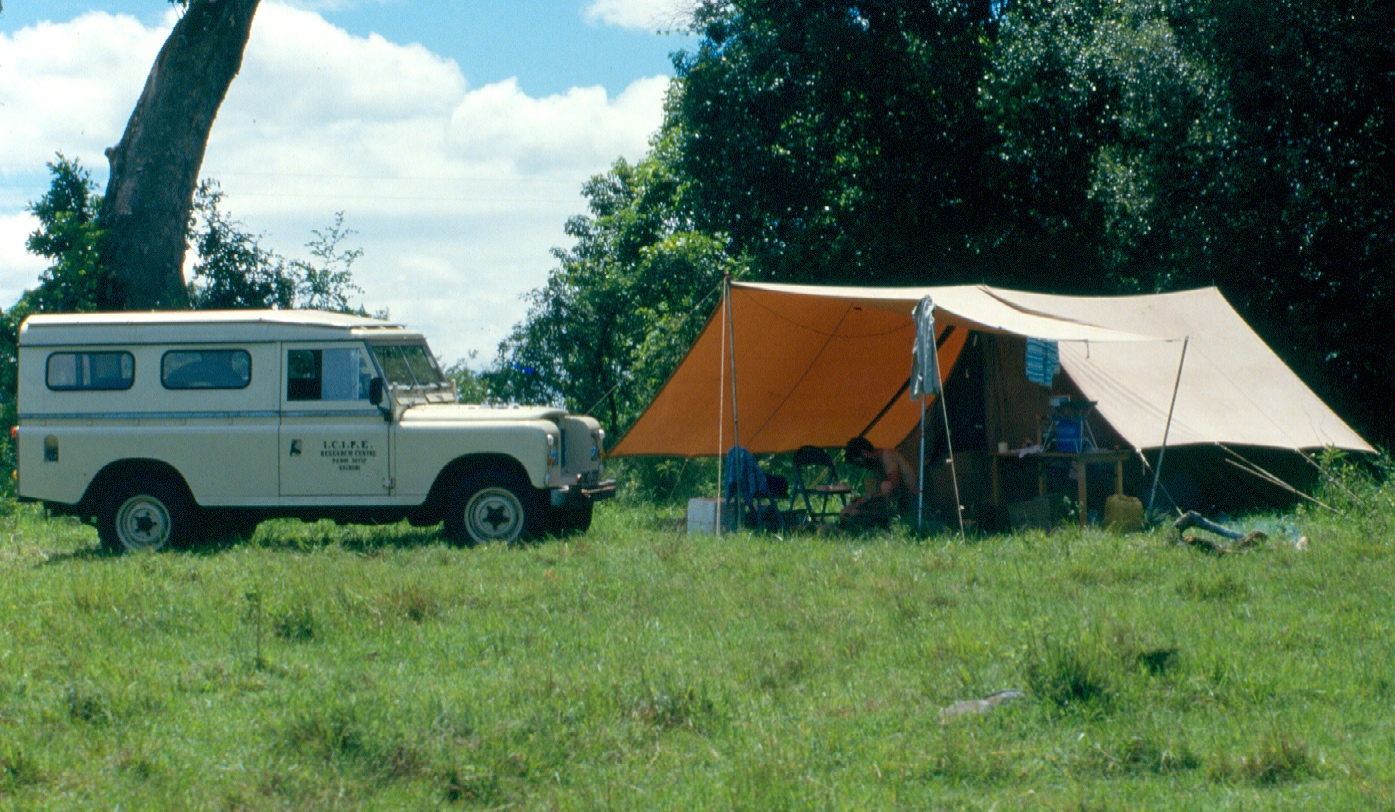
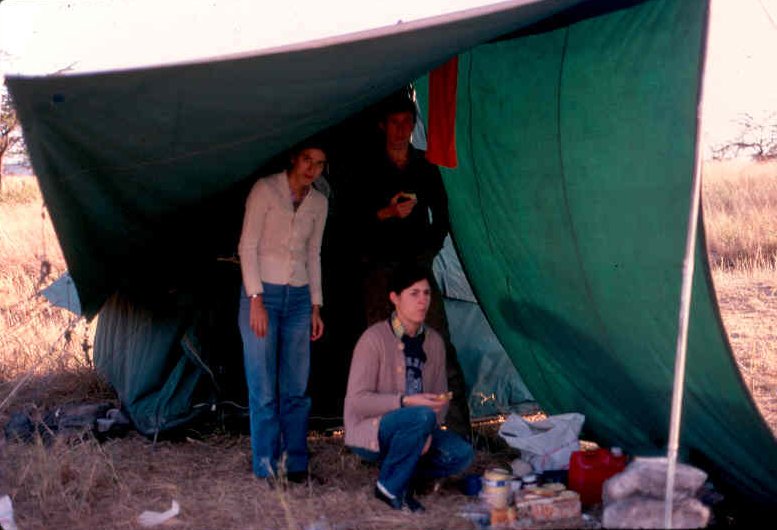
Camping at Intona ranch.

Camping at Intona ranch.

After breakfast, another day of routine field trials followed, as we needed to do many replicates of our tests in order to confirm the results. We worked without stopping until late afternoon when we decided that we had done enough and it was time for a shower and to prepare dinner. As a South American I am ashamed to confess that I am fearful of horses and prefer to keep a good distance from them. That is not all, I am a real disaster at barbequing! Therefore, on the occasion I struggled through and I made sure that the food was abundant and we ate our fill.

The night was truly spectacular. The relative short distance of Intona ranch from Lake Victoria meant that it rained very often. It poured in late afternoon and then the sky cleared at dusk. The consequence was that the rains cleaned the air and the night sky was always very sharp.

Ernest and I stayed awake until late talking and contemplating the pristine sky. We talked about many issues, occasionally stopping to listen to the night sounds, in particular the spotted hyena calls getting closer to our camp. Getting gradually bolder they moved close to the periphery of the light of our camp fire. I reassured Ernest that this was a normal event when camping at Intona and that “normally” hyenas would not be aggressive.

Despite the good time we were having, we have had a long day and we felt very tired so soon we went to bed. As soon as we were inside the tent we heard something sniffing all around our tent. A white-tailed mongoose was seen scurrying away when we shined our torches. That small mystery solved, it was back to bed, hoping that sleep would come soon.

Not so. This time it was a loud crush outside the tent that also merited investigation. This time a hyena was the culprit! The beast had grabbed a dirty pan and had taken off at speed. We run after the beast but it was a futile effort and came back to bed thinking on resuming the search for the pot in the morning.

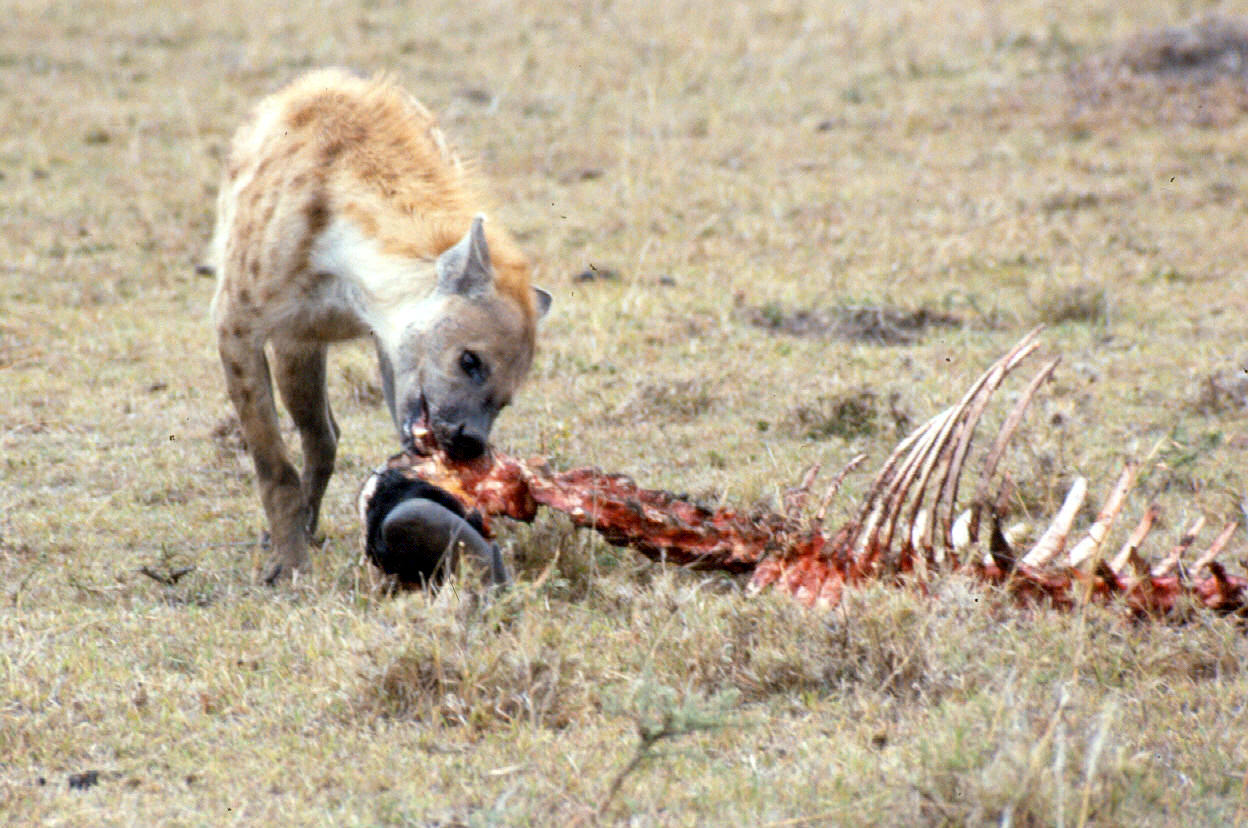
mmara hyena 2

A Brown hyena with wildebeest carcass in the Maasai Mara. Its cousins visited us nightly at Intona.

While thinking and hoping that normality would return, I finally fell sleep. Again, it did not last long. It may have been 03:00 hs when I heard Ernest opening the tent door zip. My first thought was that his gut had finally lost the fight against the filtered water drunk on the way in! In addition, aware of the hyenas I remained awake although without moving, hoping to go back to sleep immediately. No chance! Ernest came back and started to shake me up shouting “Wake up, the sky is perfect to look for planets!” I felt like slaying him but, remembering his partial deafness and on account of his contagious enthusiasm, I made the mistake of getting up!

By the time I managed to go out of the tent, Ernest was already looking through the binoculars, identifying the various noteworthy celestial bodies, accompanying his successive discoveries with shouts of joy! Although I had enjoyed contemplating the night sky both in Uruguay and in Kenya, I have never been that interested in astronomy. However, he convinced me to look at Jupiter (a small orange sphere) and even managed to see Saturn and what I though were its rings! Finally Ernest’s excitement subsided and we managed to hit the camp beds again, this time until the sun was up!

The large ball of crunched aluminium that we found about one hundred metres from our tent was not the remains of a recent asteroid that had narrowly missed us but all that remained from our cooking pan after the hyenas had squished it to get its juice.

Although our cooking options suffered another severe setback we still managed to produce some pan-less and chicken-less dinners during the following days!

The three bills

Mana Pools has several oxbow lagoons that occupy the old course the Zambezi carved in the valley a very long time ago. There are four larger pools that give the name Mana (four) in the Shona language. Of the four I can name only name two: Long and Chini. I am still trying to name the others!

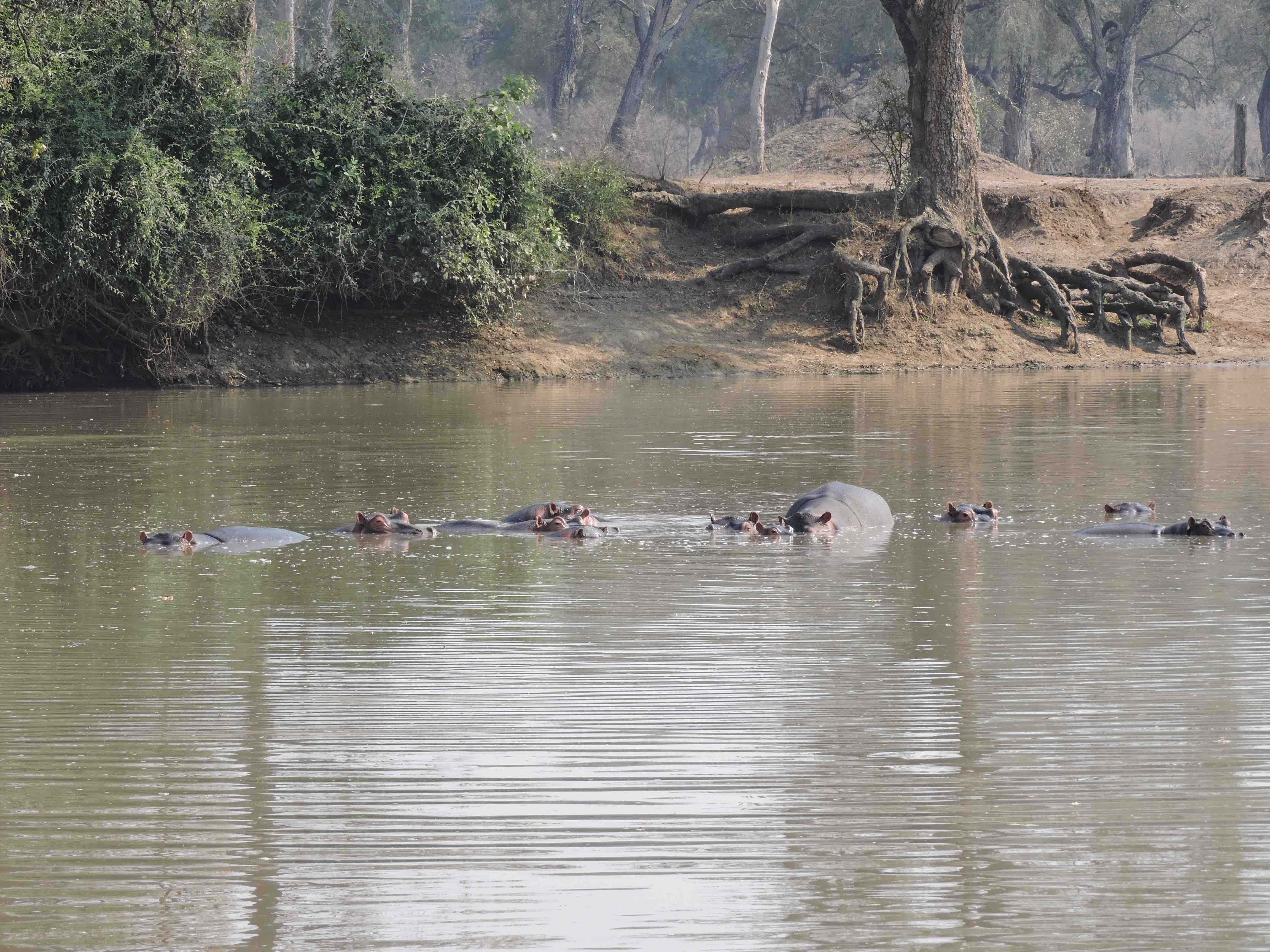
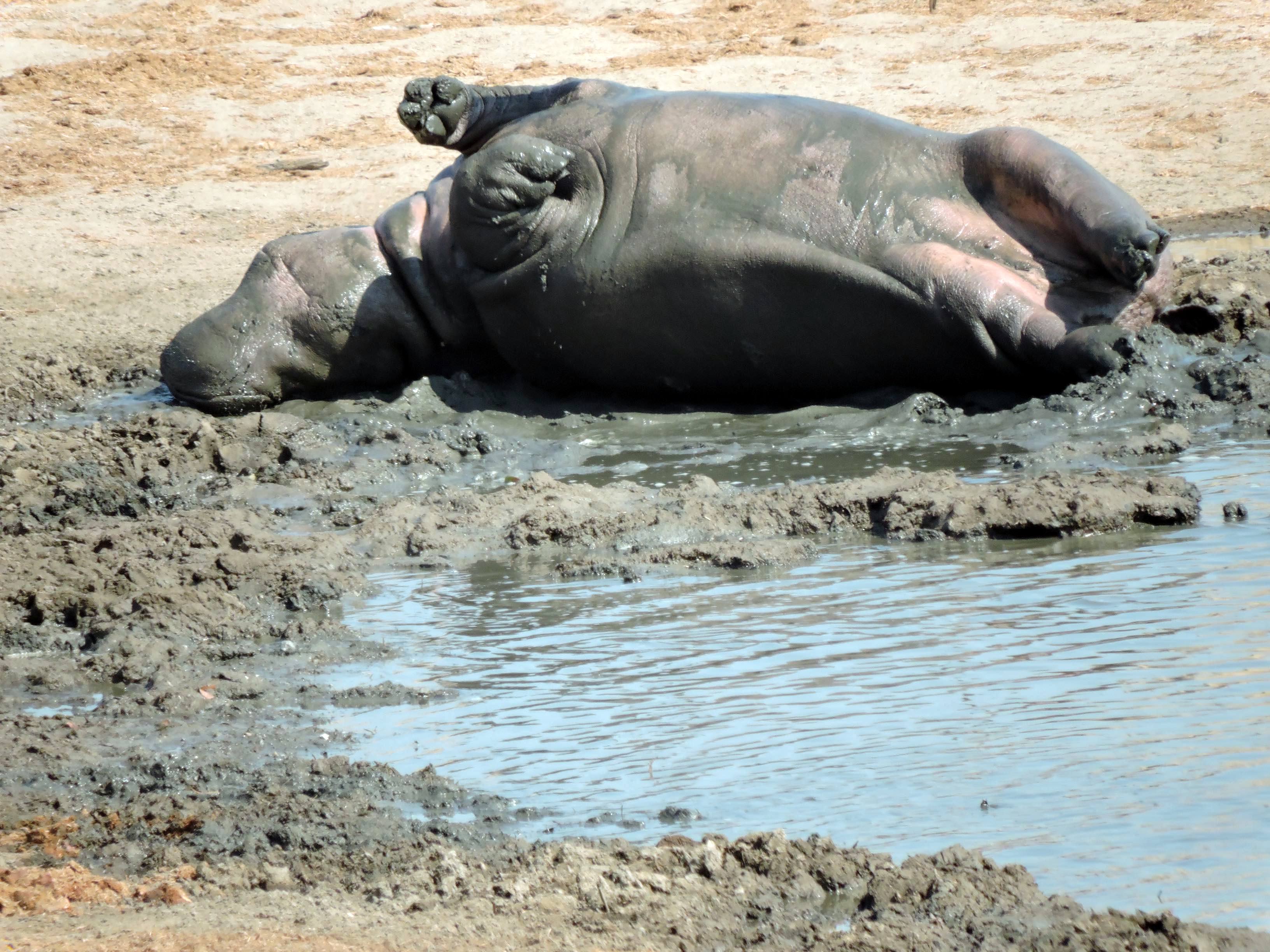
Long pool and hippos.

Long pool and hippos.

Long Pool is perhaps the better known of the four. It is a sizeable body of water where several animals are resident, including a large number of hippos and crocodiles, some of the latter really humongous, often spotted basking on its edge. With the exception of a grey heron that enjoys “hippo surfing”, most water birds are found in the shallows. The species and numbers present clearly depend on the season but Goliath and Grey herons, Hammerkop, and Stilts are normally present.

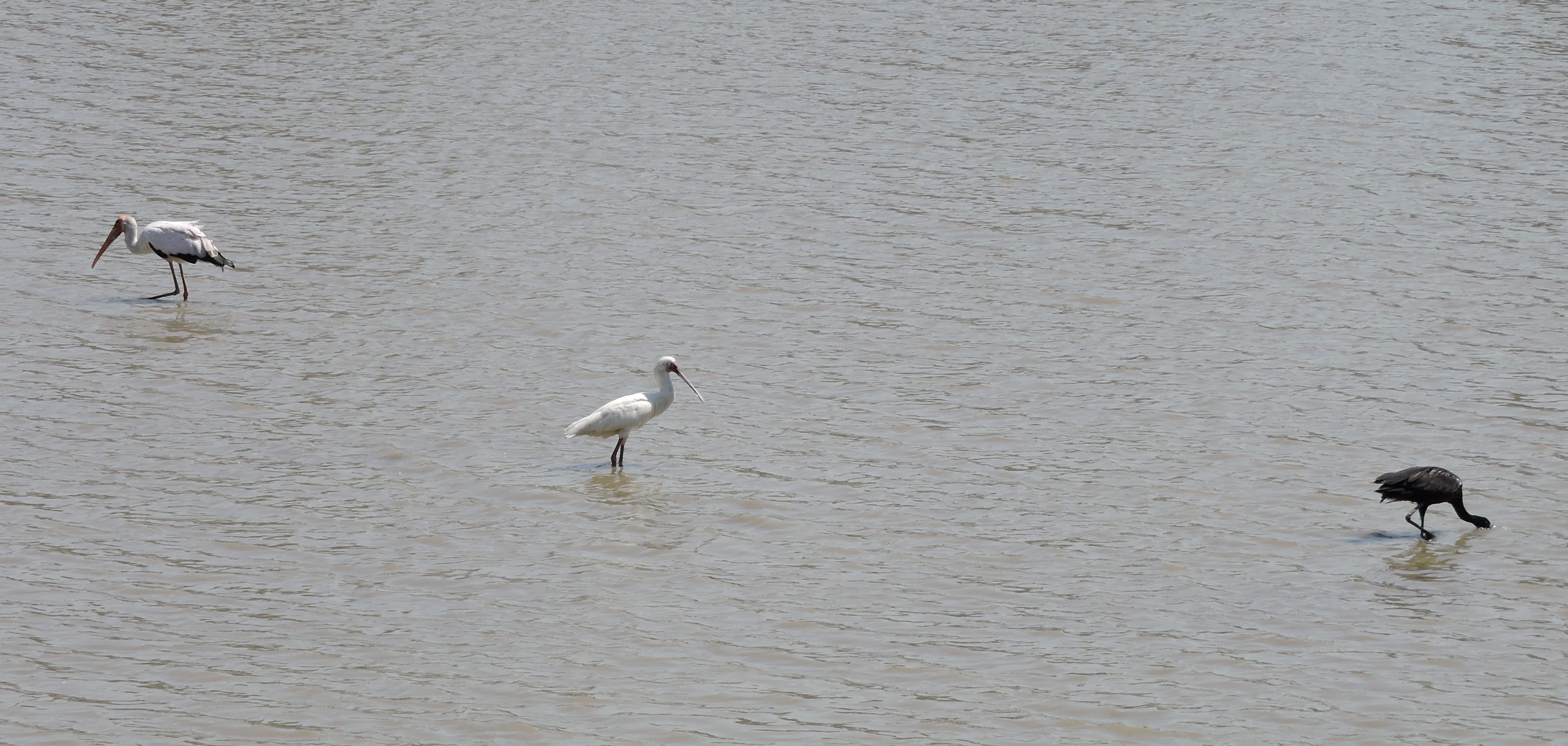
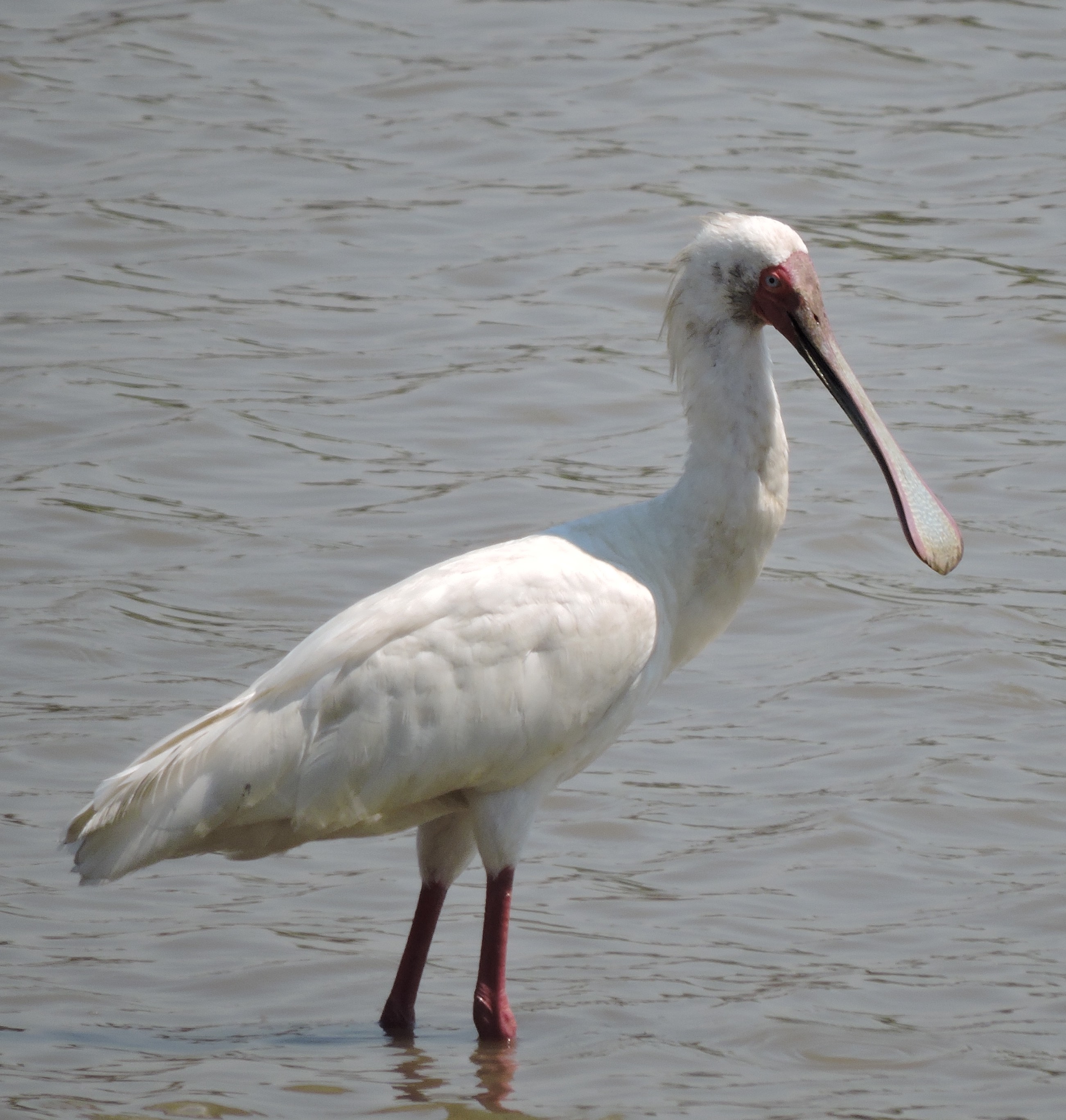
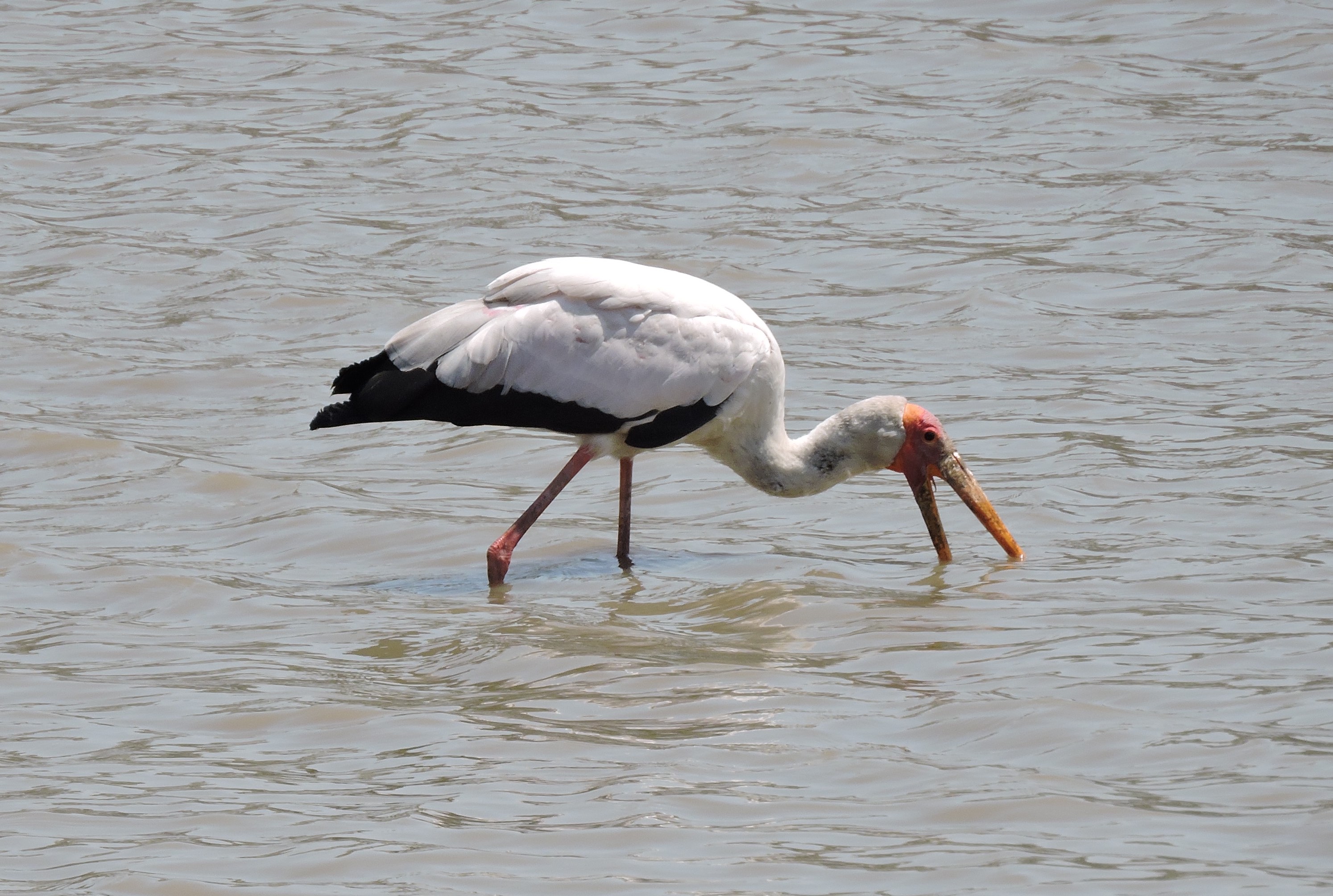
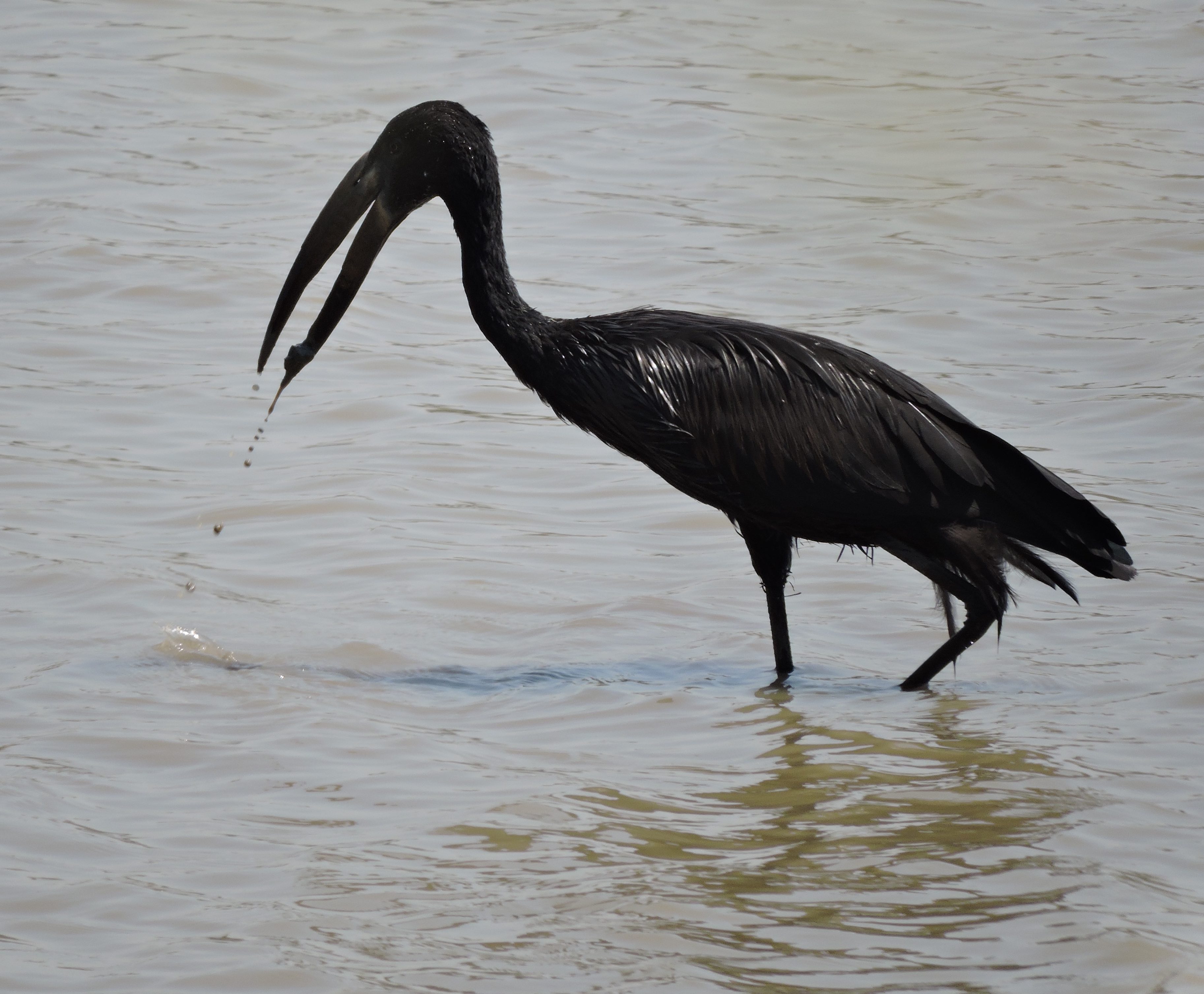
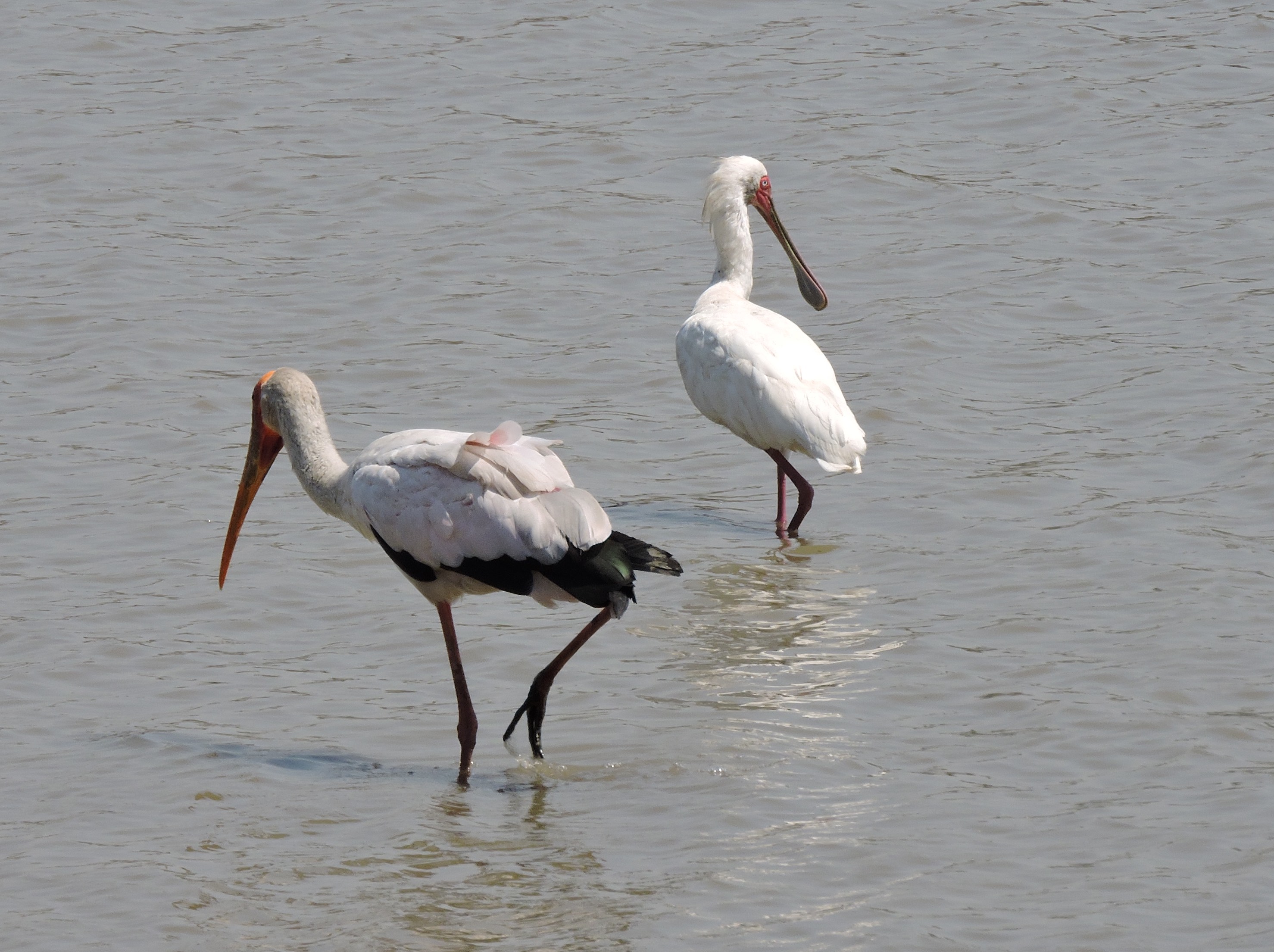
Obviously the bills of the birds are suited to different feeding strategies. On this occasion we found three different ones that actually give the names to the birds: the African Open-billed and Yellow-billed storks and the African spoonbill. They were sharing the same feeding ground at Long pool so we stopped and watched.

The three bills.

The three bills.

The Spoonbill, the less common of the three, waded through shallow water sweeping from side-to-side with bill open and inside the water. Occasionally it dashed around, chasing fish(?) like an egret does. When something edible was found, the bill snapped shut and the victim was swallowed.

A rare pause in the wadding.

A rare pause in the wadding.

The Yellow-billed stork fed walking slowly with half-submerged and slightly open bill. As the later is very sensitive to contact with potential prey, it also snapped closed when that happened.

Typical African yellow billed stork feeding pose.

Typical African yellow billed stork feeding pose.

While the two bills from the birds above are odd, they make sense from the feeding technique point of view.

It caught something small and muddy!

It caught something small and muddy!

Feeding with your bill open and shut it when catching prey is one thing, feeding with your bill open and keep it open when shutting it is another! “A priori” it seems to be pushing nature’s ingenuity to extremes! However, the African open-bill stork was also wading and catching prey, though a bit muddy!

Further reading indicated that its bill is a highly specialized tool to perform an almost surgical intervention on its main prey: snails. It has several uses, depending on the size and type of snail: it either cracks it (large ones), removes its body by shaking its head or it cuts the snail’s columellar muscle[1] with its sharp tip.

Feeding together.

Feeding together.

Although the three birds feeding paths often crisscrossed, they were respectful of each other as if benefiting from each other’s presence. The say “when the river is dirty the fisherman benefits” is likely to apply here!

Mana Pools, Zimbabwe, September 2015.

[1] The columellar (shell) muscles of gastropods join the foot and other parts of the body with the shell. (Basically, keeping the animal together!)

Talking ants

Our first stop during our afternoon game drive from Gwaya after setting up camp came quite soon. In fact, we stopped while we were still in the campsite grounds. I did a kind of emergency stop to the surprise of my companions that were still settling down for the drive. Startled, they looked around but could not see nothing so, I am sure, they waited for one of my jokes as I do have a reputation! After a while I heard “This is one of your jokes right?” coming from Tom, but I was (quite) serious.

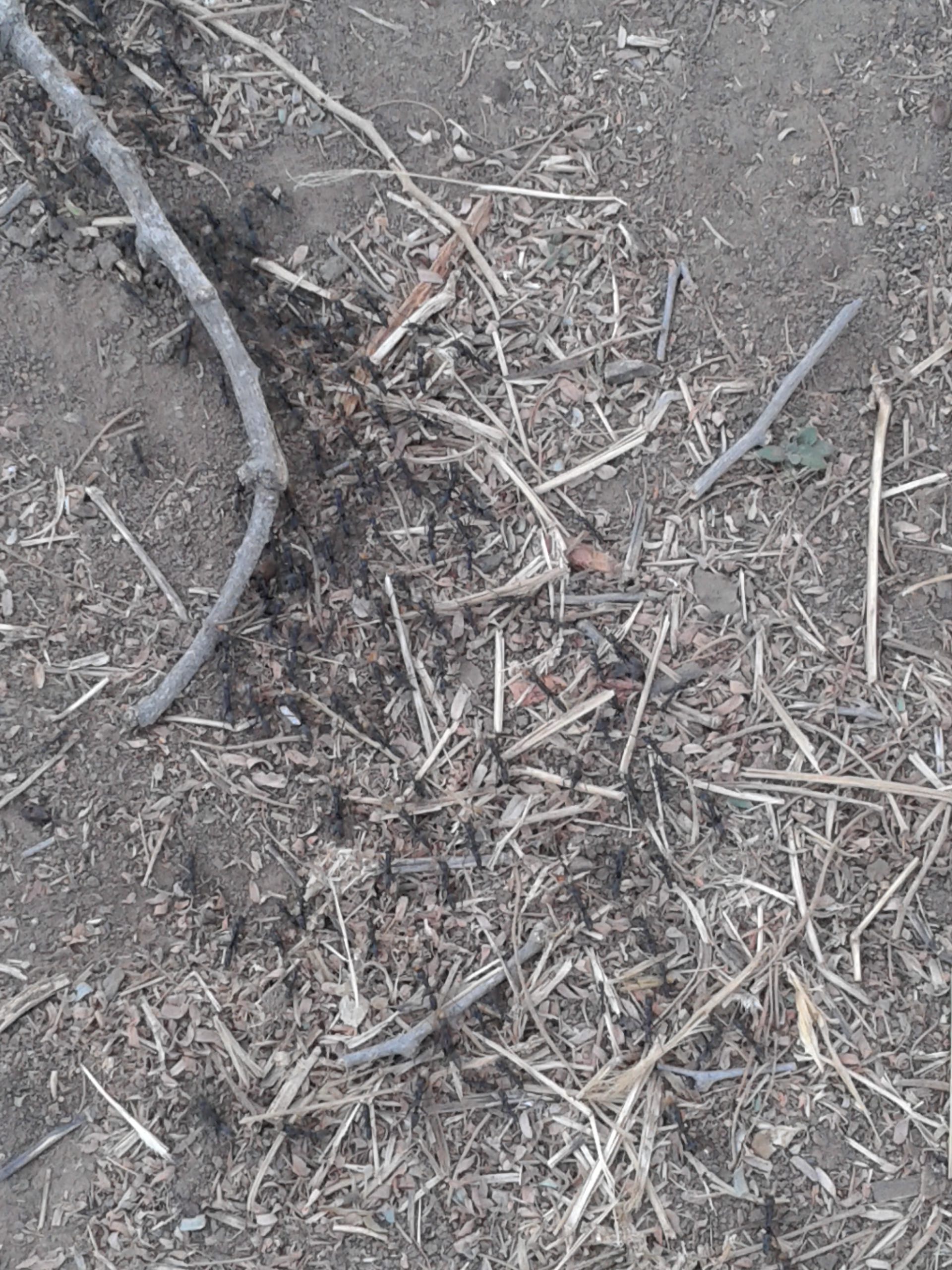
The only picture of the ants, taken by my wife.

The only picture of the ants, taken by my wife.

I had spotted a column of Matabele ants[1] crossing the track. We had seen these ants in action earlier in Zimbabwe while entering termite nests and, after a while, emerging with bundles of termites in their jaws, both workers and soldiers! These are specialized ants as they feed exclusively on termites, leaving their colony “en masse” to search for termite nests where they will all enter and attack the nest carrying their victims back to their colony. They normally raid at dawn and dusk so we were probably seeing an evening raid returning home empty-jawed.

When disturbed these ants emit a high pitch squeaking sound that we have not heard from others such as the safari ants or siafu (Dorylus sp.) of East Africa or the leaf cutting ants we have in South America. For this reason, when the ex President of Uruguay Pepe Mujica mentioned that ants whispered in his ear while spending two years at the bottom of a well during his prison sentence, I had no difficulty in believing his words!

The ones we found were carrying their eggs and young and there were not more than three hundred individuals, organized in a thick column. They were moving like an army and entering a hollow dead tree trunk, probably their nest. At the time of the observation I was reading Conn Iggulden’s Genghis Khan series and their behaviour reminded me to the Mongol raiding tactics!

When we were about to leave them to spend the night in their nest we noticed about twenty ants bringing the rear. At first we thought that these were the old and injured, struggling to keep up. But their behaviour seemed odd! They were not moving slowly or lacked any legs! They were performing an activity that was part of their moving strategy. They were clearly following the trail of the group but they were picking up sticks, leaves and other debris and moving them slightly as if trying to “restore” the path they group had trodden to its original condition!

As this seems far-fetched, perhaps they were just either erasing their earlier pheromone trail or releasing new ones to indicate their presence to other creatures?

Once these “strugglers” reached the hollow trunk, they also got inside to join the others. They were in for a hungry night.

September 2015, Mana Pools, Zimbabwe

[1] Megaponera analis, one of the world’s largest ants are named after the fierce Matabele warriors.

Hwange National Park

Last year I reported on our stay at Shumba Picnic site in Hwange National Park in Zimbabwe (see: https://bushsnobinafrica.wordpress.com/2014/10/31/watched-at-shumba/) as well as the observations we made on the struggle we witnessed between crocodiles and hippos for the impala carcasses at Masuma dam (see: https://bushsnobinafrica.wordpress.com/2015/02/22/hippos-from-hell/ and https://bushsnobinafrica.wordpress.com/2015/03/23/hippos-from-hell-the-videos/).

Hippos were not interested in Impala meat this time!

Hippos were not interested in Impala meat this time! (Photo by Julio A. de Castro & Mariana Terra)

(Photo by Julio A. de Castro & Mariana Terra)

(Photo by Julio A. de Castro & Mariana Terra)

After our return from that safari we immediately booked the Masuma dam campsite so that we could stay closer to the action and see if we could observe something additional in the crocodile-hippo saga that caught our interest earlier. We also booked a place in Main Camp as we were sure we would have fun with elephants at Nyamandlovu pan. We knew that the elephants were plentiful there and we could watch them and enjoy their antics!

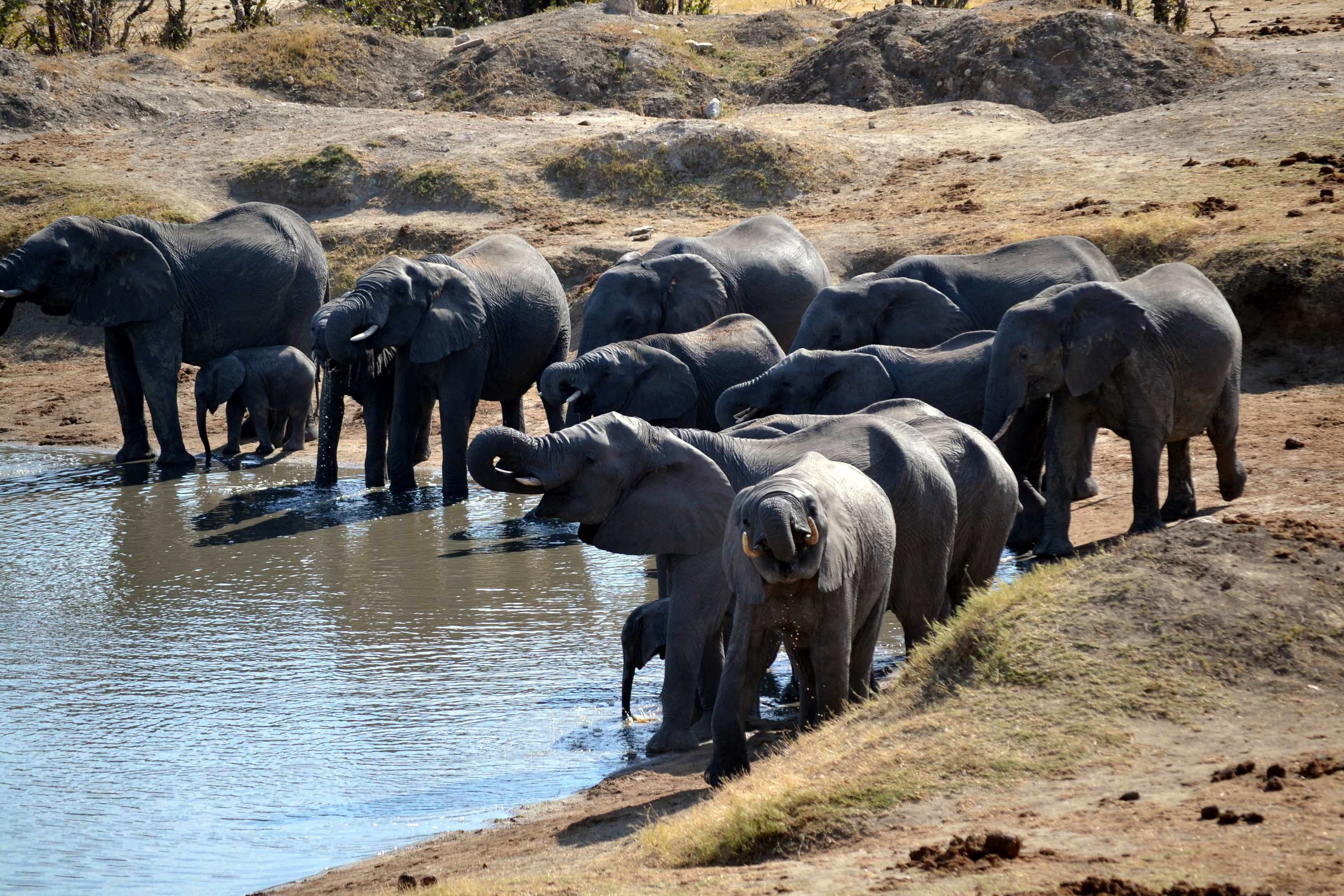
THis time there were lots of elephants at Masuma dam. (Photo by Julio A. de Castro & Mariana Terra)

This time there were lots of elephants at Masuma dam. (Photo by Julio A. de Castro & Mariana Terra)

We even saw pink elephants... (Photo by Julio A. de Castro & Mariana Terra)

We even saw pink elephants… (Photo by Julio A. de Castro & Mariana Terra)

As part of our “discovery drive” we also camped in the Ngweshla pan campsite as it has a reputation as the best place to camp in Hwange and is a place where predators are often seen because the area surrounding the various pans and water holes found there is quite open, a change from the thick bush of other areas in the park.

The safari took place between 22 and 29 July 2015 and I describe its highlights in four posts:

Fearless bee-eater

Moonlit elephants

Encounter with lions, and

Ngweshla cold.


I hope you will enjoy them.

Life and work in Kenya: Intona

The work at Intona Ranch involved the organization of a six-month field trial, a first for me. Luckily Alan had a system in place for his own trials and I just “piggybacked” on what he had created. As he was the Head of the project he kindly supported my work very generously and enthusiastically. He lent me his work Land Rover, herdsmen and the routine disease monitoring system. I needed to add the tick burden evaluation part by bringing in my own people to carry it out. Visits were required for monitoring purposes and to replace personnel every two weeks. As mentioned earlier, I had employed two people: Kimondo and Tommi. The latter was a Maasai who was no stranger to the Transmara and although he was not as hardworking as Kimondo his local knowledge would prove of immense usefulness. We were a good team!

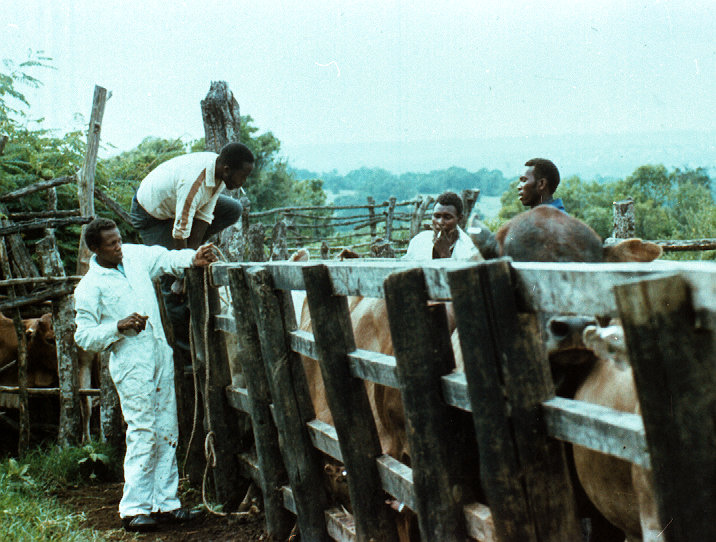
Routine monitoring of experimental cattle is key.

The team. At the time doing routine monitoring of experimental cattle. From left to right: Chege, Kimondo, Tommi and Benson.

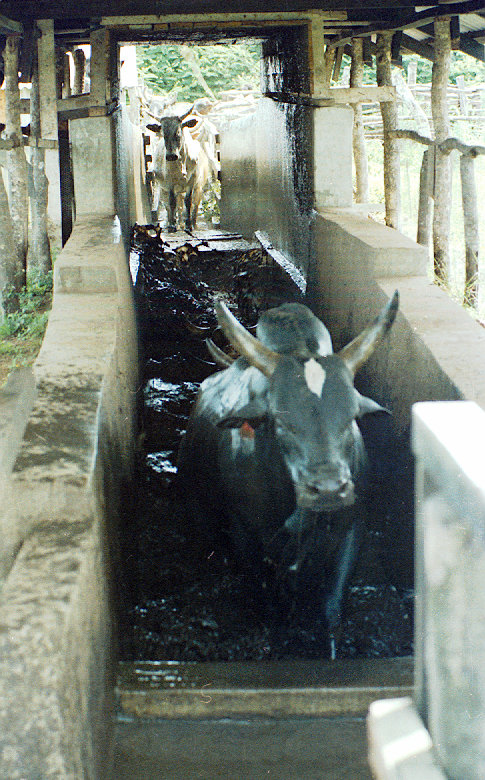
The work would consist in the creation of two groups of cattle immunized against Theileriosis by Alan and his group. This would enable me to stop applying tick-killing chemicals (acaricides) to one group while the other would be maintained with strict tick control. The comparison on their live weight gain and the tick species and burdens observed would enable me to estimate the expected losses that the ticks themselves would cause to the cattle. Clearly it was only a start but something that had not been possible to assess before.

Cattle being dipped.

Cattle being dipped.

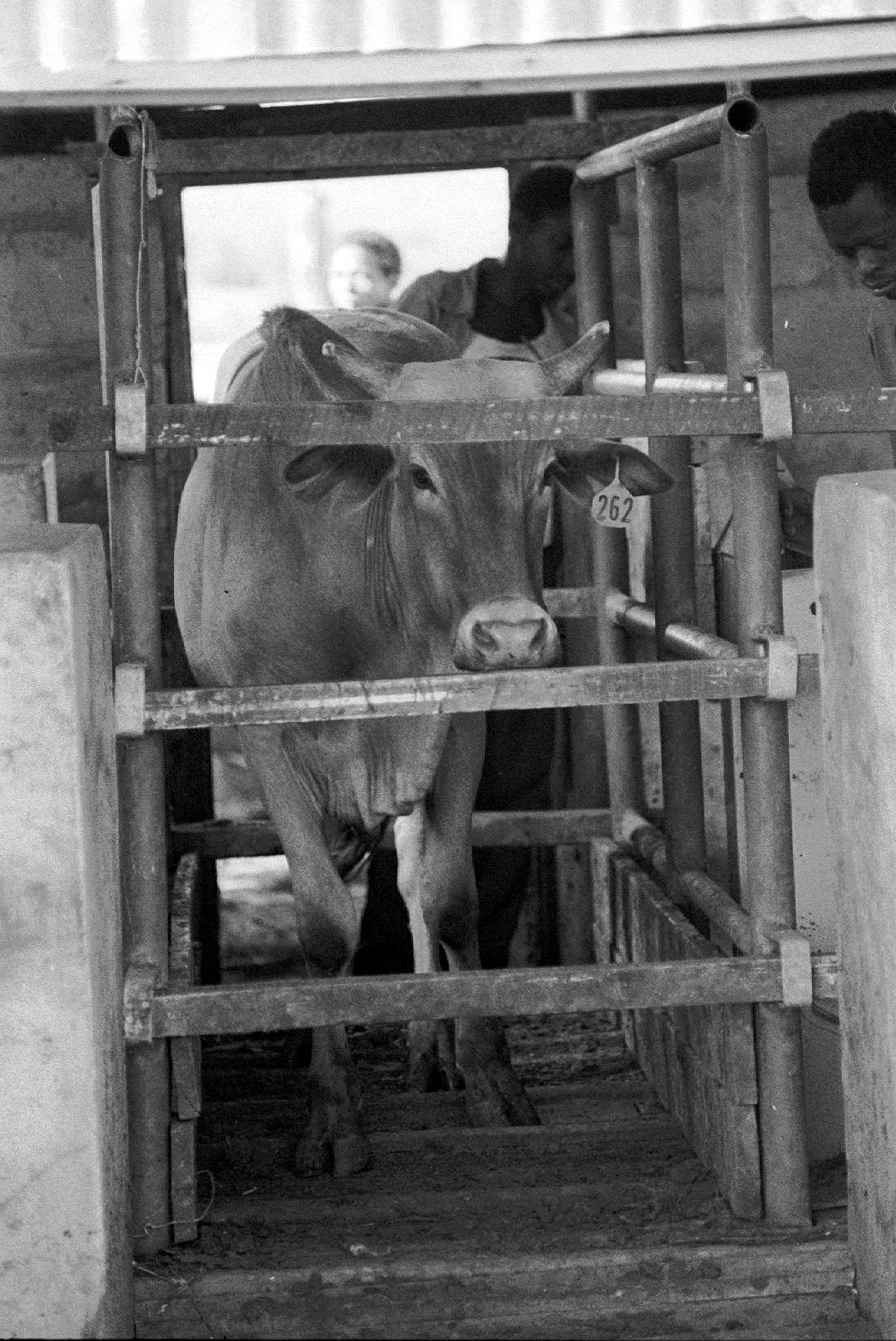
Liveweight gains were an important parameter in the trials.

Live weight gains were an important parameter in the trials.

Now I needed to find the right cattle for the trial and get them to Intona. This required some planning and involved travelling to Laikipia in Northern Kenya. I was searching for Boran, a Bos indicus breed as these would remain at Intona ranch once the trial ended and we knew that Joe would be very keen on them.

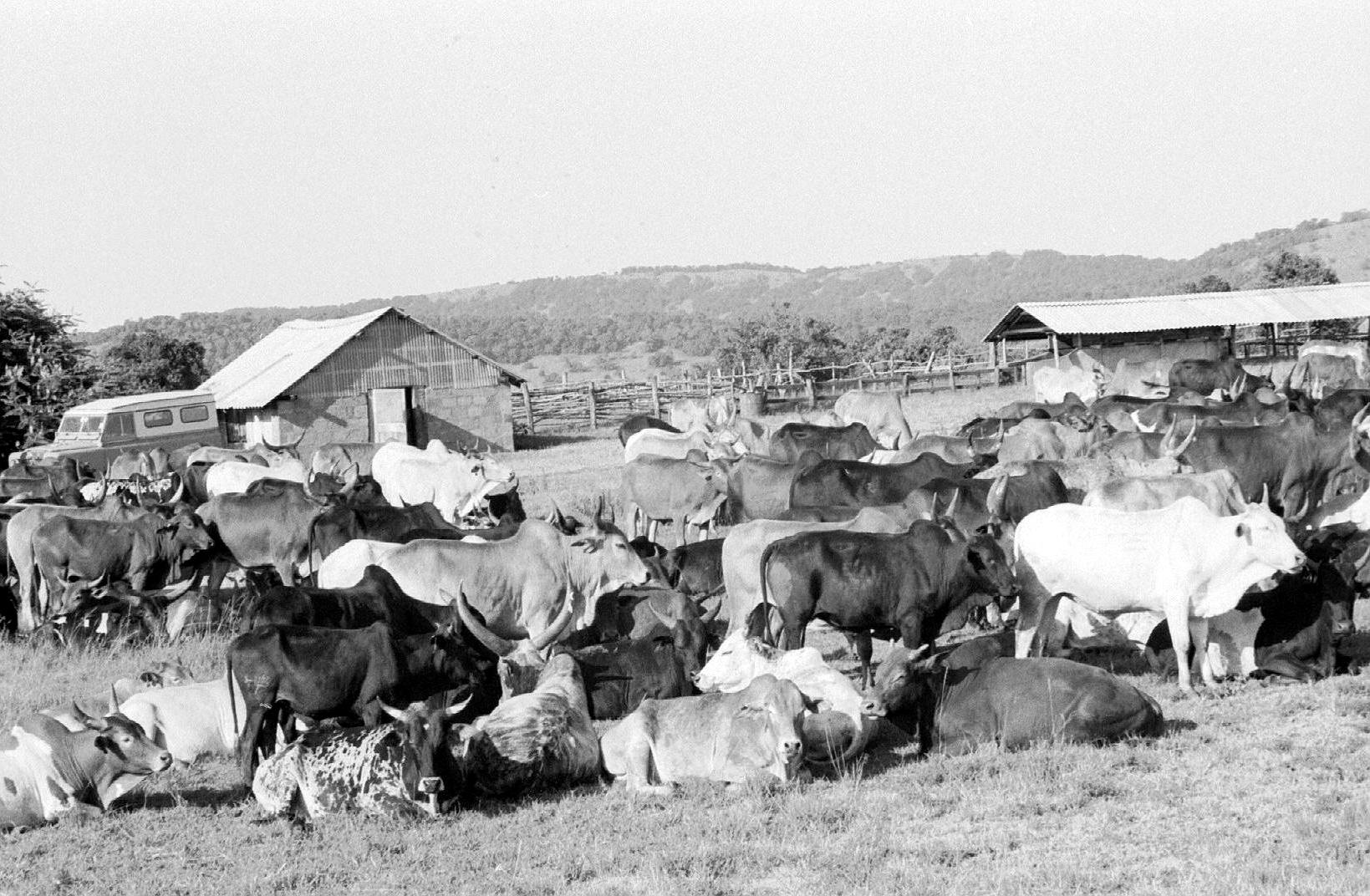
The cattle of Intona Ranch.

The cattle of Intona Ranch.

We did not take any chances...

We did not take any chances…

Gilfrid[1] had his ranch beyond the slopes of Mt. Kenya in Laikipia and he had the cattle we needed. I organized a “cattle-buying” trip. Luckily in Alan’s Land Rover, I departed for Laikipia with Kimondo and Tommi to assist me on the journey. A large lorry followed us to carry the animals. We drove past Murang’a with its amazing vegetable offer, Nyeri and Nanyuki on the slopes of Mt. Kenya. The views beyond Mt. Kenya into the very dry Northern Frontier District were worth stopping to take in. At Nanyuki we went West towards Rumuruti, gradually descending from the mountain into nomadic grazing land to finally arrive at the ranch. Gilfrid was waiting with the cattle on display for us to choose what we needed. The selection done, over a cup of tea we agreed on the final price and payment and then loaded the animals on the lorry. As the latter was slower than us, we agreed on the route to follow and told them to depart before us, as we were hoping to arrive at Nakuru to spend the night there.

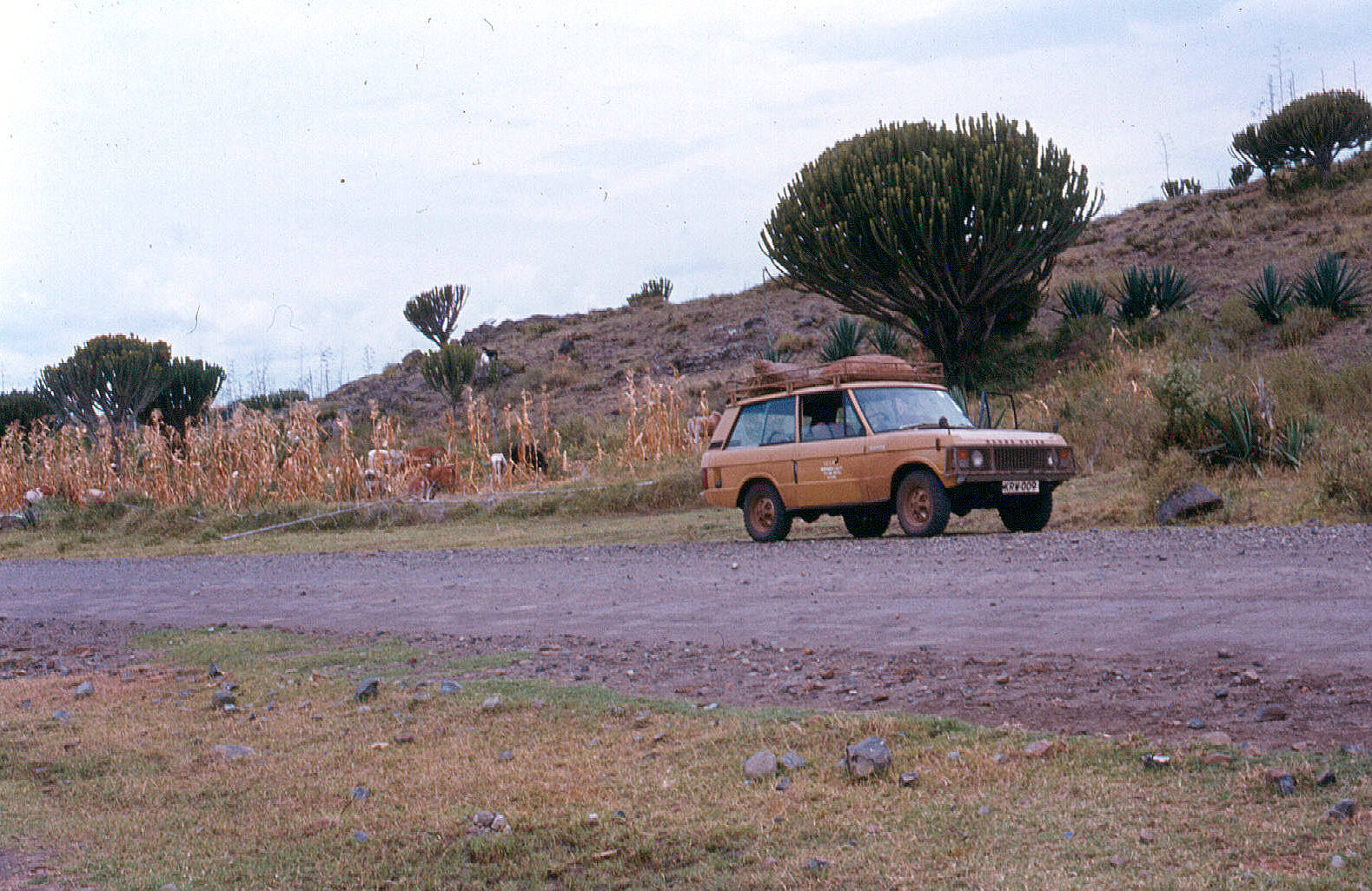
We lingered a bit longer talking to Gilfrid while he showed me his ranch. He was clearly an interesting “character” and drove a “Hang over”, due to a modification he made to the back badge of the Range Rover! Returning to the house I saw three or four skulls on the roof of the verandah. I realized that they were lions’. Gilfrid explained that they had been “cattle-eaters” that needed to be shot, as they killed far more animals than they needed to eat. “I tolerate losing a few cattle but not that one lion needlessly kills ten cattle in one night!” he asserted. However, he reassured me that lions were still plentiful in the area and that he loved to hear them roaring in the evening, provided that they kept away from his cattle! I could not help asking for one and he promised to remember me the next time a lion overstepped the mark[2]. He agreed and after a while we said our farewells, as I needed to catch up with the lorry. I liked Gilfrid and would return to him for more cattle in the future.

After about an hour, the cloud of volcanic dust in front of us indicated that we were approaching our truck. As I positioned the car to overtake it and its dust plume, I saw a grid on the road that I just managed to avoid by braking and swerving to one side. Recovered from the sudden jolt we came close to the lorry again. “What on earth is going on!” I muttered while I tried to make sense of what I saw. The back door of the lorry was missing and a line of cattle were looking at me! The sudden appearance of the grid on the road suddenly became clear, it was in fact its back gate! I started hooting and flashing my lights hoping that the driver would stop. He ignored us or did no hear us so I took the risky decision of overtaking it to stop it from the front. The maneuver was not easy as it was a narrow dirt road but somehow I managed, probably helped by my stress!

We agreed that as soon as the lorry stopped we would jump out to stop the animals from jumping off and scampering into the endless savannah, as there are no fences in that part of Kenya! Luckily we managed to stop the lorry before any of the animals jumped and, while the herdsmen held the animals in check, I rushed back to collect the back gate that, luckily, somehow fit inside the Land Rover! I mentally thanked the cattle for being wise and verbally the herdsmen for keeping them at bay. The gate fixed, we resumed our journey with our car in the lead.

We managed to get as far as Kericho where we watered the animals and made sure that all was tightly secured before we retired for a fully deserved rest. As the lorry was much slower than us, we also agreed that it would depart at dawn towards Kisii and onwards until Kilgoris and eventually to Intona Ranch. I was really exhausted both physically and mentally and managed to count about three cattle jumping before I crashed into sound sleep!

When we were ready to go the next day, the lorry had already left as arranged. We headed for Kisii following the tarmac, expecting to find our lorry on the way. We got there and didn’t find it so I assumed that they must have continued towards Sotik, the next town so I proceeded to that destination. Still no lorry! I could not believe that they had already passed Sotik so I retraced my steps looking for it, as it was likely that they had stopped on the way and I had missed them. This proved to be a mistake as we still found nothing on the way back and by this stage I had lost too much time to catch up to it on the road!

My first and rather distressing thought was that my cattle had been stolen! There were lots of stories of cattle rustling taking place in that region of Kenya at the time and I had been warned about them prior to our departure. Not sure about which Police station to report the theft to, I decided to leave that as a last resort and instead pushed on to get to Kilgoris as this was our final meeting point before we took the rougher road to Intona Ranch.

We drove silently all the way and arrived at Kilgoris in the late afternoon, rather crestfallen and upset with myself for having been so careless. As Kilgoris is a small place, if the truck was there we would be able to see it, so we entered the town with a glimmer of hope. “There it is” exclaimed Kimondo and there it was, our lorry was almost the first vehicle we saw, parked at the prearranged meeting point in the town square. As expected, the lorry was totally surrounded by Maasai that were keenly watching our cattle. Through Tommi I learnt that they were really excited and very complimentary about our rather lovely and fat Boran yearlings! My worries increased again with the knowledge that Maasai believe that all cattle belong to them!

We finally found the driver at a nearby shop and told him of our adventure. Happy to see us again, he laughed at our obvious travel miscalculation. He had left Kericho earlier than we thought, as he was not sure of the condition of the road and got to Kisii and then Sotik with ease. Seeing this, he decided to push on to Kilgoris to save time and to arrive there before nightfall as I had recommended to him. He got to Kilgoris early, parked the lorry and waited! He shared my wariness about the curiosity shown by the Maasai crowd and we agreed that his “tout” would sleep on the lorry to avoid any nocturnal mishaps!

I was relieved to see that things were back to normal and I treated everyone to some “Nyama choma[3] and “ugali[4] and then went to the hotel to sleep. The place was rather basic, prepared for a Maasai clientele but I did not mind and slept soundly as we were reunited with our “lost” cattle!

The following morning we drove in front and, luckily, the road was dry. We reached Intona ranch without further disasters. The field trial could now start!

[1] See: http://suyiantrust.wildlifedirect.org/author/gilfrid-powys/

[2] See “Lion Skull” later in this blog.

[3] Barbequed beef.

[4] Maize meal.

Life and work in Kenya: Muguga[1]

The next time I met Matt, after my return from Intona Ranch, he was very positive about my collaboration with Alan at Intona ranch. That was good news as I did not need to present to him all the arguments I had prepared. However he tersely informed me that there was still one more hurdle: a final meeting with all institutions to settle the issue. Apparently, a new idea had come to the fore that needed discussion. The Director of KEVRI from Western Kenya had proposed an alternative area of work in Busia, his home area, of course. “You would live at a former leprosy hospice there”, said Matt just managing to suppress a chuckle! I was not amused at his Scottish sense of humour.

The meeting was large and long and then it was closed. I was dismayed as for me, nothing was decided and I felt like holding the participants in place until they reached a decision. As clearly this was not possible, I also left rather crestfallen at the apparent lack of agreement. Matt came to me and said “We are fine, it will be Muguga and Intona!” I looked at him totally perplexed. He saw my expression and said “Julio, you should be happy as things went your way!” I accepted his words in amazement and learnt that meetings in the Kenya environment did not involve heated discussions as they did in Latin America, but rather polite exchanges where things are often left unsaid but at the end decisions are taken. I learnt another valuable lesson!

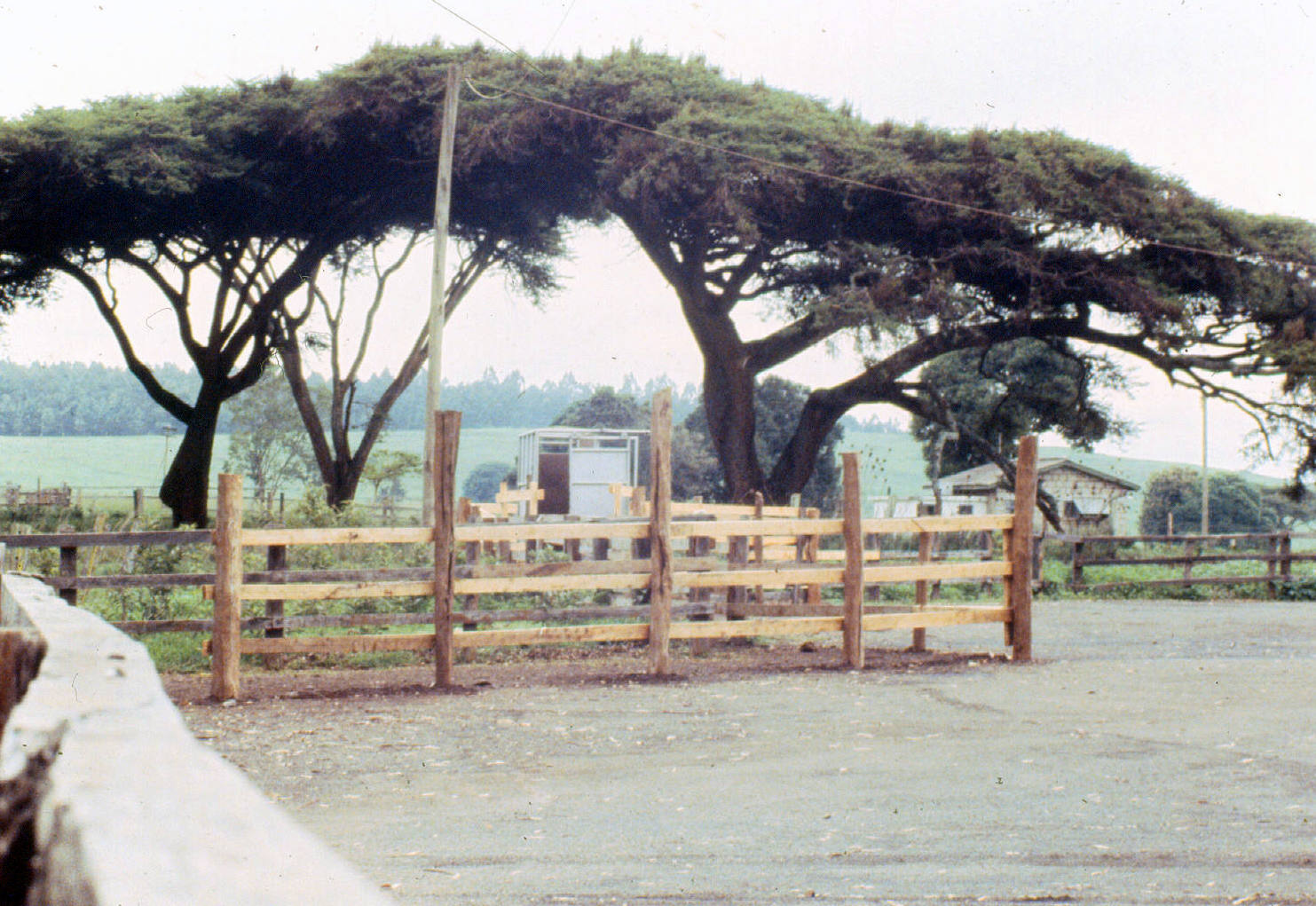
A view of the Isolation Unit showing the flat top acacias under which I spent long hours writing.

A view of the Isolation Unit showing the flat top acacias under which I spent long hours writing.

Believing Matt and having confirmation from Alan, the agreement was that I would use a two-pronged approach to tackle my goal of evaluating the impact of ticks on cattle live weight gain: a controlled trial where I would infest three groups of young cattle with a known number of adult ticks and therefore attempt a finer quantification of their impact under controlled conditions and a field trial where I would compare cattle with and without tick control. This was possible as Alan had a reliable method to engender immunity against Theileriosis, enabling us to stop chemically treating the cattle against ticks[2].

The controlled experiment would take place at the then empty Isolation Unit in KEVRI (Muguga) itself while the field trial would take place at Intona ranch. I set to work immediately as time was short and there were many issues to settle before the work would start. I needed herdsmen, ticks, cattle, housing, feed, drugs and transport to name only the basic needs. The FAO funding was a modest USD 20,000 so I needed to collaborate with others to achieve my goal in the two years I had left!

Tommi preparing an animal for tick infestation.

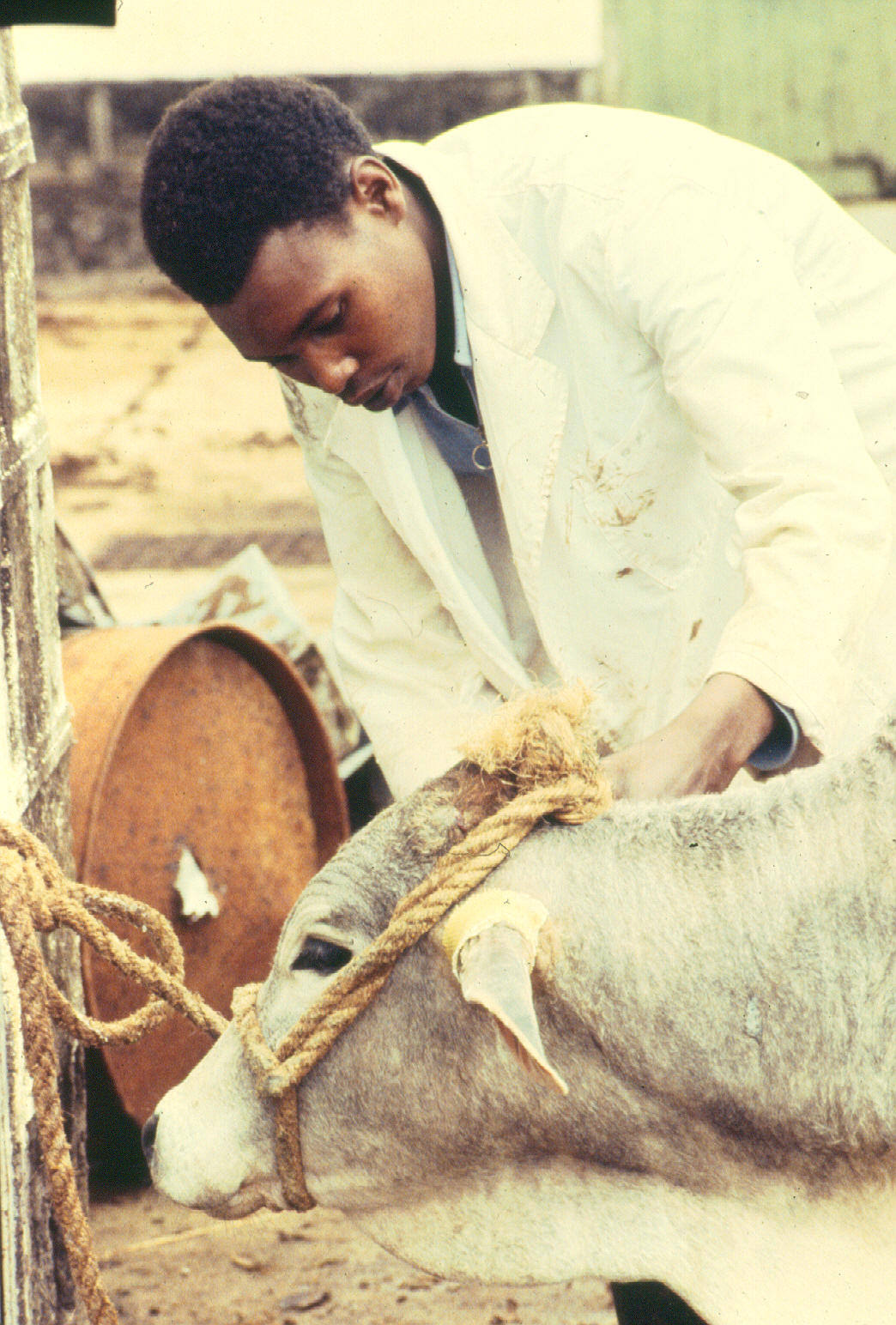
Tommi preparing an animal for tick infestation.

With my colleagues’ assistance I recruited two herdsmen for the Muguga trial (Chegue and Karanja) and two for the Intona ranch work, Kimondo and Tommi. The latter was a Maasai and this would prove to be an immense advantage working in Maasailand! The others were of Kikuyu origin, very hard working although rather fixated with money!

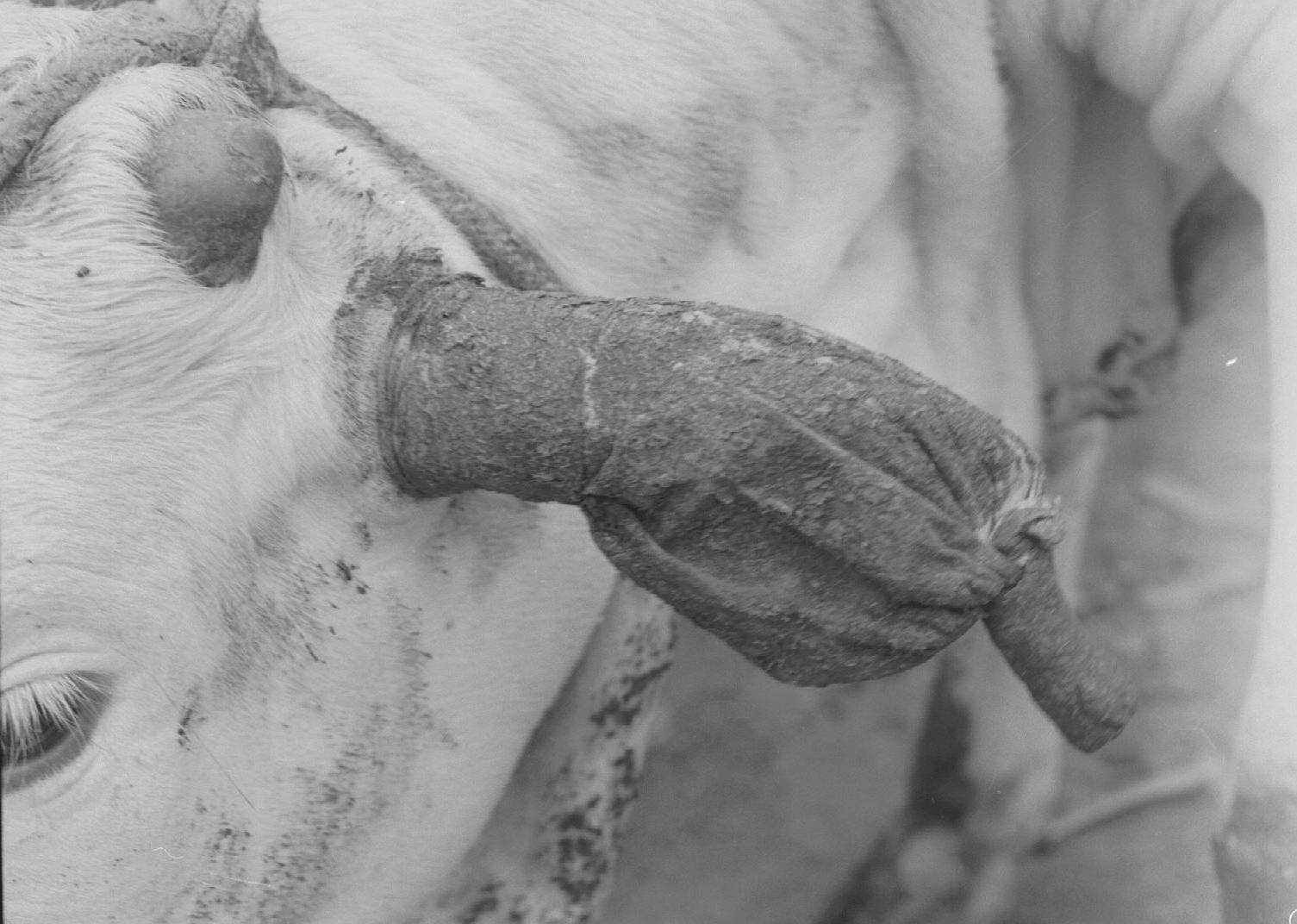
An animal with an artificial tick infestation applied by means of an ear bag.

An animal with an artificial tick infestation applied by means of an ear bag.

For the Muguga experiment I needed to purchase cattle and feed as well as secure a weekly supply of adult Brown Ear ticks to infest the cattle. A constant supply of ticks needs a “tick breeding colony” where you could breed them and, after planning ahead, you “harvest” them weekly to infest your animals. As the trial would last for six months, this meant 24 tick installments to be applied weekly on the animals. One of the reasons ICIPE had accepted my fellowship was that they maintained such a colony, managed by Fred, a very smart guy that became an essential clog in my machinery! Together with Robin we planned our needs and, luckily, it worked very well.

I bought the calves for the Muguga trial locally and randomly placed them into two groups with different levels of tick challenge and a control tick-free group. I needed to measure the feed given to them and I would weigh them weekly and take blood samples and other measurements to check them for other possible clinical signs associated with tick infestations.

The Isolation Unit accommodation was suitable and I had a storeroom where all consumables such as cattle feed and drugs were kept as well as a scale to weigh the cattle. Although I spent long spells at the Isolation Unit, I did not have an office apart from a table and chair under a beautiful flat top acacia that was only good for the dry season! I did have a place at the ICIPE laboratory. The latter was a Spartan contraption built of cement blocks and surrounded by a water moat (to avoid ticks walking away) where a large number of guppies (Poecilia reticulata) introduced to control mosquito larvae, also lived.

The “laboratory” consisted of a front area with a long bench under a window of the same length. There were also two windowless rooms where the tick colony was housed. The back of the building had cattle pens used for tick feeding as well as other experiments being carried out, mainly looking at cattle resistance to ticks. In addition to Matt and Robin there were a number of Kenyan scientists and PhD students working there as well as about ten technicians and herdsmen.

I occupied a slot on the bench between Matt on my right and near the entrance door and Robin, near the other end of the bench. Matt (a Scottish Vet from Glasgow) and Robin (an English PhD from Oxford) could not be more different but somehow they endured each other. In between these opposite characters I sat and worked. In retrospect I had a privileged location, as from my left came thorough knowledge of tick ecology and from my right a veterinary insight including vast experience as well as all sort of ideas for future projects! Work would start at 08:00hs, break for lunch at 13:00hs and resume at 14:00hs until 17:00hs where it was back to Muguga House. This timetable had been established years back during the FAO project and it was maintained until that time.

Matt was very punctual when he was at Muguga. At 13:00hs sharp he would announce that it was lunchtime, leave the building to go to his car to fetch a litre of milk and a book. He would come back, drink the milk, place his feet up (on my part of the bench!) and start reading his book (a Western paperback novel from the back pocket of his trousers!). Soon his by now familiar snoring invaded the laboratory! I was surprised the first time it happened and was going to object when I saw Robin’s resigned look, which led me to understand that any effort in that direction would be futile so I learnt to live with Matt’s antics as I did earlier at Mbita Point!

Luckily for my work Matt was not always at Muguga as he was the Tick Programme Leader and needed to be at several places such as the central ICIPE HQs at Chiromo and another place being built at the moment known as “Duduville”. For this reason his car was his office and he kept all documents on the back seat. In fact Matt was a shrewd operator that was difficult to find as he “rotated” between offices (no cell phones then).

I suspect that he spent some time fishing for trout as well! I often found him parked on the road from his house at Tigoni to Muguga reading “The Standard” newspaper and enjoying his Sportsman cigarettes.

While working at Muguga I learnt that Joseph was in charge of all workers at the laboratory and instructions should be passed on through him only. His authority did not include my newly recruited workers with whom I had a “direct” working relationship. The staff feared both Matt and Robin. As I was a temporary addition to the group, somehow I kept a closer relationship with them, despite Matt’s advice to the contrary!

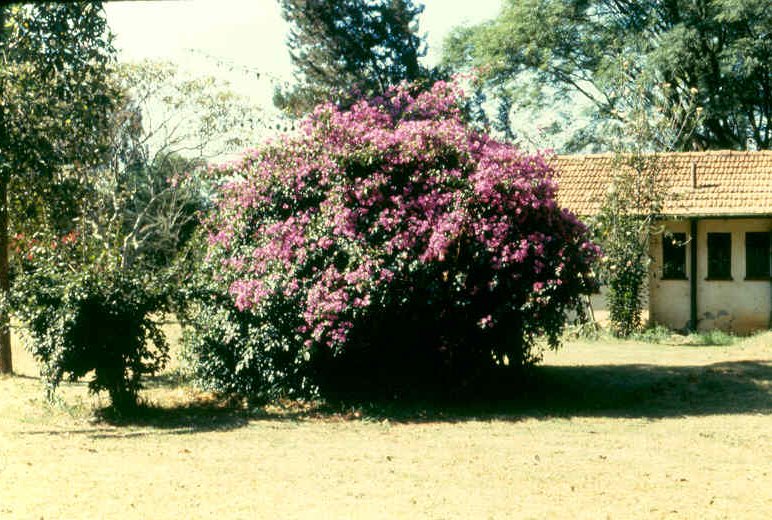
The Muguga House garden.

The Muguga House garden.

Time after work during the first few months was mostly spent at Muguga House, a place we shared with other lodgers of several nationalities: Kenyans, Tanzanians and Ugandans were the majority but there were also a few British and now two Uruguayans, probably the first and possibly the last! It was clear that the place had seen better days during the colonial time and when the East Africa Community was functional. It had a large area where the bungalows were scattered and it offered its lodgers a couple of tennis courts and bowling greens. It also had a bar where darts were a popular pastime, only second to talking about Kenyan politics!

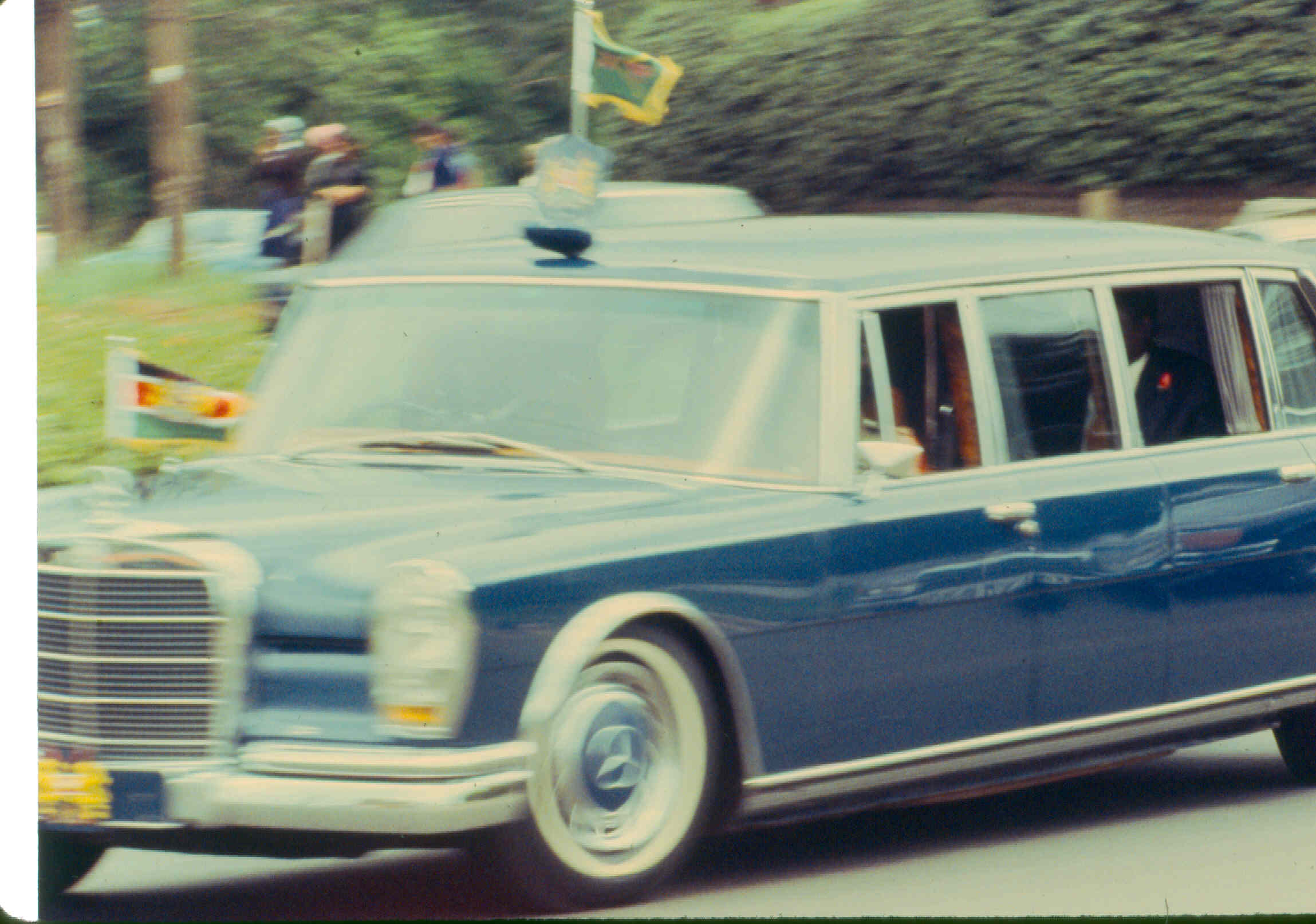
I took this picture of President's Moi motorcade. Later I learnt that this was not allowed!

I took this picture of President’s Moi motorcade. Later I learnt that this was not allowed!

Joyce did not or could not manage Muguga House very well. Despite this the place was still reasonable and although the bungalows were basic, they were kept clean. Food, however, was another story and the daily topic of conversation. The British-style breakfast was good and I skipped lunch as I remained at work. Dinner was another matter. It consisted of dishes such as egg curries (with no yolks!) twice a week, very tough and overcooked meat with ugali and sukuma wiki[3] (twice a week) and other bland dishes during the remaining three days.

Desert did not shine either and we were given artificial egg custard and rice pudding (both made with water), jelly (orange and red) and bread pudding with “flies” (tiny raisins). Cape gooseberries either boiled or as part of a crumble were there permanently and you could -if you dared- consumed them “ad lib“. We did get five o’clock Kenya tea and biscuits. Food would greatly improve whenever important visitors came for lunch or dinner!

Our first camping experience at the Maasai Mara. From left to right: Ranjini, Kevin and my wife.

Our first camping experience at the Maasai Mara. From left to right: Ranjini, Kevin and my wife.

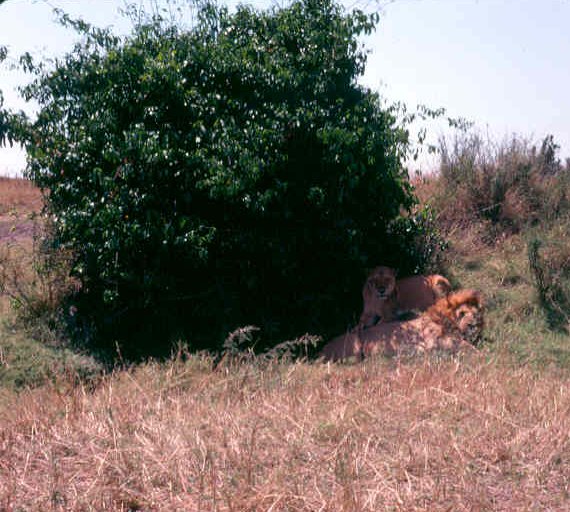
Our first lions. Exciting despite doing what they do most of the time: rest and sleep!

Our first lions. Exciting despite doing what they do most of the time: rest and sleep!

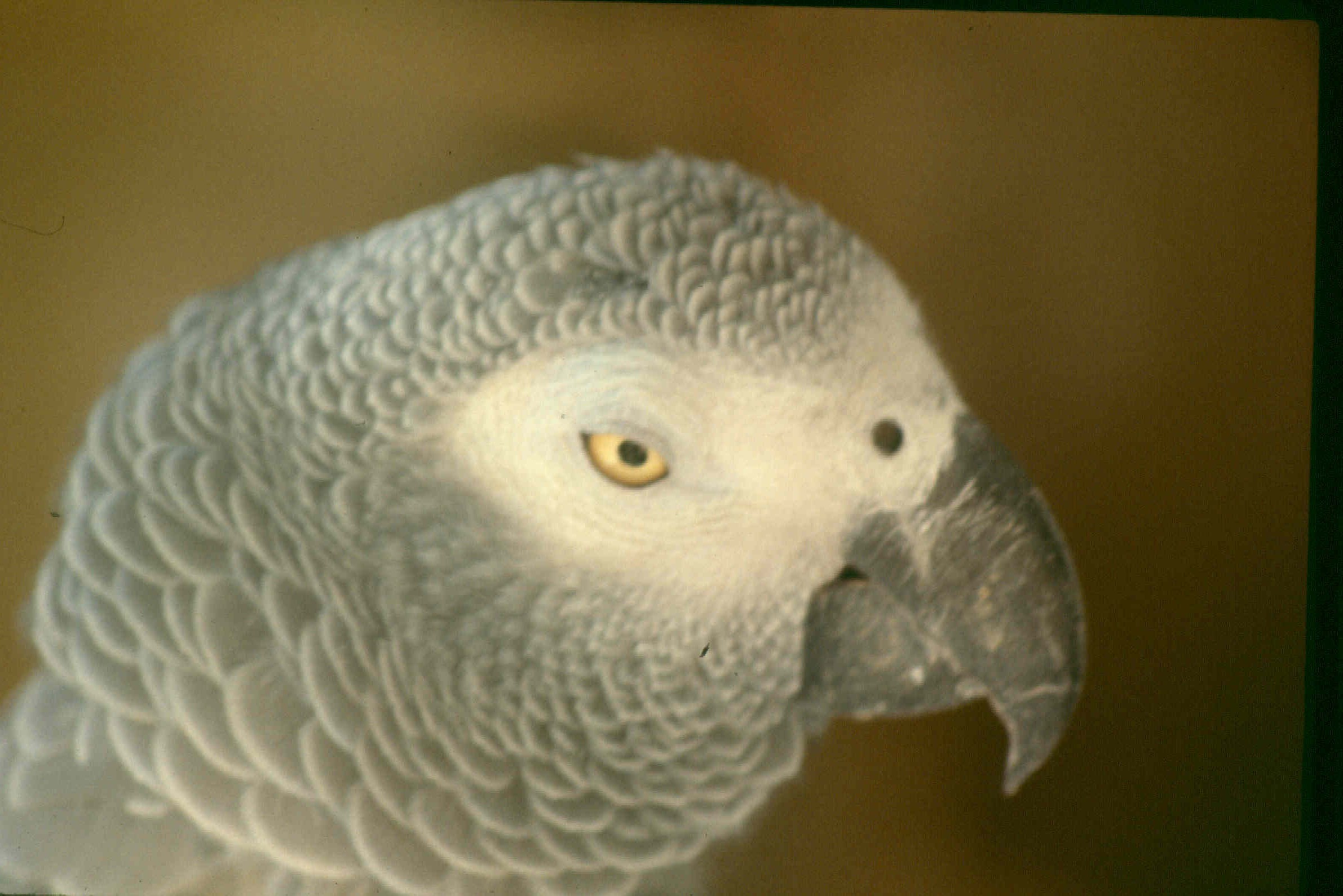
After dinner conversations were well attended and, again, Kenyan politics was the main topic. I participated with stories of South America that generally horrified our British colleagues. I do recall my stories of pest control in Uruguay, in particular the elimination of the enormous numbers of damaging parrots that left one of them, a Cambridge graduate called Richard, speechless. Only much later was I to discover that he owned an African Grey parrot and suffered for the cruel fate undergone by its relatives!

Richard's parrot.

Richard’s parrot.

Through Richard we learnt of the existence of a house for rent at Tigoni in the outskirts of Nairobi, where many British lived, including Matt, Paul and Alan. We rented a house next to Richard’s, from a former Game Warden of the Serengeti National Park called Gordon. It was a superb location with tea plantations and remaining patches of virgin forest where many animals lived such as bushbabies and our favourite, the Colobus monkeys, surrounded us!

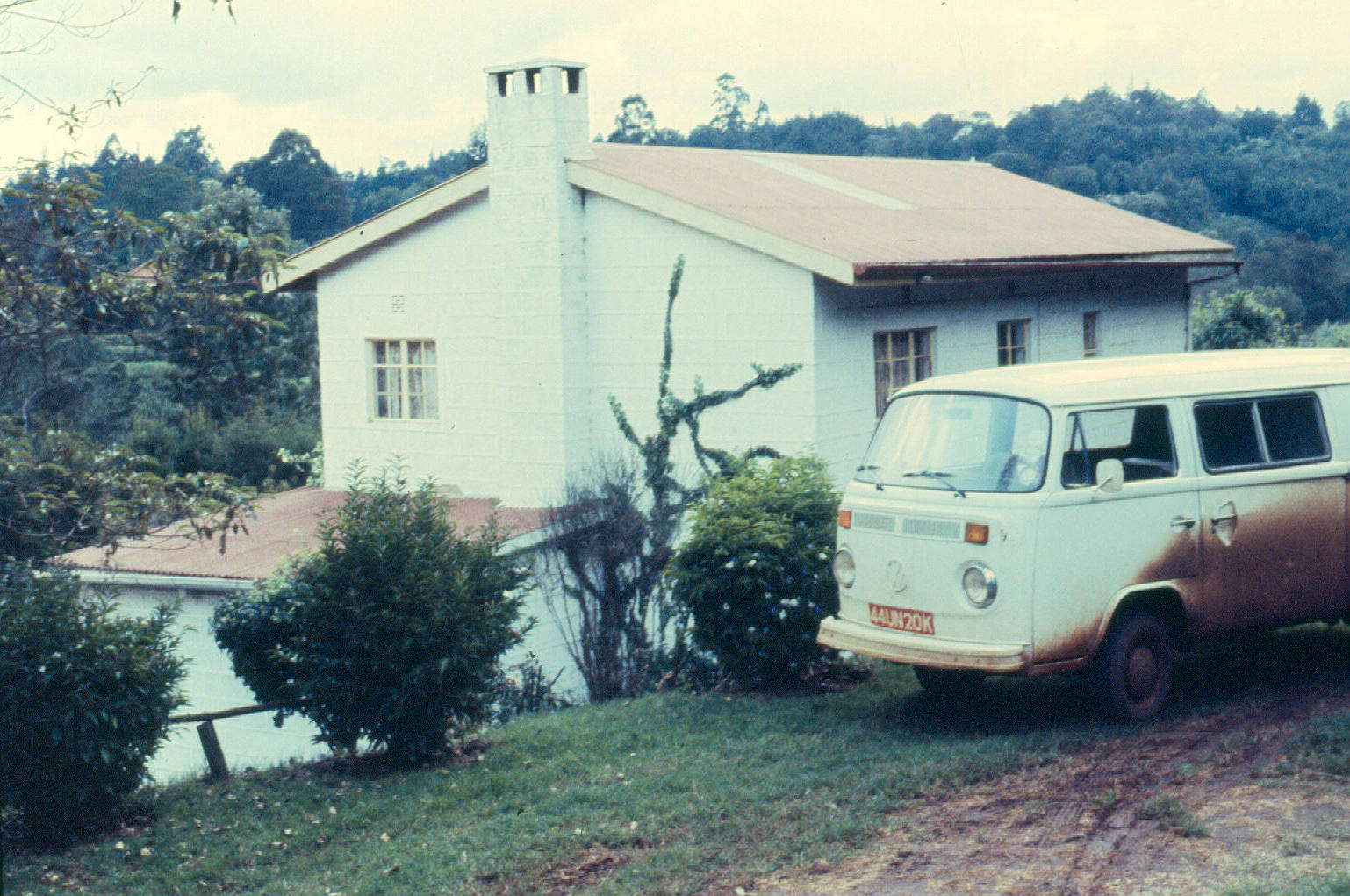
Our house at Tigoni.

Our house at Tigoni.

[1] Follows “Back to Nairobi”

[2] Ticks are killed by means of a toxic chemical known as an acaricide. The animals are normally “washed” with it but the chemical can also be applied by injection or poured on the back of the animal.

[3] In Swahili: maize meal and kale. The term “Sukuma wiki” means “push the week” in the sense that being a cheap dish, it helps to keep going.

Chicken “A la Rusinga”[1]

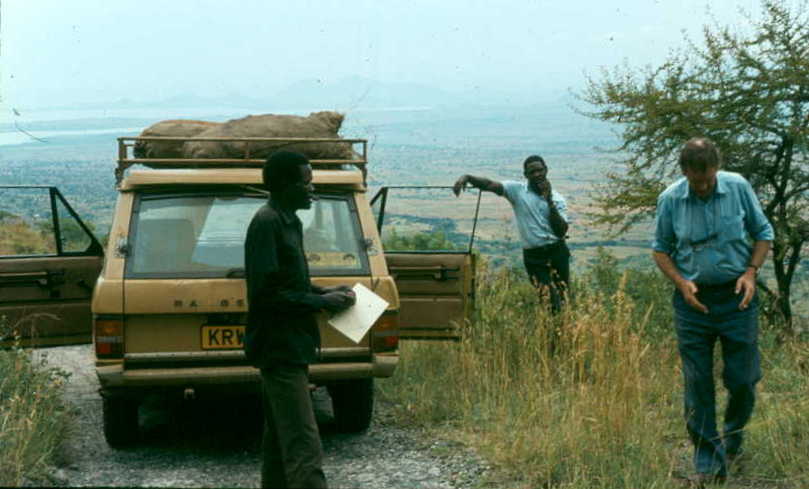
Matt, driven in a Range Rover, came to fetch me early in the morning for our rather long trip to Western Kenya. We would travel northwest, first following the Great Rift Valley then Kericho, Kisii and afterwards to Homa Bay. From the latter, already on the shores of Lake Victoria, we would proceed to Mbita Point. Rusinga Island was just across, separated by a narrow channel.

Matt enjoyed travelling. He was very cheerful while constantly giving me details of the route, Kenya, his work and other interesting facts. While going down the dramatic Kikuyu escarpment he pointed at a little chapel and said in his heavy Glaswegian accent “This road and this wee church were built by the Italian prisoners during the war” and he added “and you know, one of the guys that came from the Italian Alps longed to climb Mount Kenya, poor bugger”. He continued: “You know what he did? He organized other prisoners and secretly prepared the climb, including all necessary gear that they secretly made, escaped, climbed it and returned!” “That was good,” he said with amusement and respect for his enemy[2].

Going further down we saw Longonot, my first volcanic cone, then Suswa in the distance with its much larger caldera. As the Range Rover continued descending we spotted the blue waters of lake Naivasha with its freshwater, later lake Elementaita and finally lake Nakuru with their soda-charged waters, harbouring prolific birdlife. I made a mental note to return to this magnificent pink lake that on a more careful look revealed its secret: hundreds of thousands of flamingoes feeding on its blue green algae-rich soup. An ornithological sight difficult to match and to forget![3]

From there we continued to Kericho through extensive and manicured tea plantations that slowly became smaller areas as we moved through smallholder owned tea plots that somehow interrupted the large extensions of the commercial plantations. The area offered a great contrast between the tea and the clumps of forest that still remained, adding shady green to the yellowish green of the tea bushes. People, mainly women, were busy picking tea leaves, placing them in their back baskets while lorries were seen at points where the bulk of the tea was collected to be taken to the processing plants. We stopped at the Kericho hotel for lunch and then moved on past Kisii. Finally we entered the final dirt road towards our destination. The going was tough as the road was dusty and rough. I noted that the area got gradually more arid as we drove on towards lower altitude.

Towards Mbita Point.

Towards Mbita Point.

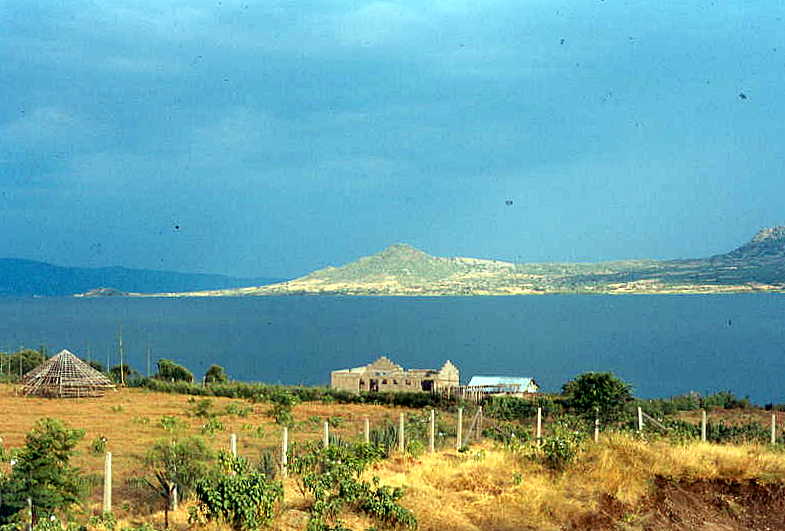
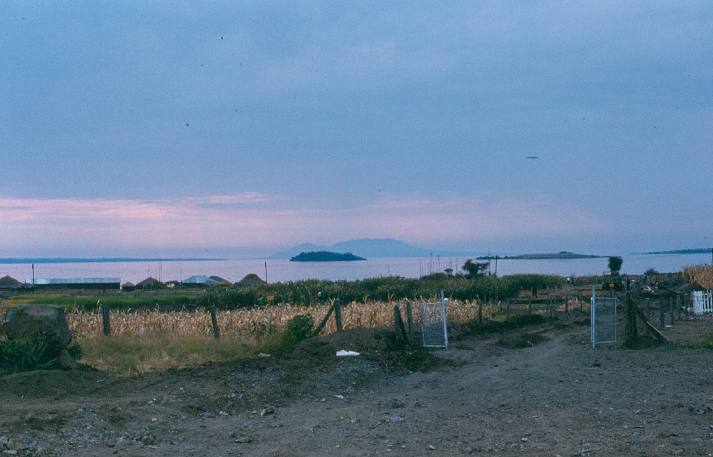
After a while, suddenly, Lake Victoria came into view. The sight did not match my expectations. It was framed by fairly bare and brownish rolling hills in a rather dry landscape that contrasted nicely with its blue water. It was humongous, a true inland sea! I thought on how the early explorers would have felt at finding the main suspect for the Nile source!

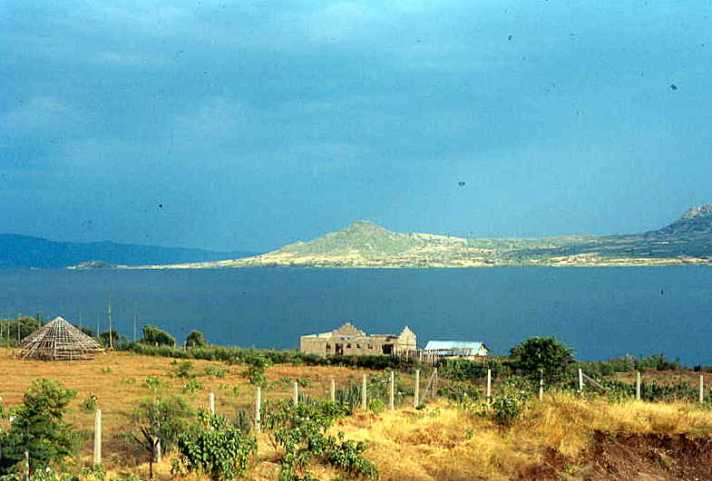
We stopped to enjoy the view of Lake Victoria in the distance.

We stopped to enjoy the view of Lake Victoria in the distance.

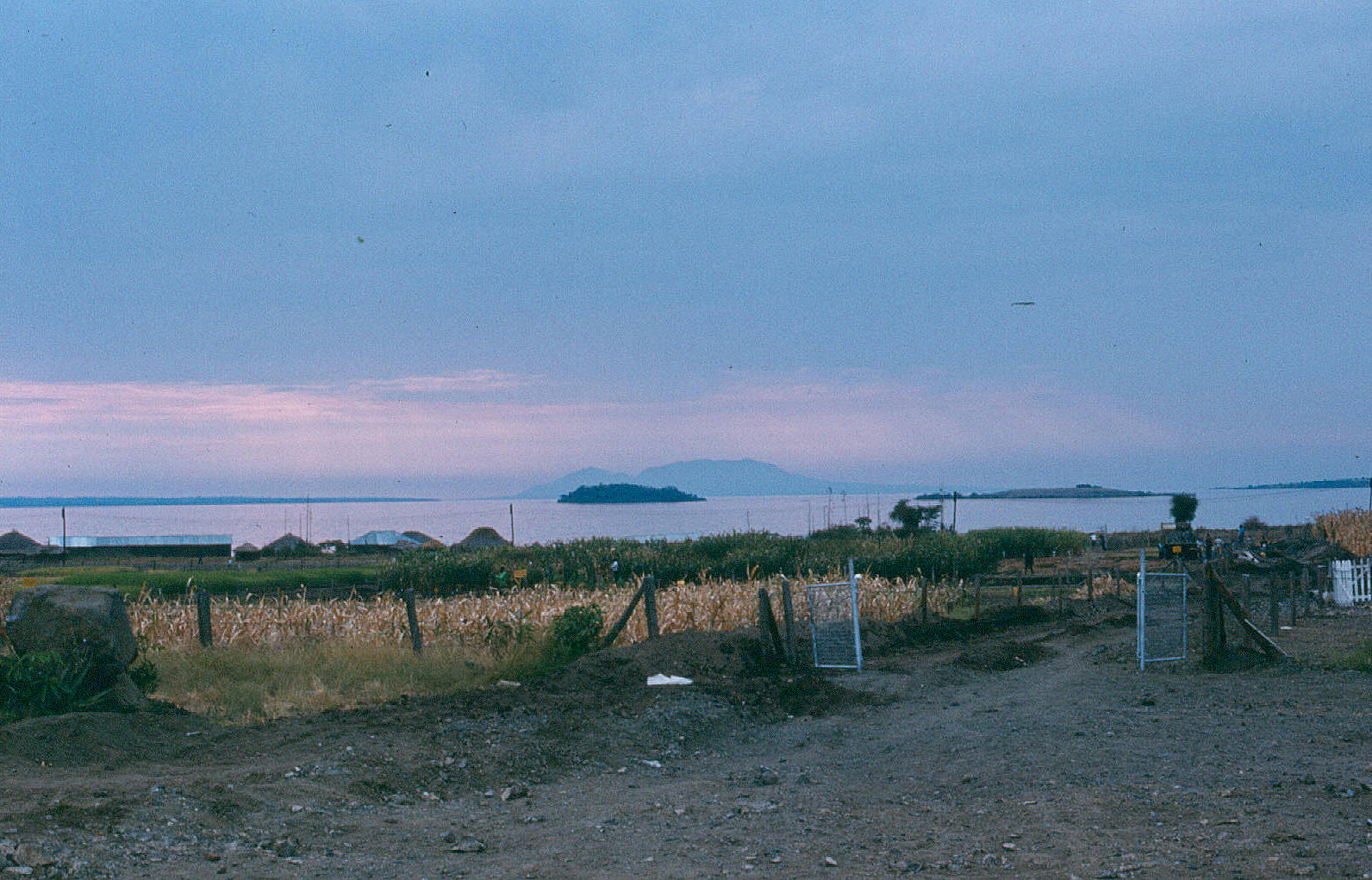
Eventually by mid afternoon we passed Homa Bay and after dustier travelling we got to Mbita Point and, just across, before my very eyes was the now “mythical” Rusinga Island! It looked beautiful by twilight and it suddenly hit me that I had come a long way from Uruguay! However, there was no time for soppiness as we needed to focus on practical issues: to find accommodation and dinner.
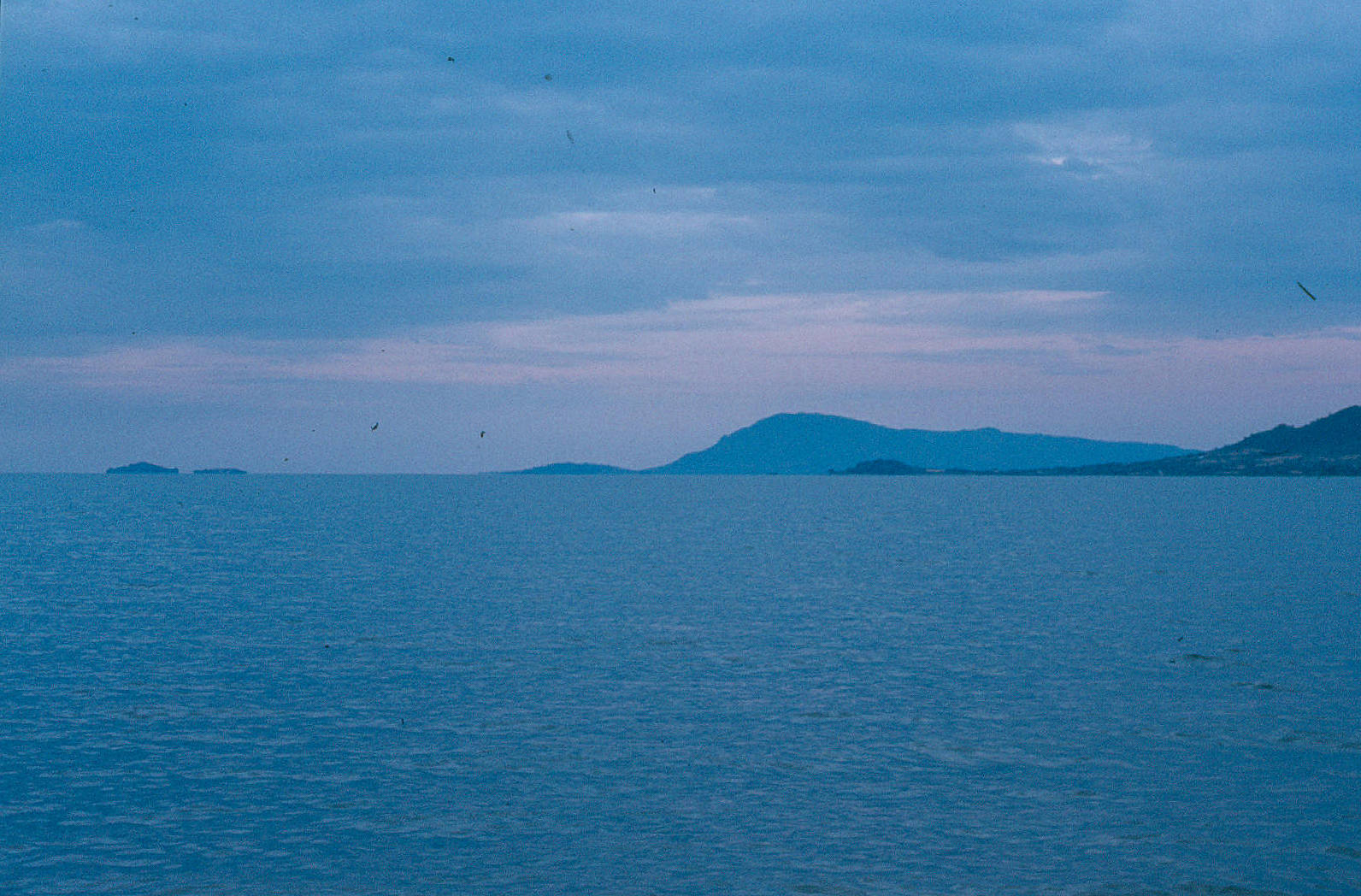
Rusinga island, across the channel.

Rusinga island, across the channel.

During the trip I had learnt -rather to my shock- that this was also Matt´s first trip to Mbita Point so he was as keen as me to see the place. The Head of the station, warned in advance of our coming, was there to welcome us. He apologized for the absence of accommodation and recommended a place for us to camp within the perimeter of the station. We agreed to meet again in the morning and got ourselves to put the tent up and unpack our belongings. While we organized the camp, Matt dispatched the Driver to find a kuku[4] and to bring it ready for cooking.
The entrance to the research station.

The entrance to the research station.

Matt had organized the food for the two nights we would spend there. I saw potatoes in the car and we had also acquired a large cabbage, bananas and charcoal on the road, as it is routine in Kenya. He had also brought a couple of sufurias[5], cooking oil, salt and pepper. Evidently food was not Matt’s main goal in life!

The tent job done, we opened the ubiquitous Tusker beers and proceeded to sit and wait for our soon-to-be dinner to arrive while contemplating the lake, peeling a few potatoes and boiling water. We spent some time discussing whether the Schistosoma[6] parasite would be present in the tap water of the station as we knew of its high prevalence in the area. As this parasite enters a person through the skin, we evaluated the risks of showering with lake water. After some discussion we agreed that we did not know but, more importantly, there was no shower on sight so the discussion ended with a hearty laugh while agreeing to continue in our dirty condition just in case. We left it at that and then changed the subject to the late Tom Mboya, a famous young politician that lived in Rusinga Island[7]. Matt told me that his house would be a good place for me to live. “Typical Matt” I though, “He has never been on the Island but he has already found me a house” but I refrained from making a comment!

We heard the return of the car and we looked at each other as we also heard a chicken! Dinner would be delayed as the Driver had difficulties to persuade farmers to part from one! Eventually, through the old trick of adding more Kenyan Schillings, had managed to buy one. It was a tough-looking country cock and, judging by the size of its talons, an elderly one! Matt was not impressed with the price paid but supervised its killing and cleaning by the Driver and myself. He then placed the whole animal in a sufuria of boiling water adding salt and pepper. The peeled potatoes were placed to boil in a separate one.
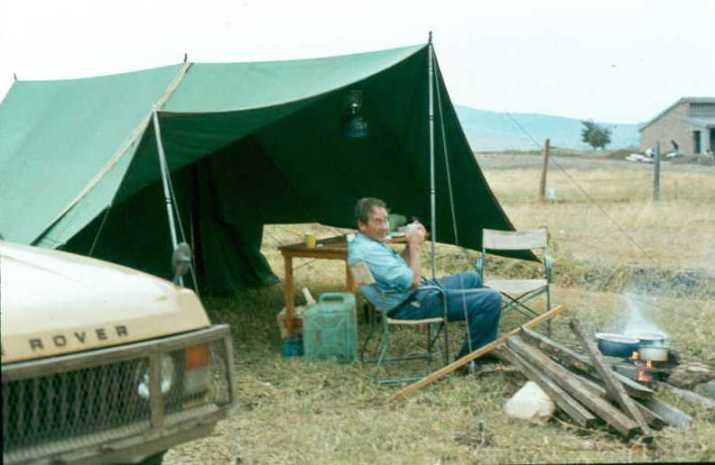
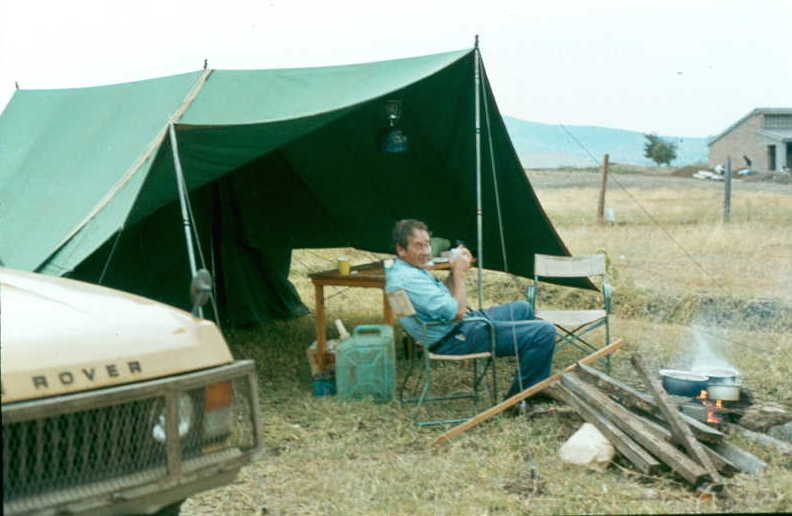
Our camp at Mbita Point. The chicken and potatoes boil while Matt relaxes.

Our camp at Mbita Point. The chicken and potatoes boil while Matt relaxes.

While we waited, time was passing when we heard “Jambo[8] pronounced in the way foreigners speak. It was a crop protection specialist from Ghana -resident at Mbita Point- that learning of our arrival had come to greet us. He knew Matt from Nairobi and he was pleased to see him again. He politely declined Matt’s invitation for dinner but he did accept a Tusker beer and stayed a while.

From him we learnt that at that time the station consisted of temporary prefabricated facilities to house staff and carry out basic laboratory work while the definitive laboratories, staff quarters, school and hostel were slowly being built. We joined him in a short walk by the lakeshore while he explained that he was there with his Dutch wife and that they had two girls aged four and six. He was a specialist on integrated crop insect control and was working on cassava, an abundant crop in the lake region.

The walk by the shore of the lake was very pleasant; the sun had already disappeared behind the hilly Rusinga Island leaving its trail of red –smoke-fed- haze with an amazing cloud frame, product of the high humidity that prevails around the lake. More basic needs suddenly interrupted our inspiring walk when Matt remembered our chicken! We rushed to our camp while our visitor, laughing at Matt’s panic, hastily departed not without inviting us for dinner on the morrow. We shouted our acceptance over our shoulders and kept running to attempt to save our dinner.

Not a chance! The water -clearly not enough in the first place- had evaporated for a while now and our dinner looked black and crusty on the bottom side and raw and very juicy on the top. The potatoes were also dried and rather burnt but had feared slightly better.

As dinner looked rather inedible and there was no way of preparing something else I braced myself for a hungry night. Conversely, Matt found the whole thing very amusing and, oblivious to its apparent inedibility, pulled bits of chicken apart and placed them on our plates together with pieces of the burnt potatoes. He passed me a plate with a Tusker and said: “Julio, welcome to Mbita” and then added with a sardonic smile: “Enjoy our Chiken a la Rusinga!” Unknown to me then, this event became our connection from then on and the anecdote came up in many conversations afterwards, helping us to connect. I must confess that I was so tired and hungry that I actually found the contrast between burnt and raw chicken meat tasty… but I think it was probably the beer that did the trick.

Dinner over, Matt got his whisky bottle from the car and, diluting it with water, started enjoying it. He cheerfully said: “Julio, I know you will be all right!” and, after a few more minutes of night contemplation, he stood up and, after wishing me good night entered the tent. I decided to follow him after brushing my teeth, still thinking of the lake water and its risks! He was already asleep when I finished undressing. Like him I passed out instantly and slept soundly until the morning, no doubt assisted by the Tuskers I have had but also by a belly filled with our newly created delicacy…

Somehow we survived the potentially severe Salmonella challenge and we were both alive in the morning. After coffee and bananas, we went to meet the Head of the station for a tour of the facilities. The fresh foundations showed the layout of the future buildings and the walls of the more advanced constructions had reached about one metre high. Clearly things were far from ready and I could detect some concern from the Head.

Despite the glaring unsuitability of the place Matt -to my surprise and growing irritation- kept insisting that I would be based here! This was music for the Head’s ears, eager to get new staff to “his” station. I kept quiet but my heart was sinking as to do all that was expected from me under these conditions would have been impossible and I saw myself having to build both house and laboratory to be able to move forward. “We have plans for Julio to stay in Tom Mboya’s house in Rusinga”, Matt repeated and the Head smiled and nodded in agreement. My concern was turning into desperation!

In accordance with what was there to see, the tour lasted a short time and we decided to visit the surrounding rural area, accompanied by a local technician to act as guide and show us the way and interpret for us. I found this much more interesting as it enabled me to have my first exchanges with the local farmers and to get a first hand feeling for their problems that, in regard to their livestock, were blatantly obvious! For the first time I saw dwarf cattle! They were the consequence of surviving trypanosomiasis and theileriosis as well as other diseases and parasites that will dispatch European cattle in days if not hours! To reduce the risk of trypanosomiasis cattle were kept tethered until late morning to protect them from the bites of the tsetse fly vectors and they were only left out to graze for literally half day.
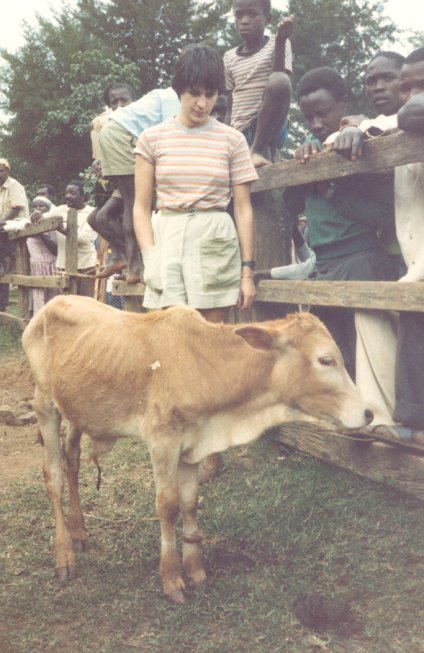
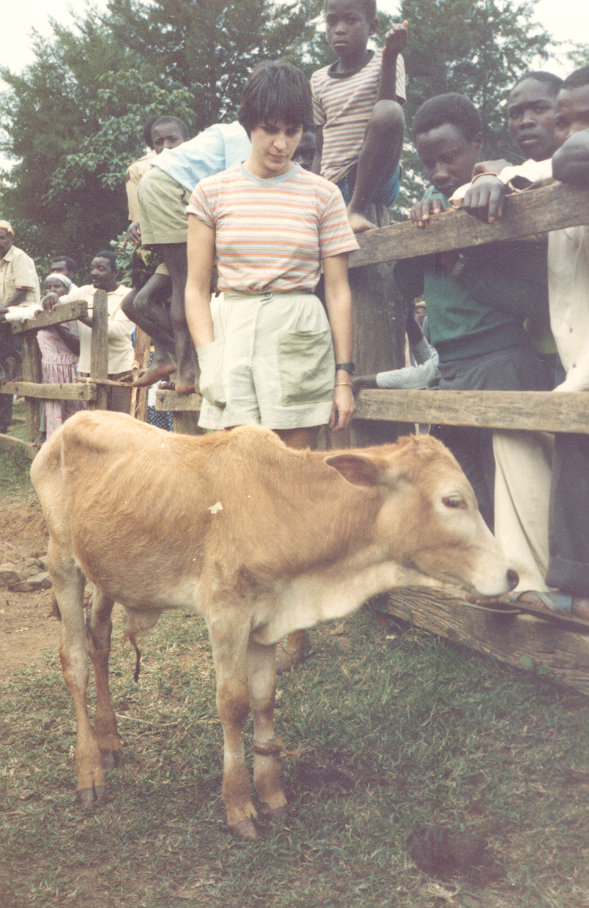
A survivor! An adult steer with my wife and members of the public!.

A survivor! An adult steer with my wife and members of the public!. Please note that this picture was taken during a subsequent trip to the area.

“What do this animals produce” I asked, realizing that it was a rather inept question before I finished asking it! I was told that they gave a calf every 18 to 24 months and that they produced meat and little milk. However, I was explained that other factors are also important in Africa as cattle are not valued only by their productivity but by their many other functions: savings, status and as a source of dowry money. I could not fail to note that they were also covered in ticks of different species! I was starting to learn about African cattle!

The field trip took us until mid afternoon as Matt kept asking to see more and spent time telling them that their productivity would increase once ICIPE developed the tick vaccine! I thought of it as a rather far-fetched promise but that was Matt. We got back from our trip dusty and sweaty but there was no chance of swimming in the lake! If you were spared by crocodile and hippos you were still likely to contract schistosomiasis and spend days under treatment with no guarantee of a full recovery. So a bucket-wash with lake water, the less risky option, is what I took. While I was on cleaning duties behind bushes Matt sat and drunk a Tusker with no intention of improving his personal hygiene and still wearing the same clothes from Nairobi!

I was ready when the Ghanaian colleague came to fetch us for dinner. His blond wife and their two lovely dark skinned and blond girls greeted us on arrival to their wooden prefabricated house. Although the house was small it transmitted a warm feeling where you could see a woman’s touch and the children’s influence. Our dinner of Nile perch was excellent and our conversation started with Matt mentioning the Chicken a la Rusinga of the night before! While having our dessert I asked how was life in Mbita Point as I was curious and needed to prepare for it. Suddenly our hostess that had remained mostly silent came to life and said bitterly: “No drinking water, no electricity, no transport and endemic cerebral malaria” and then she added with a grin of dejection: “apart from that, it is fine!”

Sensing trouble her husband tried to change the subject but she continued, getting more upset when she mentioned that they had all been sick with malaria several times, concluding her horror story. Hearing this Matt tried to comfort her saying that things were improving. However, her reaction was not what he expected and she broke down and started to cry saying finally: “Matt, please do not send Julio here with his young wife, this is no life for them!”

After this acme the lady calmed down but the situation had become very awkward and we soon decided that it was time to depart. We thanked them for their kindness and left walking in silence towards our tent, her words “this is no life for them” ringing in my ears while trying to develop a valid strategy to convince Matt -and ICIPE- of the absurd of having to stay in Mbita Point. Matt did not say a word until we got to the tent and then he only said “Good night” and went in. I sat outside for a while, still thinking. Then I decided that sleep, away from mosquitoes, was the best possible course of action and went to bed.

I heard Matt loud snuffles before I entered the tent. Until then I was the one that snored and my wife had put up with it rather stoically. This time the tables changed and I needed to continue my adjustment to Matt’s ways, this time even while he slept! I came in silently, climbed on my camp bed and closed my eyes. Matt was quiet now so I relaxed and waited for the sleep to come. Soon I started to drift off when suddenly I heard a loud grunt followed by a longish silence and then the start of a chained sequence of snorts that became louder and louder to almost be unbearable and then as suddenly as they had started stopped, before Matt breaking apart! He had gone into an apnea that I associated with his passing. I was wrong; he was alive and well and would repeat the whole shenanigans again and again during the whole night!
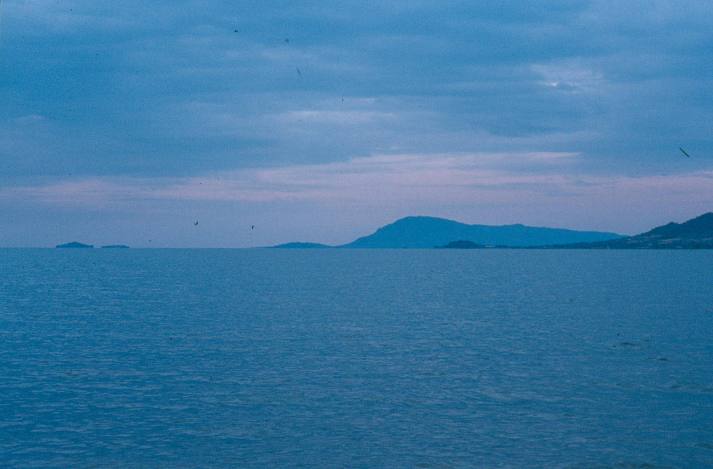
A tip of Rusinga island in the forefront (right) with Mfangano island in the back.

A tip of Rusinga island in the forefront (right) with Mfangano island in the back.

His snoring beat my most extreme ideas on the subject and I lied there with open eyes in a moral dilemma: I wanted him to stop but I had heard that waking a snoring person suddenly could be fatal. I also wanted -and needed- him to live so I decided to bite the bullet. Gradually my tiredness got the best of me and with a parting thought that it would be easier to handle his dead body in the morning rather than worrying for each of his “deaths” during the night I also joined in with my own snoring contribution. I am confident in assuring you that our combined efforts kept Rusinga Island awake for a while!

Amazingly the following morning Matt was not only alive but had also already brewed some coffee for both by the time I woke up. “Did you rest well?” he asked knowing that I had not. Then he added “Julio, we need to find another place for you to work as this place is shit!” Startled by his change of heart, all I could do was to nod gravely making a supreme effort not to laugh and shout in joy! I did silently thanked the unhappy Dutch lady, my saviour!

It was time to travel to Kilgoris to meet Alan and to decide my fate and, by en large, my future life.

[1] Follows Kenya: Friends and Foes.

[2] See Felice Benuzzi in the “Pages” section of this Blog for more details.

[3] I am told that today the lake is not what it was as the flamingoes are not there in large number anymore.

[4] Swahili for chicken.

[5] Swahili for handless saucepans.

[6] See http://www.who.int/mediacentre/factsheets/fs115/

[7] See Thomas Joseph Mboya under “Pages” for more information on him.

[8] Swahili for Hello!
Kenya: Muguga[1]

The last night at the Fairview Hotel was a good one and I enjoyed my breakfast in the garden, where I noticed that birdlife in Nairobi was prolific and that there were not only several bird species but there were also large numbers of them! I did not know their names yet, apart from the ubiquitous sparrows that I knew from Uruguay. I was amazed to see birds so tame, in particular a kind of iridescent blue ones with cinnamon chests[2] that would come to my breakfast table expecting something from me! “Cheeky ones”, I thought.
The access to the Fairview Hotel.

The access to the Fairview Hotel.

It was light by 06:00 hours and dark by 19:00 hours so, unless you covered your ears, it was impossible not to be woken up by the early loud bird chorus. As it is customary, a cup of early morning tea is brought to your room and I had asked for mine for 06:30 hs, had showered and packed my bags before I went down for breakfast to be ready for Matt’s arrival.

A Superb Starling (Lamprotornis superbus).

A Superb Starling (Lamprotornis superbus).

The hotel was good and, thankfully, economical as I did not get any perdiem as a FAO Fellow and my stipend was rather modest. I needed to watch my expenses all the time. Clearly aware of my modest income Matt had booked me at a Government’s Hostel in Muguga, known as Muguga House until more permanent accommodation could be found. Muguga was then about 30-40 minutes drive North of Nairobi, in the direction of the Uganda border.

Packing Matt’s car -a smallish Honda Civic- was trickier than expected. One of my bags filled the boot so I went straight for the back seat, only to be warned by Matt “Wait, this is my portable Office archive” I looked up and only then noted that the back seat and floor were covered with papers and publications. “I need to be in several places so I carry the work with me” said Matt while piling papers on the floor in no particular order!, until my bag fit.

We drove straight to the hostel at Muguga. The place consisted of a central building where the administration and common facilities such as dining room and bar were located and a number of two- and three-room cottages with toilet and bath, scattered throughout ample wooded grounds. Matt had already booked me a cottage so my settling in was smooth. I noticed that several cottages were occupied and wondered who my neighbours would be but I left this for later. I adverted the Manageress of the arrival of my wife in about one month and arranged to pay monthly. I also deposited some advanced money for the use of the bar and I was settled.

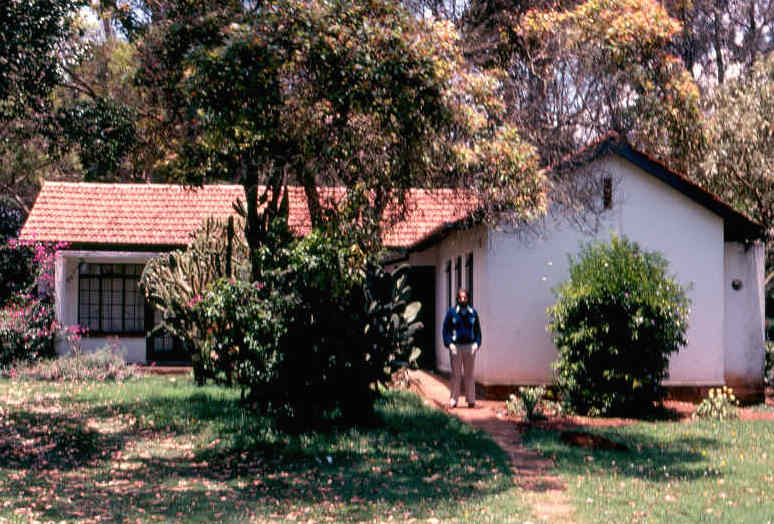
Our bungalow at Muguga House.

Our bungalow at Muguga House.

After Muguga House, we toured the very large grounds of the Kenya Agriculture Research Institute (KARI) where we saw the various establishments based there such as the Kenya Veterinary Research Institute (KEVRI) and the Kenya Trypanosomosis Research Institute (KETRI). Matt pointed out the ICIPE’s “laboratory” at KEVRI. To my eyes it looked like a very small barn but I kept the comments to myself.

We did not find any of our prospective collaborators as most were on leave and others outside the Institute so Matt decided that lunch would be at ILRAD’s restaurant, so we drove back to Kabete, about half way between Muguga and Nairobi. While KARI impressed me as a formerly beautiful place built by colonial Britain and getting slowly worn down by lack of funding and maintenance since Kenya’s independence, ILRAD belonged to another planet! It was a modern and beautifully set campus with manicured lawns and all possible facilities to perform research on livestock diseases. To me it looked like a grand place tailored for high-powered research with several state of the art laboratories and all the necessary equipment that scientific research would need. All of this was nestled in a lovely hilly area where the central manicured lawns and woods were surrounded by grasslands where lovely zebu cattle grazed. “Julio, welcome to ILRAD” said Matt while finding a place to park among the abundant 4WDs and other expensive cars. I could not believe my eyes!

While walking towards the canteen Matt explained that ILRAD was created in 197… to solve two problems Trypanosomosis and Theileriosis. “A difficult job” said Matt and added “I know lots of people here and we will meet a few over lunch”. The restaurant followed the style of a university campus restaurant and it was very busy. The diners were of mixed race and different nationalities. I was amazed, as Ross seemed to know everybody. He walked straight to a large table at a corner and introduced me to the Director General and his Argentinian born wife. I also met many other people that day. The place was a hive of activity and the closest resemblance to a place I had been was the University of East Anglia in the UK while I learnt English prior to my MSc studies in North Wales. It was both stimulating and rather intimidating but, above all, totally unexpected!

After lunch we toured the laboratories and talked to even more researchers about what they were doing until Matt decided that we had done enough and it was time to leave. He invited me to pass by his house in Tigoni, North of Nairobi, for a cup of tea. Matt’s invitations were more decisions than invitations so I was not given a chance to refuse, despite being rather tired by then!

It was a worthy visit as another huge surprise awaited me. His house was a lovely British-style house with a tiled roof and stonewalls, located in beautiful woodlands. A stream ran through the large grounds and this was the source of water for the trout ponds being developed. I could see at least three from the house.

Although she was not informed of our visit[3] his wife gracefully invited us for tea and cake in the lovely garden. Afterwards Matt gave me a guided tour of the trout dams with two of his three young sons. The third one was busy becoming a plane pilot in Nairobi Wilson Airport. It was an impressive development as three dams were being built and there was a lot of activity. Clearly Matt was serious about his trout! Afterwards it was his wife’s turn to show me their flock of African Gray parrots. About eight young parrots were kept in a large enclosure. They were young fledglings when seized as part of an illegal shipment at Jomo Kenyatta Airport. “They were in bad condition when we got them but we were lucky to get them all back to good health” said his wife, proud of her achievement. She also informed me that once fully grown they would be returned to the Kenya Society for the Protection of Animals for distribution.

Matt somehow interrupted the “parrot tour” to bring me back to his verandah as he wished to show me something. I followed him until he stopped facing the dams. “Julio, this has been my dream since I left Scotland” he said and then added “I will catch them from here when I retire and cannot walk anymore” he said, mimicking the fly rod movement from his verandah and laughing heartedly. It was clear that Matt and family enjoyed a very good standard of living that, in my ignorance, I did not expect to find in Africa!

The more I listened to Matt the more I gathered that he was a man with many dreams and ideas both private and professional. While the trout dams being built belonged to the former, the achievement of an immunization method against ECF was clearly part of a realized professional dream. A more recent one was the development of the vaccine against ticks and he talked about it as if it was something really achievable. However, it was clear that his veterinarian’s heart was with ECF work while the tick work -mine included- was more of a necessity for him, despite his infectious enthusiasm.

I continued listening to Matt for the rest of the day and it helped me to get an initial understanding of the persona as well as the worker. It was clear that as someone who got to the top of his working area, he had made himself a few enemies, both black and white. Realizing that I would have to share them I listened carefully. As most people in Kenya at the time, he had a rather colonial view of racial relations! I learnt that he had a long-term rivalry with a Senior Government veterinarian as well as with other British colleagues. He had a clear dislike for one and described his face as looking like “a weasel peering out of a bear’s ass”. I did not really understand what that meant until later!

We drove back to Muguga at the end of the day, still talking and making future plans. We agreed to meet again in a couple of days to carry out a few protocol visits: Government, FAO and ICIPE to start with.

I got back just in time for dinner and to get to know some of my future housemates. There were several Kenyans from up country, Ugandans and the ubiquitous British. I shared the table with some of them. Food was simple (some roasted, boiled or curried meat with rice and occasionally salads), soon to get boring, particularly the boiled cape gooseberries and custard dessert that I eventually learnt would be a lunch and dinner ending feature forever!

More interesting was the after dinner conversation held in the main hall. Most of the guests were long-term and worked in different institutions at KARI. There were mainly agronomists, biologists, foresters and veterinarians and the topics of conversation were Kenyan politics, sports and comments about life in Muguga House. It was entertaining and interesting as well as informative and some of the friends I made there remain friends to this very day!


[1] Follows “Kenya – The Beginnings”.

[2] Later I identified them as Superb Starlings, a common bird in East Africa.

[3] No cell phones then!