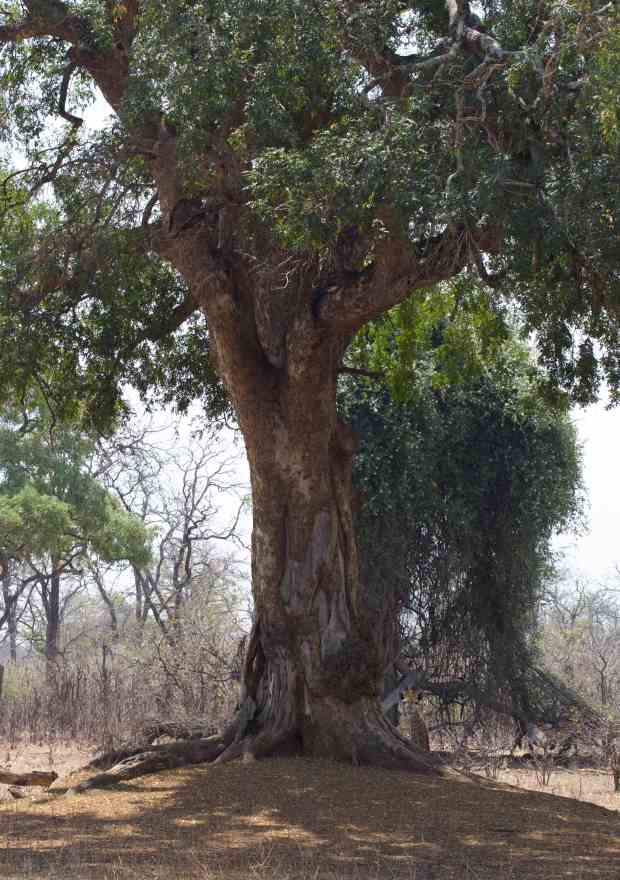
This curious “beast” was spotted while driving around in the Kruger National Park. This is what we saw. Can you see it also?
?
?
?
?
?
?
?
?
?
?
?
Here it is, in case you failed…
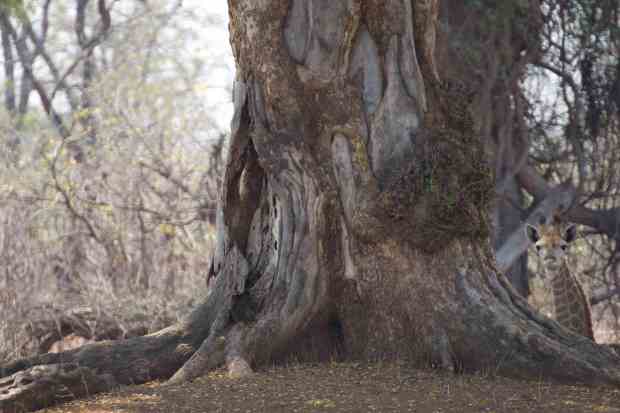
This curious “beast” was spotted while driving around in the Kruger National Park. This is what we saw. Can you see it also?
?
?
?
?
?
?
?
?
?
?
?
Here it is, in case you failed…
Although the hamerkop (Scopus umbretta) is the sole member of the genus, it is now believed that it has genetic similarities that are closer to the pelicans and shoebill stork than other water birds.
We find these true Cinderella of the swamps extremely interesting despite being rather common and overshadowed by the most colourful species. Perhaps their better known feature is their huge nests that take them 2 to 4 months to complete and that are often used by other birds as well.
I have mentioned that these birds frequently visit our former pool (now a water reservoir) in Harare and spending long hours stalking the African clawed frogs [1]. I was intrigued by how the frogs were caught as I always heard a splash but, by the time I looked, the frog had already been caught.
A couple of years ago, while camping at Shumba in Hwange National Park [2] I had the chance of seeing a hamerkop hovering over the dam there but it was evening and I could not watch it long enough to find out whether it was fishing or on some other kind of display so the mystery continued.
Luckily, during our visit to the Kruger National Park early in October we were stationed at a water pond waiting for large game to come to drink and, during the time, we were entertained by a couple of hamerkop that were feeding and we could watch them at leisure and resolve the issue.
Each bird repeated a routine that involved landing on shore and, after a time that went from a few seconds to a couple of minutes of walking about, take off and fly very slowly over the water with dangling feet and slow wing beats that would keep it just above it. During the hovering its feet sometimes touched the water and it occasionally would drag them on the water surface.
While we were there the bird was performing this routine constantly and our comment was that it must be effective for the bird to spend all this flying energy on this, apparently, futile activity. The answer to our questions came after about an hour when the bird suddenly landed in the water with feet and beak and emerged victorious with a frog!
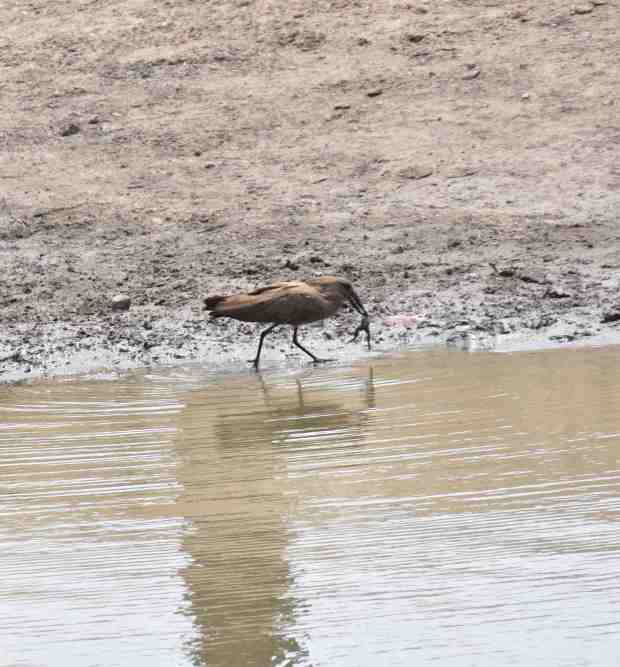
It then took off from the water and proceeded to eat it. Unluckily, after its success the bird landed on the opposite shore of the dam so I could not even guess at the identity of the frog and only managed poor pictures.
[1] See: https://bushsnobinafrica.wordpress.com/2015/09/05/garden-and-gadgets/
[2] See: https://bushsnobinafrica.wordpress.com/2014/10/31/watched-at-shumba/
You will recall that on 20 August 2014 I published a post titled “A tusk task” (https://bushsnobinafrica.wordpress.com/2014/08/20/a-tusk-task-2/) where I presented the finding of ab elephant bull that, as far as I could tell, had not been identified before. I called this animal the “Balalala tusker” as we saw it near the Balalala area at Kruger National Park.
A month later in “Unraveling the tusker mystery” (https://bushsnobinafrica.wordpress.com/2014/09/21/unraveling-the-tusker-mystery/). I reported that I got confirmation that what we had seen was indeed a new tusker that “will definitely escalate him to the top of the list when the time for the naming review comes and hopefully at that time he will be confirmed as a new bull and named“.
The naming process took a while during which I kept asking the Emerging Tuskers Project (ETP) of the Letaba Elephant Hall of the Kruger National Park for progress but I had no news for over two years. When I was starting to lose hope, on 28 June 2017, I received an e-mail from the ETP that I reproduce below.
Dear Julio,
I am sure you are convinced by now I had forgotten you. I am sorry this process took so long… I finally got the media release and approvals done and I can formally tell you now that your bull is named Matlakusa.
It proved quiet an interesting story in the end, as once we had identified your bull as a new bull, we noted that with one of our other new bulls some of the submissions characteristics matched your bull better and we actually managed to split these sightings far more accurately after the great series of images you and another contributor provided so it actually helped link the two new bulls and discover a completely new bull and a new area for him as well.
Below is the link to the website as well as the info for Matlakusa (this is a summary of the info that is on file with the project), if you have any further questions please do not hesitate to contact me.
https://www.sanparks.org/parks/kruger/elephants/tuskers/emerging.php#matlakusa
Origin of Name: ‘Matlakusa’ from tlakusa, in Tsonga meaning to ‘raise, lift up’, this is a large open pan and bore-hole, alongside the eastern border, southeast of Malonga in the Kruger National Park and links to this bull’s large home range.
Range: Northern and Far Northern KNP.
Special Features: This bull’s ivory closely resembles that of Xindzulundzulu, that it is fairly symmetrical, straight and widely splayed with a shallow curve from a side profile. The left ear holds the defining characteristics that separate these two bulls, there is a R5.00 sized hole in the tip of the lobe as well as an area of damaged cartilage at the top give a large v-shaped ‘collapse’ in the ear. A very small u-shaped notch and two R0.20 holes are visible on the middle of the lobe but only at close inspection and with the ears extended. The right earlobe had a R0.50 sized hole towards the bottom of the lobe that has recently been torn and is now a u-shaped notch with a small hole towards the inner lobe above this. Other than this the lobe is fairly clean edged. A small protrusion of skin is visible on the trunk at the top adjacent the left tusk. Visible from a side profile is a growth on the left foreleg behind the leg just above the joint.
General: Initial images of this bull from Joël and Di Roerig were identified as Xindzulundzulu due to his ivory shape. Later in 2014 a full series of images submitted by Julio de Castro [1] between Shingwedzi and Balalala created a dilemma as at the time as Xindzulundulu was known to only be local to Shingwedzi and a new bull was suspected. Additional images by regular contributor Frans van Achterbergh submitted showing his left and right side allowed the defining characteristic’s to be seen and to be able to determine that there were in fact two separate bulls. This revelation allowed two previous sightings one of which was by Ian & Deirdre Outram and the other by Forum member Lion Queen both in 2012 that were both previously thought to be Xindzulundzulu but could not be confirmed as the locations did not make sense and defining characteristics in these images were not very clear. However the receipt of the 2014 submission with clearer images could confirm these identifications. Several other images placed with Xindzulundzulu’s monitoring file could now also be separated out as being those of Matlakusa and in 2015/6 it was decided that sightings of him were sufficient to name the bull confirming his status.
Kind Regards
Kirsty Redman, Interpretive Officer, Nxanatseni Region, Kruger National Park, South African National Parks.
As you can imagine we are delighted that our contribution assisted the ETP to identify Matlakusa and separate it from Xindzulundzulu as a new tusker.

Matlakusa showing off its ivory!
We look forward to find Matlakusa again during our next safari to the KNP next week. We hope that Matlakusa will continue to live its peaceful life for many years to come and that its ivory stays with it, where it belongs!
[1] the Bushsnob.
It is clear that the more places you see, the more you learn and the more you realize the little you know! Enough of philosophical exertions and focus of the post, I hear you thinking!
Climbing Wrights’s tower to look at the Mwenezi river below spurred my curiosity about who Mr. Wright was but also about the general area where the Gonarezhou[1] National Park is located. The Great Limpopo Trans-frontier Park and Conservation Area was created on 9 December 2002. It took another four years for parts of the fence separating Limpopo in Mozambique and the Kruger national parks to be removed allowing important movement of game across the hitherto fenced area. Things move slowly in conservation!
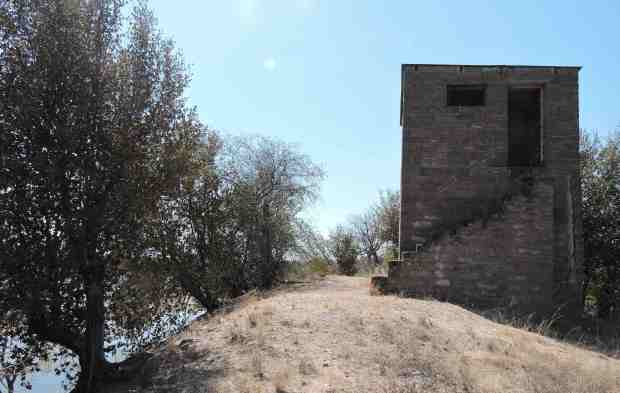
Wright’s tower.

The sign in Wright’s tower.
Although in April 2014, Mozambique and South Africa signed a memorandum of understanding on biodiversity conservation and management of the area, particularly addressing rhino poaching in the Great Limpopo area, Gonarezhou is lagging behind in this integration. There are, however, fresh hopes that the unique agreement, signed in 2016, between the Frankfurt Zoological Society and the Zimbabwe Parks and Wildlife Management Authority to form the Gonarezhou Conservation Trust may facilitate further integration.
Allan Wright was a district Commissioner in Nuanetsi, the District where Gonarezhou is. He arrived to the area in 1958 and declared himself to be an “ardent conservationist”. After a quick exploration of the topography, soils and plants found in the area he was convinced that it was “…From and agricultural point of view the whole area was in the lowest category, almost a wasteland…”.
So, the plans to divide it into farms for African farmers were gradually scrapped and his intentions made clear when he proclaimed:
“Before me, as far as the eye could see, was the vast, empty Gonakudzingwa Purchase Area – ’empty’ only in the human context for it teemed with animal life … the great wilderness looked mysterious, haze blue, inviting. What a heritage! What a wonderful national park this south-east corner of Rhodesia would make.”[2]
So, Mr. Wright managed to persuade the then Government of Rhodesia not only to spare the area from farming but also to give him funds to develop it. He describes his time at Nuanetsi in two books [3]. Mr. Wright’s efforts survived the years to come after his retirement and eventually crystalized in the creation of the Gonarezhou National Park in 1975.
Considering the Gonarezhou in the larger context of the Great Limpopo Trans-frontier Park and Conservation Area, the point where the borders of Mozambique, South Africa and Zimbabwe meet is known as Crook’s Corner. Suspecting that the name had its reasons, I investigate it further and this lead to the unraveling of some interesting facts!
It was because of its “tri-national” characteristic that Crook’s Corner attracted a number of outlaws that found the facility of moving among the three countries very advantageous. Apparently, the exact location of Crook’s Corner is on an island very close to the place where the Luvuvhu River flows into the Limpopo, near to the Pafuri area of the Kruger National Park.
Although there were other brigands, Stephanus Cecil Rutgert Barnard placed it in the world map. Barnard sought refuge there from his illegal activities related to hunting and poaching, two activities very difficult to tell apart in the 1900’s. “The one who swaggers as he walks” that is what his Shangaan nickname Bvekenya meant, arrived there in 1910.
Bvekenya’s derived his living from hunting and or poaching mainly elephants for ivory as well as illegally recruiting labour for the mines (known as blackbirding) as well as trading animal skins. It was a tough life, persecuted by police and exposed to malaria! Bvekenya functioned illegally over vast large tracts of Portuguese East Africa and Rhodesia, successfully running his ivory past the law.
It seems that Bvekenya was a bit of an oddball, to put it mildly and, during the twenty years that he operated in the region, based at Makhuleke, he carried out a number of interesting exploits, from taming a herd of eland for milking to praising lose the beacon indicating the frontier so that he could move it to “migrate” his camp to a different country according to which one was after him! A larger than life character that T.V. Bulpin immortalized in his book “The Ivory Trail” [4].
More amazing still were Bvekenya’s conservation ideas that led him to suggest the creation of a Trans-frontier park at that time (1900!)! It would take over one hundred years before the politicians in the various relevant Governments agreed on the issue and it is still unfinished!
Bvekenya’s hunting ground included the present Gonarezhou National Park. In that general area he shot a number of large elephants for their ivory. It is believed that he was not a careless hunter and that, before killing an animal, he would check the dung with his Shangaan trackers to ascertain the age of their quarry. Only elephants that had passed their prime would be shot and then nothing was wasted as the meat would be consumed by the local people.
Despite his hunting experience Bvekenya was mesmerized by the sight of a particular animal known as “taller than the trees” in the local Zulu language: Dhlulamithi! Bvekenya met this very large tusker while hunting somewhere in Gonarezhou or nearby, at a muddy pan. The bull elephant towered over the large herd he was with. The ivory that Dhlulamithi carried touched the ground while it walked, leaving grooves in the sand behind its path! Bvekenya attempted a shot at the giant but, luckily for Dhlulamithi, a younger bull that walked in front of it at the fatal moment was hit and Dhlulamithi got away unscathed.
Bvekenya never forgot Dhlulamithi and, while still hunting and or poaching other animals, he kept following it. It took Bvekenya many years to find it again and when he did, towards 1929, he had it in his rifle sights but did not shoot the animal exclaiming “Let it live”.
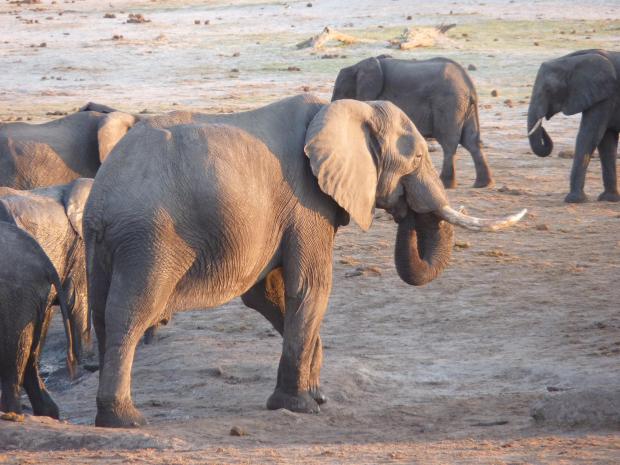
Tusk size and shape varies with the areas. This bull in Hwange National Park carries thick but rather short tusks.
Whether this took place or not is an issue of debate as other chroniclers claimed that Bvekenya -an inveterate commercial ivory trader- would not have missed such a tusker. This thesis is supported by the appearance in 1932 -a few years after Bvekenya ‘s retirement- of two humongous tusks that were claimed to be Dhlulamithi ‘s that were eventually auctioned in London. The tusks weighed 73 and 73.5 kg and their origin is unclear. They are meant to be now at a London Museum.
Luckily, there still are elephants carrying heavy ivory roaming in the Kruger National Park and, with patience they can be found at the various watering points, particularly in the Northern part of the park [4]. Whenever I see one of these colossuses I hope that Dhlulamithi ‘s genes are still present in them!
These two “friends” were leaving one of the waterholes in the north of the Kruger National Park.
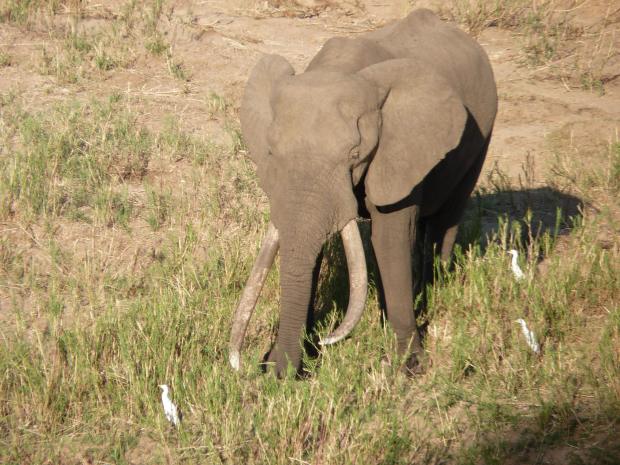
Masthulele seen at the Letaba river (Kruger National Park), together with the tusker below, the largest tuskers I have seen so far.
If lucky, next time I see these colossuses I will remember this story and hope that what I see still carries Dhlulamithi’s genes that will be passed to future generations.
The above, seen by the bushsnob in 2014, is no longer an unknown tusker! (In this regard, see: https://bushsnobinafrica.wordpress.com/2014/08/20/a-tusk-task-2/ and https://bushsnobinafrica.wordpress.com/2014/09/21/unraveling-the-tusker-mystery/ and the next post coming soon!)
[1] “Place of many elephants” is the Shona language is the more accepted meaning of Gonarezhou. It is also translated less often as “sacred place of the elephants” or “elephant’s tusk”.
[2] Quoted from from Wolmer, W. (2007). From Wilderness Vision to Farm Invasions. Conservation & Development in Zimbabwe Southeast Lowveld. James Currey, Oxford. 247p.
[3] Wright, A. (1972). Valley of the ironwoods: A personal record of ten years served as District Commissioner in Rhodesia’s largest administrative area, Nuanetsi, in the south-eastern Lowveld (unknown publisher) and Wright, A. (1976). Grey Ghosts at Buffalo Bend, Galaxie Press. Both books are out of print.
[4] Bulpin, T.V. (2011). The Ivory Trail. Protea BoekhuisEds., 4 edition. 240p.
Postcript: Apart from T.V. Bulpin’s The Ivory Trail book I recommend to visit the following links that will provide you with more detail, if interested:
https://www.africahunting.com/threads/the-legend-of-dhlulamithi.15191/
http://www.pendukasafaris.com/history/remembering-bvekenya-country-life-february-2003/
Back to Africa for a while while I develop another story from “Out of Africa”. Poor internet connection and farm work… are attempting against my productivity.
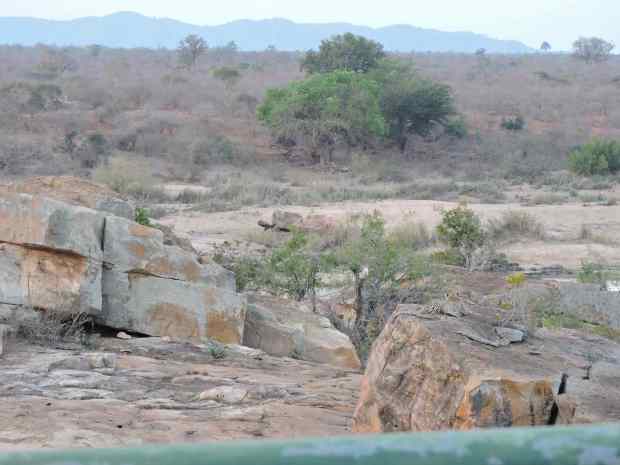
This is not a difficult “Spot the Beast” but I thought it is a nice situation to challenge your power of observation. I would be worried if you cannot find it within the first 10 seconds…
Here it is:
?
?
?
?
?
?
I hope you agree with me that she was not only beautiful but well placed to see what was happening!
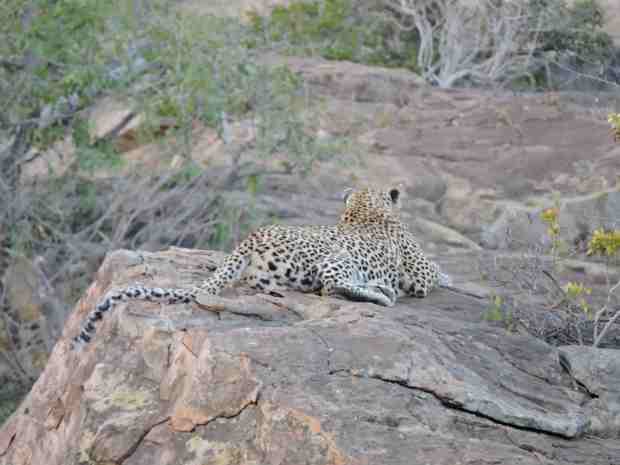
A few more pictures of her:
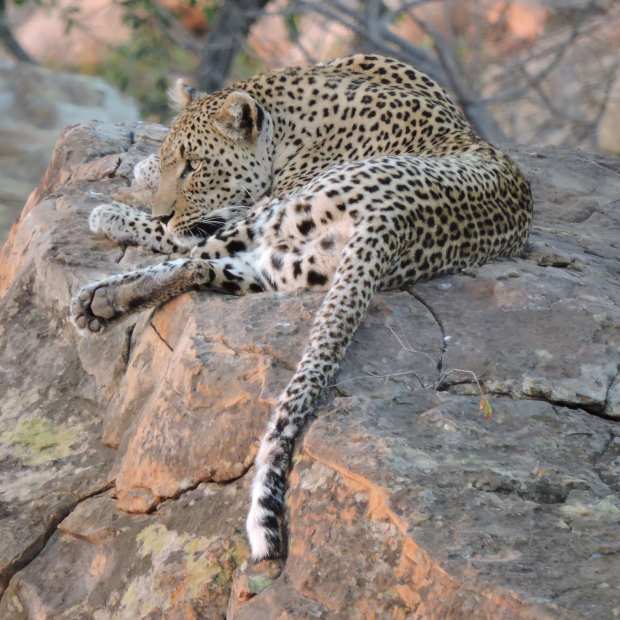
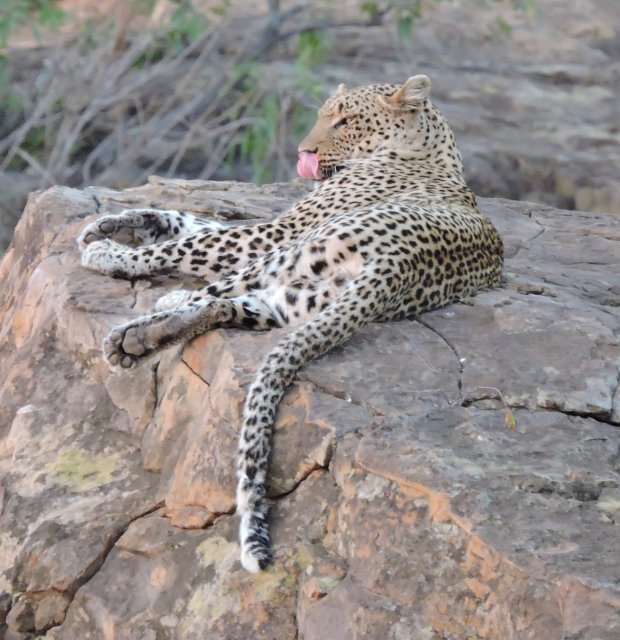
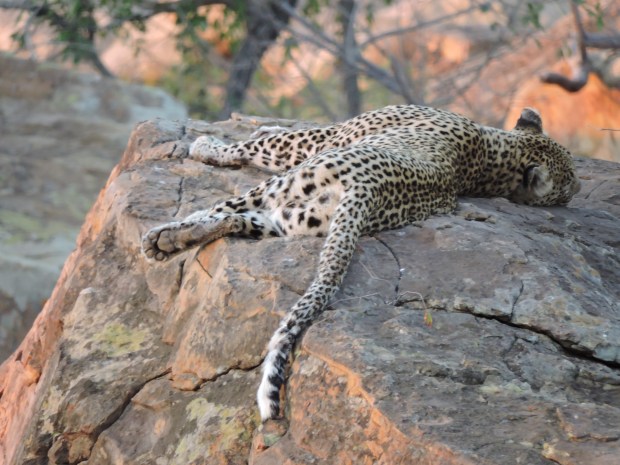
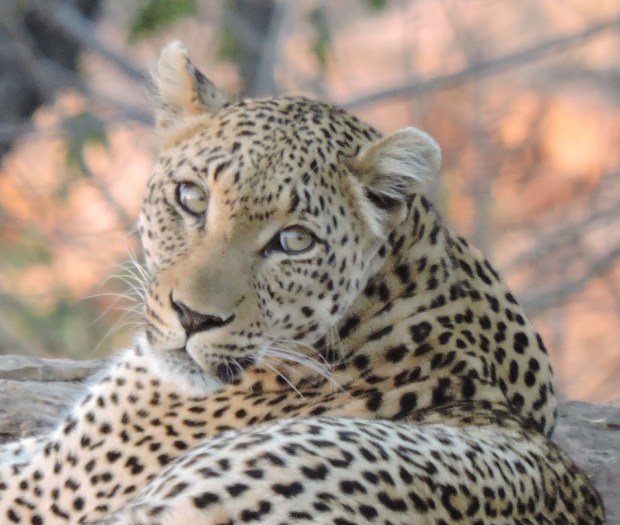
While in Kruger National Park we stopped at the Nkhulu picnic site in the Southern part of the park to have a break and stretch our legs. The place is adjacent to a small river that was still having some water. This fact made the place attractive for birds and mammals alike.
As soon as we walked in we noticed great excitement as people were congregated by the river edge watching the opposite margin. We soon discovered the reason for such a hoo-ha: a pair of leopards were having a stroll! We postponed our coffee for a while and watched the magnificent animals until they moved off into the thicket. Now, that is an arrival!
We did have our coffee among the excitement that gradually faded but that was somehow renewed every time we were raided by the baboons that were also numerous in the site and a pest throughout the park nowadays. After a while of fending off monkeys and with the image of the leopards still in our minds, it was time to resume our drive so we returned to the car park. Another surprise awaited us.
A car offering “Environmental Remediation” was parked near ours. My first thought was that the Park authorities had already sought a solution to prevent the future problems that the Park would face because of the drought. The knowledge that such an alternative existed made me also forget my concerns about the future of the world while realizing that I had been wrong all along!
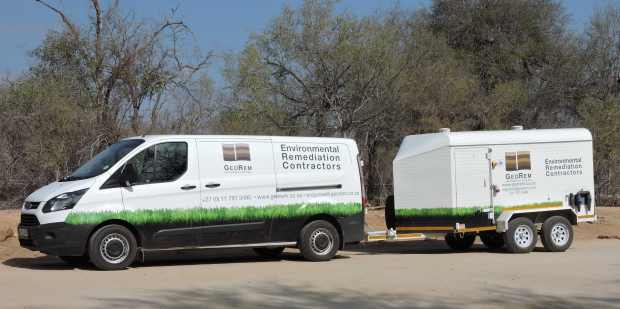
Regrettably and almost immediately my common sense brought me down to earth on that to clean up the latter we need more than that! As I have seen septic tank-emptying tankers labeled under some weird names such as “Honey sucker” I thought that it was probably another one. In any case, I soon forgot about the unusual find!
Once at home, I Googled the company and, to set the record straight, they define their activities as: “… a specialist environmental contracting service, providing assistance to consultants and industry in the monitoring, management and remediation of contaminated land and water throughout the African Continent.”[1]
So, they would not be able to solve the earth’s environmental degradation but I am sure that they provide useful services in their field.
[1] See: http://www.georem.co.za/index.html
Having stressed the negative consequences of a drought like the one the Kruger National Park is going through in the previous post (3/10/16) it is now the time to mention one of the positive aspects of this situation for the game-spotter.
The lack of grass transformed the thicket into a very dry wooded savannah. In addition, the riverine areas that usually offer some cover to herbivores were now denuded from a lot of the vegetation so there was a lot of visibility. Most animals were near the river as most need to drink regularly so most of the “action” took place there.
Even without the assistance of the existing apps[1] we were able to find lions and leopards in numbers that are usually unthinkable, even for my wife. 11 September 2016 will go down in our bush lore as the day of the cats! In the morning, during a 20 km drive we spotted three different groups of lions, two separate leopards on trees and two walking by the river! We almost did not stop when we found a hyena walking by the road! As if this would not have been enough, after (my) siesta time, we revisited the nearby causeway over the Lower Sabie River to see if anything remained of the zebra being fed on by crocodiles of the day before.[2]
We crossed the bridge but found no trace of the zebra. As usual, there were a few cars on the bridge so we decided to turn around and, after re-crossing the bridge, to do a short drive following the river to enjoy the evening. By the time I had turned the car around all other vehicles had gone and we were on the bridge on our own, a rare occurrence.
As the bridge is narrow, I was paying attention to my driving when, just before ending our crossing, I heard my wife saying, “Look!” A leopard had just appeared out of nowhere on the shore of the river. I switched off the engine and we both grabbed cameras and took the pictures we could as the animal did not stop much and never took notice of our presence while it crossed the bridge just in front of us!
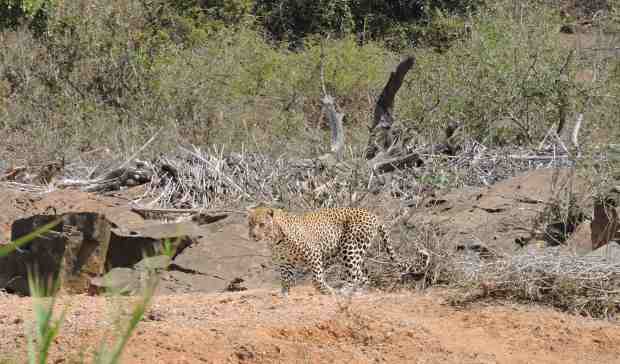
The first picture of the leopard.
It was a large male and its right hind leg was apparently painful as it was limping.
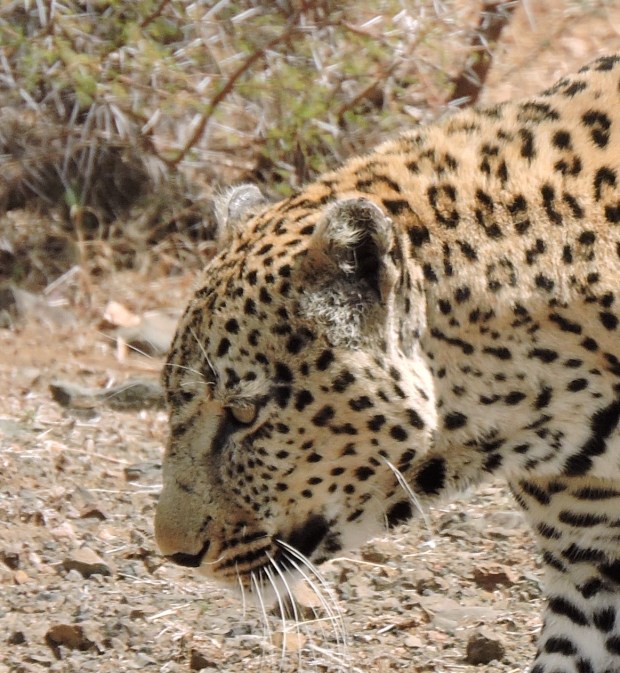
The sighting did not last more than three minutes and, by the time a few vehicles arrived to the bridge (that we were totally blocking), the leopard had moved off and it was hardly visible, although it had been spotted by others! I decided to move on and “share” our find only to realize that the car was dead! Suspecting a disconnected battery terminal I got out of the car to fix it. Although it did not take much time to get the car running again, by the time we moved off, the leopard had already disappeared and I was probably the least popular driver in the park!
Although the 11th was our most productive day, over the next couple of days we continued to find predators. We also continued to have problems with our battery! So, when I needed to get out of the car to fix it next to a group of lions, we decided that it was time to take the car to Skukuza for a long-lasting solution! This we got from one the very helpful camp mechanics that, with the right spanner, tightened the nuts and ended the problem for good.
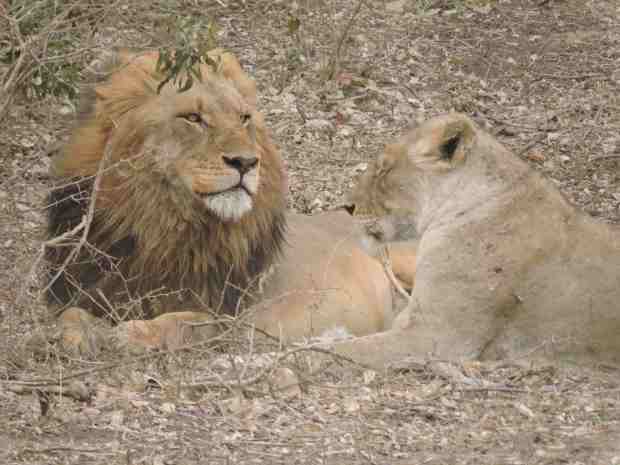
Luckily the lions were more interested in their romance than in the bushsnob fixing the battery!
Feeling now safer, on the way back to Lower Sabie Camp my wife (who else?), continued to excel and spotted more cats! The first sighting took place after we both noticed a few vultures on the ground by the Lower Sabie River. While I was watching them my wife noted that the cause was a buffalo kill where two magnificent male lions were feeding! Frankly, I would not have seen them.


As road speed limits and gate closing times in the park are very strict, we decided that we needed to start our journey back to arrive to our camp in time. Our planned timely arrival only lasted a few kilometres, until my wife spotted yet another leopard!
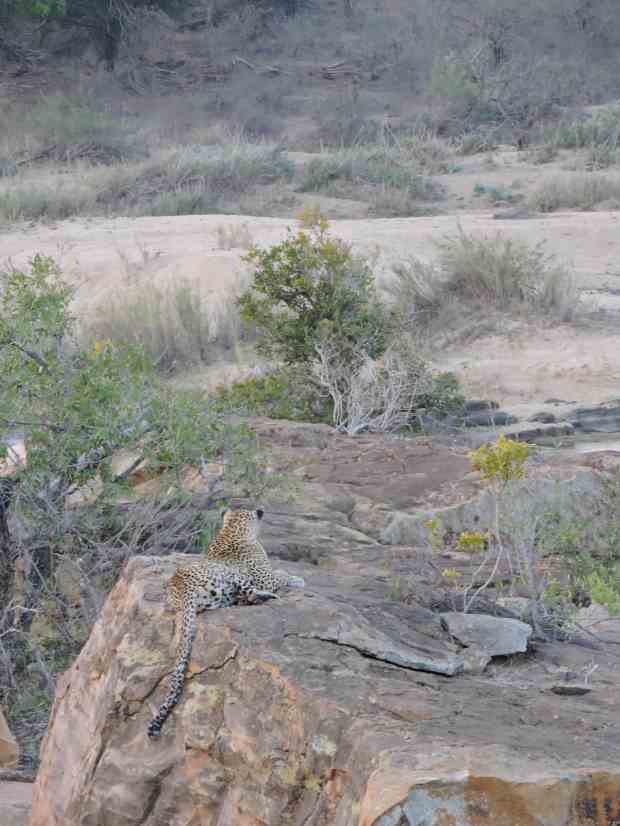
This time it was a female sunning itself on a rocky outcrop overlooking the river. A beautiful sight worth risking a fine from the park as we both agreed. It was beautiful to watch the animal with the evening light and we stayed there until it decided to move off and we lost it.


Aware that we were late, we prepared our usual excuse of engine malfunction (this time it was quite close to the truth!) and returned. Luckily we just managed to squeeze through as the gates were being shut!
That night, staying at one of Lower Sabie’s tents paid off. Despite the rather sad absence of hippo grunts, the elephants were noisily feeding nearby and they were very vocal. Later, several lions started roaring up and down river, their loud calls amplified at night and the chorus continued well into the night. At some stage, a leopard joined in with its own regular grunts ending in an amazing ensemble that we do not recall having heard before. We were late sleeping as did not wish to miss the wild concert!
[1] See the earlier post: https://bushsnobinafrica.wordpress.com/2016/09/30/animal-go/
[2] See: https://bushsnobinafrica.wordpress.com/2016/09/16/hungry-crocodiles/
The drought that Southern Africa is experiencing this year was evident already during our visit to Mana Pools in September. Despite the Zambezi River providing sufficient water, grazing was the main issue as the riverine pastures were very low and the patches of green left were those that are inedible.
Browsers and grazer/browsers were still in good shape but large grazers such as hippos and buffalos were already walking longer distances to get to areas that still had grass cover and these were dwindling fast. The hippos’ normal timetable was visibly altered as we “bumped” on several walking far from the water during the mornings and afternoons when, during normal years, they are in the water or sunning themselves by it.
Despite the Mana Pools “warning” the situation we found in the Kruger National Park (KNP) -Lower Sabie and Satara areas- was worse than expected. According to Swemmer (2016)[1] rainfall at Phalaborwa, one of the KNP’s camps, during 2014-15 was 255mm (the long-term average being 533mm) and the 2015-16 figures are extremely low. Two consecutive years of very low rain, combined with very high temperatures is regarded as rare and extreme. It is even likely that this drought will be the most severe since records started to be collected in 1954!


Different views of a very dry KNP (pictures by Mabel de Castro).
The consequences are there for all to see!
In the dry season the park usually has reasonable grass cover. This year there was almost no grass to be seen! The consequences of this could be immediately seen as few live hippos remained in the Lower Sabie River and the nearby Sunset dam. The ones we found looked rather strange and rather long-legged as their normally bulging bellies had shrunk enhancing their legs’ length! In addition, their skin hanged in folds, a consequence of their loss in body condition.


I regret that some of the pictures are disturbing but I need to show what was taking place.
We also noticed that the hippos did not move much and grazed on whatever they would find near the water bodies. As grass was scanty, they would just gradually weaken and die. Buffalo were also having a rough time and we only saw small groups looking thin. Interestingly, in some areas, both hippos and buffalo were doing better.


It is clear that the drought will have a severe impact on the animal population of the park but also on the vegetation cover as we also saw dry or drying trees that were also damaged by elephants searching for their own food. The re-establishment of grass, shrubs and trees will probably take years. The same applies to the animal populations that may not reach previous levels if the observed drier conditions become the norm in the future. In addition the drought will also accelerate soil erosion and modify the watercourses and other water bodies. Interestingly and somehow alarmingly, this is the first time that no Mopane worms have been recorded since surveys began in 2009 (Swemmer, 2016).
Trying to be optimistic about the future, it is possible that the current dry spell will have some beneficial impact by fine-tunning the situation to a future drier climate by reducing the herbivore populations while allowing vegetation to recover and, in a longer term, prevent overgrazing and environmental degradation.
Independently of the various possible interpretations of the impact of the drought on the environment, it is clear that even if the rains would come now, more animals will surely die before food becomes available. These are the ways of Nature, again.
[1] Swemmer, T. (2016). The Lowveld’s worst drought in 33 years? Understanding the long-term impacts. Consulted on 2/10/16. http://www.saeon.ac.za/enewsletter/archives/2016/february2016/doc02
I guess that the use of apps in African game parks was unavoidable as I am sure these already exist in parks in the “developed” world. Well, they have now arrived to the delight of the bush snobs (please note the space between the words) and bush executives that, not happy with looking at the sighting boards in the South Africa’s National Parks lodges and camps, required something more efficient.
A couple of years back I got the first indication that times were changing when a friend gave me -for my birthday- the app for Roberts VII Multimedia Birds of Southern Africa iPad Edition, 2012-2013. Although I have misgivings about using a tablet for bird identification rather than my loyal Sassol guide, I tried it. The result is that the Sassol guide is collecting dust in a recess of the car!

I have to announce that the same did not happen with the newish apps that -like with Pokemons- show you where the animals are so that you do not waste your valuable time driving around and can go to the hot spots straight away while the normal (or now abnormal?) game viewing enthusiasts “sweat the fat drop” (as we say in Spanish) to find interesting animals!
On a previous visit to the Kruger National Park I had heard that visitors were communicating interesting finds among them through a cellphone system. So, this time I searched the apps store and found a few and even some free. I downloaded one that looked popular called “Kruger Sightings” before our visit to this park.


The app is very straightforward to use and its information comes from what the users themselves feed in. After entering the park you are visiting and the kind of animals you wish to see, the programme will give you live updates with details of what is being found, where and other details of the sighting. It reminded me of a similar app from Brazil where users enter information regarding the location of speed traps and Police check points so that motorists can avoid them!
We followed the information it provided and easily found several other people watching what was alleged to be there! A leopard was the animal to be watched at the time and, after a long wait, we managed to progress through the traffic jam until we saw some spots up a tree!


After that first experience, we switched off the app for the rest of the safari. However, many visitors seemed to be using this and/or another similar app. We observed them drive from sighting 1 to sighting 2 at the maximum allowed speed and, as with our first trial, we found them “en masse” at the different locations where animals were supposed to be! I imagine that they did not wish to waste their lunch or dinner times?
Luckily for us and other “purists”, every cloud has a silver lining! The producers of the apps had, unintentionally given the no users a great advantage. The app groups its followers around a few of the big five, mainly lion and leopard, leaving the rest of the park for us to drive around in relative solitude and being able to find animals without cars around them. Luckily, with patience, luck and good eyesight, we managed a few good sightings of our own. Of course, our they remained incognito!


I promised myself only to use this kind of apps the day I become so important that I need to jet to parks with a few hours to spare and wish to impress some important client. I think that there is no fear of this so our game spotting will continue to be done the hard way!
The future worries me though. Rocket science is not required to see the gradual decline in animal numbers that elaborate and costly surveys and studies will confirm three years from now, three years too late to take any meaningful action! I know this sounds negative but it is what we observe.
Regrettably, the present generations had not really seen how it was, as I did not see how it was either but I guess it was better than what I saw!
See also: https://bushsnobinafrica.wordpress.com/2016/08/08/pachyderm-go/
Kruger National Park in August was busy and we just managed to get a couple of cancellations that matched with our son’s visit as well as our annual medical check-up in Nelspruit, a hang up of our days at Maputo.
The park, even with low occupancy rates, is normally busy as it offers a large number of beds to the visitors in the various rest camps and other available facilities. For this reason, it is extremely difficult to find a corner where you can be on your own. Imagine how it was in August when the park is full!
It is interesting to note that visitors move a lot within the park and its roads are busy. Some entering or leaving the park, some moving from one camp to the next and most of them looking for animals, mainly for the big five! The consequence of the latter is that, once you find one of them, there will be a constant flow of cars that would watch the animal in question for a few minutes and then move off, in search of the next one! I have already covered this issue (see: https://bushsnobinafrica.wordpress.com/2014/08/07/kruger-national-park-report/)
We were aware of this situation and decided to leave the big five for the next visit and focus on exploring a few less used roads and to improve our bird watching skills. In this department, I am pleased to inform you that we managed 99 species, about one fifth of the total number of species of the park!
Fishing was not in our plans as this is forbidden in the park. However, we crossed many rivers where wildlife can be observed! Normally this includes water birds and other creatures that come to drink or nibble tender grass associated with water. So we always stop and watch at river crossings!
One of the best places is the bridge over the Letaba River on the H1-6 road where you are allowed to get out of the car and have a look around while stretching your legs.
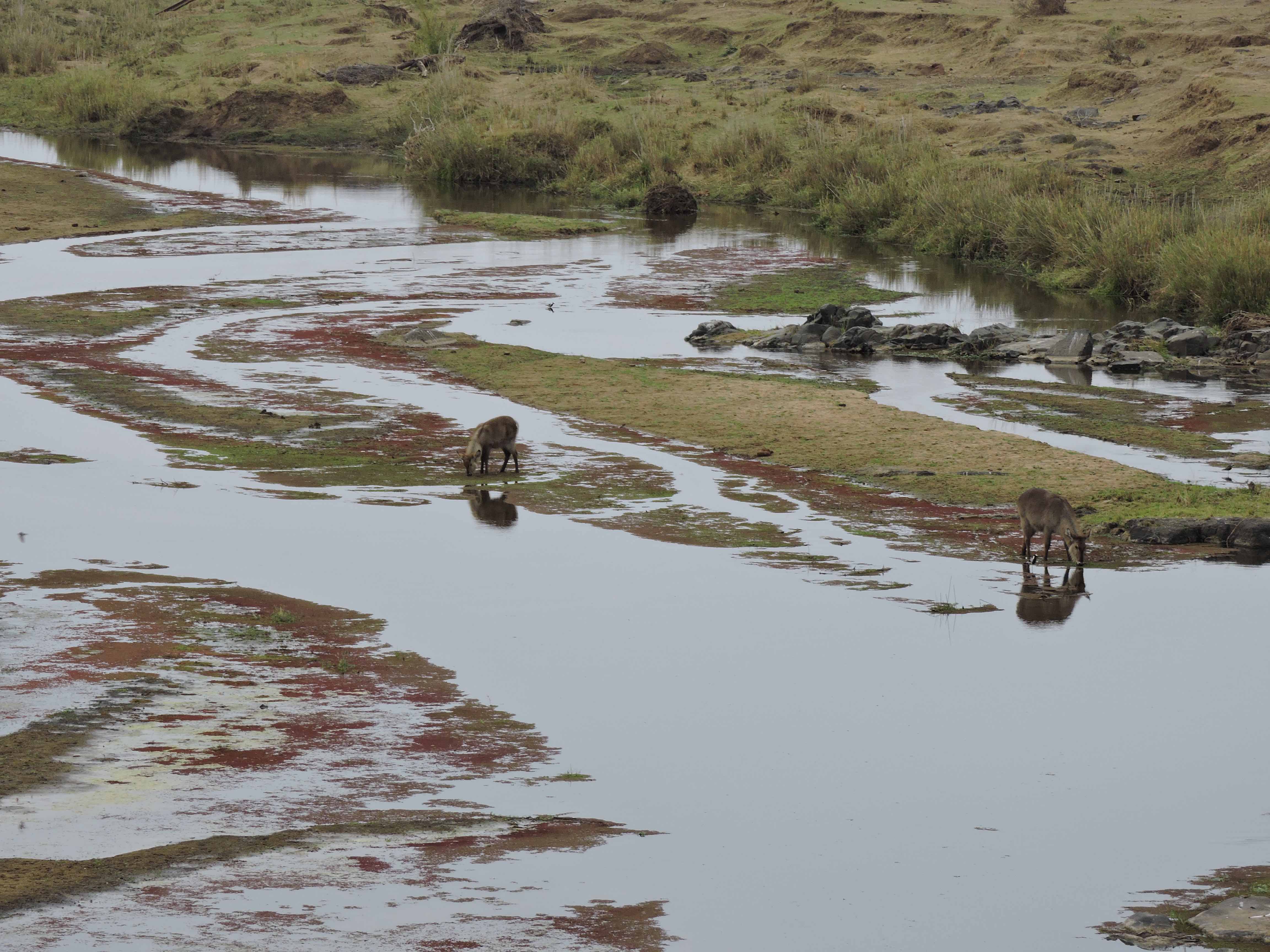
Waterbucks drinking by the Letaba River bridge.
We have seen many interesting things in this place so it is an obligatory stop where we usually spend some time. You just need to be patient, unlike most motorists that drive past, some of them quite fast!
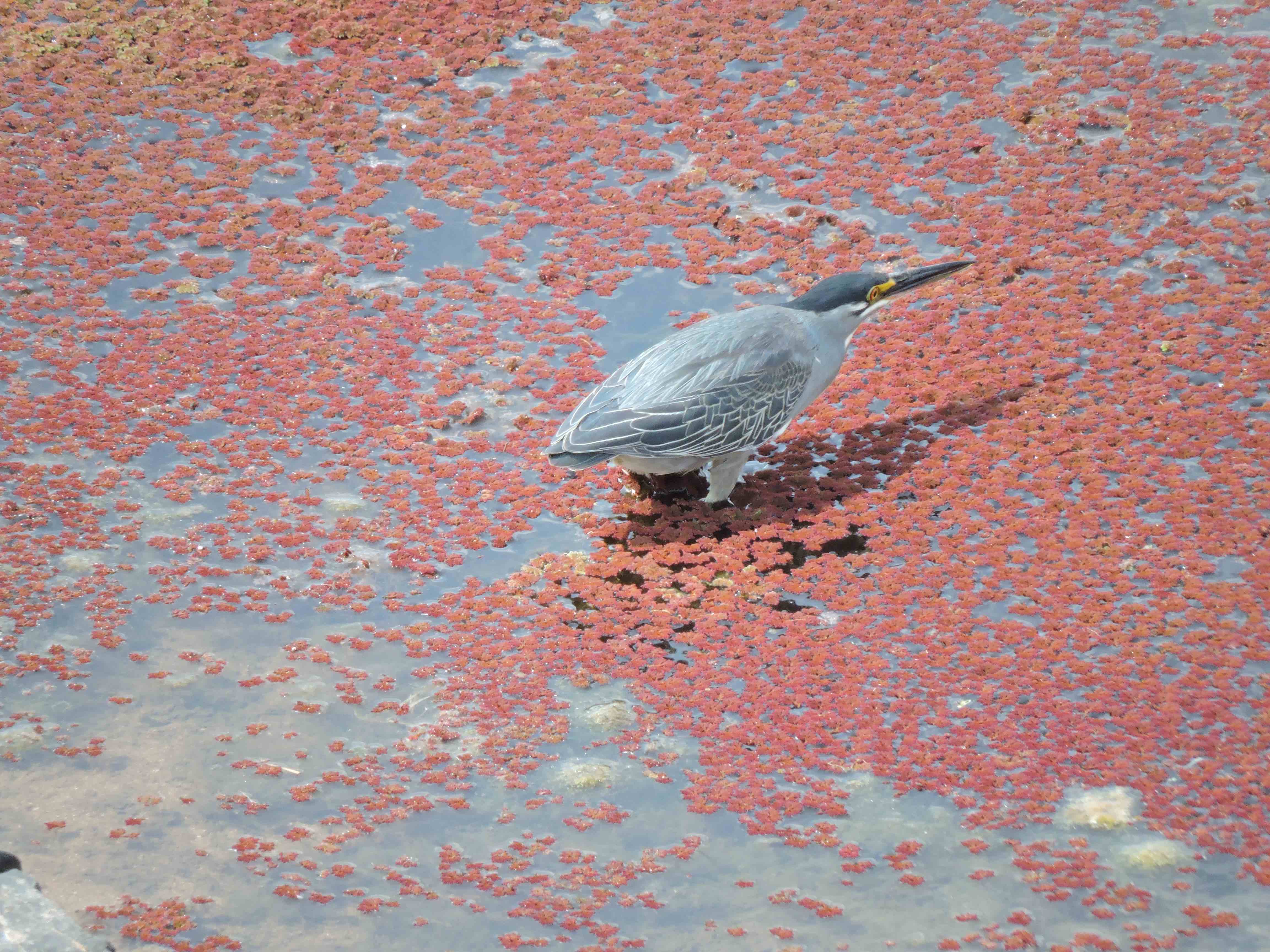
Green-backed heron fishing.
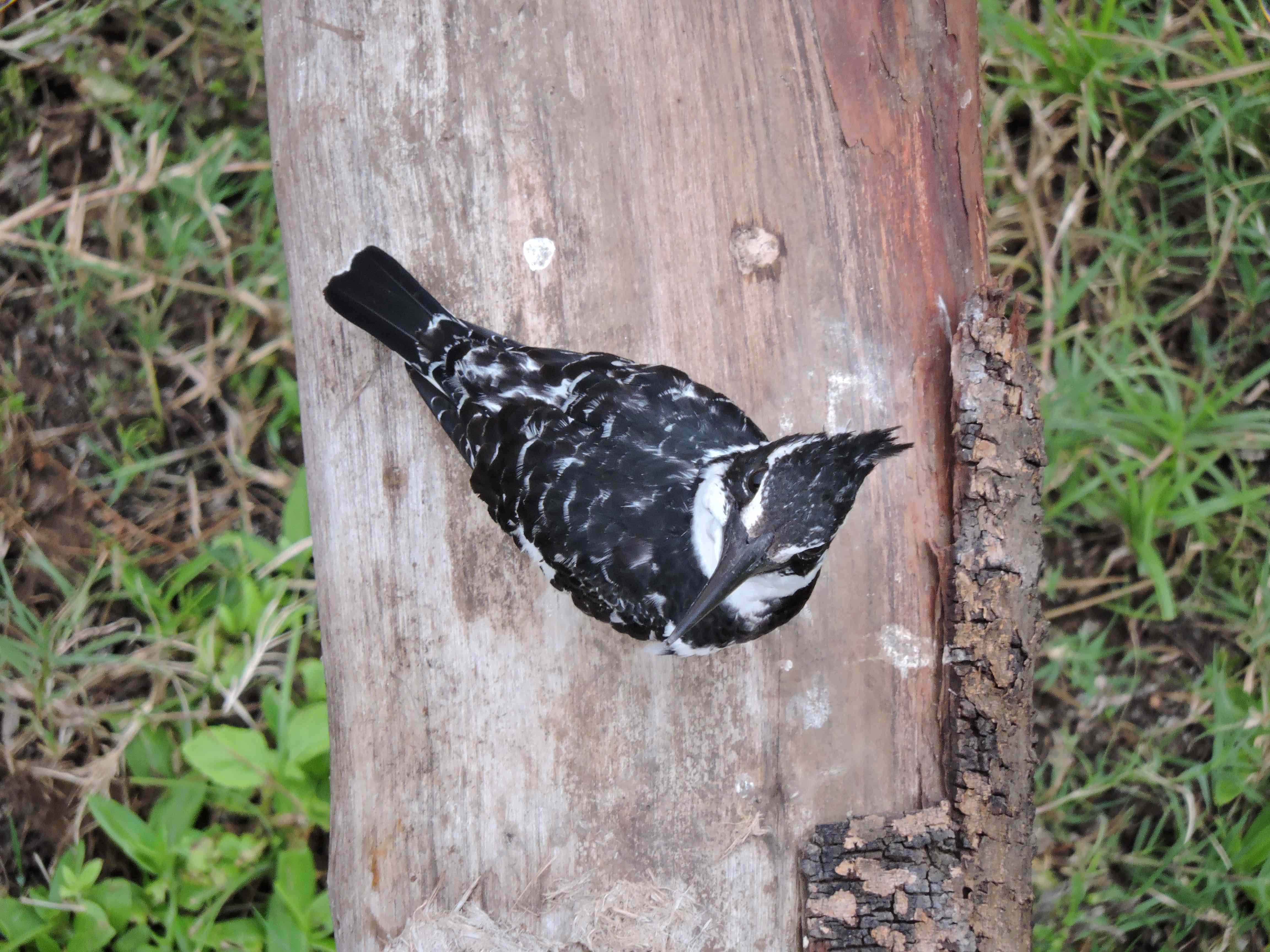
We surprised this pied kingfisher from the bridge.
As soon as we got out we were literally hit by the pungent smell of bats, stronger than we remembered. The stink seemed to be emanating from the bridge’s cement joints, together with the bats’ high pitch calls. Although we tried hard, we failed to see them through the cracks so we investigated the outside of the bridge, also unsuccessfully. We were engaged on this task when we heard splashes in the shallow water so we forgot the bats that were not cooperating and went to look for the fish.
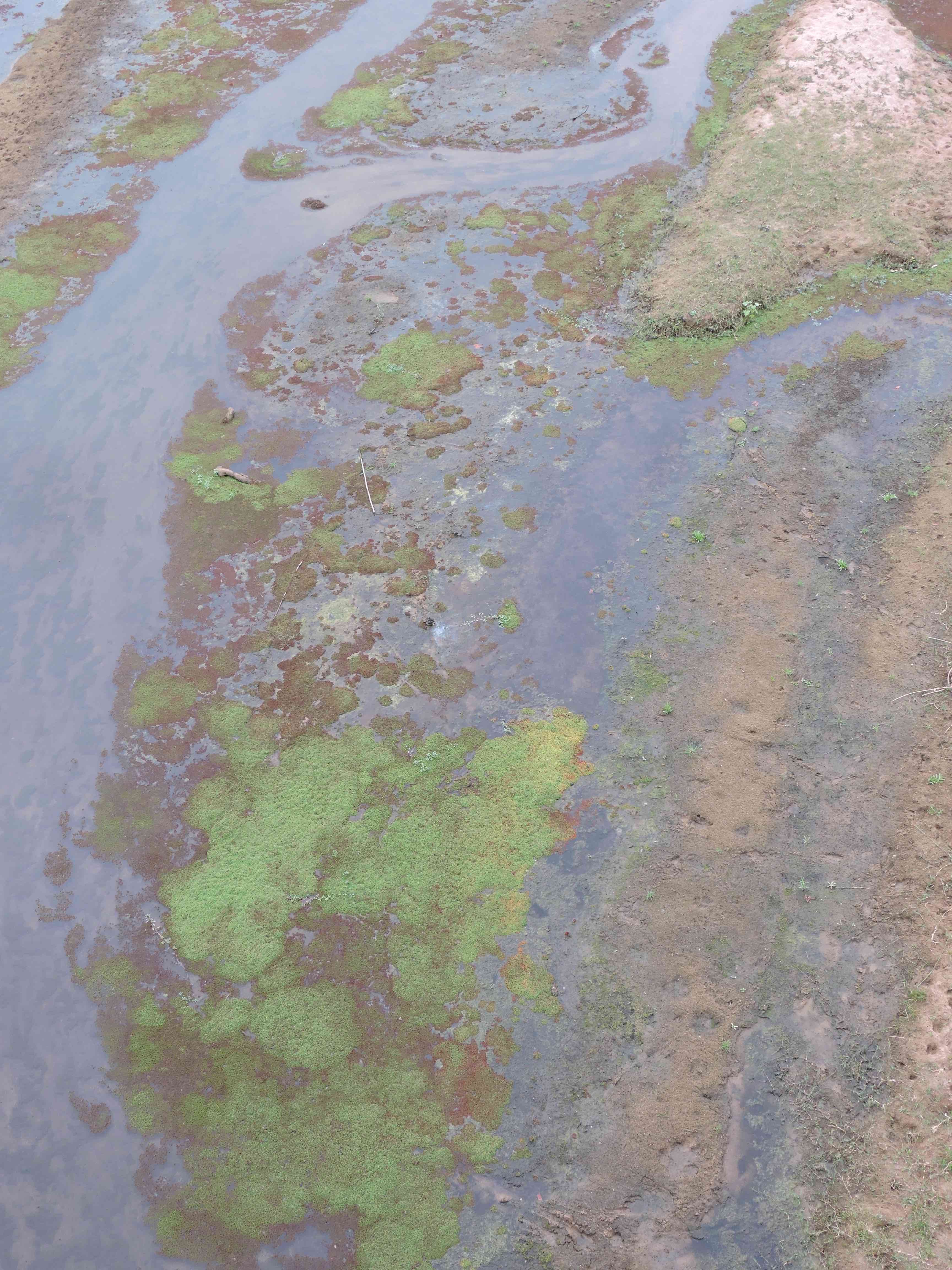
The area preferred by the fish.
These were shoals of tilapia feeding on the water plants. There were many fish of various sizes. While watching the tilapia feeding we came across a lone and slender fish lying immobile a couple of metres away from the tilapia. It was a tiger fish sunning itself but clearly waiting for prey. Further watching revealed a few catfish as well. The latter were more abundant when we looked at the river on the other side of the bridge. There we saw several catfish of various sizes lying at the bottom of the river, all pointing in the direction of the current and being disturbed by the occasional terrapin passing by.
Interestingly, having polarized sunglasses helped me to see the fish clearly while my companions needed to strain their eyes until I decided to share my glasses with them (just before they tossed me over the rails!). Photography was, however, another matter as we did not have a polarizing filter and our attempts at taking pictures through my sunglasses proved fruitless!
Despite the bad results, we did take a few pictures that were forgotten in the memory card until we returned to Harare. Then, when sorting out the photos of the journey I saw a bunch of what appeared to be uniformly brown images. They were our “fish pictures” and the fish seemed to be immersed in murky water and only just visible! I tried a few of the options that Picasa offers and failed. I was about to delete them when I pressed the “I am feeling lucky” option and then as if by a miracle the fish became very clear as if the command would have sucked out the water!
I present you with an example of a non processed cloudy picture to show you what they really looked like as well as some of the processed ones as I believe are worth viewing as they are a demonstration that not only the big five are worth watching.
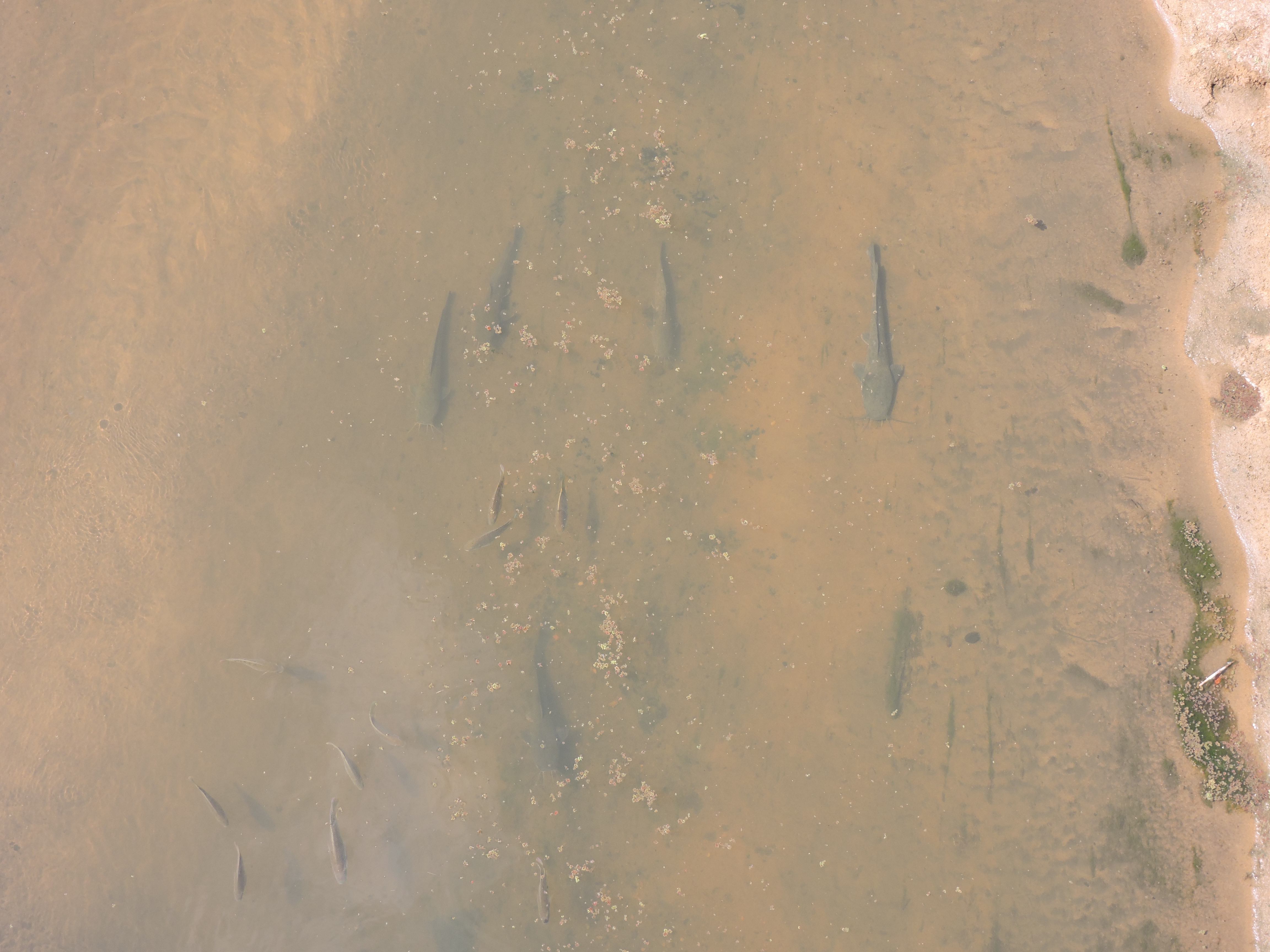
The fish to the naked eye.
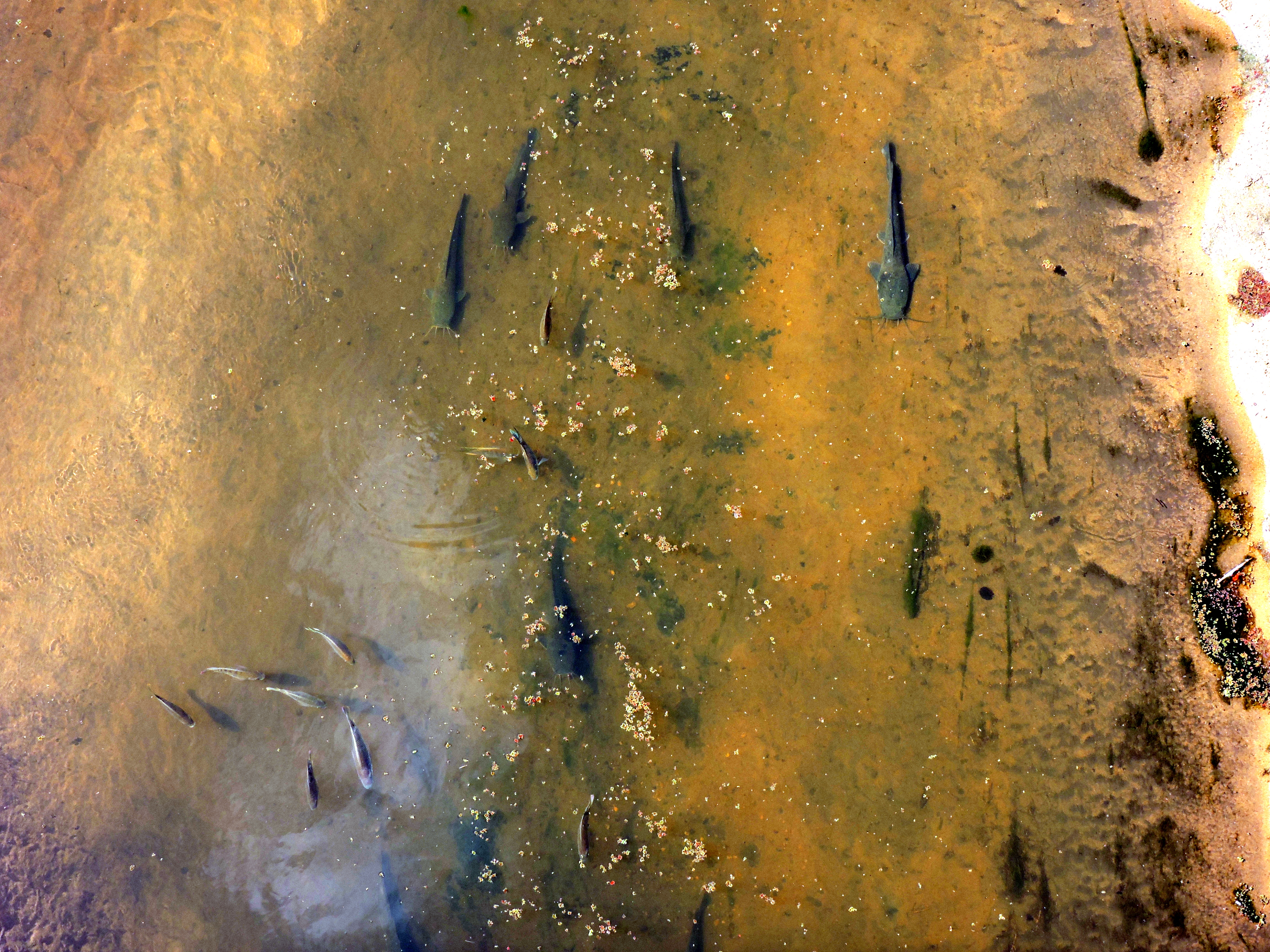
The picture above after the “magic” of Picasa! Catfish are seen at the top while the tilapia are on the bottom left.
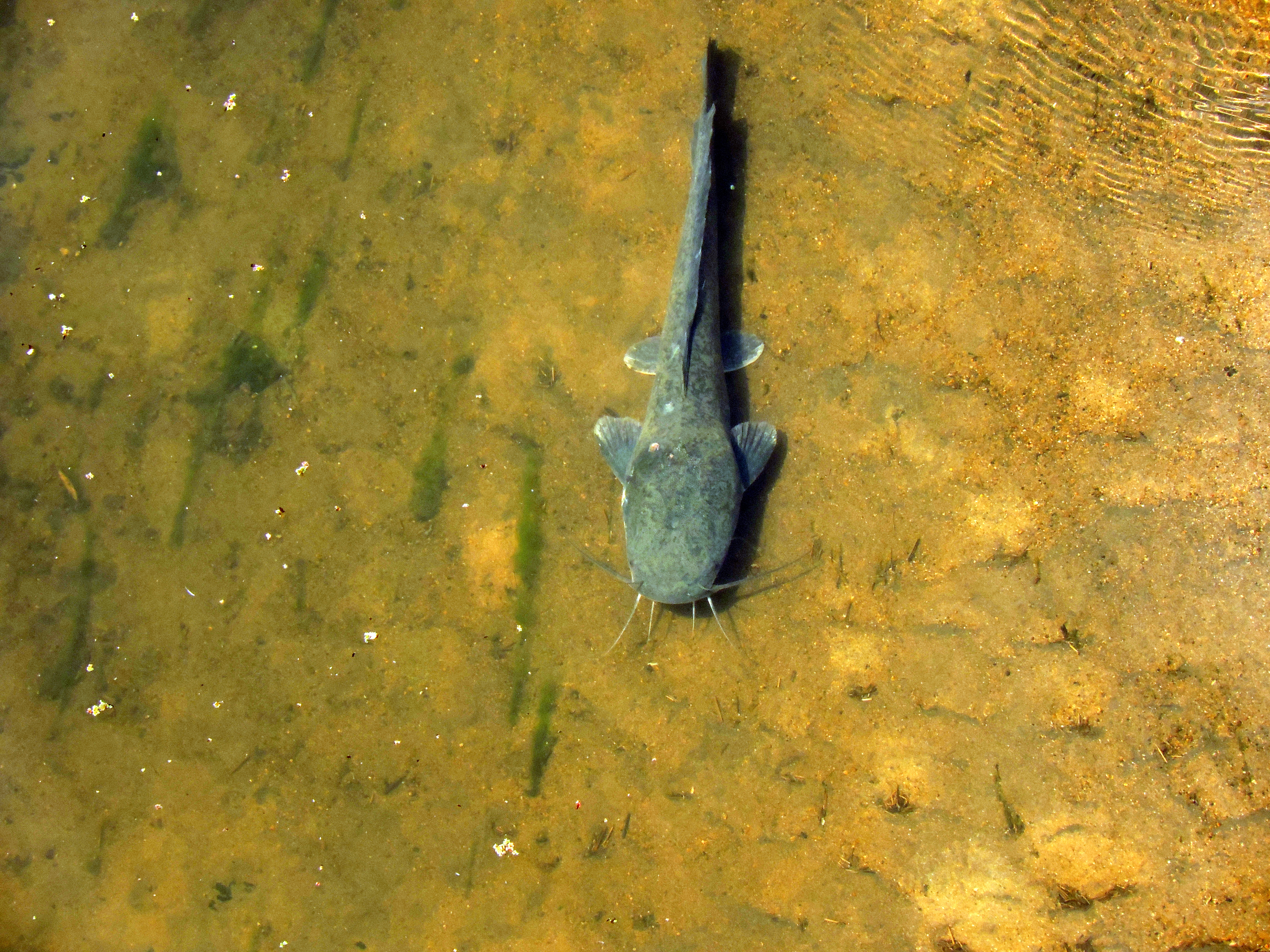
A large catfish.
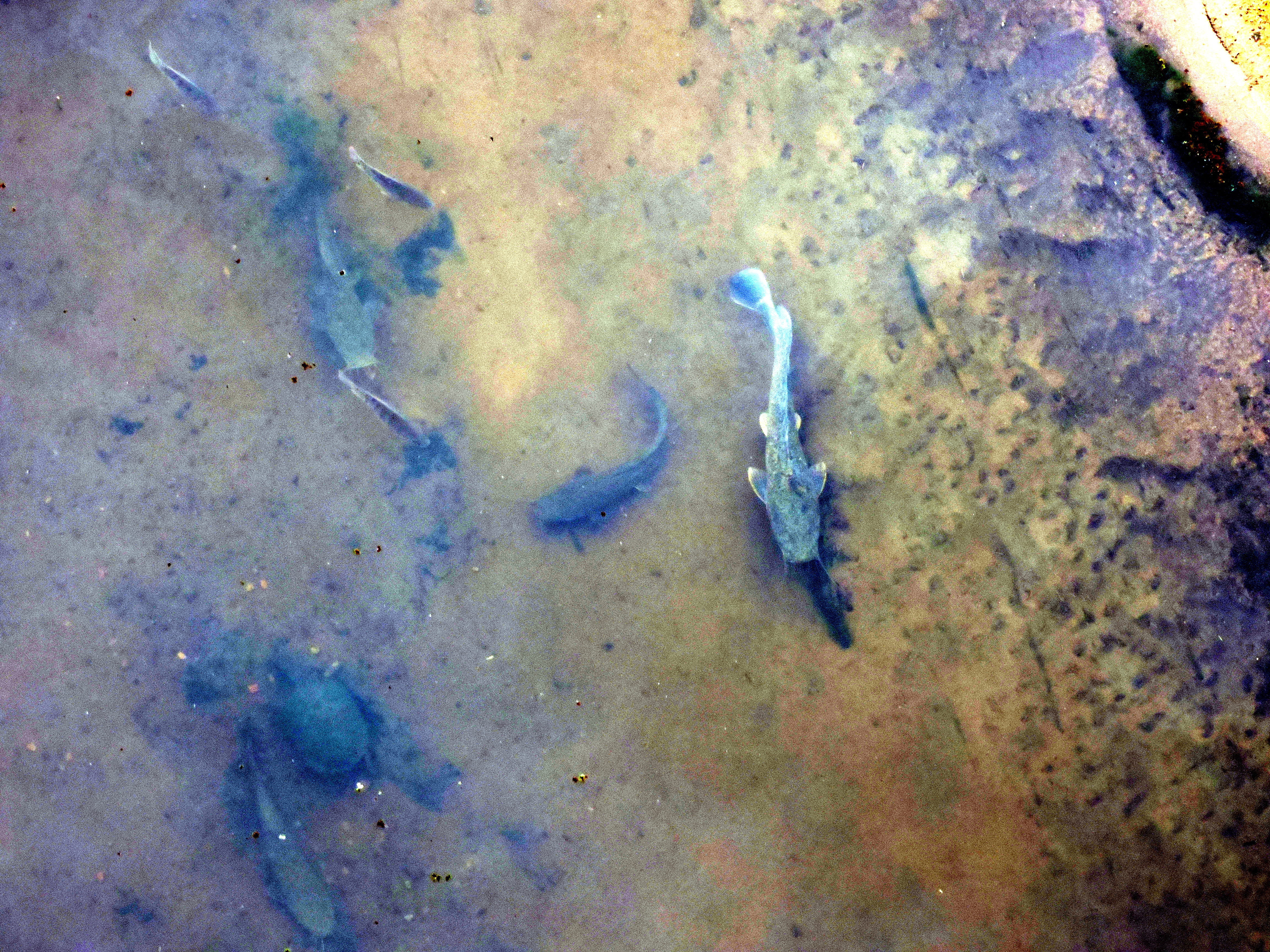
Catfish disturbed by a terrapin.

The tiger fish stalking.
Before I end this post I would like to propose a new group of animals to be seen in Africa: the “Slippery Five”. I propose the crocodile, the hippo, the python, the catfish and the terrapin as its members in an attempt at persuading visitors to pay more attention to the water courses and its inhabitants -both outside an inside the water- in the national parks!

