Memoirs

Episodes of my life in Africa.

Fossilized

When I wrote the post on Lake Magadi [1], I forgot to include a very interesting place located on route to the lake: Olorgesailie, located about 60km southwest of Nairobi.

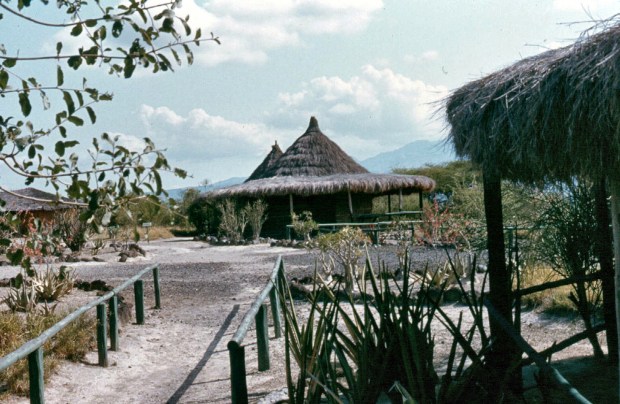
oligorsalie bandas

Olorgesailie lodges.

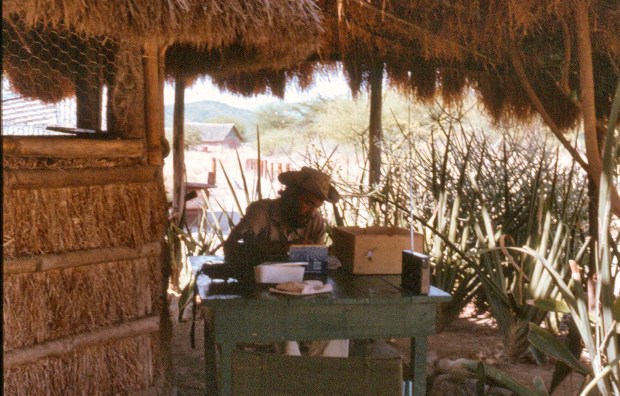
Being almost at the bottom of the rift valley it was hot all year round and often ignored by passers-by heading for Magadi and beyond. We did stop there a few times and even stayed a couple of weekends while I was writing my PhD thesis. as it was a very quiet place.

jj writing phd bushwhakers

Working on my PhD.

The site is in a lake basin that existed there probably between 200,000 and 100,000 years ago (mid Pleistocene). The lake was fed by the long gone Ol Keju Nyiro River, displaced by the then common and dramatic earth movements. While the lake existed it attracted game and hunters and then bones and tools accumulated, got buried and remained there for eons. Somehow they eventually re-surfaced and were found, first by the “discoverer” of the rift valley, J.W. Gregory, in 1919 and later by Louis and Mary Leakey.

The Leakeys, as they are commonly known, started working in the area in 1942 and unearthed crucial evidence on the activities and life of early prehistoric peoples of the Hand axe culture. Because of the fossil wealth it contained, it was declared a small National Monument of about 20 hectares in 1947 to preserve the finds under the care of the National Museum of Kenya.

We had the chance of listening to Mary Leakey talking about her work at Oligosailie and Olduvai. Louis had already passed away by then but we also attending lectures by their son Richard also exposing his finds and ideas about the evolution of man in Africa to which the findings at Oligosailie are very relevant.

Both were lecturers at the Know Kenya Course (now re-named Know Kenya More) that the Kenya Museum Society started running in 1971 and that were going full swing in the 80’s. These series of lectures were a great way for new arrivals to get familiar with the country while getting funds to support projects of this institution in Kenya.

During Mary’s lecture we learnt that at both Olduvai and Olorgesalie heavy accumulation of volcanic ash preserved the famous footsteps in the former and the fossils in the latter. The main producer of ash at Olorgesailie was the now extinct volcano that gives the site its name that with its 1760m dominates the area.

The most important fossils in Olorgesalie were human-made tools and their abnormal accumulation in the area is evidence of early man had their camps. I recall our guide during our tour of the site pointing at tools and the flakes that resulted from their making that truly littered the ground and I seem to recall that Louis Leakey used to make stone tools to practically demonstrate his conclusions at international meetings!

Apart from stones Olorgesalie also had some living attractions. One of the “specials” were the very tame Grey-headed social weavers (Pseudonigrita arnaudi) that nested in the surrounding trees and would come to feed from your hand. It was also one of the few places in Kenya to see Desert roses (Adenium obesum) around the bungalows.

Mabel and weavers.

Desert roses (pink) and other Olorgesailie flowers.

As the area was extremely hot, we walked during the early mornings and evenings and these did not include climbing Mt. Olorgesailie as we are not climbers but to follow the several paths used by the Maasai in the area as there were still a sizeable population of wild herbivores as well as lots of interesting birds.

Apart from the ubiquitous whistling thorns [2], the area is full of another thorny tree known as “wait a bit” [3], a name that describes perfectly its hooked thorns’ ability of stopping you in your tracks. Damage control in these cases indicated reversing to unhook yourself if you could. However, when you were caught jumping or going down a ravine unable to stop the damage to your skin could be rather painful and bloody. Most of the time I ended our walks not only dusty but bleeding from arms and legs. To add insult to my injuries my wife -rather miraculously- ended up dustless and unscathed, a trait she maintains up to date!

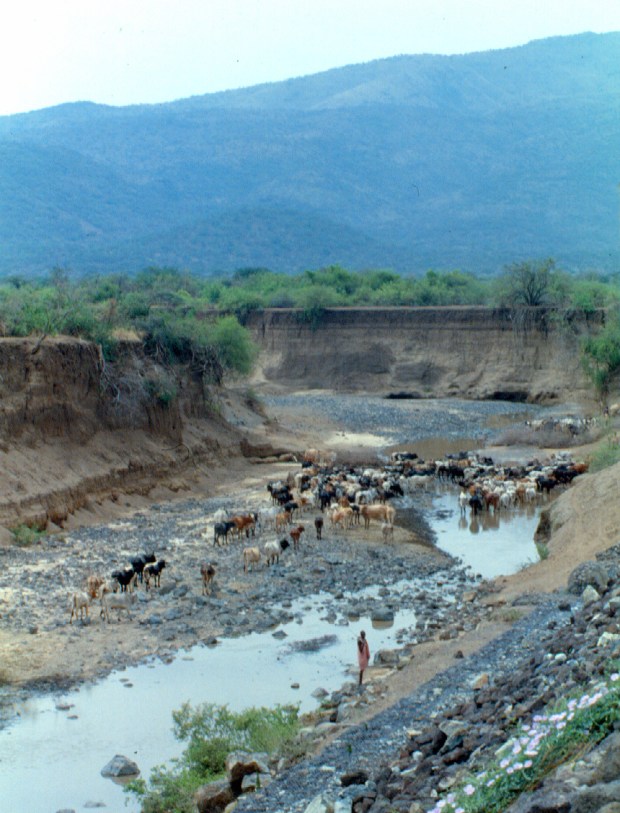
It was not rare to find Maasai herdsmen walking their cattle to the scarce watering points located in the area. They would follow the dry riverbeds that crisscrossed the area to find water. It was in one of these dry rivers while driving to get to Olorgesailie that we met a Maasai herdsman at really close quarters.

cattle Magadi rd.tif

The picture that prompted our meeting with the Maasai, seen at the bottom of the picture.

I took a picture of a herd of cattle drinking by the road, something that their owner did not appreciate and, before I knew it, he was inside the back of our kombi where he joined a very close lady friend of ours that happened to be traveling with us at the time. The man was upset and started arguing with me about the picture leaning forward and trying -unsuccessfully- to grab my camera while I was trying to calm him down and explain him that I was taking a picture of the scene and not of himself!

Unfortunately, during the rather protracted exchange he placed himself in front of our friend who, for a while, had an unobstructed view of his rear end until, when more relaxed, even sat on her lap! Eventually the message went through and the Maasai departed to join his animals, I kept my picture and our friend the “views” and the achievement of having a Maasai on her lap! The incident has remained one of our indelible memories of the times we spent together in Kenya.

At the same spot, a couple of years later we had a different encounter. A leopard had just drank at the same waterhole and it was returning to its territory and decided to cross the road. Totally unconcerned by our presence, after staring at us at leisure, proceeded to climb the rocks on the other side of the road before I could even touch my camera! It was one of the very few encounters with leopards we had in Kenya.


[1] See: https://bushsnob.com/2016/05/07/pink-gem-but-smelly/

[2] These plants that I knew as Acacia drepanolabium (now Vachellia drepanolobium) produce swollen hollow thorns inside which several symbiotic species of ants live. The wind blowing over the holed bulbous thorns it creates a clear whistling noise.

[3] Senegalia brevispica


Salty dust [1]

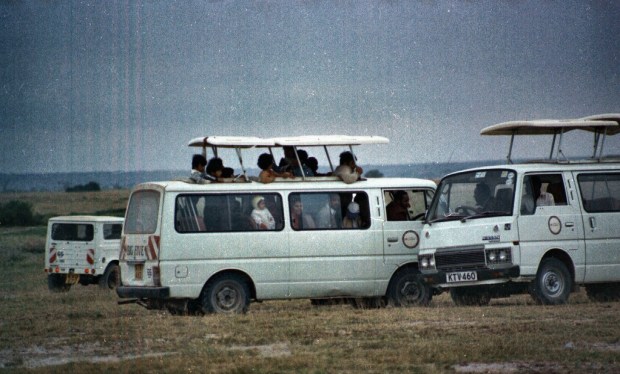
In the 1980’s Amboseli National Park (established in 1974 as a National Park but already a park from 1948) was the most popular among all the Kenya parks. This was probably because it was relatively near Nairobi, despite the corrugated road to get to it, and it offered abundant quality accommodation. The latter I cannot confirm as we always camped there! Tourist packages included an Amboseli and Tsavo National Parks circuit, as there is a road that joins them. The result was that travel companies would take tourists in large numbers and we found it rather crowded, particularly around the lodges and the swamp area.

amboseli 3 enhd

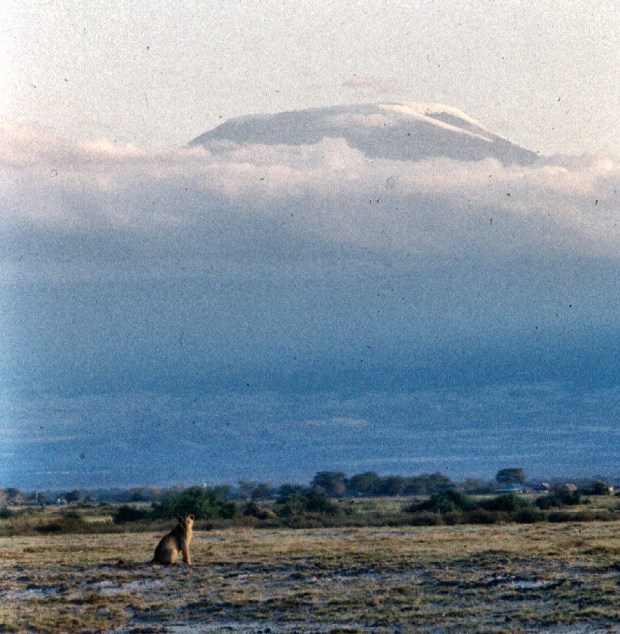
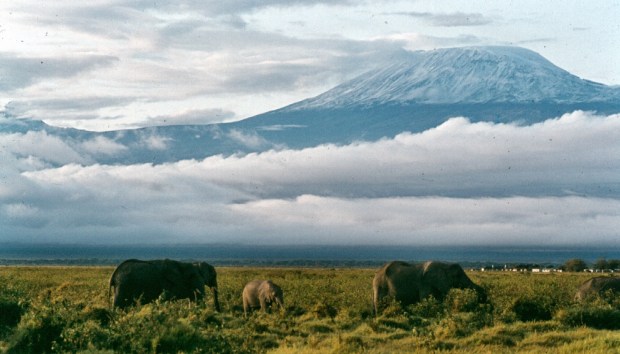
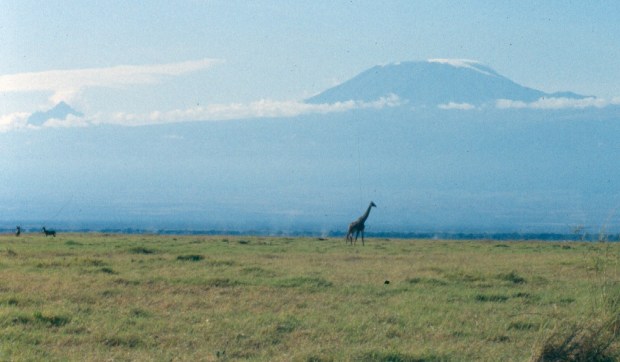
Despite its popularity, the park was still beautiful mainly because of Kilimanjaro that in a clear day offered an amazing view . With its 5,895 metres summit it truly showed itself with its well known peaks Kibo (the flat one) and Mawenzi (the rugged one) above the cloud cover creating a really special atmosphere [2].

amboseli 2

Elephants and buffalo were plentiful and there were still black rhinos that could occasionally found browsing on the scarce trees and bushes, unaware of their sad but approaching extermination.

In 1982, David Western wrote: “…The Amboseli population, at a low of eight animals in 1977, had only two breeding males and three mature females. Given such low numbers and localized populations it is inevitable that the black rhino will, like the white rhino, have to be managed in many cases as a national or even international herd…” [3]

It was the park’s flatness and its scarce vegetation, together with the abundance of prey species, that made it an ideal place to find large predators such as lions and spotted hyenas, although they were already decreasing in numbers.

The abundance of Thomson’s and Grant’s gazelles also made Amboseli a great place to spot the already scarce cheetah and, if you were lucky as we were, to watch them hunting.

Although not considered among the great cats for anatomical reasons [4] these are very interesting and exciting animals to watch. Relying on speed to catch their prey, they are forced to hunt during the day so that they can see where they step while running -for short bursts- at a maximum speed of 100 to 120 km per hour! An injury could have severe consequences to the animal that can cause its death due to starvation! It is this behaviour that exposes cheetah to tourism interference and often leads to them getting disturbed by over-eager drivers.

Although we witnessed a few chases, we only managed to observe a couple that ended with a successful capture and kill of a Thomson’s gazelle. Several times we watched them loosing their prey during the chase when the latter in desperation entered terrain that was too rough for the cheetah or when the latter took a tumble at speed!

Even if the hunt was successful, the cheetah requires about a quarter of an hour of rest before it can start eating and, although their instinct directs them to consume the hindquarters (the richest part of the animal) during this recovery time cheetah are very vulnerable to larger predators -particularly spotted hyenas- to snatch its prey forcing it to hunt again!

Although we saw cheetah defending their prey against a single hyena by bristling and increasing their size dramatically, most of the time we watched while a pack of hyenas harassed them away from their freshly killed prey.

I will not attempt to describe a cheetah hunt as this has been done many times and through different media during hundreds of years. Instead of of that, as pictures I dare recommending my favourite sequence that, despite its age, is still one of the best I have seen (except seeing it live, of course). It is a Survival documentary called “Two in the Bush” filmed by Alan and Joan Root. Although the film (link below) is worth watching in its entirety, the cheetah sequence starts at the 15:32 minutes mark when the Roots are seen driving on the plains. It is important to bear in that the movie was filmed in the 1980’s with cameras that were not those we have today.

https://www.youtube.com/watch?v=X8NzgBqOgJY

We did not attempt to emulate the Roots in filming the hunt but we were lucky enough to take a few shots of the action but the only good ones were those we took after the hund ended when we were lucky that a combination of positioning and camera zoom worked miracles, at least for our standards!

This slideshow requires JavaScript.

We visited Amboseli several times over the years and eventually we got to know it quite well. Already at that time it was showing sigs of severe erosion, particularly during the dry season and we thought that it should be closed to the public for several years to allow it to recover. The park was so degraded by 1991 that the New York Times published an article highlighting its poor status [5]. Since then, a number of initiatives to manage the park have been initiated although I do not know about their degree of success.

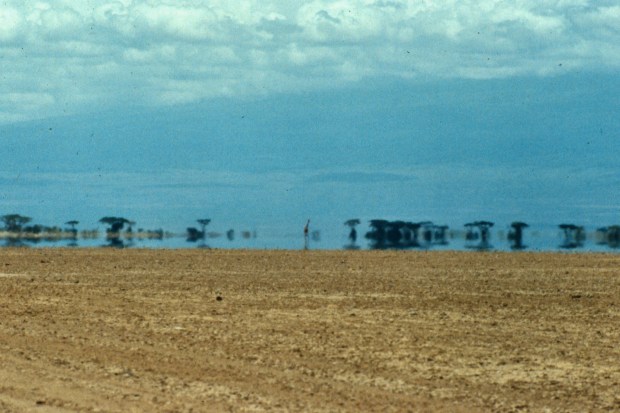
To enter Amboseli you crossed the lake that gives the park its name, a usually dry ash lake and the first place where we saw both dust devils and mirages, the latter framed by Kilimanjaro.

Amboseli dry lake and giraffecopy

Funnily the lake was occasionally flooded! During these times it became a quagmire that took some driving to negotiate.

Land Rover Amboseli flooded lake copy

At first we camped at the now called Amboseli campsite but the lack of adequate shade prompted us to seek other places. We then found the palm tree campsite that our friend Paul also used when staying at the park. Although lacking ablution facilities, this was a shady and cool camp, ideal to rest during the hot time of the day and even to have a short nap before embarking on a late afternoon game drive.

Being rather secluded and with small camping areas it had the advantage of not being frequented by the overland trucks that were beginning to be common at the time and that immediately crowded the limited space and facilities available at the other campsites. We soon learnt the reasons for this seclusion…

While Paul was investigating a rinderpest outbreak we took the opportunity to join him a couple of times at the palm tree campsite where he was staying with his camp hand Tobias as usual. He was a great help at the camp as well as producing some good food, particularly in the evening when we were tired after driving all day. However, the English breakfast was his “special” and this prompted Paul’s say of “with such breakfast, who needs to think about cooking later” in reply to our criticism to the rest of the English cuisine!

After dinner we usually made an inventory of the birds seen during the day as well as planning where we would go on the morrow. That night, however, Paul was starting to tell us about what had happened to him earlier at that camp when, suddenly, we started hearing people shouting!

We stopped talking and listened. After a few seconds we clearly heard a loud and frantic scream: “elephant!” that got repeated until finally we heard a desperate “help us, elephant!” Without hesitating Paul and Tobias grabbed their torches and ran towards the source of the voices. I followed.

We did not have a lot of ground to cover, perhaps one hundred metres, when we came to the next camping spot, a clearing in the bush where the drama was unfolding. There were tents and a Land Rover with three terror-stricken occupants in the back, two men and a woman rather scantily clothed. Outside there was a large elephant holding the roof rack and vigorously shaking the car as much as its springs would allow and, in so doing, badly shaking the people inside!

We then realized that the elephant had stepped and flattened an aluminium camera case and scattered camera(s) and lenses on the fine dust. Luckily, as soon as we shone the torches on the intruder, it took off tail up, aware of its guilt, crashing into the low palm trees to the relief of the vehicle occupants and mine when I saw it running in the opposite direction rather than charging!

After helping the “victims” to collect their dusty gear and their wits, we reassured them that the elephant would not come back as it got quite a fright, not being sure of this ourselves as it was unusual that elephants would attempt to raid a camp in Kenya. After we saw that our neighbours were as calm as the situation allowed, we returned to our camp.

After commenting the incident with the rest of the campers it was Paul’s turn to return to its interrupted story that, funnily enough, also dealt with elephants! He told us that one night he was woken up by some noise outside the tent. Through the door he realized that there were elephants outside and then he felt a rush of hot air in his face, coming from one of the visitors. It was trying to get to the food he had in the tent. Quite alarmed, he tried to get out through the other tent exit that went to his “kitchen” area only to find it blocked by a white elephant that blocked his way. The intruder had managed to break a sac of flour and it was enjoying it!

In the meantime, another pachyderm was busy trying to get at Tobias’ tent where some dirty pots and pans were kept to be cleaned the following morning. His smaller tent was lifted from the ground and Tobias got very frightened and -according to the storyteller- proffered such screams that he managed to scare the animals away, saving the day! After that achievement Tobias rushed to the Land Rover where he spent the rest of that night! (Something I would also have done! – Bushsnob)

It was then apparent that the campsite was a rather uninhabited one in virtue of its naughty elephantine visitors that have become used to get food from campers and the news had spread prompting campers -except us!- to stay away. As it is inevitable in these cases, the camp was closed soon after and, possibly, the elephants destroyed as wild animals always pay for being fed by people who do not realize the consequences of their actions.

This slideshow requires JavaScript.

I always wonder if some of these were the culprits!


[1] The English meaning of the Maa word Amboseli.

[2] There is apparently a third peak called Shira that I learnt about when writing this post! See: https://en.m.wikipedia.org/wiki/Mount_Kilimanjaro (Consulted on 19/10/19).

[3] Western, D. (1982). Patterns of depletion in a Kenya rhino population and the conservation implications. Biological Conservation, 24: 147-156.

[4] The word “Cheetah” is derived from the Hindi word “Chita” meaning “spotted one”. The Cheetah is the fastest land animal reaching speeds of 45 – 70 mph. Cheetahs have also been known to swim, although they do not like to. “…The Cheetah is not one of the Great Cats, because it does not have a floating Hyoid bone in its neck it can not roar, therefore it is a Lesser Cat…” See: https://bigcatrescue.org/cheetah-facts/?amp (consulted 16/10/19)

[5] See: https://www.nytimes.com/1991/05/19/travel/an-african-park-in-peril.html (consulted 16/10/19)


Under the shadow of Kilimanjaro

I am sure that when I went to Kenya in 1981, my knowledge of this mountain was less than what the German missionaries and explorers Johannes Rebmann and Ludwig Krapf knew when in1848 they caught the first glimpse of what was then known locally as ‘Kilimansharo’ a mountain that was “higher than the clouds and capped in silver”.

Kili with ellies amboseli 4.55.57 PM copy

The accepted knowledge at the time was that ice and snow did not occur in the equator so the explorers initially failed to realise the significance of their find. However, Rebmann -clearly unconvinced- explored its vecinity and eventually wrote in his diary: “…This morning we discerned the Mountains of Jagga more distinctly than ever; and about ten o’clock I fancied I saw a dazzlingly white cloud. My Guide called the white which I saw merely ‘Beredi,’ cold; it was perfectly clear to me, however, that it could be nothing else but snow…”

5 - Kili copy

He published his observations in 1849 but the scientific community did not accept them until later on. About 40 years later, the “Kilimanjaro Elephant” believed to have been killed in 1898 was found with tusks that weighed 108 and 102kg, the heaviest in history. Each were over 3m long and 70cm in circumference at the base. They were eventually bought by the British Museum of Natural History in 1932.

V0048591 An ornate carved doorway in Zanzibar, with an enormous pair

An ornate carved doorway in Zanzibar, with an enormous pair of elephant’s tusks leaning against it. Photograph by A.R.P. de Lord, ca.1900. Credit: Wellcome Collection.

Much later, Ernest Heminway made the mountain more popular when he wrote his well known novel “The Snows of Kilimanjaro” that he opens mentioning another altitude find: a frozen leopard.

Microsoft Word – The Snows of Kilimanjaro.doc

It was when in Kenya that I became aware of the existence of the mountain somewhere in the rift valley until one very clear morning, while traveling from Muguga to Nairobi, I actually saw its silver shadow far in the horizon and I realized that it did exist and that it was not that far away!

Amboseli kili 1


At that time I also learnt that in the late 1800’s Queen Victoria gave her German grandson Wilhelm by changing the Kenya-Tanzania border for Kilimanjaro to be in Tanzania! Only recently, while reading history for this blog, I learnt that the border was a consequence of negotiations and that the story is not true.


If I knew little of Kilimanjaro I knew even less about its surrounding area and the wealth of interesting cultures and beautiful areas that it contained on both sides of the Kenya-Tanzania border. Although unfortunately at the time the border was closed as a consequence of the end of the East African Community that linked Kenya, Tanzania and Uganda, we could still enjoy the Kenyan side and explore its parks, mainly Amboseli and Tsavo National Parks.

I will tell you some anecdotes of our visits to these areas around the mountain in the next posts. Just in case you are interested beyond what I mentioned here, the video below from Alan and Jane Root, despite being “aged”, is worth watching.

https://www.youtube.com/watch?v=ibfoSYwK4MY


Dust

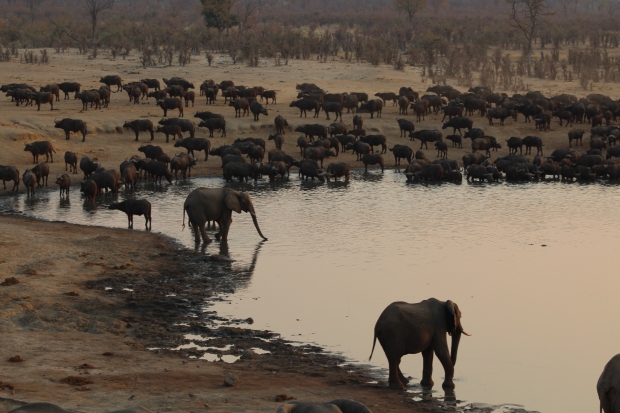
This year Masuma dam offered an amazing spectacle because of the very dry conditions that prevail in Hwange National Park at the moment. There was a continuous flow of animals coming to drink at the shrinking waterhole despite its constant water pumping that could not match evaporation and what hundreds of animals needed to drink.

As described in the previous post the elephants were the stars of the show but there were other visitors, not less interesting such as impala, giraffe, zebra, greater kudu, warthogs, baboons, jackals and some buffalo. Among the latter there was a male that looked in very poor condition that we predicted that it would not last too long and that ended up as a lion meal two days later.

After watching the lions feeding on the buffalo we returned to Masuma to continue with our “comfortable” viewing from our camp as the water is very close to it. We were -as usual- focussing on the comings and goings of the elephants when we noted a large brown cloud rising far away, in the direction of Mandavu reservoir.

One afternoon we were enjoying game viewing from our platform at Masuma when we spotted dust in the horizon.

IMG_6742 copy

We thought that more elephant family groups were arriving but the dust turned into a large cloud and we realized that a large herd was indeed coming. But we were wrong, there were not elephants but a very large herd of buffalo! Hundreds and hundreds of them coming to drink at Masuma.

P1010095 copyP1010101 copyP1010099 copyIMG_6752 copyIMG_6755 copyP1010106 copyP1010110 copy

We had seen very large numbers of buffalo during previous visits at Mandavu reservoir and probably this was the same herd forced to move in search of grazing.

It was an amazing site as buffalo, usually respectful of elephants just bulldozed their way through by the pressure of their large numbers and took over the entire water body! It was interesting to see that the elephants were forced to wait this time.DSC_0769 copyIMG_6763 copyIMG_6748 copy

After about an hour, when the afternoon was turning to dusk, they slowly moved off in in the direction of the Shumba picnic site and the other animal’s wait was over. The herd went slowly, probably in search of grazing and hoping to drink  at Shumba where there was abundant water still.

IMG_6763 copyP1010103 copy

Pictures by Julio A and Mabel de Castro, Patricia Ruiz Teixidor and the bushsnob.

Elephants!

As I mentioned in the earlier post Hwange National Park is going through a severe drought and some of the classical water points where wild animals usually drink are shrinking and drying up.

The hippos at Masuma (except a lone one that is there part-time) are gone, probably to Mandavu reservoir, a walk of about 18 km, not a great distance for a hippo. However, although it is unlikely that such large water body would dry up, grass availability remains the limitant and grazers such as hippos and buffaloes may be the ones to suffer most.

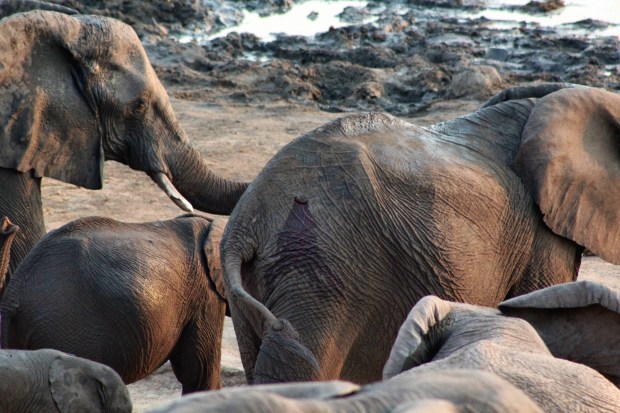
As for the elephants, they were congregating in large numbers at Masuma dam and Dom pan -the areas we saw-  and drinking 24/7 as it is now said. Nyamandhlovu and Masuma dams’ water levels were low and getting lower. Although usually most elephants prefer to drink from the water inlet to get the clean and fresh water, there was no room for everybody there and mostly the large individuals managed to hold their ground there. The majority were forced to drink the muddy water from other areas of the dams, a thing they would not do under normal circumstances.

Tempers were also hot and trumpeting and squealing day and night were heard. At one stage thee was some brawl that ended up with a loud crack when one of the elephants had a tusk embedded in its rump that cracked when the victim tried to move away! After a night of intense elephant traffic we found a dead young elephant near the water although we do not know how it died.

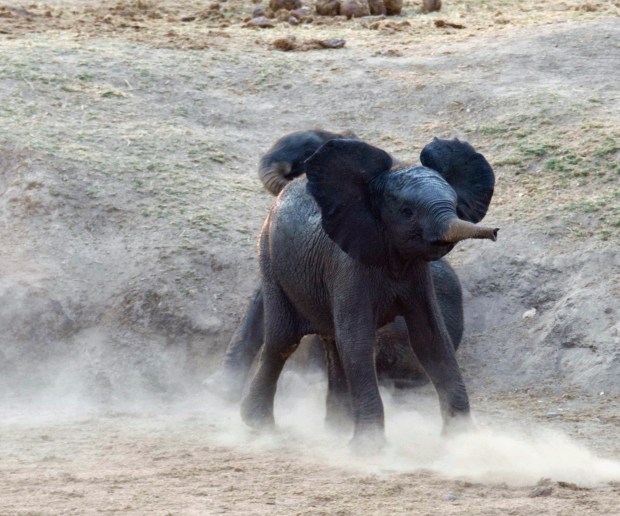
So, there was drama at the dams and pans but there was also great fun with the youngsters as usual and I just wish to show you a few pictures and videos of the action so that you can get an idea of what took place.

Videos and pictures were taken by my son Julio A., his girlfriend Patricia and myself.

Arrival

IMG_6619 PR copy

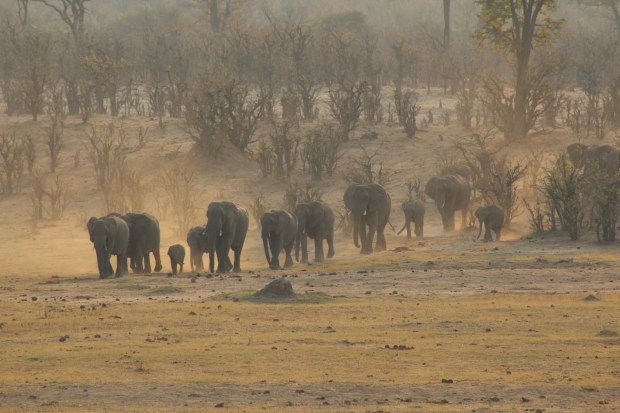
The dust can be seen for several minutes before the thirsty animals arrive.

Drinking

DSC_0348 JA copy 2

A youngster frolicking and drinking.

P1010039 copy

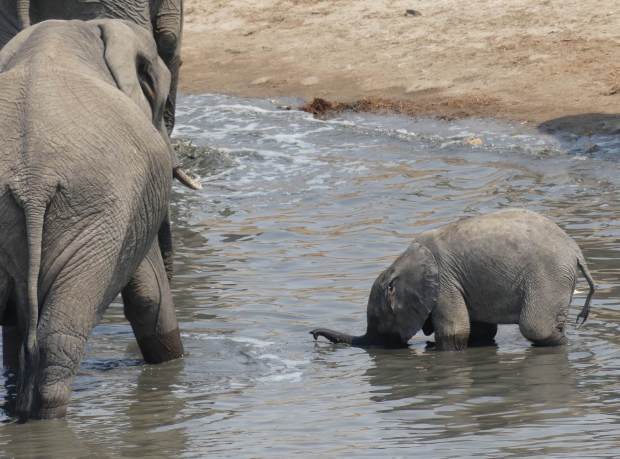
Not able to use its trunk yet a baby uses its mouth!

DSC_0585 JA copy

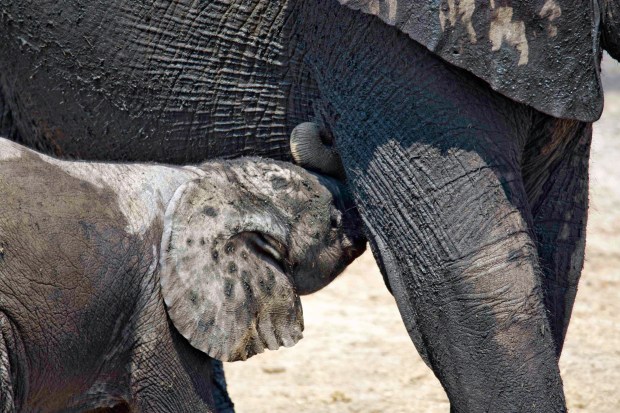
And then it gets the real treat from its mother!

DSC_0602 JA copy

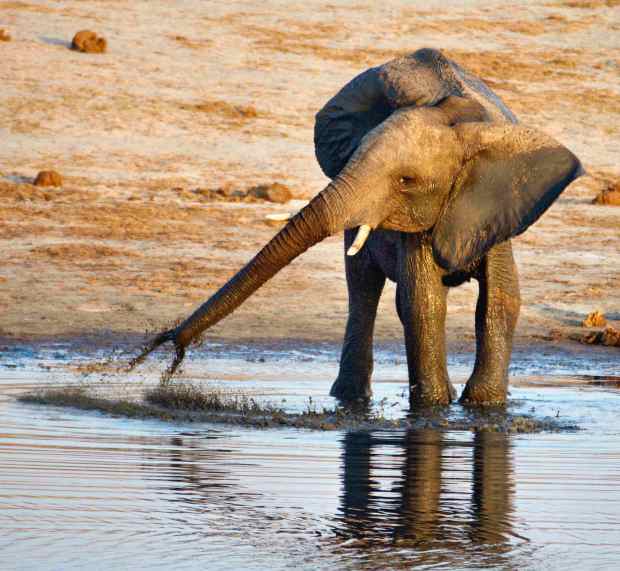
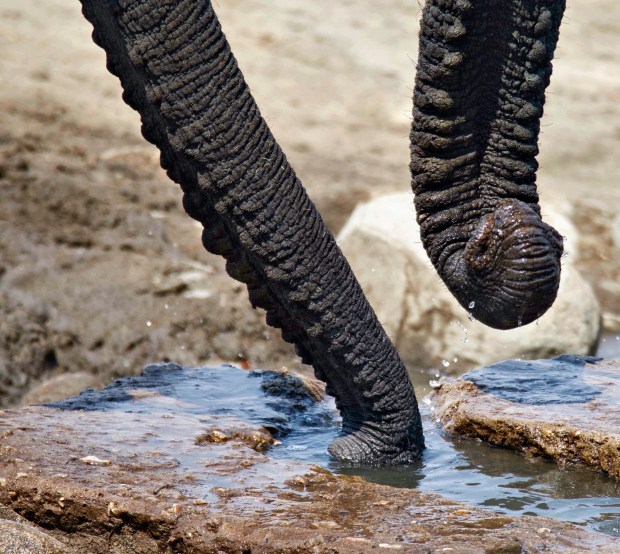
The amazing trunks in action.

Bathing

P1010057 copy

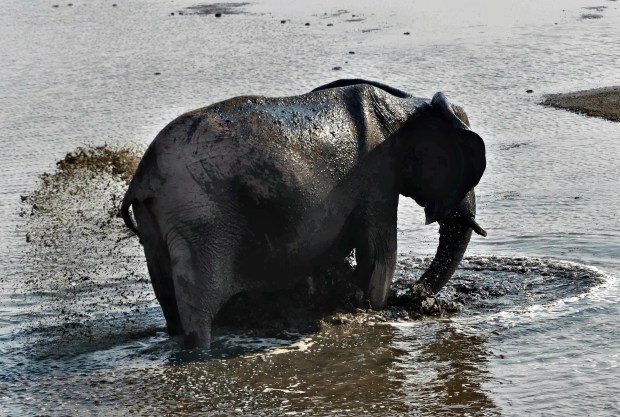
Preparing the water for a mud bath!

DSC_0712 JA copy 2

DSC_0666 JA copy 2

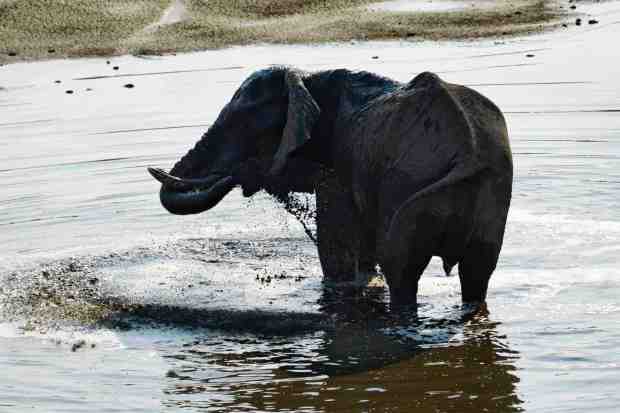
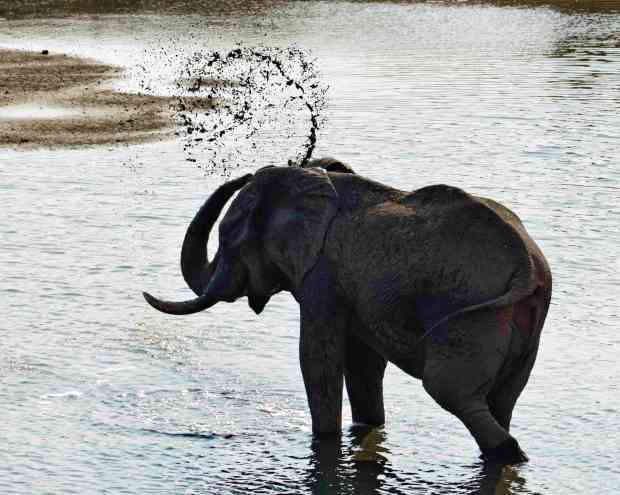
Mud sprinkling.

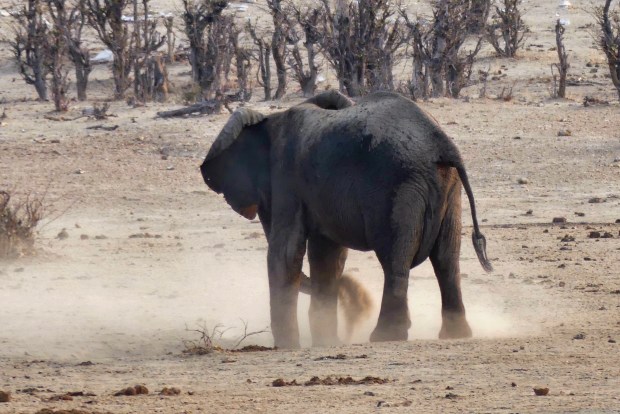
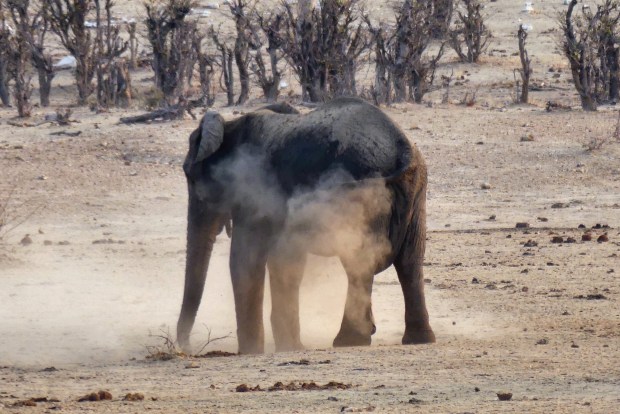
Powdering

P1010024 copy

P1010025 copy

Hanging around

This slideshow requires JavaScript.


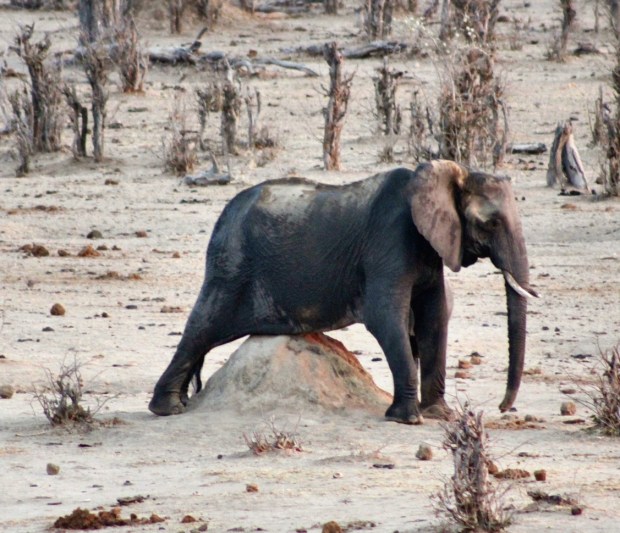
Scratching

IMG_6985 PR copy

Itchy belly!

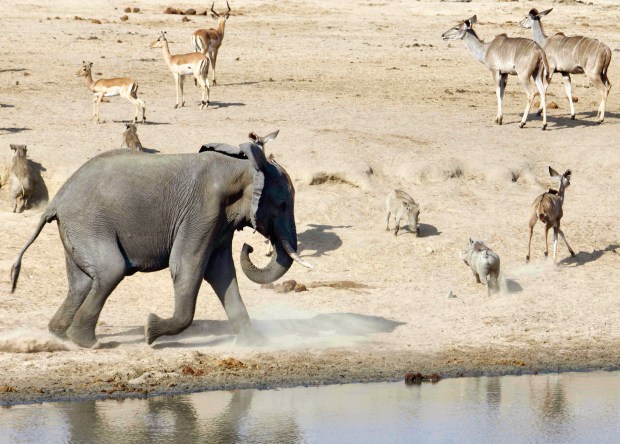
When tempers flare

DSC_0142 JA copy

A young calf scatters smaller animals before drinking.

IMG_6651 PR copy

A tusk wound. The result of a hard push that broke the tusk of the aggressor.

DSC_0551 JA copy

A funny moment!

Although pictures show some of the action, I also present you with a few videos to show you the atmosphere at the water holes.

First Masuma dam:

Then my son did a time lapse one evening:


The next two videos were taken at Dom pan, near Hwange Main camp to show the elephant numbers present there at the time (September 2019).

I really enjoy the start of the video with the arrival of the first group and the noises of the elephants.


The joys of camping

Camping Intona... copy 3

Mabel with some company while camping in the Transmara.

As my work at Intona ranch in the Transmara took me through the Maasai Mara Game Reserve, I was often taking visitors with me to the bush. There were those related to my work and friends that came for the fun of it. The former included technical colleagues and representatives from our funding agencies. The latter were of great importance and often they flew directly to Intona or to an airstrip near a camp called Kitchwa Tembo in the reserve, a kind of luxury camping. I would then collect them and I was careful to take them at least on one game drive before climbing the Oloololo escarpment towards Intona. I am not sure if the donors appreciated my work or the time spent on safari but the end result was that we were always well funded!
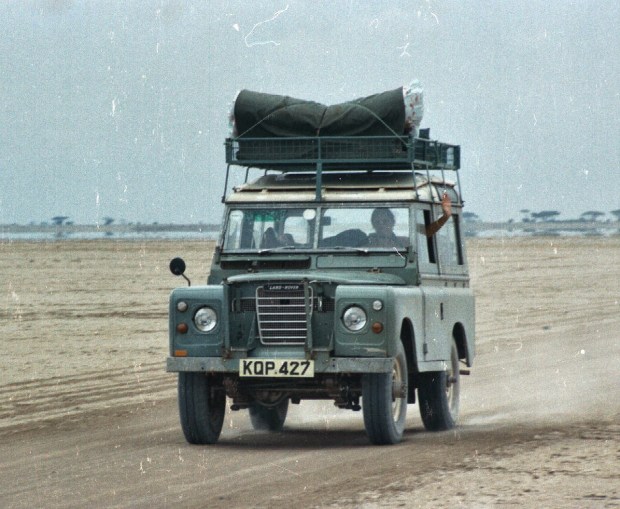
amboseli

Traveling through the Amboseli National Park.

Travel to the bush for pleasure is not everyone’s game. Some of our friends never came, others came once and a few repeated the experience. Fear of wild animals and/or creepy crawlies, lack of ablution facilities, sleeping on the hard ground and cooking with smoke were some of the excuses put forward to decline our invitation.

As much as I tried to convince them that a tent was a safe place to spend the night among wild creatures of all sorts, that nearby lodges offered luxurious toilets, that we did have a gas stove that avoided getting smoked out and mattresses to soften the ground, they still did not come.

m mara puff adder in sand river camp the day hyena stole coolbox

A recently moulted puff adder, one of the few snakes that you may encounter while camping.

However, not all my preaching fell on deaf ears and we did find a few good companions. Ranjini, with who we shared our very first camp in the Maasai Mara, often joined us and the same did Luis (Mabel’s boss). Ranjini was very accommodating and enthusiastic. Further, she had an unfounded faith in our skills when it came to negotiate difficulties. However, she enjoyed joining us and we had a few memorable trips to Northern Kenya with her. This included a memorable visit to Mt. Elgon when she inadvertently closed the tap of our car’s second petrol tank, an episode that had me a couple of hours frantically trying to determine why no petrol would reach the carburetor!

Luis was very keen on bird photography and a lover of large campfires “to keep the beasts away” as he put it despite my arguments to the contrary, not based on ecological grounds but rather that the fires advertised our position to both two- and four-legged potential visitors. He was an assiduous companion with who we shared many bush moments, including a lunch break in the Maasai Mara interrupted by a kind tour operator that came to tell us that we were sitting below a cliff from which a leopard was lazily contemplating us! Luckily the wise animal abstained from disturbing three feeding apes!

Later on came Genevieve and François with who we also shared a few adventurous trips (https://bushsnob.com/2019/02/28/a-short-trip-to-ngorongoro-contributed/) and a few other trips in Kenya and beyond. I still laugh when I remember François’ anger with his Isuzu Trooper that would often let him down! It was with them that we had our only experience at -unwisely- camping only under our mosquito nets at Shaba Game Reserve. Although we survived it, we did not repeat it!

16-TzCampsiteNgoro88-2

Camping in the Ngorongoro with Francois, Geneviève and Paula (her mother). Picture by G. Mery.

Of course, the very few visitors we had from Uruguay had no option but to come with us whether they liked camping or not. I described one of the experiences already (https://bushsnob.com/2016/04/25/unpredicted-friends-and-unforgettable-dates/) and this was also the case of my father’s cousin Marta and her friend Elcira, both retired, that also came for a visit. Having good retirement conditions they traveled all over the world and, somehow, we managed to convince them to visit us in Kenya! Although they traveled on their own to the Kenya coast, later on they joined us in trips to Nakuru and Tsavo National Parks as well as our frequent detours into the Nairobi National Park.

They were great examples of adaptable people. Marta agreed to travel seated on a camping chair tied with rope and elastic hook ties at the back of our SWB Land Rover as only three people could travel in the front. She braved the trips to both Nakuru and Tsavo sitting on canvas and she enjoyed every minute of them.

I still recall a few moments we shared such as the overt emotion they showed when, on their first morning at the Kitani bandas, they had a surprise crystal clear view of mount Kilimanjaro! Unfortunately their pleasure was offset that same evening by a serious scare when we were seating at the verandah after dinner trying to identify the different night noises while shining our torch at the various visitors such as genets, mongooses and hyenas. All of a sudden we heard a very loud and close elephant scream that made them slide their chairs back, stand up and attempt to run to their bedroom! A rather understandable response to something that also scared us and -eventually- ended in great laughter.

At Nairobi National Park we found a herd of buffalo and, aware of the curiosity of these animals, I stopped the car and told them to keep quiet to allow the buffaloes to approach. When they were almost touching the car, Marta could not hold her excitement anymore and said loudly “you want to kill us!” That caused a buffalo stampede and I started laughing but she was not amused!
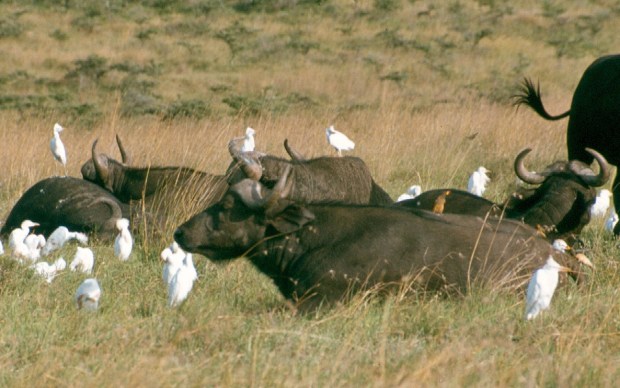
Buff group with egrets NNP copy

The buffalo herd at Nairobi National Park.

At Nakuru National Park, one of the safest camping places at the time, we set them up in separate tents to spend the night with some privacy only to discover that they emerged from the same tent the following morning saying that they felt safer being together as they heard too many animals outside!

Camping was a strong experience for Sara, Ernesto and their two kids, some of the rare Uruguayans living in Nairobi. We took them to the Maasai Mara for a weekend and stayed at the Mara Research Station, where, being a scientist, you could camp for free. It was the rainy season and the grass was rather long at the camping area so we spent sometime cutting the grass before we could set up our camp.
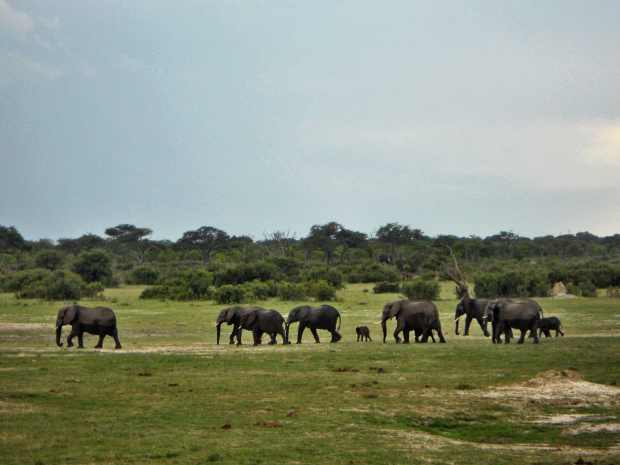
DSCN3918 11.23.28 AM copy

This picture from the Kruger National Park reminds me of what I saw at the Mara Research Station!

I noted a large number of elephants grazing and browsing some distance away and hoped that they would not come closer but I did not mention them to avoid alarming our friends. I realized later that I made a mistake. As the trip had been long, we had a quick dinner and retired to our tents early. Unfortunately, the elephants -against my hope- decided to approach us. I could hear them all around us pulling the grass and braking branches while their bellies rumbled.
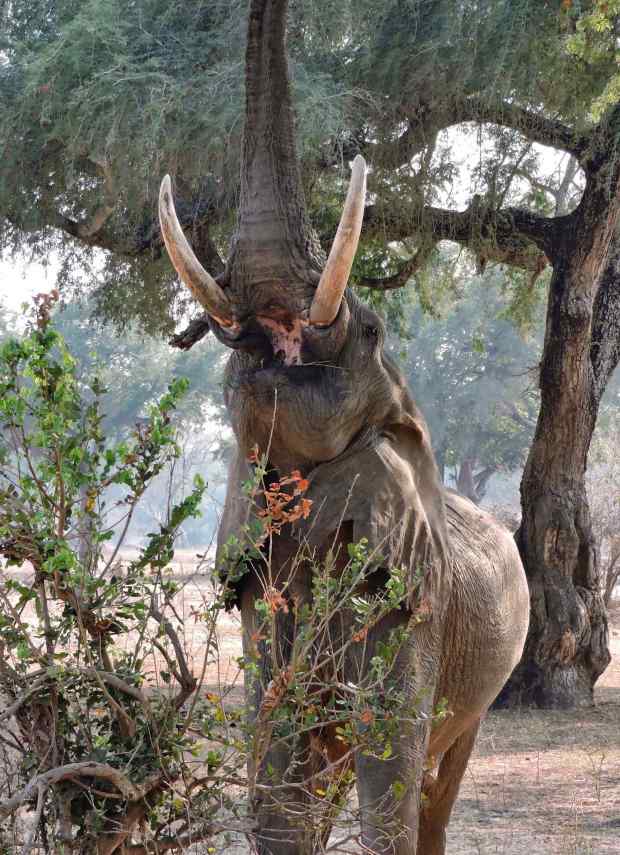
DSCN6504 copy 2

Elephant feeding overhead in Mana Pools National Park. A similar situation to that in the Mara Research Station.

After a while of listening to the pachyderms I heard Ernesto asking softly “what is that noise?” My reply was, perhaps, not the best “elephants” I said trying to sound confident to calm them down, something I clearly failed to do and I could hear them talking among themselves and hear movements inside the tent. “We are scared!” they said nervously and asked “can we go to the car?” I explained them that they were safer in the tent and that they must not go out, not even to the toilet! Luckily, the elephants soon walked away and they started to relax although I did not enquiry about their ablution needs.

The following morning, they looked very tired and they were not very happy at first until they saw the lovely place we were in and the elephants in the distance when all was forgotten! However, they never completely forgave me as they were convinced that I did it all intentionally! Despite this initial scare, they repeated the experience with us at Tsavo West, a much more sedated outing as there were not so many animals around the camp there.
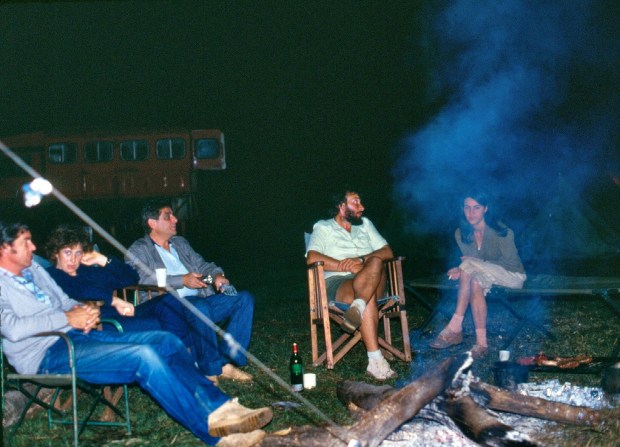
camping...

From left to right: Luis, Sara, Ernesto, the bushsnob and Mabel camping at Tsavo West. Clearly Luis built the fire!

Camping did put us in close proximity to wild animals, as none of the campsites we frequented were fenced.
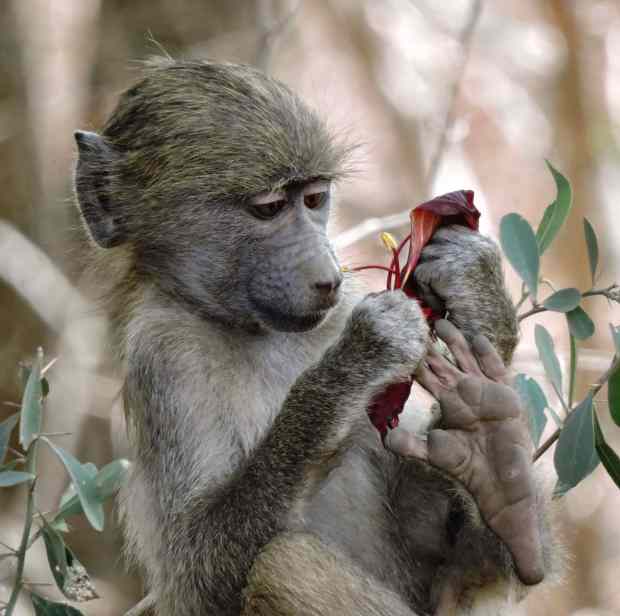
DSCN9981 6.57.00 PM copy

A cute babbon youngster before becoming a camping menace!

By far the biggest nuisance that awaits the camper in Africa is the monkeys both vervet monkeys (Chlorocebus pygerythrus) and baboons (Papio spp.). Although the latter can be rather destructive to tents and other gear, the former can be a real menace when it comes to steal your food. They are the masters of opportunism and surprise and a distraction of a few seconds is enough for them to strike.

We suffered many incidents with monkeys. Most of them were annoying but there were also some that were quite amusing. Unseen to you the vervets would be stalking you from the trees above to descend on you while unpacking your car and snatch any item that looks attractive to them. In this way you risk having an eggless or “butterless” camping experience that could leave you quite frustrated!

I have seen people running after monkeys in anger in a futile attempt at recovering their lost food while the thieves eat their booty well beyond their reach! I have thrown all kinds of objects to them in a rage when they had taken items from me but I have never managed to hit one and I have been personally “assaulted” a couple of times. Although I admit that I deserved both, at the time it was not funny. Vervets snatched our lunch bananas from my very hands in the hippo pools at Nairobi National Park and throw back the peels at me and a rather tall baboon took my packet of chips at the Man-eaters fuel station near Tsavo!

Of course the fault does not lie with the monkeys but with the habit by inexperienced campers and/or tourists of feeding them. After that the animals expect food and if they are not given it, they search for it. This gradually turns them into thieves that eventually will need to be destroyed by the parks’ authorities when they become too much of a nuisance!

Apart from monkeys we often had to deal with other possible dangerous visitors to our camps and the possibility of meeting them was directly proportional to their density. For this reason most of the incidents took place in the savannahs of Amboseli National Park and the Maasai Mara Game Reserve, than in the rather dry Tsavo West or Samburu National Parks.

I will deal with the spotted hyenas in a separate post and I will also tell you some experiences we had or learnt of encounters with elephants, in my opinion, the most intelligent animals that you are likely to encounter while camping.

I will also strike the black rhinos off the list as they were already on a severe decline at that time to be a bother to us. In any case, their reputed fame for putting out campfires is -apparently- not true! I heard of this while in Kenya and then saw it when I watched “The Gods Must Be Crazy” movie [1] but it is not a confirmed fact.
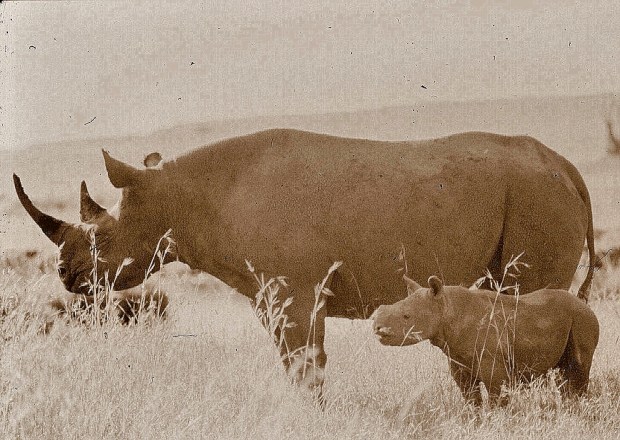
m mara rhino and calf...-001 8.55.16 AM 8.56.48 AM

Some of the few black rhinos we encountered in Kenya. These were at Amboseli National Park.

Although the buffalo have a well-deserved reputation as some of the most dangerous of the wild animals, they rarely approached our camp area. However, they can be deadly if found on foot as, particularly the lone males, will attack you without hesitation. People that had gone through the experience (and survived it!) declare that they had no idea how they managed to climb the tree they did and that often they have great difficulties to climb down once the danger is over!

The experience of hearing lions roaring at dusk and at night is unforgettable as, I believe, it awakens some ancestral fear in us. Near the Mara river area lions were abundant and we got to know the prides that lived there and we were aware that we were camping in their land! One thing is to see lions from the safety of your vehicle and another, rather different, is to know they are “there somewhere” in the dark of the night!

lion male number 1 Cottars with PMcC copy.jpeg copy

At night you always think that what is coming is the largest lion you have seen!

We heard lions roaring in various degrees of intensity every night we camped in the Maasai Mara. Sometimes they would roar while there was still daylight, particular when it was over cast. However, most often they called after sunset and we heard their call reverberating loudly against the Oloololo escarpment. The situation often became “interesting” once we had retired to our tent to sleep.

Once in the tent we would hear the lions while reading as we both enjoy this very much. Normally their roaring will be only in the background but at times they would get closer. It was interesting how our feeling of enjoyment at hearing them far off would gradually fade and soon turn into apprehension as they moved near!

At times they would roar real close and we could also hear their breathing! Those were the times when we became really worried but stuck to our belief that the tent would protect us. Despite our apprehension, the lions were walking or running through our camp and paid no attention to us. So, after a few agitated nights we gradually relaxed and became more convinced that we were safe inside the tent and waited for the lions to walk away.

However, it is easy to narrate these experiences now, from the comfort of the armchair but a different thing is to live through them!

Just to illustrate that things can, albeit rarely, go awry, I will narrate a story of what happened to a former wildlife veterinarian that worked in Kenya and left while we were there. He had taken two lady friends camping in the Aberdare National Park. They were already inside the tent, preparing to spend the night when they heard some grunts that were attributed to a duiker. Later, in the early hours of the morning something crashed on their tent and brought part of it down. The vet’s reaction, thinking that an animal had accidentally bumped on their tent was to shout something like “out of here!” while his lady companions were rather terrified. Eventually, through a slit of the tent door he saw a large male lion that, fortunately, got away -roaring- when he shone the torch into its eyes. Although sleeping after such an encounter was difficult, they stuck together and stayed in what remained of the tent until the morning without further ado.

During the evenings we spent together by the campfire Paul told us the story of Hannu (not his real name) a retired and veteran Finnish veterinarian that was studying fluke control in Kenya. Paul had invited him to share his work as he did with me.

Hannu happened to be quite deaf and, because of his age, he needed to pass water a couple of times at night, a hazardous exercise when camping! Aware of the situation Paul kept an eye on him just in case. One night, while Hannu snored, lions started roaring close by. Paul was aware of the fact that Hannu would go out of the tent after midnight so he made an effort to stay awake to stop him if necessary. The lion roaring became quite loud and, suddenly, the veteran sat up in bed and shouted, “that was a lion!” and went back to sleep, forgetting his need to pass water and leaving Paul sleepless for a long while!
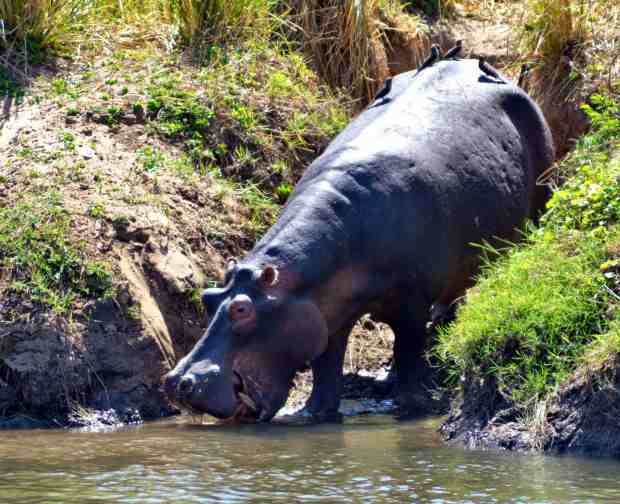
DSC_6291.1 copy

A large hippo enters the water through a well trodden path. Those are the ones to avoid while camping!

Although hippos will normally keep clear of your camp, the fact that many of the camp sites are located near water puts you in close proximity with them and if you sited your tent in the middle of one of their paths you may suffered the nasty experience of one bumping into your tent when walk to their grazing area.


[1] See: https://www.physicsforums.com/threads/do-rhinos-put-out-fires.116998/and http://en.wikipedia.org/wiki/The_Gods_Must_Be_Crazy


Learning to camp among the wildebeest

Sometime after our first enthusiastic attempt at camping in the Maasai Mara [1], I got to know Paul, a virologist working at the Kenya Veterinary Research Institute in Muguga as part of a veterinary team of the then Overseas Development Agency [2]. Paul had been a student of Sir Walter Plowright, one of the discoverers of the vaccine against Rinderpest [3]. Then he was the mainly working with the latter as well as Bovine Malignant Catarrhal fever (BMCF) [4].

At that time he was spending time in the field investigating the epidemiology of BMCF as well as the serious outbreaks of Rinderpest that were still present in East Africa.

Rinderpest_1896-CN

The well known picture of rinderpest in South Africa in 1896. From Wikimedia (Public domain).

Our friendship started by having our lunches together “al fresco” under the Muguga sun and, after a few weeks, he invited me to come with him camping for a few days in the Maasai Mara Game Reserve. A while earlier, Paul had received reliable information from the chief game warden that the first few wildebeests -of the hundred of thousands present- were starting to drop their calves. It was early in the year and he needed to get there to get samples of wildebeests’ placentas as part of his studies. As I was still waiting for a decision regarding my work, I readily accepted.

So, we drove to the Maasai Mara in Paul’s series III Land Rover that had a few reinforced parts, including a bulletproof windscreen and a very hard suspension! Paul had permission to camp anywhere in the reserve and he had already selected a spot where he had established his base. During his absences the camp was looked after by his assistant, the do-it-all Tobias, a Kenya Government employee, that always accompanied Paul when camping [5].

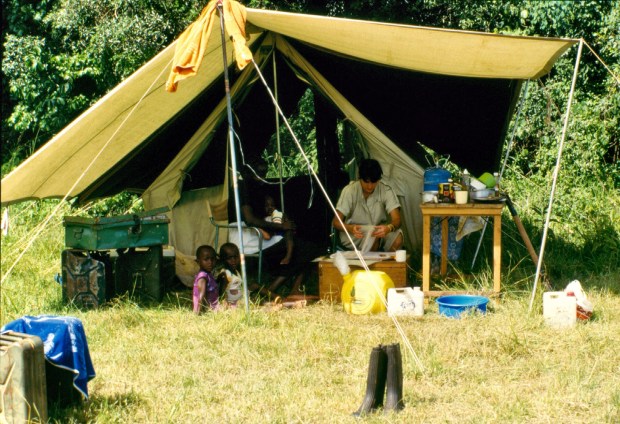
I believe the camp was located in the Mara triangle but I do not remember its precise location except that it was a very secluded area in a clump of trees. There were two tents, a smaller one for Tobias and a large one that was where Paul stayed. On one end of the tent there was the “sitting room” and kitchen while the other was the field laboratory. As it was a large tent, we were very comfortable. Paul’s pride and joy was his Australian portable gas fridge that enabled him to keep reagents and veterinary drugs as well as food (and a couple of Tuskers) so that he could stay in the field for a few days!

The fact that we were in the middle of the bush with no fences and no other humans nearby was, at first, rather unsettling for me and I put this to Paul. He explained that he had learnt from his own experience and that of other wildlife veterinarians and field workers that animals will normally stay clear of your camp. He added that exceptions did take place but that serious accidents were extremely rare provided you did not interfere with your the wild inhabitants. “It sounds incredible but the tent will protect you against almost all animals” he said and this has been our camping creed ever since and -so far- it has not failed us.

Our task for the few days we were together was to start the collection of tissue samples from wildebeest placentas to attempt to isolate the BMCF virus. With this in mind, by the end of the first day we had located the vast herd of wildebeest and we had prepared the necessary equipment to be ready to start working the following morning before dawn.

m mara air wbeest migration

The wildebeest migration from the Oloololo escarpment.

We started our journey in the dark and in twilight we began to drive cross-country across the plains among the wildebeest until we got to our destination: a vantage position on top of a hillock. Once at the top while daylight improved we prepared our observation post by setting up a small table and chairs as well as our binoculars and a telescope.

After some time the sun emerged and bathed the savanna with its yellowish light. What was revealed had already been announced by the intense noise that we were already hearing as thousands of wildebeest bleating, moaning and snorting.


We also heard zebras barking and braying as they were also there mixed with the wildebeests, sharing their grazing.

We immediately started watching the animals looking for arched backs and tails held horizontally, signs of a calving animal. It was not an easy job as we needed to scan thousands of animals that were constantly on the move! We had spent a couple of fruitless hours watching the animals with the only satisfaction of feeling the warmth of the sun on our backs. Then I heard Paul shouting, “there is one starting to calf” and added “let’s go”. I followed him having seen nothing!

We drove down our knoll rather fast. While Paul held to the steering wheel I held tight to every bit of the Land Rover that would resemble a handle as we hit stones and ruts that would have destroyed most cars’ suspensions. It was not a careless race but rather that our attention was fixed on not losing our “patient”.

We drove among a sea of animals and, luckily, Paul kept his bearings and eventually we found the animal. Well, in fact there were two as the calf had been born and it was a steaming miniature of its mother already struggling to stand up, drink the vital colostrum and start running to avoid predators.

We waited at a prudent distance until both animals moved away and then we descended on the placenta that was left on the grass. We have found our first placenta and took the necessary samples. We were very happy and celebrated this by taking pictures of the event as well as burying a long stake with a number to indicate the area of collection so that a GPS reading could be taken later.

We returned to our viewing point and continued watching. We waited for a long time without spotting another calving. At some stage we saw a clearing appear among the sea of wildebeests. It became gradually wider resembling the wave a boat makes when going fast on still water and then we saw that a male lion was walking through the vast herd that -amazingly- simply stared at it and just moved the minimum distance from it. “It is better for the wildebeest to know where the lion is!” Paul explained. A sighting that I will not forget!

It was clearly still early in the calving season and that first day we only got a second sample in the afternoon.

The following day, although we did not get the expected storm of births, more females were calving and the collection of samples did not require so much watching from the hill but rather slow driving among the animals looking for calving signs and then to wait for them to release the placenta to collect what we needed.

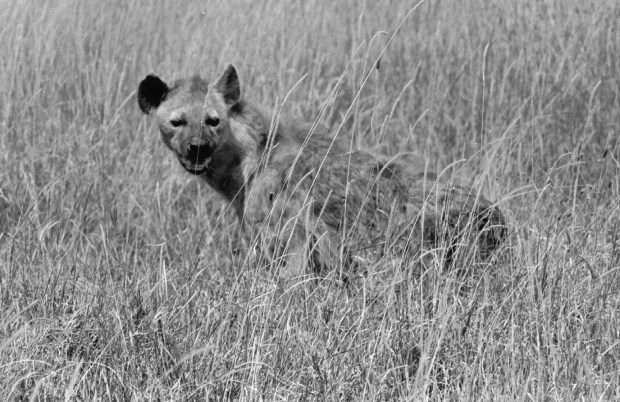
The next day our work took a competitive turn. As the calving increased, more predators started to appear, particularly the spotted hyenas that in the Maasai Mara are rather abundant so we needed to move fast to beat them to the placentas and even while one of us collected samples, the other kept an eye on hyenas, just in case!

hyena

One of our ‘competitors”!

Sadly, after a few days we needed to return to Muguga to deal with the samples we had collected so we left that true animal paradise and great work and started our drive back through the vast plains of the Maasai Mara to the Kenya highlands where Mugug and Nairobi are located.

Although I was unaware then, the fact that Paul continued to do field work there and that I (often with Mabel) started to work at Intona ranch and needed to drive past the edge of the reserve, gave us ample possibilities to meet and share lots of time in the bush where we continued learning the ways of the bush and contracted the “bush camping disease” from which we still suffer today!


[1] See: https://bushsnob.com/2019/08/25/a-brave-camping-attempt/

[2] Today’s Department for International Development (DFID).

[3] Following the break-through finding of J. T. Edwards in the 1920s that the infectivity of the rinderpest virus could be attenuated and used to immunize animals for life, in 1956-7 W. Plowright and R. D. Ferris obtained a stable, attenuated, and non-infectious virus, ideal for a vaccine. This was cheap to produce and safe and its use eventually -after lots of very hard work in the laboratory and in the field- led to the global eradication of rinderpest in 2011.

[4] Wildebeests carry a lifelong infection of BMCF but are not affected by the disease that is passed from mother to offspring and shed mostly in the nasal secretions of wildebeest calves under one year old. Wildebeest-associated BMCF is transmitted from wildebeest to cattle normally following the wildebeest calving period.

[5] See: https://bushsnob.com/2017/02/05/camping-in-kenya-mara-river-fishing/


A brave camping attempt

Although I had camped once before in Bogoria with Richard and Philip [1] our first attempt at spending a couple of nights under canvas took place at the Sand River campsite in the Maasai Mara Game Reserve. This pioneer effort took place way before I knew I would be working at Intona ranch in the Transmara, something that would require lots of driving through the Reserve as well as camping for many years.

We were still staying at Muguga House then and we hatched the idea together with Kevin, a young forester that was had arrived to work a short time at the Kenya Forestry Research Institute (KEFRI) a sister organization of the Kenya Veterinary Research Institute, both of the Kenya Agricultural Research Institute (KARI).

Aware that his time in Kenya was limited, Kevin wished to visit the well-known Maasai Mara before returning to the UK so he was the main promoter of the idea. He managed to convince our friend Ranjini to come as well so we created a four-person team for this rather new undertaking.

Kevin did most of the footwork for the trip, Ranjini borrowed some stuff from other colleagues and I borrowed a large and strong tent from our laboratory in Muguga. We rented the 4WD car we could afford and ended up with a Subaru van. Unfortunately, we could not pack lots of things in it so our safari lacked a few essentials we have learnt to love over the years we have spent camping in comfort.

We did not have a table, chairs or mattresses. Luckily we were able to borrow four sleeping bags, basic cooking utensils, cutlery and crockery and, wisely, the ladies decided to stuff four pillows (borrowed from Muguga House!) at the last minute! The rest, we thought, would be overlooked by our enthusiasm and excitement at camping in the open surrounded by wild animals!

The trip started on a Friday morning traveling about 30 km in the wrong direction as we needed to catch a matatu (packed public minibus) to Nairobi to get the car only to go back to Muguga to load it and start our journey. Kevin drove all the way as I had not driven a right hand drive car yet.

Although he drove rather fast to get to our destination before closing time, the trip went well. We got a bit of a scare when, trying to save petrol, he switched the engine off during a long descent and both the power steering and the brakes stopped working! Luckily this only lasted a few seconds until the engine re-started and all functions returned to normality! After a rather long journey, we arrived to the Maasai Mara rather late but luckily we managed to get in before the closing time and reached the Sand River campsite rather late.

Although we all had assembled tents before, putting up the large tent for the first time in the dark was a bigger challenge than we had anticipated. There was a lot of trial and error and, after our best combined effort we were very pleased when we managed to get something with a V shape erected that served the purpose for us to rest our tired bones after a quick supper.

camping ranjini kevin

From left to right: Ranjini, Kevin and Mabel (kneeling down) and a good tent badly assembled!

That night we herd grunting noises very close to our tent. Although we were sleepy and tired the situation demanded some discussion as, at times, the situation became rather nerve-wrecking with the grunts coming from an animal or animals very close to the tent! After a while we unanimously decided that buffaloes were responsible for the noise, as we had seen them nearby earlier on. Today I believe that we all knew which animal was responsible but that we took the decision for our own peace of mind and refuse to accept that there were lions inspecting our camp!

Lion grunts

Despite the nervous start of the night we slept through and, luckily, we were in a good enough shape in the morning. When we saw the way our tent looked, we had a good laugh and decided that it was worth spending some time reassembling it to manage to close its zips fully! We finally managed to get it more or less in shape and to close it.

We decided that it was time to explore the area searching, as any first comers to the Maasai Mara, for lions. However, before departing we walked to the dry river bed to check for spoor. The overwhelming lion spoor we saw left us in no doubt of the kind of night visitors we had.

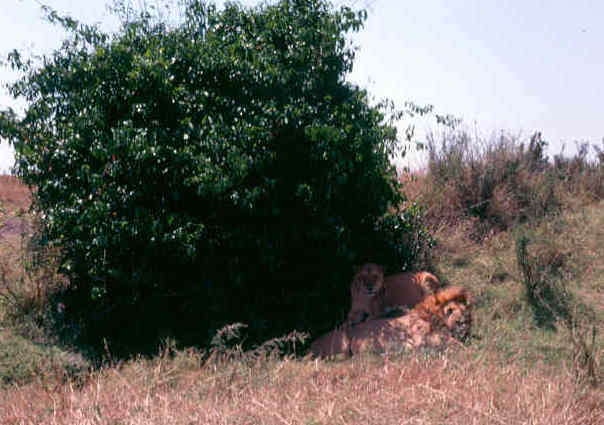
We drove many kilometres through the bush, got lost a few times and, finally to our delight, we found a couple of sleeping lions. Although the objects of our desire hardly moved, they made our day!

Maasai Mara lions

Our first lions.

Again, we returned to our camp very late after our drive to prepare supper. Unfortunately, while we were cooking we heard Ranjini saying that she had just lost her contact lenses in the grass, just outside the tent while trying to clean them. We postponed supper and all joined efforts in search of the tiny lenses in twilight. After a while, luckily, Mabel’s eyes came to the rescue and she, miraculously, found both of them stuck to some blade of grass!

That evening we also heard our first hyena call and we could also herd lions roaring in the distance. Our British friends knew both sounds from the BBC documentaries. We believed them.

Hyenas calling.

Lion roar

That night the grunting took place inside the tent and it was equally disturbing to everybody except me, the cause of the noise. My snoring was such that both Ranjini and Kevin were planning to wake me up (or worse!) when we had a partial tent collapse that solved the problem as we all woke up and my roaring, apparently, ceased!

Although this first camping was very basic and limited in what we saw, it wetted our appetite for the bush and showed that there was a lot to explore in Kenya and that you did not need to pay a fortune to do it. We promised ourselves that, as soon as our finances allowed it, we would get camping equipment and start going out to enjoy beautiful Kenya.


[1] See: https://bushsnob.com/2018/02/22/pink-bogoria/


Uncomfortable tick

Working with certain ticks can be dangerous. As an example, it is possible to contract the severe Crimean-Congo Haemorraghic fever while working with its vector Hyalomma spp. Luckily, most of the work we carried out at the International Centre of Insect Physiology and Ecology (ICIPE) dealt with the Brown Ear tick (Rhipicephalus appendiculatus), vector of Theileriosis, the most important and deadly cattle tick-borne disease found in Africa but not known to transmit diseases to humans. Over the many years my colleagues and I worked with this tick, we never had an instance of sickness that we could attribute to them.

R a on ear high resol

Heavy infestation of Rhipicephalus appendiculatus on a calf ear.

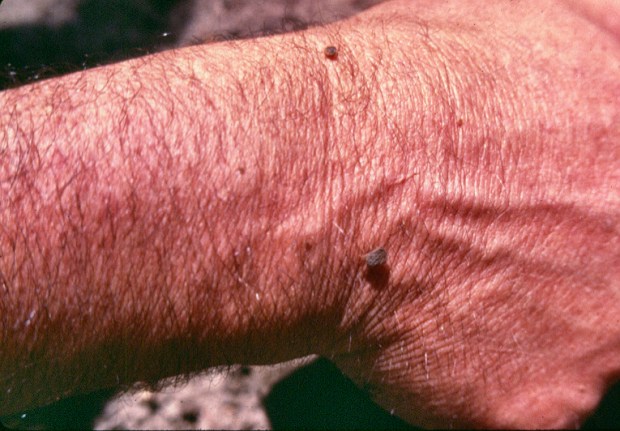
Ixodid (hard) ticks such as the Brown Ear tick bite but do not sting. They do not bite like other insects either but rather they attach themselves in a usually painless way so that you do not know about them until sometime later. Argasid (soft) ticks do bite, feed and go away to their resting place to come back and feed again after digesting the blood meal.

Argasids' lesions copy

The Argasid ticks (Ornitodhoros, Argas, etc.) shown will bite, feed and detach. Ixodid ticks (Rhipicephalus, Hyalomma, Amblyomma, etc.) need to attach to the host prior to feeding).

Although we did not get any disease signs, we did experience tick bites very often. We got ticks on while walking in the field and during our laboratory work during which we needed to handle them very often.

Although the adult ticks did not attach readily to us, the nymphs and larvae did. Their preferred body regions were areas where there was hair such as neck, armpits and genital area but the larvae picked while walking on the grass would mainly stay on your ankles (pepper ticks). Eventually I became hypersensitive to their bites that produce me intense itching that makes me scratch their bites intensely and often breaking my skin!


Counting immature ticks was a normal procedure for our work and -at the time- the procedure consisted in placing them on a white smooth table where immediately they would start moving. Being attracted by CO2 they would aim for you straight away and you needed to work very fast to be able to catch them -with an inverted tube- before they would get at you. Unfortunately and rather inevitably a few would break through your defences, fell on your lap or crawled up your arms with the consequence that later you would find them attached to you in the various places mentioned above!

Although, as I mentioned above, adult ticks generally did not attach to you, there were exceptions with certain species that caused the unfortunate incident that happened to a visiting colleague.

After a day of fieldwork counting and collecting ticks from local domestic animals in the Mbita Point area [1], we came back to our bungalow for a deserved shower before our dinner. I noted that John (not his real name) was walking with his legs slightly separated as if suffering from nappy rash but I attributed to the many hours we spent kneeling down searching for ticks and -with some effort- refrained from making any rude remarks!

It was only after the shower that he came to me and, very seriously, told me that he had a problem. This took me by surprise but nothing prepared me for what would come next. “I have a tick attached to me and I cannot remove it!” and, before I could comment he added, “because it is in a place that I cannot reach” and then added “do you think you can pull it out?”

Having suffered various tick invasions to my privacy, I immediately imagined where the invader was and -albeit unwillingly- agreed to do it. So it was that I ended up with my naked colleague spreadeagled on a bed!

I will omit further details of the intervention except to say that I did lock the door as I suddenly realised that the excuse “I was looking for a tick” if found rummaging my friends privates to a visitor would not be very credible! Fortunately, no one disturbed the procedure!

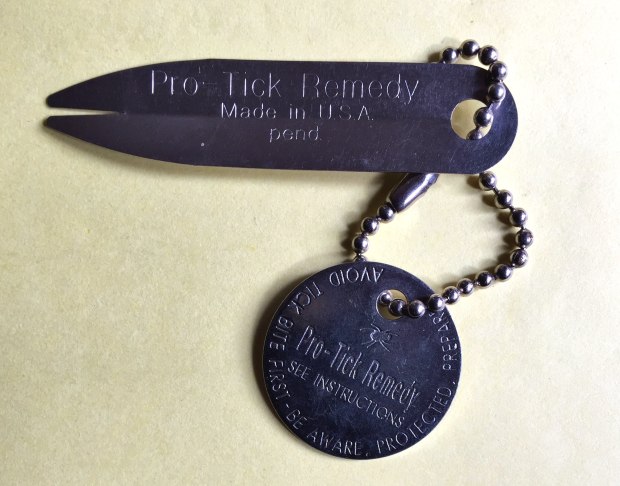
It was good that the trespasser was an adult female that had already started to engorge and it was easy to find and to remove it intact by turning it upside down before pulling it out. At that time I did not possess my “tick remover” tool that was sent to me as a present from the manufacturers.

IMG_4519 copy 2

A “tick remover”. Please note that I neither recommend or do not recommend this product that i have never used.

Leaving mouthparts’ fragments embedded in the skin could have still caused further discomfort in such delicate body region! We were both very relieved with the outcome and celebrated the de-ticking with a couple of beers over dinner.


[1] See: https://bushsnob.com/2015/03/26/kenya-friends-and-foes1/ and https://bushsnob.com/2015/04/04/chicken-a-la-rusinga1/

Apartheid days

The Oxford dictionary defines Apartheid as ” … (in South Africa) a policy or system of segregation or discrimination on grounds of race [1].

At the time of our arrival in Kenya Apartheid was in full swing in South Africa. As this Afrikaans name suggests, segregation (or literally “separateness”) between races had been official policy from 1948. The system promoted White supremacy over Blacks, Coloured and Asian South Africans the four main racial groups it recognised. Marriages (or sex) between races were forbidden and housing and employment opportunities were for Whites only.

At the time that our experience took place, there was a bitter struggle going on in order to obtain equal rights for black people but the news about this were not widely known and there was no social media in those days.

Before I traveled to Kenya my knowledge of Africa was negligible. As most people I pictured it as a jungle largely influenced by the Tarzan movies! I was aware of Patrick Lumumba’s assassination in the Belgian Congo and we did study the ideology of Jomo Kenyatta and the Mau Mau movement but little else.

My concept of Apartheid was also very limited but I knew that it was the segregation of Black Africans by a White minority in South Africa and that there was some kind of sanctions imposed to South Africa because of this.

Once in the UK in 1979 while studying for my MSc in Wales I followed the negotiations between the UK and Zimbabwe that culminated with the signing of the Lancaster House Agreement that granted independence to Zimbabwe on 18 April 1980. Following the latter I learnt more about Apartheid, particularly that it included an arms and trade embargo as well as serious on-going conflicts of South Africa with neighbouring countries as well as a number of other sanctions that had various degrees of success.

In 1981, when we arrived, Kenya had obtained its independence in 1964 and Jomo Kenyatta had, by then, been succeeded by Daniel arap Moi after his death in 1978. All people were equal in Kenya but it had strong policies against what was then known as “the racist regime” of South Africa.

Very soon we had to deal with the Apartheid complications when Mabel traveled to Kenya as I already described [2] but this was a kind of remote perception of the issue that only became real when we returned to Uruguay after completing my FAO “Andre Mayer” fellowship.

At the time, to get from Nairobi to Montevideo you could not avoid a stopover in Johannesburg, where you needed to spend a night or two, depending of the flight connection. I believe that there were two flights per week between Johannesburg and Rio de Janeiro, operated by Varig [3].

When the time to travel home arrived, we got our tickets from the Varig office in Nairobi. Those were the times of hand-written tickets! Varig informed us that we required a Visa for South Africa, even if we were to spend the night at the airport. This meant a similar procedure to the one undergone at the time of Mabel’s arrival for both of us.

As we were returning to Kenya after our holiday to work at the International Centre of Insect Physiology and Ecology (ICIPE), they also reminded us that the Kenya Government would refuse entry to visitors with South African stamps in their passports. Again we solved this by getting Visas on a separate sheet of paper through the South Africa Trade Mission[4] in Nairobi after going through a lengthy questionnaire.

Now we only needed to get our money and pack our cases. As we did not have credit cards then, we went to our bank to get travellers cheques (TCs), an instrument rarely used today with the advent of the ATM machines! We preferred to carry TCs as these were safer than cash. Almost immediately regretted our decision when we immediately noted the stamp at the back saying “Valid worldwide except in the Republic of South Africa”!

Although our overnight stay in Johannesburg to connect with the flight to Rio de Janeiro would be paid for by Varig we realised that duty-free shopping would be out of the question!

On arrival at Johannesburg all our attention was focused on avoiding the infamous stamp in our passports as, although we had the paper visa, we needed to hand them over as well. We were relieved to get them back “clean” we tried to memorise the process for our return in a month time.

So, soon afterwards we were back traveling to South Africa on our return trip to Kenya. This time we decided to spend an extra day at Johannesburg to have a look at the city and buy a few essentials that we could not get in Kenya.

We managed to “survive” immigration managing to keep our passports “visa free” and we were taken to our hotel by its courtesy bus. During the whole time at the airport we dealt with whites and, believe me, that the driver of the bus was the first black man we saw!

The following morning we decided to catch a public bus to get to the centre of Johannesburg and the hotel receptionist advised us of the location of the bus stop. So we walked a short distance and found it. After a few minutes we saw a bus approaching and we tried -fruitlessly- to stop it. After a few more buses drove past, one finally stopped only for us to be informed by a kind driver that we needed to wait further for the correct bus. The one for whites!

A few minutes later the bus came and we got in. The drive was through among the cleanest streets we had seen (including those in the UK) and the city centre was no exception! Soon we were walking and being amazed by the number and quality of the shops we saw. We were coming from Uruguay going through bad spell and going to Kenya that did not allow many imports to get into the country and certainly none from South Africa!

It was time for us to change our TCs and we entered in the first bank we found to get some Rand. After some consideration we had decided to ignore the ban stamp at the back and handed them over to the cashier. Without showing any concern he counted them and gave us the equivalent in Rand. Unable to restrain my curiosity I asked if he did not mind the stamp at the back. He shrugged his shoulders and said something in Afrikaans that did not sound nice! “So much for the stamp and the sanctions”, I thought!

There were so many tempting stores that we had difficulties choosing one to enter and, frankly, I do not recall their names. By the end of the our shopping we had managed to get a lot of items that we needed in Kenya [5] and I still have a strong rubberised torch (my “Black Apartheid torch” as I call it) that still survives today! Amazingly, all shop attendants were white and the blacks were nowhere to be seen!

Once in the street, we walked about through streets -again- vastly dominated by white pedestrians with very few Africans on sight, most of them involved in service tasks. Tired and to avoid being left behind by buses, we decided that a taxi would take us to our hotel to get ready to leave the following day after our Apartheid first hand experience!

Many years later, on 10 May 1994, the day Nelson Mandela became President I was in South Africa on a work trip related to my FAO work. While watching the vast African crowds celebrating the event, the memories of our first visit to the “racist regime” in the 80s came vividly to my mind and I really felt joyful at seeing that finally there was equality for all. But more of that later, when I deal with stories from Southern Africa.


[1] See: https://en.oxforddictionaries.com/definition/apartheid

[2] See: https://bushsnob.com/2015/03/26/kenya-friends-and-foes1/

[3] Varig (Viação Aérea Rio-Grandense), formerly the largest airline of Latin America and Brazil’s first airline, stopped flying in 2006. Varig was known and recognized worldwide for its quality. From: http://www.varig-airlines.com/en/

[4] I am not sure of the exact kind of representation that South Africa had in Kenya at the time.

[5] In the 80s imports into Kenya were somehow controlled and most of the stuff in the shops were local or from neighbouring countries.


===

Apartheid attracted lots of opposition not only in Africa but worldwide. Arms and trade embargo. During 1970-80s internal resistance to A became strong and several brutal crackdowns followed by the Nat Party government. From 1987 to 1993 the NP entered in negotiations with the ANC. In 1990 prominent ANC figures including Mandela were released from prison and all Apartheid legislation was repealed on 17 June 1991 and multiracial elections held in April 1994.

========

I needed to return to Uruguay for a vacation and later return to Kenya to take up my new appointment as a Research Scientist at the


started to notice that all employees at the airport were white, except those dealing with cleaning and other services, although we knew that the majority of the population were not!