Elephant

On silent feet

cropped-zebra-and-trees-morning.jpg

To write these lines I needed to sit down and in so doing, I sat on a snake! Luckily any concerns you may have about my derrière are unnecessary as said snake was made of rubber. Yes, I know, I should not be playing with toys at my age but some of us are take longer to mature!

Baboons and vervet monkeys are a menace while camping in Africa, and Mana Pool’s lodges are no exception to the rule. We learnt that rubber snakes are a good deterrent so we alwayscatter a few around our area while on safari. They work well and we have had fun watching monkeys perform panicky gravity-defying summersaults while screaming in terror after spotting them! I will come back to the topic of monkeys and camping in the future, so for now I turn back to Mana Pools.

In my earlier post I mentioned that in Mana Pools you are able to go about freely on foot. Funnily enough, you often come into much closer contact with wild animals while in your lodge or campsite than when walking in the bush. The former (named by the Zimbabwe Parks & Wildlife Management Authority) is a small house with one or two bedrooms, a kitchen and a toilet.
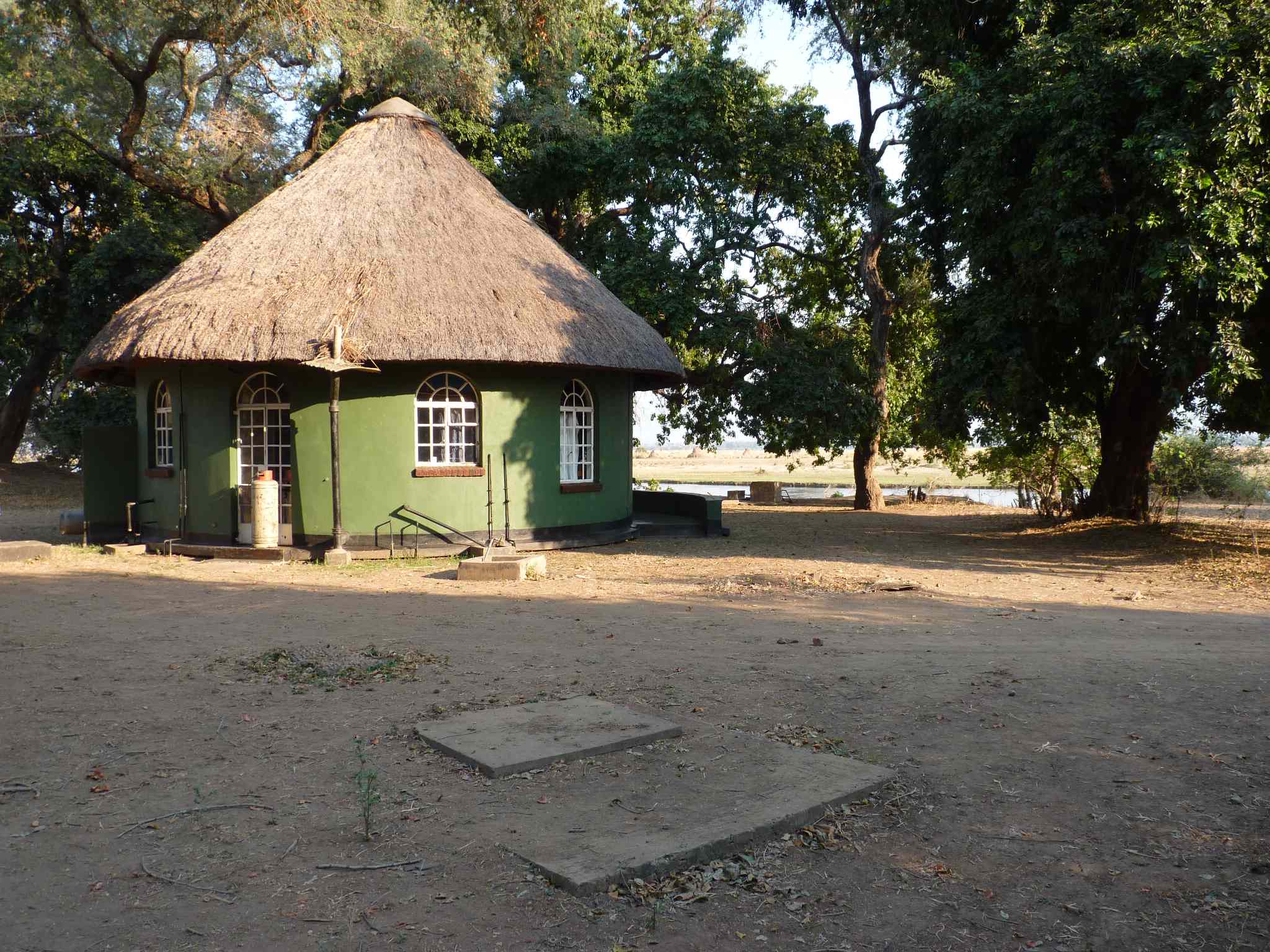
Mbuvvee? , our lodge.

Mubvee, our lodge.

Solar lamps provide lighting and there is a freezer, a gas cooker and a BBQ place. The ubiquitous Tanganyika boiler -firewood operated- provides ample hot water while the vervet monkeys and baboons come free of charge!

The lodges are well positioned, only a few metres from the river bank providing great views of the Zambezi. The sunsets over the river were spectacular as usual.
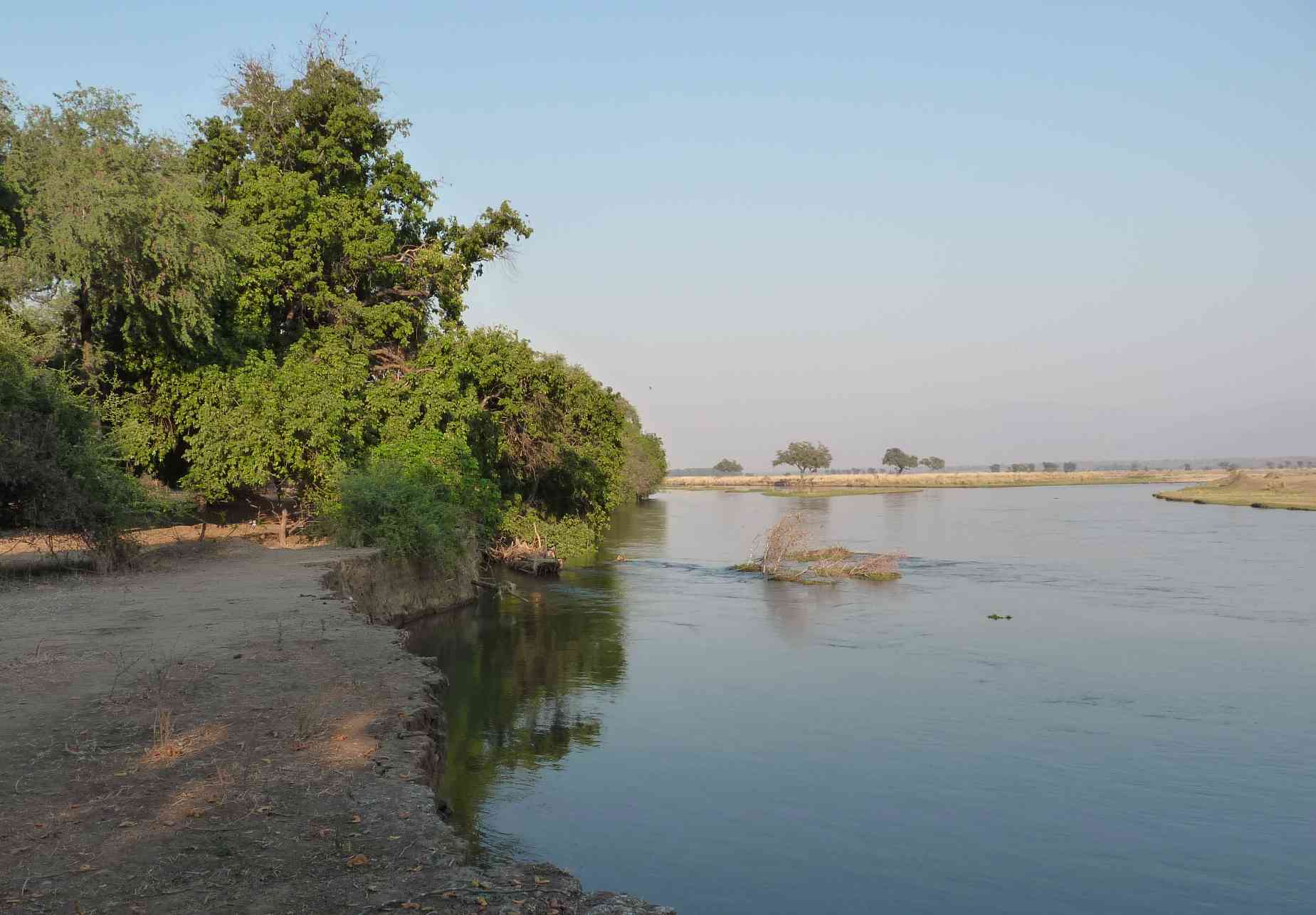
The Zambezi river from the lodge.

The Zambezi river seen from the lodge grounds.

At the time of our visit the sundowns were made even more dramatic by the bush fires raging on the mountains opposite us, across the river in Zambia. Most nights the hills were decorated with crisscrossed fire garlands that devoured the dry brush voraciously and added drama to the view.
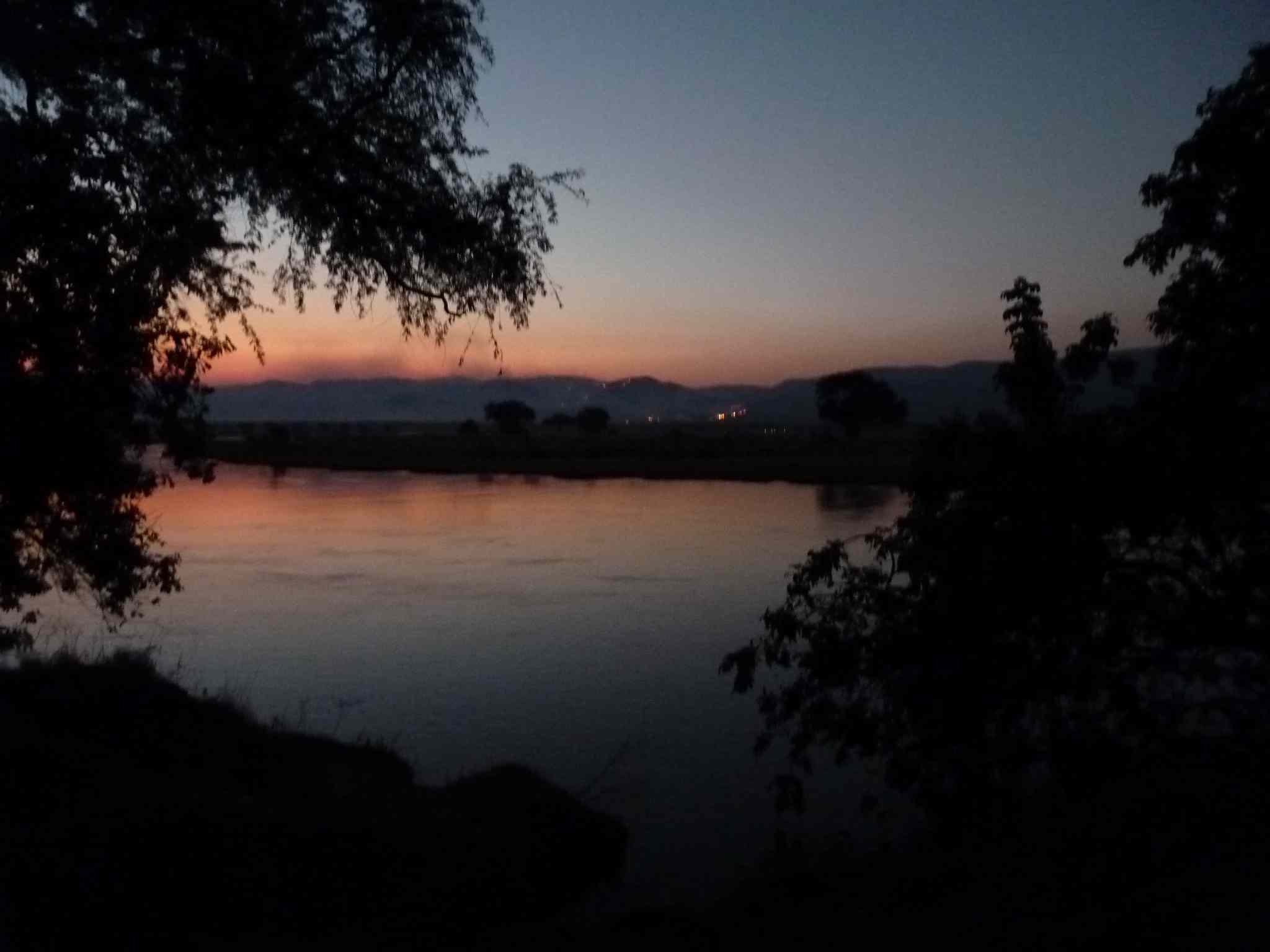
The sunset and bushfires.
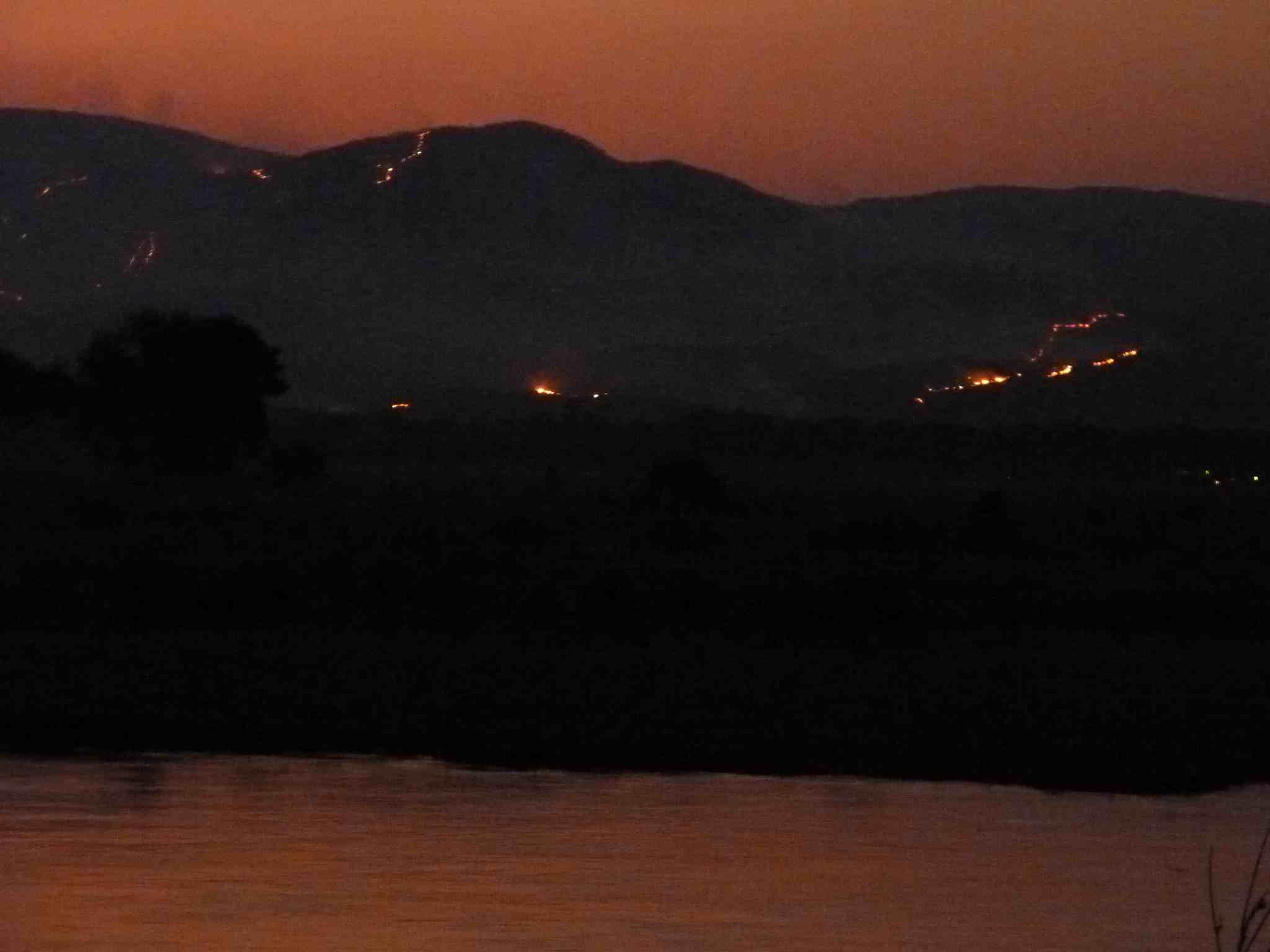
The sunset and bushfires.


A bad picture of the burning hills.

A view of the burning hills (apologies for the bad picture).

Usually we are at the lodge in the morning (before leaving for a walk or game drive), lunchtime (when you are not in the bush) and in the evening (always). It is during these times that you have the closest encounters with wild animals.

In the early mornings we were woken up by loud birdcalls that made going back to sleep rather difficult. The din came from the goings on of a colony of white fronted bee-eaters (Merops bullockoides) that had their burrows in the banks in front of our lodge. With them were also a large number of the much bigger southern carmine bee eaters (Merops nubicoides), adding more colour to the scene while basking under the morning sun in the treetops above our lodge (a magnificent sight).
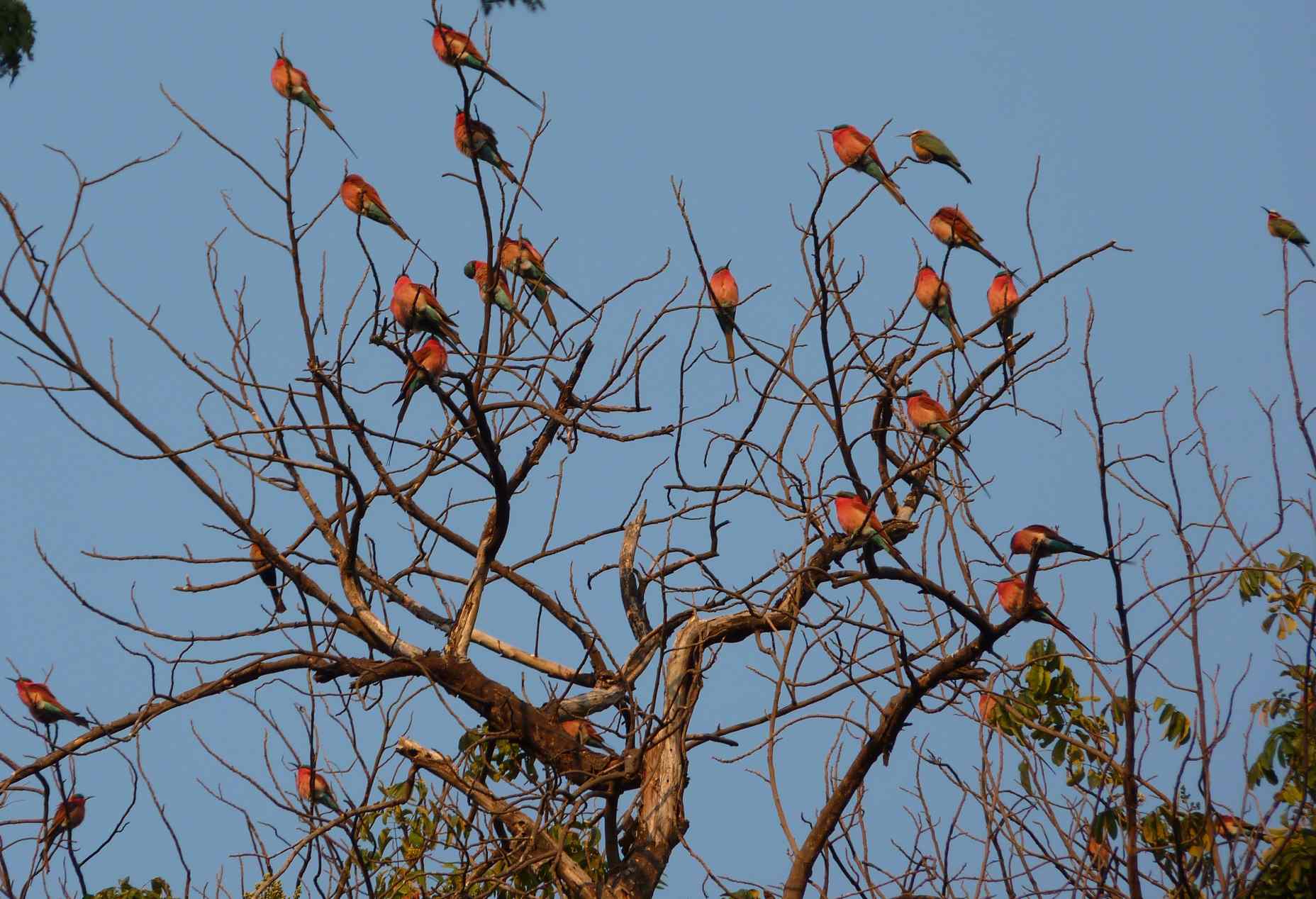
Southern carmine bee-eaters basking in the sun.

Southern carmine bee-eaters basking in the sun (please note the smaller white-fronted bee-eaters on the right of the picture).

The white-fronted bee-eaters were very active and most likely involved in courting and nesting. A bit of reading when we returned to Harare revealed that mixed colonies of these two species are common. I also learnt later that these birds are colonial but also cooperative. The latter means that many individuals of both sexes play a role as helpers* and that they may switch from breeder to helper and back to breeder many times over a lifespan.
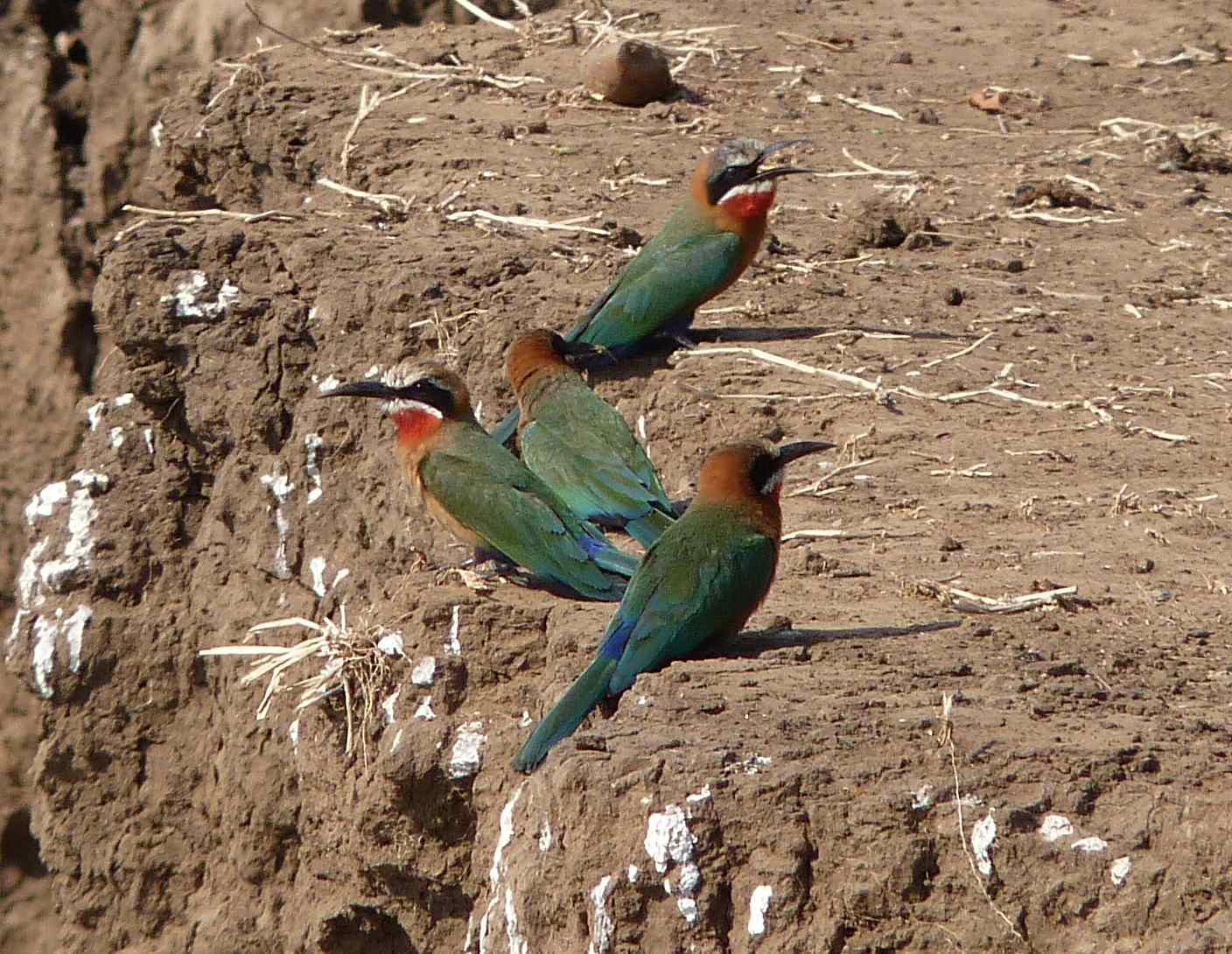
White fronted bee-eaters at the bank.

White fronted bee-eaters at the river bank. Their borrowed nests are below.

Every morning the carmine bee-eaters, after being sufficiently warmed by the sun, flew off for the day on unknown errands, and returned in the afternoon. Unfortunately I could not tell if these birds were also nesting in the banks but I suspect so.

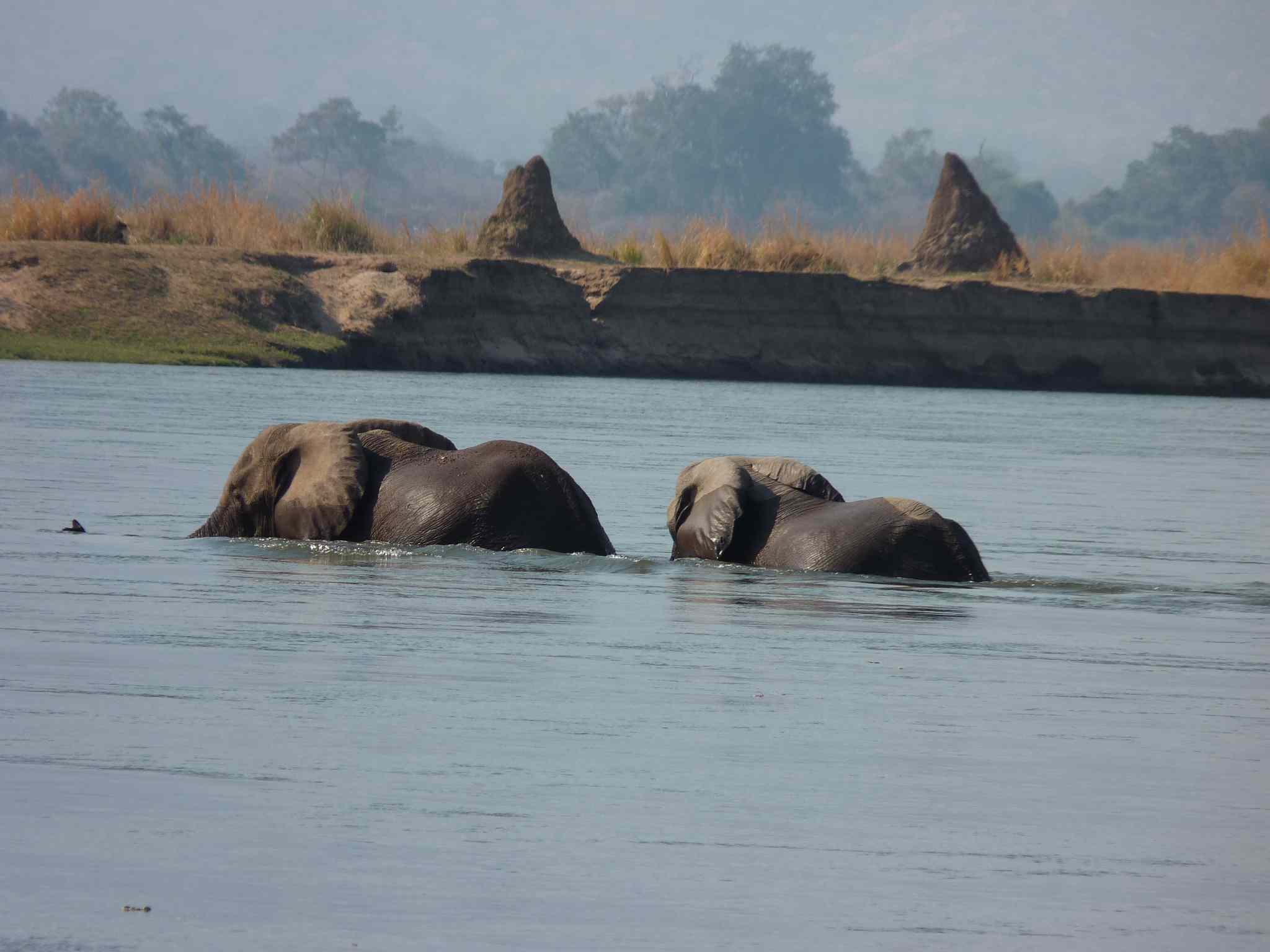
The proximity of our lodge to the water’s edge provided us with a continuous parade of animals without having to move too much. These included some really huge crocodiles as well as buffaloes, hippos and elephants: they were on both sides of the channel that ran in front of the lodge. It was wonderful to see elephants wading to reach the opposite shore only to return once they ate their fill of their favorite vegetation.
Elephants crossing the channel.

Elephants crossing the channel (note the two termite nests in the background).

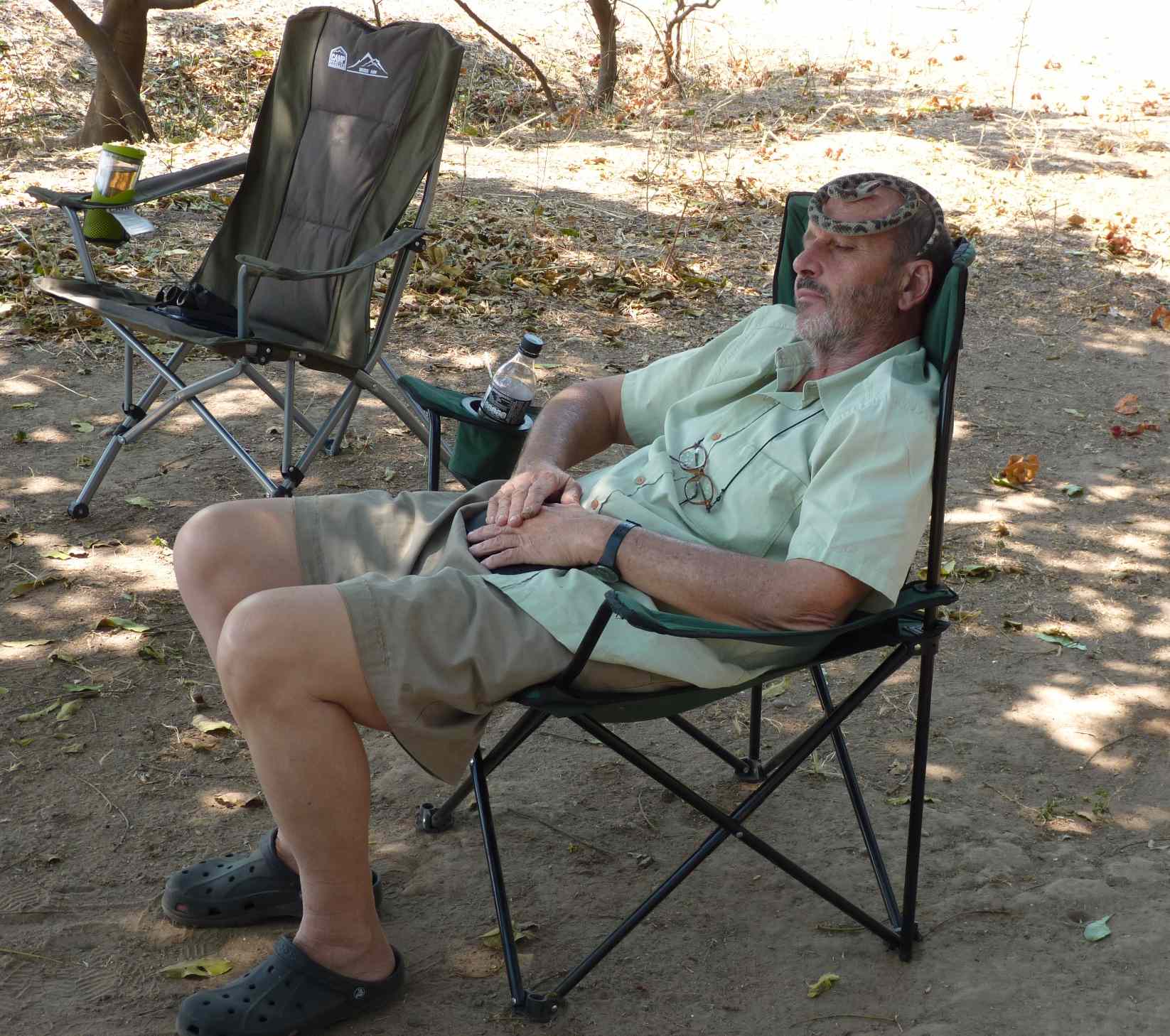
It was during the first lunch hour -a bit too hot to go looking for animals- that, after a light salad lunch, I prepared myself for my usual short siesta. I placed myself under the shade of an acacia tree that provided ample shade (and pods!) and prepared myself for sleep while reading my book. It was warm but there was a soft breeze, which resulted in the perfect cool spot. These were ideal conditions and I was even prepared for a monkey-attack, just in case…
The bushsnob prepared for a "monkey-proof" siesta!

The bushsnob prepared for a “monkey-proof” siesta!

It all started with my wife becoming very agitated at the exact moment that I had duly dropped my book (on my face) and entered the “drifting off” stage of my nap! Her alert call brought me back to life. Before I could proffer my -I am sure expected- complaint, I heard a soft “Don’t move and look” I knew then that I should do as I was told! My eyes were filled with an elephant!

Thankfully its attention was solely on the Acacia pods.

Thankfully, its attention was solely on the Apple ring Acacia pods.

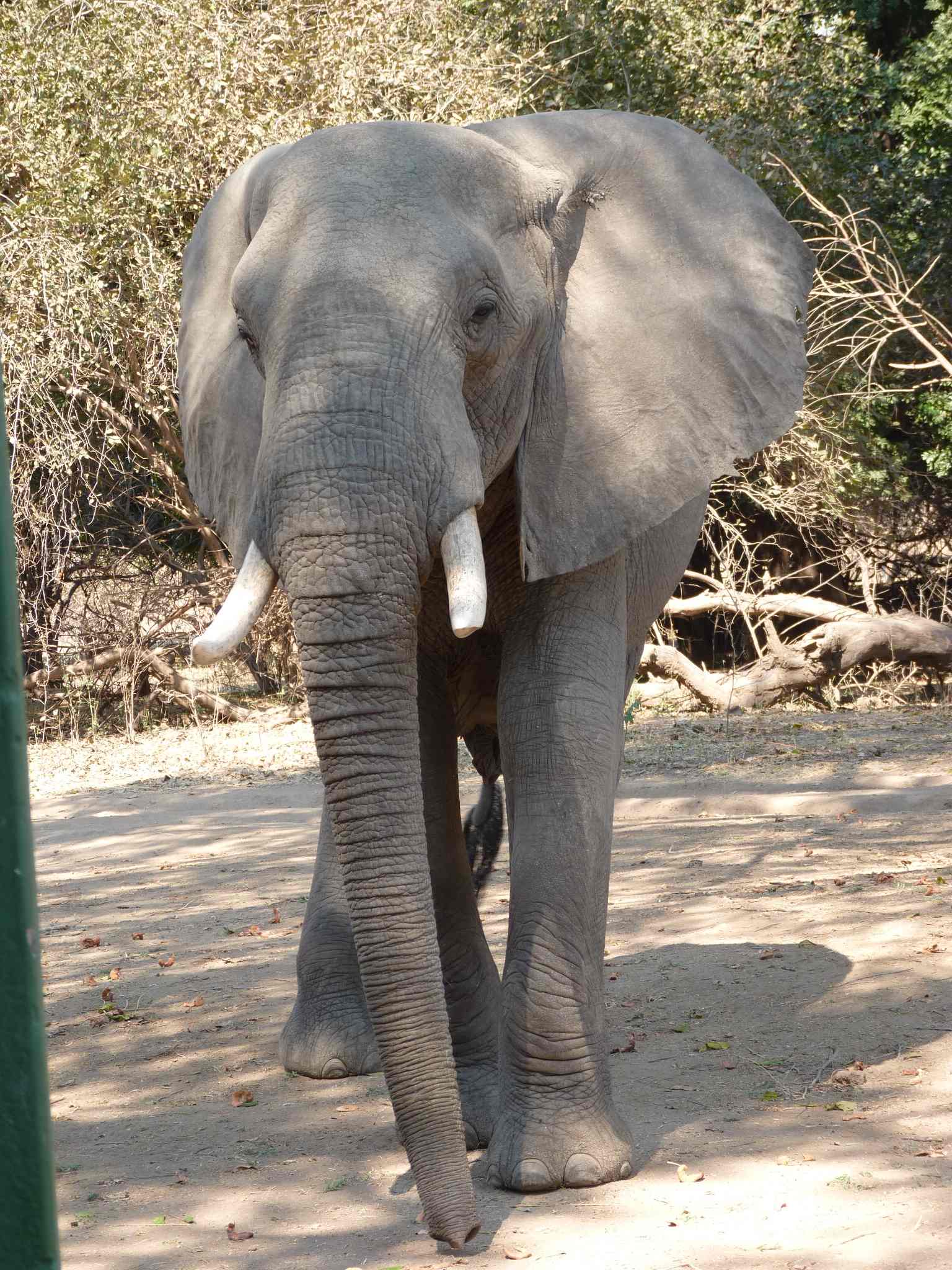
I froze -purely out of fear rather than bushsnob wisdom- as the elephant was three metres away from me and still approaching! I immediately noticed that, although very close, it was after the pods on the floor and oblivious to its surroundings including me! With a super human effort, given my panic-driven semi paralytic state, I lifted my feet off the ground as it could have otherwise, unintentionally stepped on my bare feet (ouch…). The sight mesmerized me! Finally, it came to about a couple of metres and looked at me “Now I am history” I thought. However, it simply raised its head as if saluting me and continued with its feeding, slowly ambling past with the only heralds of its presence the crunching of pods, the rattle of those discarded and the occasional soft huffs of its trunk as it searched for more.
It was coming in my direction...

It was coming in my direction on silent feet…

The amazing thing about elephants is that despite their size, you will not hear them unless they want you to. While walking on tarmac elephant footpads make a whisper-like ‘chuff’, similar to the sound produced when one brushes a hand over the fabric of a pillow; on dusty earth they are virtually silent. At night, they silently walk through your campsite while browsing without disturbing anything. Finally, although I often trip over the tent ropes, I have never had an elephant doing so day or night!

As my knees had suddenly turned into jelly, I did not move, even after it passed and not even when my wife’s “order” was issued: “That was close! Get up quick and take a picture of it before it goes away” When I managed to collect all my wits and do a mental inventory of the condition of my various body parts, it was too late and I could only see its backside moving off. Although we have had these kind of encounters before this was a very close one and it is quite an experience to be literally “face to trunk” with a fully-grown male elephant! The siesta was abandoned, this time for a good reason!

This was not the only occasion that this happened during our stay at Mana Pools but I describe it to you so that you have an idea of our interactions with wildlife at the park. More than one tusker visited us everyday and a few family groups walked around the lodge during the day and night. They were even rude enough to try to spoil our BBQs!
The bushsnob just discovered the bomb dropped by the "terrorist" elephant and he is horrified thinking on cleaning the mess.

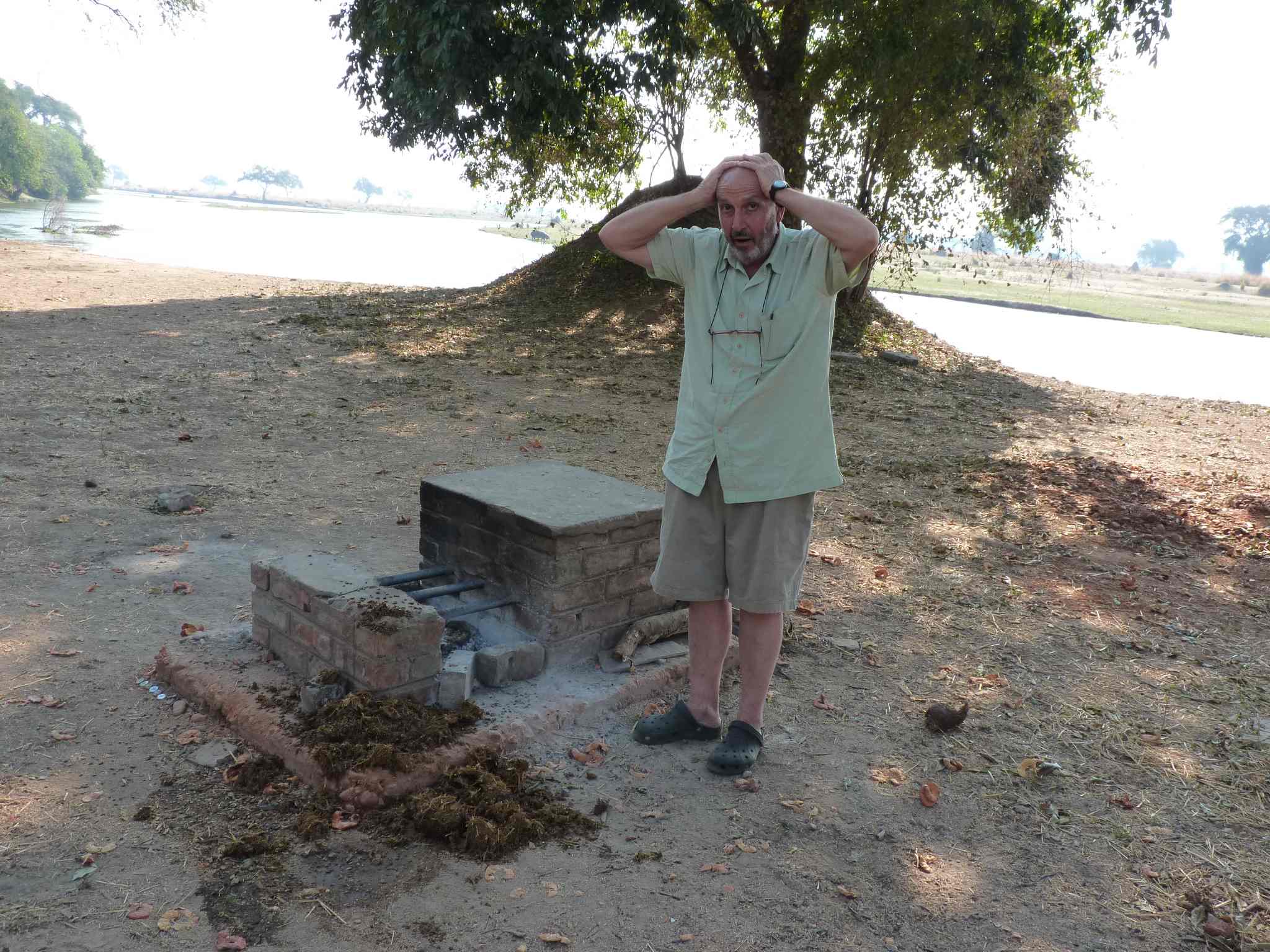
The bushsnob just discovered the bomb dropped by a “terrorist” elephant and he is horrified thinking on cleaning the mess (the faeces were almost pure Apple ring Acacia seeds!).

In addition to the pachyderms, a lone hippo kept us company everyday as it fed on the pods. It would arrive after sunset and we would hear it chomping while it walked about. Although it occasionally entered the circle of light provided by our lamps, it preferred to stay in the dark. This meant that every now and then, we would have to locate it as it was an additional hazard while walking around our lodge (particularly when going to the BBQ area or the water boiler) to avoid the danger of bumping into it!
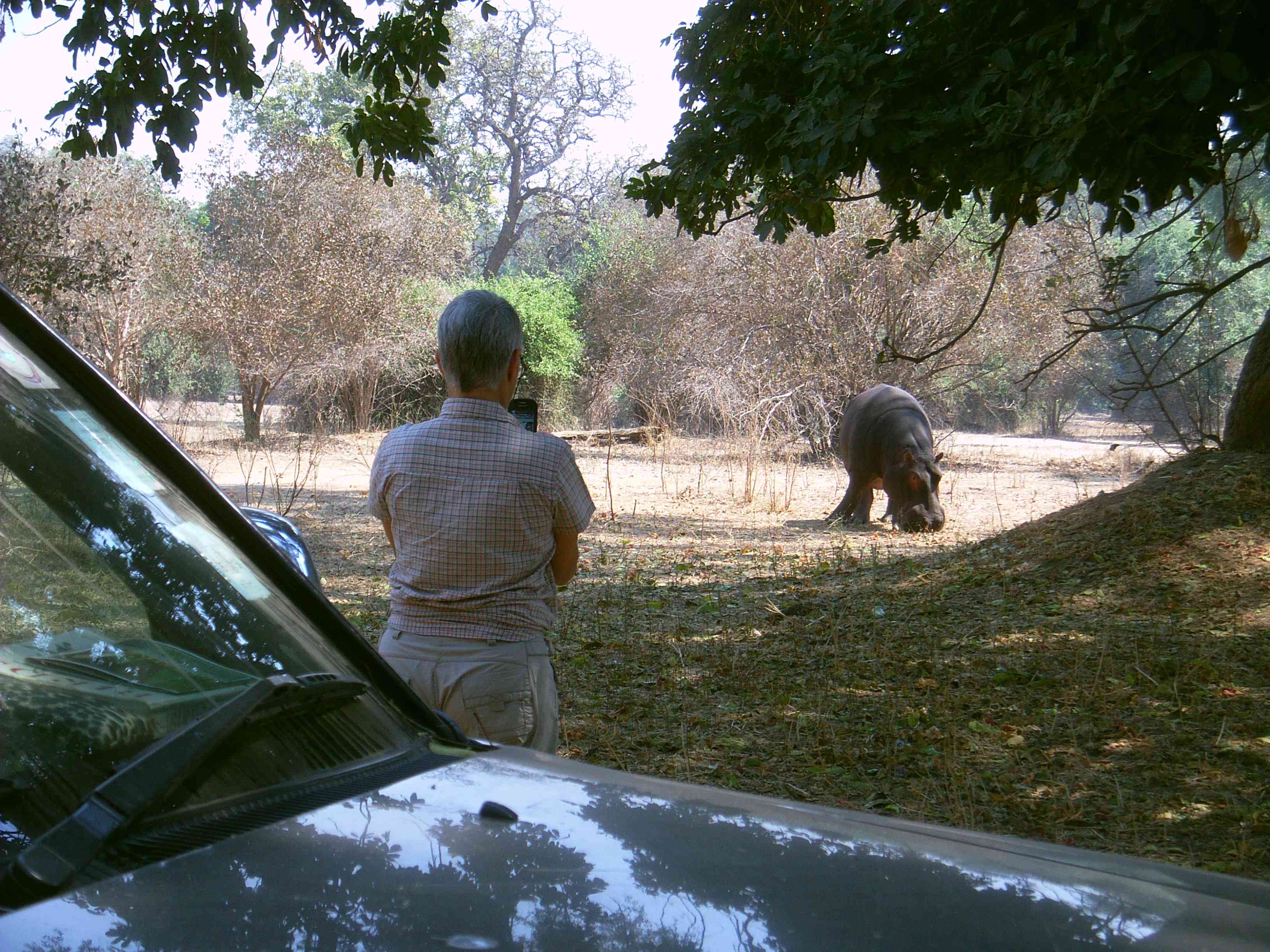
My wife keeping an eye on our hippo visitor during a day visit.

My wife keeping an eye on our hippo visitor during a rarer day visit.

A least one spotted hyena also did its food-run every evening. We did not think that hyenas were around as we did not hear them but they were afoot operating silently in the darkness! The lions were, quite to the contrary, rather close and very loud. They were heard, as my wife put it, “all night long” and a lioness and two cubs passed by while the occupant of our next-door lodge was having his morning coffee!

* Birds (normally juveniles and sexually mature young birds of both sexes) that remain in association 
with their parents and help them raise subsequent broods.

The unseen painted dog

We arrived at Mana Pools National Park (Mana Pools) at about 15:00 hours after a six hour drive from Harare. Just before the turn off to get into the final stretch of rough dirt road, we stopped at the edge of the escarpment to take in the hazy view of the Zambezi valley below, always a beautiful sight, and one that is full of anticipated adventure. The view was even hazier than usual, as this is the season of bush fires that add a blue tint to the horizon.

The view of the Zambezi valley from the main road.

The view of the Zambezi valley from the main road.

The stop to contemplate the view had to be brief as we still had about two hours of driving to get to the park. As soon as we started the escarpment’s steep descent we came across a queue of lorries parked on both sides of the road. The normal sightings involve slow moving lorries either struggling uphill or burning brakes downhill, so this kind of mass convergence was not normal. We drove through the narrow “lorry tunnel” very slowly, passing around 60 lorries before we came to the reason for the queue. An unfortunate driver had lost control of his truck while going downhill and crashed at full speed against a rocky bend. The accident was recent as the rescue of the occupants’ was taking place as we passed by. This was a stark reminder of the dangers associated with driving.

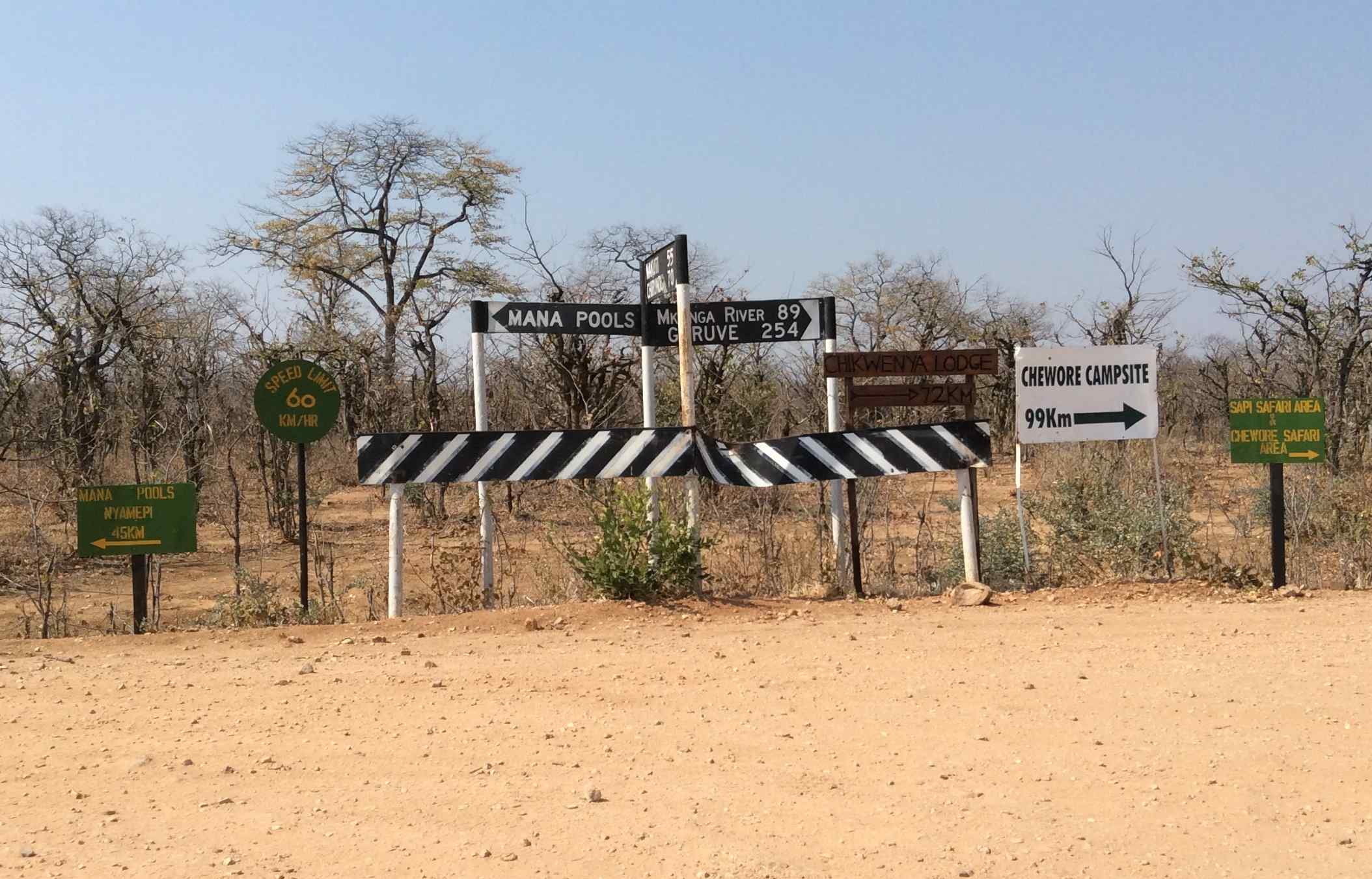
The turn off into the rough road leading to Mana Pools came as a relief after witnessing such a mishap. We drove on and, after 80 km of dirt road; we arrived at Mana Pools, a UNESCO World Heritage site of similar standing to the Great Barrier Reef, the Tower of London or Yellowstone National Park. The recent book “Mana Pools” by Gregg Robinson presents excellent pictures and describes the park in great detail. What more can I say not being a poet but rather a humble veterinarian!

The road to Mana Pools.

The road to Mana Pools.

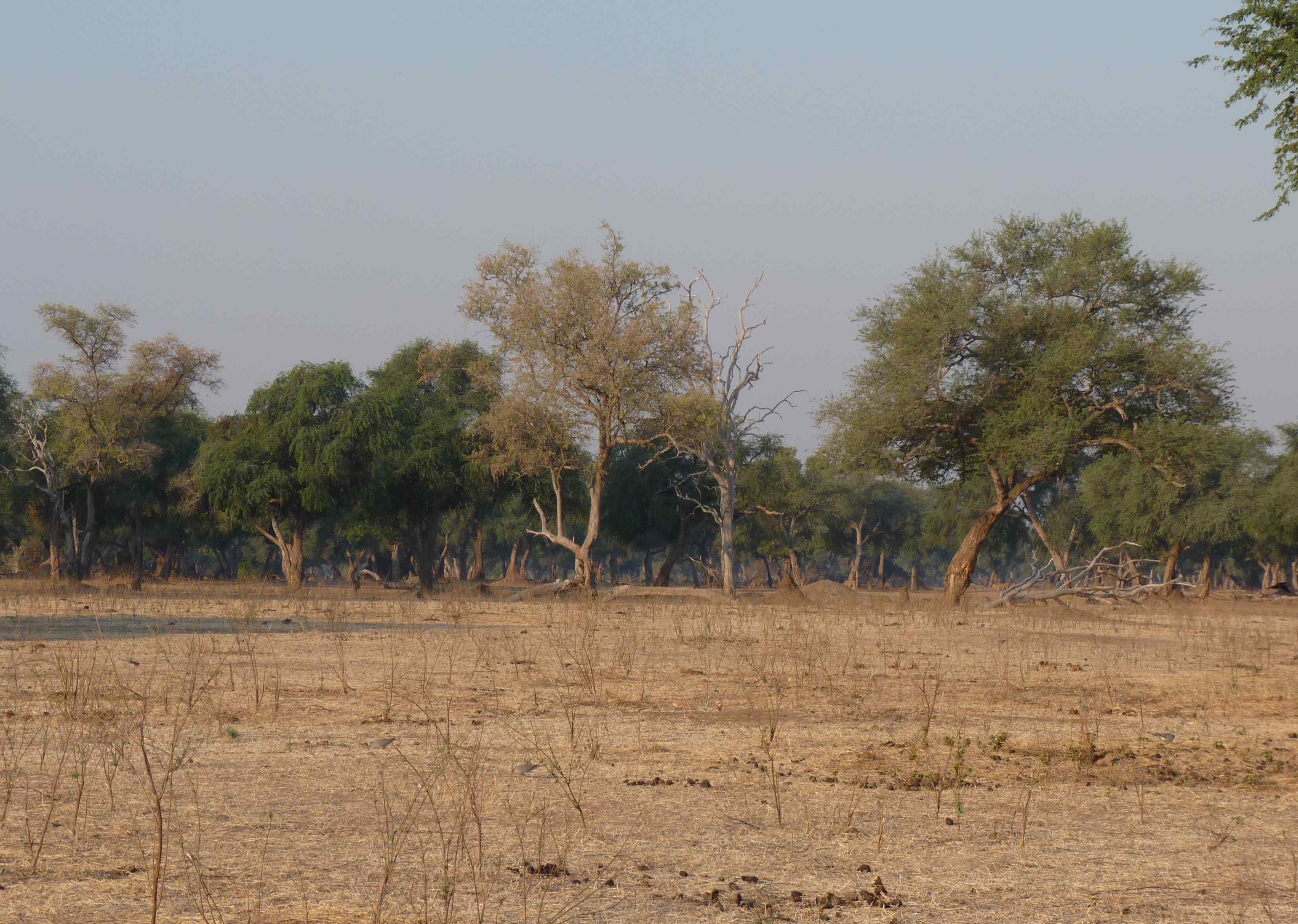
Mana Pools is a place of unique natural beauty. The Zambezi River, with its hilly background, forms its northern border and the area to the South is a flat wooded expanse where earlier river meanderings have left a number of separate pools that give the park its name. This is where game abounds and, because of the nature of their habitat they can be spotted at a distance, similar to the East African parks.

The Mana woodlands in the afternoon.

The Mana Pools woodlands in the afternoon.

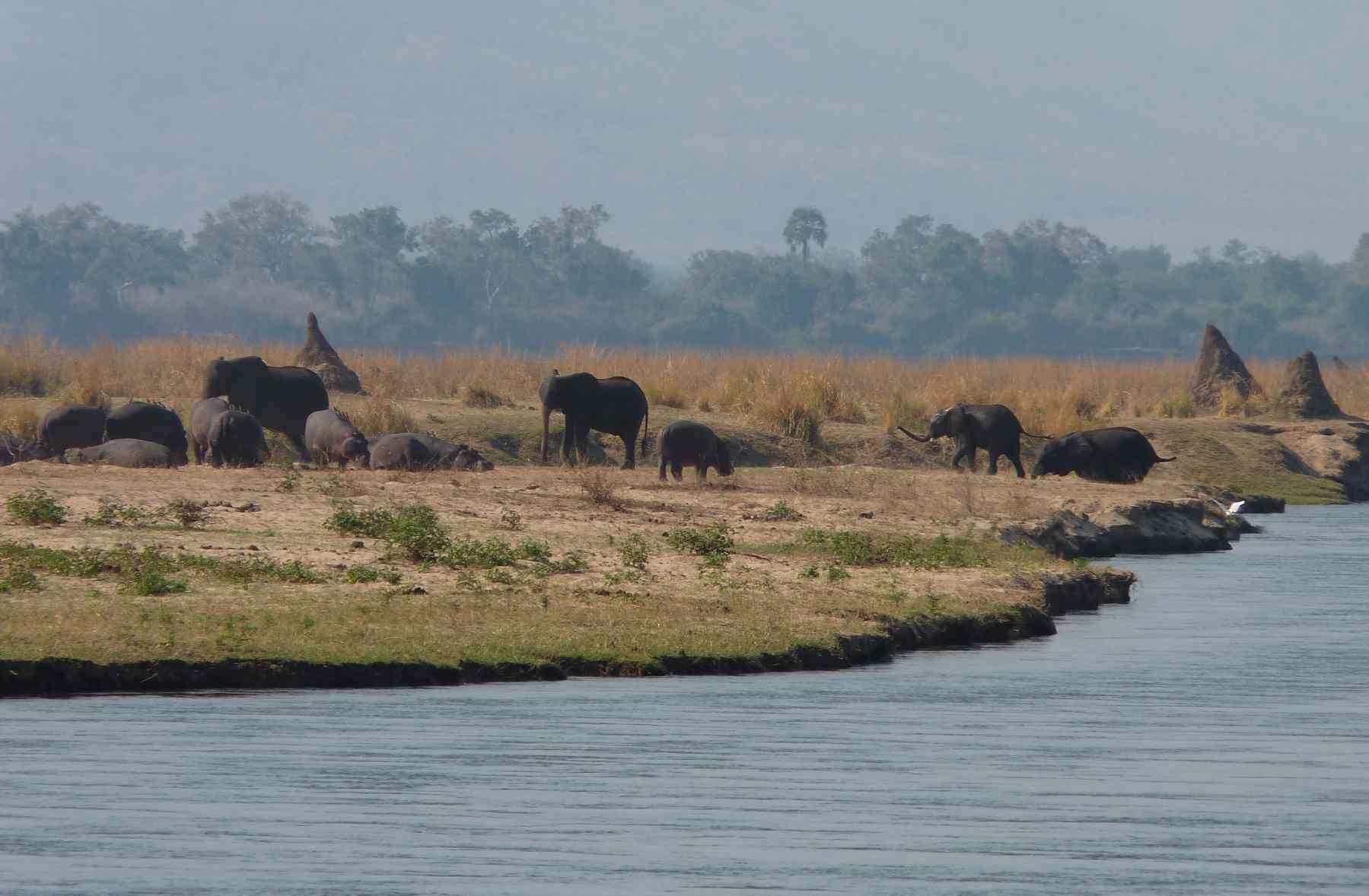
In addition to its magnificent and ancient trees and its abundant wildlife, Mana Pools is -I believe- the only national park in Africa where you can leave your car and walk on your own despite there being dangerous animals at large. We know of two prides of lions and a pack of painted dogs that live in the area, not to mention numerous hyenas, several buffalo herds, many elephants, the occasional leopard, crocodiles and hippos, among others.

elephants and hippos

Hippos and elephants sharing the grazing area in the banks of the Zambezi River.

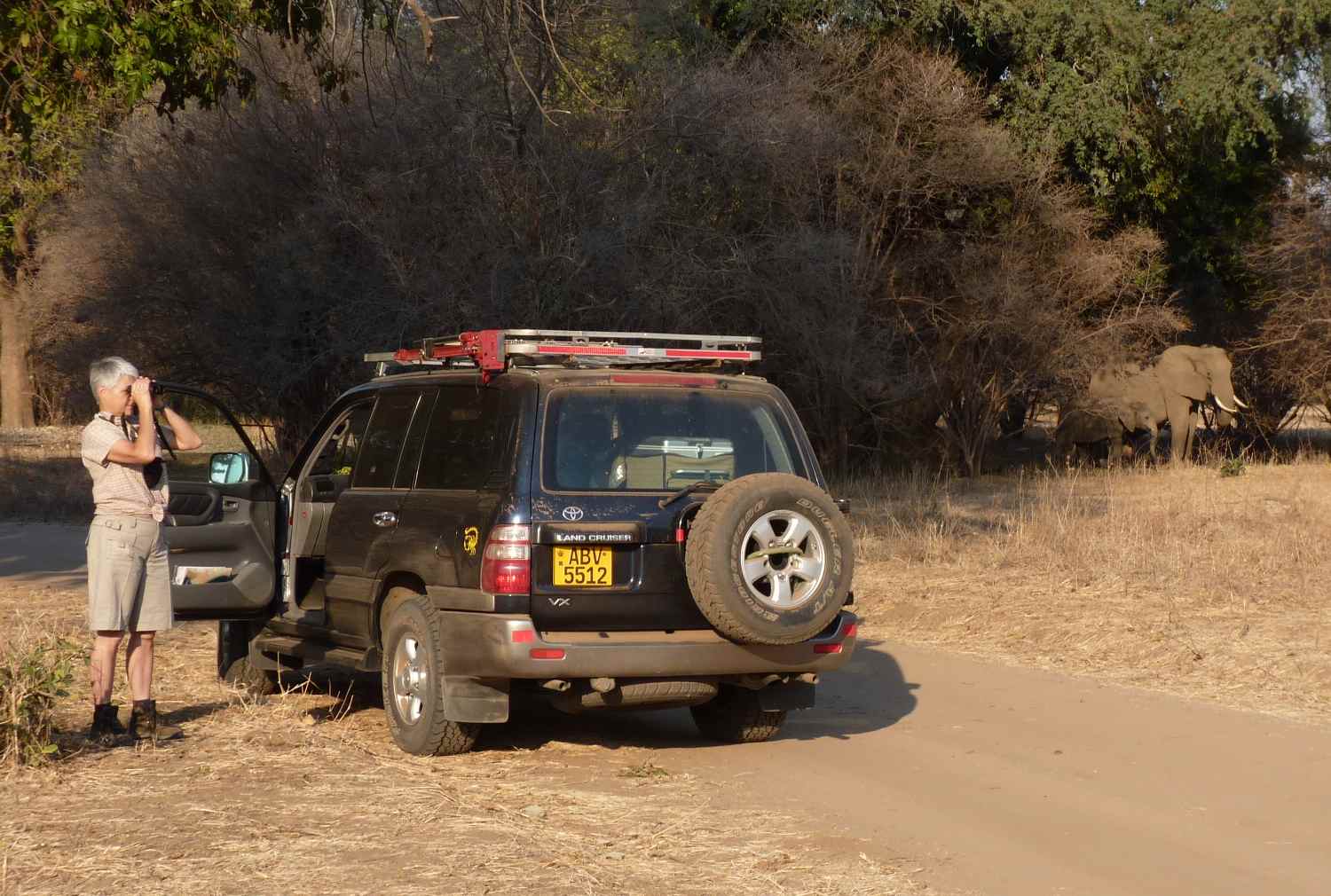
You may be surprised at this unusual and seemingly dangerous freedom but it works well due to a combination of animal tolerance and human caution. So, you are able to leave your metal cage and walk around freely! However, we must never forget that the animals we see around us are wild and as such, require the utmost respect and caution from us. Walking away from the protection of your car demands extreme prudence at all times, along with being aware of your surroundings, the direction of the wind, where you place your feet along with being able to read other important signs and, most importantly: to remember where you parked your vehicle!

The beauty of leaving your car.

The beauty of leaving your car.

We found lions on our first day, ten minutes after leaving our lodge! There were two: a young male and an adult female. They were just visible in the bush, near Chisasiko pool. We stopped the car and joined other people already there having their morning coffee while watching the lions, a rather unique experience! The opinions were divided on whether they had or would hunt. To us they looked alert as if looking for prey but it was difficult to guesstimate!

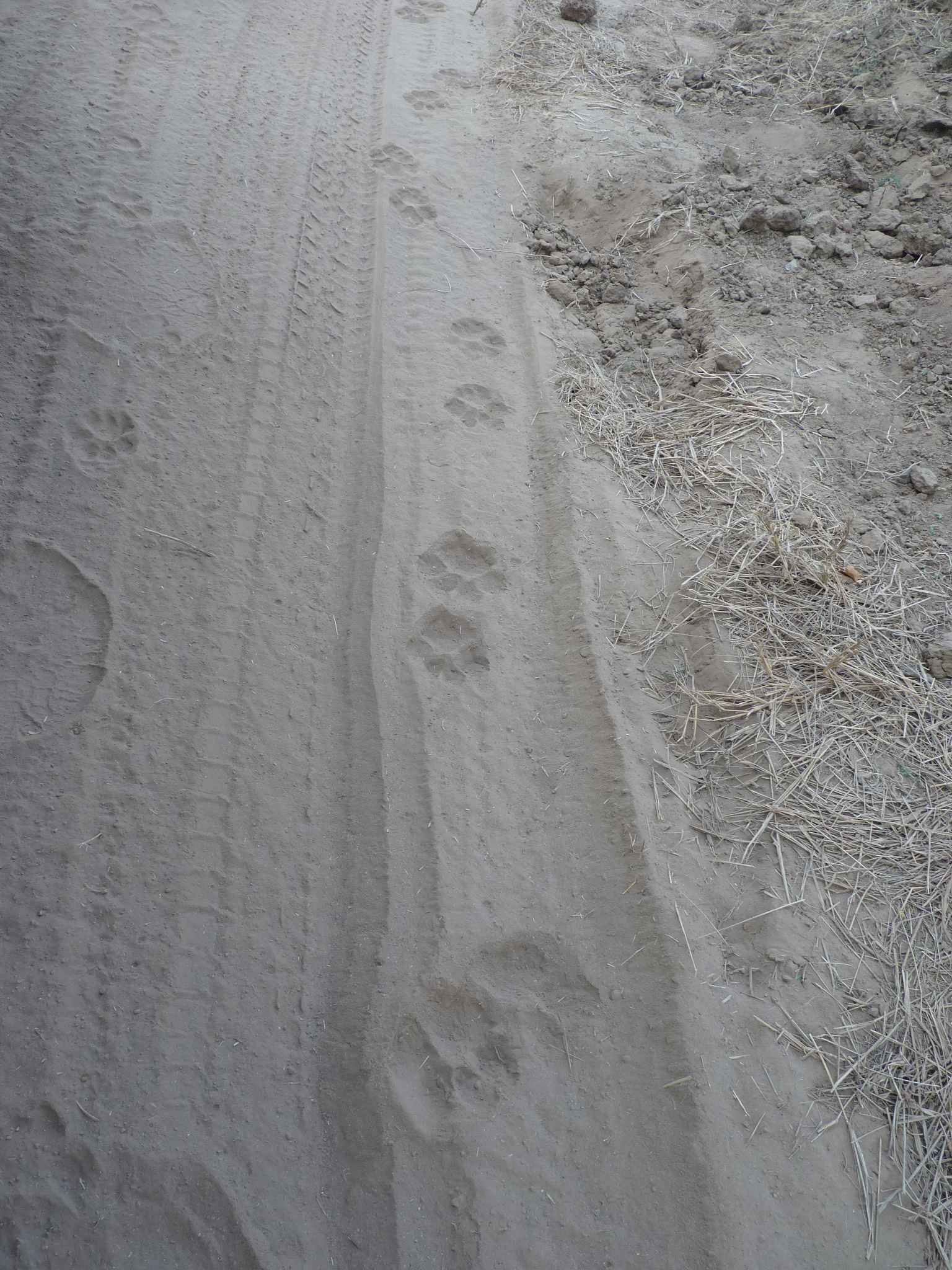
Lion paw marks on the dusty road.

Lion paw marks on the dusty road before they entered the bush.

While the lion conversation was going on, a new vehicle arrived. It was a group of tourists with a professional guide in his late fifties, known to some of the people present. As usual, the excited crowd informed him of the lions’ location. What followed next was as unexpected as it was shocking! He, followed by his unknowing clients and another staff member with a gun, walked straight towards the lions, doing exactly what you must not do! What happened next was as predictable as it was unnecessary: the lions moved off! The group then turned back and left!

The ... pool, where the lions were.

The Chisasiko pool, where the lions were.

“He is after a fat tip from his clients” was my angry and rather loud comment and then I heard my wife’s lapidary “poor man, it is sad that at his age he has to do this to get some extra money!” The latter was followed by another remark from a lady in the group “he left it a bit late!” Anyway, seeing that the situation had been modified by human folly beyond immediate recovery, we pushed on with the idea of coming back later as we knew that, despite the interference, the lions would remain in the area.

However, finding lions only ten minutes into your safari changes the situation as you become somehow “dependent” on what they will do next! Afterwards, while driving you wonder if they are hunting, moving or whether other lions have joined them (which means you could miss something unique!). We also made a mental note of their proximity to our lodge!

During our stay we were rewarded by nice sightings of buffalo, eland, greater kudu, waterbuck and zebra among others. We also saw a trio of fish eagles engaged in a loud territorial dispute and a proud saddle bill stork mother with her two grown offspring, although no male was around.

The saddle bill storks.

The two young saddle bill storks (left) and their mother. A hamerkop and a baboon complete the picture.

We did see the lions a few more times in the general area of the Chisasiko pool, but they did not hunt and on the final day they moved off towards the mouth of the Mana river, probably stalking a buffalo herd that resides in that area. We also spotted a pair of Selous mongooses and two side striped jackals (Canis adustus). Our general impression was that the park has a good animal population.

We also attempted to visit a new water hole, recommended by a friend as a good place for a “sundowner”. Equipped with the right ingredients for such occasions, we drove following a path that was clearly a firebreak with the anticipation of reaching a quiet place where animals would come to drink. Unfortunately, after driving about 10 km we came to a wide sand river with very broken and steep banks. There were very recent and deep wheel marks in the sand showing that someone else had tried to find the waterhole and got severely trapped in the deep sand. The story was reinforced by the warm ashes of the campfire they had lit while spending the night by the car! We decided not to risk the crossing!

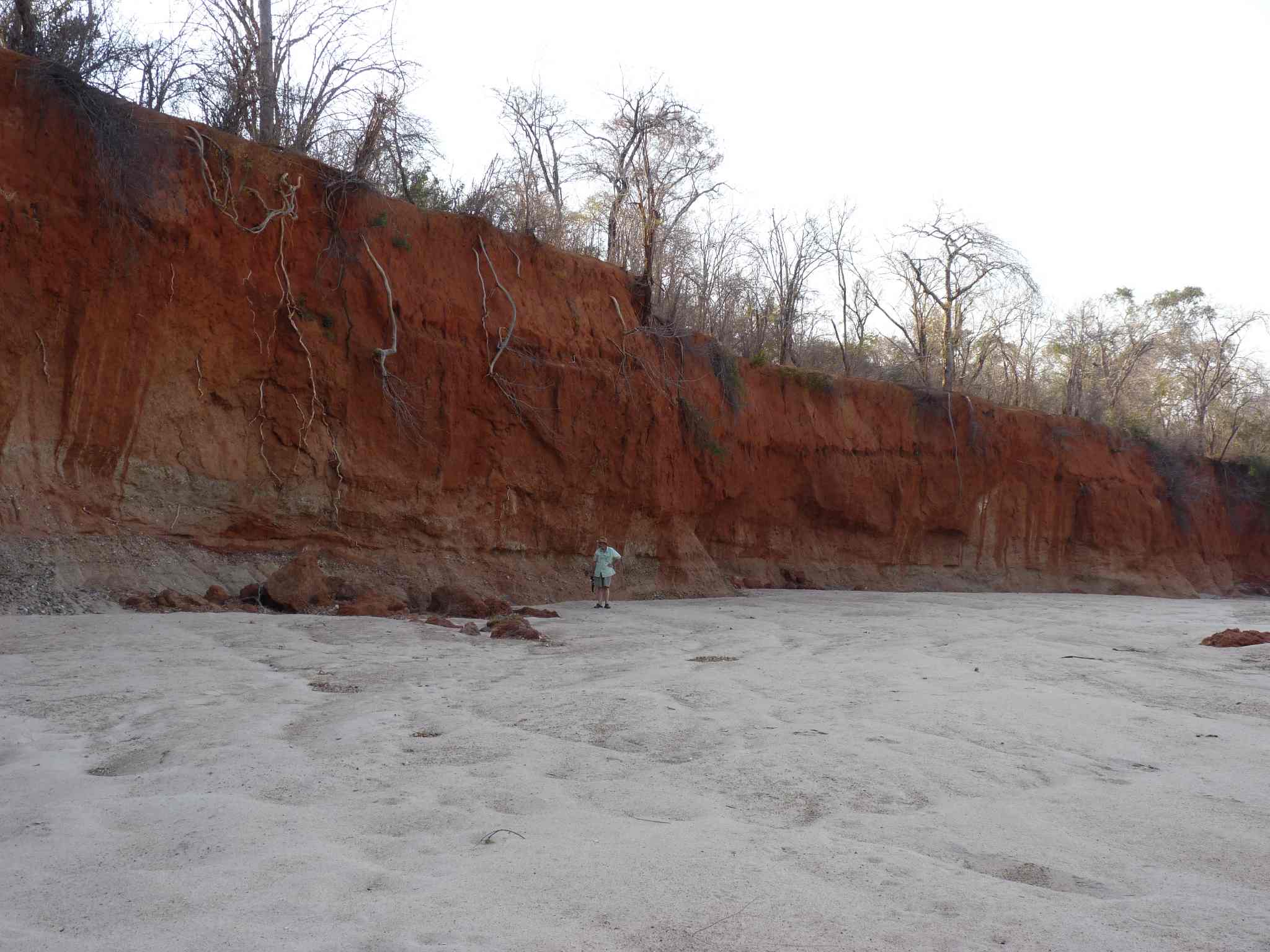
The river was a lovely place to have a drink anyway. We also enjoyed a nice walk on the dry riverbed framed by rather high cliffs made of red soil, where trumpeter hornbills feeding on wild figs could be seen. We will come back next time for another attempt at crossing the river.

Walking by the red cliffs in the sandy river bed.

Walking by the red cliffs in the sandy river

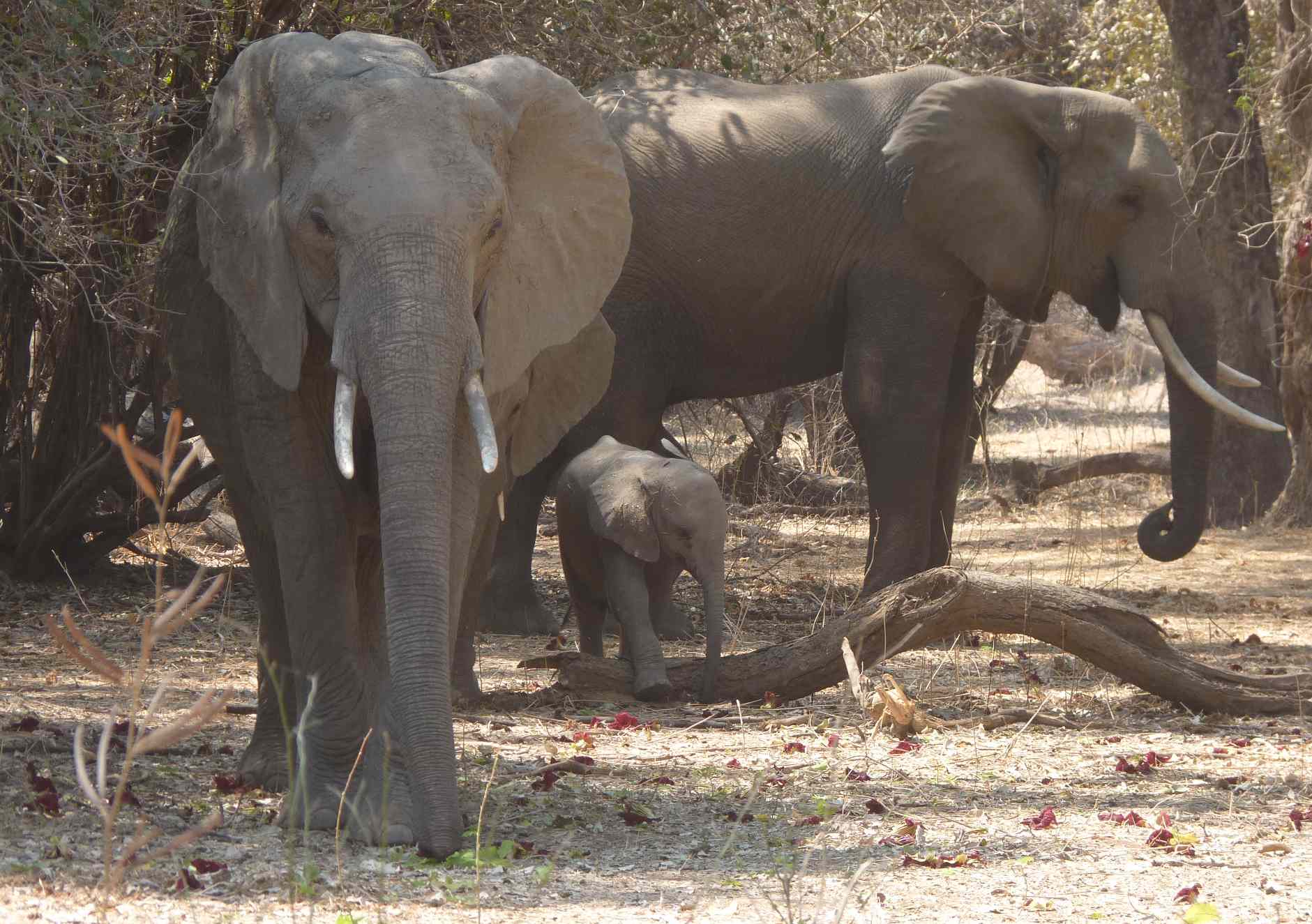
Elephants were numerous throughout the park. Young animals were in abundance. We also saw a number of adult tuskers. The latter do not carry heavy tusks of the type we saw in Kruger and described in my earlier post.

All feed on pods!

A small group with a young one. Note the Apple ring acacia pods on the ground.

Although I will focus on the Mana trees in one of the next accounts, one tree is a major protagonist in Mana: the Apple-ring Acacia (Faidherbia albida). It is the main tree of the Mana riverine plain forest and it produces a spiral shaped pod eaten by most herbivores in the park and it constitutes a valuable source of food in the dry season.

The elephants are very fond of these pods and at this time of the year they can be seen feeding on them all the time, wherever the trees are. To watch this activity is rather engrossing so we stopped often to watch them as they pick them up from the floor using their trunks as vacuum cleaners! However, as usual, the best are difficult to get! The tastier pods are those still high up in the trees!

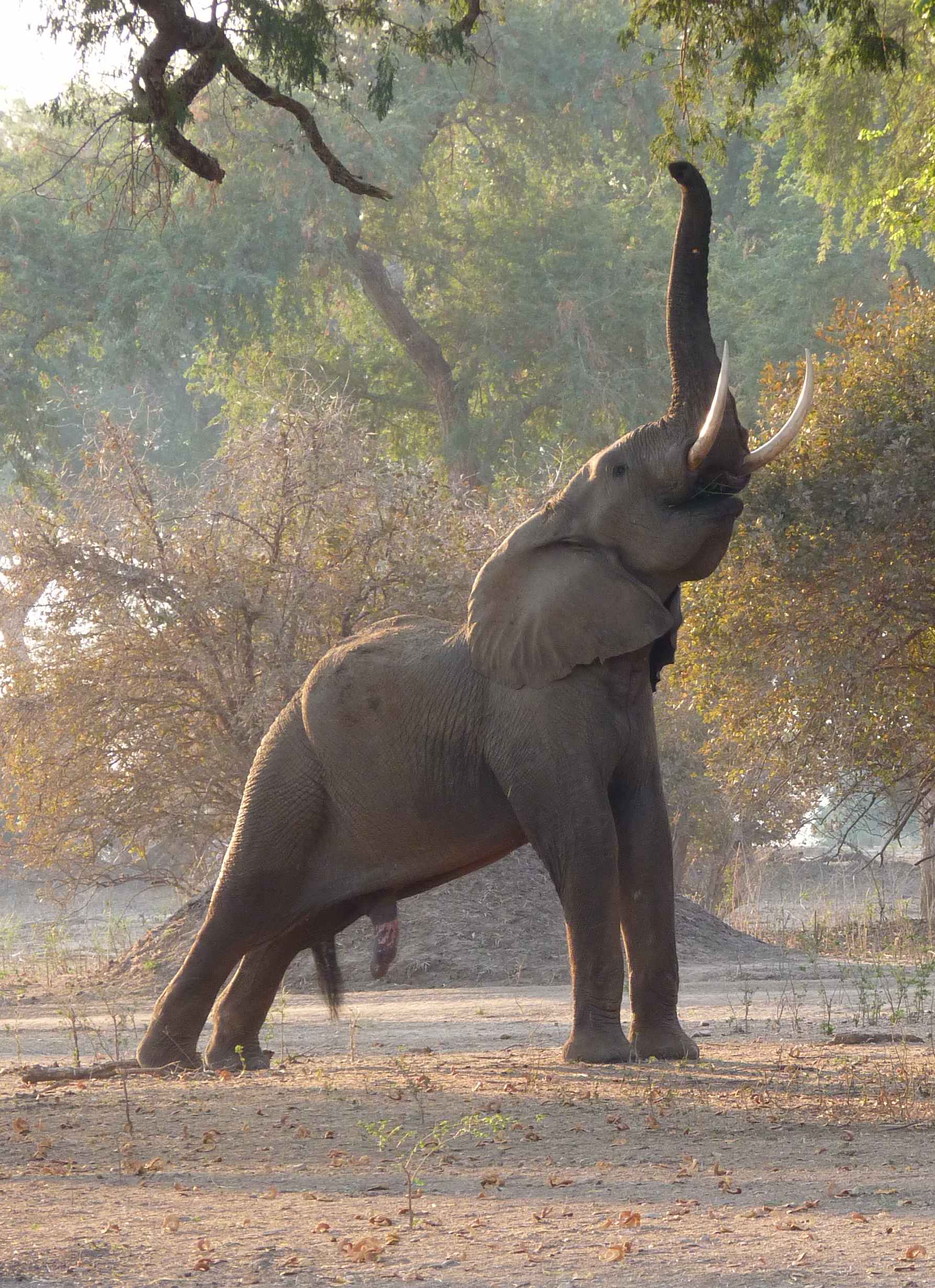
Pod collecting at full stretch.

Pod collecting at full stretch.

Aware of this, elephants will go to great efforts to reach them and, with patience; you may be able to watch them doing it. This was, fortunately, our case as we came across several pod-eaters that stopped at nothing to get these treats!

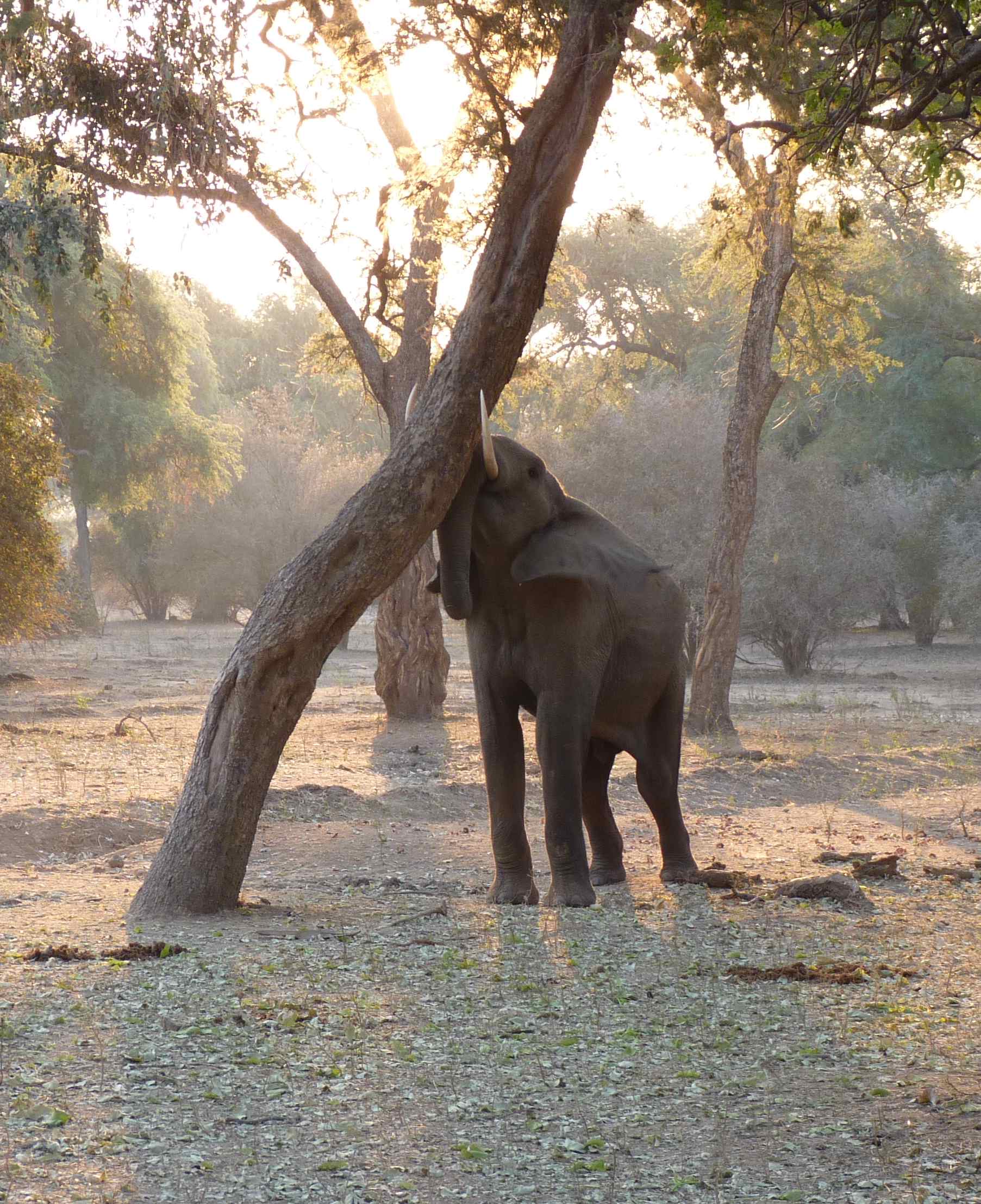
During the second day of our stay we found a particular tusker that “agreed” to put on a show for us. He was dealing with a rather tall tree, so he stretched to the highest possible extent in order to reach the place in a wild circus-like act, and brought down branches full of pods. After finishing them and unable to get any more, he changed tactics by leaning his head against the tree trunk and proceeding to head-butt it vigorously, which provoked a “pod rain” that it subsequently picked up from the floor.

Shaking the tree.

Shaking the tree.

As the tusker moved off in search of other tasty trees we also moved off, still looking for elephants. As we were driving slowly, we were overtaken by another vehicle that, we found parked by the road after a while. We stopped and asked its sole occupant if he had seen the lions. “Not today” he replied, “I have been here for three days and only saw them the first day” he added. We volunteered what we knew about the current lions’ location and asked “Any painted dogs*?” as we knew that these carnivores are often seen in Mana.

We could not believe his reply: “Do you mean other dogs apart from the one that we just saw crossing the road in front of your car?” “Are you serious?, we did not see anything!” my wife’s response came immediately. The reply came: “OK then, apart from the one I saw and you didn’t?” he said, clearly enjoying the moment and with a nice touch of humour. “We did not see it!” we confessed rather sheepishly, as it seemed unbelievable to us that this could have happened. He then added “I see them often as I am part of a painted dog conservation project that works here!”. Our embarrassment was somehow lessened as he had a “trained eye” for dogs!

Talking to him we learnt that the dogs are present in Mana around the “Mucheni” area and that the one he saw (and we didn’t!) was probably a male of a new pair that had just come from the Rukomechi area. We also learnt that the alpha male of the local Mana pack was missing and, although there could be several reasons for his absence, it is possible that it has died. We thanked him for the information but, despite it, we failed to see them during our safari. Our only consolation was that, although we did not see one, it was in the same place at the same time as us!!!

As a last attempt to save face, I tell you that we had seen painted dogs on a previous occasion in Mana Pools. We were on a game drive with my daughter/Editor when we spotted a pack on the road. There were about 16 dogs and they were moving rather fast. Taking advantage of the freedom of Mana Pools we parked the car in a hurry and followed them on foot, together with a group of tourists.  It was very exciting as they caught an impala just before we got to them and they were feeding on it. Regrettably, the scene was interrupted by my loud talking -being a bushsnob- and the weird noise my camera made every time I switch it on! The picture below was taken at that time.

A couple of the wild dogs seen during an earlier visit.

Wild dogs seen during an earlier visit.


* Lycaon pictus is commonly referred to as African wild, cape or hunting dog and African painted dog, among other names. I use "Painted dogs" as this is the name used by the project in Zimbabwe.

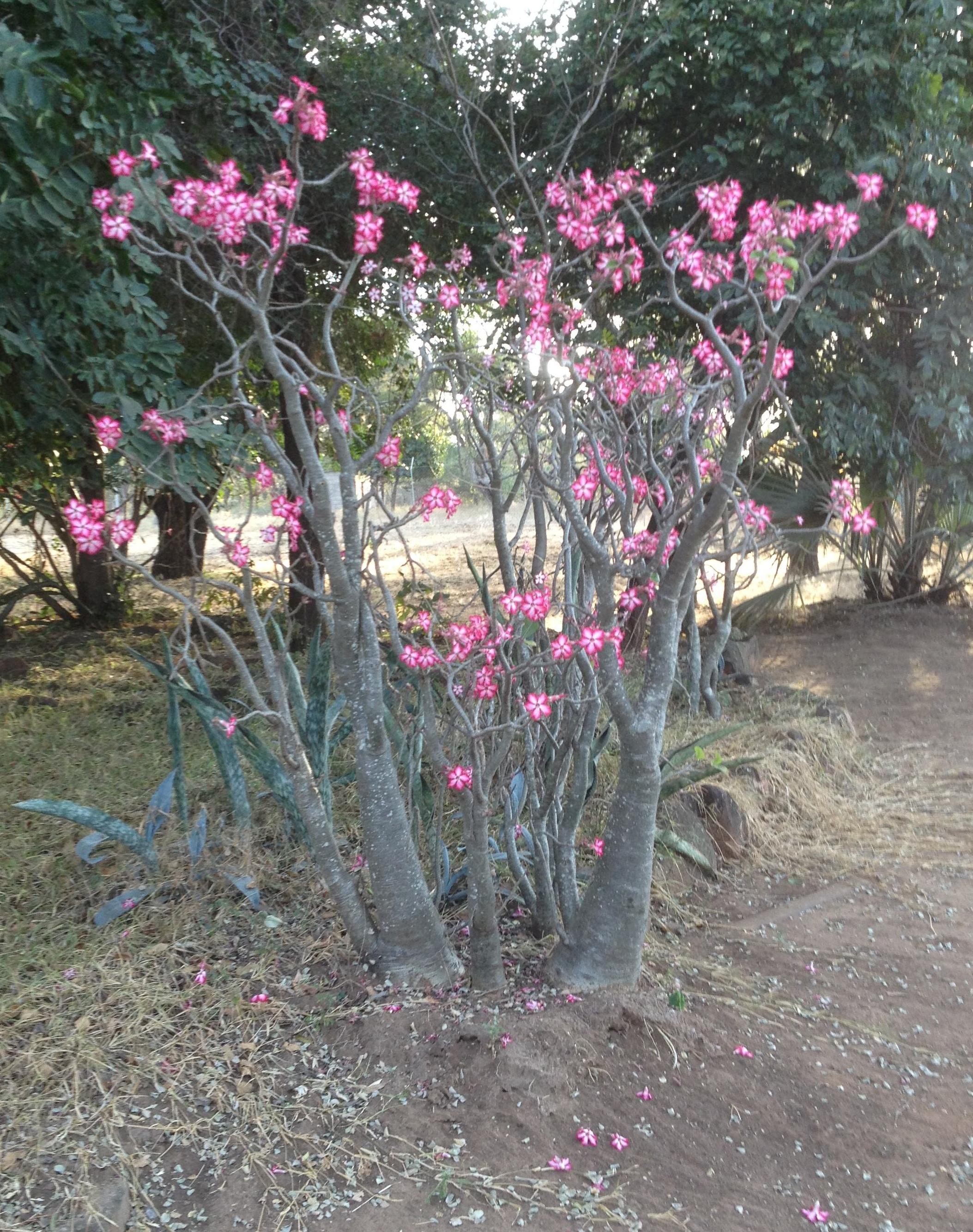
The desert roses at Swimuwini Rest Camp were spectacular.

The desert roses at Swimuwini Rest Camp were spectacular.

From Gonarezhou to South Africa

29/7/14 – After another good night’s sleep we were up and ready to go by 08:30 hours. We set off towards Rutenga and the dreaded Beitbridge, the infamous border crossing. We said farewell to our nice and helpful camp attendant Fungisai Shava and co-workers. The weather was chilly and there was a tenuous drizzle.

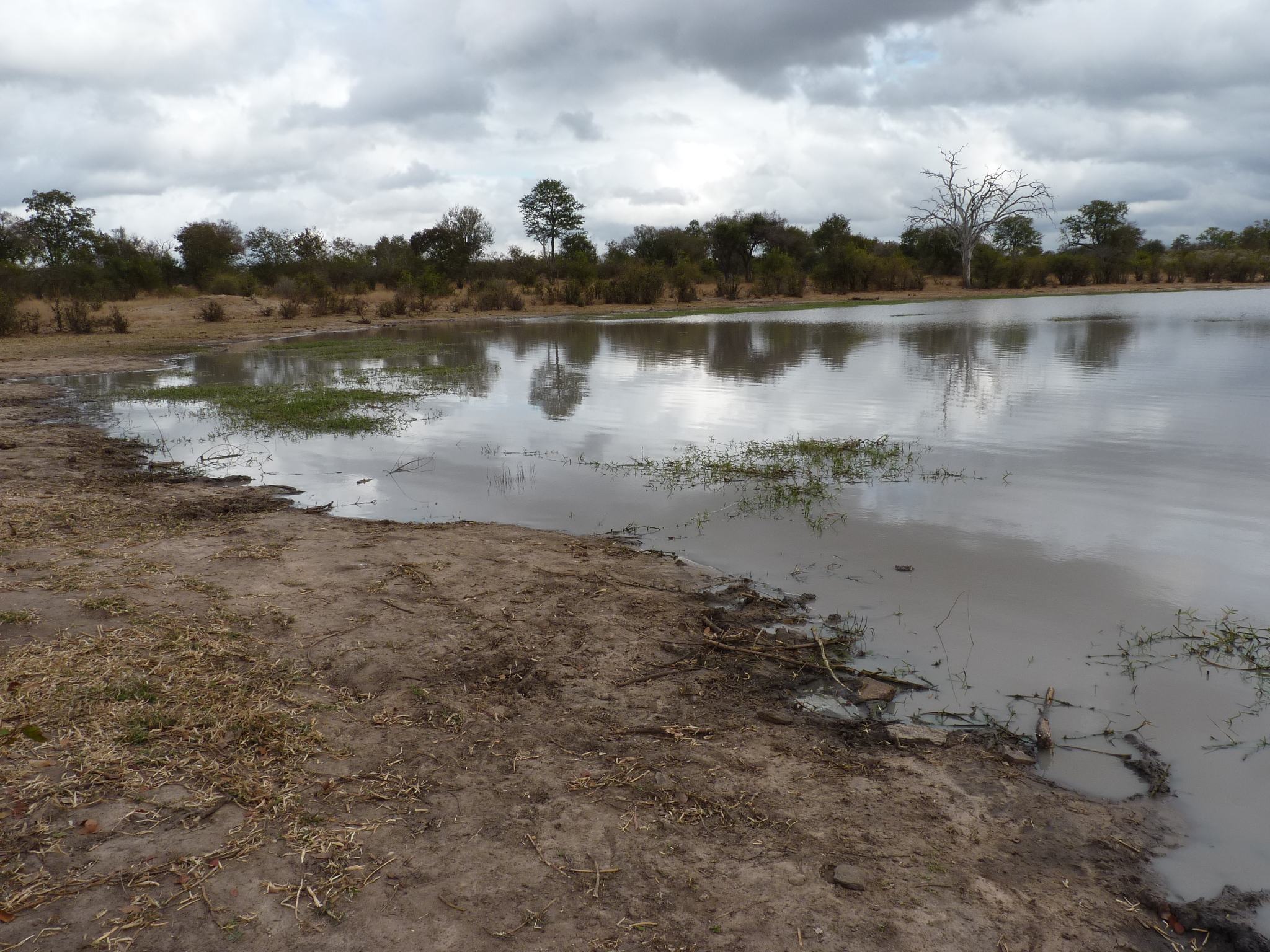
At some distance from the camp we started coming across elephant paths and fresh spoor and, while speculating about the reasons, we came across a small road leading to a pan with lots of water. I believe it to be Nyamugwe but it requires confirmation. Despite its water abundance and plentiful traces of elephants, it was completely devoid of mammals. Clearly the trend in the area is for most animals to move at night. It was then back to the main road without another stop as time was passing

Copious elephant spoor took us to this pan that was empty.

Copious elephant spoor took us to this pan that was empty.

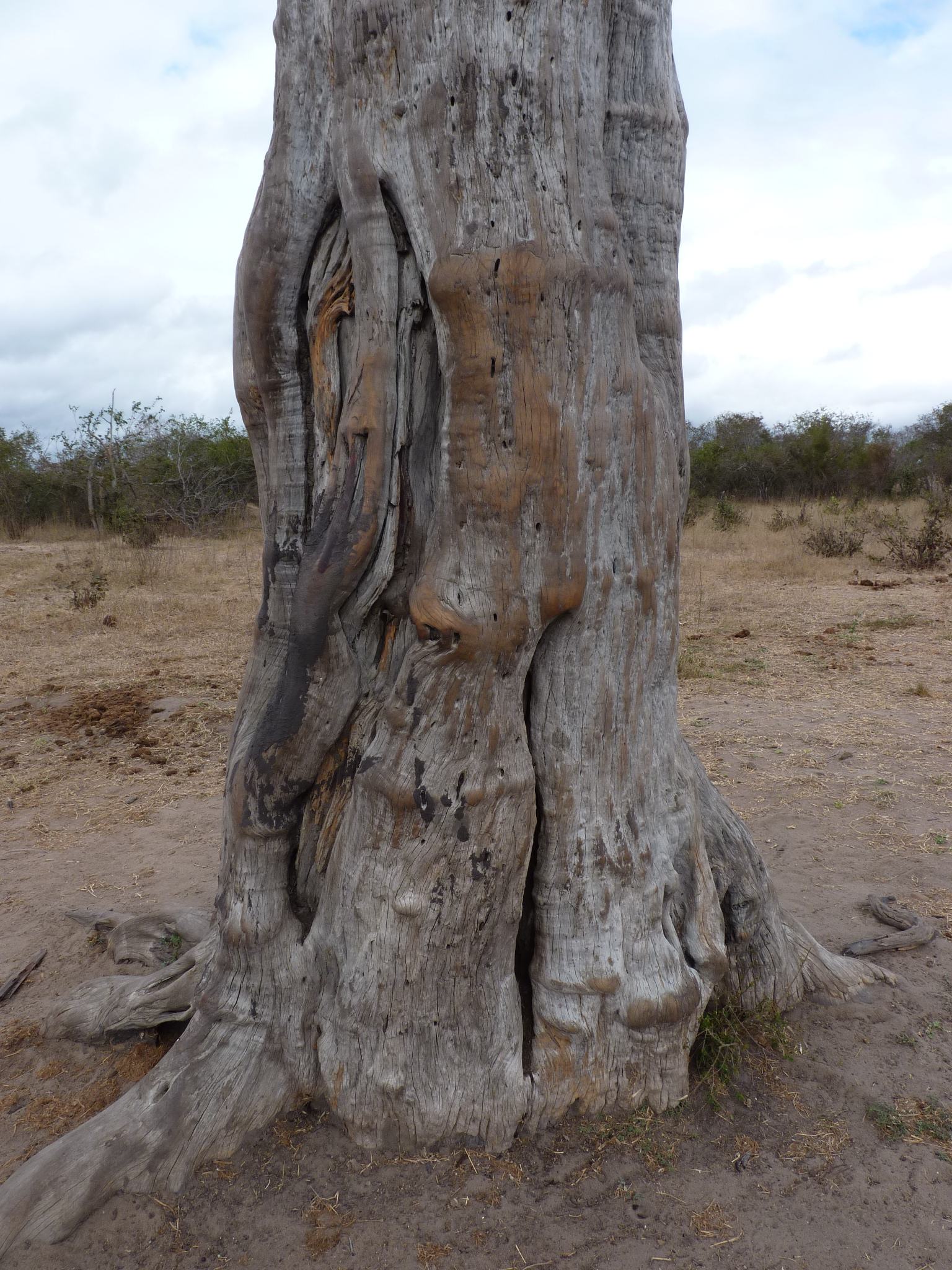
This rubbing tree trunk confirmed that elephants visited the pan, probably at night.

This rubbing tree trunk confirmed that elephants visited the pan, probably at night.

Before leaving Harare my wife learnt through the Bambazoke Nhasi web newsletter that the Tourism Authority of the Zimbabwe Government offered a free service to assist you at the border crossing as this can, sometimes, take several hours. I am not a good queue person and the ones at border posts are not my scene as I get upset and do not enjoy them at all. This time, however, we had already pre-booked the Tourism Authority assistance and made an appointment for 14:00 hs at the border. We had names and cell phone numbers so with this helpful “shield” the border crossing was out of my mind!

We drove back to Rutenga through the dirt road where, again traffic was absent although this time we met 100 per cent more traffic than before: one pickup, loaded with cotton. We did hit a number of rather large potholes but reached the asphalt unscathed, only dusty.

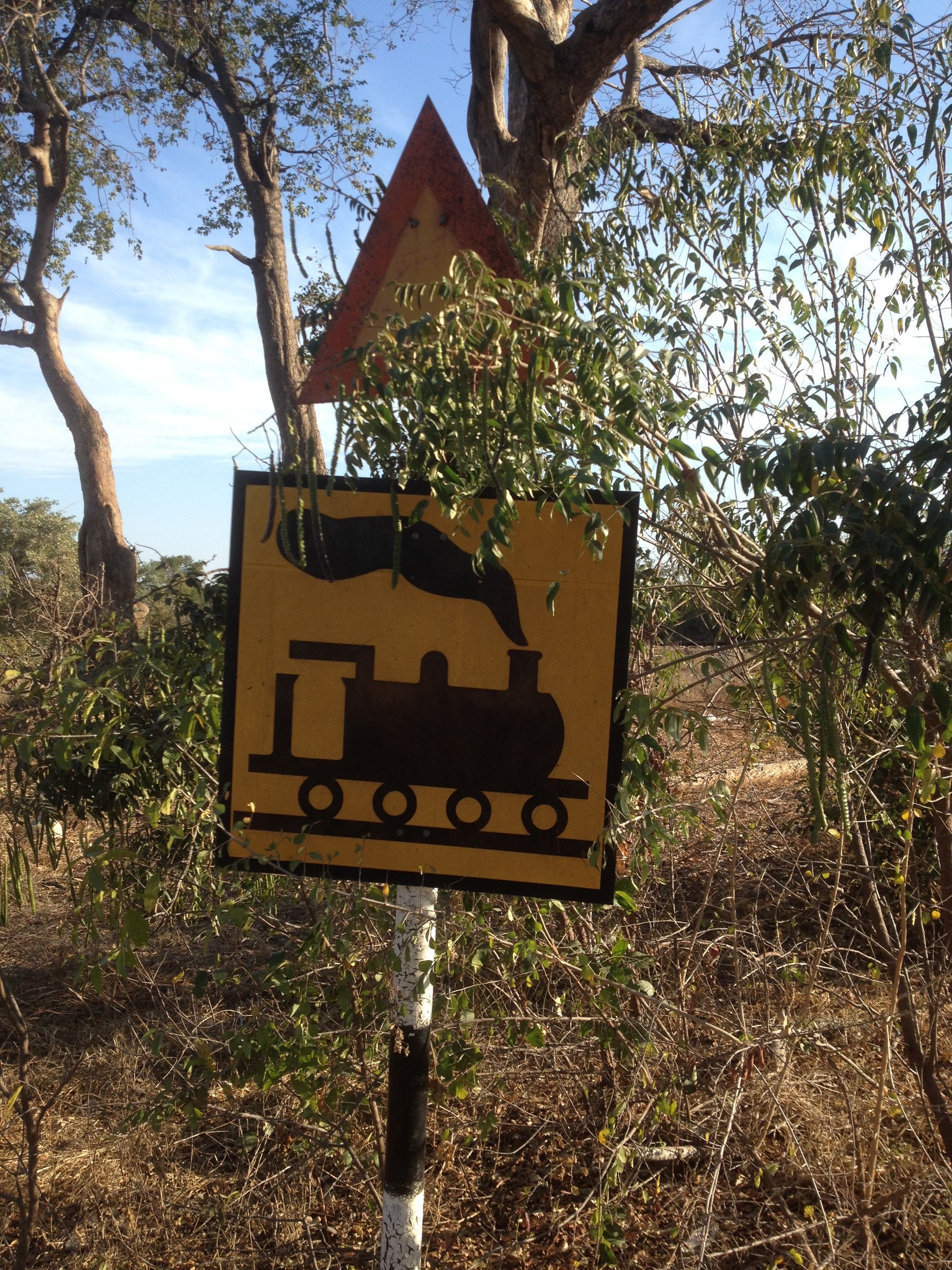
Leaving Mabalauta the railroad is crossed prior to reaching the main road.

Leaving Mabalauta the railroad is crossed prior to reaching the main road.

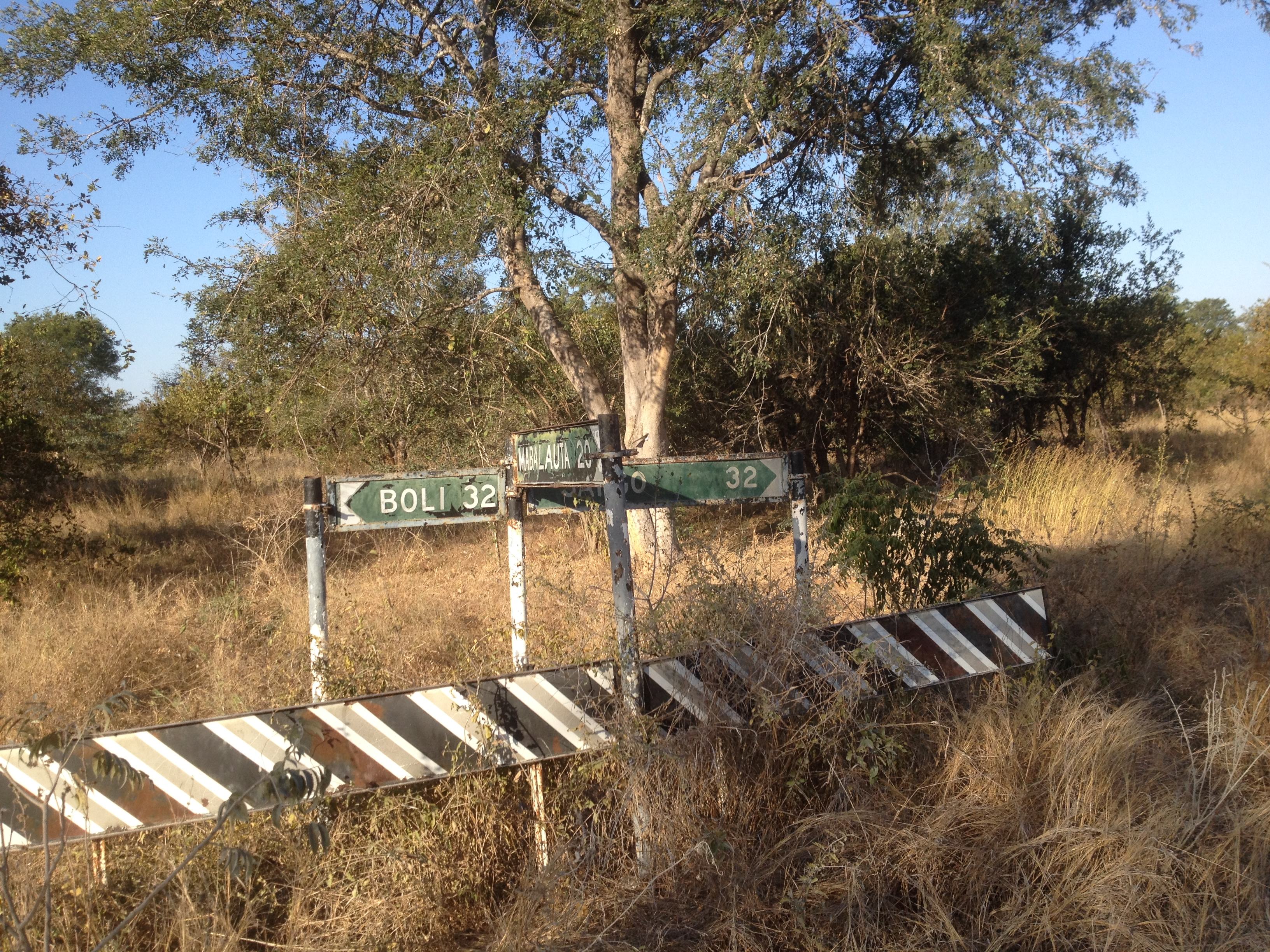
The first road junction leaving Mabalauta.

The first road junction leaving Mabalauta. Rutenga (via Boli) to the left and Mozambique to the right.

As agreed, about 40 kilometres from Beitbridge, I called Tourism and I was told that there was a person already at the border and, after contacting him we agreed to talk later at the border itself. Not what I expected for a supposedly “excellent service” I thought but kept the reflection to myself as we continued. About one hour later, already in Beitbridge, as agreed, we phoned again only to be told that the person was busy with other clients and he could not be with us! All of a sudden the “border terror” assaulted me big-time on hearing the bad news and I did not want to cross. Luckily my wife persuaded me to attempt it while I was thinking of plan B, a deviation through Botswana!!!

Gathering my wits as well as I could I entered the buildings and was welcomed by no queues! “We are in the wrong place” I said, and went to ask at a window but, relief of all reliefs, we were at the right spot and, five minutes later, yes five minutes later, we were through immigration, customs, police and free to go! The same happened on the South African side: 10 minutes (because of the use of a more advanced computer system!) and off we went. No need to search for psychiatric backup but only to drive on! So easy was it that I kept waiting for something to go wrong for a few kilometers after the border but nothing did…

As we crossed so fast we now had extra time on our hands and decided to push on to Louis Trichardt as we find Musina -like most border towns- rather unattractive and even unsafe. So we happily drove on and got to Louis Trichardt by mid-afternoon, with sufficient time for some shopping for our sojourn to Kruger National Park and hoping to find a nice place to stay. As we did not know the town, I decided to ask a customer in the supermarket for a hotel and she sent us to one nearby that was clean and quiet, she said.

It was a small pub with four rooms that looked OK but that really was not. The place was being refurbished so parking space was severely reduced and the hot water was very limited and finished before both of us could have our showers. Food came in small portions, particularly my wife’s quarter chicken that was as she defined “quarter pigeon”! In addition, the floor of the dining room shook and squeaked very badly when patrons and waiters walked by and making knife and fork use a real hazard. The waitress also squeaked not to be left out! That they served us the best mashed sweet potato that we ever tasted, I am afraid, was not sufficient to offset all other inconveniences.

I was sure that such an easy border crossing could not end well! Next time I will contact Psychiatrics Anonymous to prepare me for both: bad borders and poor quality hotels!